
The Elements of Art An Overview The Elements


- Slides: 21
The Elements of Art An Overview
The Elements of Art There are five basic elements of art. 1. 2. 3. 4. 5. Line Shape Form Color Texture All artworks are created using the elements of art.
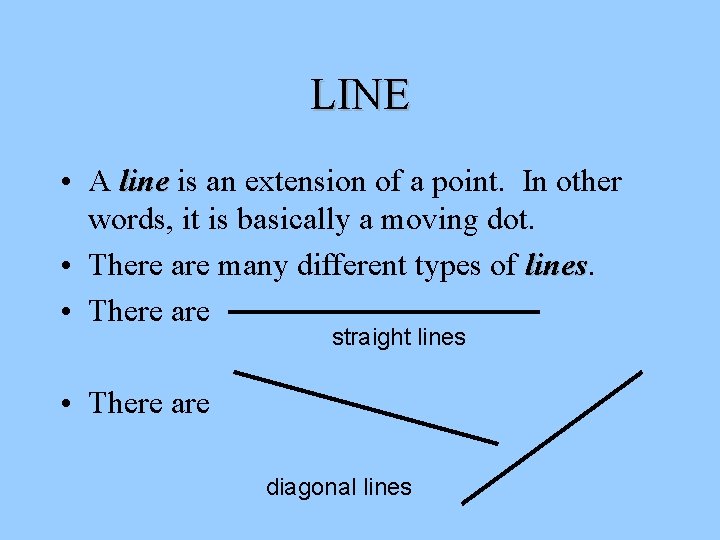
LINE • A line is an extension of a point. In other words, it is basically a moving dot. • There are many different types of lines • There are straight lines • There are diagonal lines
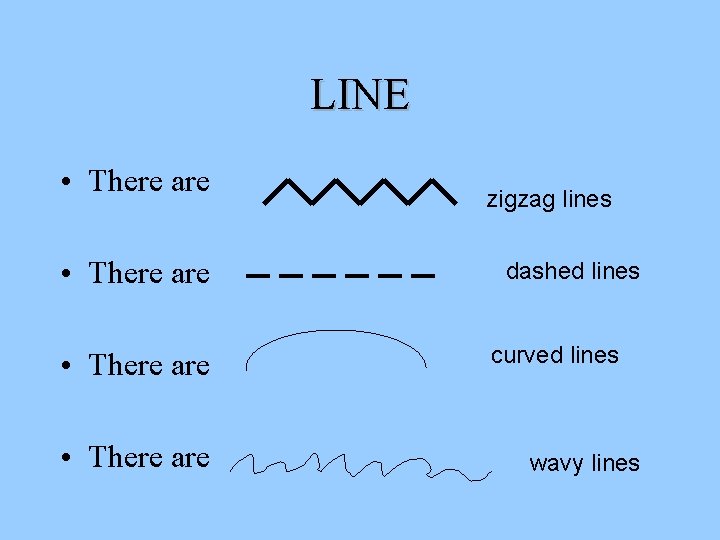
LINE • There are zigzag lines dashed lines curved lines wavy lines
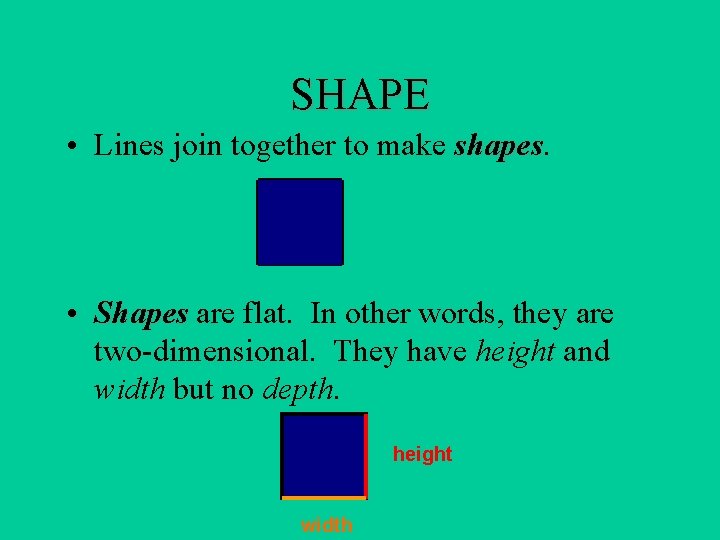
SHAPE • Lines join together to make shapes • Shapes are flat. In other words, they are two-dimensional. They have height and width but no depth. height width
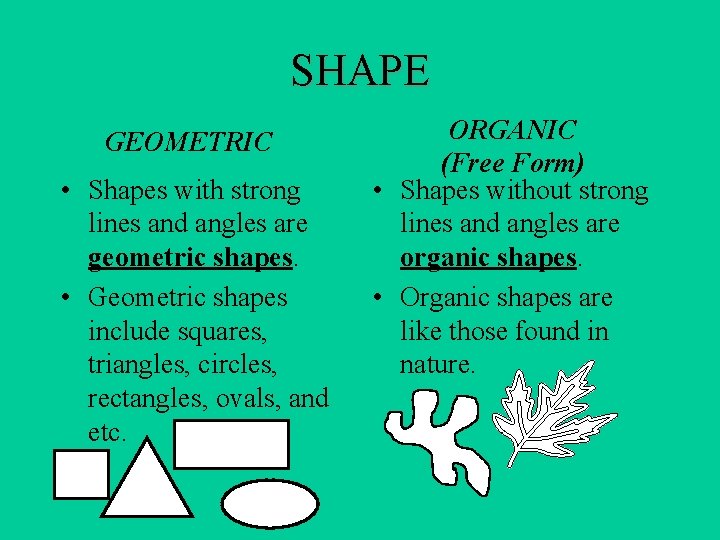
SHAPE GEOMETRIC • Shapes with strong lines and angles are geometric shapes. • Geometric shapes include squares, triangles, circles, rectangles, ovals, and etc. ORGANIC (Free Form) • Shapes without strong lines and angles are organic shapes. • Organic shapes are like those found in nature.
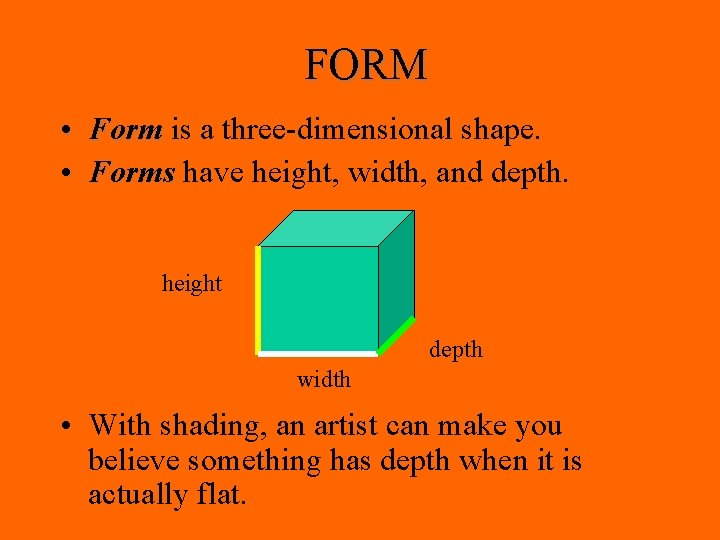
FORM • Form is a three-dimensional shape. • Forms have height, width, and depth. height depth width • With shading, an artist can make you believe something has depth when it is actually flat.
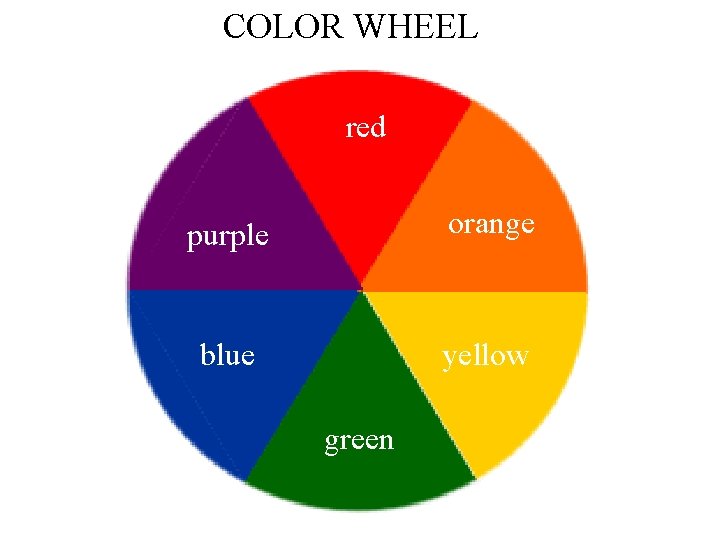
COLOR • Color is what makes up light. You can use a prism to split light into its colors. • The color wheel shows how colors are related. • Hue is the actual name of the color. • The primary colors are red, yellow, and blue. You cannot make the primary colors using any other colors, and the primary colors are combined to form all other colors on the color wheel.
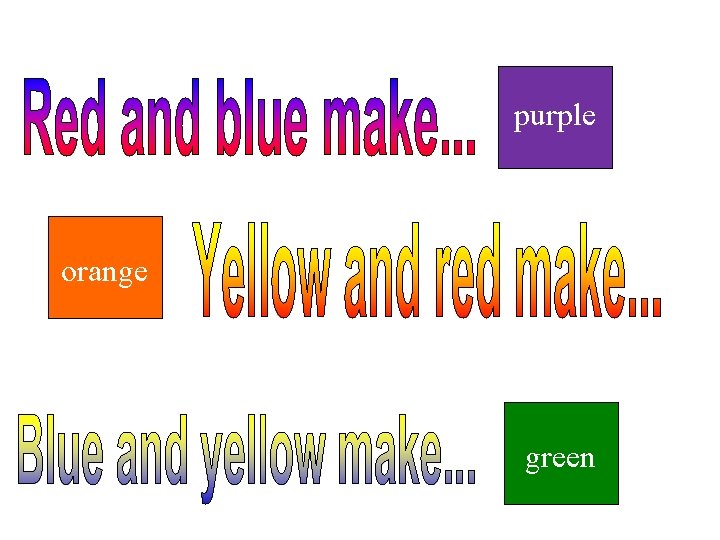
COLOR • If you mix two primary colors together, you get a secondary color • The secondary colors are purple, purple green, green and orange • On the color wheel, wheel the secondary color can be found between the two primary colors that are mixed to create it.
COLOR WHEEL red purple orange blue yellow green
purple orange green
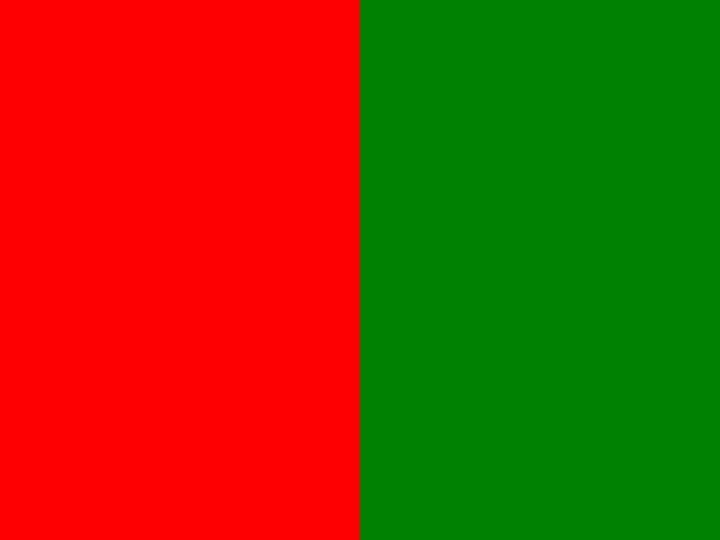
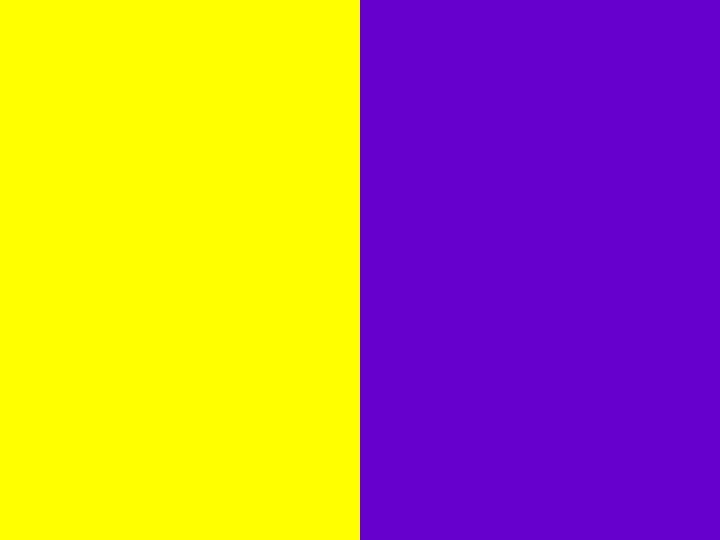
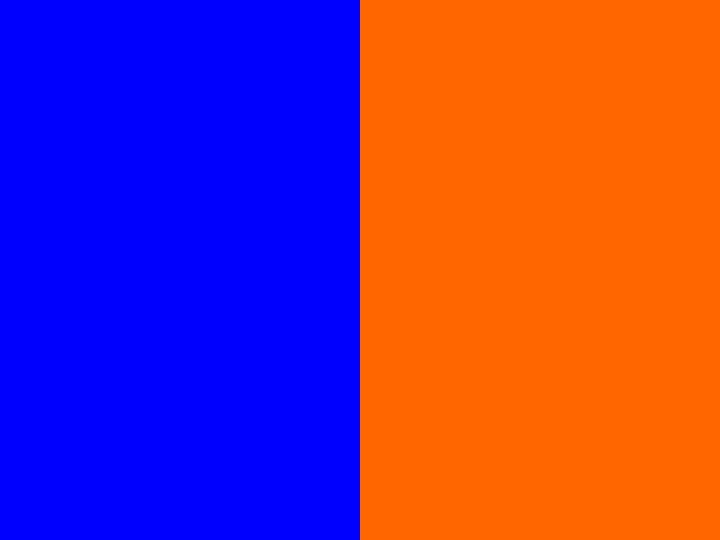
COLOR • Colors opposite each other on the color wheel are complementary colors When put together, they make each other seem brighter. • Red and green are complementary colors. • Yellow and purple are complementary colors. • Blue and orange are complementary colors.
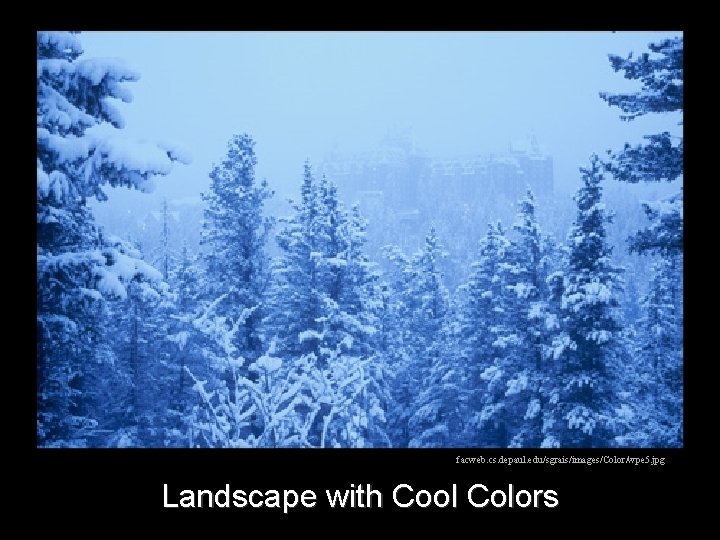
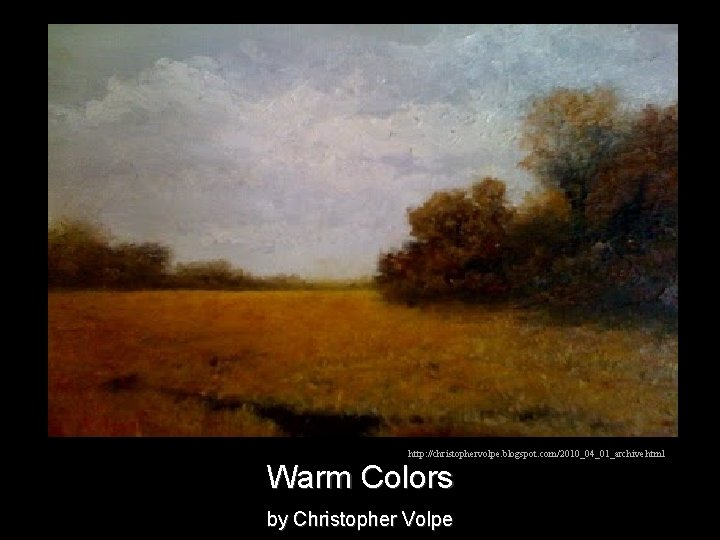
COLOR SCHEMES • Neutrals are black, black brown, brown white, white & gray • They can be made by mixing black and white or by mixing the three primary colors together. • Cool colors are blues, purples, and greens. • Cool colors can make you feel peaceful and relaxed. Most landscapes include blue and green. Blues can also make you fee sad and lonely. • Warm colors are reds, oranges, and yellows. • Warm colors can make you fee warm and cozy or exciting and energizing.
facweb. cs. depaul. edu/sgrais/images/Color/wpe 5. jpg Landscape with Cool Colors
http: //christophervolpe. blogspot. com/2010_04_01_archive. html Warm Colors by Christopher Volpe
TEXTURE • Texture is the way something feels or looks like it would feel. • Texture might be rough or smooth, hard or soft. • Texture can be real or implied. • Real texture is the way an artwork actually feels. • Implied texture is the way artists fool you into thinking something will feel a certain way in their artwork.
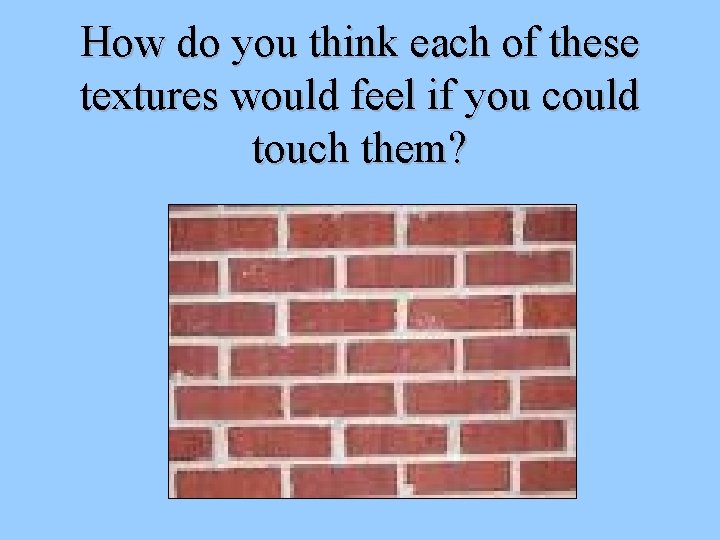
How do you think each of these textures would feel if you could touch them?
The Elements of Art