
The Elements and Principles of Art The Ingredients


- Slides: 49
The Elements and Principles of Art The Ingredients for Art
THE ELEMENTS OF ART The basic “ingredients” or techniques used to create a work of art Many of the elements can be used to complete a work of art. In most cases, a work of art has 1 or 2 elements that are more dominate.
Definitions: The Elements of Art • Line: Marks used in art-making that have a longer length than width. • Shape: An area made up of closed lines. • Form: 3 D shapes that have length, width, and height. • Value: The scale from black to white or light to dark. • Texture: The way a surface feels or looks like it feels. • Color: AKA pigment. Mixing different combinations of red, yellow, blue, black, and white can make every color • Space: The area between and around objects in an artwork.
Line: “A dot that went for a walk” • Actual Lines: Are literally, “actual” or real lines. • Implied Lines: Are suggested using the repetition of a mark. • Contour Lines: Are lines that show the outline of something. • Line Quality: The thickness or thinness of a line. • Texture: smooth, bold, fuzzy, blurry, etc. • Direction: Horizontal, Vertical, Diagonal, Zig-zag, Curved, etc.
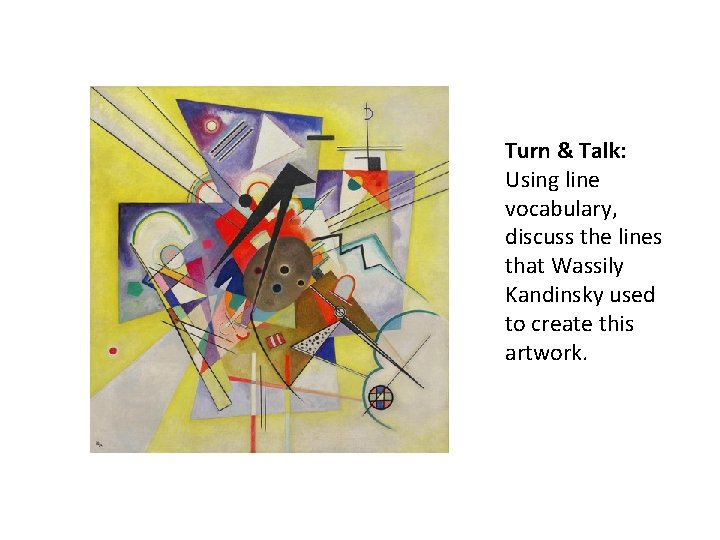
Turn & Talk: Using line vocabulary, discuss the lines that Wassily Kandinsky used to create this artwork.
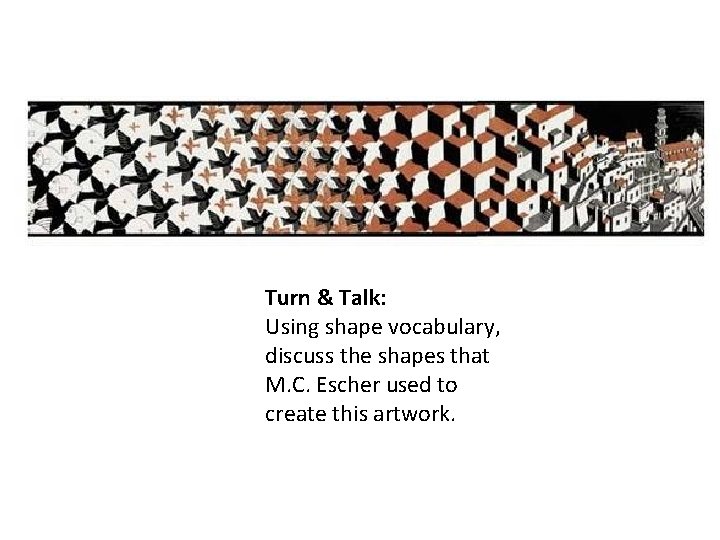
Shape • Geometric Shapes: Shapes that can be easily measured, have names, and have clear sides or edges. • Organic Shapes: Shapes that cannot be easily measured, do not have names, and edges that are irregular or poorly defined. • Positive Shape: The shape or outline of an actual object. • Negative Shape: The shape or outline of an empty space.
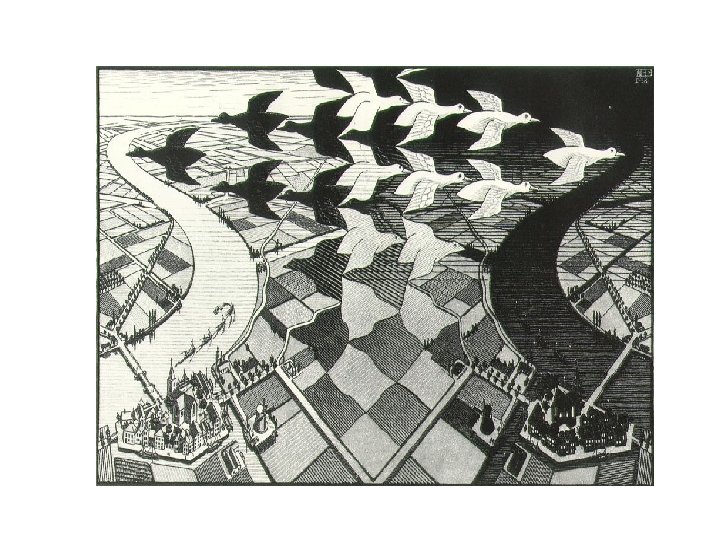
Turn & Talk: Using shape vocabulary, discuss the shapes that M. C. Escher used to create this artwork.
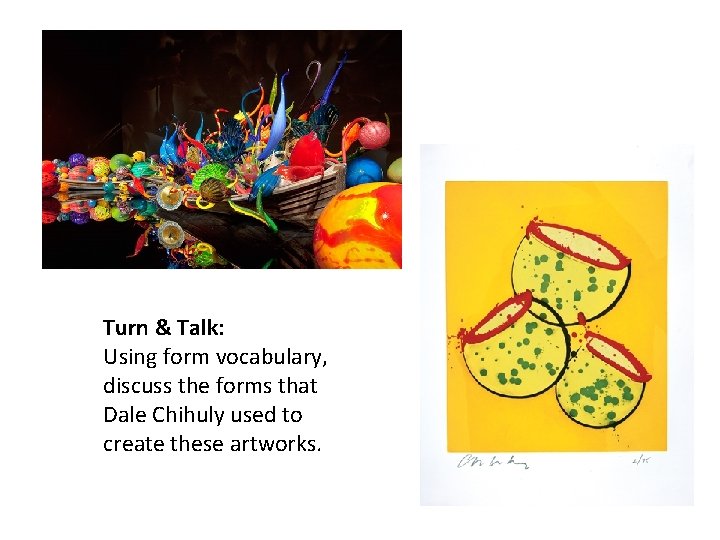
Form • Geometric Forms: Are forms that have names such as cone, cylinder, or sphere and are typically man-made. • Organic Forms: Are forms without specific names and that are naturally occurring such as the form of your body or of a mountain. • Implied Form: Is when a 2 D or flat artwork suggests that an object has form or is 3 D. • Sculpture: Is what we call any 3 D artwork.
Turn & Talk: Using form vocabulary, discuss the forms that Dale Chihuly used to create these artworks.
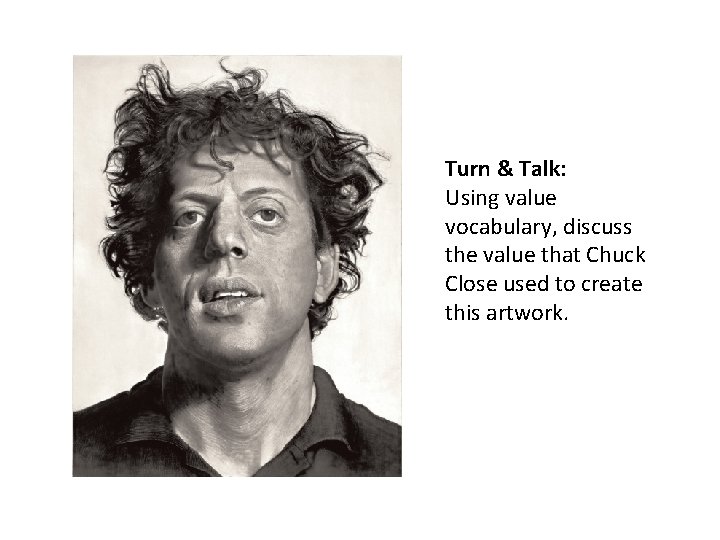
Value • High Value: Is the lightest and whitest end of the value scale. • Tint: A lighter value of a certain color. • Low Value: Is the darkest and blackest end of the value scale. • Shade: A darker value of a certain color.
Turn & Talk: Using value vocabulary, discuss the value that Chuck Close used to create this artwork.
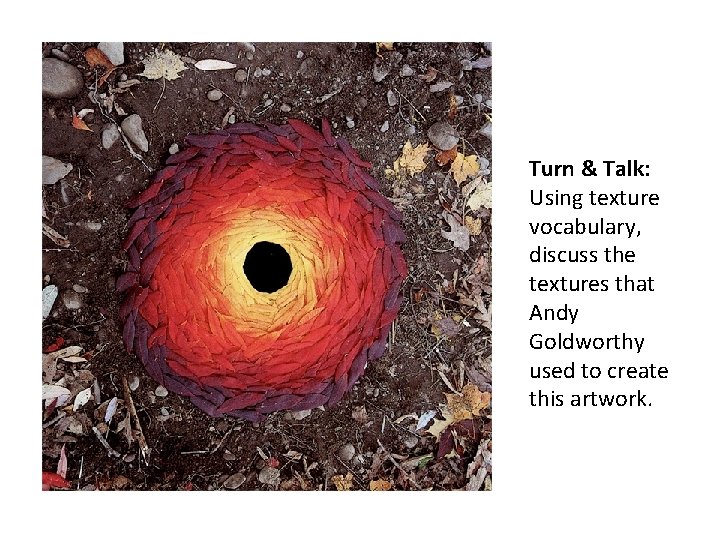
Texture • Actual texture: Literally, “actual” texture that can be touched and felt on an artwork. – 3 D artwork has actual texture • Implied texture: When a flat 2 D artwork looks like it feels a certain way, but does not in reality, then it has implied texture.
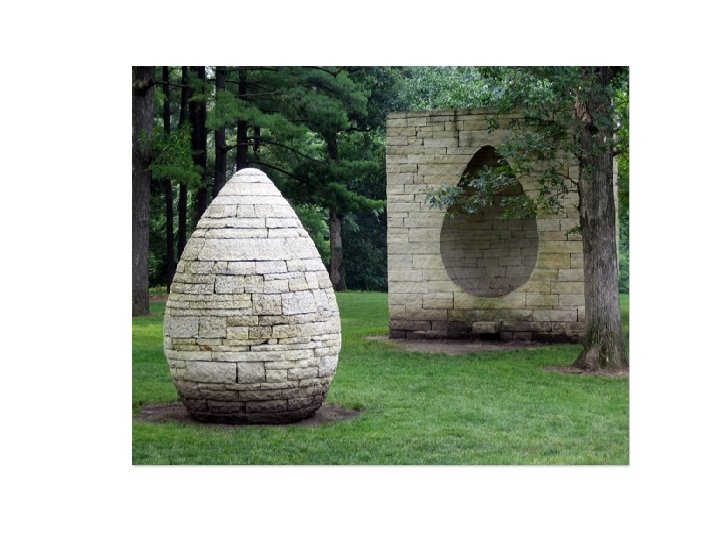
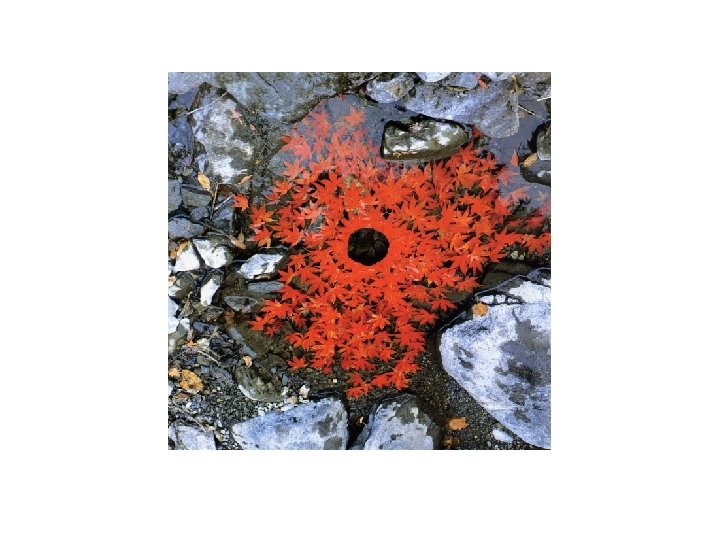
Turn & Talk: Using texture vocabulary, discuss the textures that Andy Goldworthy used to create this artwork.
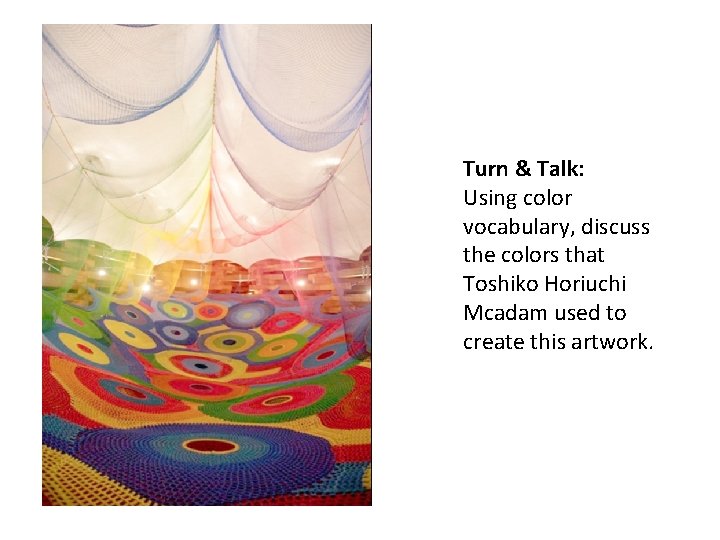
Color • Primary color: The color group of red, yellow, and blue; from which all other colors can be made by mixing. • Secondary color: The color group of green, purple and orange; which are made by mixing two primary colors together. • Tertiary color: Various colors that are made by mixing one primary and one secondary color together. • Color Schemes or Color Harmony- A certain combination of colors that cause certain response or look. (warm, cool, complimentary, monochromatic • The “color wheel” represents how each color is related to the other. (primary, secondary, intermediate)
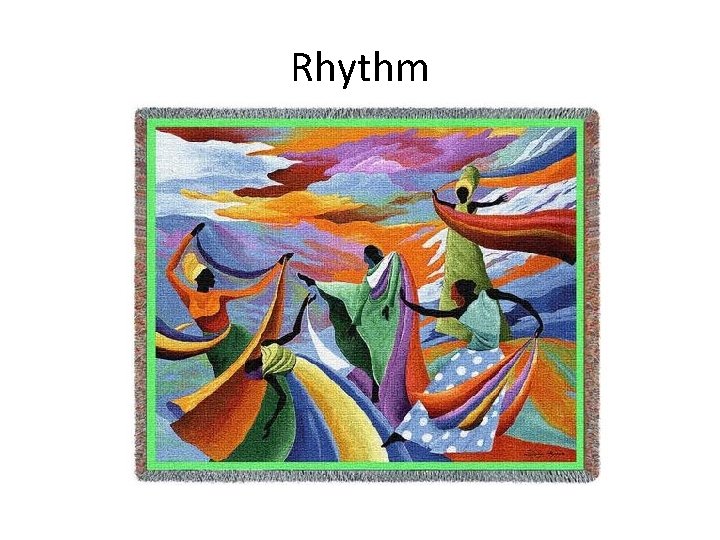
Turn & Talk: Using color vocabulary, discuss the colors that Toshiko Horiuchi Mcadam used to create this artwork.
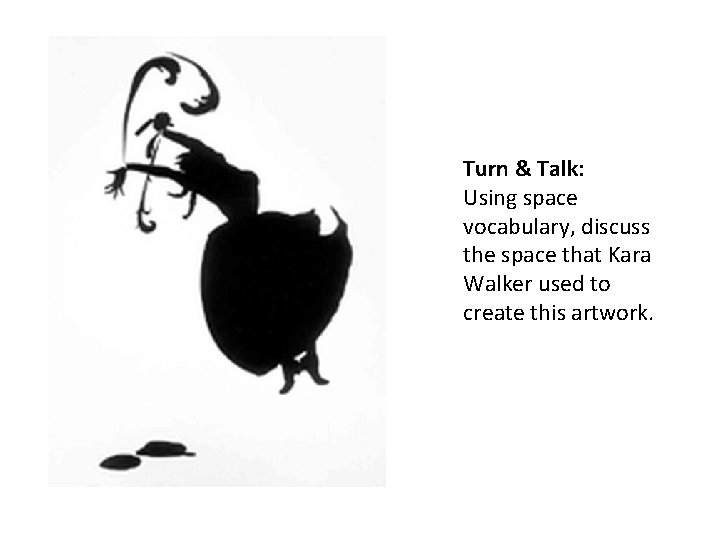
Space • Positive space: Is the space that an object or the subject occupies. • Negative space: Is the empty area around objects or subjects.
Turn & Talk: Using space vocabulary, discuss the space that Kara Walker used to create this artwork.
THE PRINCIPLES OF DESIGN The principles are ways in which the elements of design are organized. Like the elements, more than one principle can be used in a work of art. They organize the parts of a design so that an artwork clearly communicates an artist’s message or intention.
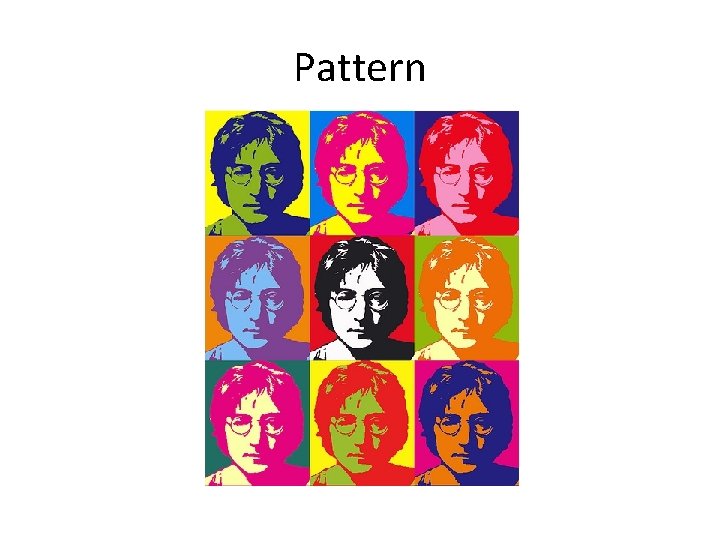
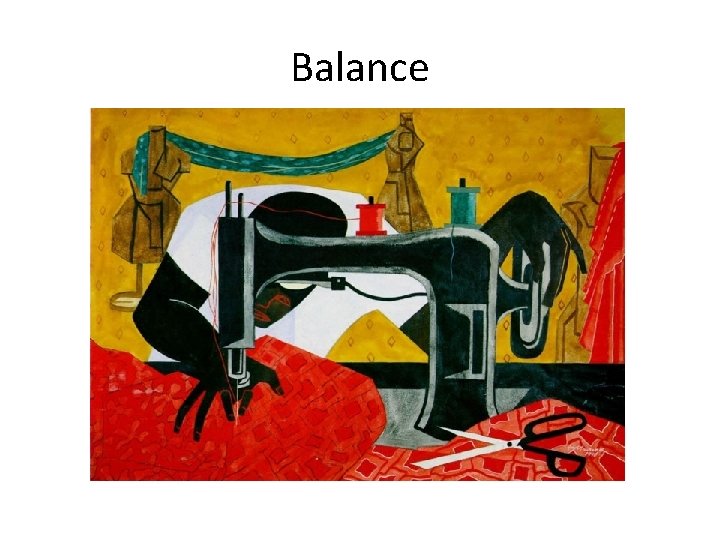
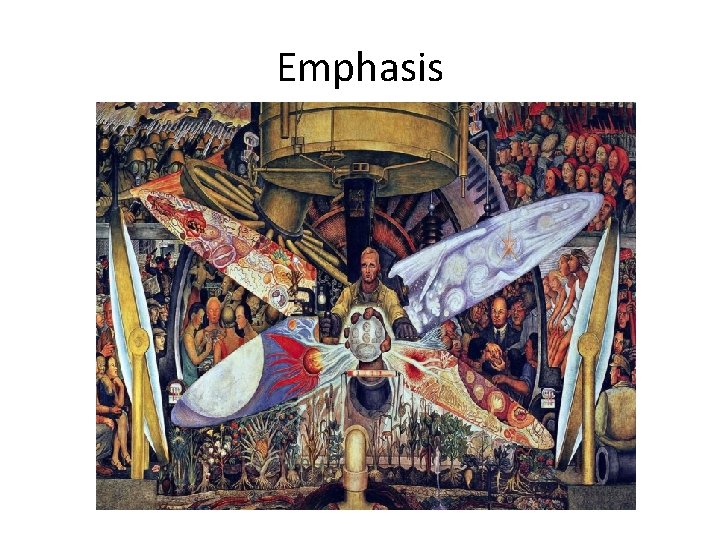
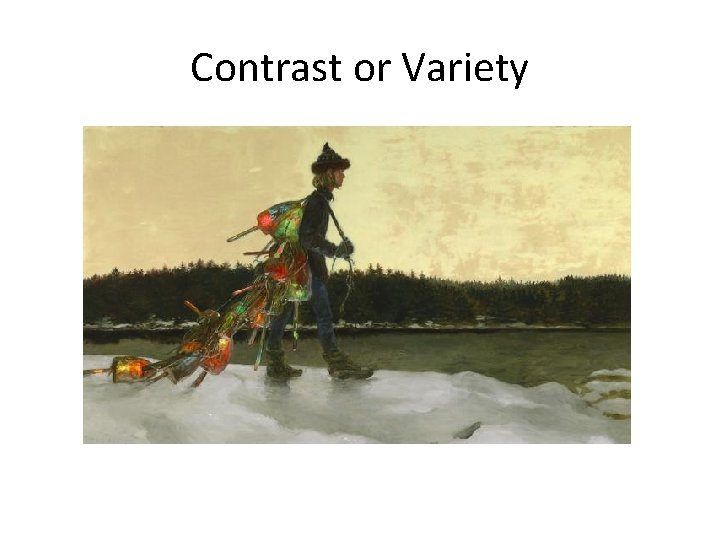
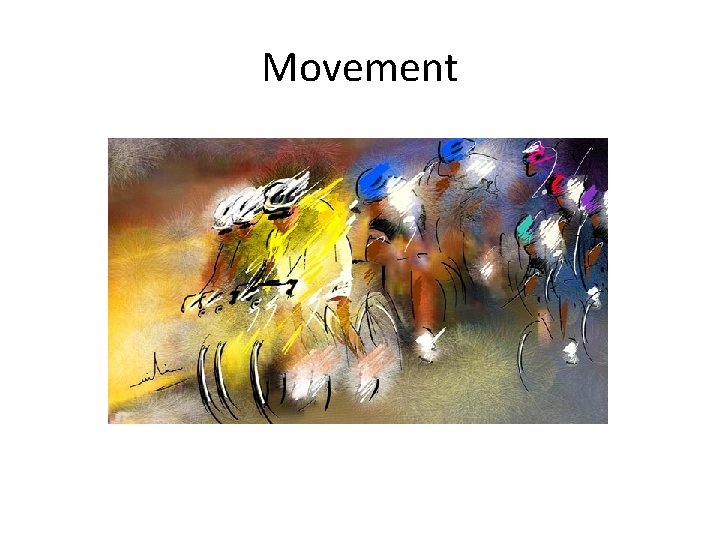
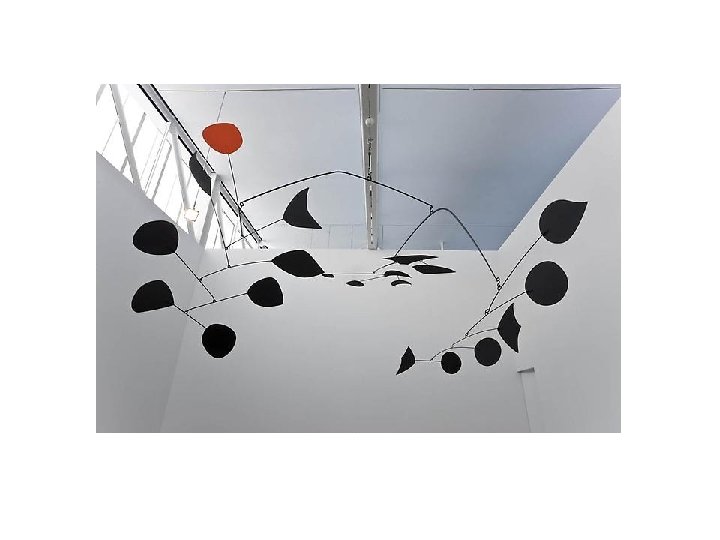
Definitions: The Principles of Art • Pattern: A combination of elements or shapes repeated in a recurring and regular arrangement. • Rhythm: The repetition of the same objects or symbols throughout an art-work but, in an irregular arrangement or in an altered way. • Balance: How the “visual weight” of the parts of an artwork are organized • Emphasis: The part of the design that catches the viewer’s attention and proves to be the focal point of the artwork. • Unity or Harmony: When all parts of an art-work seem like they belong together and are complete. When the composition is clearly organized. • Contrast or Variety: When several elements of art are used in different or unusual ways to make the art-work more interesting and eye-catching • Movement: When an art-work seems to have motion throughout the composition.
“Ingredients & Recipes” • We use the Elements of Art as ingredients to create the Principles of Design in our artwork. – Remember: there is more than one recipe for making a sandwich… v EXERCISE: For each of the following slides, consider what Elements of Art were used to create the specific Principle of Design.
Pattern
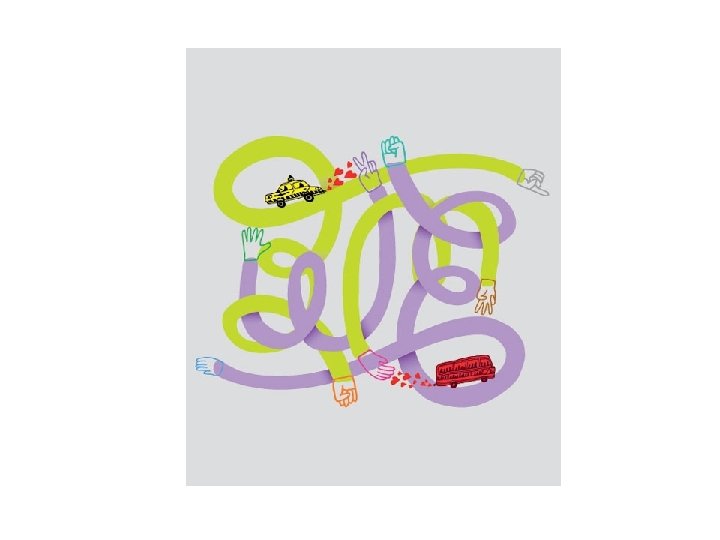
Rhythm
Balance
Emphasis
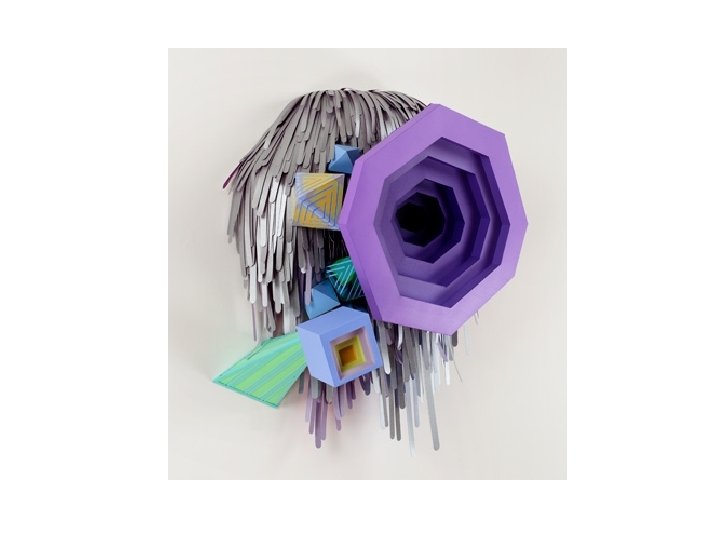
Unity or Harmony
Contrast or Variety
Movement
We use these ingredients in different combinations to make different recipes for artwork. The way the parts of an artwork (aka the Elements and Principles of an artwork) are put together = COMPOSITION