
The Elements 1 H Hydrogen Most abundant element
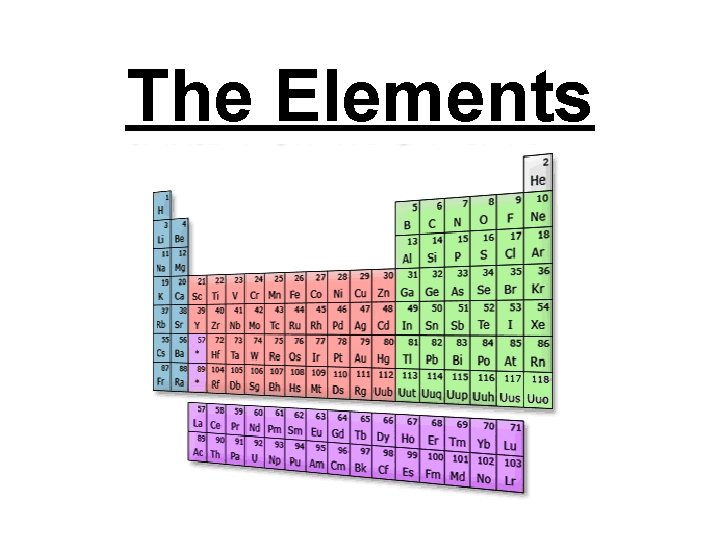
The Elements

1 - H - Hydrogen - Most abundant element in the Universe - One of the elements that make up Water (H 2 O), which is essential to life - H 2 is an explosive gas - H 2 gas can be used as a ‘Clean’ combustible fuel
2 - Helium - Colorless gas - Odourless gas - Unreactive/Inert gas - Used to inflate balloons (safer than H 2 gas) - Can release light when exposed to electricity
3 - Lithium - Lightest metal - Very reactive metal (Alkali) - Found in many batteries (Lithium-ion) -Anti-depressent properties
4 - Beryllium - Often used as an alloying agent (very lightweight) - Found in some precious stones (emeralds)
5 - Boron - Used as a control material in nuclear reactors which produce electricity. - Absorbs neutrons in nuclear reactions slowing down nuclear chain reactions.
6 - Carbon - Found in many different substances (coal, graphite, fossil fuels/petroleum, diamonds) - Found in Earth’s crust (minerals) - Found in Earth’s atmosphere (CO 2) - Life forms (Humans, trees, etc) contain a lot of Carbon (carbon-based life forms) - Has many different uses - Fuel Energy sources - gasoline, natural gas, diesel, etc - Found in Petroleum which is used to make all Plastics.
7 - Nitrogen - Most abundant substance in Earth’s Atmosphere 78% (Nitrogen gas – N 2) - Nitrogen gas (N 2) is very unreactive - Very important for Plant growth - Main ingredient in chemical Fertilizers - Found in many explosives (TNT, etc)
8 - Oxygen - Second most abundant substance in Earth’s Atmosphere 21% (Oxygen gas – O 2) - One of the elements that make up Water (H 2 O), which is essential to life - Oxygen is very reactive - Very important for Respirations - Oxygen gas (O 2) is Combustible - Found in many organic substances - Ozone gas (O 3) forms a protective layer in the upper atmosphere that shields us from harmful UV radiation.
9 - Fluorine - Most reactive Non-Metal (Halogen) - Yellow color - Corrosive gas - Used in some cleaning products / disinfectants - Used in Dental Products (strengths teeth and kills bacteria)
10 - Neon - Colorless gas - Odourless gas - Unreactive/Inert gas - Can release light when exposed to electricity - Neon illuminated signs are very common in stores
11 - Na - Sodium - Very reactive Metal (alkali) - Always found in compounds in nature (because of its reactivity) - Most common compound: Sodium Chloride (Na. Cl) - Sodium Chloride (Na. Cl) = TABLE SALT (needed by all living organisms) - To much sodium in our diets = BAD (high blood pressure)
12 - Mg - Magnesium - Silvery white metal - Often alloyed due to its lightweight properties - Used to make lightweight frames for bicycles, car seats, luggage, certain aircraft components - When burned will releases a Bright White Light - Was used to make old Flash Bulbs (photography) - Used in the production of Fireworks (bright when burned)
13 - Aluminum - Silvery white metal - Lightweight and tough - Will not ‘rust’ - Very Ductile and Malleable, therefore easy to work with - Wide Variety of uses - Extensively used in the Aviation industry. - Used in the production of mirrors
14 - Silicon - Very abundant element in Earth’s crust (sand, clay, etc) - Used to make concrete, cement, glass, pottery - Micro-processors (microchips) - Used to make flexible castings - Used in some medical prosthetics inside the body
15 - Phosphorus - Many different uses - Can be made to emit light / glow in the dark - Found in many mineral rocks - Important for life (found in DNA) - Used in the production of Fertilizers - Used in the production of Detergents
16 - Sulfur - Yellow brittle solid - Many industrial applications - Will burn in air producing a bad smell (rotten eggs!) - Used in explosives, fireworks, gunpowder, matchsticks, stinkbombs ! -Sulfur is the main culprit in the formation of Acid Rain
17 - Cl - Chlorine - Greenish-yellowish gas at room temperture - Very reactive element (Halogen) -Always found in compounds in nature (because of its reactivity) -Sodium Chloride (Na. Cl) = TABLE SALT - Corrosive (respiratory irritant, and burns the skin) - Kills Bacteria - Found in many Disinfecting products, Bleach, Swimming pools.
18 - Argon - Colorless gas - Odourless gas - Unreactive/Inert gas - Can release light when exposed to electricity - Can be found in certain tube lights
19 - K - Potassium - Light metal - Not found as free atoms in nature (found in compounds) - Used in the production of fertilizers - Found in bananas
20 - Calcium - Greyish white metal - Very abundant - Calcium is an essential constituent of leaves, bones, teeth, and shells - Found in Marble & Chalk
22 - Titanium - Strong metal - Lightweight metal - Does not corrode - Expensive metal - Very often alloyed for its lightweight / strength properties - Used in aircraft & aerospace industries (fighter jets, jet engines, missiles, spacecraft, etc) - Used in high-end sporting equipment (tennis raquets, golf clubs, auto-racing)
26 - Fe - Iron - Very important metal - Very strong - ENDLESS USES (most used metal) many iron products - Drawback Iron will RUST (especially oxygen rich moist environments). - Rust = Reddish/brown residue. Rust = Ironoxide -Must be alloyed with other metals in order to avoid Rusting - Covering Iron with paint will keep it from rusting - Iron is part of Hemoglobin which carries oxygen in the bloodstream - Iron has Magnetic Properties
28 - Nickel - Strong metal - Often alloyed (will not corrode) - Also found in Meteorites - 5 cent coin is called Nickel because it use to be make partly of nickel - Has Magnetic properties
29 - Cu - Copper - Strong metal - Copper is reddish/Orange metal with lustre (ex: penny) - It is malleable and ductile - Great conductor electricity (second only to silver in electrical conductivity). - Found in many alloys - Used in plumbing (copper pipes), and electrical wires. - Copper will oxidize to form Copper oxide Dark greenish residue when exposed to oxygen - Statue of liberty, old Quebec church rooftops Green
30 - Zn - Zinc - Metal - Does not corrode easily - Used in many alloys
33 - As - Arsenic - Solid metalloid - Poisonous (rat poison)
35 - Bromine - Liquid non-metal - Reddish/Brown liquid - Very reactive (halogen) - Corrosive to skin - Chocking bad smell - Used in: Photography industry, Pharmaceutical industry, flame-retardent materials, some disinfectants.
36 - Krypton - Colorless gas - Odourless gas - Unreactive/Inert gas - Can release light when exposed to electricity - Can be found in certain tube lights / lamps
47 - Ag - Silver - Brilliant white metal - Rare metal - Expensive metal - Very Ductile and Malleable - Very high electrical conductivity (but to expensive to be used for that purpose) - Silver will Tarnish (oxidize) Turn yellowish/black when exposed to oxygen - Used in: Jewelry, Mirrors (old), and Money.
50 - Sn - Tin - Silvery white metal - Resists Corrosion very well - Used as an alloy (because it resists corrosion) - Many different alloying uses (Tin Cans won’t rot)
53 - Iodine - Purplish/Black solid (can turn into a purple gas when heated) - Very reactive non-metal (halogen) - Used in: photography, medicine, inks - Iodine is important in the healthy functioning of the Thyroid Gland - Iodine in artificially added to our table salt (iodized table salt) in order for humans to get needed iodine in our diets.
54 - Xenon - Colorless gas - Odourless gas - Unreactive/Inert gas - Can release light when exposed to electricity - Used in: Black Lights (Xenon lights), lasers.
55 - Cs - Cesium - Very Reactive metal (Alkali)
56 - Barium - Metal - Barium Sulfate solution is used as a medical tracer in the human body which will show up on X-Rays.
74 - W - Tungsten - Very Hard Metal - Alloyed (for hardness property) - Very High Melting (highest of all metals) - Used in Lightbulb filaments - Used for cutting tools / drill bits
78 - Pt - Platinum - A silvery white metal - Resistant to corrosion and tarnishing - Very Rare - Very expensive - Used to make Jewelry - Used in automotive Catalytic converters (coverts dangerous exhaust emissions into less harmful substances) - Used in medications to treat cancer
79 - Au - Gold - Lustrous Yellow Metal - Rare metal - Expensive metal - Very Ductile and Malleable - Very high electrical and thermal conductivity - Gold is Unreactive will not oxidize - Used in: Jewelry, Fine electonics, money - Purity of gold is measure in the Karat unit
80 - Hg - Mercury - Heavy LIQUID metal - Mercury atoms like to ‘stay together’ - Toxic to life forms - Not many uses due to its high Toxicity - Found in many lakes/rivers due to industrial waste May enter food chains - Uses: old thermometers, old batteries
82 - Pb - Lead - Bluish/grey metal - Heavy - Very Malleable (easy to work with) - Toxic to living organisms - Found in many lakes/rivers due to industrial waste May enter food chains - Used in: old roman pipe systems, old gasoline, old batteries, old paints, solder, old bullets, x-ray shielding.
84 – Po - Polonium - Radioactive Metal
86 – Rn - Radon - Colorless gas - Odourless gas - Unreactive/Inert gas - Releases Radiation !
87 – Fr - Francium - Extremely reactive Metallic element (Alkali) - No real uses - Very short life-span (very little on Earth at any given moment)
88 – Ra - Radium - Radioactive Metal
92 – U - Uranium - Radioactive Metal - Of great interest because of its application to nuclear power and nuclear weapons. - Named after the planet Uranus. - Large amounts of energy can be harnessed from very little Uranium. - Energy from 1 kg of Uranium = Energy harnessed from the burning of 2 500 000 kg of coal !!!
94 – Pu - Plutonium - Radioactive Metal - Named after Pluto ! - Similar characteristics and uses to Uranium
- Slides: 46