
The Electromagnetic Spectrum Theres a whole lot of

- Slides: 20
The Electromagnetic Spectrum There’s a whole lot of light out there!
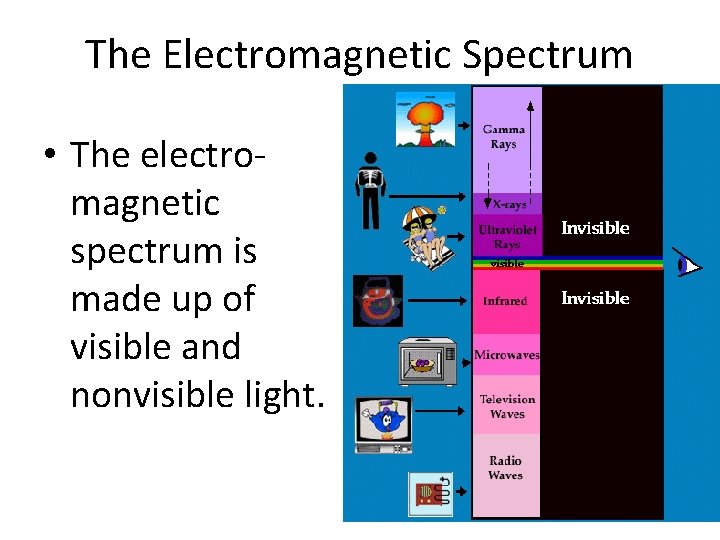
The Electromagnetic Spectrum • The electromagnetic spectrum is made up of visible and nonvisible light.
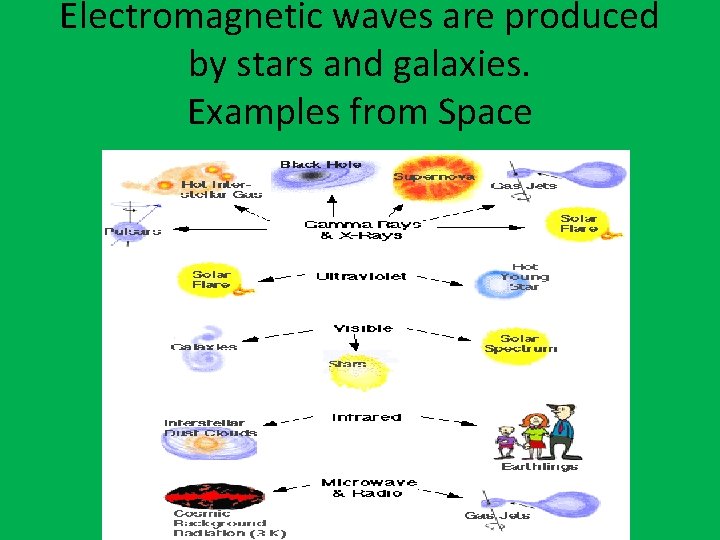
Electromagnetic waves are produced by stars and galaxies. Examples from Space
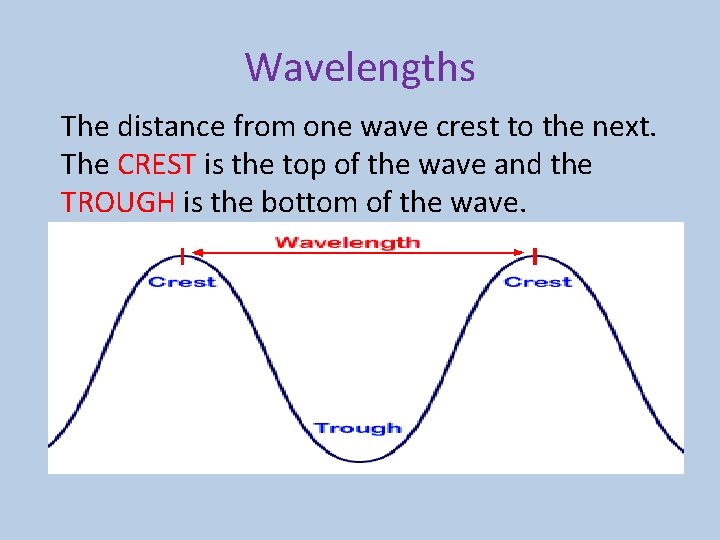
Wavelengths The distance from one wave crest to the next. The CREST is the top of the wave and the TROUGH is the bottom of the wave.
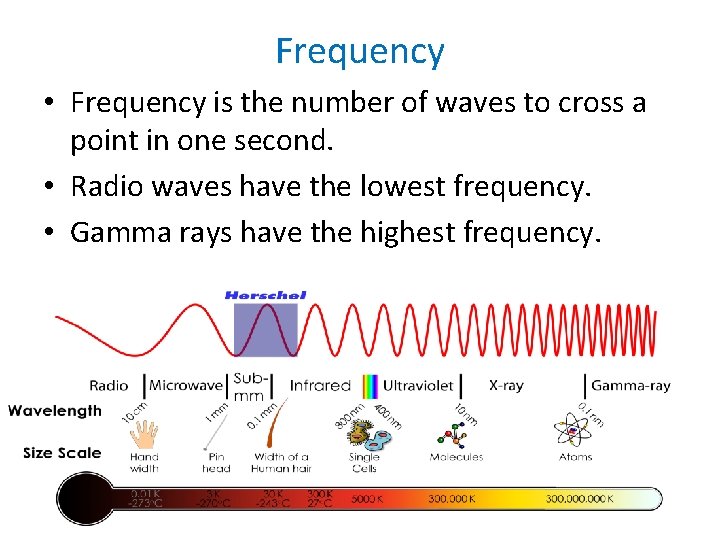
Frequency • Frequency is the number of waves to cross a point in one second. • Radio waves have the lowest frequency. • Gamma rays have the highest frequency.
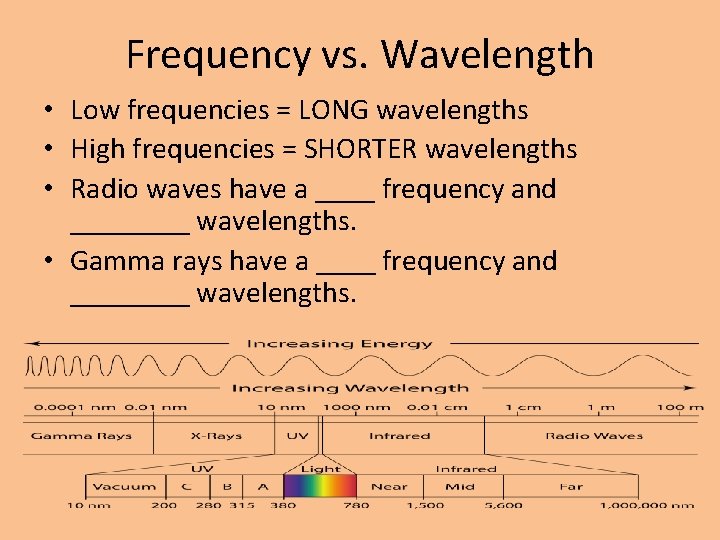
Frequency vs. Wavelength • Low frequencies = LONG wavelengths • High frequencies = SHORTER wavelengths • Radio waves have a ____ frequency and ____ wavelengths. • Gamma rays have a ____ frequency and ____ wavelengths.
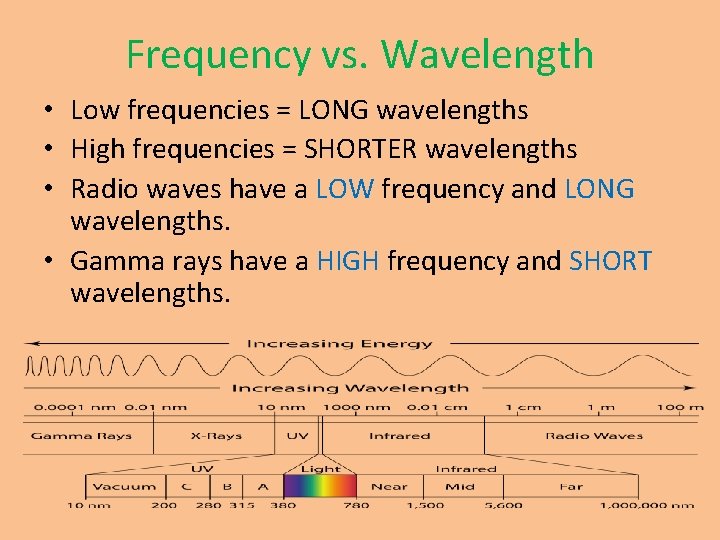
Frequency vs. Wavelength • Low frequencies = LONG wavelengths • High frequencies = SHORTER wavelengths • Radio waves have a LOW frequency and LONG wavelengths. • Gamma rays have a HIGH frequency and SHORT wavelengths.
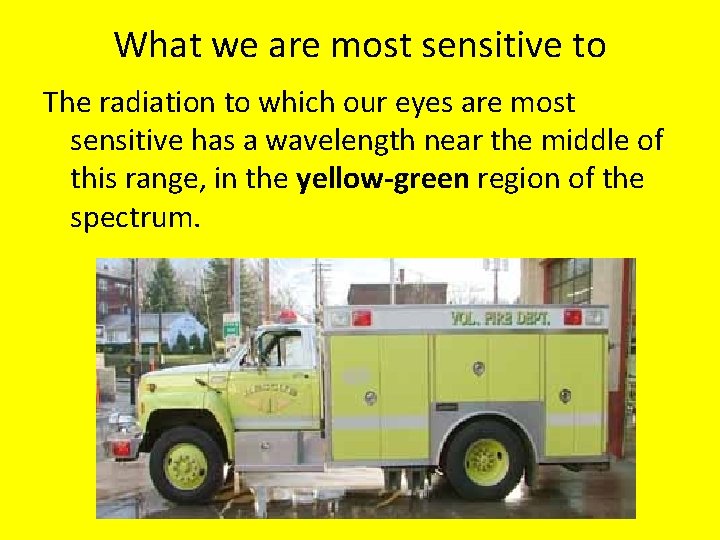
What we are most sensitive to The radiation to which our eyes are most sensitive has a wavelength near the middle of this range, in the yellow-green region of the spectrum.
Light we are most sensitive to • It is no coincidence that this wavelength falls within the range of wavelengths at which the Sun emits most of its electromagnetic energy—our eyes have evolved to take greatest advantage of the available light.
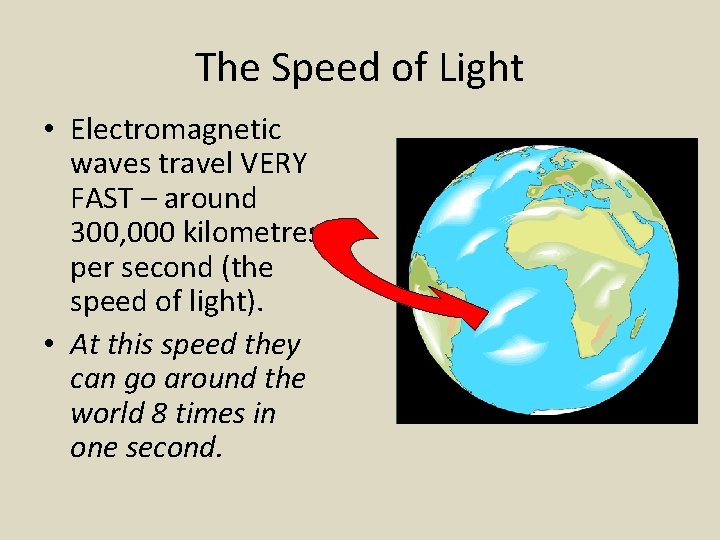
The Speed of Light • Electromagnetic waves travel VERY FAST – around 300, 000 kilometres per second (the speed of light). • At this speed they can go around the world 8 times in one second.
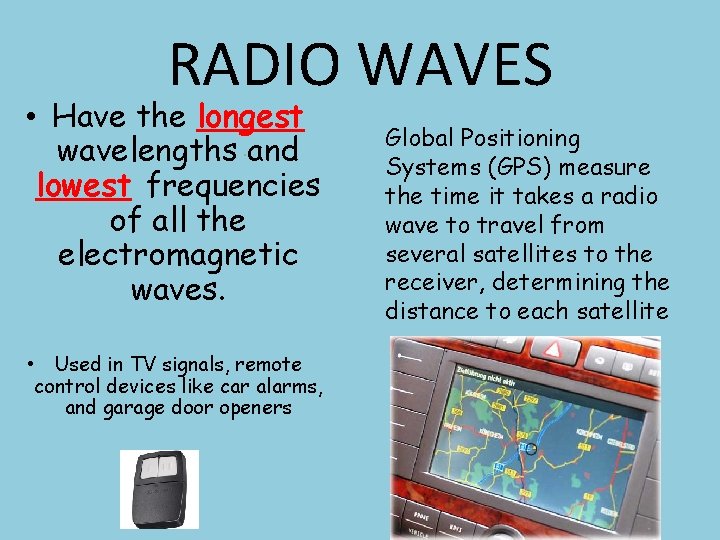
RADIO WAVES • Have the longest wavelengths and lowest frequencies of all the electromagnetic waves. • Used in TV signals, remote control devices like car alarms, and garage door openers Global Positioning Systems (GPS) measure the time it takes a radio wave to travel from several satellites to the receiver, determining the distance to each satellite
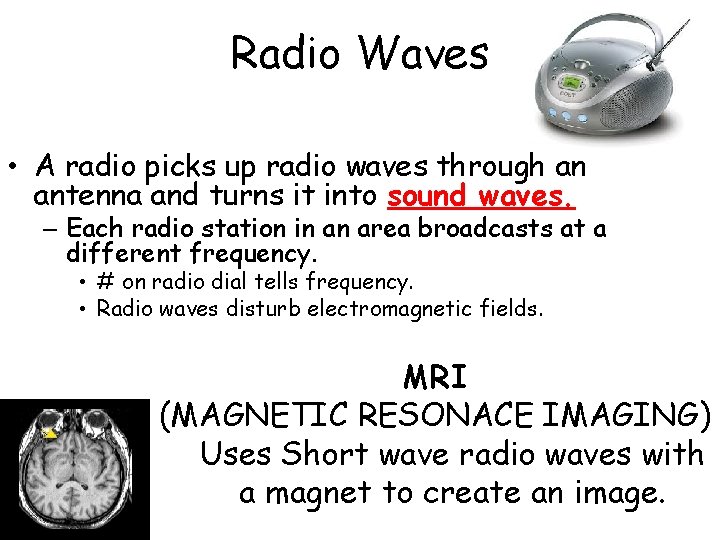
Radio Waves • A radio picks up radio waves through an antenna and turns it into sound waves. – Each radio station in an area broadcasts at a different frequency. • # on radio dial tells frequency. • Radio waves disturb electromagnetic fields. MRI (MAGNETIC RESONACE IMAGING) Uses Short wave radio waves with a magnet to create an image.
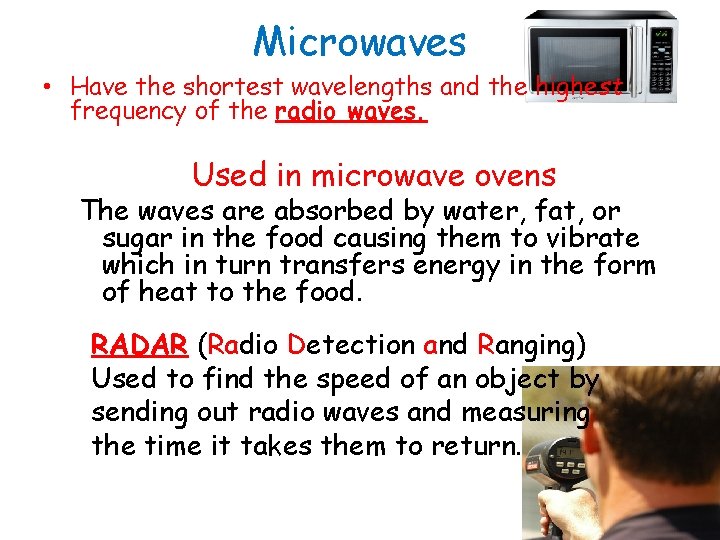
Microwaves • Have the shortest wavelengths and the highest frequency of the radio waves. Used in microwave ovens The waves are absorbed by water, fat, or sugar in the food causing them to vibrate which in turn transfers energy in the form of heat to the food. RADAR (Radio Detection and Ranging) Used to find the speed of an object by sending out radio waves and measuring the time it takes them to return.
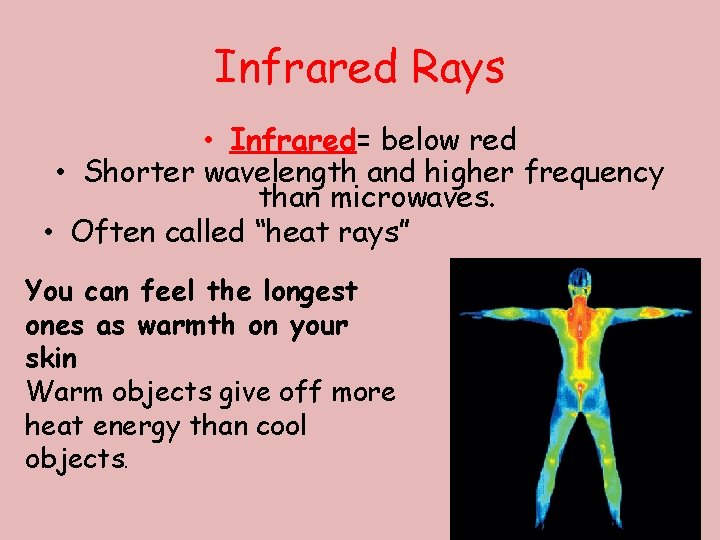
Infrared Rays • Infrared= below red • Shorter wavelength and higher frequency than microwaves. • Often called “heat rays” You can feel the longest ones as warmth on your skin Warm objects give off more heat energy than cool objects.
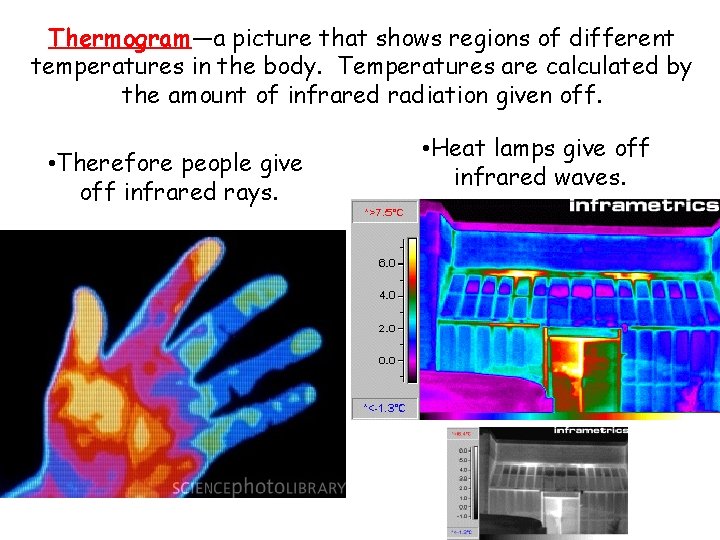
Thermogram—a picture that shows regions of different temperatures in the body. Temperatures are calculated by the amount of infrared radiation given off. • Therefore people give off infrared rays. • Heat lamps give off infrared waves.
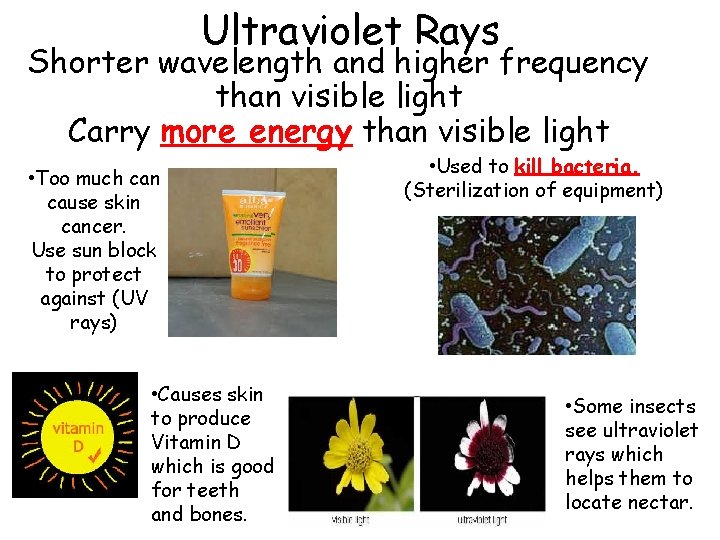
Ultraviolet Rays Shorter wavelength and higher frequency than visible light Carry more energy than visible light • Too much can cause skin cancer. Use sun block to protect against (UV rays) • Causes skin to produce Vitamin D which is good for teeth and bones. • Used to kill bacteria. (Sterilization of equipment) • Some insects see ultraviolet rays which helps them to locate nectar.
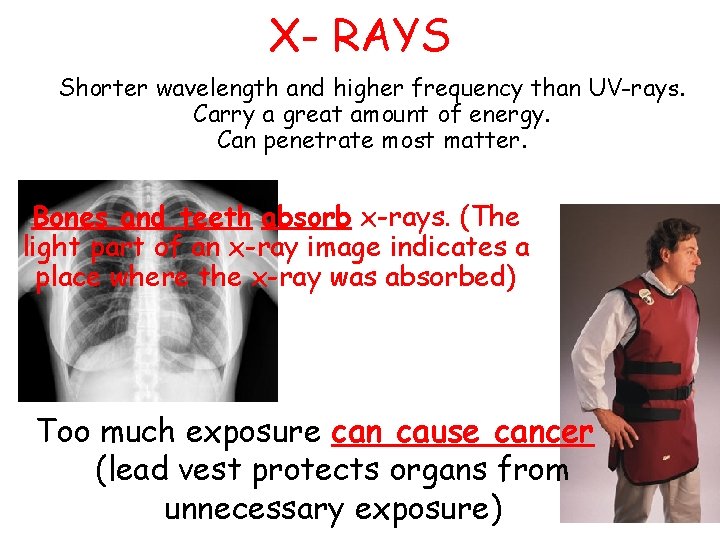
X- RAYS Shorter wavelength and higher frequency than UV-rays. Carry a great amount of energy. Can penetrate most matter. Bones and teeth absorb x-rays. (The light part of an x-ray image indicates a place where the x-ray was absorbed) Too much exposure can cause cancer (lead vest protects organs from unnecessary exposure)
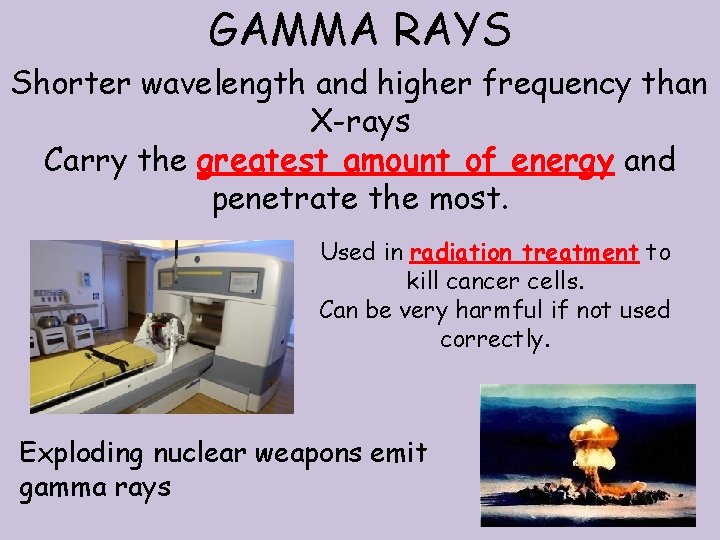
GAMMA RAYS Shorter wavelength and higher frequency than X-rays Carry the greatest amount of energy and penetrate the most. Used in radiation treatment to kill cancer cells. Can be very harmful if not used correctly. Exploding nuclear weapons emit gamma rays
• Brief SUMMARY • A. All electromagnetic waves travel at the same speed. (300, 000 meters/second) in a vacuum. • B. They all have different wavelengths and different frequencies. – Long wavelength- lowest frequency – Short wavelength highest frequency – The higher the frequency the higher the energy.
Homework: Pg. 147 -152 and test on Friday!