
The Electromagnetic Spectrum Spectroscopy Spectroscopy is a measurement
- Slides: 14
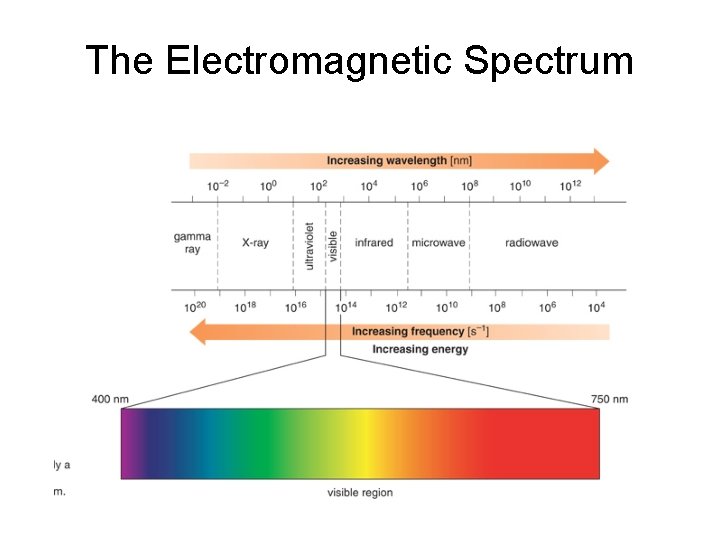
The Electromagnetic Spectrum
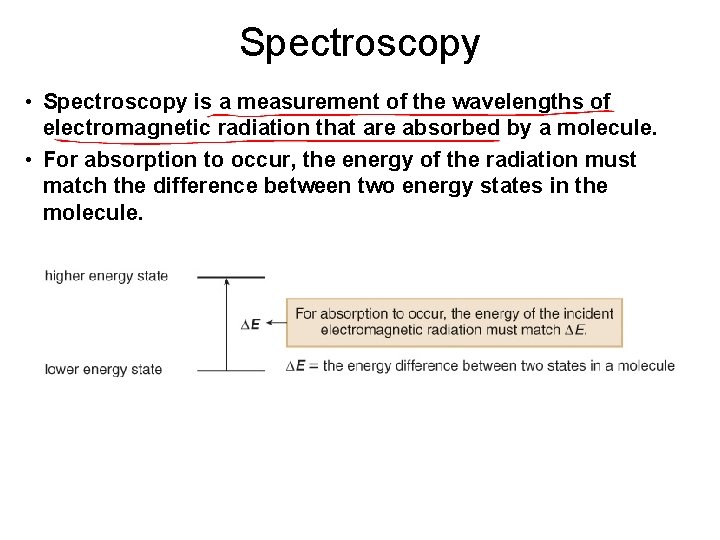
Spectroscopy • Spectroscopy is a measurement of the wavelengths of electromagnetic radiation that are absorbed by a molecule. • For absorption to occur, the energy of the radiation must match the difference between two energy states in the molecule.
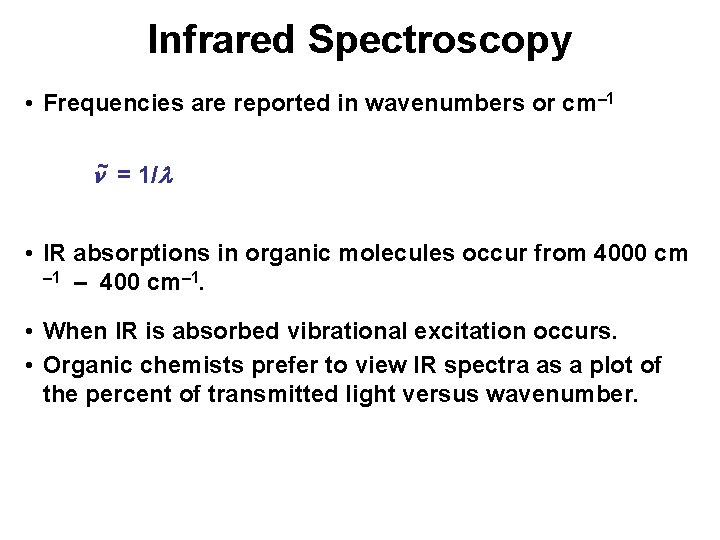
Infrared Spectroscopy • Frequencies are reported in wavenumbers or cm– 1 ~ = 1/ • IR absorptions in organic molecules occur from 4000 cm – 1 – 400 cm– 1. • When IR is absorbed vibrational excitation occurs. • Organic chemists prefer to view IR spectra as a plot of the percent of transmitted light versus wavenumber.
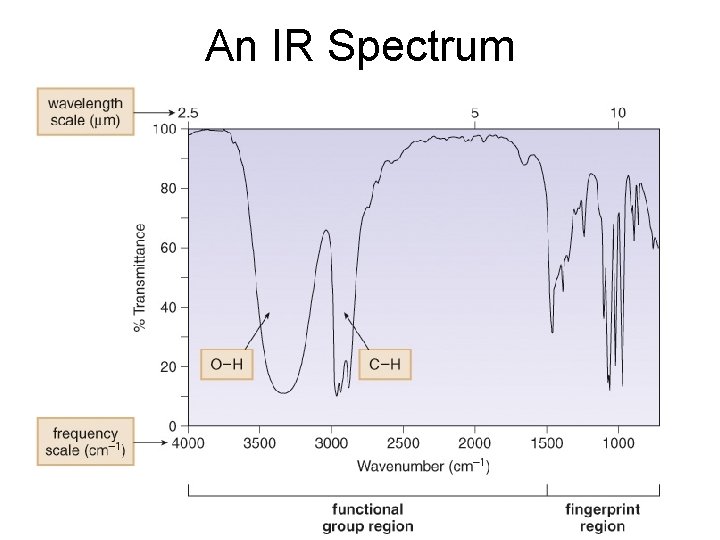
An IR Spectrum
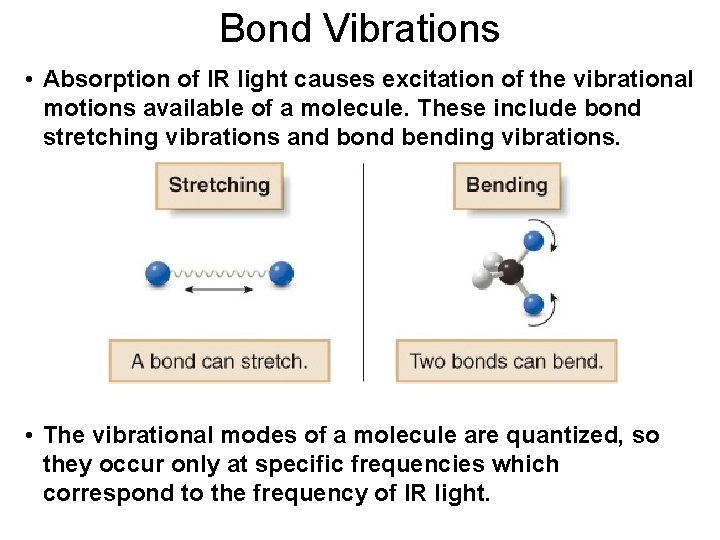
Bond Vibrations • Absorption of IR light causes excitation of the vibrational motions available of a molecule. These include bond stretching vibrations and bond bending vibrations. • The vibrational modes of a molecule are quantized, so they occur only at specific frequencies which correspond to the frequency of IR light.
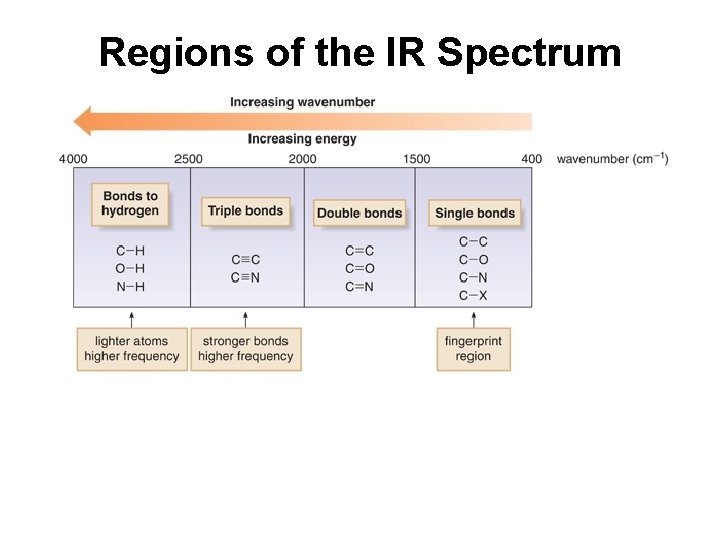
Frequency of Stretching Vibrations • The frequency of a bond stretching vibrations depends on the bond strength and the masses of the bonded atoms. • Stronger bonds vibrate at a higher frequency. • Bonds with lighter atoms vibrate at higher frequency.
Regions of the IR Spectrum
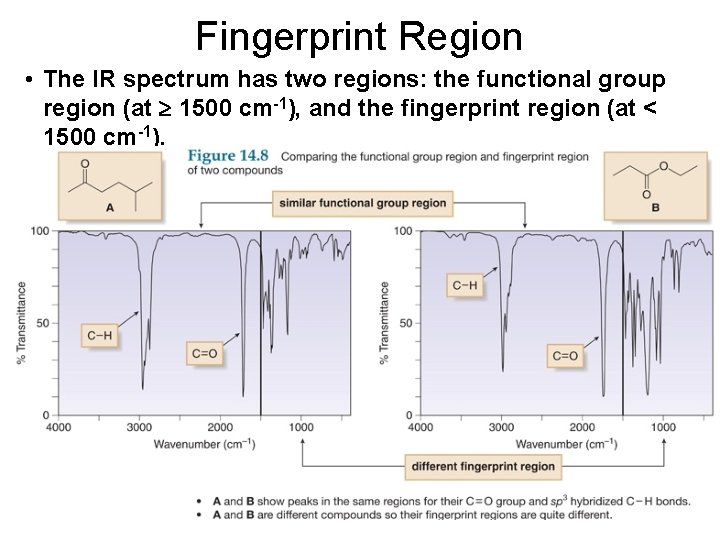
Fingerprint Region • The IR spectrum has two regions: the functional group region (at 1500 cm-1), and the fingerprint region (at < 1500 cm-1).
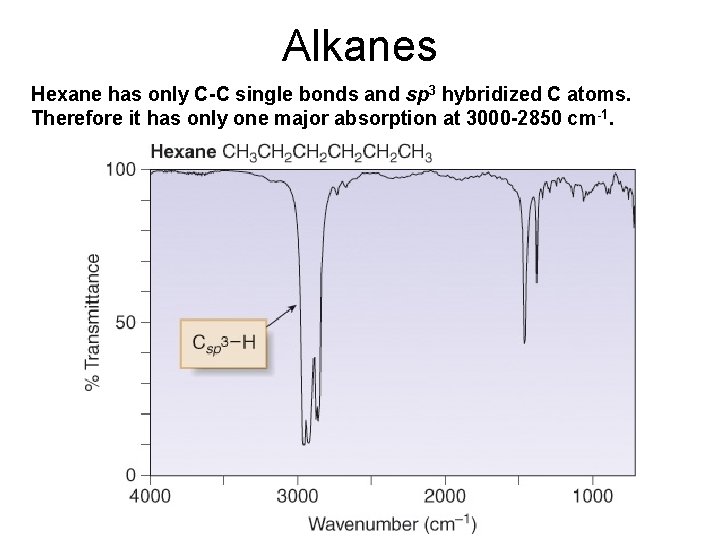
Alkanes Hexane has only C-C single bonds and sp 3 hybridized C atoms. Therefore it has only one major absorption at 3000 -2850 cm-1.
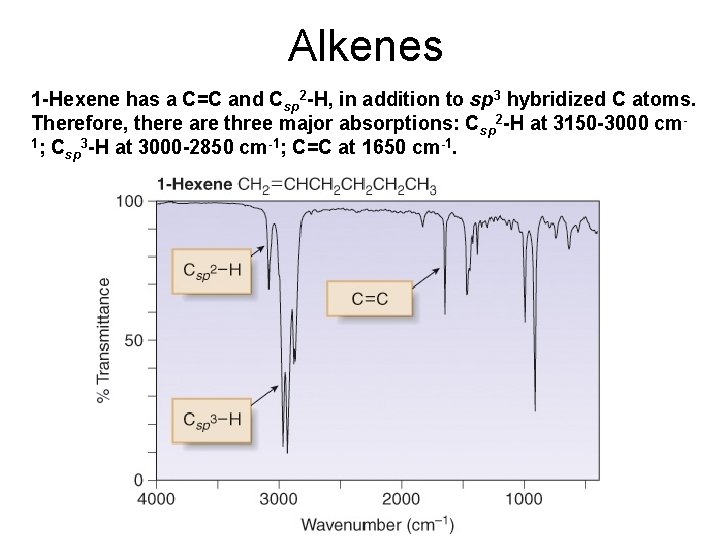
Alkenes 1 -Hexene has a C=C and Csp 2 -H, in addition to sp 3 hybridized C atoms. Therefore, there are three major absorptions: Csp 2 -H at 3150 -3000 cm 1; C 3 -H at 3000 -2850 cm-1; C=C at 1650 cm-1. sp
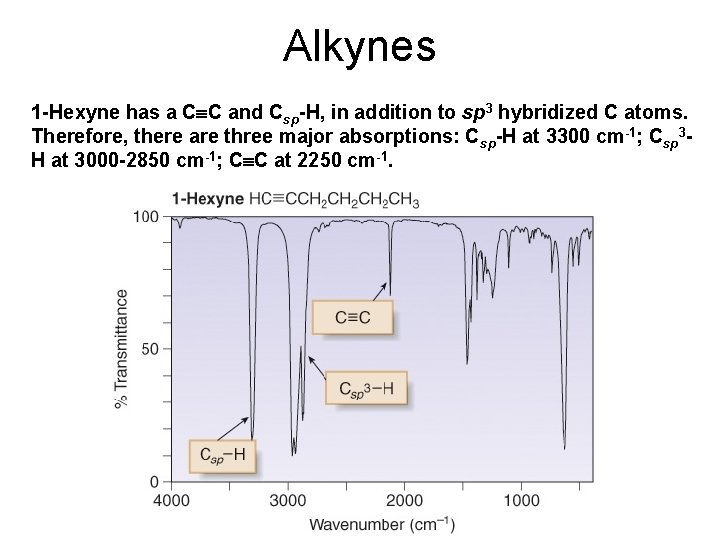
Alkynes 1 -Hexyne has a C C and Csp-H, in addition to sp 3 hybridized C atoms. Therefore, there are three major absorptions: Csp-H at 3300 cm-1; Csp 3 H at 3000 -2850 cm-1; C C at 2250 cm-1.
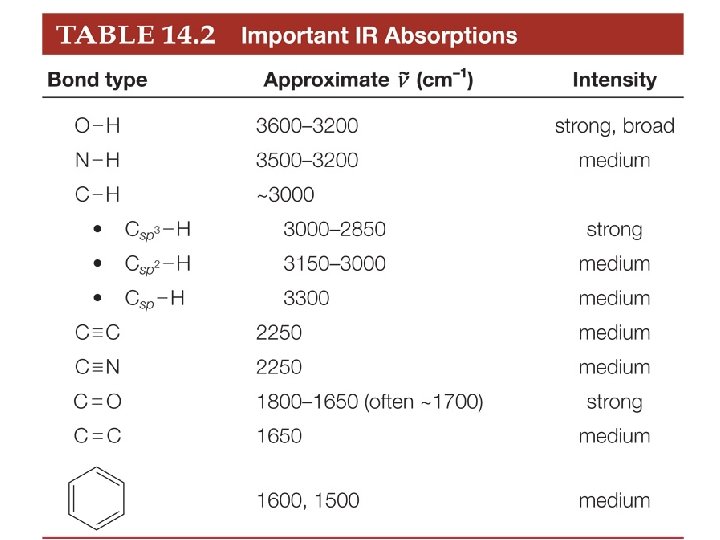
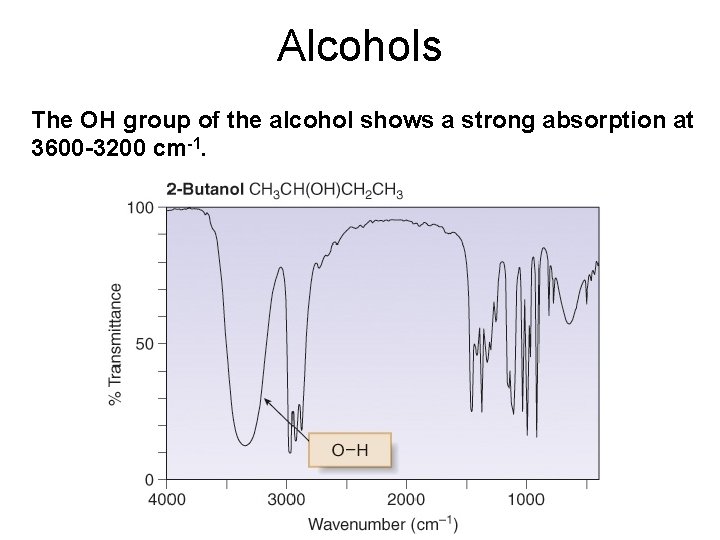
Alcohols The OH group of the alcohol shows a strong absorption at 3600 -3200 cm-1.
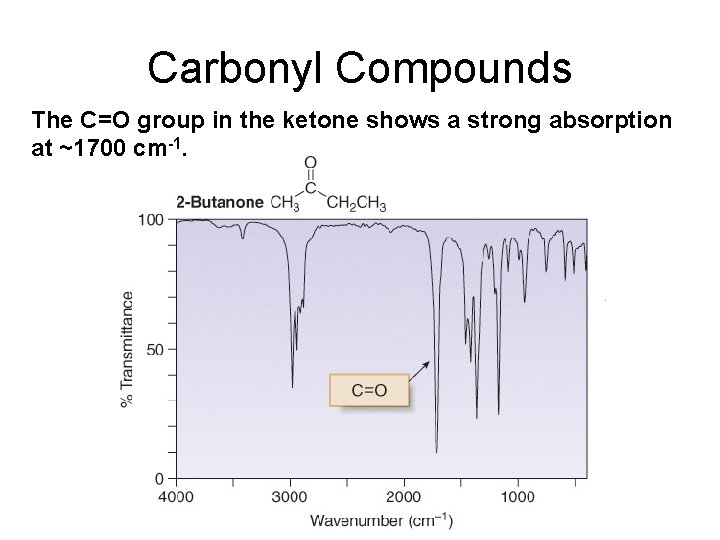
Carbonyl Compounds The C=O group in the ketone shows a strong absorption at ~1700 cm-1.