
The electromagnetic spectrum 7 6 Describe the main
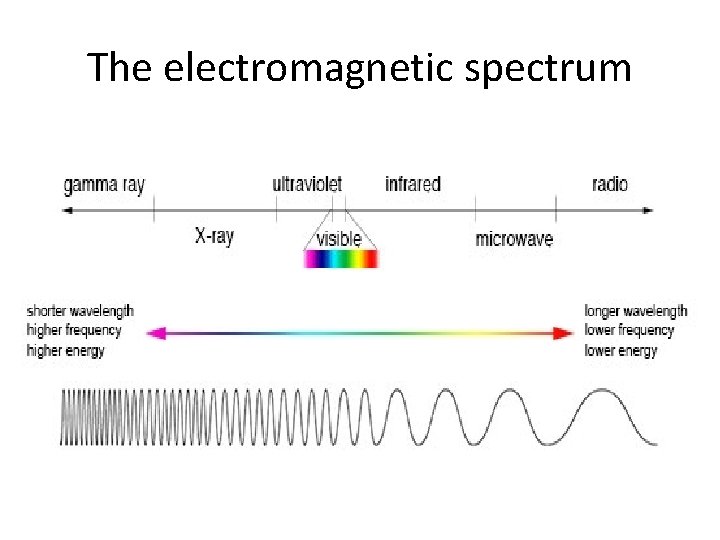
The electromagnetic spectrum
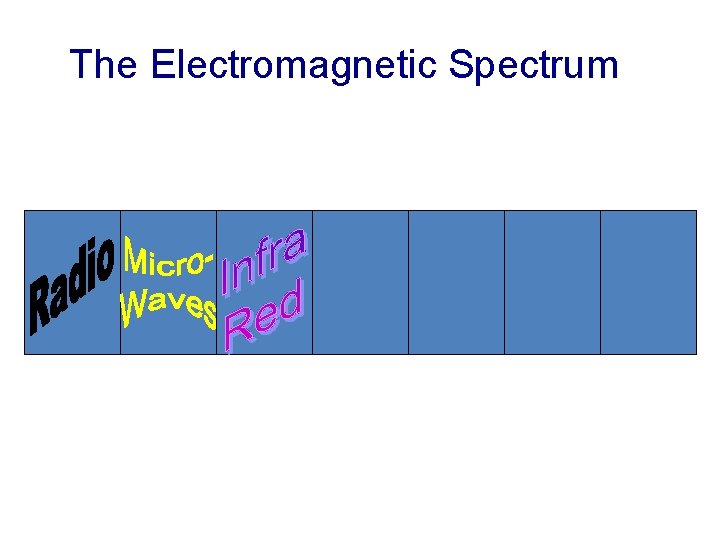
7. 6 Describe the main features of the electromagnetic spectrum. 7. 7 State that all electromagnetic waves travel with the same high velocity in a vacuum 7. 8 Describe typical properties and uses of radiations in all the different regions of the electromagnetic spectrum including: • radio and television communications (radio waves), • satellite television and telephones (microwaves), • electrical appliances, remote controllers for televisions and intruder alarms (infra-red), • medicine and security (X-rays).
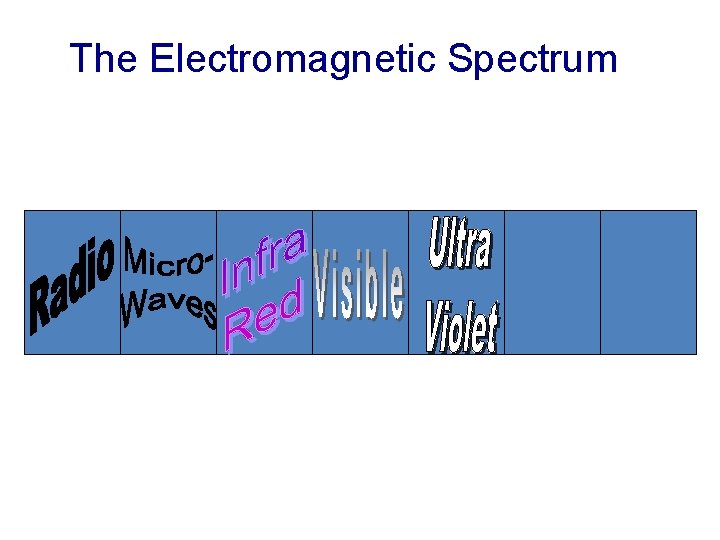
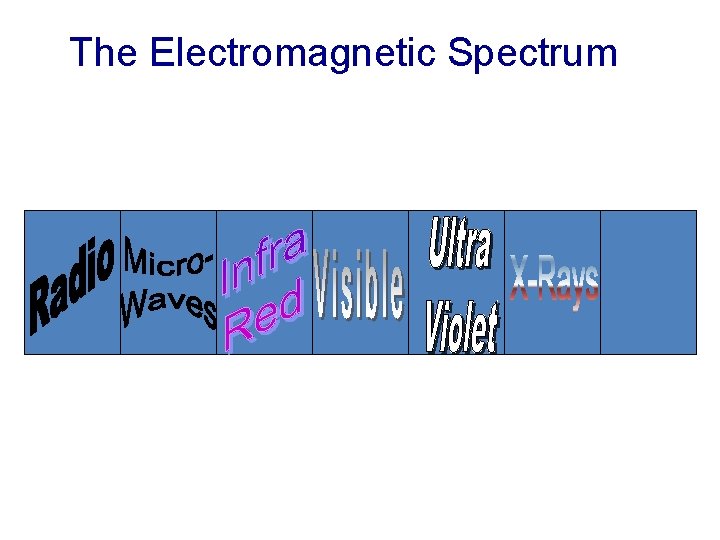
What is the electromagnetic spectrum? • We are all familiar with LIGHT • Light is part of the EM spectrum – it is an electromagnetic wave. • There are several different types of EM waves. • The EM spectrum is a way of classifying all the types of waves according to wavelength, frequency or energy.
What are Electromagnetic Waves? • Electromagnetic waves are just like any other wave, with one exception: • They are the only type of wave that can travel through a vacuum • They are transverse waves • They all travel at the same speed: 300, 000 m/s (3 x 10⁸ m/s)
Where do electromagnetic rays come from? • All electromagnetic waves are produced from various forms of oscillating charges or currents. • All of the waves are transverse waves which travel at the speed of light and involve oscillating electric and magnetic fields
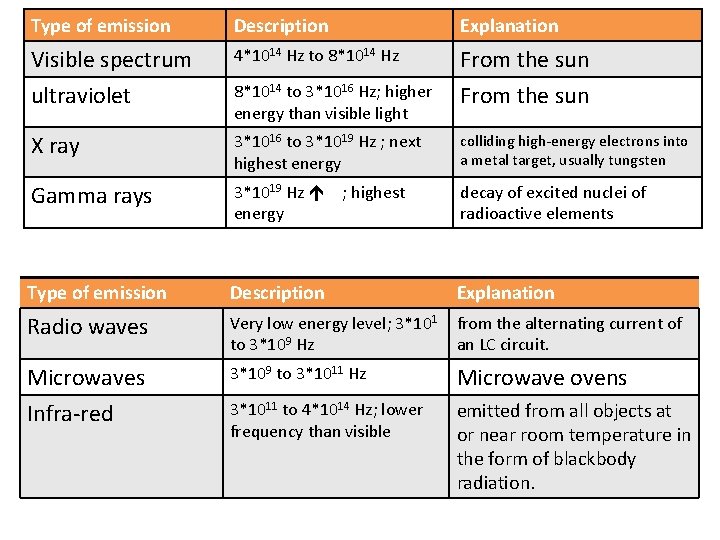
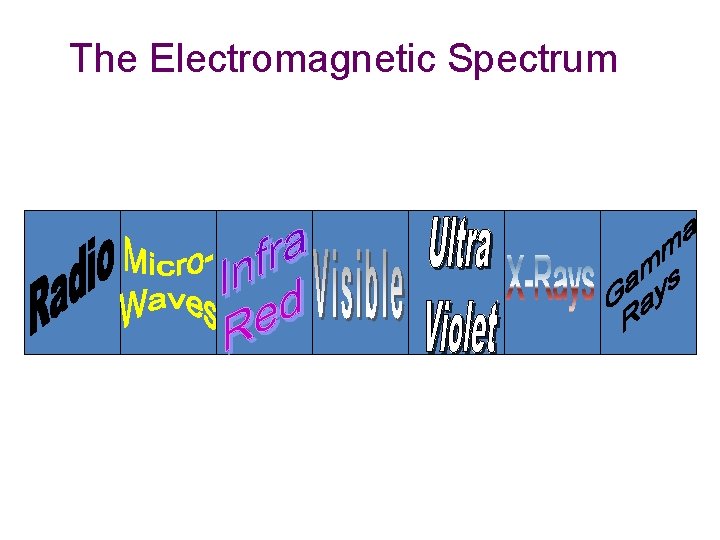
Type of emission Description Explanation Visible spectrum 4*1014 Hz to 8*1014 Hz From the sun ultraviolet 8*1014 to 3*1016 Hz; higher energy than visible light From the sun X ray 3*1016 to 3*1019 Hz ; next highest energy colliding high-energy electrons into a metal target, usually tungsten Gamma rays 3*1019 Hz energy decay of excited nuclei of radioactive elements Type of emission Description Explanation Radio waves Very low energy level; 3*101 to 3*109 Hz from the alternating current of an LC circuit. Microwaves Infra-red 3*109 to 3*1011 Hz Microwave ovens 3*1011 to 4*1014 Hz; lower frequency than visible emitted from all objects at or near room temperature in the form of blackbody radiation. ; highest
7. 8 Describe typical properties and uses of radiations in all the different regions of the electromagnetic spectrum including: • radio and television communications (radio waves), • satellite television and telephones (microwaves), • electrical appliances, remote controllers for televisions and intruder alarms (infra-red), • medicine and security (X-rays)

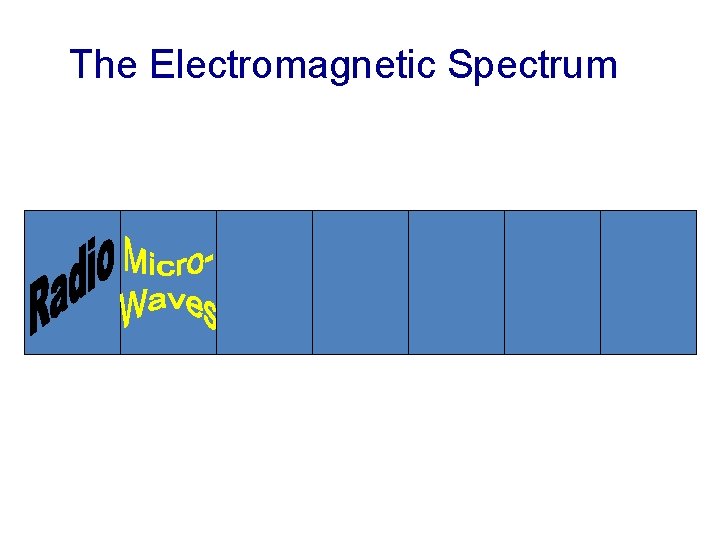
Radio Waves • Created by oscillations (vibrations) of electrons in a conductor. • Very long wavelength (few km to few cm) – low frequency – so low energy waves. • Used to transmit radio and TV signals. • Travel in straight lines, but can be bounced off the upper atmosphere, so can travel around the world.
The Electromagnetic Spectrum
MICROWAVES • formed from oscillating electrons within a magnetic field • wavelength from cm to 0. 1 mm • used for cooking food • microwaves make water molecules vibrate, which causes food to get very hot very quickly. • penetrate only a few cm, the heat is then carried inside by conduction
MICROWAVES • Microwaves are also used for communication. • Mobile telephones use microwaves. • They are also used to communicate with satellites as they can pass through the upper atmosphere • They also do not spread out much, so they are easy to use with a dish.
The Electromagnetic Spectrum
INFRA-RED • Formed from heat, emitted by anything hot/warm. • Wavelength from mm to 1 x 10 -6 m. • Most familiar use is for cooking and heating, like electric grills and heaters. • Infra red waves are easily absorbed at the surface of things, making them hot, then heat is carried inside by conduction.
INFRA-RED • All matter emits infra-red rays • This allows night-vision cameras to sense IR instead of visible light • They are also used for thermal-imaging cameras, to find people buried in earthquakes. • They are also used for remote controls
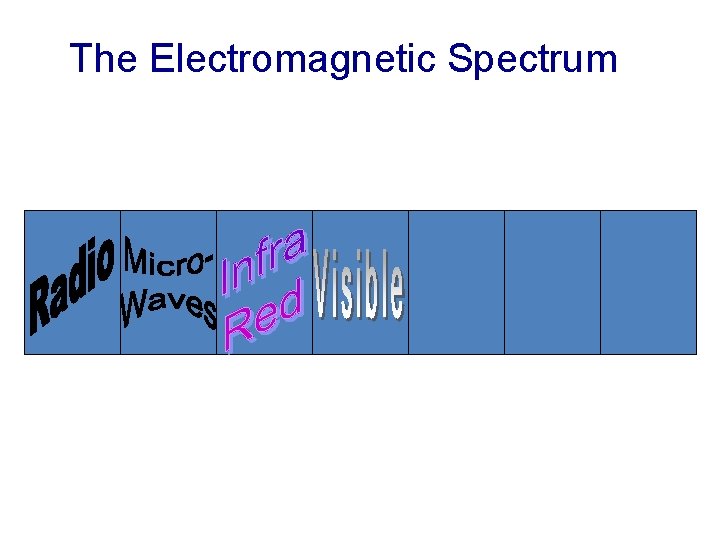
The Electromagnetic Spectrum
VISIBLE LIGHT • Formed from very hot objects or the synchronisation of waves within a crystal i. e. lasers • This is the EM wave we are most familiar with. • Different colours have different wavelengths, from red (longest) to violet (shortest).
The full spectrum is: THE VISIBLE SPECTRUM Ø RED Ø ORANGE Ø YELLOW Ø GREEN Ø BLUE Ø INDIGO Ø VIOLET These can be remembered using: Richard Of York Gave Battle In Vain! ROYGBIV
The Electromagnetic Spectrum
ULTRA VIOLET • Formed from extremely hot objects (like the sun or sparks) or exciting Hg vapour in fluorescent tubes • Shorter wavelength – 1 x 10 -6 m to 1 x 10 -9 m, frequency higher. • Carry more energy, and can penetrate top layers of skin, damaging the lower layers • This can cause sun burn, and possibly skin cancer of a long period of time. • The eyes are very sensitive to UV, so sunglasses should always be worn in bright sunshine. • Most UV radiation from the sun is filtered by the ozone layer.
Ultra Violet • UV rays can be used to sterilise things, as bacteria can be killed by UV. • UV is also used for anti-counterfeit purposes in bank notes. • UV tubes are used in entertainment venues – they make white clothes glow
The Electromagnetic Spectrum
X-RAYS • Discovered accidentally by Wilheim Röntgen in 1895 • Formed from high speed electrons being fired at a metal target. • Very short wavelength (0. 00000001 m to 0. 0000001 m) – so a very high frequency. • Very energetic – can pass through your body. • Produced by firing electrons at a metal target
X-Rays • Their ability to pass through soft tissue, but not bone, makes them very useful in medicine. • They are completely stopped by metals, making them useful for security scanning at airports.
X-Rays • Because they carry a lot of energy they can easily damage or kill cells. • This can lead to cancer if over-exposure occurs. • Very small amounts are used in hospitals and are relatively safe, however the operator will stand behind a lead screen to stop unnecessary exposure • X-rays are also used to treat cancer by killing cancerous cells.
The Electromagnetic Spectrum
GAMMA RAYS • Extremely short wavelength (0. 000001 to 0. 00000001 m) • Extremely high frequency, so carry a large amount of energy. • Gamma rays arise from the radioactive decay of nuclei of unstable atoms.
GAMMA RAYS • Very harmful to living things – they can easily kill or damage cells leading to cancer. • They are used to sterilise hospital equipment as bacteria are killed instantly on exposure • They can also be used to kill bacteria in food. This is known as irradiation.
GAMMA RAYS • A very important application of gamma rays is the treatment of cancer. • More effective than X-rays because they carry more energy. • Careful focussing of gamma rays avoids damage to healthy cells.
- Slides: 28