
THE EIGHT STAGES OF GENOCIDE Dr Gregory Stanton


- Slides: 11
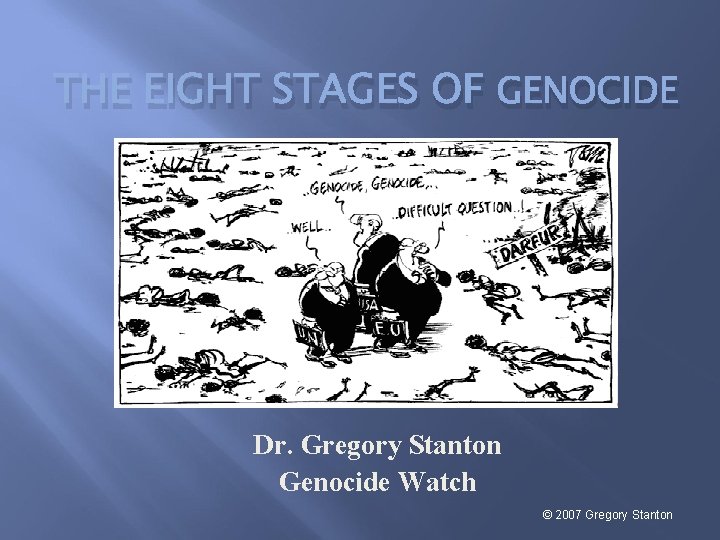
THE EIGHT STAGES OF GENOCIDE Dr. Gregory Stanton Genocide Watch © 2007 Gregory Stanton
The 8 Stages of Genocide Understanding the process of GENOCIDE is one of the most important steps in preventing it. The Eight Stages of Genocide were first outlined by Dr. Greg Stanton, Department of State: 1996. The first six stages are Early Warnings: Classification Symbolization Dehumanization Organization Polarization Preparation
Stage 1: Classification “Us versus them” – if you’re not with us, you’re against us Distinguish by nationality, ethnicity, race, or religion – and those not of the preferred group are deemed unwelcome, and a “threat”: Classification aims to (a) divide society and (b) create a power struggle between groups
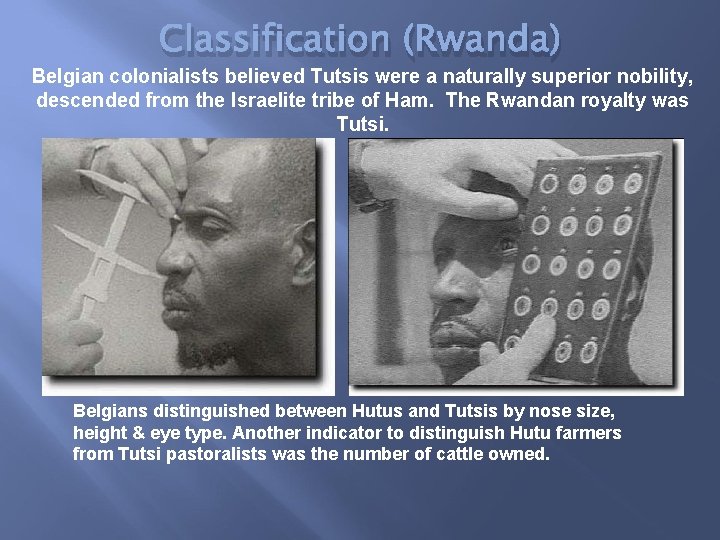
Classification (Rwanda) Belgian colonialists believed Tutsis were a naturally superior nobility, descended from the Israelite tribe of Ham. The Rwandan royalty was Tutsi. Belgians distinguished between Hutus and Tutsis by nose size, height & eye type. Another indicator to distinguish Hutu farmers from Tutsi pastoralists was the number of cattle owned.
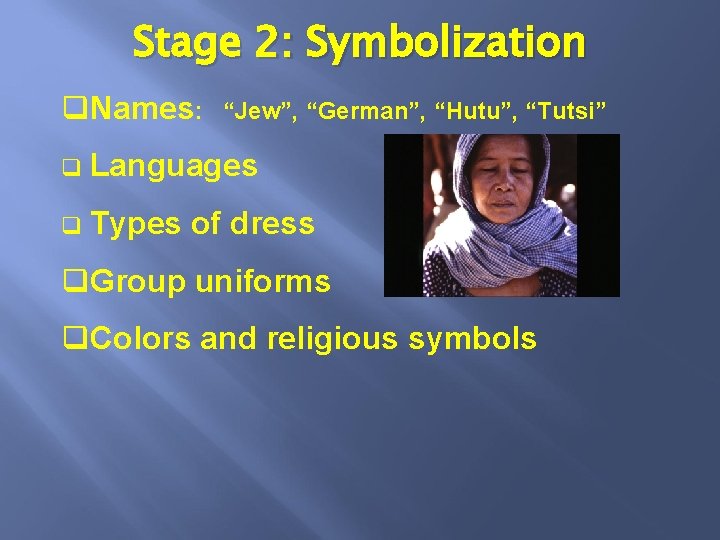
Stage 2: Symbolization q. Names: “Jew”, “German”, “Hutu”, “Tutsi” q Languages q Types of dress q. Group uniforms q. Colors and religious symbols
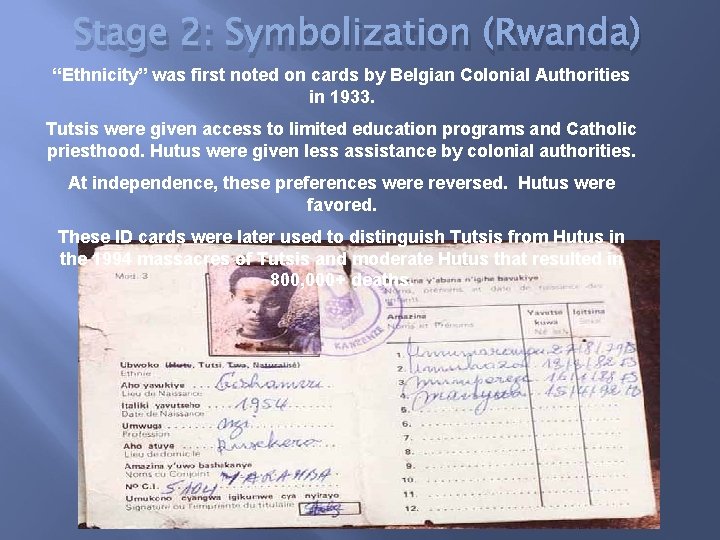
Stage 2: Symbolization (Rwanda) “Ethnicity” was first noted on cards by Belgian Colonial Authorities in 1933. Tutsis were given access to limited education programs and Catholic priesthood. Hutus were given less assistance by colonial authorities. At independence, these preferences were reversed. Hutus were favored. These ID cards were later used to distinguish Tutsis from Hutus in the 1994 massacres of Tutsis and moderate Hutus that resulted in 800, 000+ deaths.
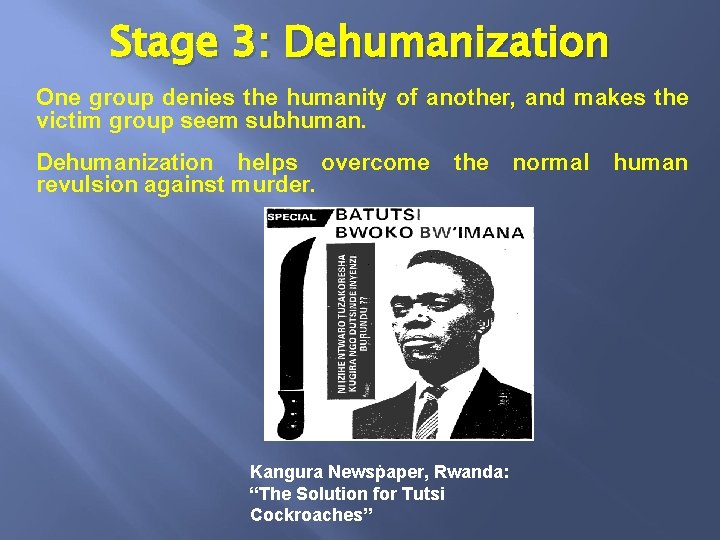
Stage 3: Dehumanization One group denies the humanity of another, and makes the victim group seem subhuman. Dehumanization helps overcome revulsion against murder. the . Kangura Newspaper, Rwanda: “The Solution for Tutsi Cockroaches” normal human
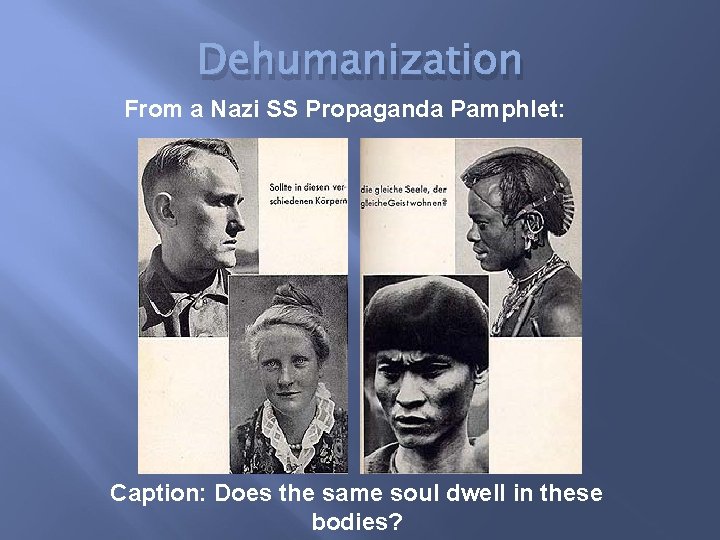
Dehumanization From a Nazi SS Propaganda Pamphlet: Caption: Does the same soul dwell in these bodies?
Dehumanization Hate propaganda in speeches, print, and on radio, vilify the victim group. – painting them as evil or expendable. Members of the victim group are described as animals, vermin, and diseases. Hate radio in Rwanda during the 1994 massacres urged Hutus to kill Tutsis by proclaiming “Kill the cockroaches”. Dehumanization invokes superiority of one group and inferiority of the “other. ” Murder is justified by calling it “ethnic cleansing, ” or “purification. ” Such euphemisms hide the horror of mass murder.
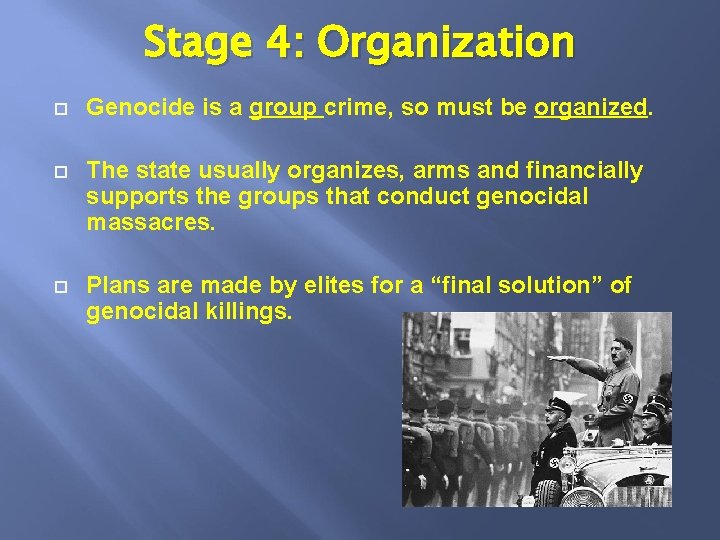
Stage 4: Organization Genocide is a group crime, so must be organized. The state usually organizes, arms and financially supports the groups that conduct genocidal massacres. Plans are made by elites for a “final solution” of genocidal killings.
Organization (Rwanda) n “Hutu Power” elites armed youth militias called Interahamwe, which meant “Those Who Stand Together” n Government and Hutu Power businessmen provided the militias with over 500, 000 machetes and other weapons n Also set up camps to train militias to “protect their villages” by exterminating every Tutsi.