
The Efficacy of Pharmaceutical Approaches to Weight Loss
- Slides: 16
The Efficacy of Pharmaceutical Approaches to Weight Loss • Joseph Martinez, RPh, PDE, PPC – former New Jersey State Medicaid Pharmacy Director – Medicaid 2004: • 900, 000 beneficiary lives covered • Annual drug spend of $1. 4 billion
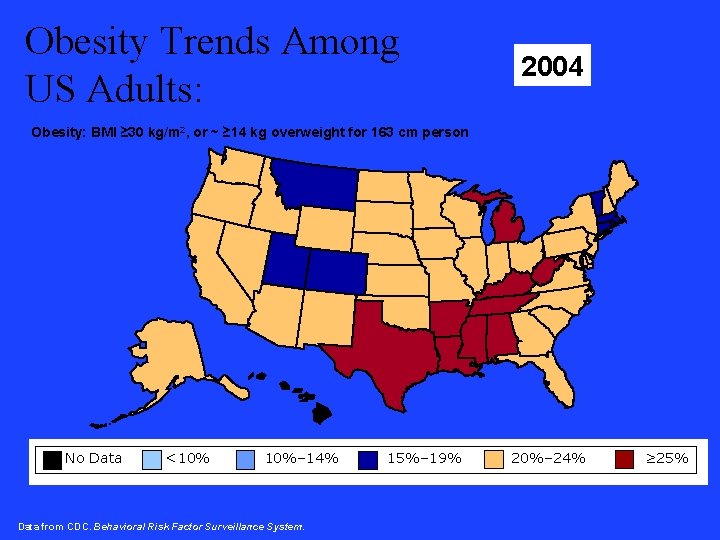
Obesity Trends Among US Adults: 1998 2000 2002 2004 Obesity: BMI ≥ 30 kg/m 2, or ~ ≥ 14 kg overweight for 163 cm person No Data <10% 10%– 14% Data from CDC. Behavioral Risk Factor Surveillance System. 15%– 19% ≥ 20 20%– 24% ≥ 25%
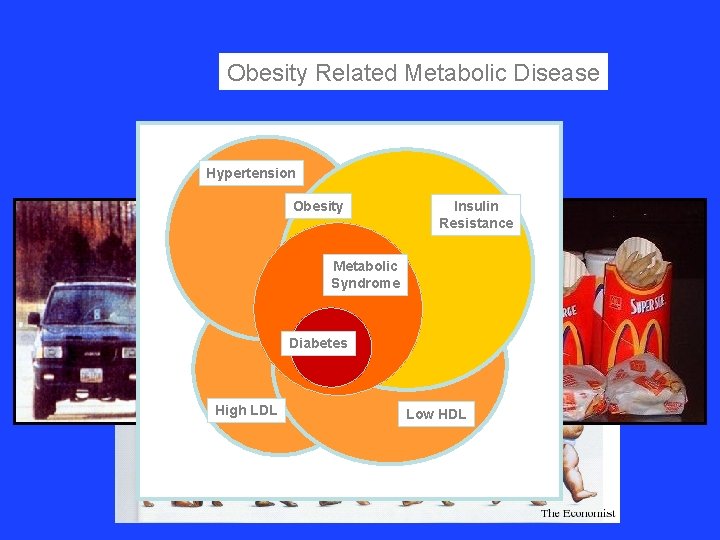
Obesity Related Metabolic Disease Hypertension Obesity Insulin Resistance Metabolic Syndrome Diabetes High LDL Low HDL
Health Risks of Obesity is associated with an increased risk of: • Morbidity – Hypertension – Dyslipidemia (high total cholesterol, high TG levels or low HDL – Coronary heart disease – Type 2 diabetes – Stroke – Cancer (endometrial, breast and colon) – Impairments in health-related quality of life and psychosocial well-being • Mortality NIH-NHLBI. Clinical Guidelines on the Identification, Evaluation, and Treatment of Overweight and Obesity in Adults. 1998.
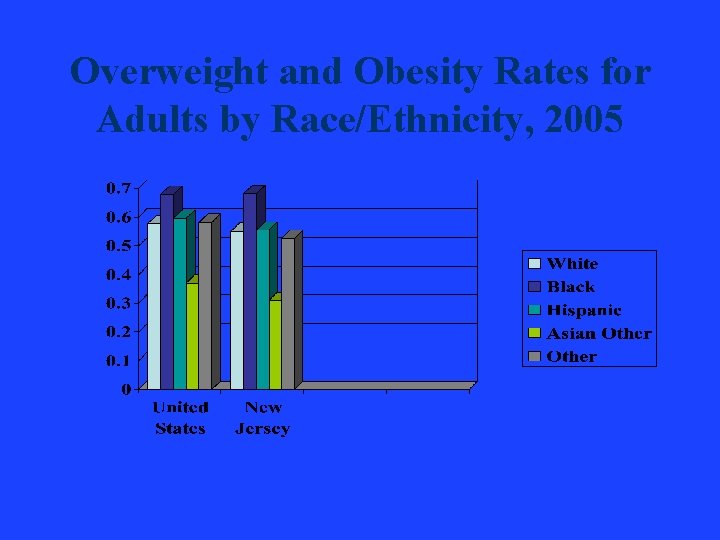
Overweight and Obesity Rates for Adults by Race/Ethnicity, 2005
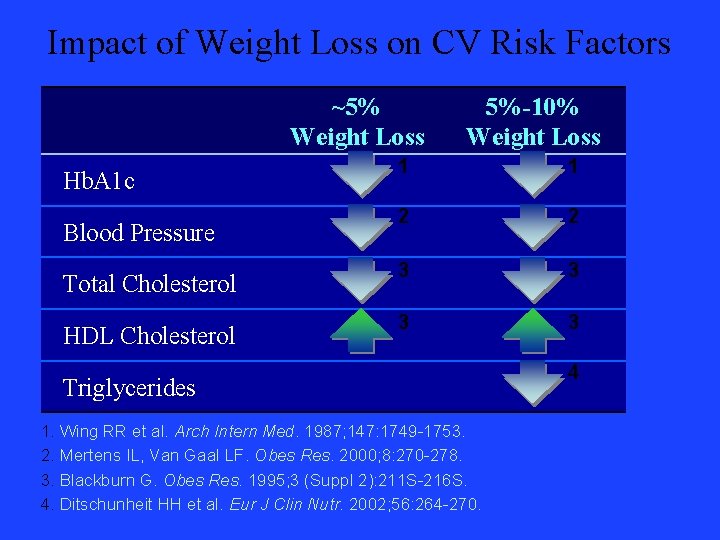
Impact of Weight Loss on CV Risk Factors ~5% Weight Loss Hb. A 1 c Blood Pressure Total Cholesterol HDL Cholesterol 5%-10% Weight Loss 1 1 2 2 3 3 Triglycerides 1. Wing RR et al. Arch Intern Med. 1987; 147: 1749 -1753. 2. Mertens IL, Van Gaal LF. Obes Res. 2000; 8: 270 -278. 3. Blackburn G. Obes Res. 1995; 3 (Suppl 2): 211 S-216 S. 4. Ditschunheit HH et al. Eur J Clin Nutr. 2002; 56: 264 -270. 4
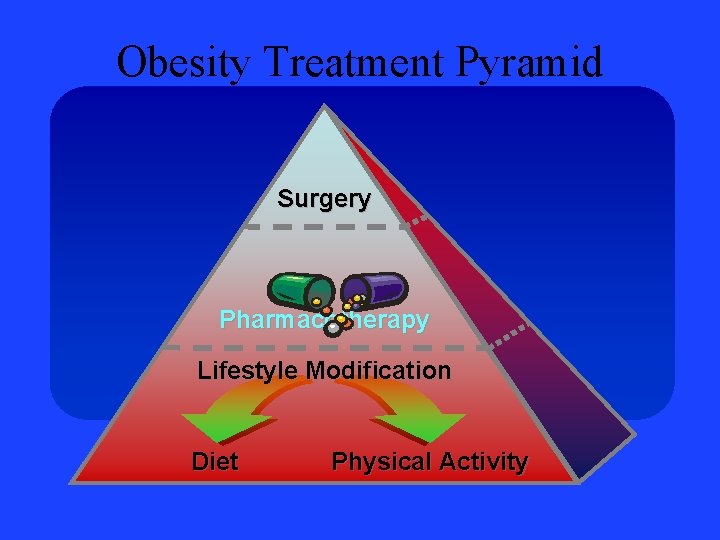
Obesity Treatment Pyramid Surgery Pharmacotherapy Lifestyle Modification Diet Physical Activity
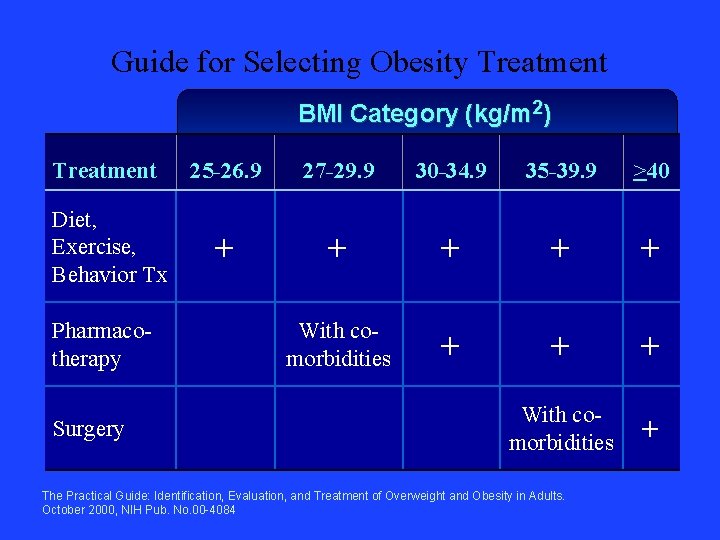
Guide for Selecting Obesity Treatment BMI Category (kg/m 2) Treatment 25 -26. 9 27 -29. 9 30 -34. 9 35 -39. 9 >40 Diet, Exercise, Behavior Tx + + + With comorbidities + Pharmacotherapy Surgery The Practical Guide: Identification, Evaluation, and Treatment of Overweight and Obesity in Adults. October 2000, NIH Pub. No. 00 -4084
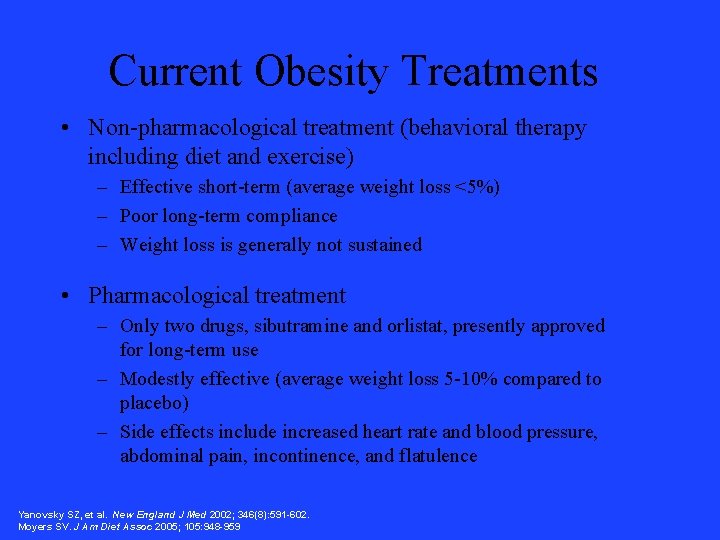
Current Obesity Treatments • Non-pharmacological treatment (behavioral therapy including diet and exercise) – Effective short-term (average weight loss <5%) – Poor long-term compliance – Weight loss is generally not sustained • Pharmacological treatment – Only two drugs, sibutramine and orlistat, presently approved for long-term use – Modestly effective (average weight loss 5 -10% compared to placebo) – Side effects include increased heart rate and blood pressure, abdominal pain, incontinence, and flatulence Yanovsky SZ, et al. New England J Med 2002; 346(8): 591 -602. Moyers SV. J Am Diet Assoc 2005; 105: 948 -959
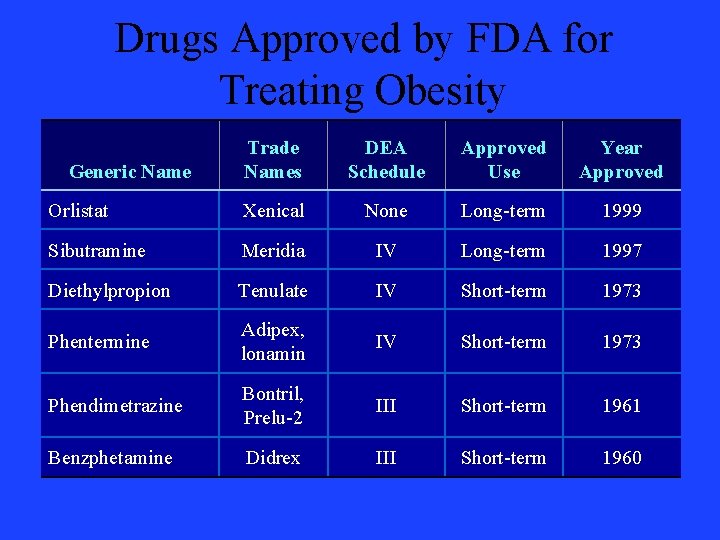
Drugs Approved by FDA for Treating Obesity Trade Names DEA Schedule Approved Use Year Approved Orlistat Xenical None Long-term 1999 Sibutramine Meridia IV Long-term 1997 Diethylpropion Tenulate IV Short-term 1973 Phentermine Adipex, lonamin IV Short-term 1973 Phendimetrazine Bontril, Prelu-2 III Short-term 1961 Benzphetamine Didrex III Short-term 1960 Generic Name
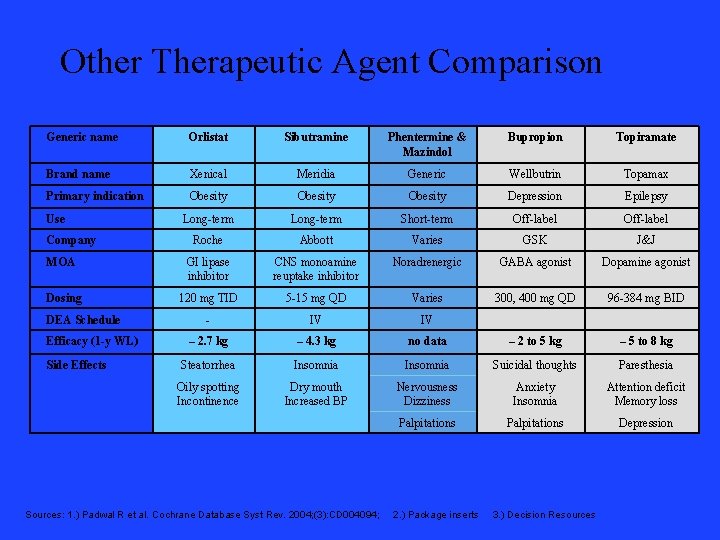
Other Therapeutic Agent Comparison Generic name Orlistat Sibutramine Phentermine & Mazindol Bupropion Topiramate Brand name Xenical Meridia Generic Wellbutrin Topamax Primary indication Obesity Depression Epilepsy Long-term Short-term Off-label Roche Abbott Varies GSK J&J MOA GI lipase inhibitor CNS monoamine reuptake inhibitor Noradrenergic GABA agonist Dopamine agonist Dosing 120 mg TID 5 -15 mg QD Varies 300, 400 mg QD 96 -384 mg BID - IV IV – 2. 7 kg – 4. 3 kg no data – 2 to 5 kg – 5 to 8 kg Steatorrhea Insomnia Suicidal thoughts Paresthesia Oily spotting Incontinence Dry mouth Increased BP Nervousness Dizziness Anxiety Insomnia Attention deficit Memory loss Palpitations Depression Use Company DEA Schedule Efficacy (1 -y WL) Side Effects Sources: 1. ) Padwal R et al. Cochrane Database Syst Rev. 2004; (3): CD 004094; 2. ) Package inserts 3. ) Decision Resources
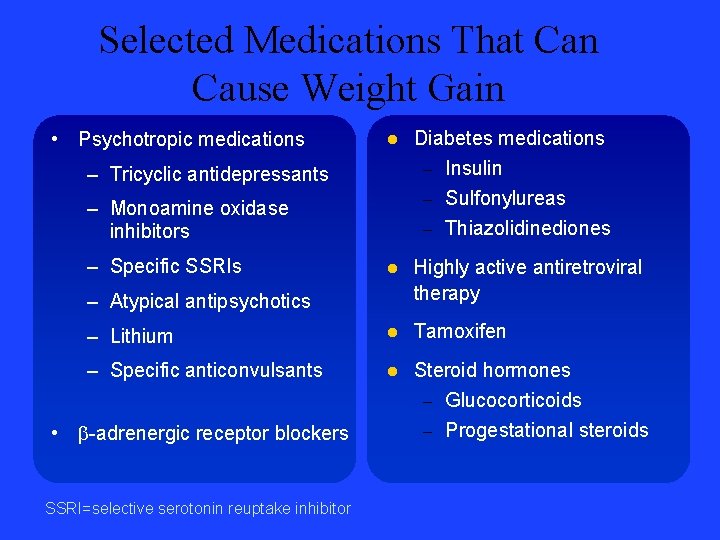
Selected Medications That Can Cause Weight Gain l Diabetes medications – Insulin – Sulfonylureas – Thiazolidinediones l Highly active antiretroviral therapy – Lithium l Tamoxifen – Specific anticonvulsants l Steroid hormones – Glucocorticoids – Progestational steroids • Psychotropic medications – Tricyclic antidepressants – Monoamine oxidase inhibitors – Specific SSRIs – Atypical antipsychotics • -adrenergic receptor blockers SSRI=selective serotonin reuptake inhibitor
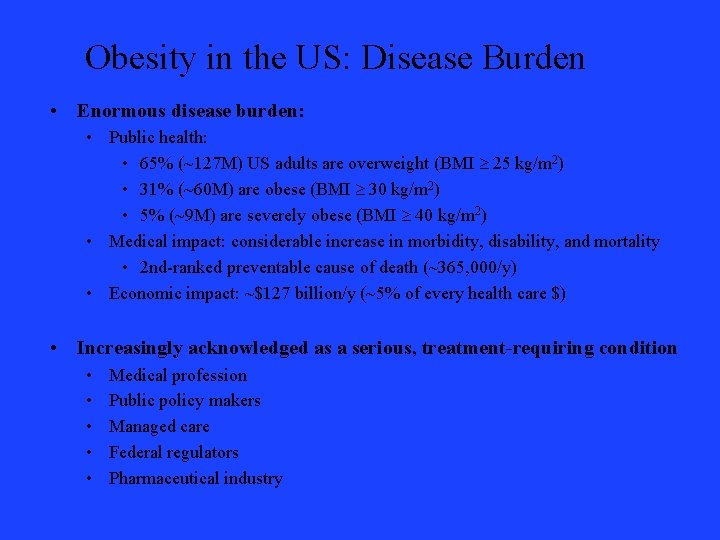
Obesity in the US: Disease Burden • Enormous disease burden: • Public health: • 65% (~127 M) US adults are overweight (BMI 25 kg/m 2) • 31% (~60 M) are obese (BMI 30 kg/m 2) • 5% (~9 M) are severely obese (BMI 40 kg/m 2) • Medical impact: considerable increase in morbidity, disability, and mortality • 2 nd-ranked preventable cause of death (~365, 000/y) • Economic impact: ~$127 billion/y (~5% of every health care $) • Increasingly acknowledged as a serious, treatment-requiring condition • • • Medical profession Public policy makers Managed care Federal regulators Pharmaceutical industry
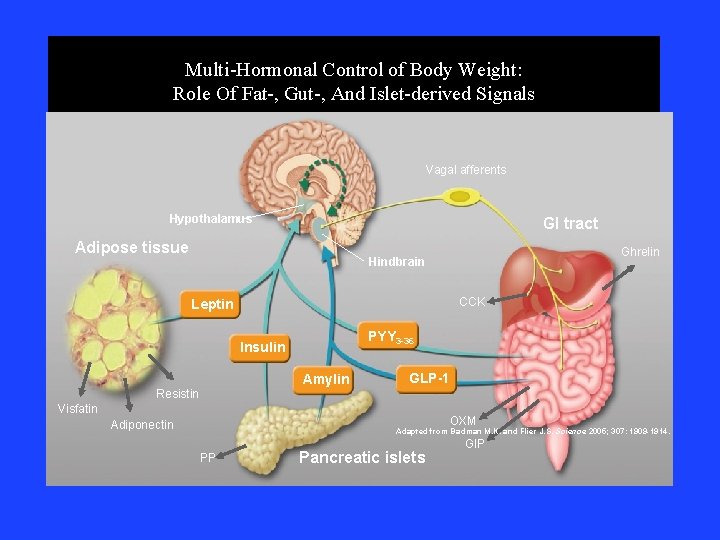
Multi-Hormonal Control of Body Weight: Role Of Fat-, Gut-, And Islet-derived Signals Vagal afferents Hypothalamus GI tract Adipose tissue Ghrelin Hindbrain CCK Leptin PYY 3 -36 Insulin Amylin Resistin GLP-1 Visfatin OXM Adiponectin Adapted from Badman M. K. and Flier J. S. Science 2005; 307: 1909 -1914. PP Pancreatic islets Amylin GIP
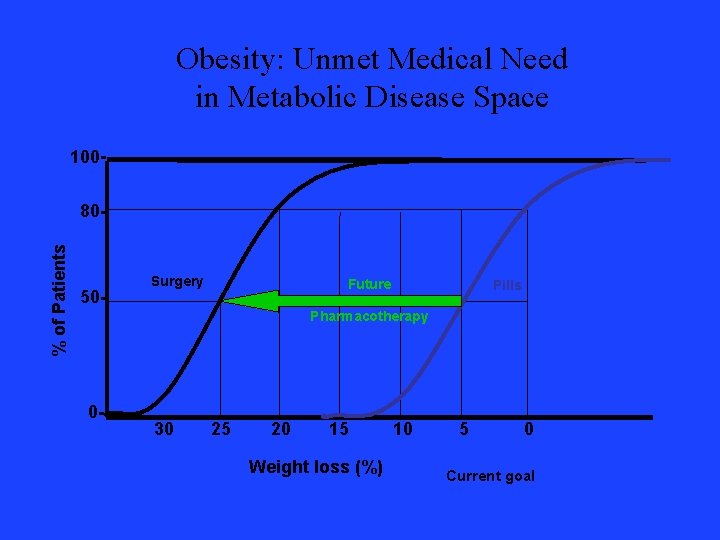
Obesity: Unmet Medical Need in Metabolic Disease Space 100 - % of Patients 80 - 50 - Surgery Future Pills Pharmacotherapy 0 - 30 25 20 15 Weight loss (%) 10 5 0 Current goal
Obesity Treatment Guidelines The Practical Guide can be found at: NHLBI web site: www. nhlbi. nih. gov NAASO web site: www. naaso. org