
The Effects of Color on Gendered Perceptions of
- Slides: 26
The Effects of Color on Gendered Perceptions of a Product
Statement of the Problem The purpose of our study is to see if differences in color will have an effect on purchase likelihood, attractiveness ratings of a product, as well as other evaluating factors. We assessed both males and females to try and find a gender difference in ratings scores We want to tackle the idea that males will also choose the color pink given correct circumstances, based on prior research, and to challenge social norms
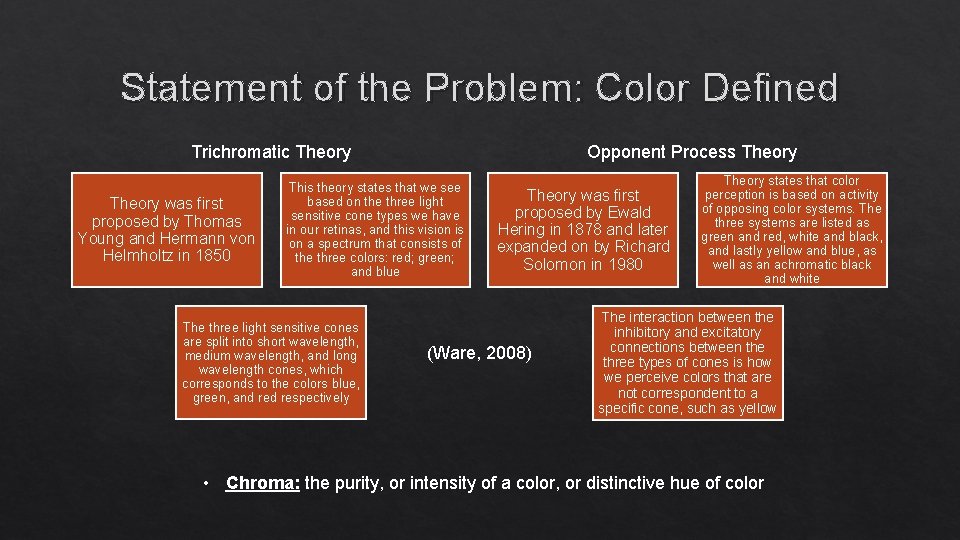
Statement of the Problem: Color Defined Trichromatic Theory was first proposed by Thomas Young and Hermann von Helmholtz in 1850 Opponent Process Theory This theory states that we see based on the three light sensitive cone types we have in our retinas, and this vision is on a spectrum that consists of the three colors: red; green; and blue The three light sensitive cones are split into short wavelength, medium wavelength, and long wavelength cones, which corresponds to the colors blue, green, and respectively Theory was first proposed by Ewald Hering in 1878 and later expanded on by Richard Solomon in 1980 (Ware, 2008) Theory states that color perception is based on activity of opposing color systems. The three systems are listed as green and red, white and black, and lastly yellow and blue, as well as an achromatic black and white The interaction between the inhibitory and excitatory connections between the three types of cones is how we perceive colors that are not correspondent to a specific cone, such as yellow • Chroma: the purity, or intensity of a color, or distinctive hue of color
Background Research #1 In research done by Silver, Mc. Culley, and Chambliss in 1988, they gathered a group of 582 undergraduate college students to conduct a survey. In the survey they asked questions about participants favorite color in order to see if there was a difference in color preference by gender or by race. Blue was most often chosen as favorite color by both sexes. This was valuable in our development of the research design, and subsequent hypotheses, because we wanted to test whether or not sex had a role in color preference.
Background Research #2 A study on the brightness of colors looked into participants evaluation of different colors. Participants were prompted with various pictures and were asked to rate attractiveness of stimulus models. It was found that males reported preference for brighter vivid colors and females preferred soft colors. (Radeloff, 1990) This pertained to us because we wanted to manipulate a graphic in a manner that preference was determinant on only color type. Given that there was an inherent preference for bright and soft colors across sexes, we chose to have three stimuli that incorporate a bright, neutral, and soft color ( Pink, White, Blue respectively).
Background Research #3 Research conducted by Mehta and Zhu in 2009 was done in order to gain more knowledge on how color choice affects emotion and dictates decision making performance. In order to reduce confounds they manipulated only hue. They included white as a neutral stimulus to ensure a nonconflicting stimuli was used. They found that the color red will induce primarily an avoidance motivation, whereas blue will activate an approach motivation We used this to generate hypothesis that people will shy away from our hue (pink) which closely resembles red. We also modeled our color choice of white for our neutral stimulus after this study
Back ground research #4 In a study by Madden, Hewett and Roth in 2000, it was found that color ranks among the top three considerations, along with price and quality, in the purchase of an automobile. They found that particular colors elicit certain values that buyers look for. This gave us rationale to test our dependent measure of durability with both products but especially the car. Quality and color associations were also inferred from the research.
Background research # 5 It was found that bright colors may be valued from an aesthetic point of view but may diminish the impression of quality (i. e. , functional value). Aesthetic responses are primarily emotional or feeling responses, and as such they are very personal (Creusen & Schoormans, 2004) This research assisted us in deciding how our products may be valued based on appearance. Bright colors (in our case pink) was hypothesized to be valued less in both value and durability.
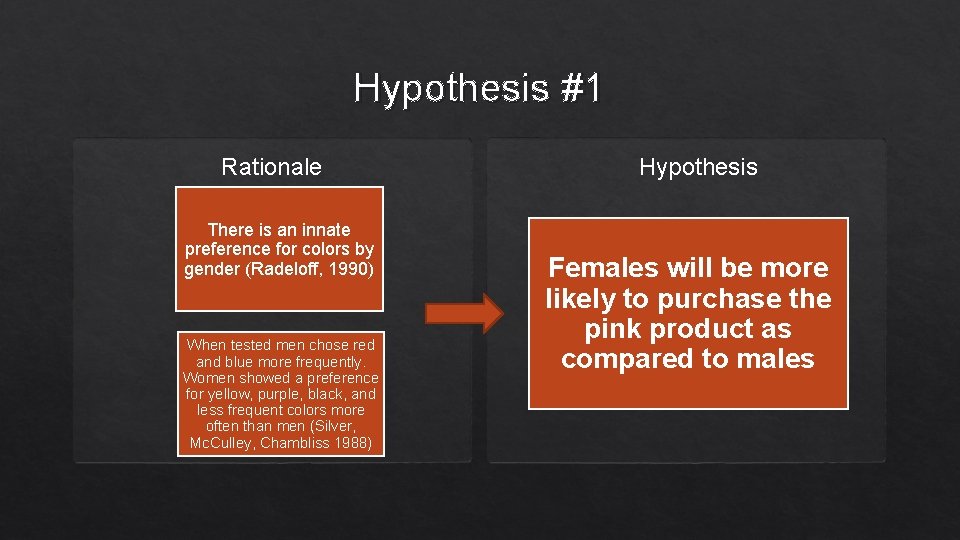
Hypothesis #1 Rationale There is an innate preference for colors by gender (Radeloff, 1990) When tested men chose red and blue more frequently. Women showed a preference for yellow, purple, black, and less frequent colors more often than men (Silver, Mc. Culley, Chambliss 1988) Hypothesis Females will be more likely to purchase the pink product as compared to males
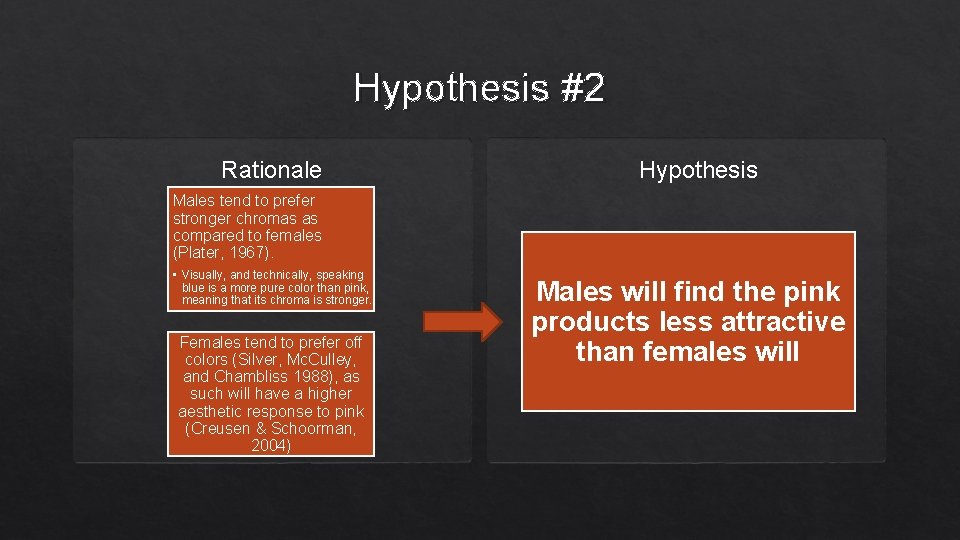
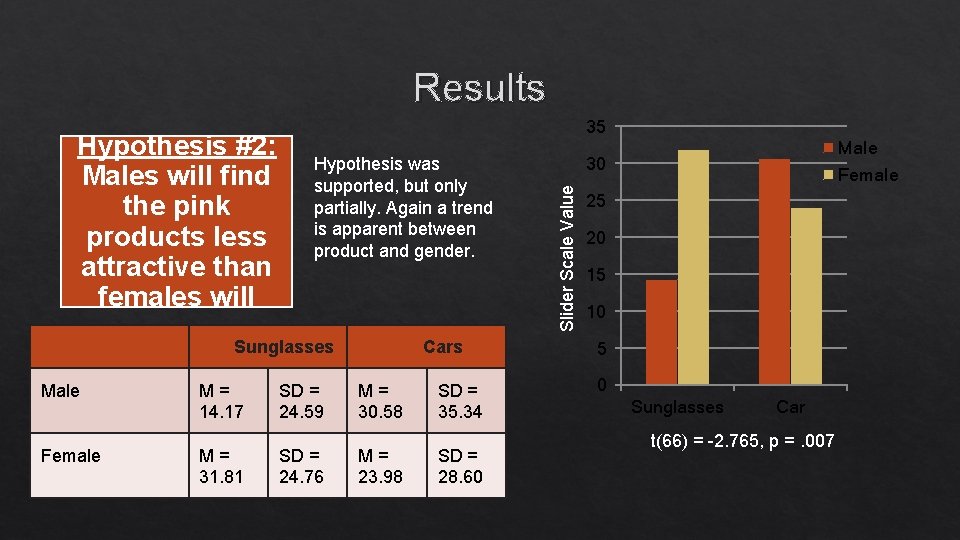
Hypothesis #2 Rationale Hypothesis Males tend to prefer stronger chromas as compared to females (Plater, 1967). • Visually, and technically, speaking blue is a more pure color than pink, meaning that its chroma is stronger. Females tend to prefer off colors (Silver, Mc. Culley, and Chambliss 1988), as such will have a higher aesthetic response to pink (Creusen & Schoorman, 2004) Males will find the pink products less attractive than females will
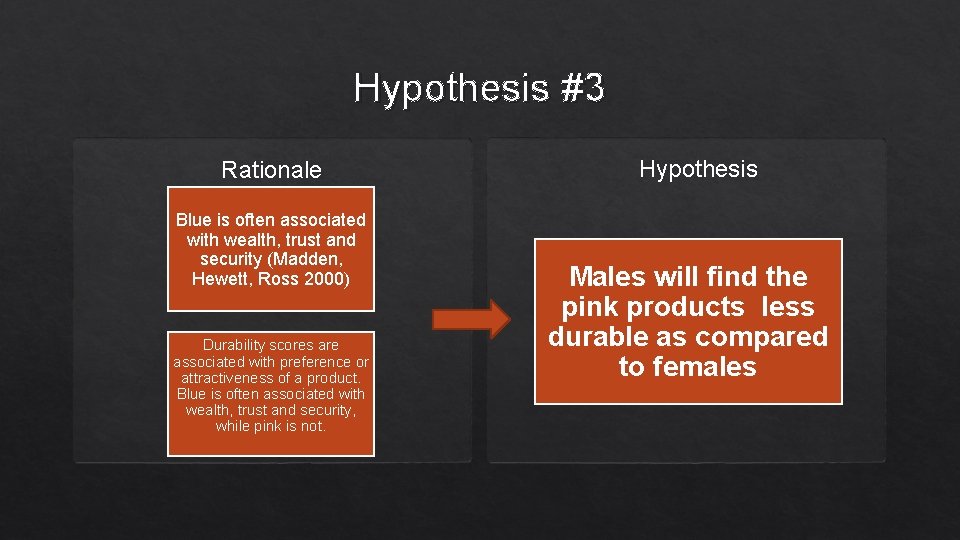
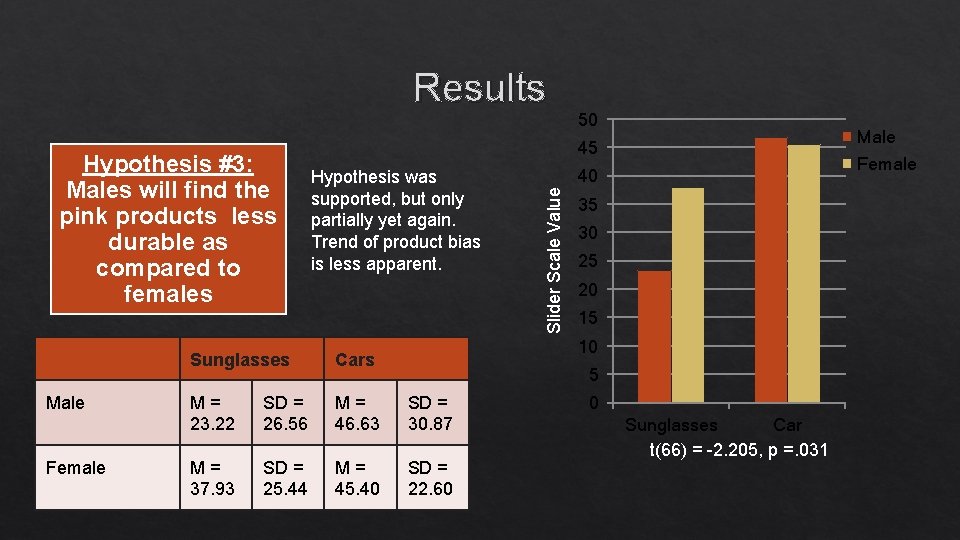
Hypothesis #3 Rationale Blue is often associated with wealth, trust and security (Madden, Hewett, Ross 2000) Durability scores are associated with preference or attractiveness of a product. Blue is often associated with wealth, trust and security, while pink is not. Hypothesis Males will find the pink products less durable as compared to females
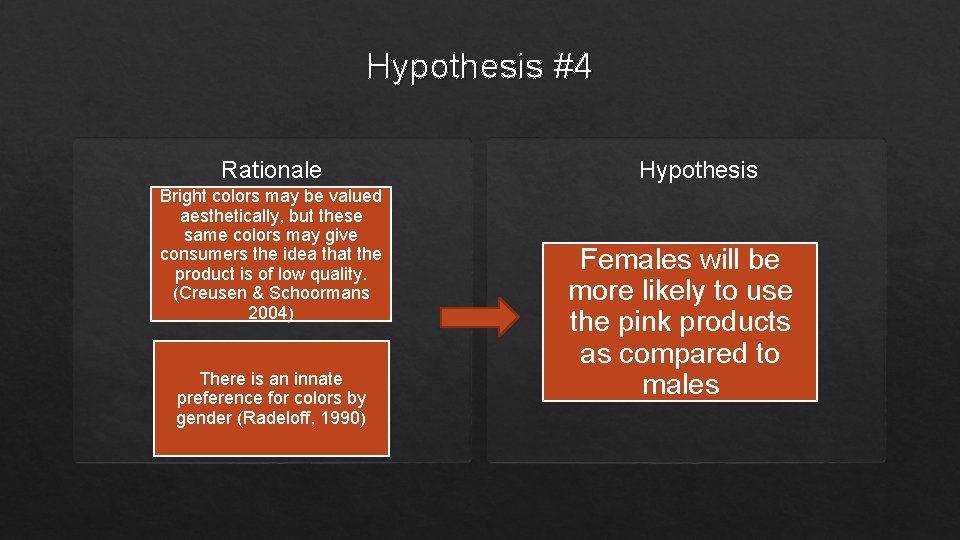
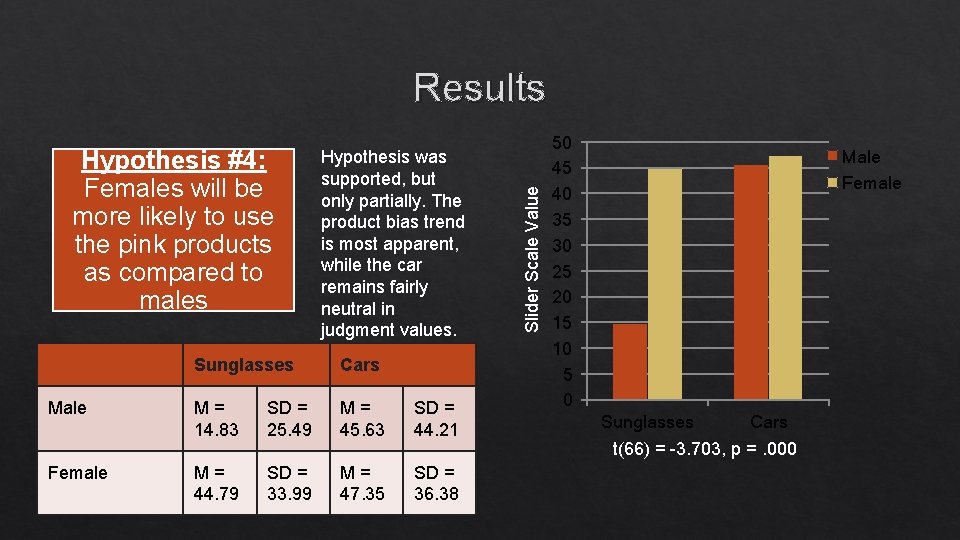
Hypothesis #4 Rationale Bright colors may be valued aesthetically, but these same colors may give consumers the idea that the product is of low quality. (Creusen & Schoormans 2004) There is an innate preference for colors by gender (Radeloff, 1990) Hypothesis Females will be more likely to use the pink products as compared to males
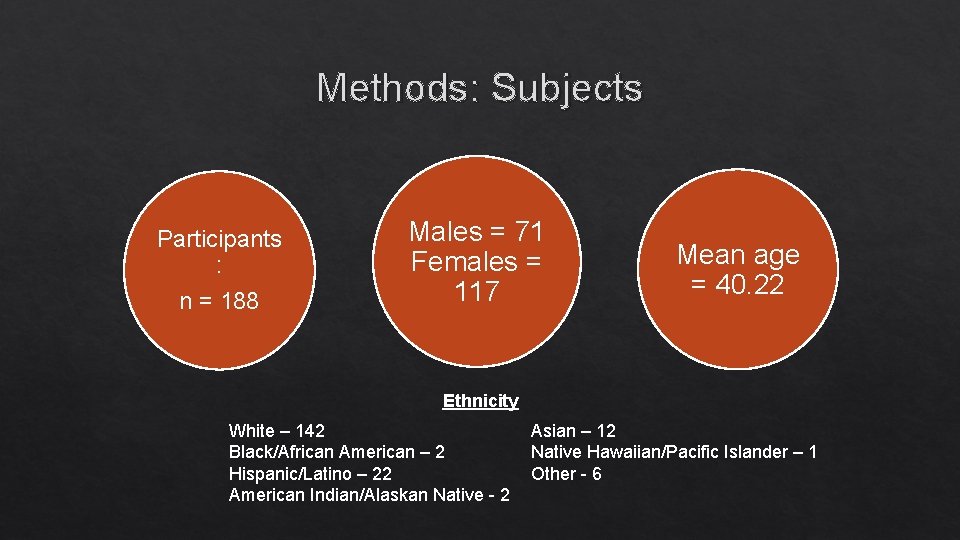
Methods: Subjects Participants : n = 188 Males = 71 Females = 117 Mean age = 40. 22 Ethnicity White – 142 Black/African American – 2 Hispanic/Latino – 22 American Indian/Alaskan Native - 2 Asian – 12 Native Hawaiian/Pacific Islander – 1 Other - 6
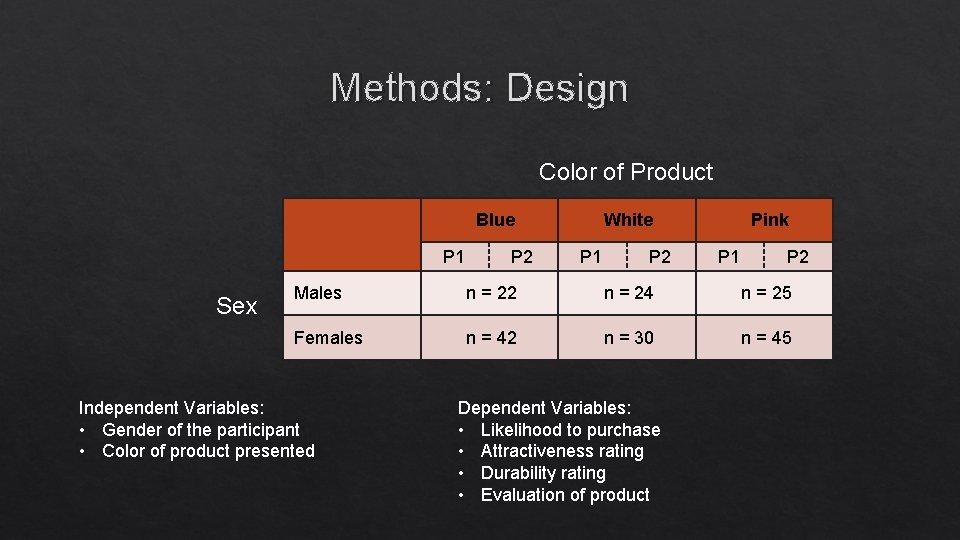
Methods: Design Color of Product Blue P 1 Sex P 2 White P 1 P 2 Pink P 1 P 2 Males n = 22 n = 24 n = 25 Females n = 42 n = 30 n = 45 Independent Variables: • Gender of the participant • Color of product presented Dependent Variables: • Likelihood to purchase • Attractiveness rating • Durability rating • Evaluation of product
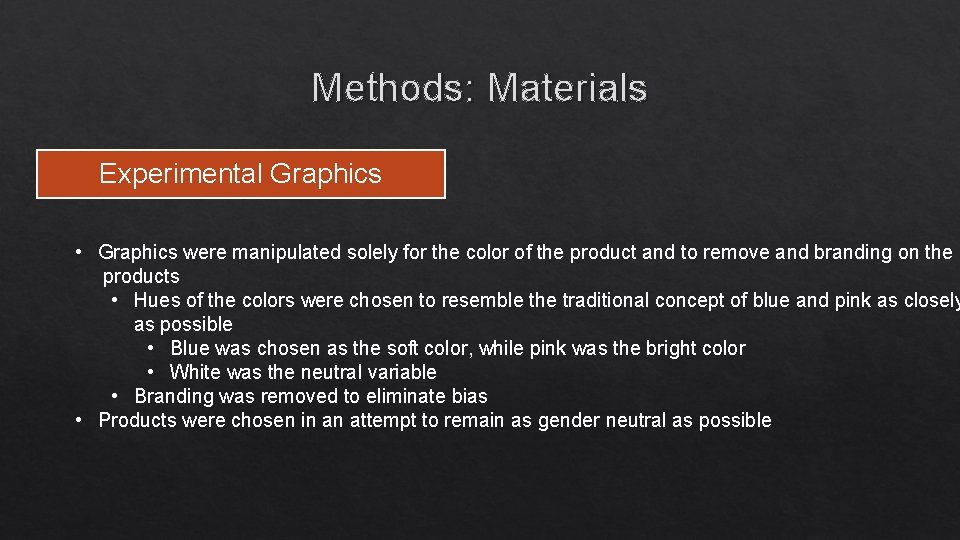
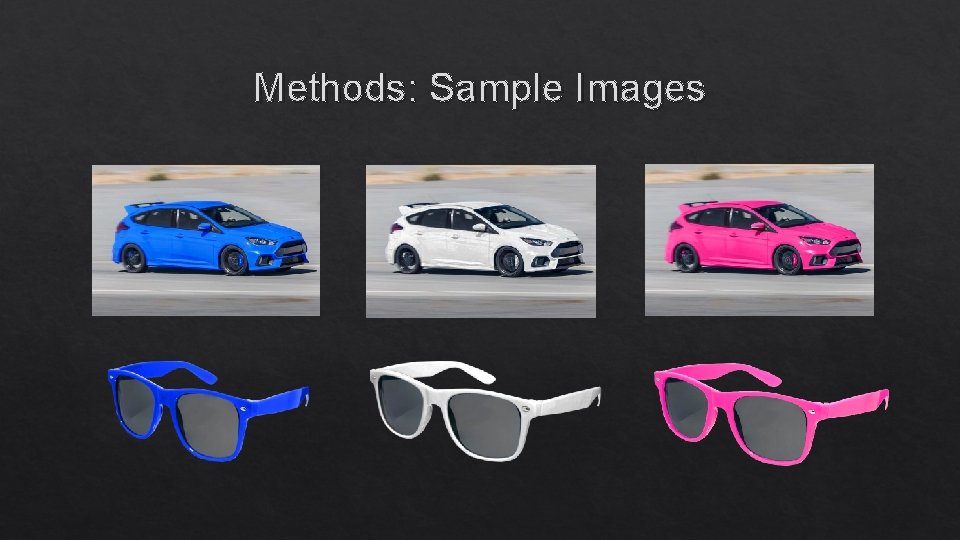
Methods: Materials Experimental Graphics • Graphics were manipulated solely for the color of the product and to remove and branding on the products • Hues of the colors were chosen to resemble the traditional concept of blue and pink as closely as possible • Blue was chosen as the soft color, while pink was the bright color • White was the neutral variable • Branding was removed to eliminate bias • Products were chosen in an attempt to remain as gender neutral as possible
Methods: Sample Images
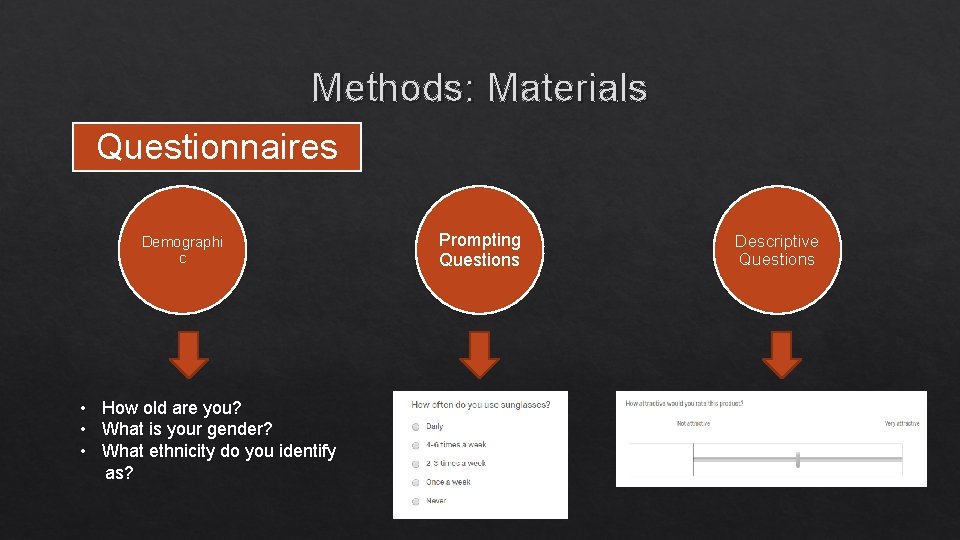
Methods: Materials Questionnaires Demographi c • How old are you? • What is your gender? • What ethnicity do you identify as? Prompting Questions Descriptive Questions
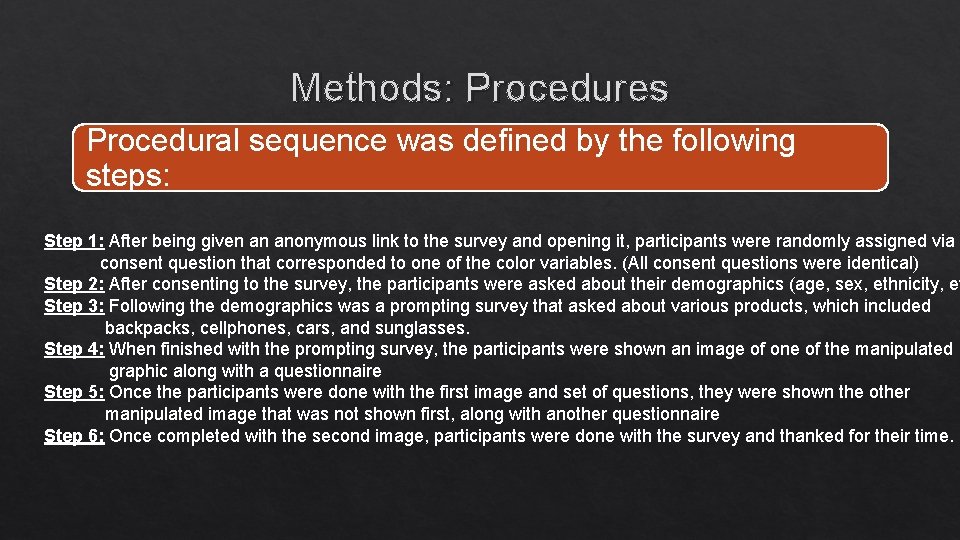
Methods: Procedures Procedural sequence was defined by the following steps: Step 1: After being given an anonymous link to the survey and opening it, participants were randomly assigned via consent question that corresponded to one of the color variables. (All consent questions were identical) Step 2: After consenting to the survey, the participants were asked about their demographics (age, sex, ethnicity, et Step 3: Following the demographics was a prompting survey that asked about various products, which included backpacks, cellphones, cars, and sunglasses. Step 4: When finished with the prompting survey, the participants were shown an image of one of the manipulated graphic along with a questionnaire Step 5: Once the participants were done with the first image and set of questions, they were shown the other manipulated image that was not shown first, along with another questionnaire Step 6: Once completed with the second image, participants were done with the survey and thanked for their time.
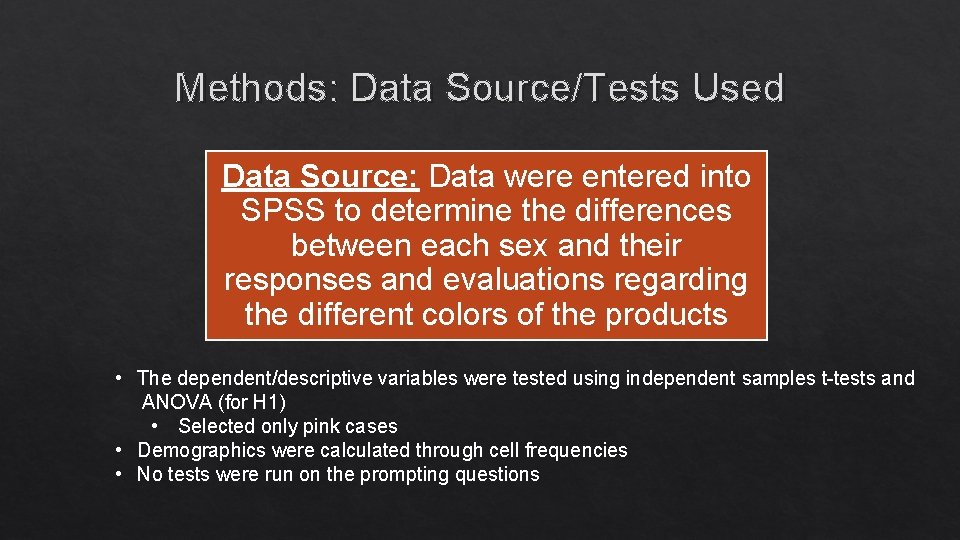
Methods: Data Source/Tests Used Data Source: Data were entered into SPSS to determine the differences between each sex and their responses and evaluations regarding the different colors of the products • The dependent/descriptive variables were tested using independent samples t-tests and ANOVA (for H 1) • Selected only pink cases • Demographics were calculated through cell frequencies • No tests were run on the prompting questions
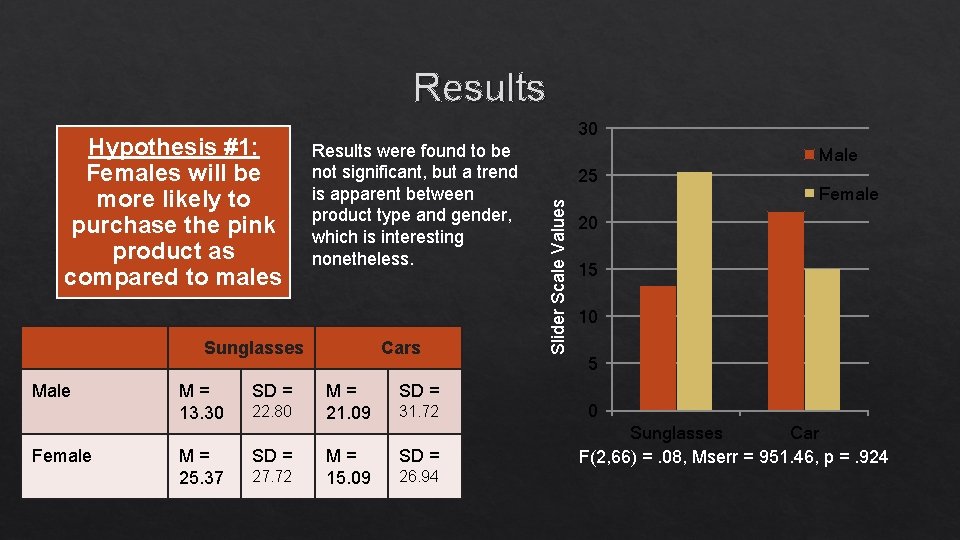
Results were found to be not significant, but a trend is apparent between product type and gender, which is interesting nonetheless. Sunglasses Male Female M= 13. 30 SD = M= 25. 37 SD = 22. 80 27. 72 Cars M= 21. 09 SD = M= 15. 09 SD = 31. 72 26. 94 Male 25 Slider Scale Values Hypothesis #1: Females will be more likely to purchase the pink product as compared to males 30 Female 20 15 10 5 0 Sunglasses Car F(2, 66) =. 08, Mserr = 951. 46, p =. 924
Results Hypothesis was supported, but only partially. Again a trend is apparent between product and gender. Sunglasses Male Female M= 14. 17 M= 31. 81 SD = 24. 59 SD = 24. 76 Cars M= 30. 58 M= 23. 98 SD = 35. 34 SD = 28. 60 Male Female 30 Slider Scale Value Hypothesis #2: Males will find the pink products less attractive than females will 35 25 20 15 10 5 0 Sunglasses Car t(66) = -2. 765, p =. 007
Results Male Female 45 Hypothesis was supported, but only partially yet again. Trend of product bias is less apparent. 40 Slider Scale Value Hypothesis #3: Males will find the pink products less durable as compared to females 50 35 30 25 20 15 10 Sunglasses Cars M= 23. 22 SD = 26. 56 M= 46. 63 SD = 30. 87 M= 37. 93 SD = 25. 44 M= 45. 40 SD = 22. 60 5 0 Sunglasses Car t(66) = -2. 205, p =. 031
Hypothesis #4: Females will be more likely to use the pink products as compared to males Male Female Hypothesis was supported, but only partially. The product bias trend is most apparent, while the car remains fairly neutral in judgment values. Sunglasses Cars M= 14. 83 SD = 25. 49 M= 45. 63 SD = 44. 21 M= 44. 79 SD = 33. 99 M= 47. 35 SD = 36. 38 Slider Scale Value Results 50 45 40 35 30 25 20 15 10 5 0 Male Female Sunglasses Cars t(66) = -3. 703, p =. 000
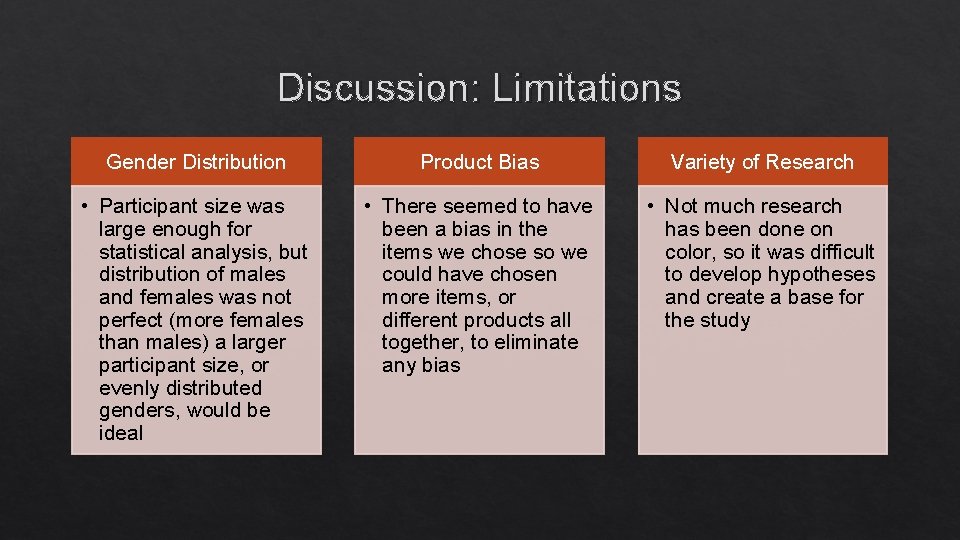
Discussion: Limitations Gender Distribution Product Bias Variety of Research • Participant size was large enough for statistical analysis, but distribution of males and females was not perfect (more females than males) a larger participant size, or evenly distributed genders, would be ideal • There seemed to have been a bias in the items we chose so we could have chosen more items, or different products all together, to eliminate any bias • Not much research has been done on color, so it was difficult to develop hypotheses and create a base for the study
Discussion: Future Research List more available products for rating • Increase variability and work towards eliminating any product bias Utilize more “bright/soft” colors • Color pool was very limited for our study Attain evenly distributed gender amongst participants • An even distribution would represent a more accurate data set regarding the comparison of gender Attain a more concisely distributed age range • Our age range was from 18 -86 years of age
References Creusen, M. E. , & Schoormans, J. P. (2004, December 22). The Different Roles of Product Appearance in Consumer Choice*. 22(1), 63 -81. https: //onlinelibrary. wiley. com/doi/full/10. 1111/j. 07376782. 2005. 00103. x Grossman, R. P. , & Wisenblit, J. Z. (1999). What we know about consumers’ color choices. Journal of Marketing Practice: Applied Marketing Science, 5(3), 78 -88. doi: 10. 1108/eum 00000456 Madden, T. J. , Hewett, K. , & Roth, M. S. (2000). Managing images in different cultures: A crossnational study of color meanings and preferences. Journal of International Marketing, 8(4), 90 -107. Retrieved from http: //mantis. csuchico. edu/login? url=https: //search. proquest. com/docview/197575478? accountid=1034 6 Mehta, R. , & Zhu, R. (2009, February 27). Blue or Red? Exploring the Effect of Color on Cognitive Task Performances. http: //sciencemag. org/content/323/5918/1226. full Radeloff, D. J. (1990). Role of Color in Perception of Attractiveness. Perceptual and Motor Skills, 71(1), 151 -160. doi: 10. 2466/pms. 1990. 71. 1. 151 Silver, N. Clayton, et al. (1988). Sex and racial differences in color and number preferences. Perceptual and Motor Skills, 66 (1), 295– 299. , doi: 10. 2466/pms. 1988. 66. 1. 295. Ware, Colin. (2008). Visual Thinking: For Design. Ergonomics. 53. -256.