
The Effects of Climate Variations on Mosquito Species

- Slides: 12
The Effects of Climate Variations on Mosquito Species Distribution at the Ordway-Swisher Biological Station Dhruv Patel, Katerina Nikiforova, Sierra Stocker, Anjali Vadlamudi, Marius De. Martino Open Access Research Seminar Young Scholars Online Program Thomas Miller
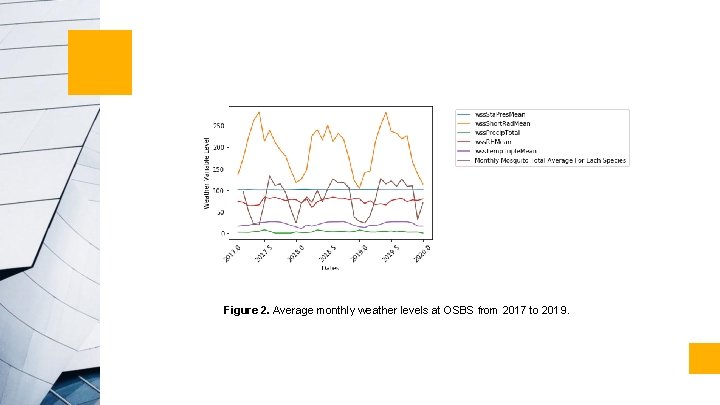
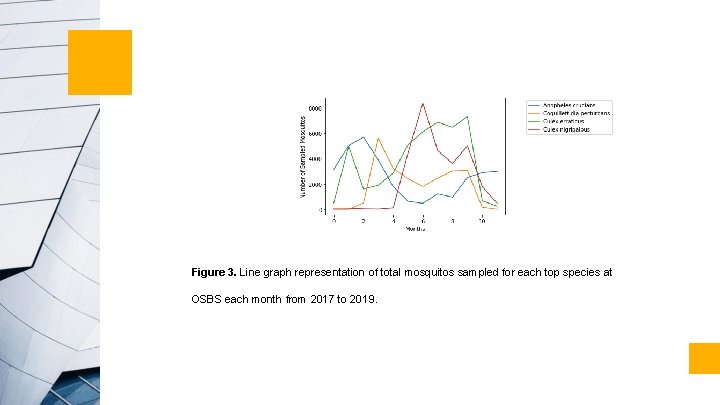
Abstract The National Ecological Observatory Network (NEON) provides open-access ecological data at various sites, including data on climate statistics and mosquito populations. Understanding variations in mosquito populations is important not only to understand how a changing global climate is affecting species populations, but also to model the spread of invasive species and mosquito-borne pathogens. Utilizing mosquito population from NEON at the Ordway-Swisher Biological Station (OSBS), as well as summary weather statistics, this study aimed to deduce the correlation between weather patterns, such as temperature, humidity, and radiation, and the populations of different species of mosquitoes found at OSBS. The study found that certain mosquito species reacted differently to weather patterns such as temperature. Additionally, the study found that although total mosquito populations remained relatively constant, due to interspecies competition the proportions of species differed significantly.
Research Question How Have Climate Variations Affected The Mosquito Species Distribution at the Ordway-Swisher Biological Station In Florida?
Hypothesis If there is an increase in average temperature and humidity, then there will be an increase in the mosquito population of species under the genus Aedes because this species sustains in a more tropical environment while a decrease in temperature will result in a decrease in the proportion of this genus from the overall mosquito population.
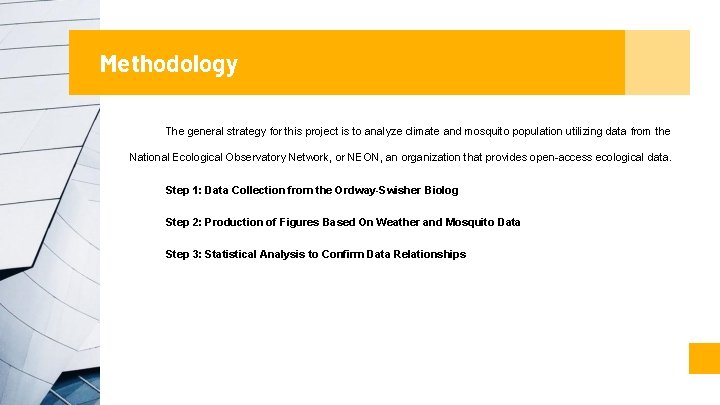
Methodology The general strategy for this project is to analyze climate and mosquito population utilizing data from the National Ecological Observatory Network, or NEON, an organization that provides open-access ecological data. Step 1: Data Collection from the Ordway-Swisher Biolog Step 2: Production of Figures Based On Weather and Mosquito Data Step 3: Statistical Analysis to Confirm Data Relationships
Figure 2. Average monthly weather levels at OSBS from 2017 to 2019.
Figure 3. Line graph representation of total mosquitos sampled for each top species at OSBS each month from 2017 to 2019.
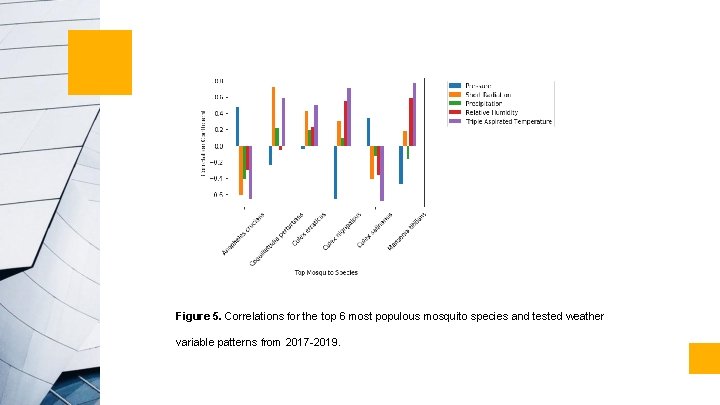
Figure 5. Correlations for the top 6 most populous mosquito species and tested weather variable patterns from 2017 -2019.
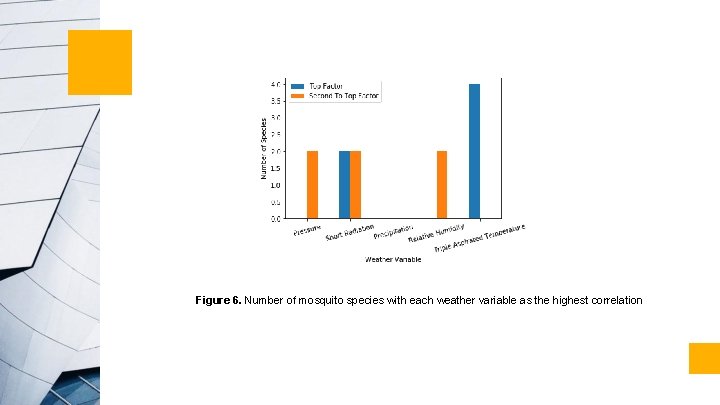
Figure 6. Number of mosquito species with each weather variable as the highest correlation
Conclusion The results show that different mosquito species respond differently to climate variation. - Triple aspirated temperature was the factor that had the greatest correlation with five of the six mosquito species analyzed. Although the data showed that the mosquitoes collected at the OSBS site did not carry pathogens; a better understanding of this data potentially helps prevent pathogen spread by increasing awareness on variations in mosquito population in relation to climate.
Sources