
The Effects of Channel Transitions on Culvert and

- Slides: 16
The Effects of Channel Transitions on Culvert and Bridge Design Marla Sykora CE 394 K. 3
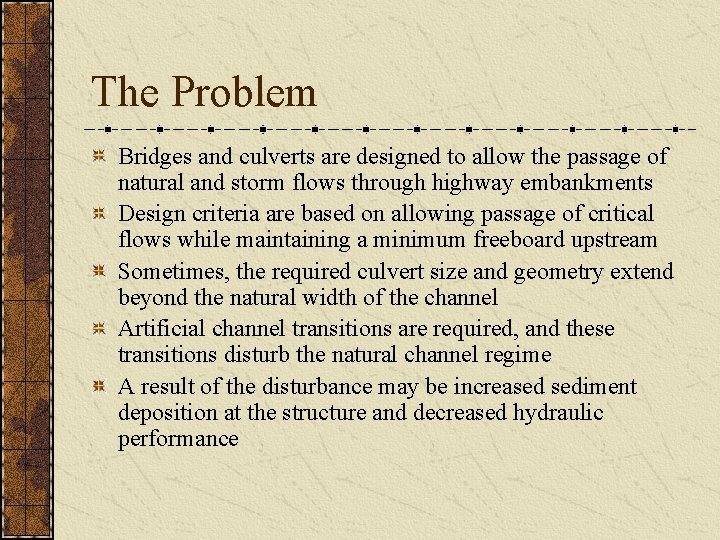
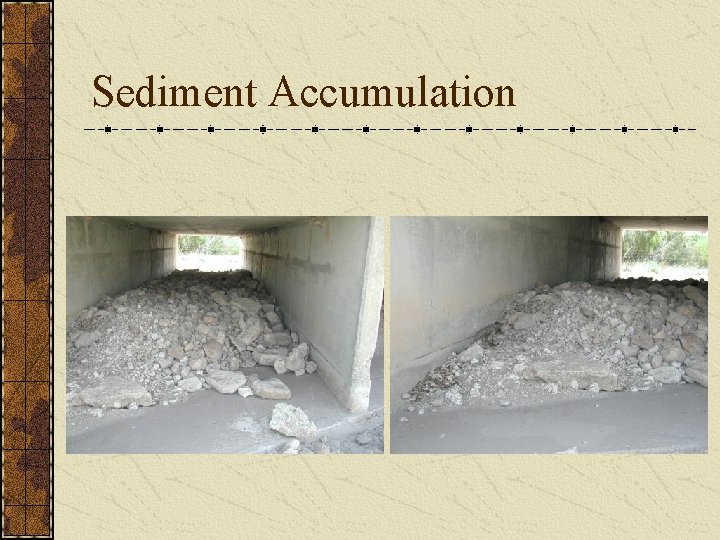
The Problem Bridges and culverts are designed to allow the passage of natural and storm flows through highway embankments Design criteria are based on allowing passage of critical flows while maintaining a minimum freeboard upstream Sometimes, the required culvert size and geometry extend beyond the natural width of the channel Artificial channel transitions are required, and these transitions disturb the natural channel regime A result of the disturbance may be increased sediment deposition at the structure and decreased hydraulic performance
Sediment Accumulation
Project Goals Demonstrate use of HEC-RAS as a design tool Compare and contrast sites throughout Texas that exhibit sediment deposition within the culvert system ~ three sites were chosen for this purpose
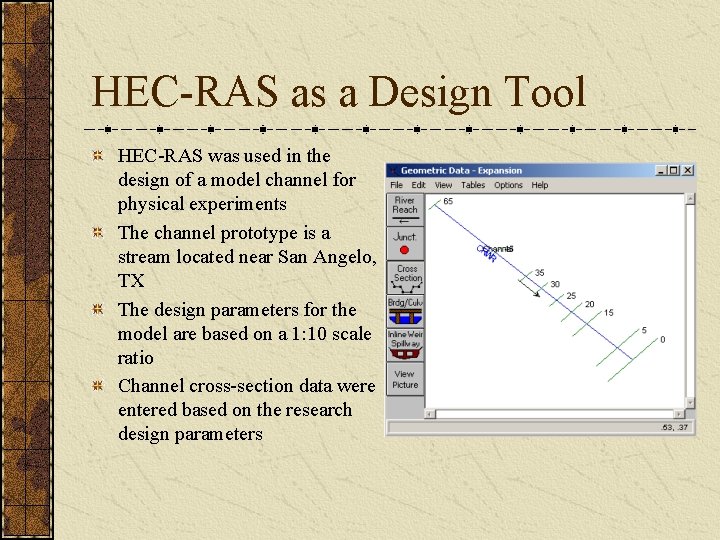
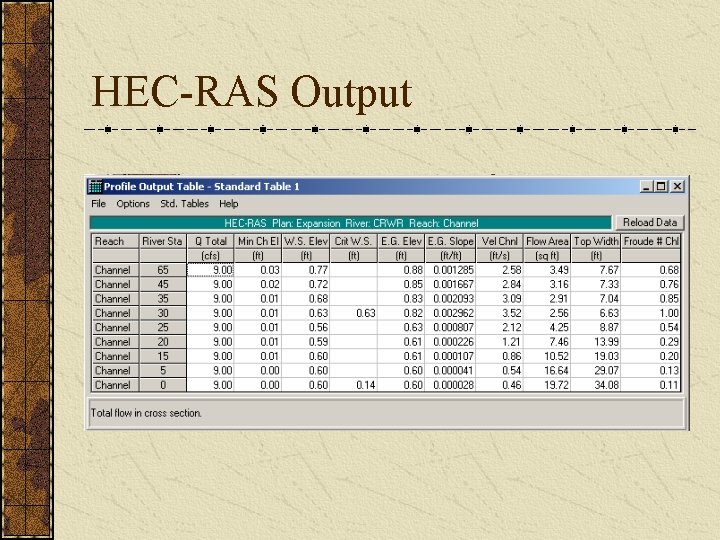
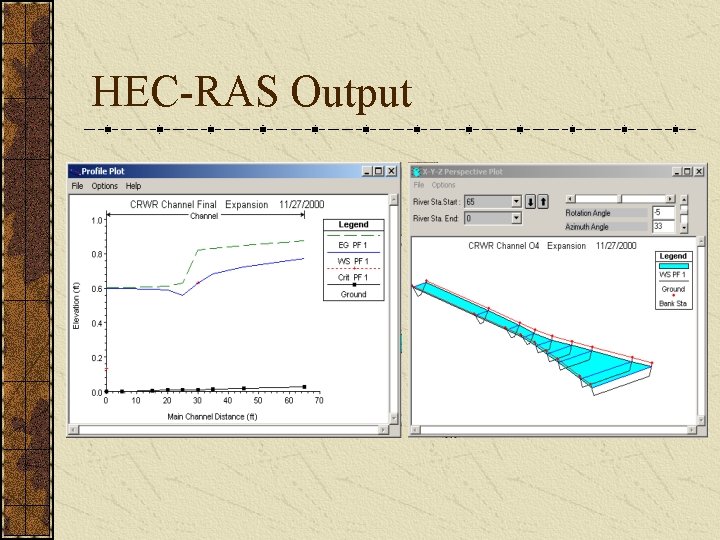
HEC-RAS as a Design Tool HEC-RAS was used in the design of a model channel for physical experiments The channel prototype is a stream located near San Angelo, TX The design parameters for the model are based on a 1: 10 scale ratio Channel cross-section data were entered based on the research design parameters
HEC-RAS Output
HEC-RAS Output
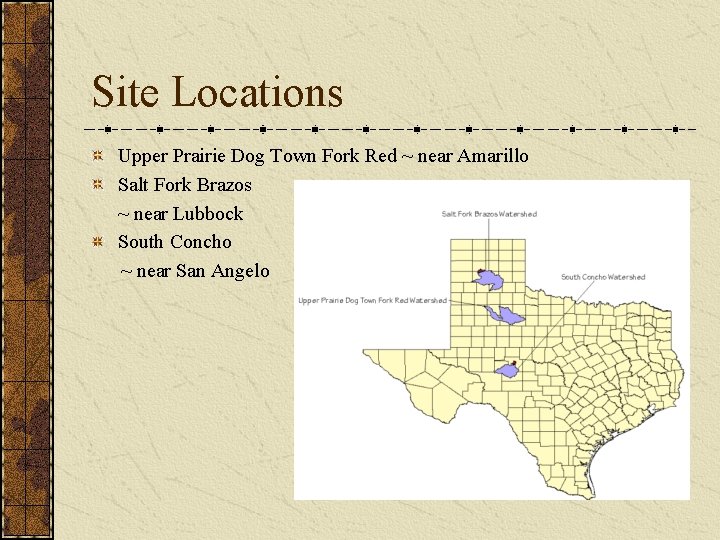
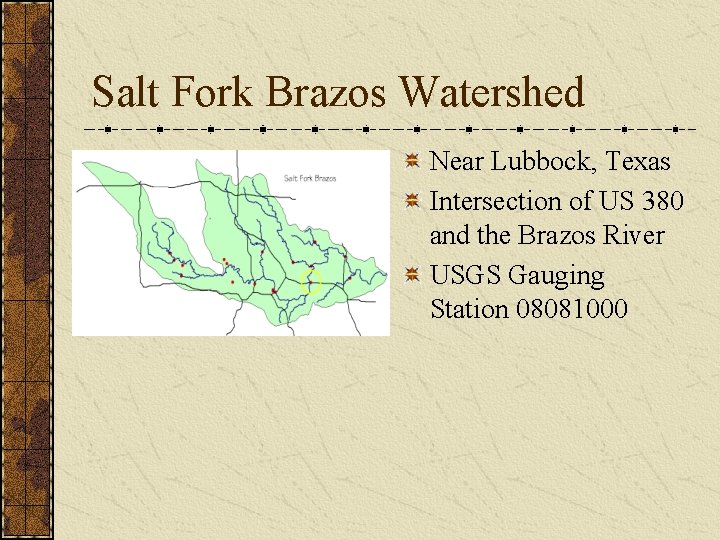
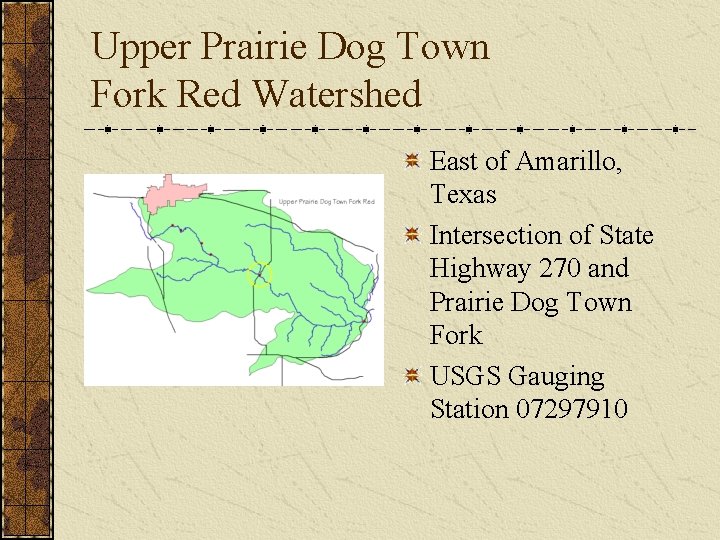
Site Locations Upper Prairie Dog Town Fork Red ~ near Amarillo Salt Fork Brazos ~ near Lubbock South Concho ~ near San Angelo
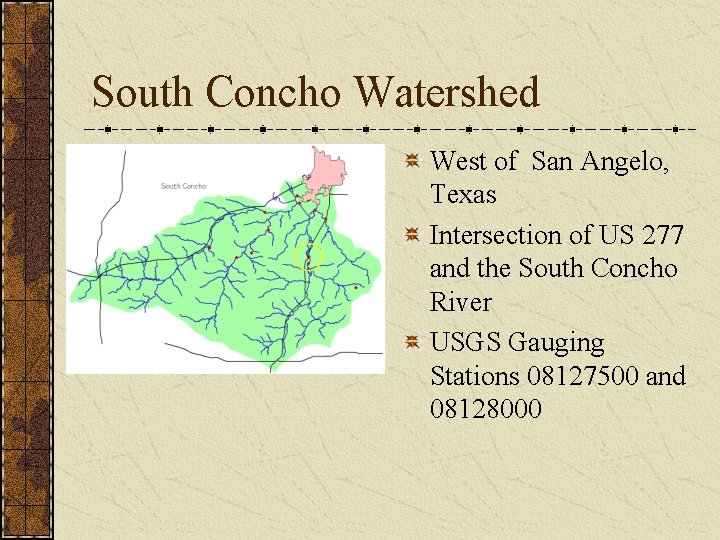
South Concho Watershed West of San Angelo, Texas Intersection of US 277 and the South Concho River USGS Gauging Stations 08127500 and 08128000
Salt Fork Brazos Watershed Near Lubbock, Texas Intersection of US 380 and the Brazos River USGS Gauging Station 08081000
Upper Prairie Dog Town Fork Red Watershed East of Amarillo, Texas Intersection of State Highway 270 and Prairie Dog Town Fork USGS Gauging Station 07297910
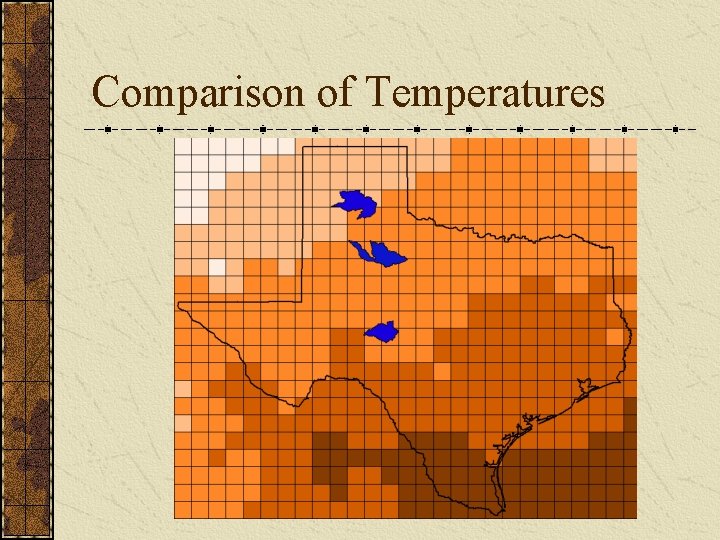
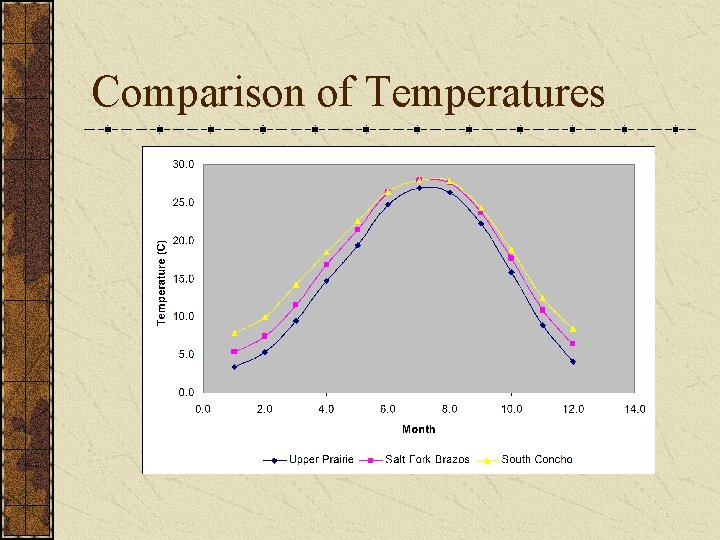
Comparison of Temperatures
Comparison of Temperatures
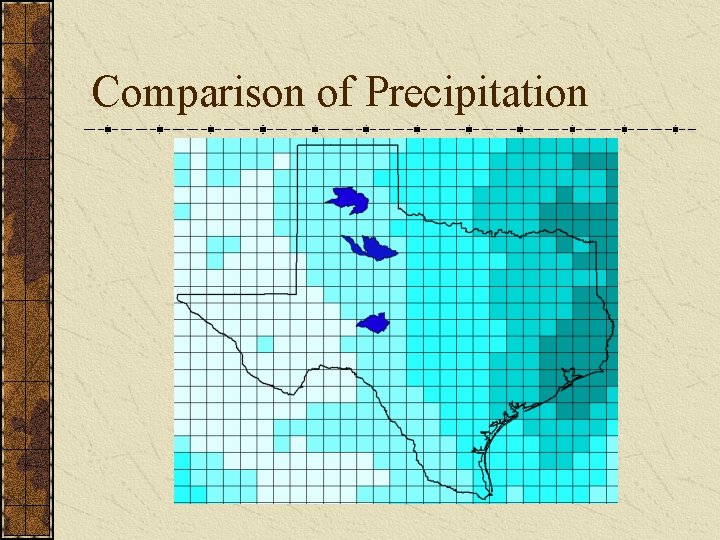
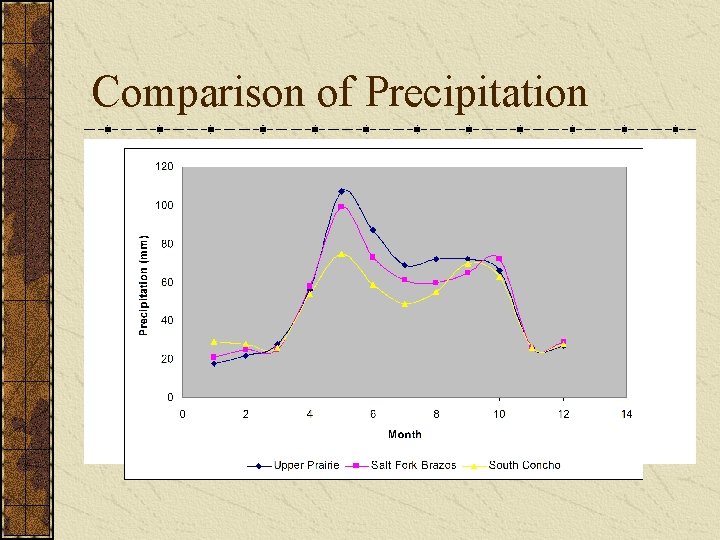
Comparison of Precipitation
Comparison of Precipitation
Future Work Comparison of land use / land cover data Comparison and analysis of gauging station discharge data Determine if the data indicate consistent patterns from which we could predict when and where sediment deposition will occur