
The Effective Use of Rhetoric in Scientific Communication


- Slides: 22
The Effective Use of Rhetoric in Scientific Communication . . . . . How to get to know your audience Keith Gibson Senior Design Consultant Allen Communication Learning Services
Aristotle’s Reasoning . . . . . • Demonstration—when the premises from which the deduction starts are true and primitive • Dialectic—when it reasons from reputable opinions
Simon Locke. . . . . . • The technical sphere is nonrhetorical because it is the sphere of truth; rhetoric is employed only as “handmaiden” in imparting truth to nonspecialist, public audiences, whose reasoning is “untrained. ” –The Public Understanding of Science, 2002
My Claim . . . . . • The effectiveness of science communication is directly proportional to the level of knowledge about the audience
Three Questions. . . . . . • What does our audience need? • Where do we disagree with them? • What do we have in common with them?
Three Audiences . . . . • Public • Journalists • Politicians
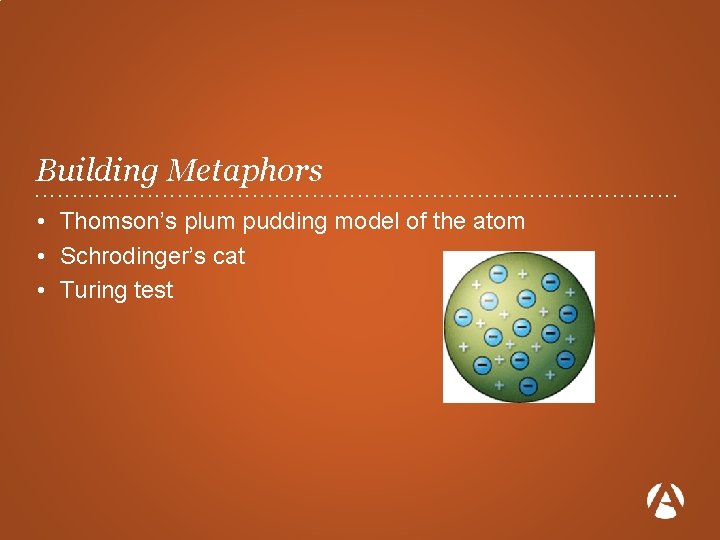
Building Metaphors. . . . . . • Thomson’s plum pudding model of the atom • Schrodinger’s cat • Turing test
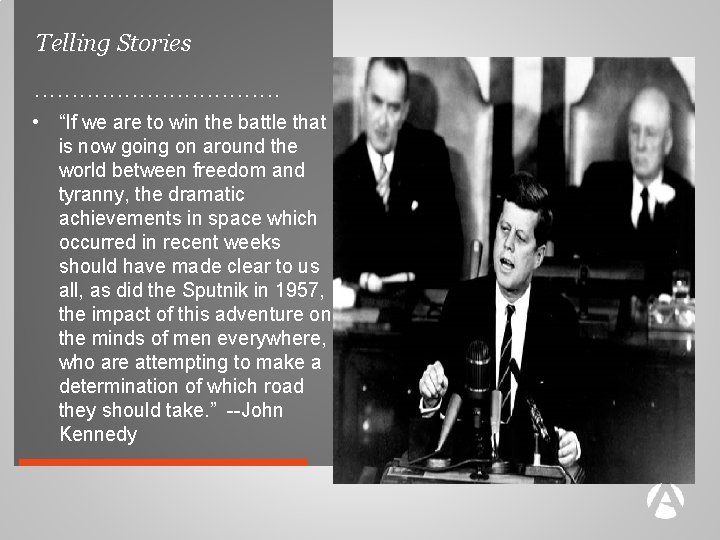
Telling Stories. . . . • “If we are to win the battle that is now going on around the world between freedom and tyranny, the dramatic achievements in space which occurred in recent weeks should have made clear to us all, as did the Sputnik in 1957, the impact of this adventure on the minds of men everywhere, who are attempting to make a determination of which road they should take. ” --John Kennedy
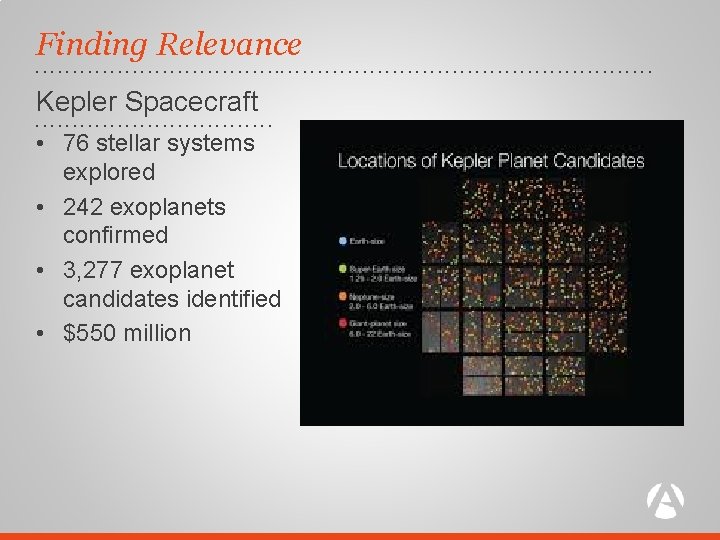
Finding Relevance. . . . . . Kepler Spacecraft. . . . • 76 stellar systems explored • 242 exoplanets confirmed • 3, 277 exoplanet candidates identified • $550 million
Identify the Issue. . . . . . • Stasis Theory • Fact • Definition • Quality • Procedure
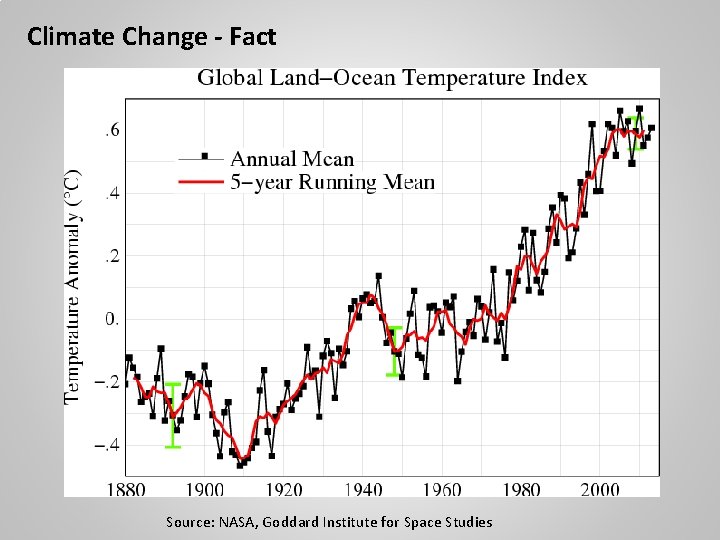
Climate Change - Fact Source: NASA, Goddard Institute for Space Studies
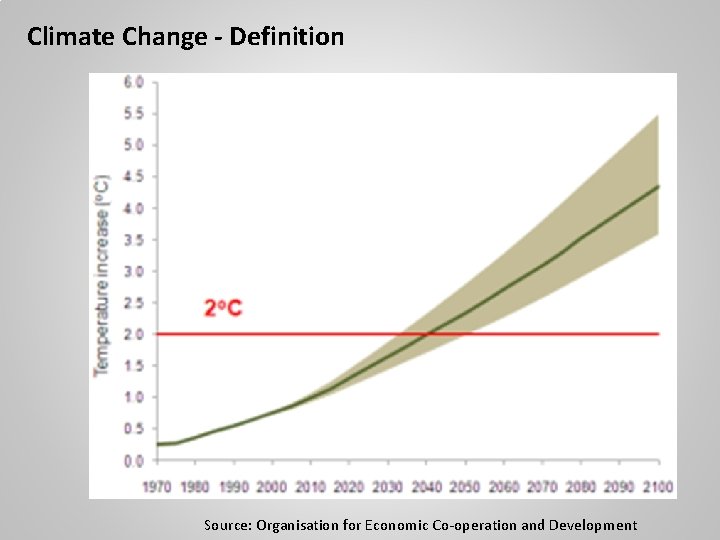
Climate Change - Definition Source: Organisation for Economic Co‐operation and Development
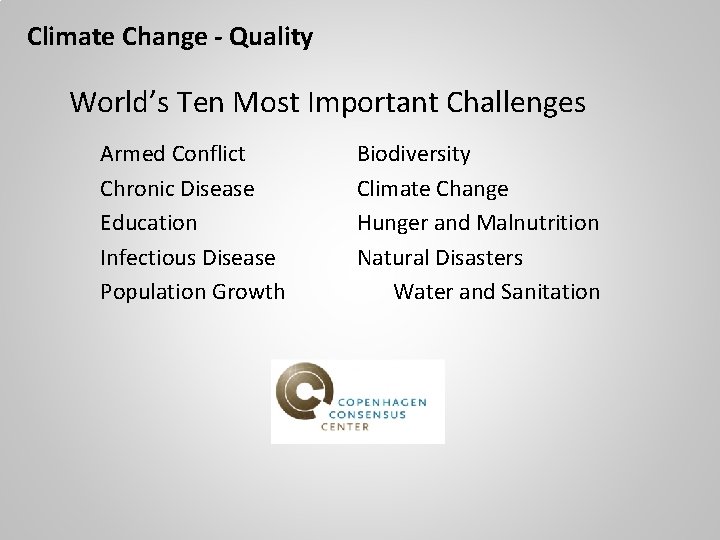
Climate Change - Quality World’s Ten Most Important Challenges Armed Conflict Chronic Disease Education Infectious Disease Population Growth Biodiversity Climate Change Hunger and Malnutrition Natural Disasters Water and Sanitation
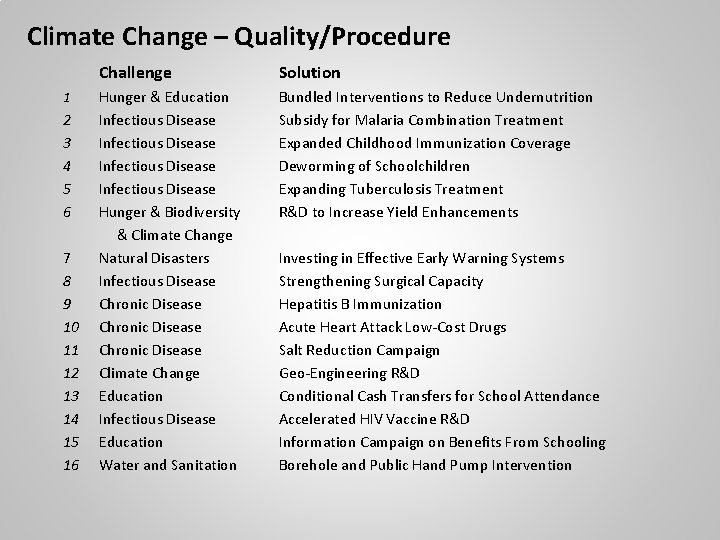
Climate Change – Quality/Procedure 1 2 3 4 5 6 7 8 9 10 11 12 13 14 15 16 Challenge Solution Hunger & Education Infectious Disease Hunger & Biodiversity & Climate Change Natural Disasters Infectious Disease Chronic Disease Climate Change Education Infectious Disease Education Water and Sanitation Bundled Interventions to Reduce Undernutrition Subsidy for Malaria Combination Treatment Expanded Childhood Immunization Coverage Deworming of Schoolchildren Expanding Tuberculosis Treatment R&D to Increase Yield Enhancements Investing in Effective Early Warning Systems Strengthening Surgical Capacity Hepatitis B Immunization Acute Heart Attack Low‐Cost Drugs Salt Reduction Campaign Geo‐Engineering R&D Conditional Cash Transfers for School Attendance Accelerated HIV Vaccine R&D Information Campaign on Benefits From Schooling Borehole and Public Hand Pump Intervention
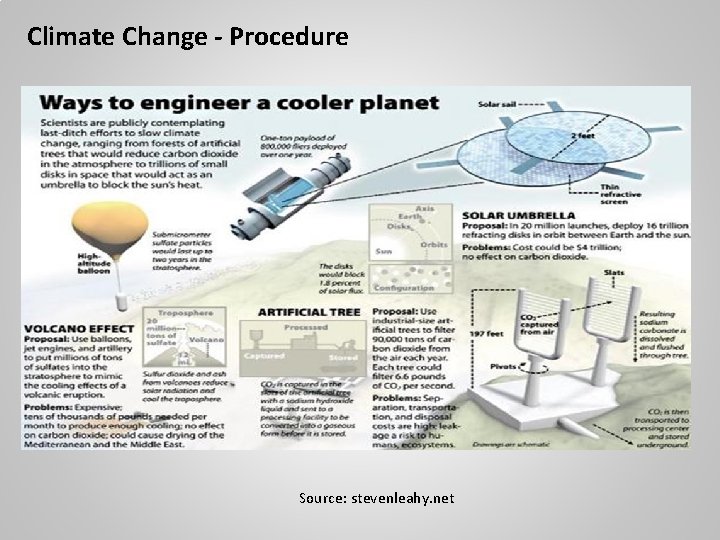
Climate Change - Procedure Source: stevenleahy. net
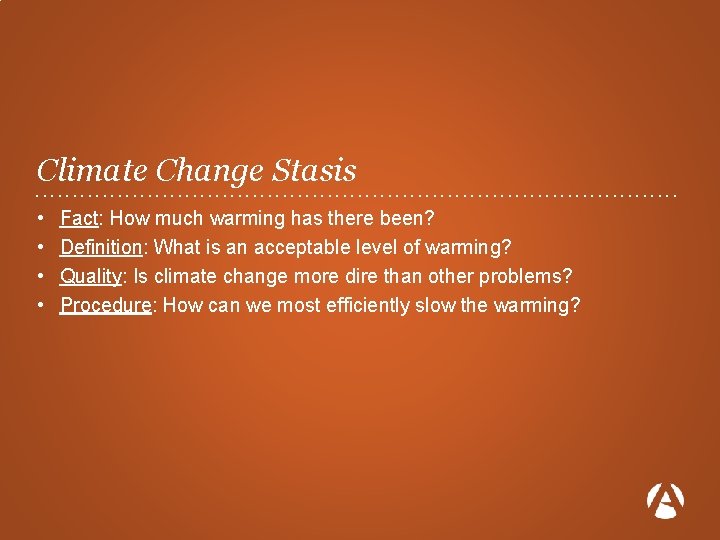
Climate Change Stasis. . . . . . • • Fact: How much warming has there been? Definition: What is an acceptable level of warming? Quality: Is climate change more dire than other problems? Procedure: How can we most efficiently slow the warming?
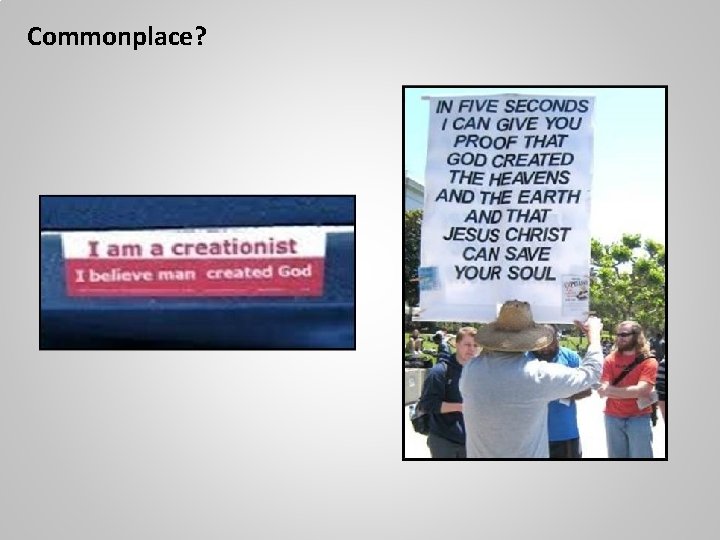
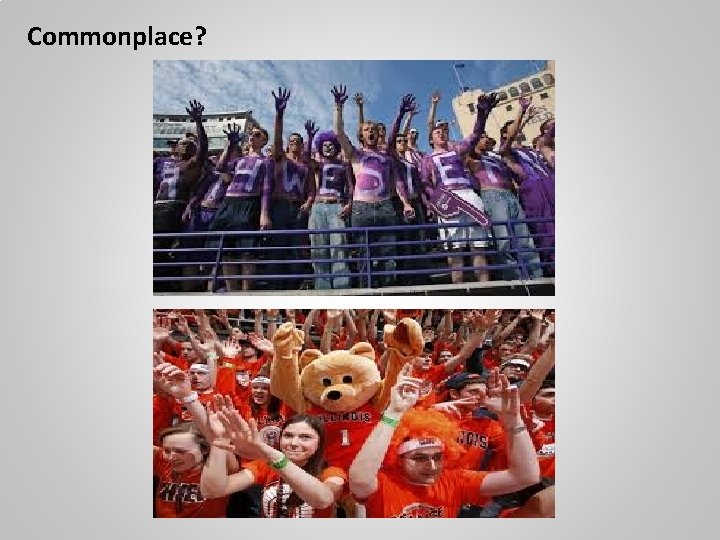
Find a Commonplace . . . . . • What does the audience value? • What are their goals? • How can your project help them achieve those goals?
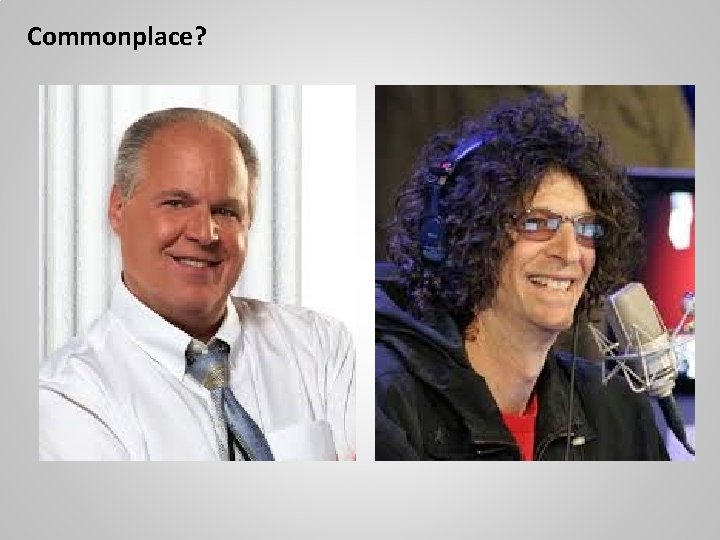
Commonplace?
Commonplace?
Commonplace?
Climate Change Stasis. . . . . . • • Fact: How much warming has there been? Definition: What is an acceptable level of warming? Quality: Is climate change more dire than other problems? Procedure: How can we most efficiently slow the warming?
Three Questions. . . . . . • What does our audience need? • Where do we disagree with them? • What do we have in common with them?