
The Effect of Vagus Nerve Stimulation in Heart
- Slides: 19
The Effect of Vagus Nerve Stimulation in Heart Failure: Primary Results of the INcrease Of VAgal Ton. E in chronic Heart Failure (INOVATE-HF) Trial MICHAEL R GOLD, BRETT J BERMAN, MARTIN BORGGREFE, SANJA DJORDJEVIC, P MILASINOVIC, SURESH NEELAGARU, PETER J SCHWARTZ, RANDALL C STARLING, PAUL J HAUPTMAN, SPENCER H KUBO, RANDY A LIEBERMAN, GORAN MILASINOVIC, DIRK J VAN VELDHUISEN, DOUGLAS L MANN *Dr. Gold and other members of this group have received consulting fees and/or research grants from Bio. Control Medical 1
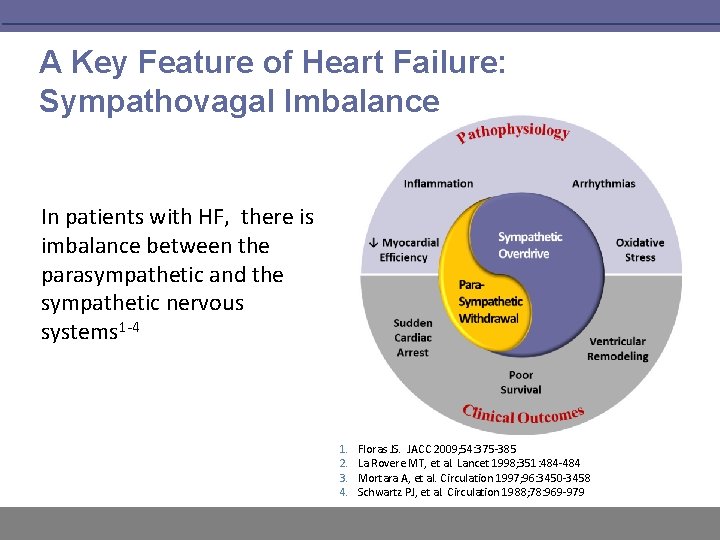
A Key Feature of Heart Failure: Sympathovagal Imbalance In patients with HF, there is imbalance between the parasympathetic and the sympathetic nervous systems 1 -4 1. 2. 3. 4. Floras JS. JACC 2009; 54: 375 -385 La Rovere MT, et al. Lancet 1998; 351: 484 -484 Mortara A, et al. Circulation 1997; 96: 3450 -3458 Schwartz PJ, et al. Circulation 1988; 78: 969 -979
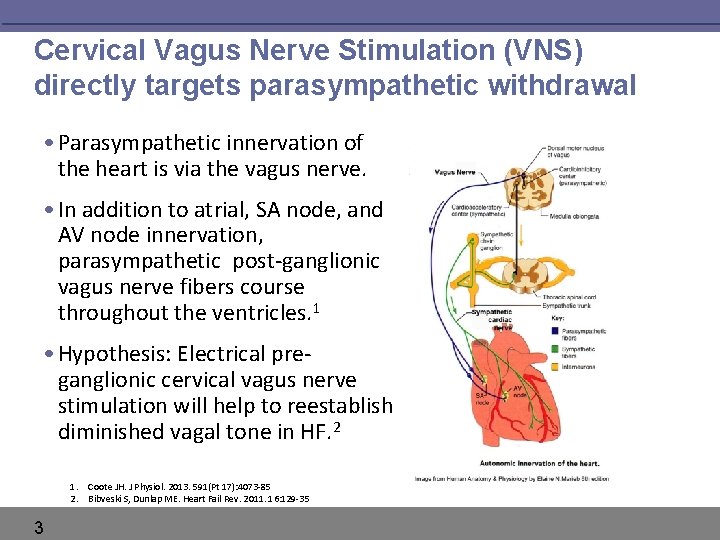
Cervical Vagus Nerve Stimulation (VNS) directly targets parasympathetic withdrawal • Parasympathetic innervation of the heart is via the vagus nerve. • In addition to atrial, SA node, and AV node innervation, parasympathetic post-ganglionic vagus nerve fibers course throughout the ventricles. 1 • Hypothesis: Electrical preganglionic cervical vagus nerve stimulation will help to reestablish diminished vagal tone in HF. 2 1. Coote JH. J Physiol. 2013. 591(Pt 17): 4073 -85 2. Bibveski S, Dunlap ME. Heart Fail Rev. 2011. 16: 129 -35 3
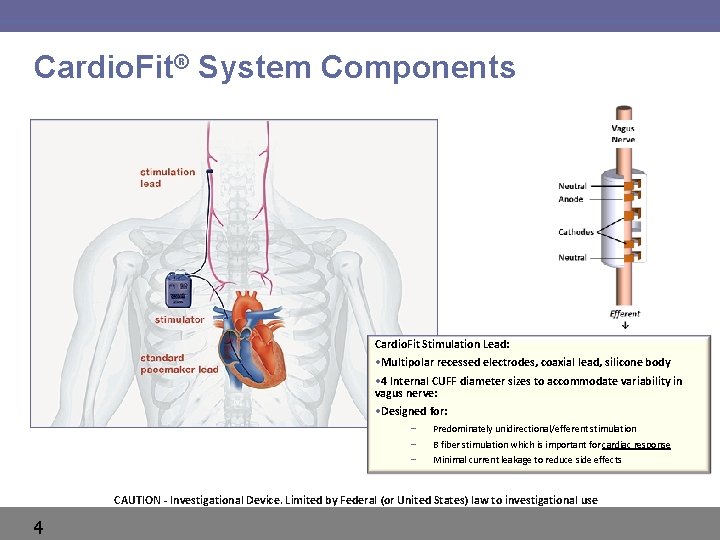
Cardio. Fit® System Components Cardio. Fit Stimulation Lead: • Multipolar recessed electrodes, coaxial lead, silicone body • 4 Internal CUFF diameter sizes to accommodate variability in vagus nerve: • Designed for: – – – Predominately unidirectional/efferent stimulation B fiber stimulation which is important for cardiac response Minimal current leakage to reduce side effects CAUTION - Investigational Device. Limited by Federal (or United States) law to investigational use 4
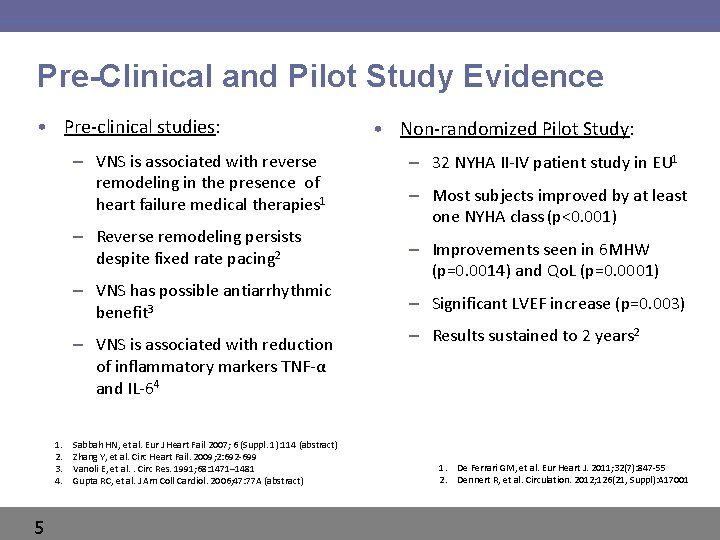
Pre-Clinical and Pilot Study Evidence • Pre-clinical studies: – VNS is associated with reverse remodeling in the presence of heart failure medical therapies 1 – Reverse remodeling persists despite fixed rate pacing 2 – VNS has possible antiarrhythmic benefit 3 – VNS is associated with reduction of inflammatory markers TNF-α and IL-64 1. 2. 3. 4. 5 Sabbah HN, et al. Eur J Heart Fail 2007; 6 (Suppl. 1): 114 (abstract) Zhang Y, et al. Circ Heart Fail. 2009; 2: 692 -699 Vanoli E, et al. . Circ Res. 1991; 68: 1471– 1481 Gupta RC, et al. J Am Coll Cardiol. 2006; 47: 77 A (abstract) • Non-randomized Pilot Study: – 32 NYHA II-IV patient study in EU 1 – Most subjects improved by at least one NYHA class (p<0. 001) – Improvements seen in 6 MHW (p=0. 0014) and Qo. L (p=0. 0001) – Significant LVEF increase (p=0. 003) – Results sustained to 2 years 2 1. De Ferrari GM, et al. Eur Heart J. 2011; 32(7): 847 -55 2. Dennert R, et al. Circulation. 2012; 126(21, Suppl): A 17001
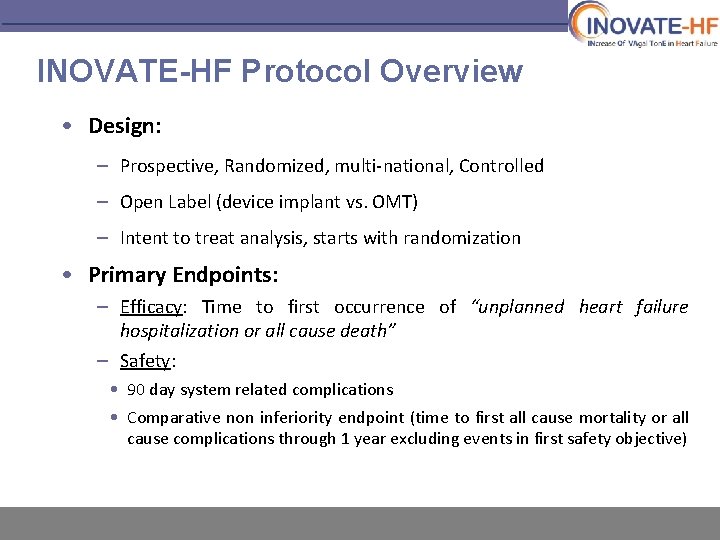
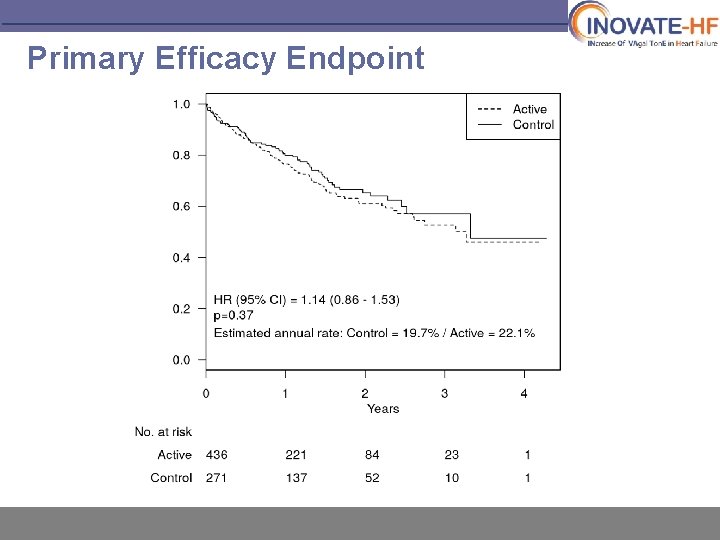
INOVATE-HF Protocol Overview • Design: – Prospective, Randomized, multi-national, Controlled – Open Label (device implant vs. OMT) – Intent to treat analysis, starts with randomization • Primary Endpoints: – Efficacy: Time to first occurrence of “unplanned heart failure hospitalization or all cause death” – Safety: • 90 day system related complications • Comparative non inferiority endpoint (time to first all cause mortality or all cause complications through 1 year excluding events in first safety objective)
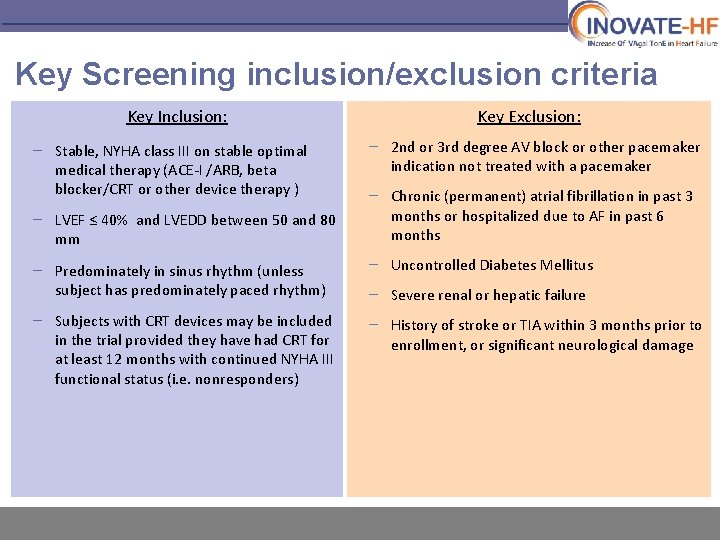
Key Screening inclusion/exclusion criteria Key Inclusion: – Stable, NYHA class III on stable optimal medical therapy (ACE-I /ARB, beta blocker/CRT or other device therapy ) – LVEF ≤ 40% and LVEDD between 50 and 80 mm Key Exclusion: – 2 nd or 3 rd degree AV block or other pacemaker indication not treated with a pacemaker – Chronic (permanent) atrial fibrillation in past 3 months or hospitalized due to AF in past 6 months – Predominately in sinus rhythm (unless subject has predominately paced rhythm) – Uncontrolled Diabetes Mellitus – Subjects with CRT devices may be included in the trial provided they have had CRT for at least 12 months with continued NYHA III functional status (i. e. nonresponders) – History of stroke or TIA within 3 months prior to enrollment, or significant neurological damage – Severe renal or hepatic failure
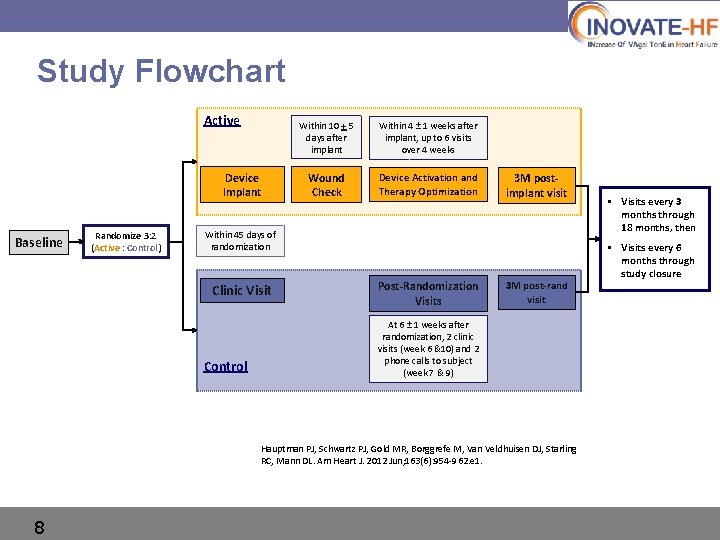
Study Flowchart Active Device Implant Baseline Randomize 3: 2 (Active : Control) Within 10 + 5 days after implant Within 4 ± 1 weeks after implant, up to 6 visits over 4 weeks Wound Check Device Activation and Therapy Optimization 3 M postimplant visit Within 45 days of randomization Clinic Visit Control Post-Randomization Visits 3 M post-rand visit At 6 ± 1 weeks after randomization, 2 clinic visits (week 6 &10) and 2 phone calls to subject (week 7 & 9) Hauptman PJ, Schwartz PJ, Gold MR, Borggrefe M, Van Veldhuisen DJ, Starling RC, Mann DL. Am Heart J. 2012 Jun; 163(6): 954 -962. e 1. 8 • Visits every 3 months through 18 months, then • Visits every 6 months through study closure
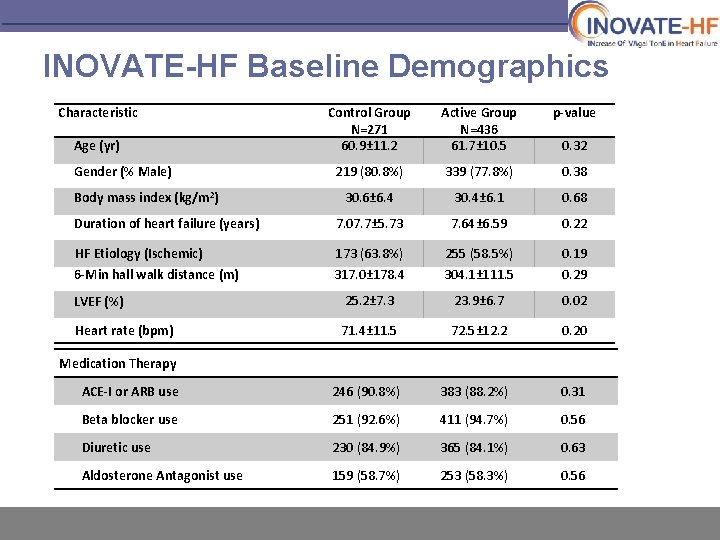
INOVATE-HF Baseline Demographics Characteristic Control Group N=271 60. 9± 11. 2 Active Group N=436 61. 7± 10. 5 p-value 219 (80. 8%) 339 (77. 8%) 0. 38 30. 6± 6. 4 30. 4± 6. 1 0. 68 Duration of heart failure (years) 7. 07. 7± 5. 73 7. 64± 6. 59 0. 22 HF Etiology (Ischemic) 173 (63. 8%) 255 (58. 5%) 0. 19 6 -Min hall walk distance (m) 317. 0± 178. 4 304. 1± 111. 5 0. 29 LVEF (%) 25. 2± 7. 3 23. 9± 6. 7 0. 02 Heart rate (bpm) 71. 4± 11. 5 72. 5± 12. 2 0. 20 ACE-I or ARB use 246 (90. 8%) 383 (88. 2%) 0. 31 Beta blocker use 251 (92. 6%) 411 (94. 7%) 0. 56 Diuretic use 230 (84. 9%) 365 (84. 1%) 0. 63 Aldosterone Antagonist use 159 (58. 7%) 253 (58. 3%) 0. 56 Age (yr) Gender (% Male) Body mass index (kg/m 2) 0. 32 Medication Therapy
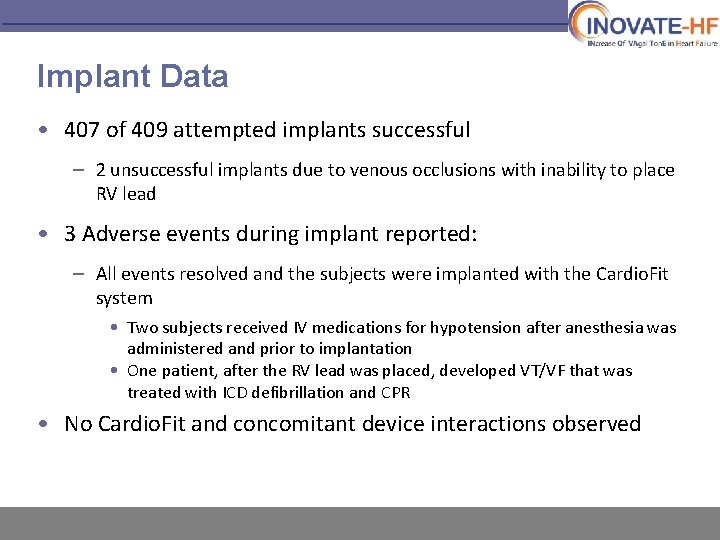
Implant Data • 407 of 409 attempted implants successful – 2 unsuccessful implants due to venous occlusions with inability to place RV lead • 3 Adverse events during implant reported: – All events resolved and the subjects were implanted with the Cardio. Fit system • Two subjects received IV medications for hypotension after anesthesia was administered and prior to implantation • One patient, after the RV lead was placed, developed VT/VF that was treated with ICD defibrillation and CPR • No Cardio. Fit and concomitant device interactions observed
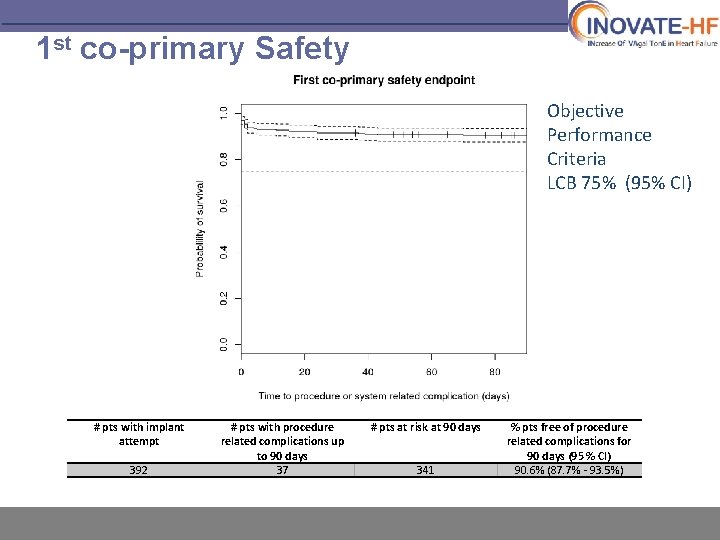
1 st co-primary Safety Objective Performance Criteria LCB 75% (95% CI) # pts with implant attempt 392 # pts with procedure related complications up to 90 days 37 # pts at risk at 90 days 341 % pts free of procedure related complications for 90 days (95 % CI) 90. 6% (87. 7% - 93. 5%)
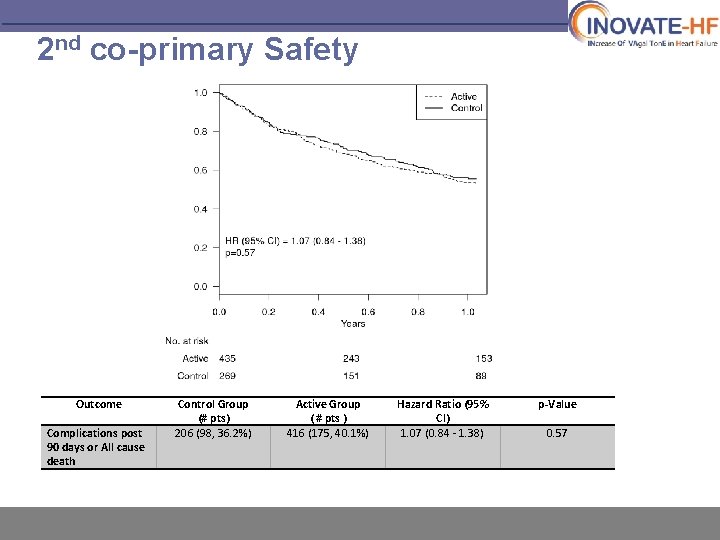
2 nd co-primary Safety Outcome Complications post 90 days or All cause death Control Group (# pts) 206 (98, 36. 2%) Active Group ( # pts ) 416 (175, 40. 1%) Hazard Ratio (95% CI) 1. 07 (0. 84 - 1. 38) p-Value 0. 57
DSMB Review of 2 nd Interim Analysis • Both safety objectives were considered acceptable • Futility border had been crossed for primary efficacy endpoint • DSMB recommended stopping the study due to futility • Study closure by Steering Committee occurred on 15 December 2015
Primary Efficacy Endpoint
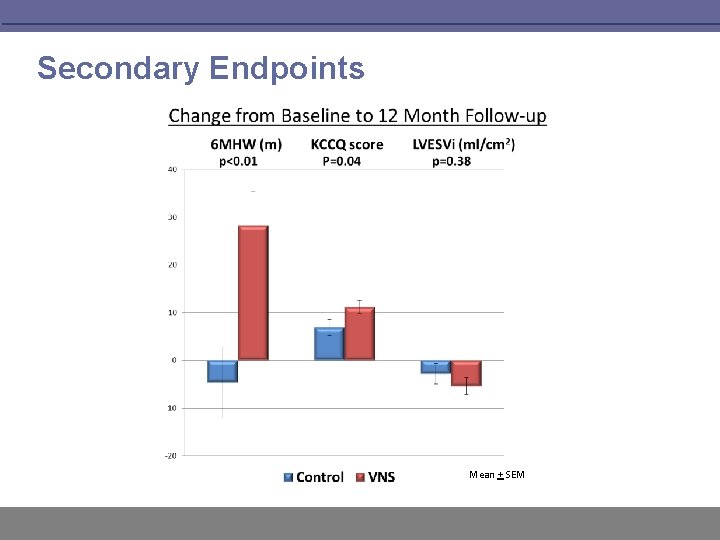
Secondary Endpoints Mean + SEM
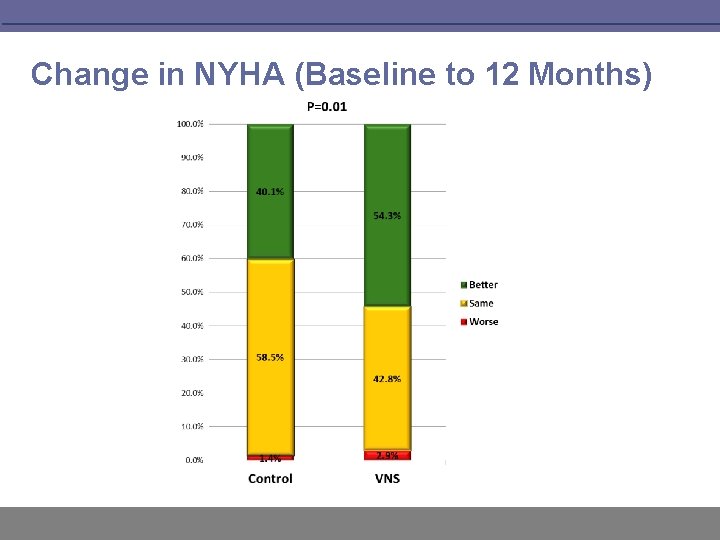
Change in NYHA (Baseline to 12 Months)
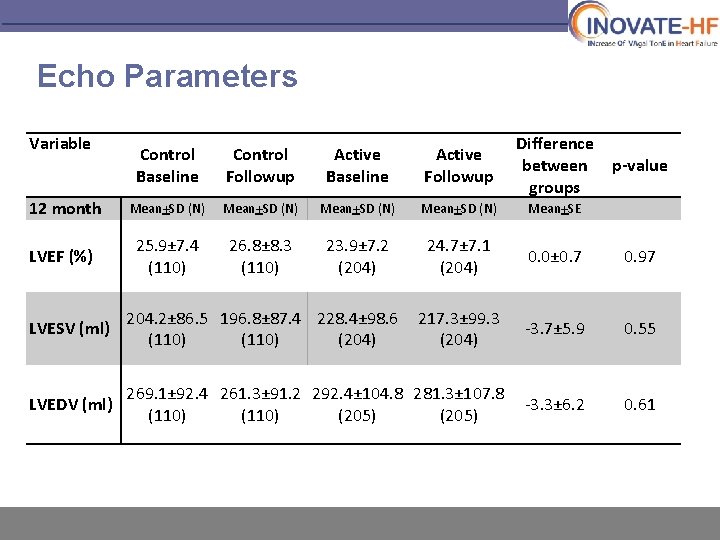
Echo Parameters Variable 12 month LVEF (%) Control Baseline Control Followup Active Baseline Active Followup Difference between groups Mean+SD (N) Mean+SE 25. 9± 7. 4 (110) 26. 8± 8. 3 (110) 23. 9± 7. 2 (204) 24. 7± 7. 1 (204) 0. 0± 0. 7 0. 97 p-value LVESV (ml) 204. 2± 86. 5 196. 8± 87. 4 228. 4± 98. 6 (110) (204) 217. 3± 99. 3 (204) -3. 7± 5. 9 0. 55 LVEDV (ml) 269. 1± 92. 4 261. 3± 91. 2 292. 4± 104. 8 281. 3± 107. 8 (110) (205) -3. 3± 6. 2 0. 61
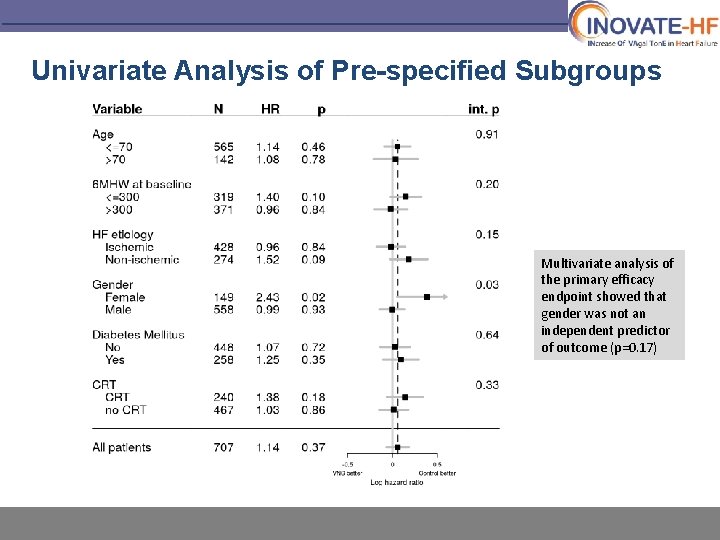
Univariate Analysis of Pre-specified Subgroups Multivariate analysis of the primary efficacy endpoint showed that gender was not an independent predictor of outcome (p=0. 17)
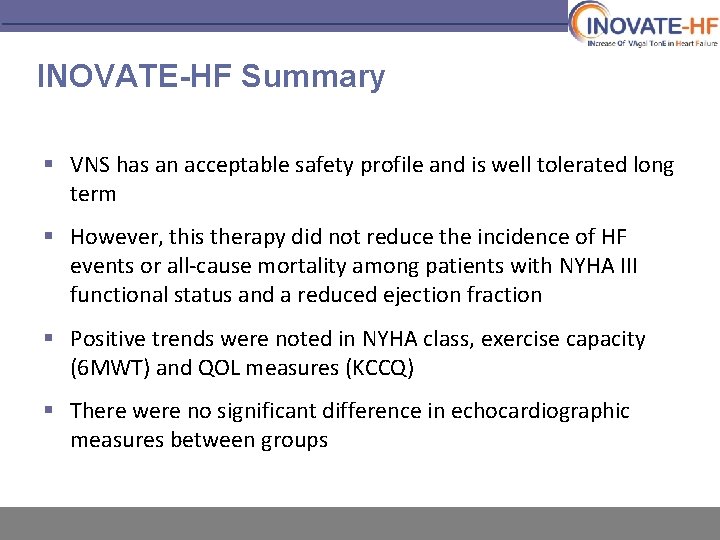
INOVATE-HF Summary § VNS has an acceptable safety profile and is well tolerated long term § However, this therapy did not reduce the incidence of HF events or all-cause mortality among patients with NYHA III functional status and a reduced ejection fraction § Positive trends were noted in NYHA class, exercise capacity (6 MWT) and QOL measures (KCCQ) § There were no significant difference in echocardiographic measures between groups