
The Effect of Surface Tension Anisotropy on the

- Slides: 29
The Effect of Surface Tension Anisotropy on the Rayleigh Instability in Materials Systems K. F. Gurski and G. B. Mc. Fadden Mathematical and Computational Sciences Division National Institute of Standards and Technology • Introduction to the Rayleigh instability • Anisotropic surface energy • 2 -D equilibrium shapes • Rayleigh instability for anisotropic surface energy • Conclusions and future work NASA Microgravity, NSF NIRT (NWU) Thanks to S. H. Davis
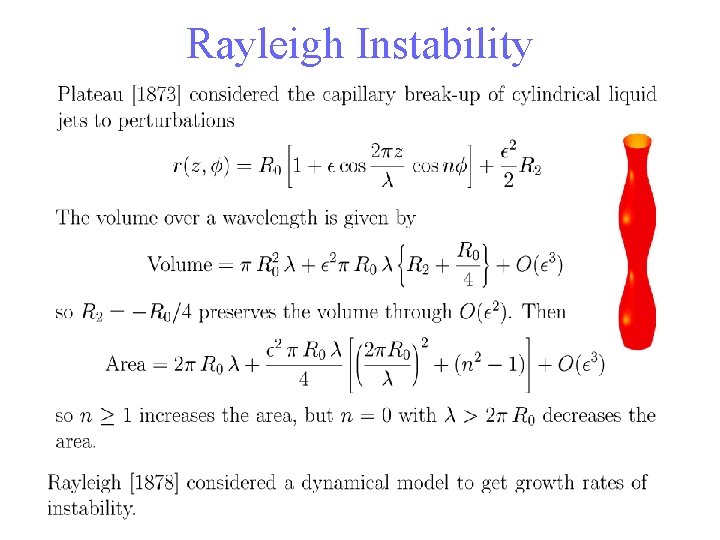
Rayleigh Instability
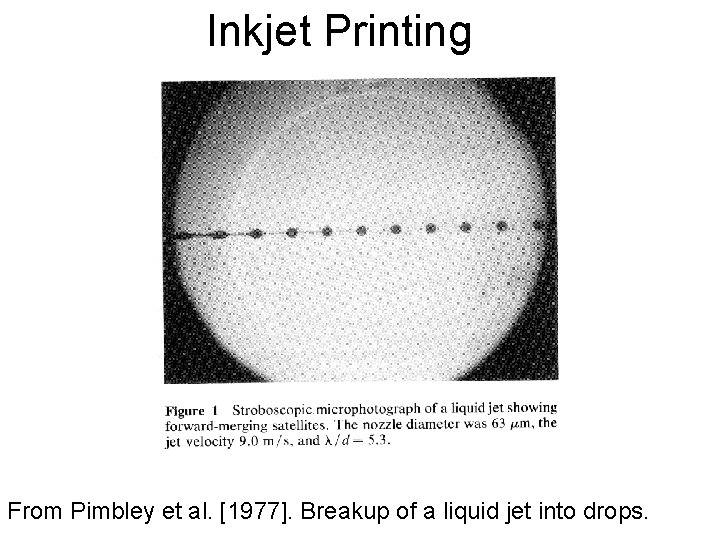
Inkjet Printing From Pimbley et al. [1977]. Breakup of a liquid jet into drops.
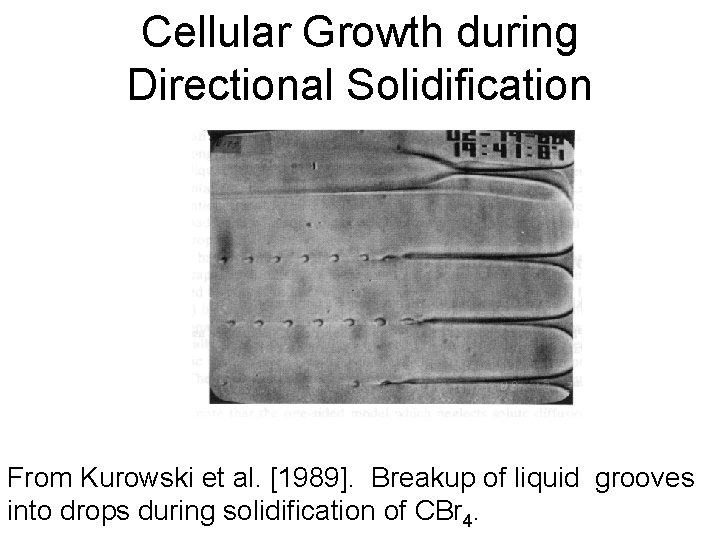
Cellular Growth during Directional Solidification From Kurowski et al. [1989]. Breakup of liquid grooves into drops during solidification of CBr 4.
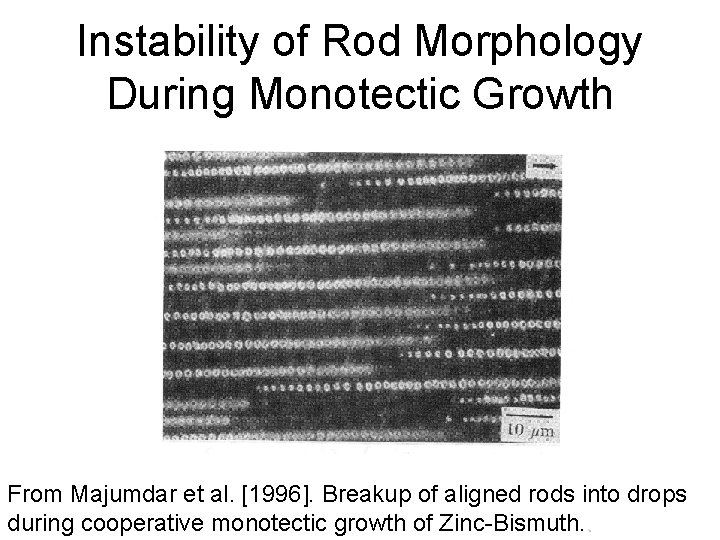
Instability of Rod Morphology During Monotectic Growth From Majumdar et al. [1996]. Breakup of aligned rods into drops during cooperative monotectic growth of Zinc-Bismuth. .
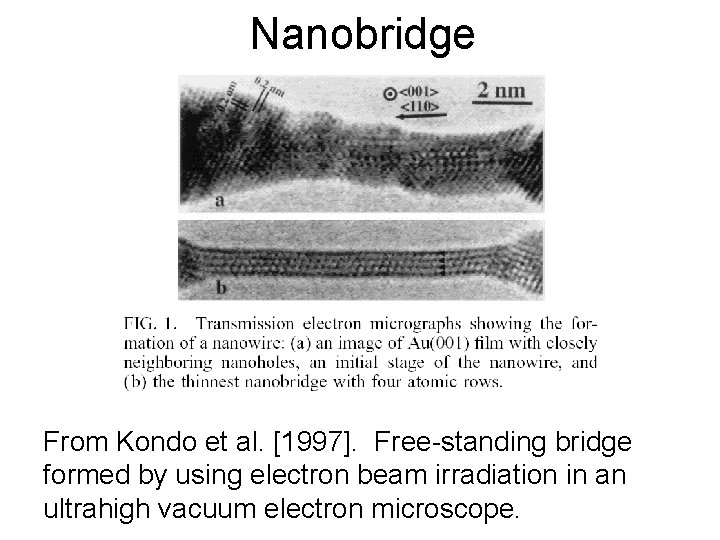
Nanobridge From Kondo et al. [1997]. Free-standing bridge formed by using electron beam irradiation in an ultrahigh vacuum electron microscope.
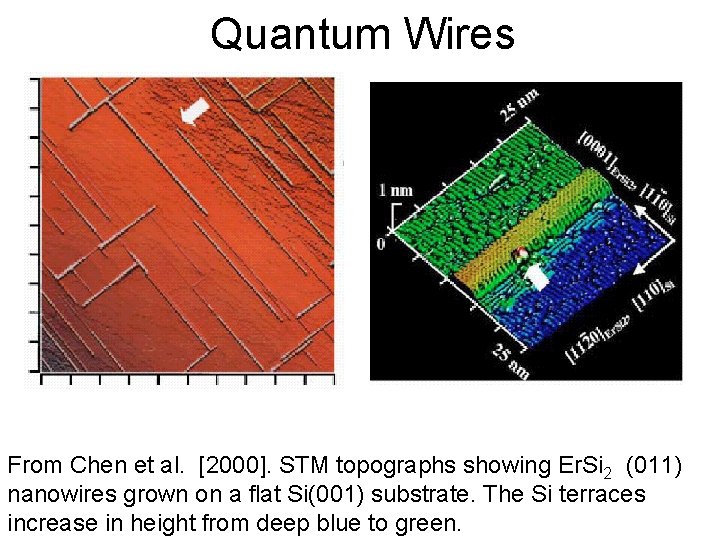
Quantum Wires From Chen et al. [2000]. STM topographs showing Er. Si 2 (011) nanowires grown on a flat Si(001) substrate. The Si terraces increase in height from deep blue to green.
Possible Reasons for Enhanced Stability Quantum effects (Kassubek et al. [2001]). Elastic effects with substrate (Chen et al. [2000]) Stabilization by contact angle (Mc. Cullum et al. [1996]) Radial thermal gradients (Mc. Fadden et al. [1993]) Surface energy anisotropy (this work)
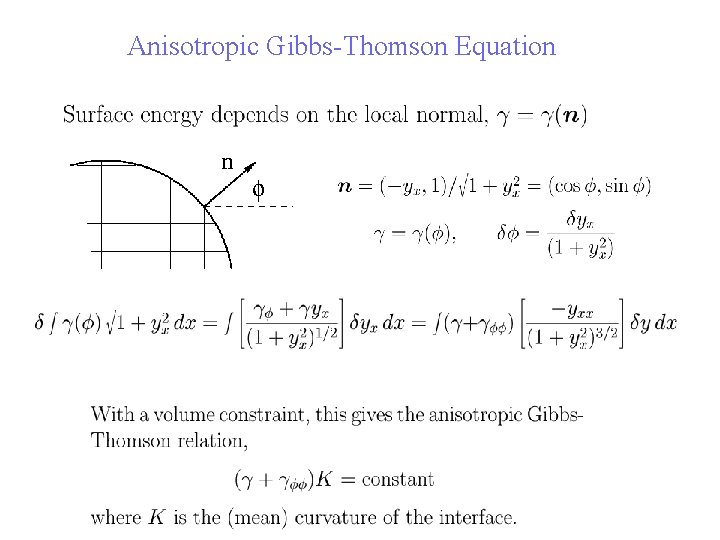
Anisotropic Gibbs-Thomson Equation
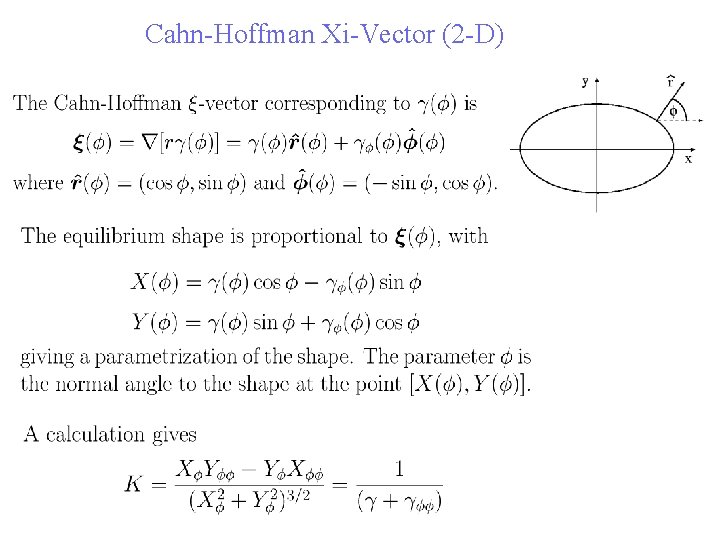
Cahn-Hoffman Xi-Vector (2 -D)
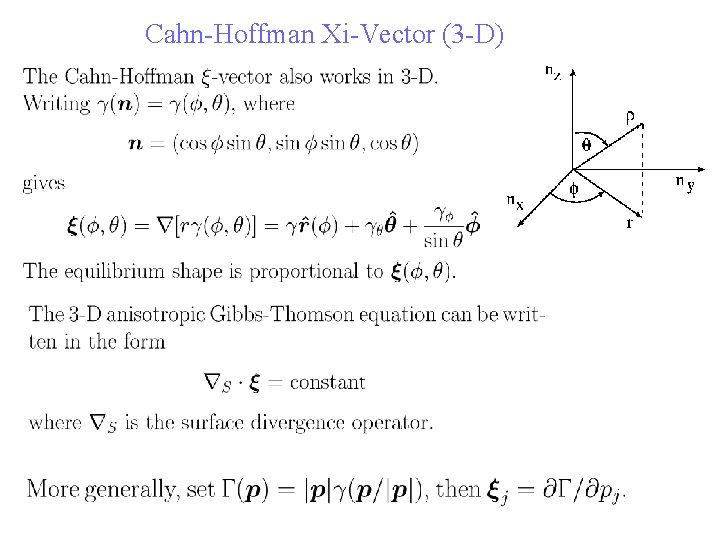
Cahn-Hoffman Xi-Vector (3 -D)
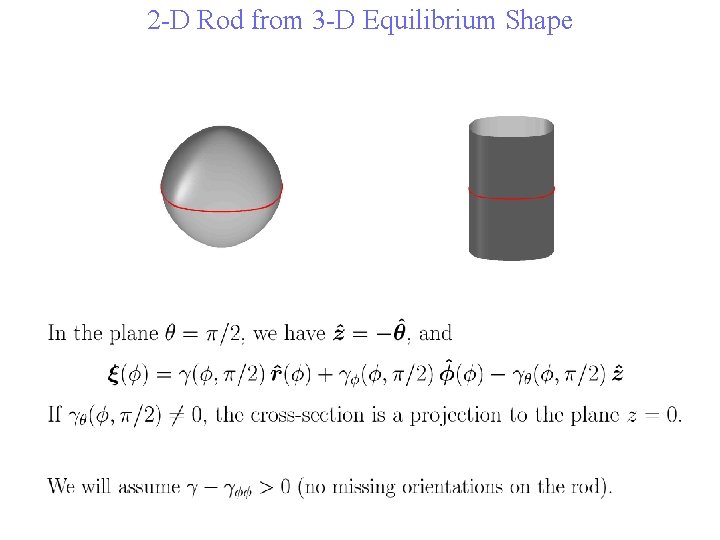
2 -D Rod from 3 -D Equilibrium Shape
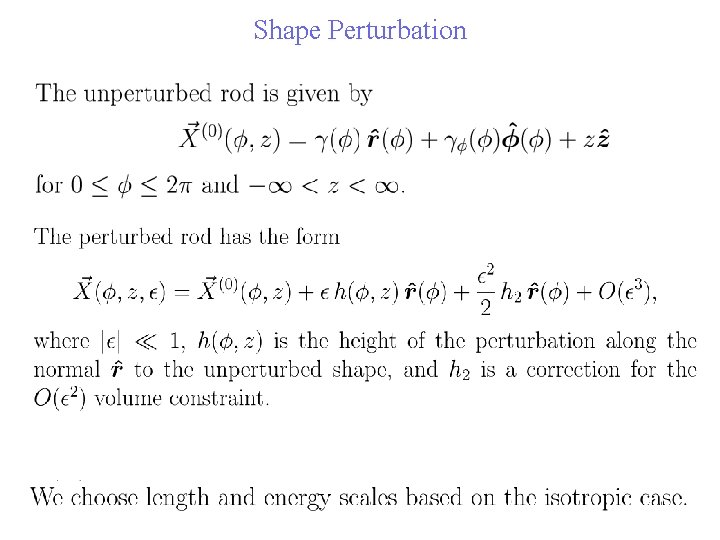
Shape Perturbation
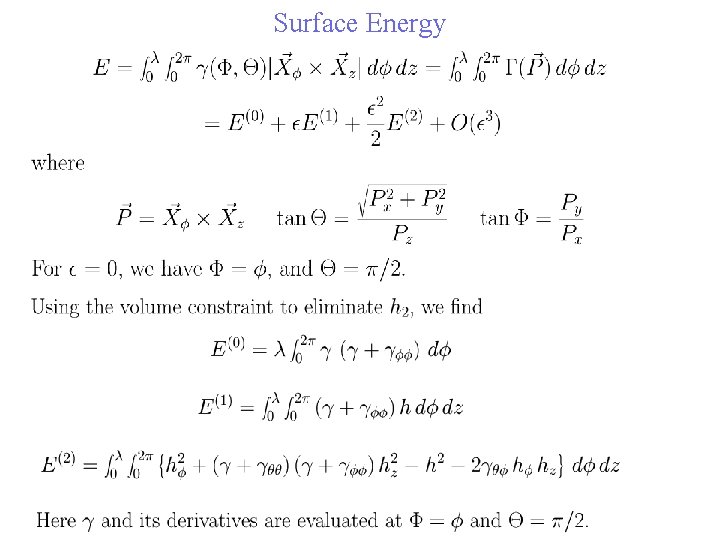
Surface Energy
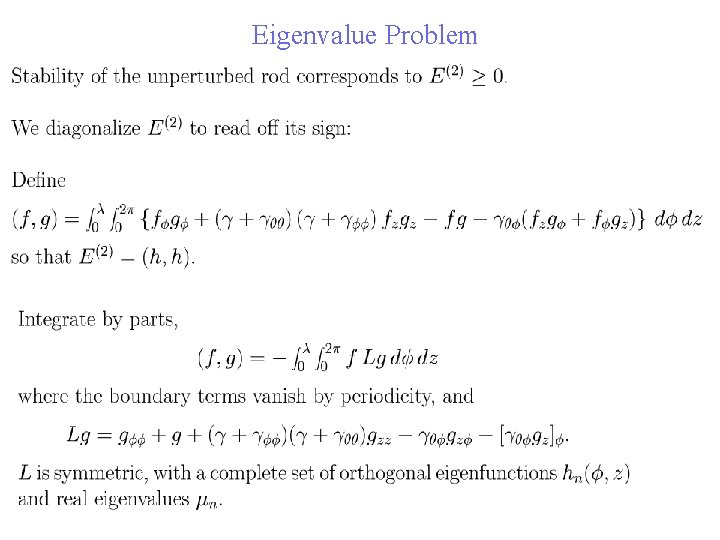
Eigenvalue Problem
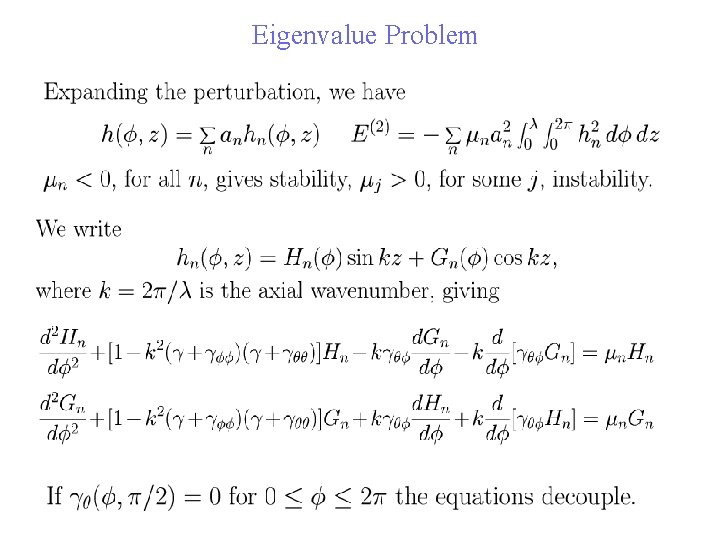
Eigenvalue Problem
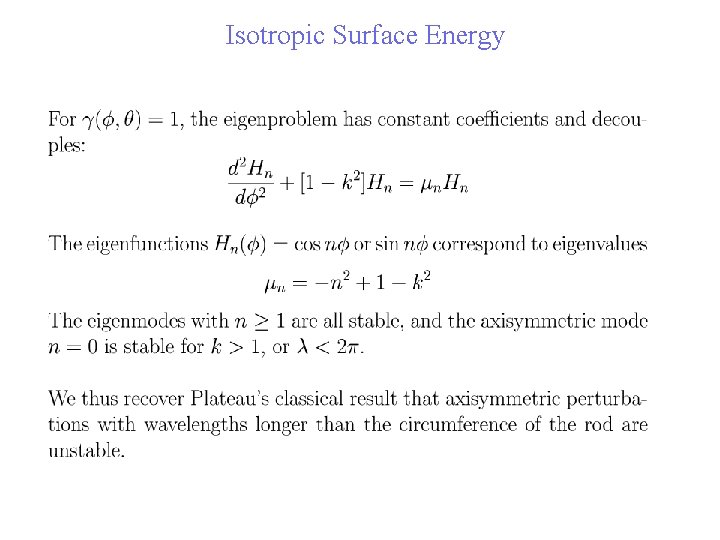
Isotropic Surface Energy
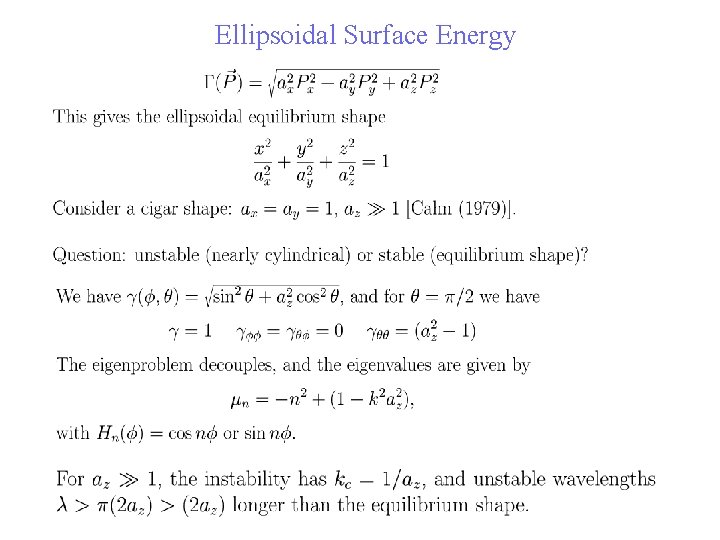
Ellipsoidal Surface Energy
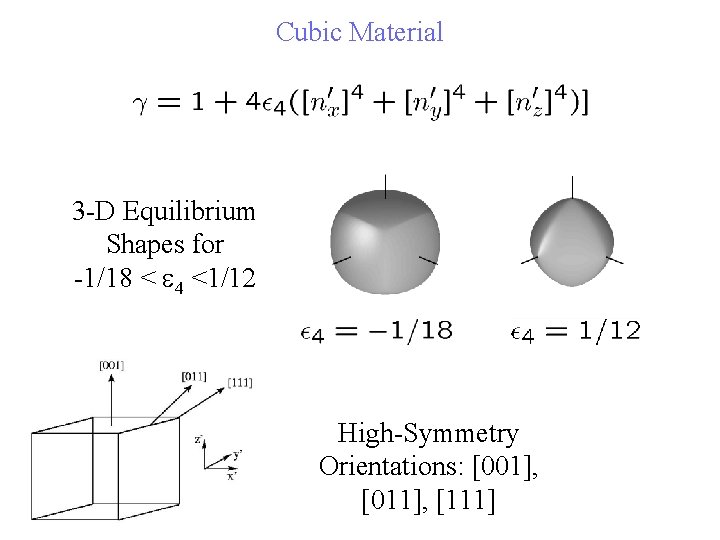
Cubic Material 3 -D Equilibrium Shapes for -1/18 < 4 <1/12 High-Symmetry Orientations: [001], [011], [111]
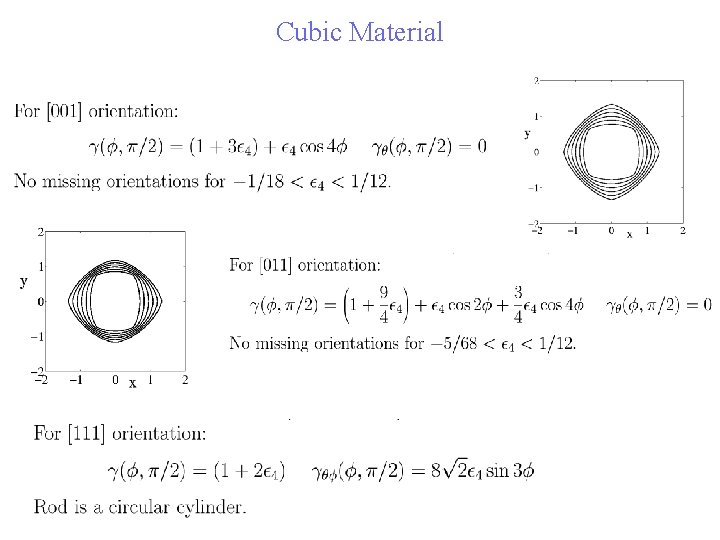
Cubic Material
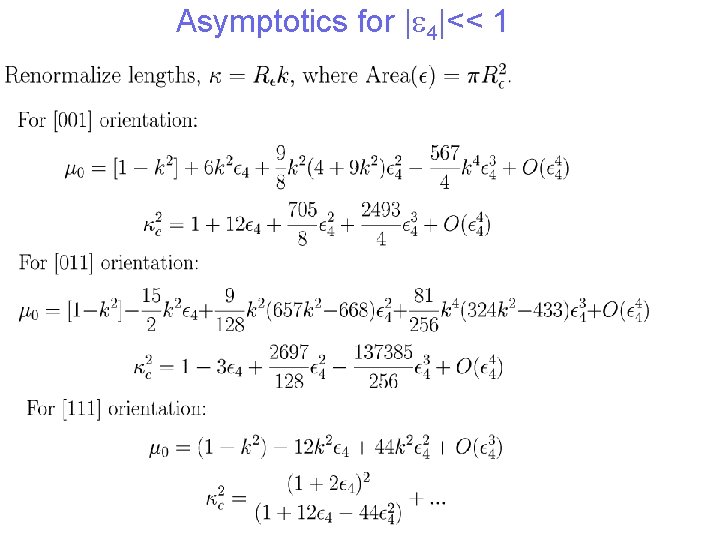
Asymptotics for | 4|<< 1
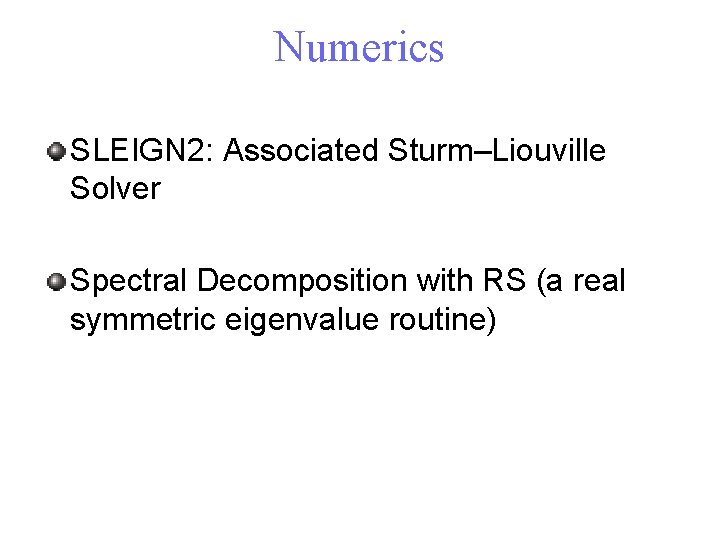
Numerics SLEIGN 2: Associated Sturm–Liouville Solver Spectral Decomposition with RS (a real symmetric eigenvalue routine)
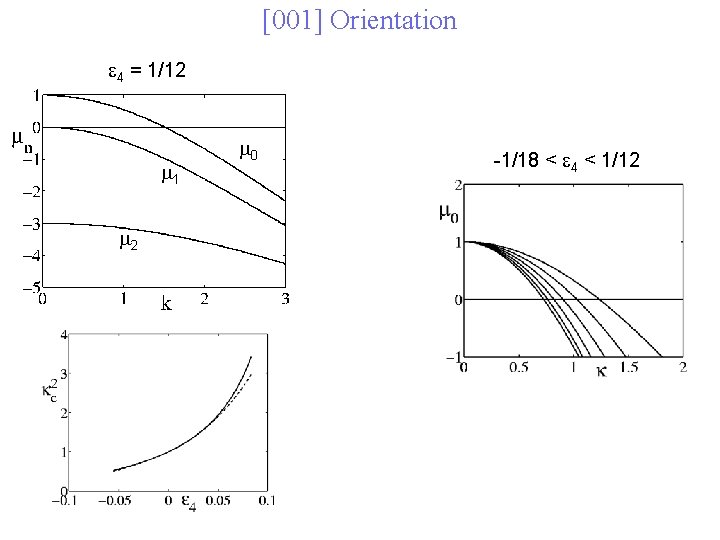
[001] Orientation 4 = 1/12 1 2 0 -1/18 < 4 < 1/12
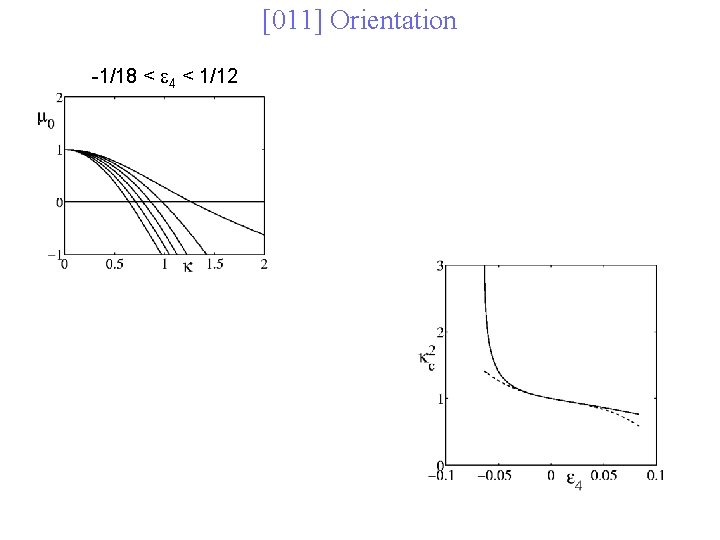
[011] Orientation -1/18 < 4 < 1/12
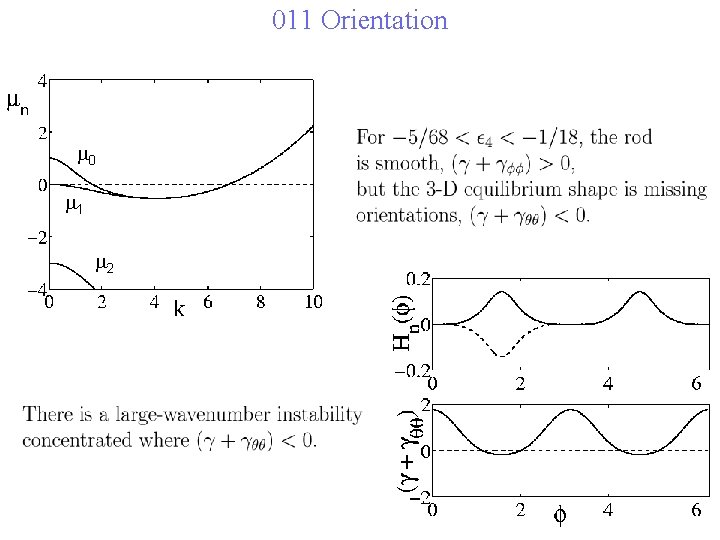
011 Orientation 0 1 2
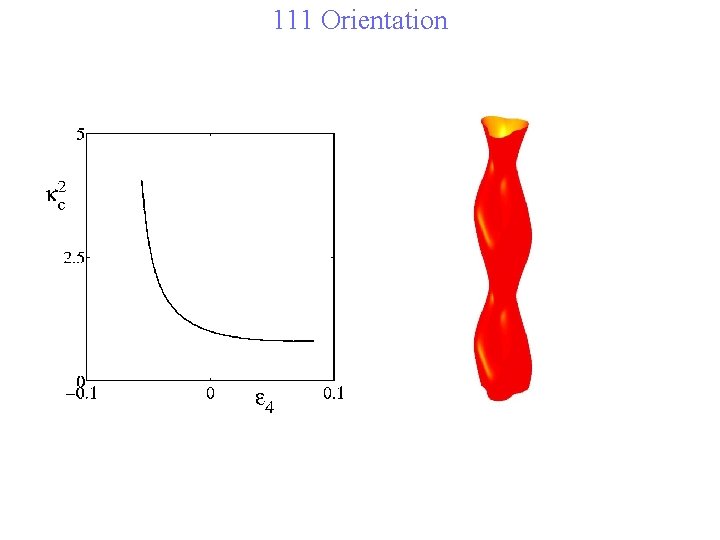
111 Orientation
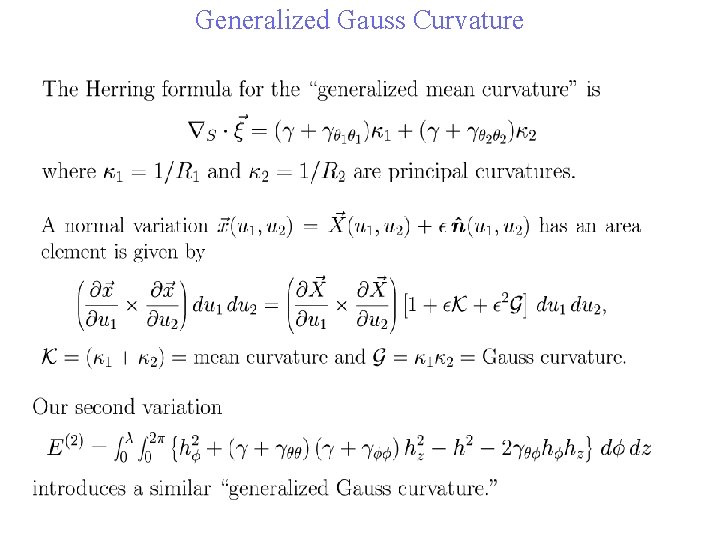
Generalized Gauss Curvature
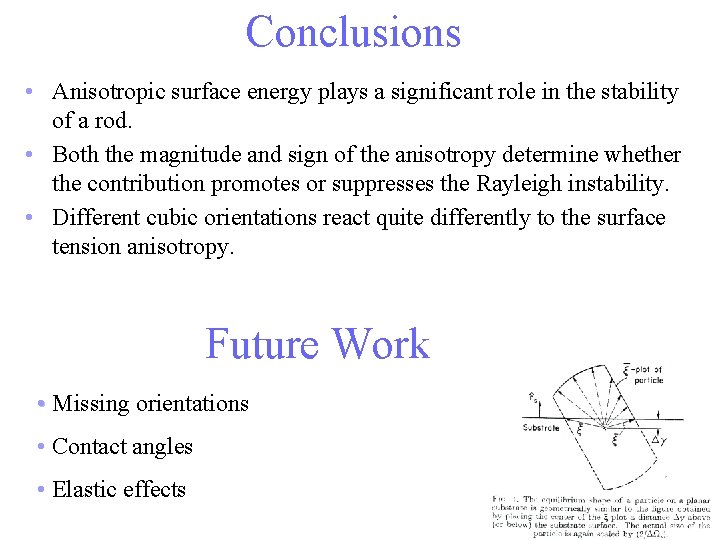
Conclusions • Anisotropic surface energy plays a significant role in the stability of a rod. • Both the magnitude and sign of the anisotropy determine whether the contribution promotes or suppresses the Rayleigh instability. • Different cubic orientations react quite differently to the surface tension anisotropy. Future Work • Missing orientations • Contact angles • Elastic effects
References P. B. Bailey, W. N. Everitt, and A. Zettl, Algorithm 810: The SLEIGN 2 Sturm-Liouville code, ACM T Math Software 27: (2) Jun 2001 143 --192. Y. Kondo and K. Takayanagi, Gold nanobridge stabilized by surface structure, Phys. Rev. Lett. 79 (1997) 3455 -3458. Y. Chen, D. A. A. Ohlberg, G. Medeiros-Ribeiro, Y. A. Chang, and R. S. Williams, Self-assembled growth of epitaxial erbium disilicide nanowires of silicon(001), App. Phys. Lett. , Vol. 76, No. 26 (2000), 4004 --4006. B. Majumdar and K. Chattopadhyay, The Rayleigh Instability and the Origin of Rows of Droplets in the Monotectic Microstructure of Zinc-Bismuth Alloys, Met. Mat. Trans. A, Vol 27 A, July (1996) 2053 --2057. M. G. Forest and Q. Wang, Anisotropic microstructure-induced reduction of the Rayleigh instability for liquid crystalline polymers, Phys. Lett. A, 245 (1998) 518 --526. M. S. Mc. Callum, P. W. Voorhees, M. J. Miksis, S. H. Davis, and H. Wong, Capillary instabilities in solid thin films: Lines, J. Appl. Phys. 79 (1996) 7604 -7611. J. W. Cahn, Stability of rods with anisotropic surface free energy, Scripta Metall. 13 (1979) 1069 -1071. G. B. Mc. Fadden, S. R. Coriell, and R. F. Sekerka, Effect of surface tension anisotropy on cellular morphologies, J. Crystal Growth 91 (1988) 180 --198. F. Kassubek, C. A. Stafford, H. Grabert, and R. E. Goldstein, Quantum suppression of the Rayleigh instability in nanowires, Nonlinearity 14 (2001) 167 --177. P. Kurowski, S. de Cheveigne, G. Faivre, and C. Guthmann, Cusp instability in cellular growth, J. Phys. (Paris) 50 (1989) 3007 -3019. G. B. Mc. Fadden, S. R. Coriell, and B. T. Murray, The Rayleigh instability for a cylindrical crystalmelt interface, in Variational and Free Boundary Problems, (ed. A. Friedman and J. Spruck), Vol. 53 (1993) pp. 159 -169.