
The effect of Pharmacokinetics Pharmacodynamics of the Drug
- Slides: 24
The effect of Pharmacokinetics/ Pharmacodynamics of the Drug on its Dosage Form Design 1
Introduction n n The therapeutic dose, dosage form and frequency of drug administration have to be determined to ensure the maximum efficacy and safety of the drug. The drug therapeutic action is affected by many factors; the drug molecule, formulation, pharmacokinetics and pharmacodynamics. 2
Input-Response n n n A balance is required between the input and the response of the drug The pharmacokinetics covers the relation between the drug concentration and the input which is adjusted by dose, dosage form, frequency of administration and route of administration. The Pharmacodynamics: the relationship between the concentration and the desired and adverse effects. 3
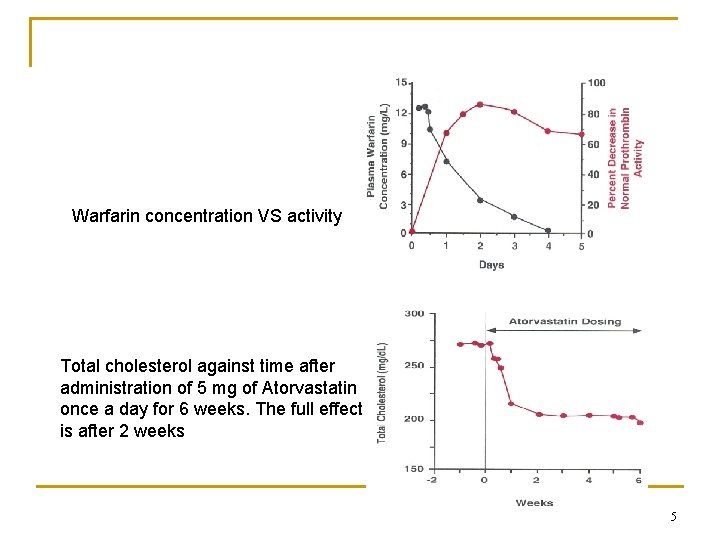
Input-Response n n n Understanding sequential events of each drug. Understanding therapeutic windows. E. g. Morphine and digoxin both have narrow therapeutic windows, but morphine has short half-life and digoxin has longer half-life. Some drugs are initially given at higher dose to achieve therapeutic concentration the dose is reduced (drug loading), like quinacrine (antimalaria). It is also important to recognize that some drugs have lag time in response and so the dose should be related to the plasma concentration and not therapeutic effect like Warfarin. Lipitor’s effect starts after 2 -3 weeks of administration. 4
Warfarin concentration VS activity Total cholesterol against time after administration of 5 mg of Atorvastatin once a day for 6 weeks. The full effect is after 2 weeks 5
Input-Response n The lessons are q q Understand the specific concentration- response relationship helps in the management and optimal use of drugs. Only through proper understanding of the events after the drug administration can a meaningful decision be made about the dose and formulation. 6
Local vs. Systemic n n Absorption of locally acting drugs should be minimized. Give some examples for locally acting drugs. 7
Important Definitions Intravascular: n Administration of drugs directly into the blood either intravenous or intra-arterial. Extravascular : n Administration of drugs through intradermal, intramuscular, oral, pulmonary subcutaneous, rectal, and sublingual routes. 8
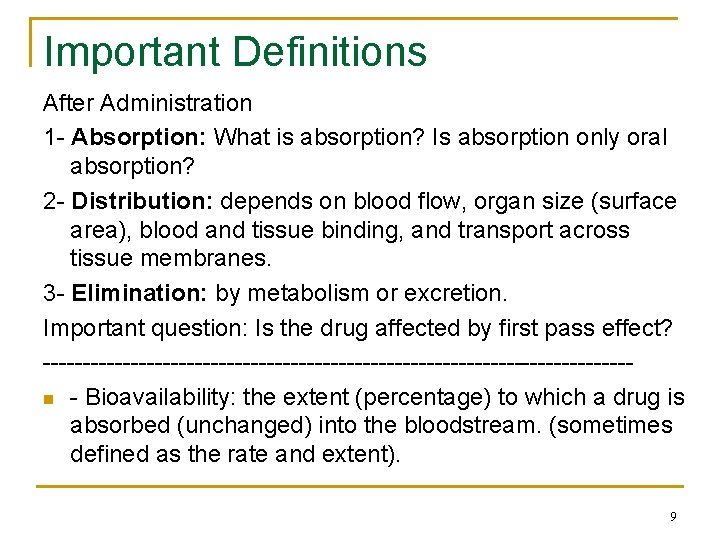
Important Definitions After Administration 1 - Absorption: What is absorption? Is absorption only oral absorption? 2 - Distribution: depends on blood flow, organ size (surface area), blood and tissue binding, and transport across tissue membranes. 3 - Elimination: by metabolism or excretion. Important question: Is the drug affected by first pass effect? -------------------------------------n - Bioavailability: the extent (percentage) to which a drug is absorbed (unchanged) into the bloodstream. (sometimes defined as the rate and extent). 9
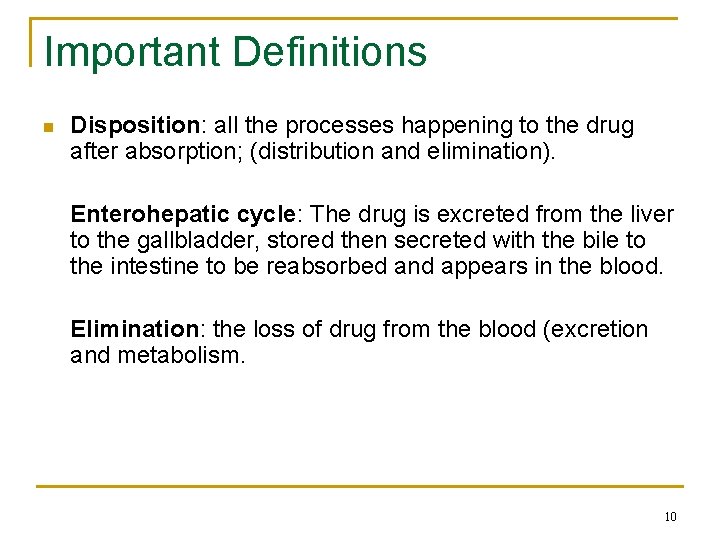
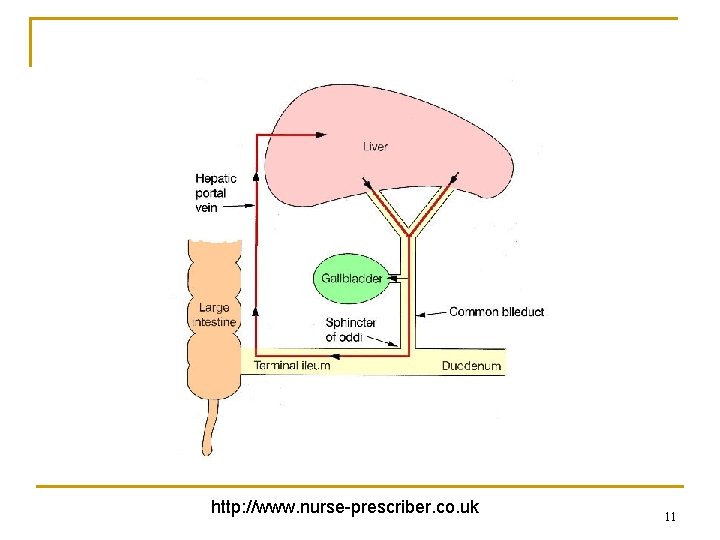
Important Definitions n Disposition: all the processes happening to the drug after absorption; (distribution and elimination). Enterohepatic cycle: The drug is excreted from the liver to the gallbladder, stored then secreted with the bile to the intestine to be reabsorbed and appears in the blood. Elimination: the loss of drug from the blood (excretion and metabolism. 10
http: //www. nurse-prescriber. co. uk 11
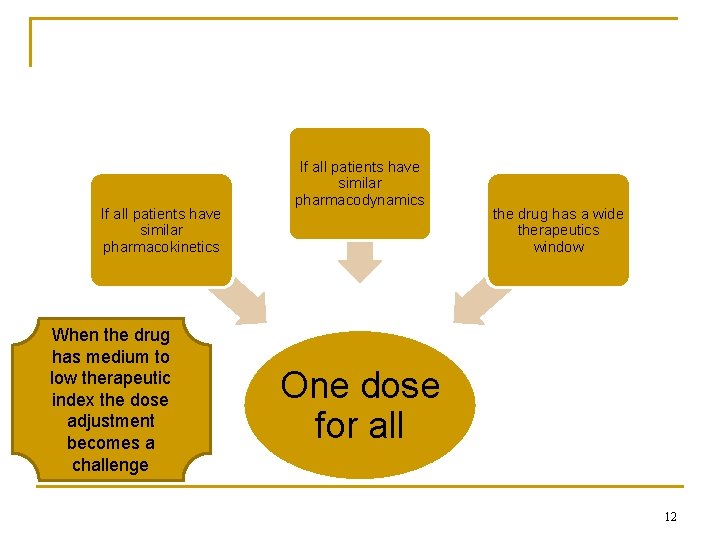
If all patients have similar pharmacokinetics When the drug has medium to low therapeutic index the dose adjustment becomes a challenge If all patients have similar pharmacodynamics the drug has a wide therapeutics window One dose for all 12
Genetic Variability Pharmacogenomics n n Individuals are different in their responses to medicine. This is more significant with drugs with medium to small therapeutic windows. It is crucial to identify whether the variability is due to pharmacokinetics (phenytoin) or pharmacodynamics (suprane) origin? Genetic variability is racial related. 13
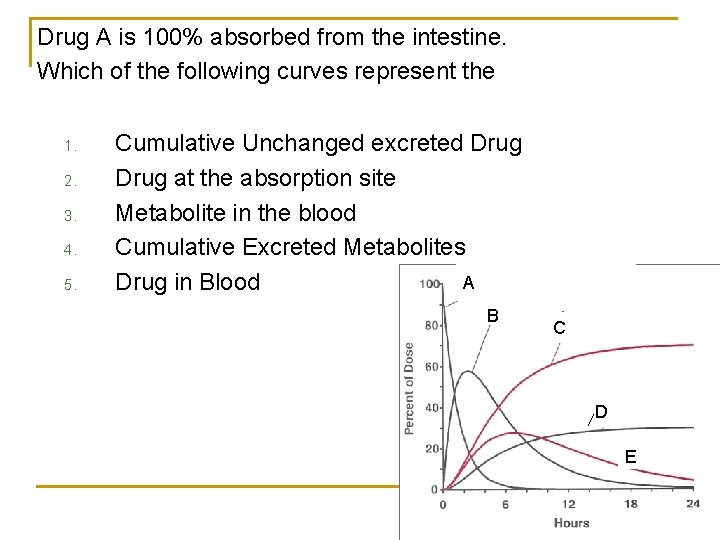
Drug A is 100% absorbed from the intestine. Which of the following curves represent the 1. 2. 3. 4. 5. Cumulative Unchanged excreted Drug at the absorption site Metabolite in the blood Cumulative Excreted Metabolites A Drug in Blood B C D E 14
Membranes n n n Movement through membranes is required for absorption into the body and for distribution to various tissue. (drug transport) Cellular membrane is composed of an inner predominantly lipoid layer. The transport of drugs is described as movement across a series of membranes and spaces each of which hinders the drug transport to varying degrees, and anyone can be the slowest and thus the rate limiting step. 15
Absorption Sites It is important to recognize the characteristics of the mucus membrane through which the drug is (supposed to get) absorbed. 1. The membrane permeability (the buccal < sublingual < intestinal… 2. The enzyme activity (e. g. the enzymatic activity is minimum in the colon, and the permeability is good). !!! 16
How to Improve Absorption? n n Prodrug: Can be used to improve stability, absorption, targeting Formulation: salt, complexation, surfactant, lipid, solid dispersions, nanoparticles 17
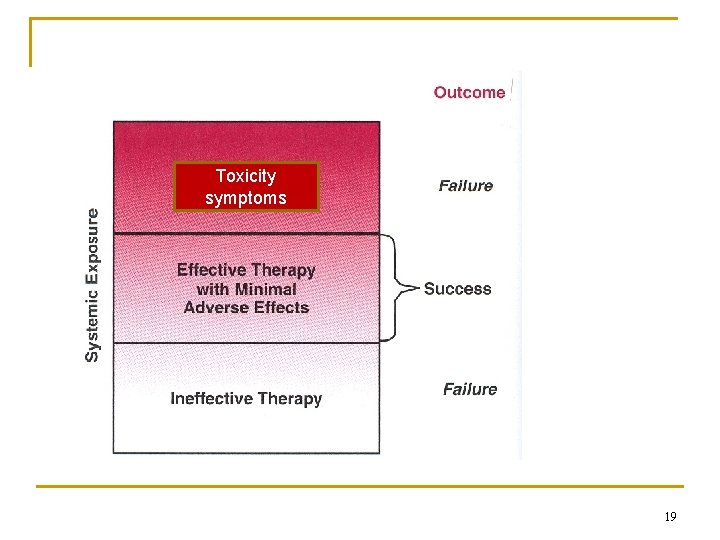
Therapeutic Window n n The therapeutic window is used as a guideline in the absence of particular information about the patient. Combinations of medications are also sometimes used (example? ) to reduce the probability of adverse effect. 18
Toxicity symptoms 19
Therapeutic Window n n The dosage regimen: a schedule of the medication administration including the dose (# of m. L or quantity of drug, the dosage form, the rate and route of administration. Pharmacokinetic factors: How the body acts on the drug. Clinical factors: State of the patient, Patient adherence, genetics, weight. . . Note the significant inter-individual variability in the doseefficacy and dose-adverse effect response leading to a differences in therapeutic window. 20
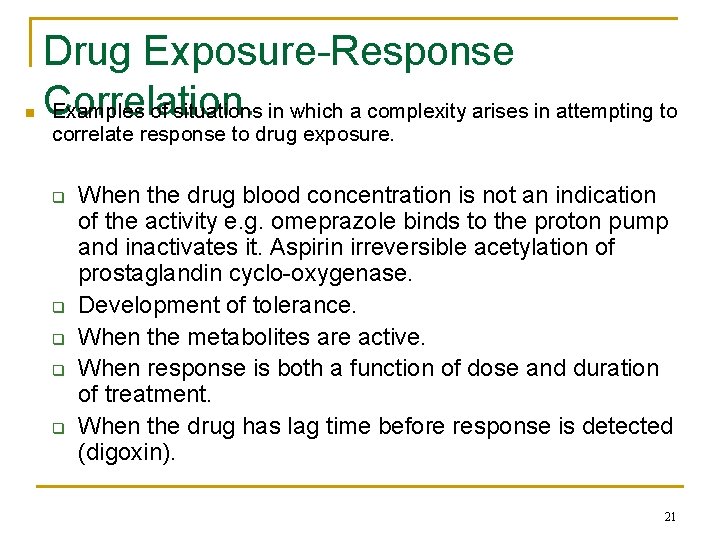
n Drug Exposure-Response Correlation. Examples of situations in which a complexity arises in attempting to correlate response to drug exposure. q q q When the drug blood concentration is not an indication of the activity e. g. omeprazole binds to the proton pump and inactivates it. Aspirin irreversible acetylation of prostaglandin cyclo-oxygenase. Development of tolerance. When the metabolites are active. When response is both a function of dose and duration of treatment. When the drug has lag time before response is detected (digoxin). 21
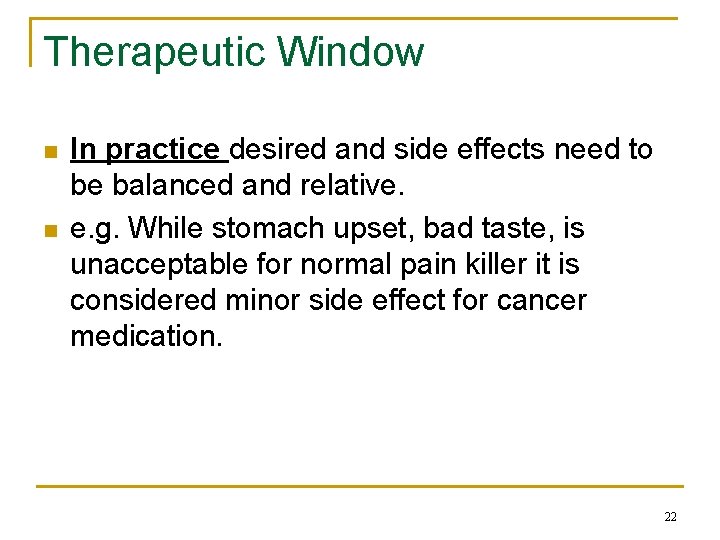
Therapeutic Window n n In practice desired and side effects need to be balanced and relative. e. g. While stomach upset, bad taste, is unacceptable for normal pain killer it is considered minor side effect for cancer medication. 22
Homework n In one page using 3 -5 references /each question, comment on the following: q q Genetic variability is racial related. Drug case in which complexity arises in attempting to correlate response to drug exposure. 23
References n Introduction to Pharmacokinetics and Pharmacodynamics, by Thomas N. Tozer And Malcom Rowland 24