
The Effect of Parasites on the Host Diagnosis
- Slides: 25
- The Effect of Parasites on the Host - Diagnosis of the Parasitic infections General Microbiology 2 nd year students 2018 -2019 Dr. Mohammad Odibate
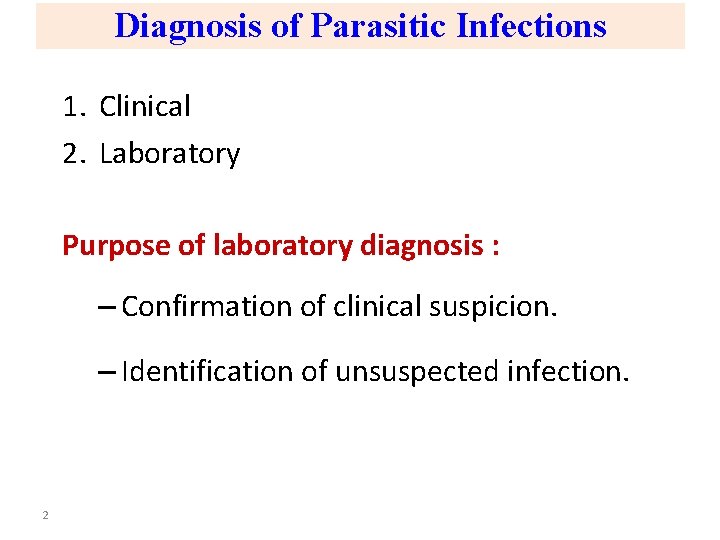
Diagnosis of Parasitic Infections 1. Clinical 2. Laboratory Purpose of laboratory diagnosis : – Confirmation of clinical suspicion. – Identification of unsuspected infection. 2
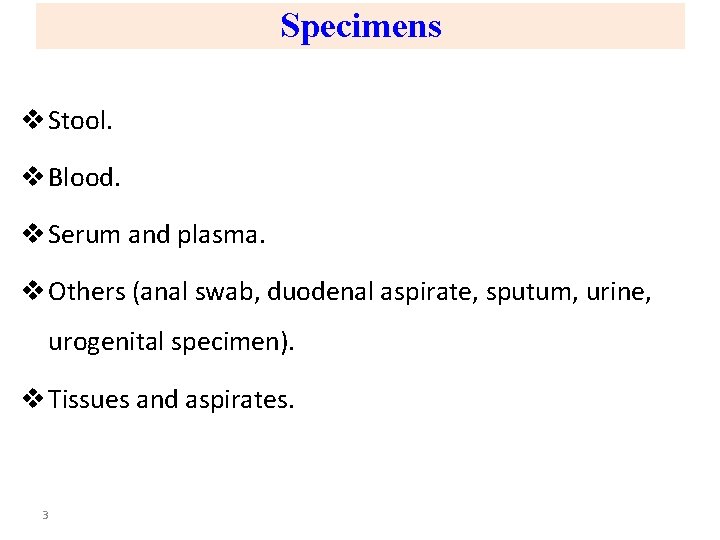
Specimens v Stool. v Blood. v Serum and plasma. v Others (anal swab, duodenal aspirate, sputum, urine, urogenital specimen). v Tissues and aspirates. 3
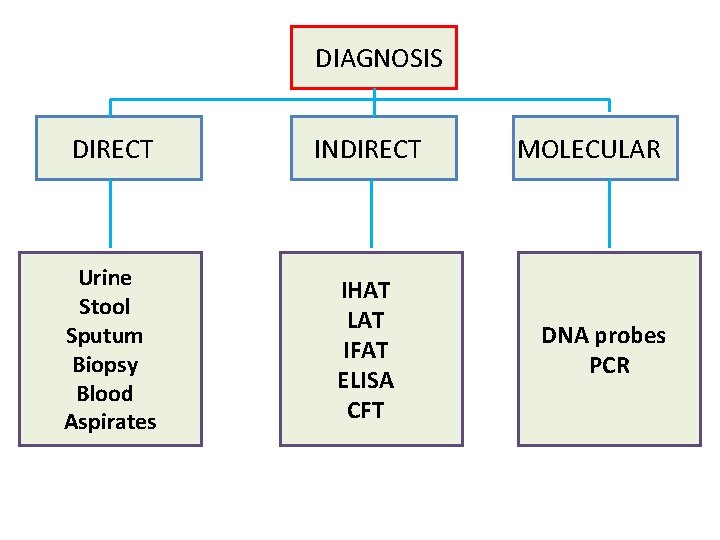
DIAGNOSIS DIRECT INDIRECT Urine Stool Sputum Biopsy Blood Aspirates IHAT LAT IFAT ELISA CFT MOLECULAR DNA probes PCR
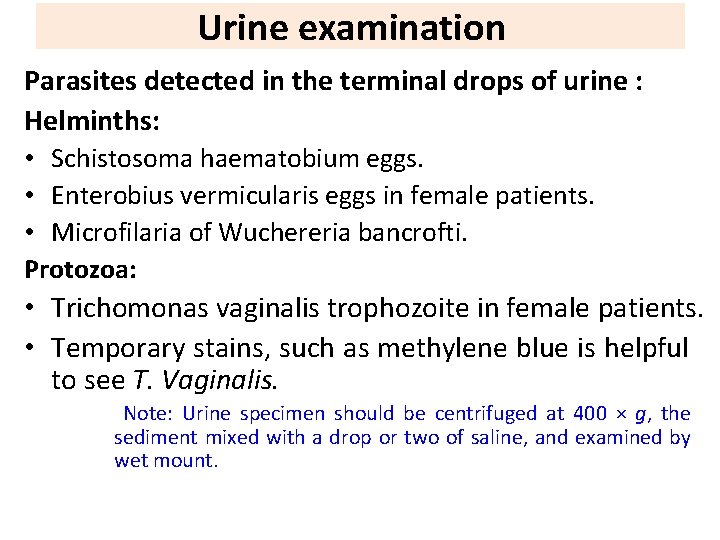
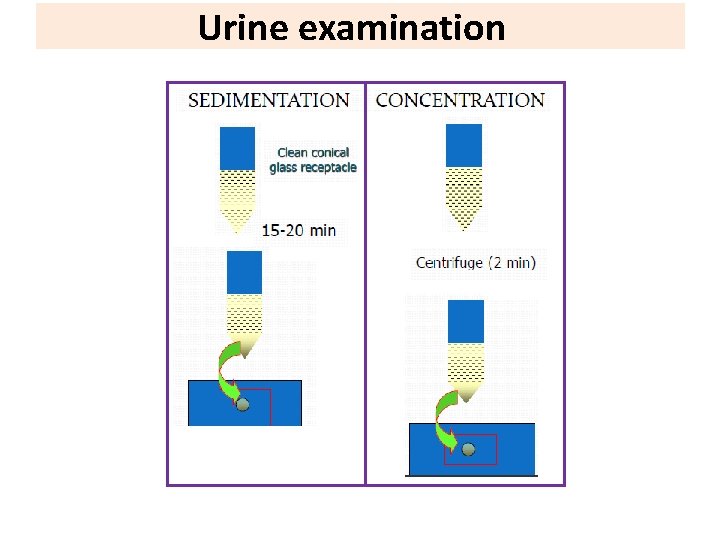
Urine examination Parasites detected in the terminal drops of urine : Helminths: • Schistosoma haematobium eggs. • Enterobius vermicularis eggs in female patients. • Microfilaria of Wuchereria bancrofti. Protozoa: • Trichomonas vaginalis trophozoite in female patients. • Temporary stains, such as methylene blue is helpful to see T. Vaginalis. Note: Urine specimen should be centrifuged at 400 × g, the sediment mixed with a drop or two of saline, and examined by wet mount.
Urine examination
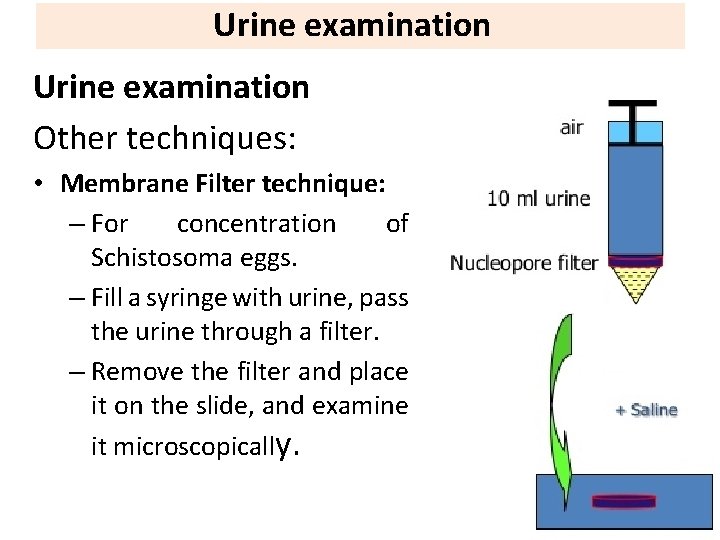
Urine examination Other techniques: • Membrane Filter technique: – For concentration of Schistosoma eggs. – Fill a syringe with urine, pass the urine through a filter. – Remove the filter and place it on the slide, and examine it microscopically.
Stool examination Sample collection: • Sample is collected in clean, dry container • Handled carefully • Samples in some cases fresh (amoeba, ciliates) • Liquid and soft stool examined within 15 min • Not mixed with urine or disinfectant (as they will kill trophozoites) Preservation of stool specimens: Aim: • To preserve protozoan morphology. • To prevent the continued development of some helminthic eggs and larvae. • The most common preservative used is 10% formalin. 8
Stool examination Microscopic Examination of Faecal Specimens: 1 - Direct Smears. 2 - Direct wet mount 3 - Concentration methods.
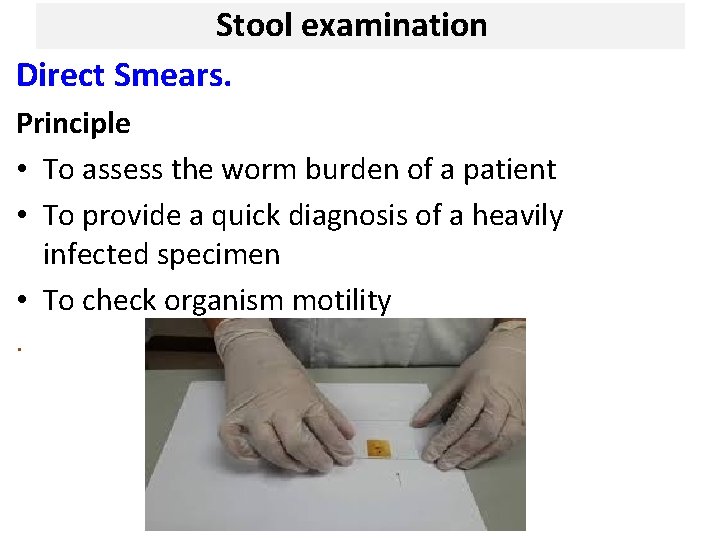
Stool examination Direct Smears. Principle • To assess the worm burden of a patient • To provide a quick diagnosis of a heavily infected specimen • To check organism motility.
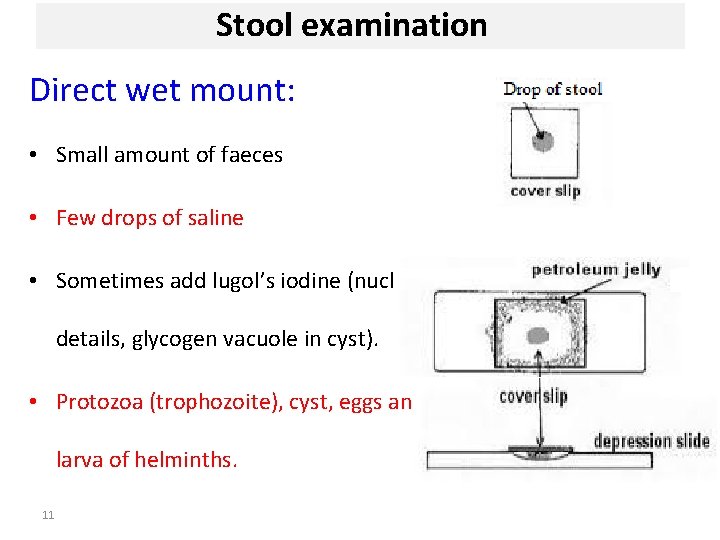
Stool examination Direct wet mount: • Small amount of faeces • Few drops of saline • Sometimes add lugol’s iodine (nuclear details, glycogen vacuole in cyst). • Protozoa (trophozoite), cyst, eggs and larva of helminths. 11
Stool examination Concentration methods • Used if parasites are scanty in the sample. • Two types: 1 - Floatation (eggs and cyst float , solution of high specific gravity) Saturated sodium chloride ii. Zinc sulphate centrifugation floatation (cyst, nematodes). i. 2 - Sedimentation (solution of formol ether Egg count in 1 gram 12 low specific gravity):
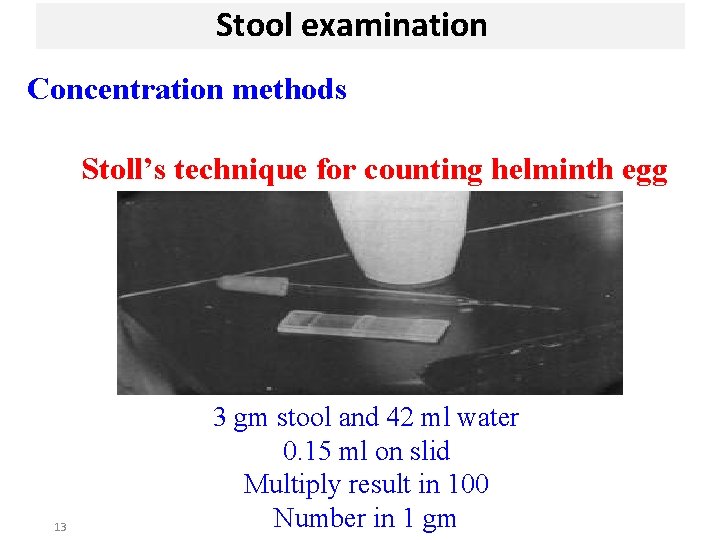
Stool examination Concentration methods Stoll’s technique for counting helminth egg 13 3 gm stool and 42 ml water 0. 15 ml on slid Multiply result in 100 Number in 1 gm
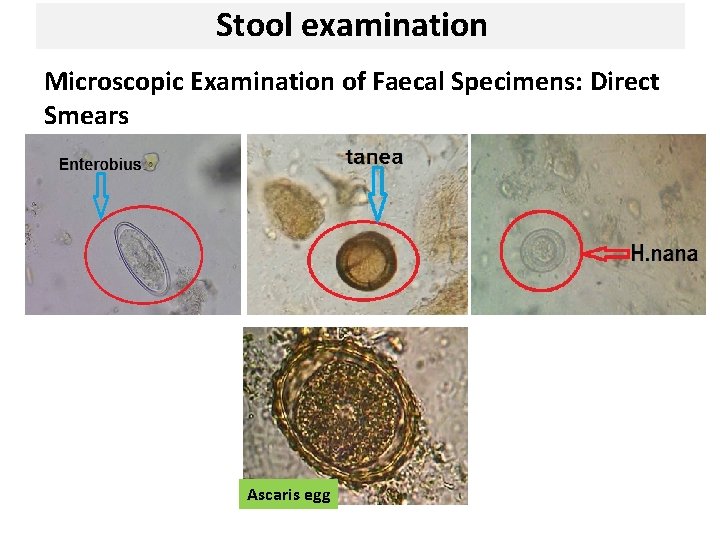
Stool examination Microscopic Examination of Faecal Specimens: Direct Smears Ascaris egg
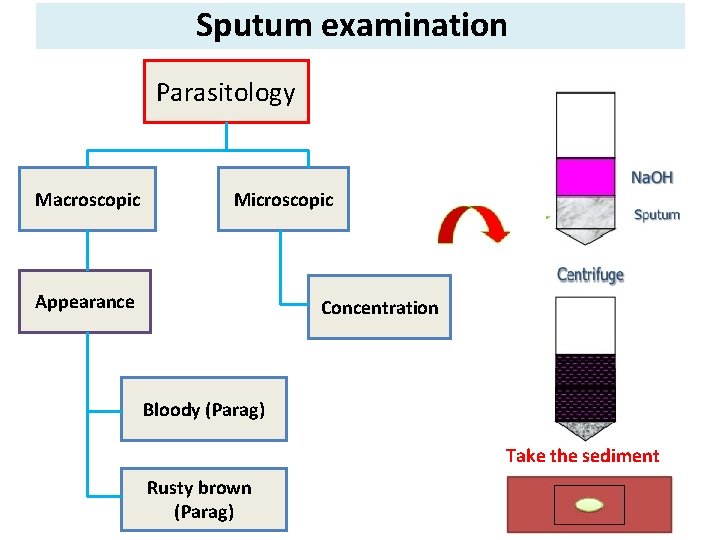
Sputum examination üAbnormally, it is purulent, bloody, contains rusty brown particles (Paragonimus). Technique for examination: üAdd on a sputum sample equal volume of Na. OH to dissolve the mucus. üLeave this combination for a while, then centrifuge at 200 xg for 5 minutes, then examine the sediment. üThe specimen can be preserved in 10% formalin and a formalin-ethyl acetate
Sputum examination Parasitology Macroscopic Microscopic Appearance Concentration Bloody (Parag) Take the sediment Rusty brown (Parag)
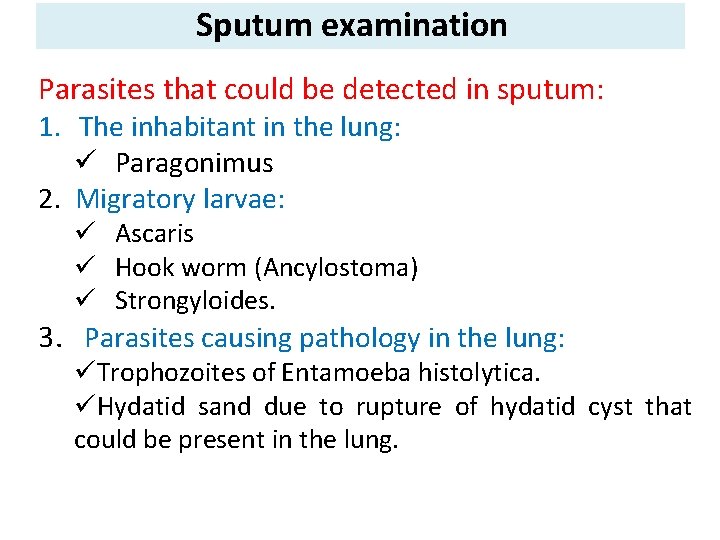
Sputum examination Parasites that could be detected in sputum: 1. The inhabitant in the lung: ü Paragonimus 2. Migratory larvae: ü Ascaris ü Hook worm (Ancylostoma) ü Strongyloides. 3. Parasites causing pathology in the lung: üTrophozoites of Entamoeba histolytica. üHydatid sand due to rupture of hydatid cyst that could be present in the lung.
Blood examination • Fresh capillary blood of finger or ear lobe • Venous blood collected in EDTA (anticoagulant) Blood sample will be used for : – Microscopic examination(Thin Smear, Thick smear, Wet mount for microfilaria). • • Molecular diagnosis Detection of parasite antigen Isolation of organisms Special tests 18
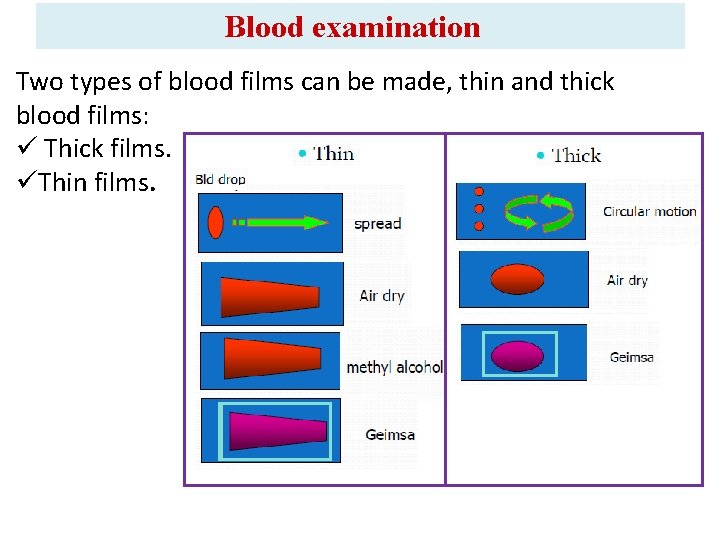
Blood examination Two types of blood films can be made, thin and thick blood films: ü Thick films. üThin films.
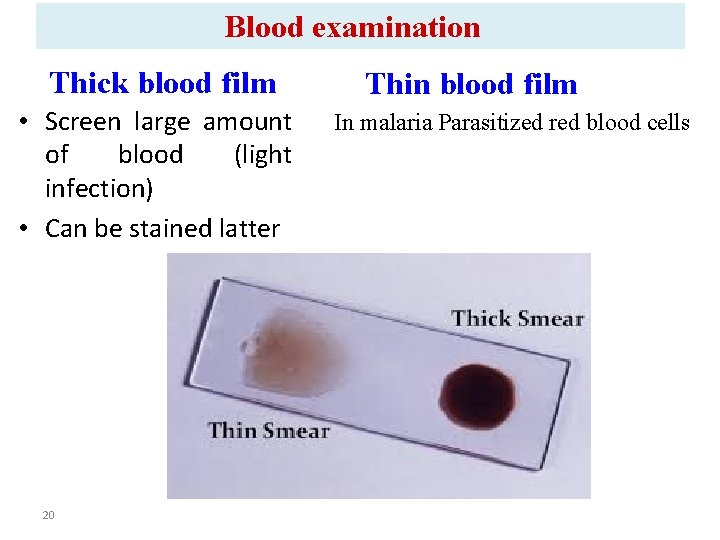
Blood examination Thick blood film • Screen large amount of blood (light infection) • Can be stained latter 20 Thin blood film In malaria Parasitized red blood cells
Blood examination Parasites that could be detected in blood film: • Malaria • Trypanosoma (African and American). • Microfilaria of all types Filaria except Onchocerca volvulus. • Indian type of Leishmania donovani.
Examination of other Specimens 1. Lung and Liver • Aspiration from lung and liver could be examined for: üPneumocytosis üAmoebiasis Technique: The use of proteolytic enzymes is recommended to free the organisms from the aspirate material üHydatid Disease 2. Lymph nodes, Spleen, Liver, Bone Marrow and Spinal Fliud: Aspirated material may be examined for presence of trypanosomes, leishmanial forms and amoebae. 3. Cutaneous Ulcers : Leishmaniasis
Harmful effects of the parasite on the host • Many parasites cause harmful effects to their host, but in most cases these effects are not of such importance that the host is being killed. • Such effects comprise: – Wasting (cachexia) African trypanosomiasis and leishmaniasis may lead to severe loss of weight in both animals and man. – Superinfections In the case of (muco)cutaneous leishmaniasis ulcerations may lead to superinfections with bacteria
Harmful effects of the parasite on the host – Immunodepression Malaria, bilharziosis, etc. , lead to a certain degree of immune suppression which renders the infected host more susceptible to other diseases. – Allergic reactions – Anaphylactic shock : may be induced by the sudden release of large amounts of parasite internal antigens into the bloodstream.
Harmful effects of the parasite on the host - Mechanical damage – In the case of malaria the lysis of erythrocytes does lead to haemolysis and anaemia. – In the case of ascaris infection the presence of the worms in the small intestine may lead to intestinal occlusions • Reflexes (intestinal contractions-ascaris) • Irritation of skin and tissues by ecto- and endoparasites