
The effect of interspecific competition on population growth



- Slides: 21
The effect of interspecific competition on population growth Moretz Biology, 2016
Review Ecological Relationships Predator/Prey Producer/Consumer Symbiosis Competition
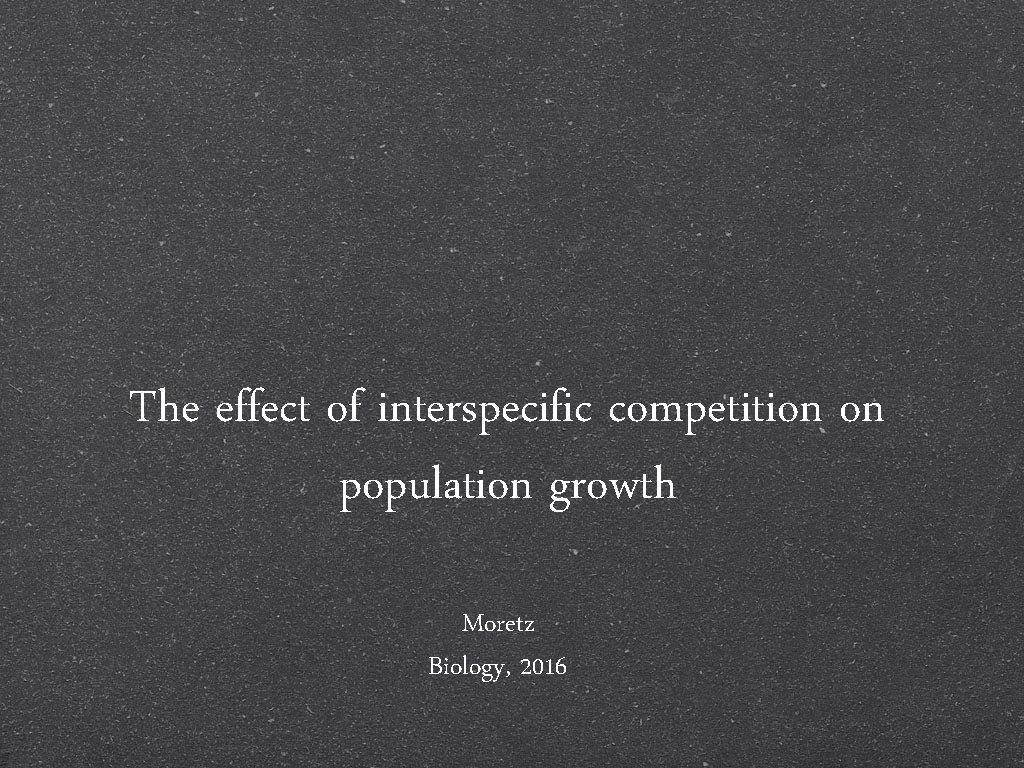
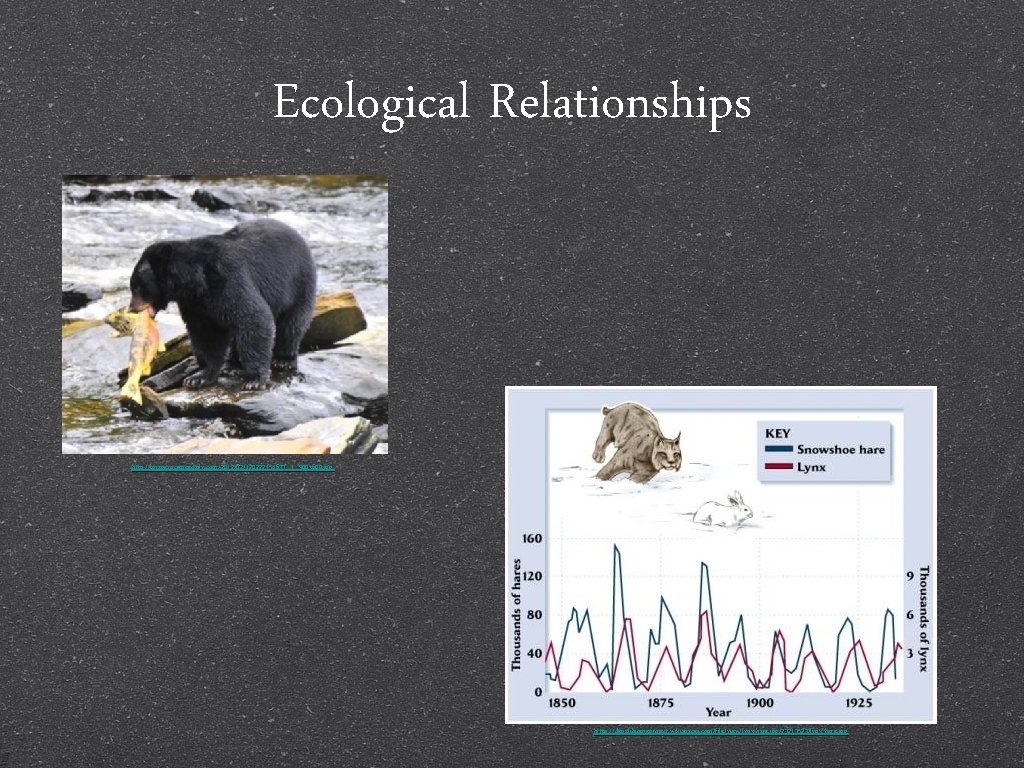
Ecological Relationships http: //images. sciencedaily. com/2012/02/120222154633_1_900 x 600. jpg https: //denalibiomeproject. wikispaces. com/file/view/lynx-hare. jpg/73213523/lynx-hare. jpg
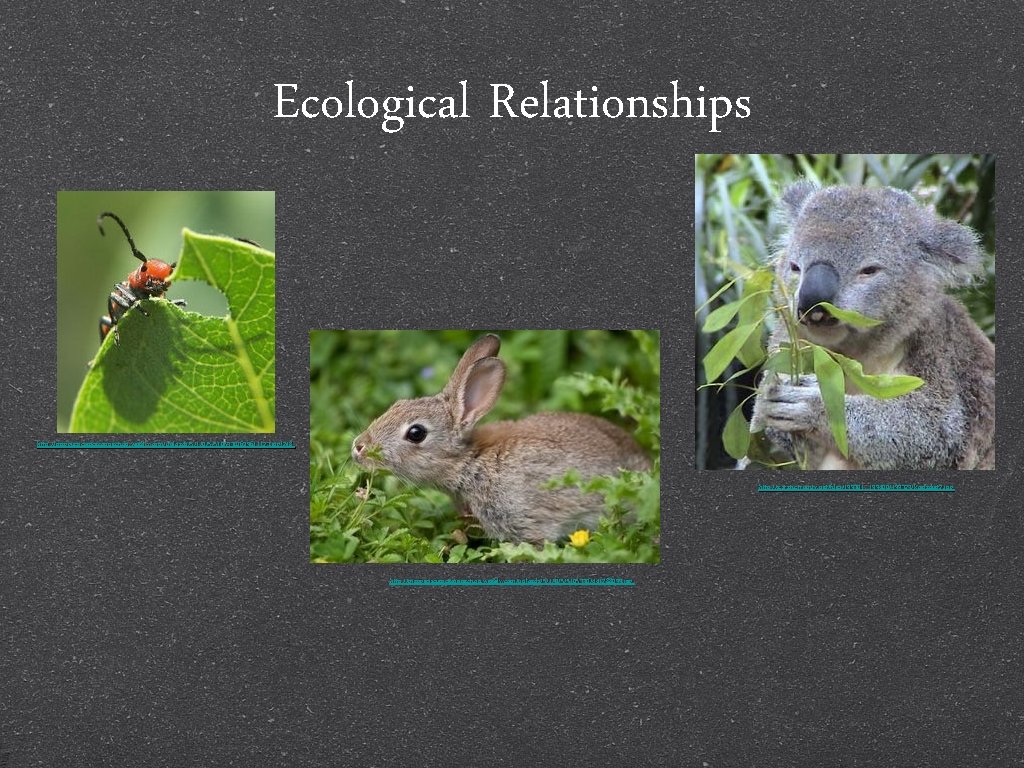
Ecological Relationships http: //maggiesscienceconnection. weebly. com/uploads/5/1/0/5/5105330/639611123. jpg? 218 http: //a. static. trunity. net/files/199301_199400/199323/koaladiet 2. jpg http: //maggiesscienceconnection. weebly. com/uploads/5/1/0/5/5105330/441288099. jpg
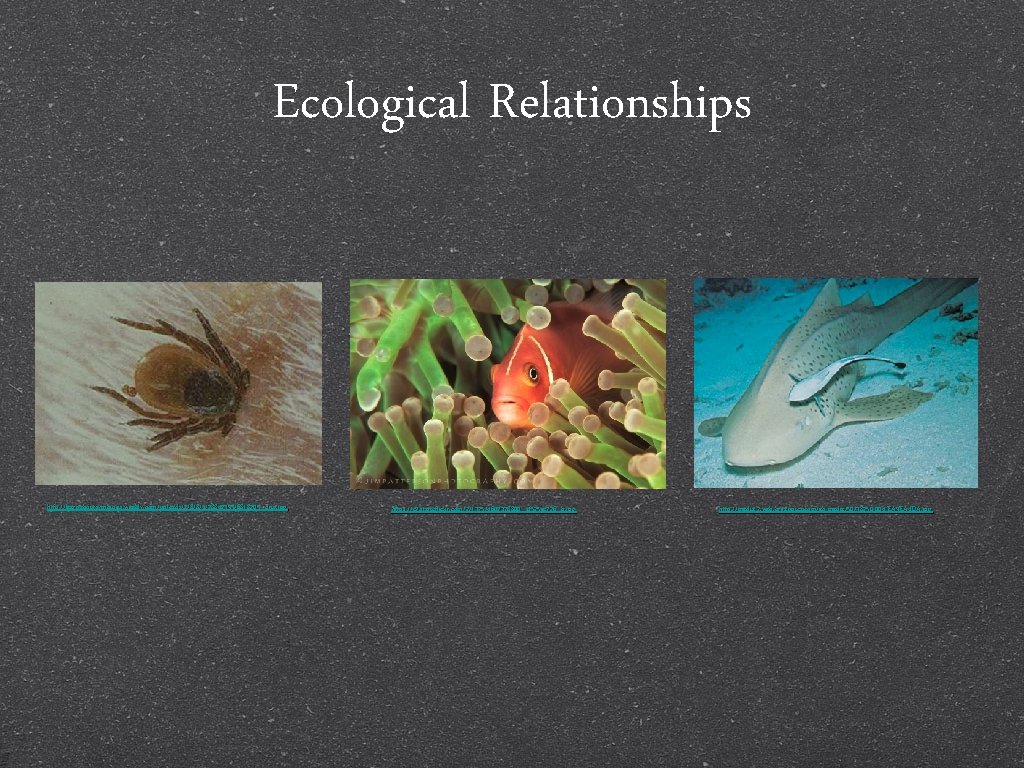
Ecological Relationships http: //learnaboutsymbiosis. weebly. com/uploads/2/8/8/4/28842393/6818205_orig. jpg https: //c 2. staticflickr. com/2/1375/4602378800_af 525 ec 726_b. jpg http: //media-2. web. britannica. com/eb-media/50/38250 -004 -EA 9 EA 4 DA. jpg
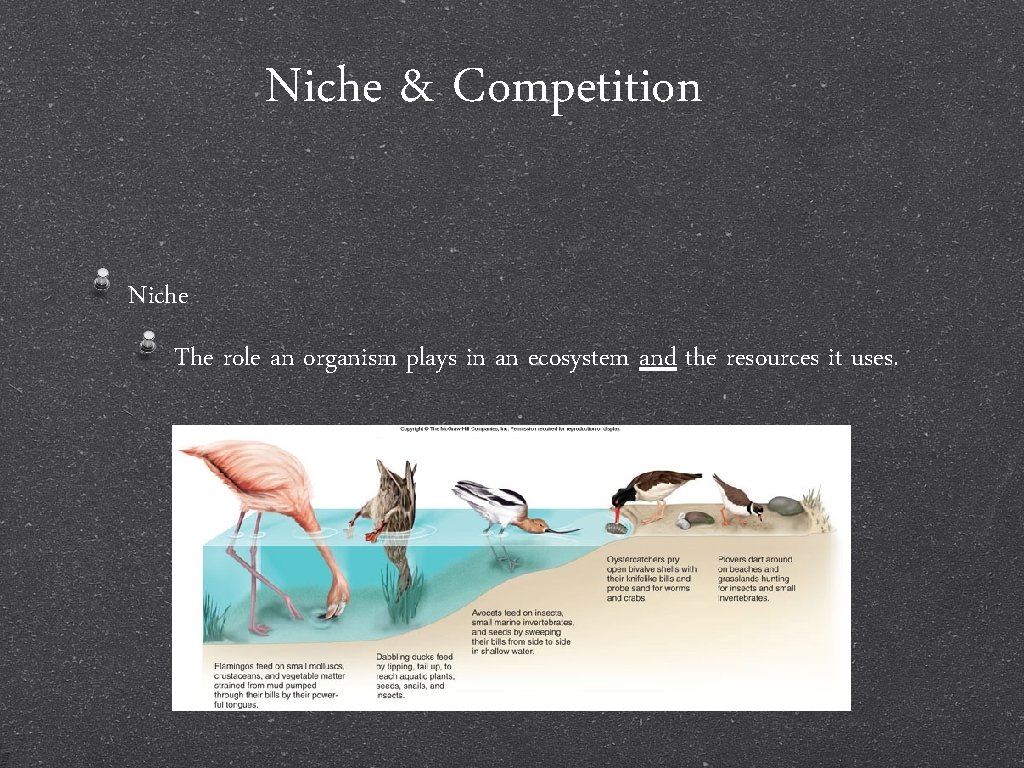
Niche & Competition Niche The role an organism plays in an ecosystem and the resources it uses.
Competition Struggle over scarce resources
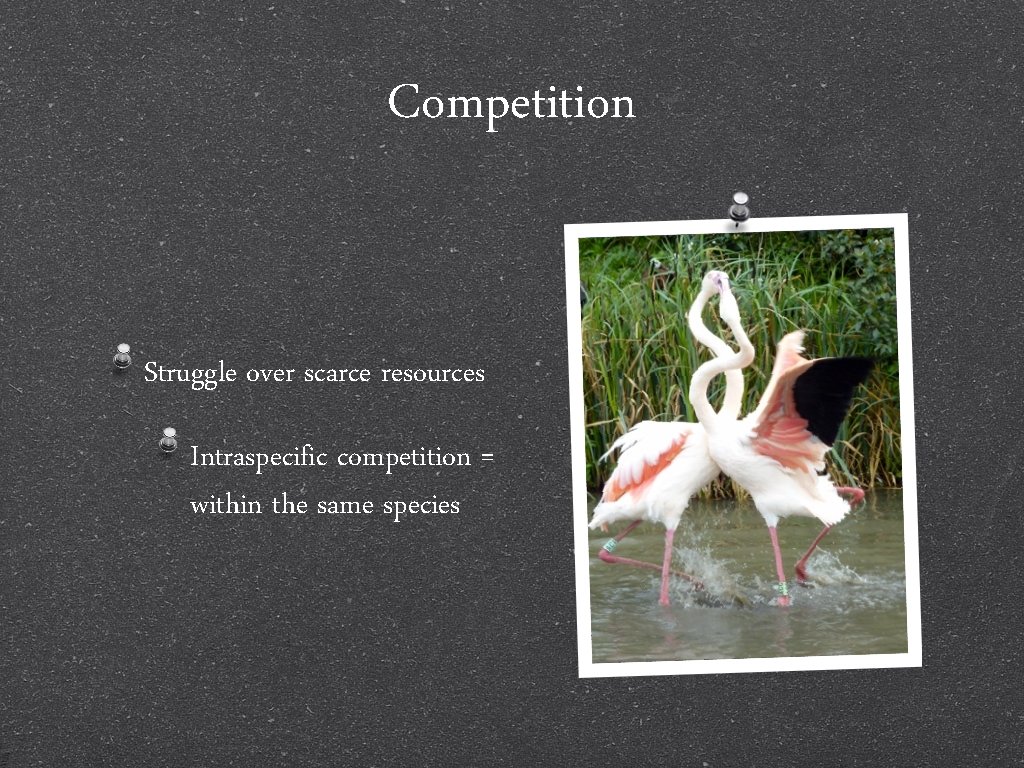
Competition Struggle over scarce resources Intraspecific competition = within the same species
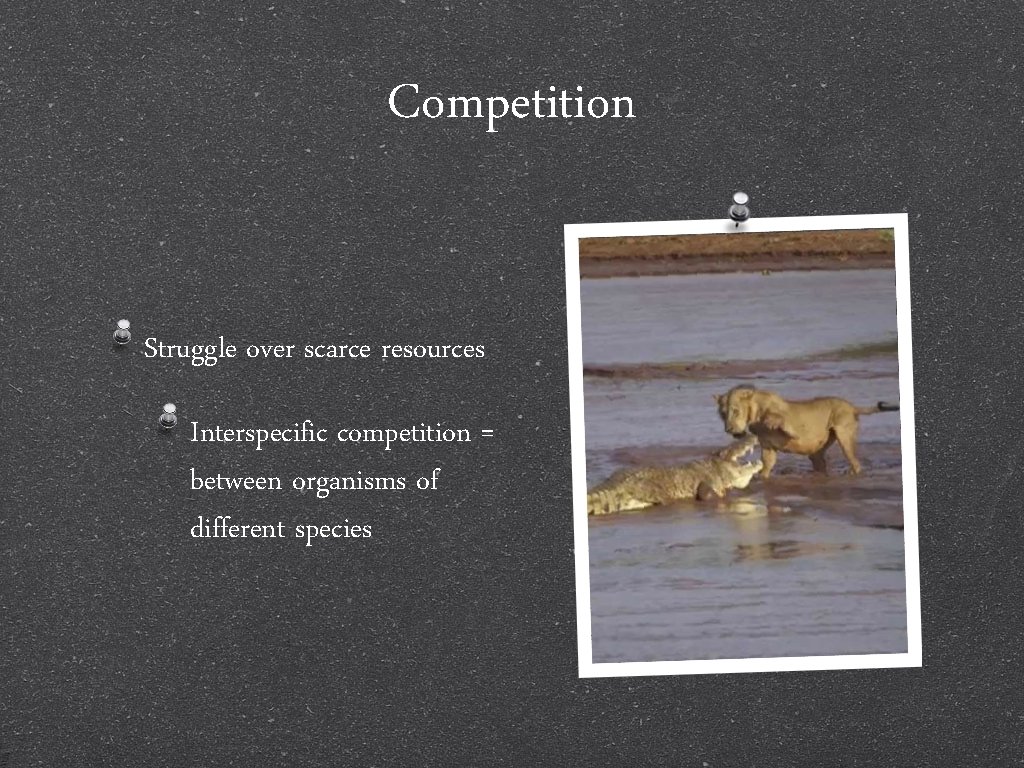
Competition Struggle over scarce resources Interspecific competition = between organisms of different species
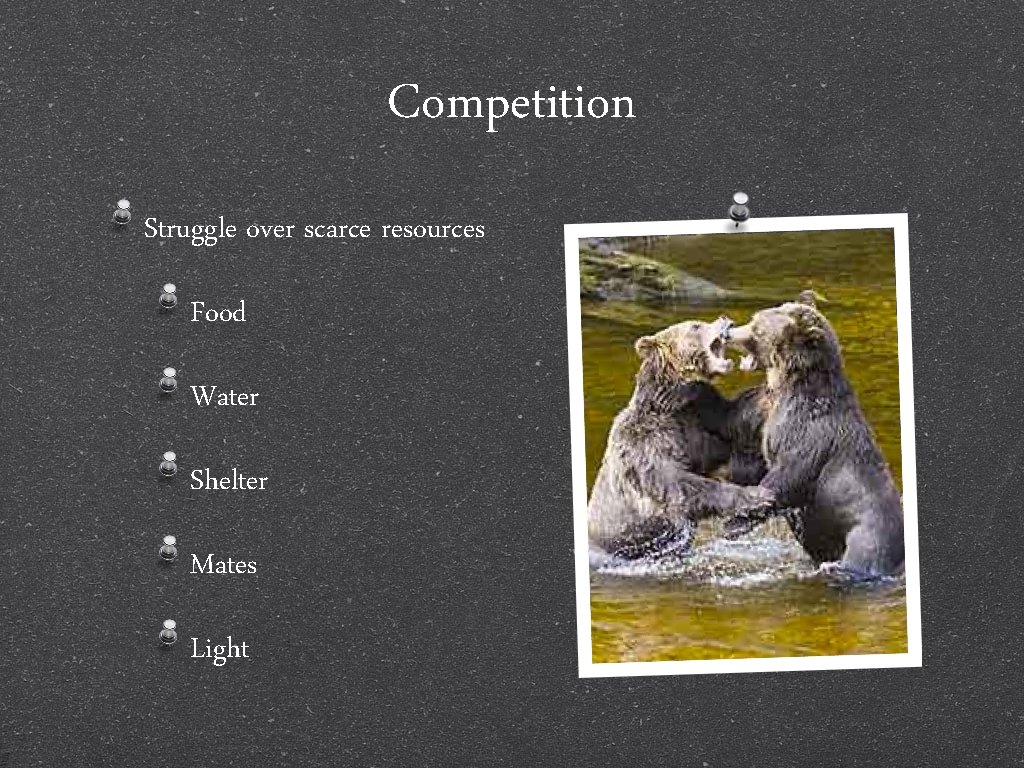
Competition Struggle over scarce resources Food Water Shelter Mates Light
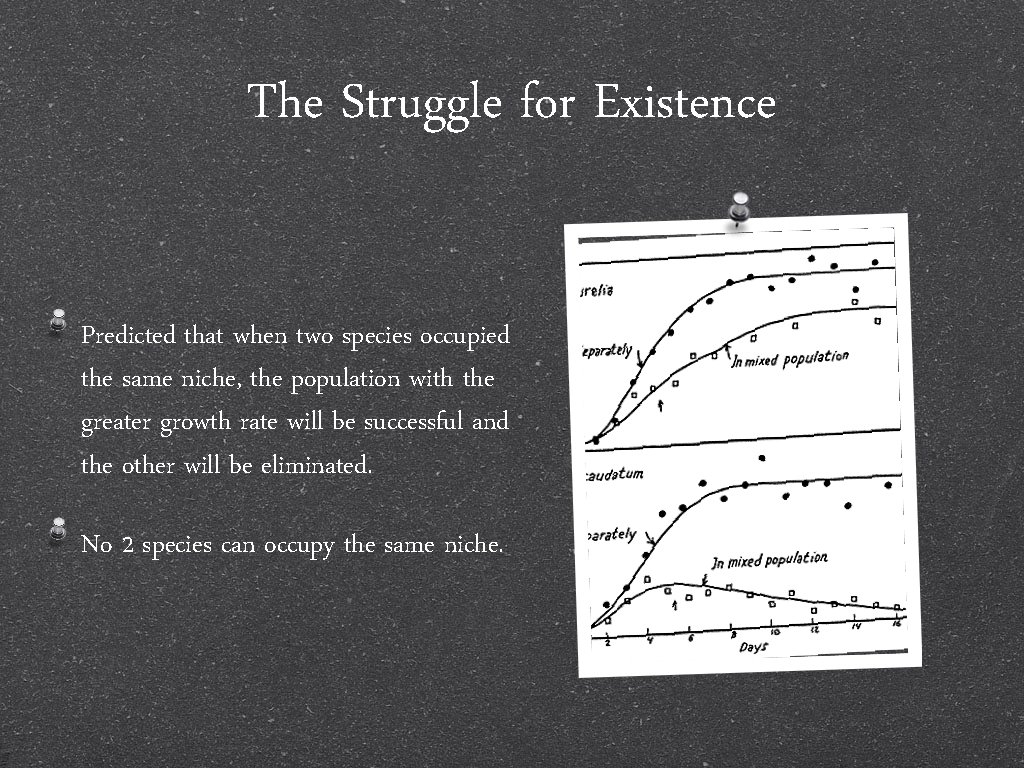
The Struggle for Existence G. F. Gause, 1934 Theory of Competitive Exclusion: describes what will happen to the populations of different species when they have nearly identical niches.
The Struggle for Existence Predicted that when two species occupied the same niche, the population with the greater growth rate will be successful and the other will be eliminated. No 2 species can occupy the same niche.
Experimental Evidence Design and implement an experiment that supports or refutes Gause’s claim (paramecium focus).
Experimental Evidence Design and implement an experiment that supports or refutes Gause’s claim (plant focus).
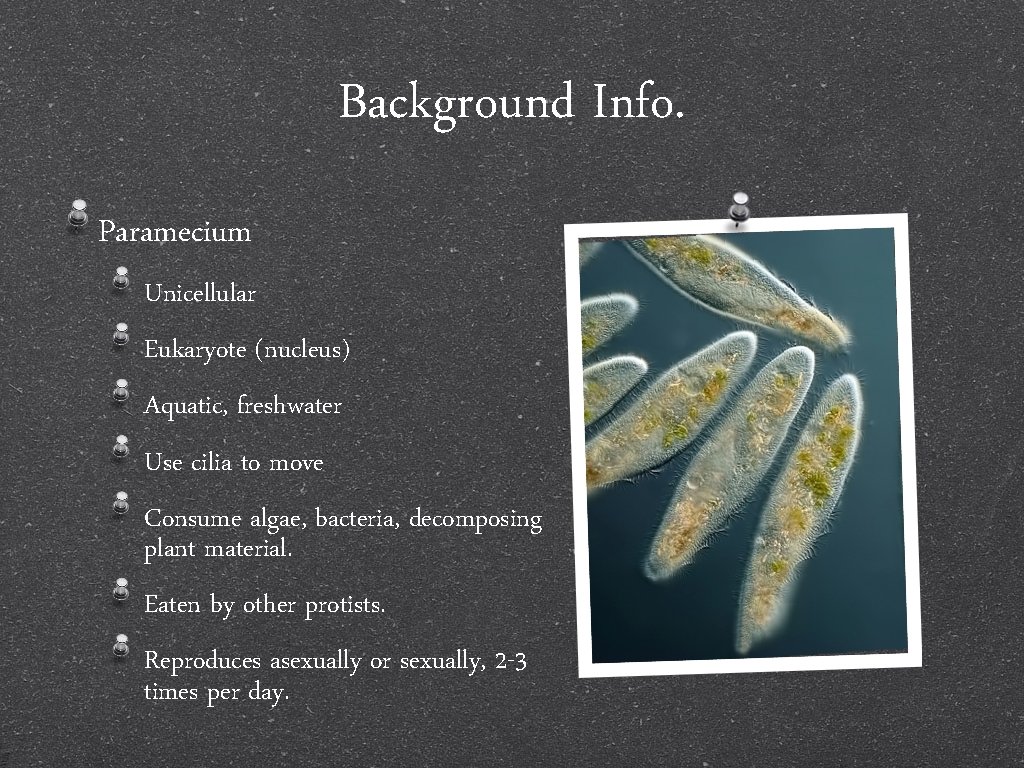
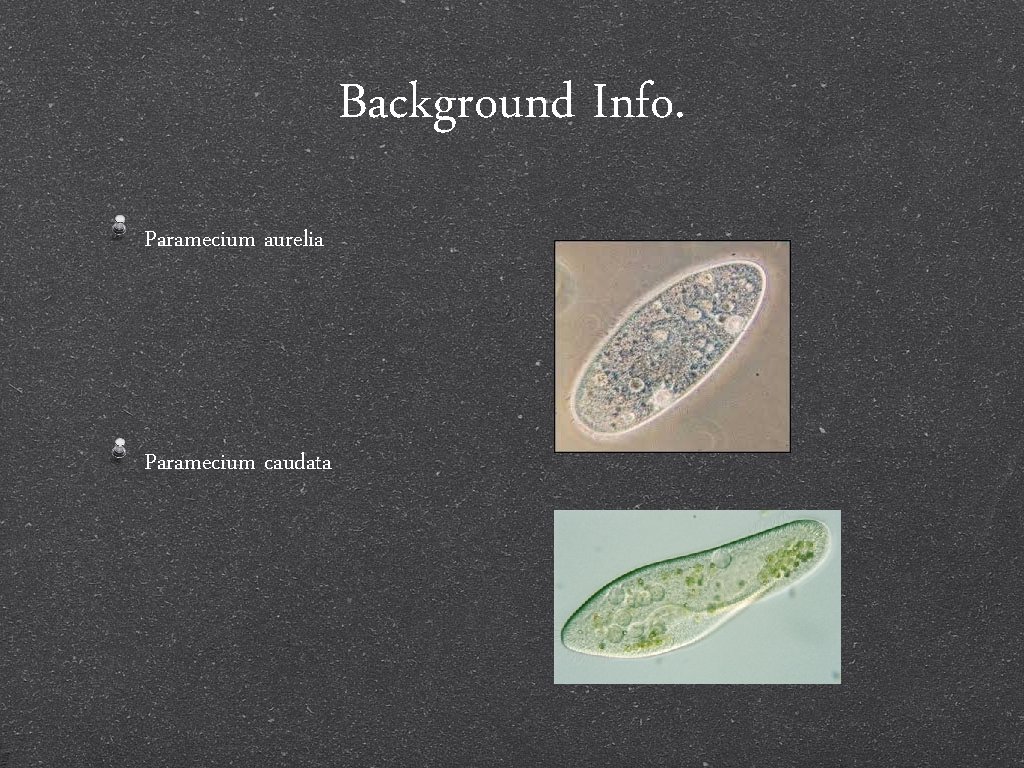
Background Info. Paramecium Unicellular Eukaryote (nucleus) Aquatic, freshwater Use cilia to move Consume algae, bacteria, decomposing plant material. Eaten by other protists. Reproduces asexually or sexually, 2 -3 times per day.
Background Info. Paramecium aurelia Paramecium caudata
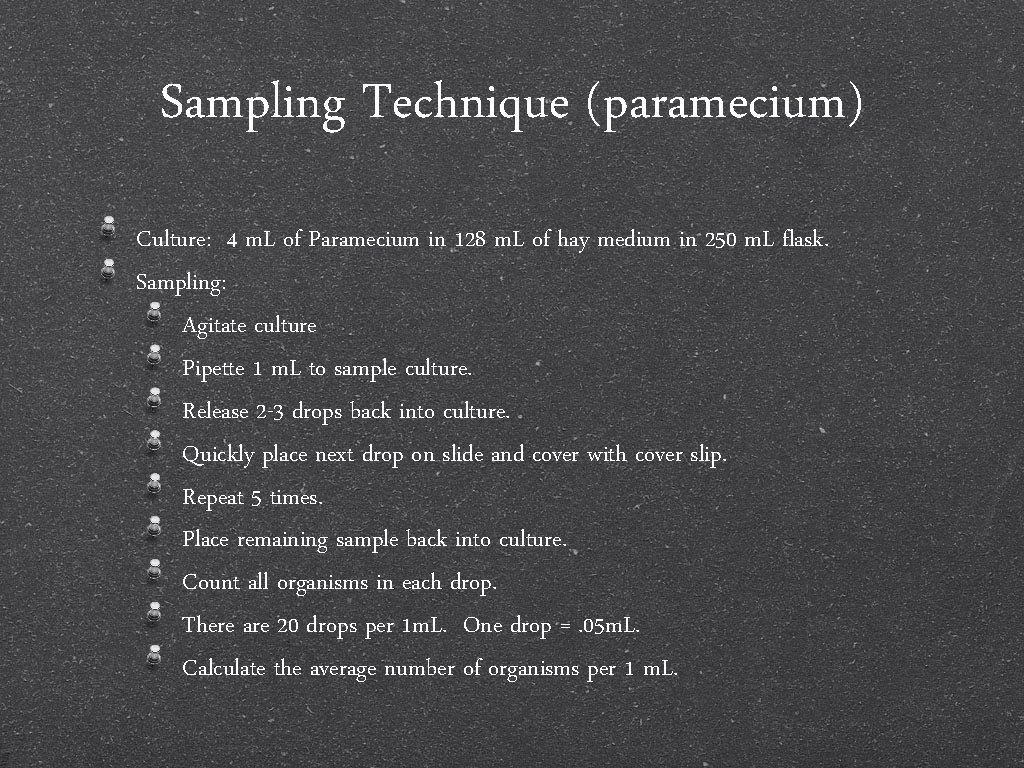
Sampling Technique (paramecium) Culture: 4 m. L of Paramecium in 128 m. L of hay medium in 250 m. L flask. Sampling: Agitate culture Pipette 1 m. L to sample culture. Release 2 -3 drops back into culture. Quickly place next drop on slide and cover with cover slip. Repeat 5 times. Place remaining sample back into culture. Count all organisms in each drop. There are 20 drops per 1 m. L. One drop =. 05 m. L. Calculate the average number of organisms per 1 m. L.
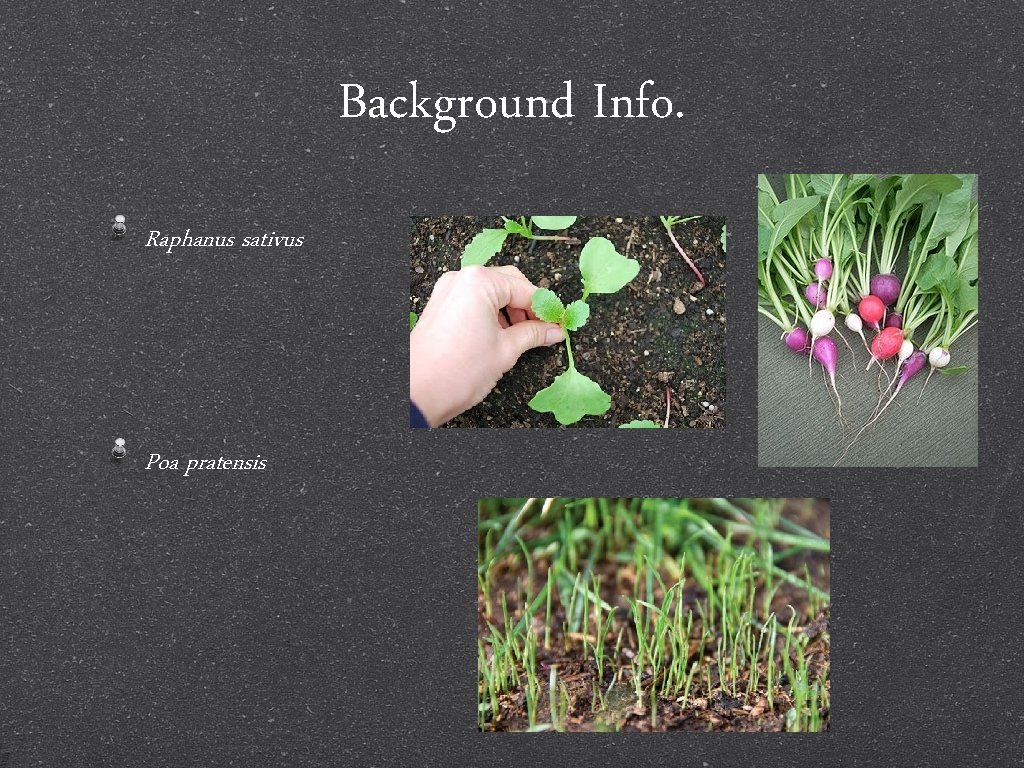
Background Info. Raphanus sativus Poa pratensis
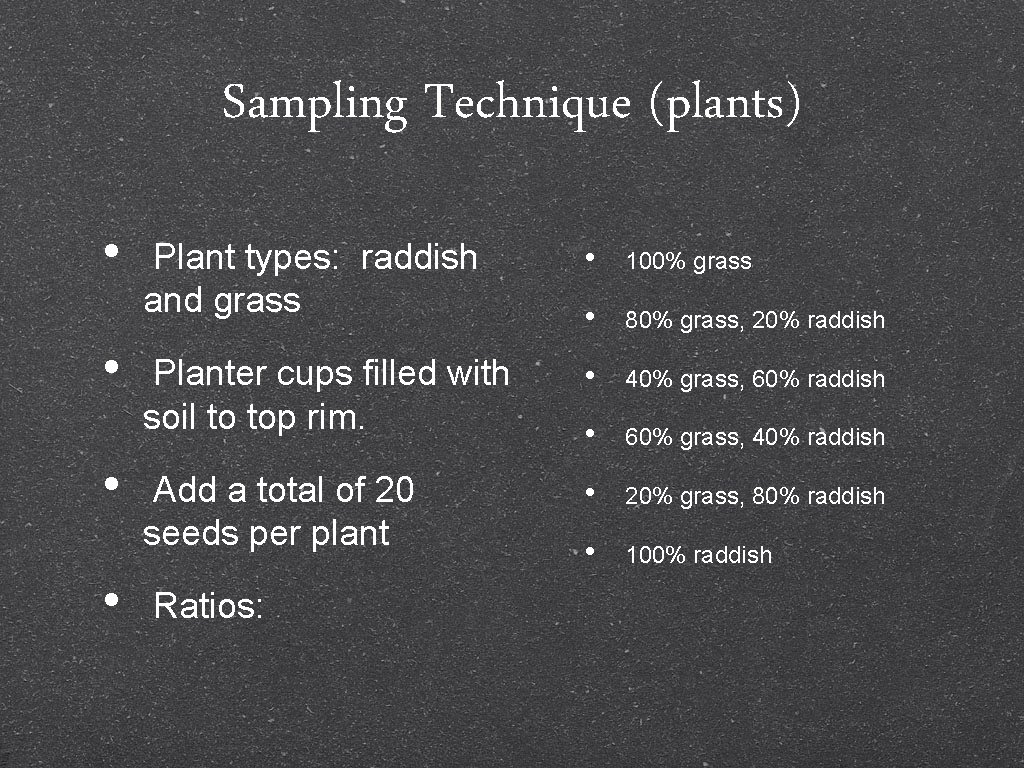
Sampling Technique (plants) • • Plant types: raddish and grass • 100% grass • 80% grass, 20% raddish Planter cups filled with soil to top rim. • 40% grass, 60% raddish • 60% grass, 40% raddish Add a total of 20 seeds per plant • 20% grass, 80% raddish • 100% raddish Ratios:
Repeating Gause’s Competitive Exclusion Experiment Design and implement an experiment that supports or refutes Gause’s claim. Paramecium focus Plant focus
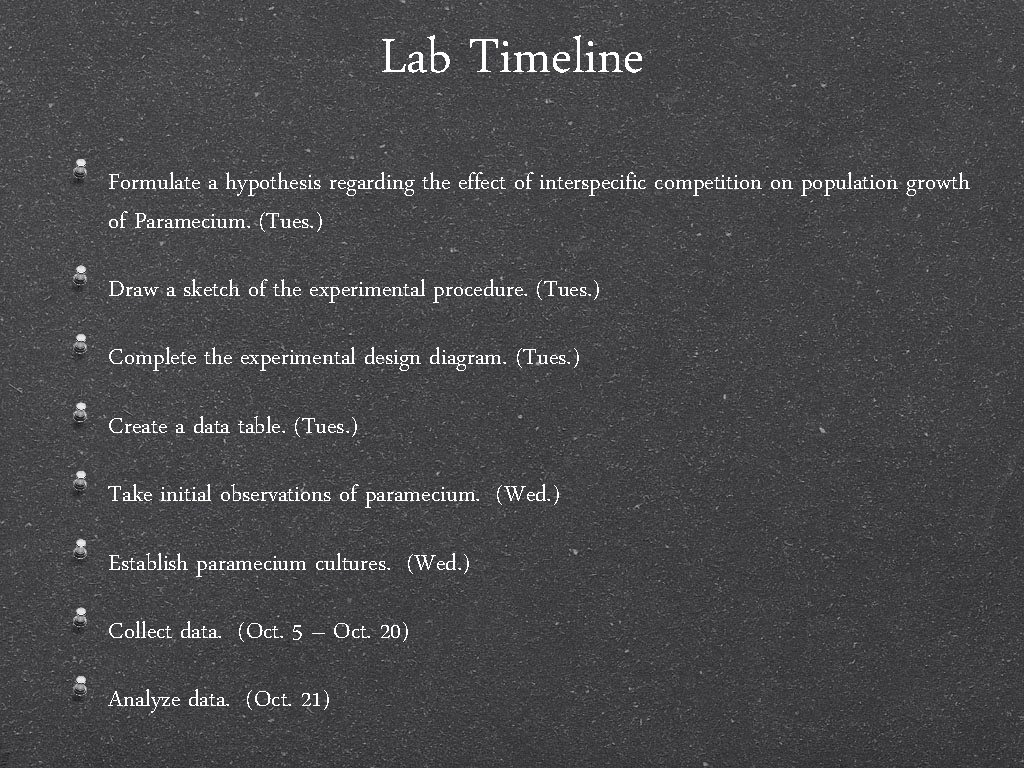
Lab Timeline Formulate a hypothesis regarding the effect of interspecific competition on population growth of Paramecium. (Tues. ) Draw a sketch of the experimental procedure. (Tues. ) Complete the experimental design diagram. (Tues. ) Create a data table. (Tues. ) Take initial observations of paramecium. (Wed. ) Establish paramecium cultures. (Wed. ) Collect data. (Oct. 5 – Oct. 20) Analyze data. (Oct. 21)