
The Effect of Exercise on the Cardiovascular System

- Slides: 17
The Effect of Exercise on the Cardiovascular System
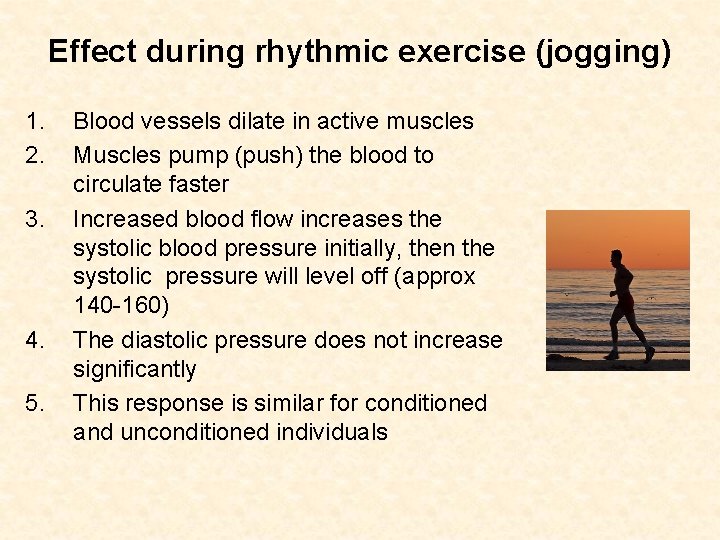
Effect during rhythmic exercise (jogging) 1. 2. 3. 4. 5. Blood vessels dilate in active muscles Muscles pump (push) the blood to circulate faster Increased blood flow increases the systolic blood pressure initially, then the systolic pressure will level off (approx 140 -160) The diastolic pressure does not increase significantly This response is similar for conditioned and unconditioned individuals
Oxygen supply to the heart 1. Normal tissues use 25% of oxygen in the blood 2. Heart muscle uses 70 -80% of oxygen in the blood 3. Exercise can increase coronary blood flow 4 -6 times 4. Exercise increases myocardial metabolism – If blood flow is restricted (due to coronary disease) chest pain results – Stress tests are done during exercise to measure the demand on the heart
Energy for the heart Ø Myocardium (heart muscle) has the greatest number of mitochondria per cell (compared to all muscles in the body) Ø Myocardium uses glucose, fatty acids, and lactic acid (from skeletal muscle activity) for energy Ø During sub-maximal exercise, the heart muscle may get up to 50% of its energy from lactic acid
Distribution of blood (arterial) Ø Vasodilatation in active muscles will increase blood flow significantly • At rest, only 1 of 30 -40 capillaries in muscle tissue are open • Exercise will open these capillaries – This increases the exchange surface area between blood and muscle cells – This is stimulated mostly by sensors in the tissue that sense an increased demand for oxygen – Increased circulation is also stimulated by tissue’s increased temperature, and increased carbon dioxide levels
Distribution of blood (venous) Ø Adequate venous return is also important for regulating distribution of blood – This is achieved by action of muscles (pushing blood along) Ø Also achieved by venous valves (prevention of back flow)
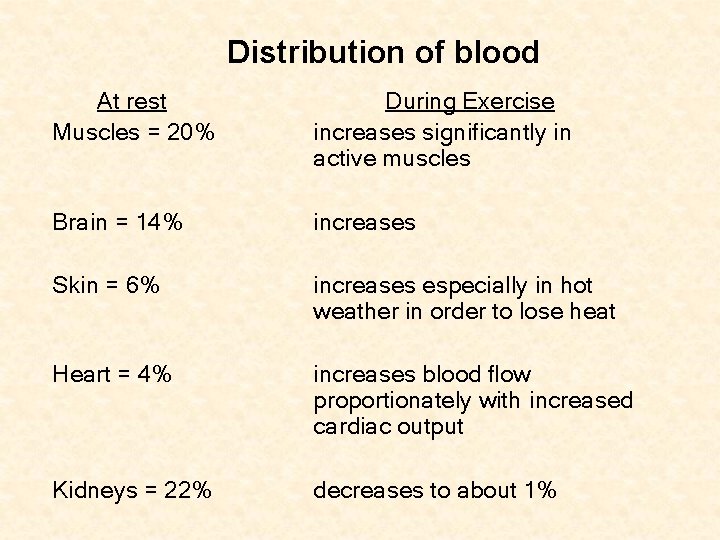
Distribution of blood At rest Muscles = 20% During Exercise increases significantly in active muscles Brain = 14% increases Skin = 6% increases especially in hot weather in order to lose heat Heart = 4% increases blood flow proportionately with increased cardiac output Kidneys = 22% decreases to about 1%
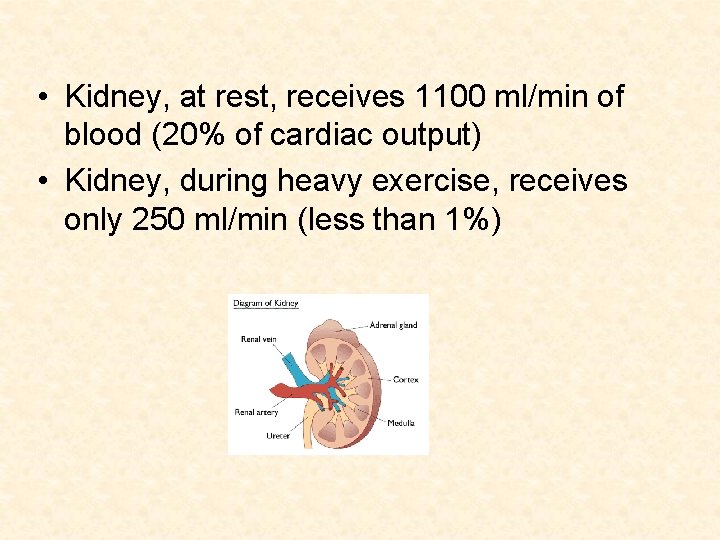
• Kidney, at rest, receives 1100 ml/min of blood (20% of cardiac output) • Kidney, during heavy exercise, receives only 250 ml/min (less than 1%)
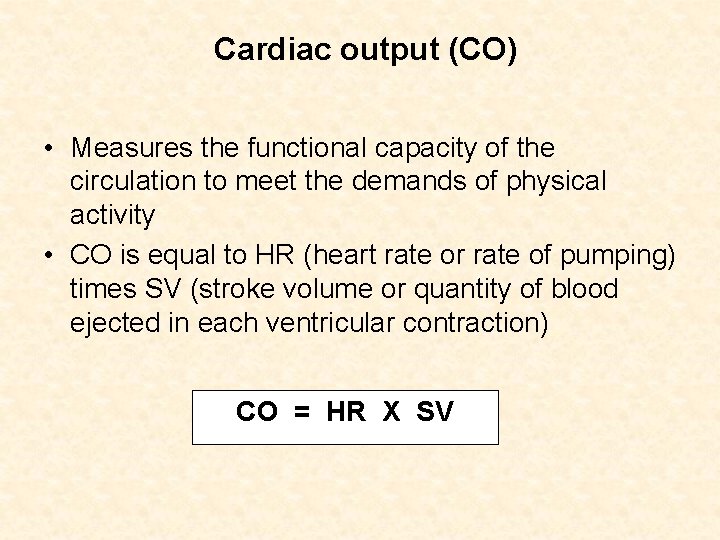
Cardiac output (CO) • Measures the functional capacity of the circulation to meet the demands of physical activity • CO is equal to HR (heart rate or rate of pumping) times SV (stroke volume or quantity of blood ejected in each ventricular contraction) CO = HR X SV
Let’s try these problems!
Why? Endurance training strengthens heart muscle and allows the heart to pump with more force pushing out more blood per stroke (ventricular contraction) Because the stroke volume is greater in conditioned persons, the heart rate can be lower, the heart does not have to beat as many times/minute to maintain the necessary cardiac output.
Is this same effect seen during exercise? Blood flow increases rapidly at first, then rises gradually until it reaches a plateau
In conclusion: The untrained person increases his cardiac output mainly due to an increased pulse *The trained athlete increases his cardiac output mainly due to an increased stroke volume *Stroke volumes are larger in athletes at rest and during exercise, therefore the HR (pulse) does not need to rise as much in either case
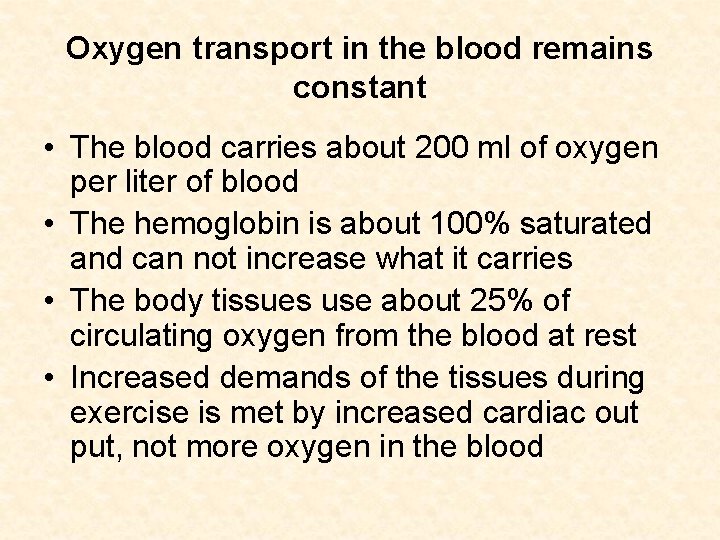
Oxygen transport in the blood remains constant • The blood carries about 200 ml of oxygen per liter of blood • The hemoglobin is about 100% saturated and can not increase what it carries • The body tissues use about 25% of circulating oxygen from the blood at rest • Increased demands of the tissues during exercise is met by increased cardiac out put, not more oxygen in the blood
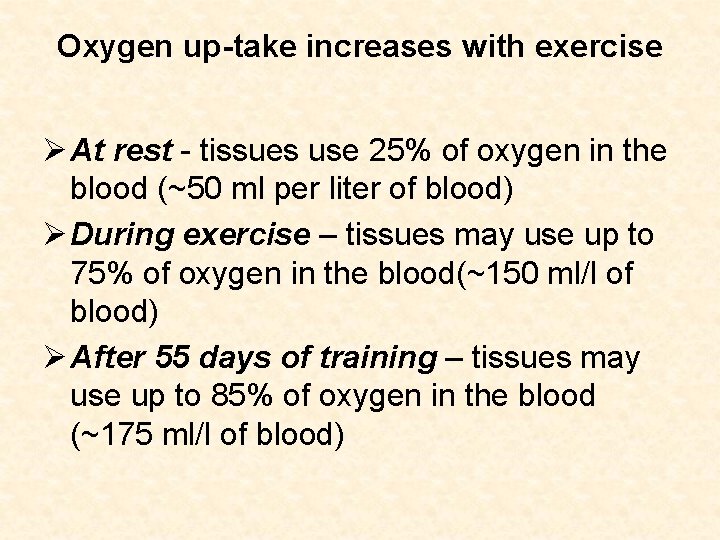
Oxygen up-take increases with exercise Ø At rest - tissues use 25% of oxygen in the blood (~50 ml per liter of blood) Ø During exercise – tissues may use up to 75% of oxygen in the blood(~150 ml/l of blood) Ø After 55 days of training – tissues may use up to 85% of oxygen in the blood (~175 ml/l of blood)
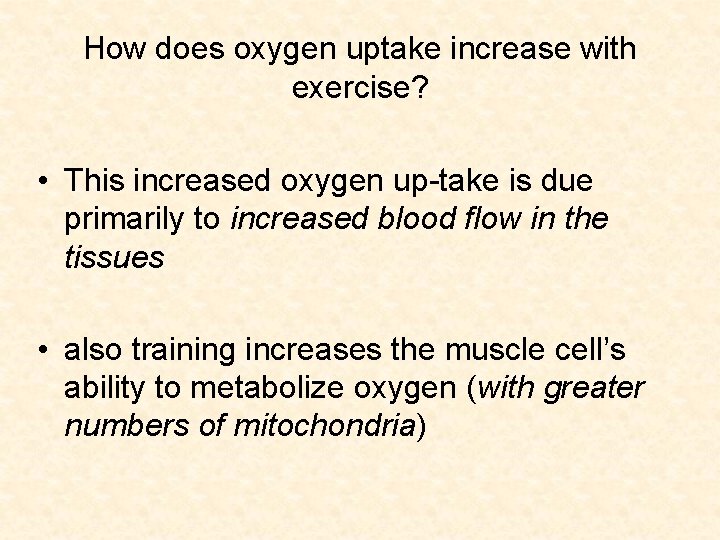
How does oxygen uptake increase with exercise? • This increased oxygen up-take is due primarily to increased blood flow in the tissues • also training increases the muscle cell’s ability to metabolize oxygen (with greater numbers of mitochondria)
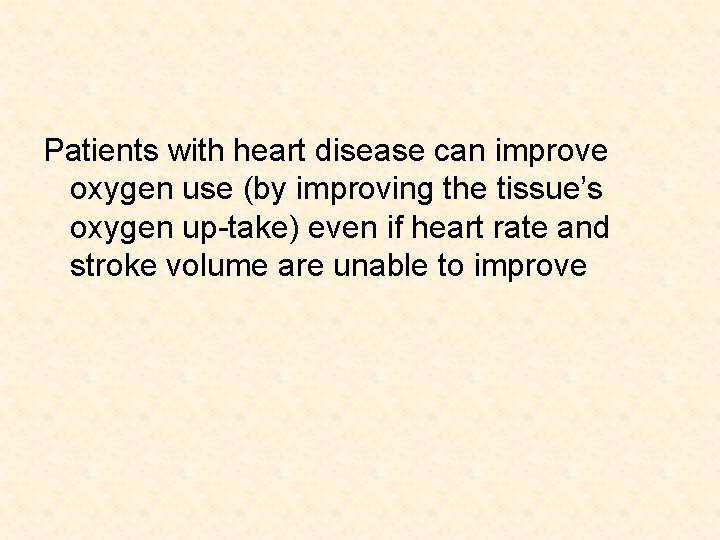
Patients with heart disease can improve oxygen use (by improving the tissue’s oxygen up-take) even if heart rate and stroke volume are unable to improve