
The Effect of Dobutamine on the 8 Day
The Effect of Dobutamine on the 8 -Day Old Chicken Embryonic Heart Rate Amanda Lindsay Fatema Kermalli Biology 142 Section 002
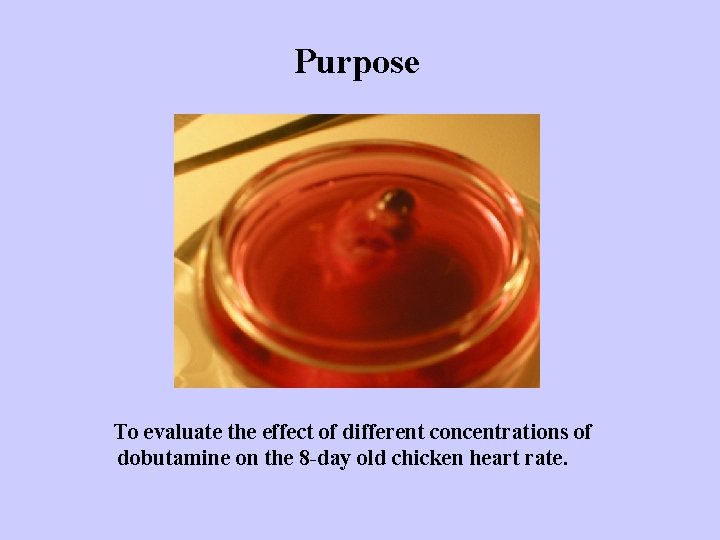
Purpose To evaluate the effect of different concentrations of dobutamine on the 8 -day old chicken heart rate.
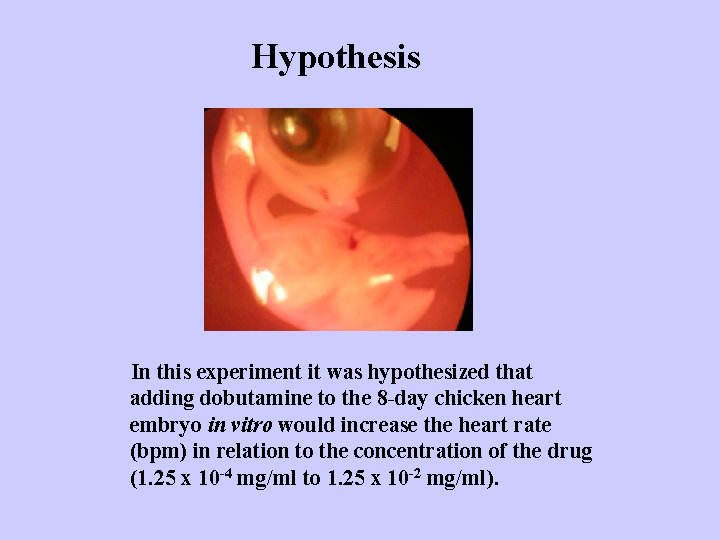
Hypothesis In this experiment it was hypothesized that adding dobutamine to the 8 -day chicken heart embryo in vitro would increase the heart rate (bpm) in relation to the concentration of the drug (1. 25 x 10 -4 mg/ml to 1. 25 x 10 -2 mg/ml).
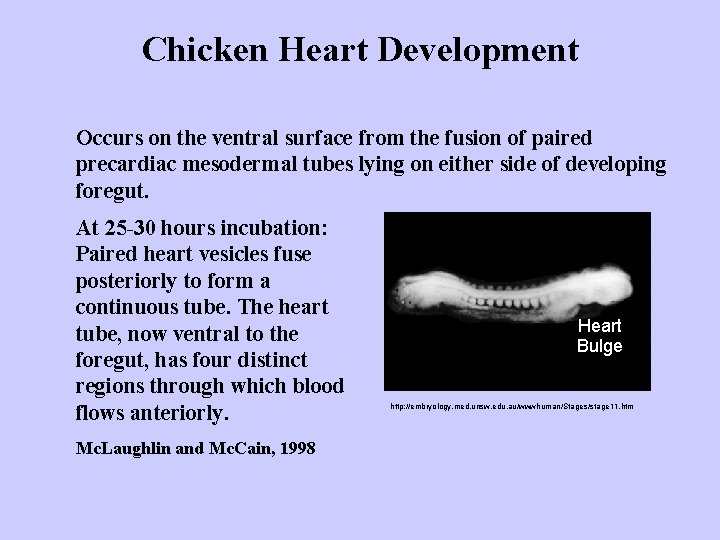
Chicken Heart Development Occurs on the ventral surface from the fusion of paired precardiac mesodermal tubes lying on either side of developing foregut. At 25 -30 hours incubation: Paired heart vesicles fuse posteriorly to form a continuous tube. The heart tube, now ventral to the foregut, has four distinct regions through which blood flows anteriorly. Mc. Laughlin and Mc. Cain, 1998 Heart Bulge http: //embryology. med. unsw. edu. au/wwwhuman/Stages/stage 11. htm
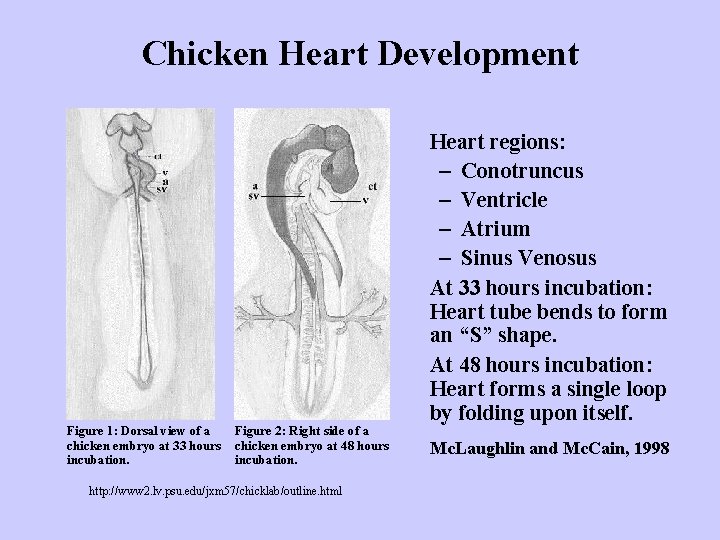
Chicken Heart Development Figure 1: Dorsal view of a chicken embryo at 33 hours incubation. Figure 2: Right side of a chicken embryo at 48 hours incubation. http: //www 2. lv. psu. edu/jxm 57/chicklab/outline. html Heart regions: – Conotruncus – Ventricle – Atrium – Sinus Venosus At 33 hours incubation: Heart tube bends to form an “S” shape. At 48 hours incubation: Heart forms a single loop by folding upon itself. Mc. Laughlin and Mc. Cain, 1998
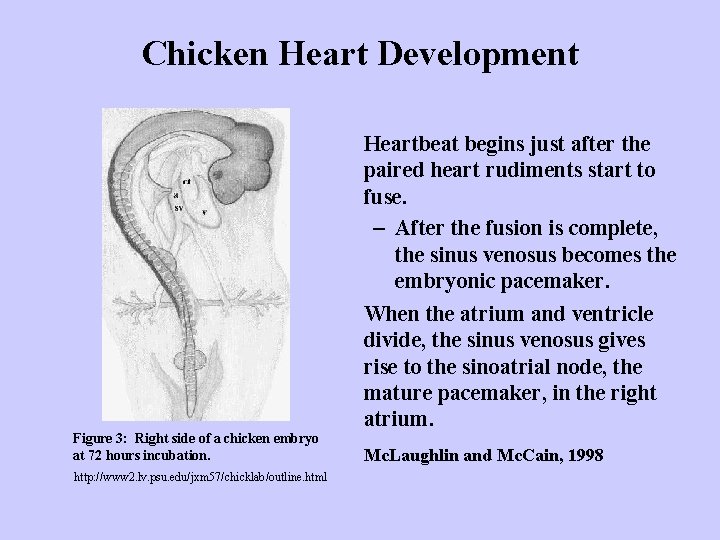
Chicken Heart Development Figure 3: Right side of a chicken embryo at 72 hours incubation. http: //www 2. lv. psu. edu/jxm 57/chicklab/outline. html Heartbeat begins just after the paired heart rudiments start to fuse. – After the fusion is complete, the sinus venosus becomes the embryonic pacemaker. When the atrium and ventricle divide, the sinus venosus gives rise to the sinoatrial node, the mature pacemaker, in the right atrium. Mc. Laughlin and Mc. Cain, 1998
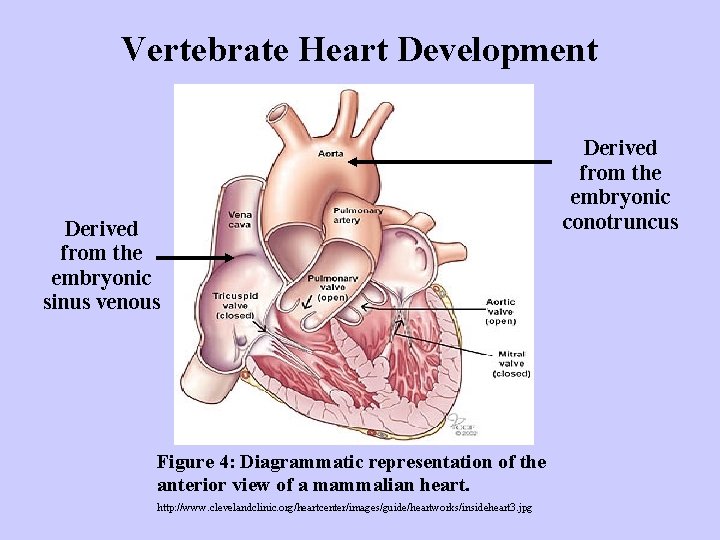
Vertebrate Heart Development Derived from the embryonic sinus venous Figure 4: Diagrammatic representation of the anterior view of a mammalian heart. http: //www. clevelandclinic. org/heartcenter/images/guide/heartworks/insideheart 3. jpg Derived from the embryonic conotruncus
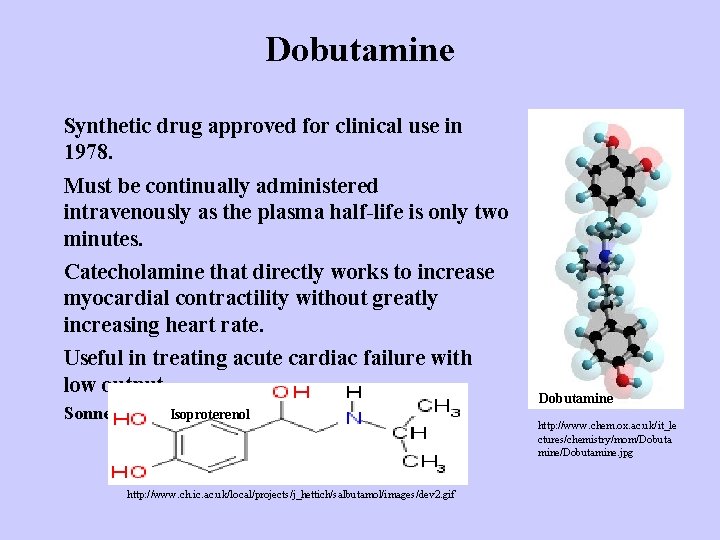
Dobutamine Synthetic drug approved for clinical use in 1978. Must be continually administered intravenously as the plasma half-life is only two minutes. Catecholamine that directly works to increase myocardial contractility without greatly increasing heart rate. Useful in treating acute cardiac failure with low output. Sonnenblick, 1979 Isoproterenol http: //www. ch. ic. ac. uk/local/projects/j_hettich/salbutamol/images/dev 2. gif Dobutamine http: //www. chem. ox. ac. uk/it_le ctures/chemistry/mom/Dobuta mine/Dobutamine. jpg

Dobutamine Stimulates beta-1 adrenergic receptors located on the plasma membranes. This activates the Gs protein which releases the alpha subunit. The subunit activates adenylate cyclase which catalyzes the reaction converting ATP to c. AMP activates protein kinase A which phosphorolates a protein. This changes the protein’s activity and causes a cellular response. Germann, 2005 http: //kph 12. myweb. uga. edu/11_12 c. AMP. jpg
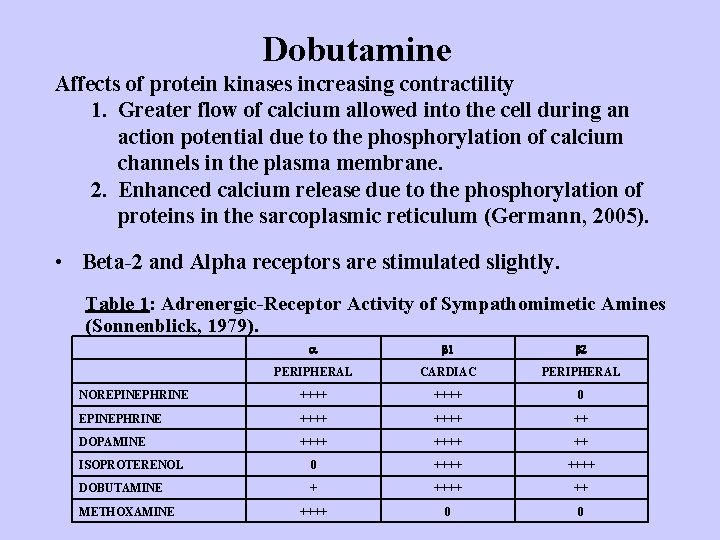
Dobutamine Affects of protein kinases increasing contractility 1. Greater flow of calcium allowed into the cell during an action potential due to the phosphorylation of calcium channels in the plasma membrane. 2. Enhanced calcium release due to the phosphorylation of proteins in the sarcoplasmic reticulum (Germann, 2005). • Beta-2 and Alpha receptors are stimulated slightly. Table 1: Adrenergic-Receptor Activity of Sympathomimetic Amines (Sonnenblick, 1979). a b 1 b 2 PERIPHERAL CARDIAC PERIPHERAL NOREPINEPHRINE ++++ 0 EPINEPHRINE ++++ ++ DOPAMINE ++++ ++ ISOPROTERENOL 0 ++++ DOBUTAMINE + ++++ ++ ++++ 0 0 METHOXAMINE
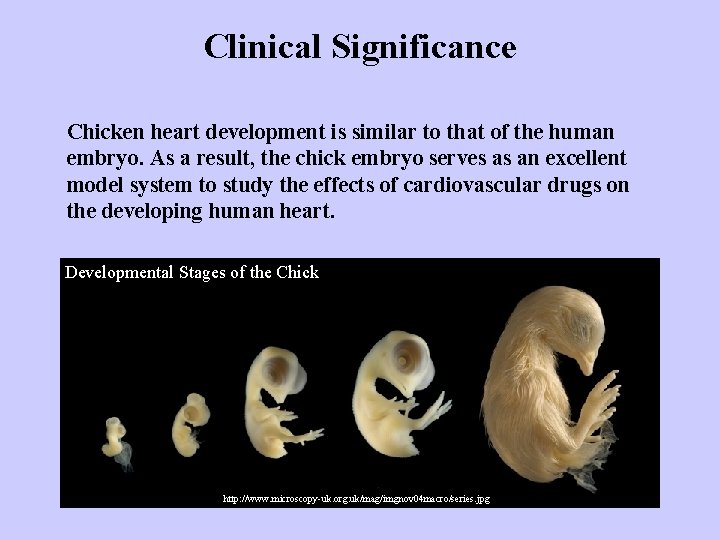
Clinical Significance Chicken heart development is similar to that of the human embryo. As a result, the chick embryo serves as an excellent model system to study the effects of cardiovascular drugs on the developing human heart. Developmental Stages of the Chick http: //www. microscopy-uk. org. uk/mag/imgnov 04 macro/series. jpg
Methods Step 1: Serial Dilutions of Dobutamine – A 12. 5 mg/ml aliquot of drug was diluted 100 fold with media CMRL to yield a 0. 125 mg/ml stock solution. – Serial dilutions of the stock were created to obtain 1. 25 x 10 -4 mg/ml dobutamine, 1. 25 x 10 -3 mg/ml dobutamine, and 1. 25 x 10 -2 mg/ml dobutamine. http: //www. blcleathertech. com/images/ pagefiles/Corbis_test%20 tubes. jpg
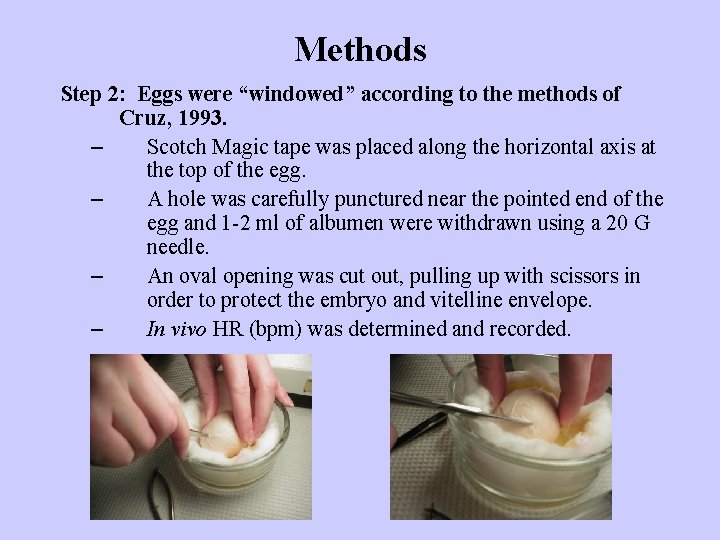
Methods Step 2: Eggs were “windowed” according to the methods of Cruz, 1993. – Scotch Magic tape was placed along the horizontal axis at the top of the egg. – A hole was carefully punctured near the pointed end of the egg and 1 -2 ml of albumen were withdrawn using a 20 G needle. – An oval opening was cut out, pulling up with scissors in order to protect the embryo and vitelline envelope. – In vivo HR (bpm) was determined and recorded.
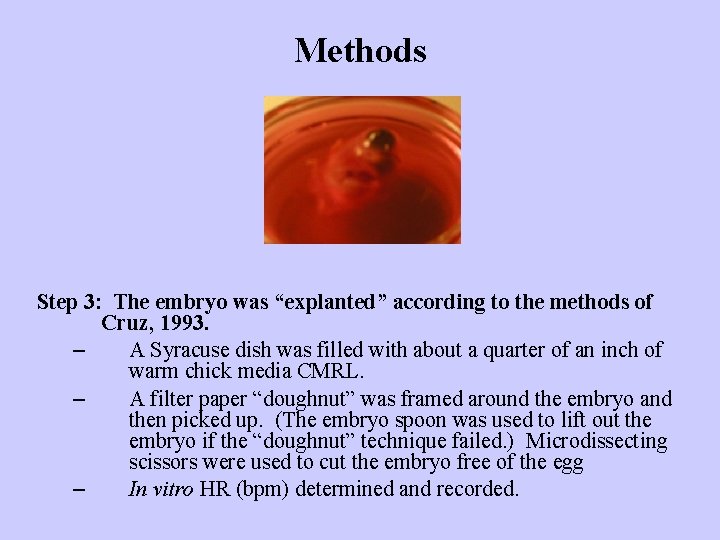
Methods Step 3: The embryo was “explanted” according to the methods of Cruz, 1993. – A Syracuse dish was filled with about a quarter of an inch of warm chick media CMRL. – A filter paper “doughnut” was framed around the embryo and then picked up. (The embryo spoon was used to lift out the embryo if the “doughnut” technique failed. ) Microdissecting scissors were used to cut the embryo free of the egg – In vitro HR (bpm) determined and recorded.
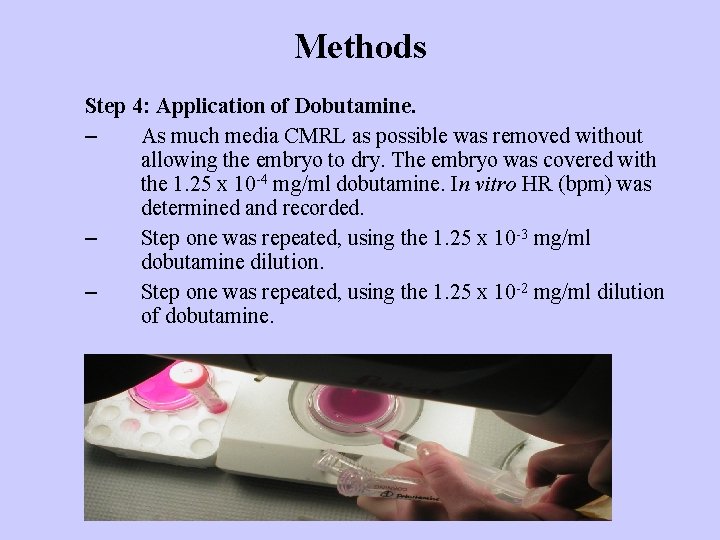
Methods Step 4: Application of Dobutamine. – As much media CMRL as possible was removed without allowing the embryo to dry. The embryo was covered with the 1. 25 x 10 -4 mg/ml dobutamine. In vitro HR (bpm) was determined and recorded. – Step one was repeated, using the 1. 25 x 10 -3 mg/ml dobutamine dilution. – Step one was repeated, using the 1. 25 x 10 -2 mg/ml dilution of dobutamine.
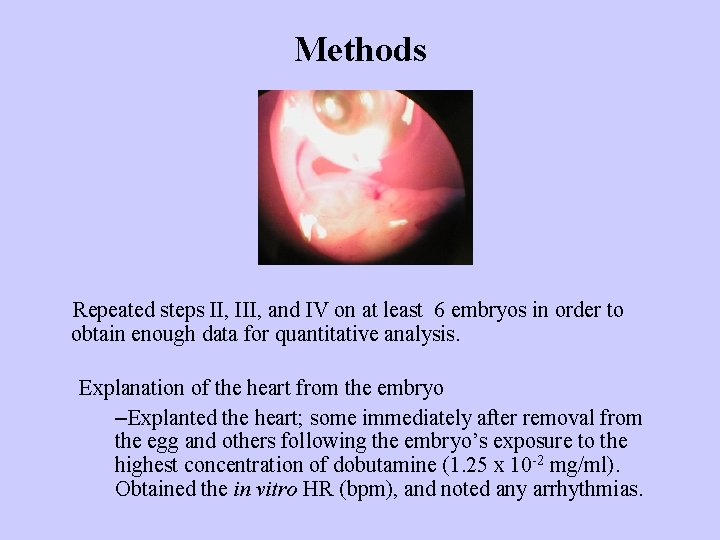
Methods Repeated steps II, III, and IV on at least 6 embryos in order to obtain enough data for quantitative analysis. Explanation of the heart from the embryo –Explanted the heart; some immediately after removal from the egg and others following the embryo’s exposure to the highest concentration of dobutamine (1. 25 x 10 -2 mg/ml). Obtained the in vitro HR (bpm), and noted any arrhythmias.
Results Figure 1: Graph showing the control (recorded in vivo and in vitro heart rates of embryos before the application of dobutamine) and experimental heart rates (bpm) following the exposure to 1. 25 x 10 -4 mg/ml dobutamine.
Results Figure 2: The average heart rate of five 8 -day chicken embryos following exposure to dobutamine at the specified concentrations. In vivo and in vitro controls are also displayed.
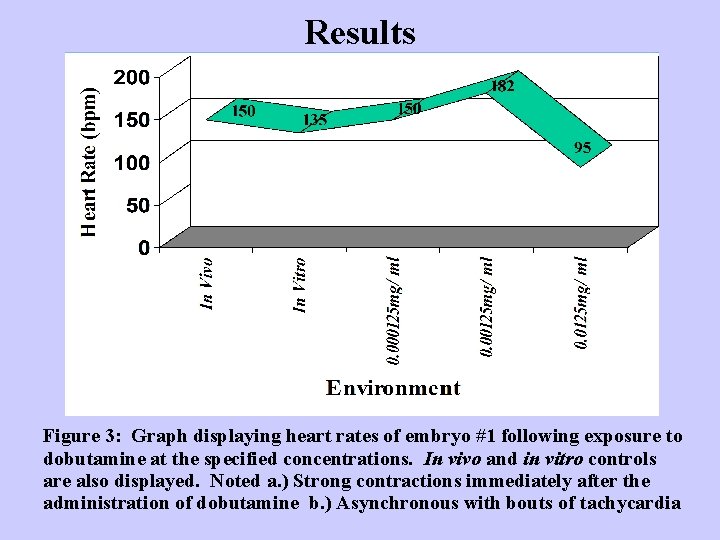
Results Figure 3: Graph displaying heart rates of embryo #1 following exposure to dobutamine at the specified concentrations. In vivo and in vitro controls are also displayed. Noted a. ) Strong contractions immediately after the administration of dobutamine b. ) Asynchronous with bouts of tachycardia
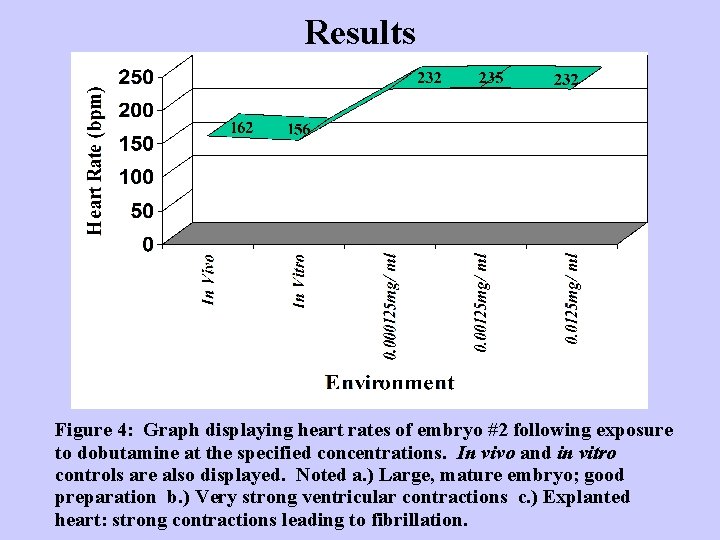
Results Figure 4: Graph displaying heart rates of embryo #2 following exposure to dobutamine at the specified concentrations. In vivo and in vitro controls are also displayed. Noted a. ) Large, mature embryo; good preparation b. ) Very strong ventricular contractions c. ) Explanted heart: strong contractions leading to fibrillation.
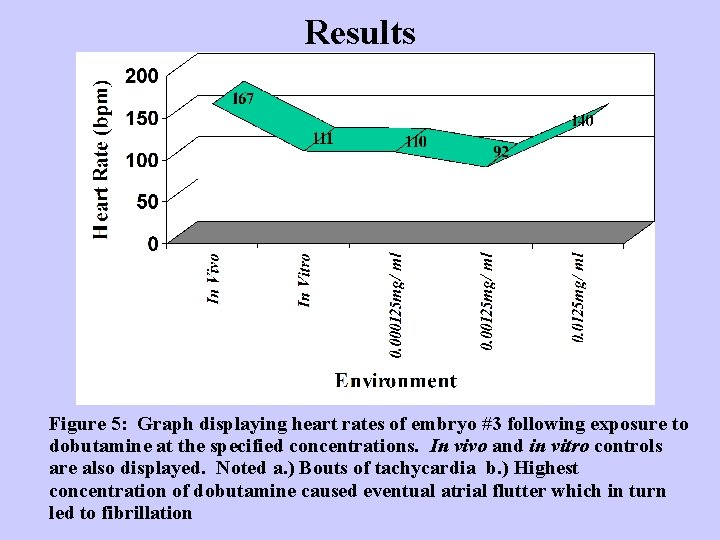
Results Figure 5: Graph displaying heart rates of embryo #3 following exposure to dobutamine at the specified concentrations. In vivo and in vitro controls are also displayed. Noted a. ) Bouts of tachycardia b. ) Highest concentration of dobutamine caused eventual atrial flutter which in turn led to fibrillation
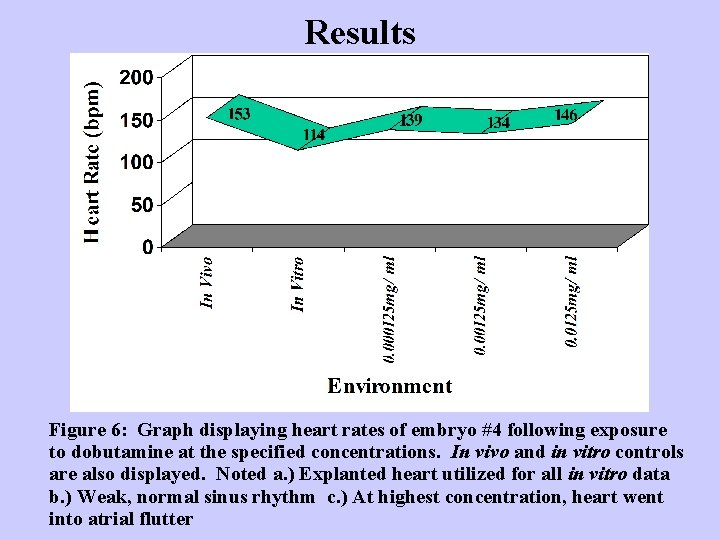
Results Figure 6: Graph displaying heart rates of embryo #4 following exposure to dobutamine at the specified concentrations. In vivo and in vitro controls are also displayed. Noted a. ) Explanted heart utilized for all in vitro data b. ) Weak, normal sinus rhythm c. ) At highest concentration, heart went into atrial flutter
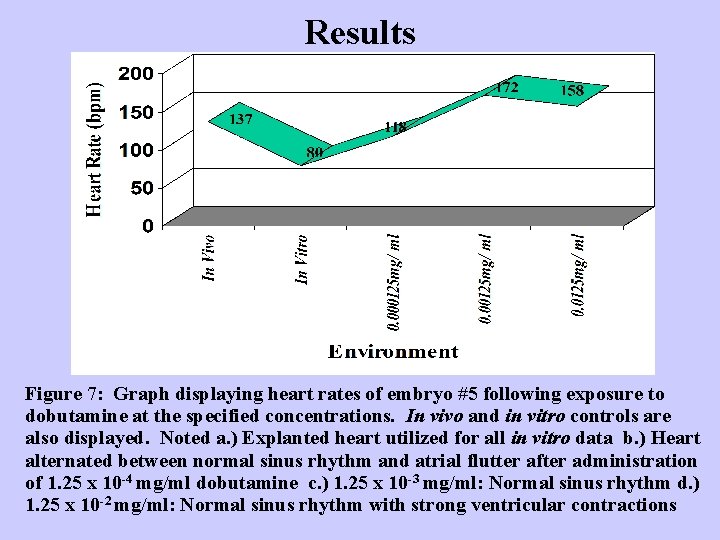
Results Figure 7: Graph displaying heart rates of embryo #5 following exposure to dobutamine at the specified concentrations. In vivo and in vitro controls are also displayed. Noted a. ) Explanted heart utilized for all in vitro data b. ) Heart alternated between normal sinus rhythm and atrial flutter after administration of 1. 25 x 10 -4 mg/ml dobutamine c. ) 1. 25 x 10 -3 mg/ml: Normal sinus rhythm d. ) 1. 25 x 10 -2 mg/ml: Normal sinus rhythm with strong ventricular contractions
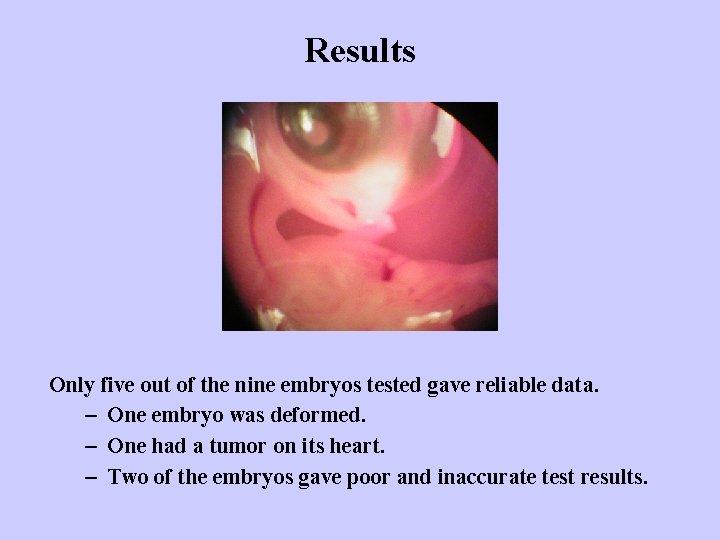
Results Only five out of the nine embryos tested gave reliable data. – One embryo was deformed. – One had a tumor on its heart. – Two of the embryos gave poor and inaccurate test results.
Conclusions • In vivo, normal sinus rhythm was routinely observed for all embryos. This may be attributed to the fact that the embryos remained in their natural environment. • In vitro, the average heart rate decreased due to the embryos’ removal from their natural environment and possible damage to the extraembryonic membranes. • Overall, the HR (bpm) increased with the initial application of dobutamine, 1. 25 x 10 -4 mg/ml. • A trend of increased HR (bpm) was observed since the HR also elevated in the next highest concentration, 1. 25 x 10 -3 mg/ml dobutamine. • At the highest concentration, 1. 25 x 10 -2 mg/ml dobutamine, the heart rate was inconsistant and arryhthmias such as atrial flutter, bouts of tachycardia, and fibrillation were routinely observed.
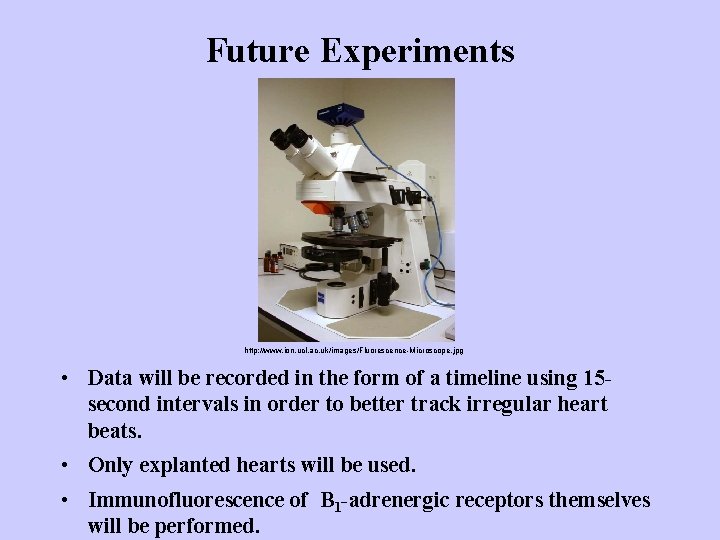
Future Experiments http: //www. ion. ucl. ac. uk/images/Fluorescence-Microscope. jpg • Data will be recorded in the form of a timeline using 15 second intervals in order to better track irregular heart beats. • Only explanted hearts will be used. • Immunofluorescence of B 1 -adrenergic receptors themselves will be performed.
References • • Cruz, Y. P. (1993). Developmental biology: A guide for experimental study. Sinauer Associates, Sunderland, Massachusetts. Driscoll, D. J. , Gillette, PC. , Lewis, R. M. , Hartley, C. J. , Schwartz, A. (1979). Comparative Hemodynamic Effects of Isoproterenol, Dopamine, and Dobutamine in the Newborn Dog. Pediatric Research, 13, 1006 -1009. Fiser, D. H. , Fewell, J. E. , Hill, D. E. , Brown, A. L. (1988). Cardiovascular and renal effects of dopamine and dobutamine in healthy, conscious piglets. Critical Care Medicine, 16 (4), 340 -345. Germann, W. J. and Stanfield, C. L. (2005). “Principles of Human Physiology” Second Ed. (S. Beauparlant, Editor). Pearson Education, Inc. , San Francisco. 153, 443. Mc. Laughlin, J. S. and Mc. Cain, E. R. (1998). “Developmental and Physiological Aspects of the Chicken Embryonic Heart. ” Tested Studies for Laboratory Teaching, Volume 20 (C. A. Goldman, Editor). Proceedings of the 20 th Workshop/Conference of the Association for Biology Laboratory Education (ABLE), 20: 85 -100. Sonnenblick, E. H. , Frishman, W. H. , Le. Jemtel, T. H. (1979). Dobutamine: a new synthetic cardioactive sympathetic amine. Medical Intelligence, 300, 17 -22. Tyler, M. S. (1994). Laboratory exercises in developmental biology. Academic Press, San Diego, California.
- Slides: 27