
The effect of chromatin structure on DNA damage
- Slides: 15
The effect of chromatin structure on DNA damage signaling Dr. Rebecca Burgess Misteli Lab Cell Biology of Genomes Group National Cancer Institute Bethesda, MD
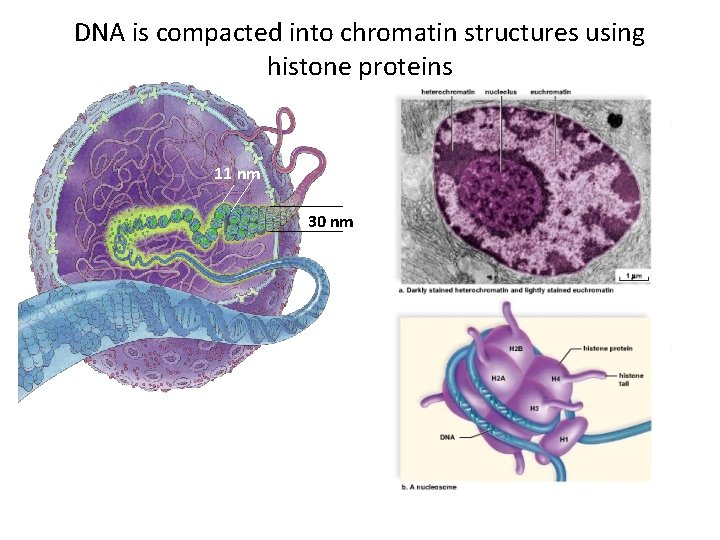
DNA is compacted into chromatin structures using histone proteins 11 nm 30 nm
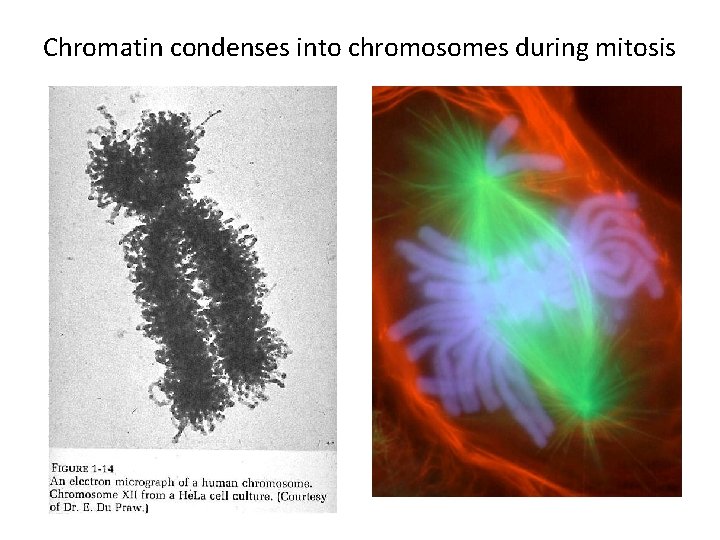
Chromatin condenses into chromosomes during mitosis
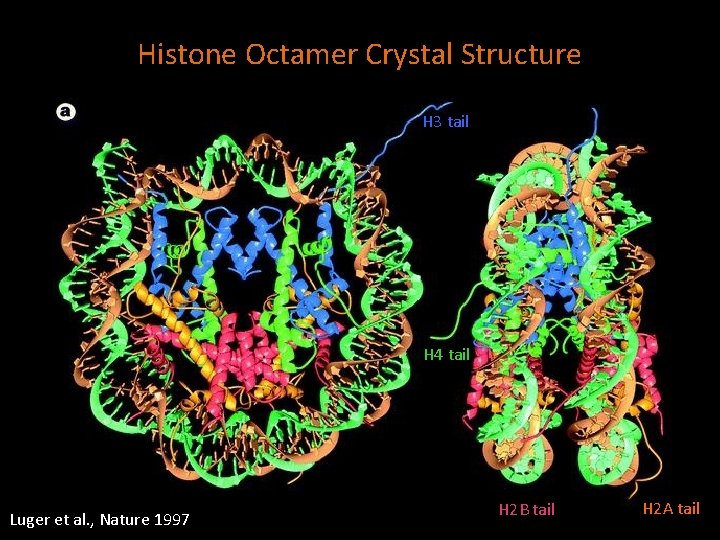
Histone Octamer Crystal Structure H 3 tail H 4 tail Luger et al. , Nature 1997 H 2 B tail H 2 A tail
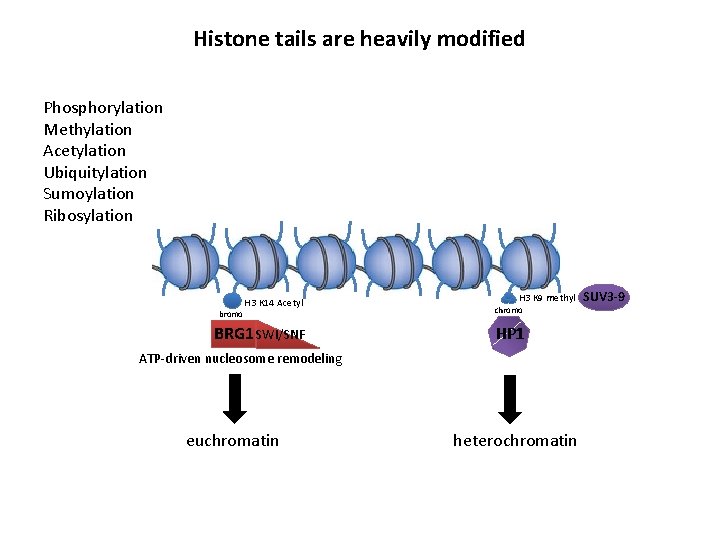
Histone tails are heavily modified Phosphorylation Methylation Acetylation Ubiquitylation Sumoylation Ribosylation H 3 K 14 Acetyl bromo BRG 1 SWI/SNF H 3 K 9 methyl chromo HP 1 ATP-driven nucleosome remodeling euchromatin heterochromatin SUV 3 -9
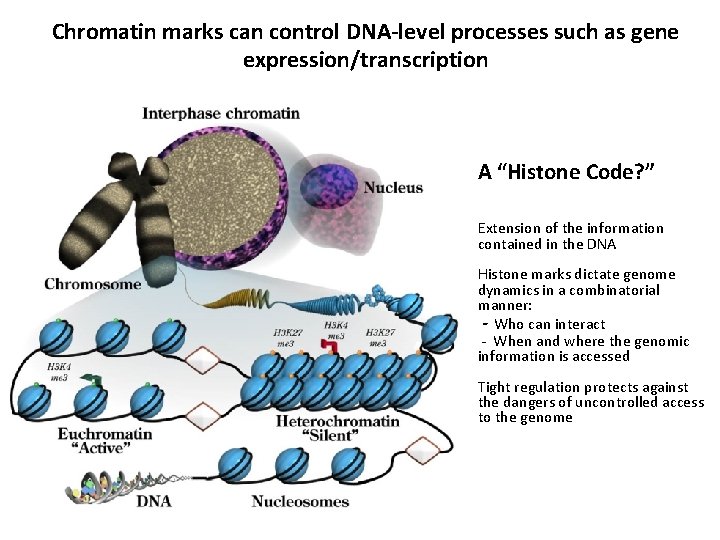
Chromatin marks can control DNA-level processes such as gene expression/transcription A “Histone Code? ” Extension of the information contained in the DNA Histone marks dictate genome dynamics in a combinatorial manner: - Who can interact - When and where the genomic information is accessed Tight regulation protects against the dangers of uncontrolled access to the genome
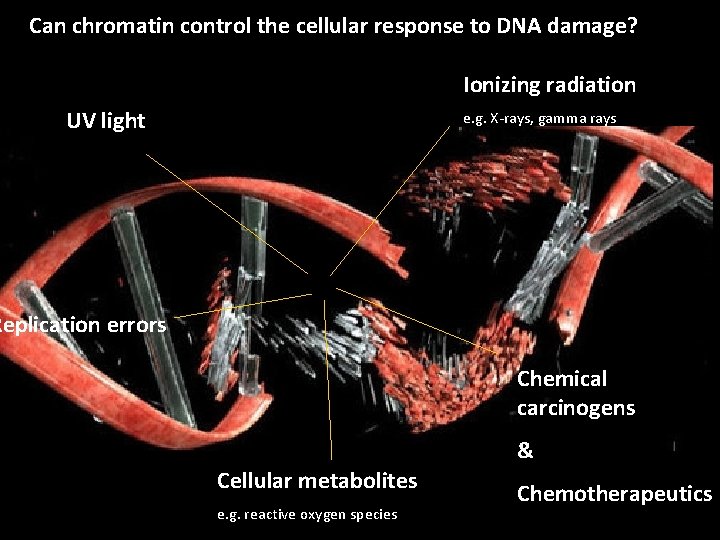
Can chromatin control the cellular response to DNA damage? Ionizing radiation UV light e. g. X-rays, gamma rays Replication errors Chemical carcinogens & Cellular metabolites e. g. reactive oxygen species Chemotherapeutics
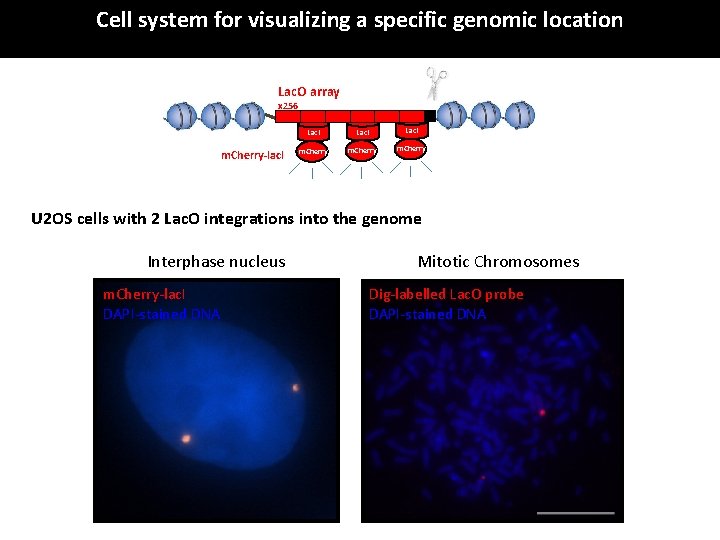
Cell system for visualizing a specific genomic location Lac. O array x 256 m. Cherry-lac. I Lac. I m. Cherry U 2 OS cells with 2 Lac. O integrations into the genome Interphase nucleus m. Cherry-lac. I DAPI-stained DNA Mitotic Chromosomes Dig-labelled Lac. O probe DAPI-stained DNA
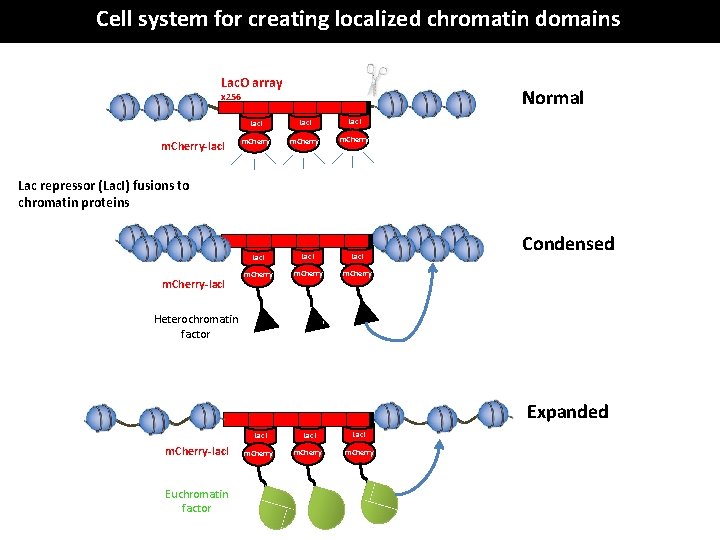
Cell system for creating localized chromatin domains Lac. O array Normal x 256 m. Cherry-lac. I Lac. I m. Cherry Lac repressor (Lac. I) fusions to chromatin proteins m. Cherry-lac. I Lac. I m. Cherry Condensed Heterochromatin factor Expanded m. Cherry-lac. I Euchromatin factor Lac. I m. Cherry
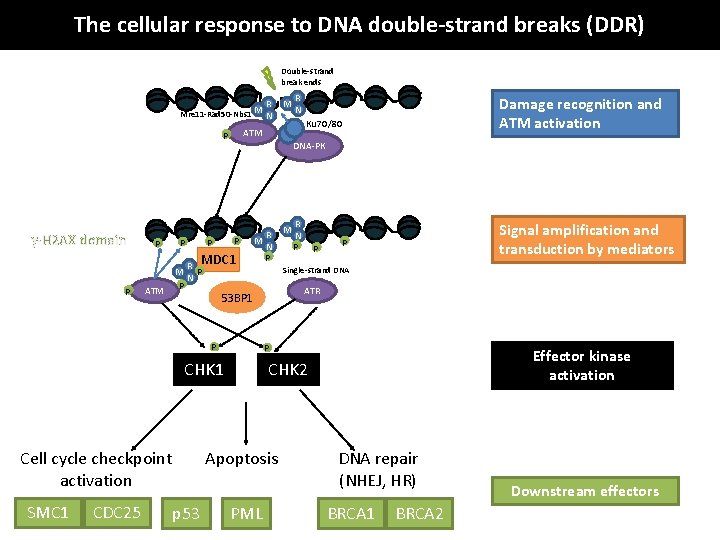
The cellular response to DNA double-strand breaks (DDR) Double-strand break ends Mre 11 -Rad 50 -Nbs 1 M ATM P g-H 2 AX domain P P ATM P R MDC 1 M P N P P CDC 25 Single-strand DNA ATR Effector kinase activation CHK 2 Apoptosis p 53 P Signal amplification and transduction by mediators P P CHK 1 SMC 1 Ku 70/80 R R MN M P N P 53 BP 1 Cell cycle checkpoint activation Damage recognition and ATM activation DNA-PK P P R R M N N PML DNA repair (NHEJ, HR) BRCA 1 BRCA 2 Downstream effectors
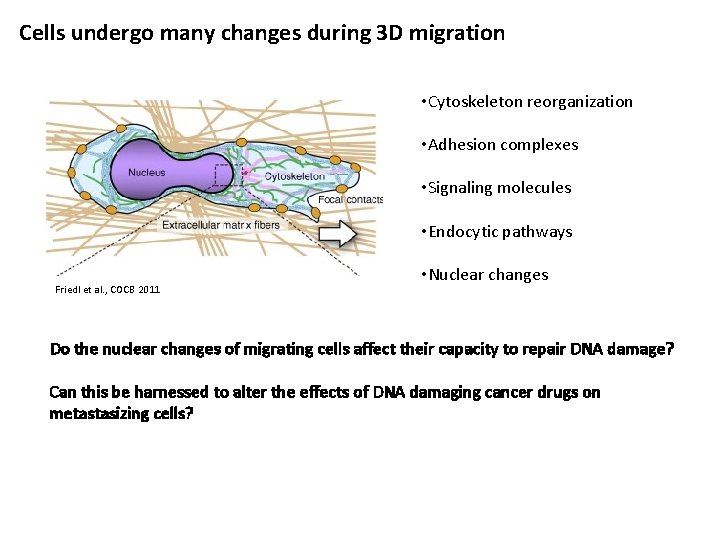
Cells undergo many changes during 3 D migration • Cytoskeleton reorganization • Adhesion complexes • Signaling molecules • Endocytic pathways Friedl et al. , COCB 2011 • Nuclear changes Do the nuclear changes of migrating cells affect their capacity to repair DNA damage? Can this be harnessed to alter the effects of DNA damaging cancer drugs on metastasizing cells?
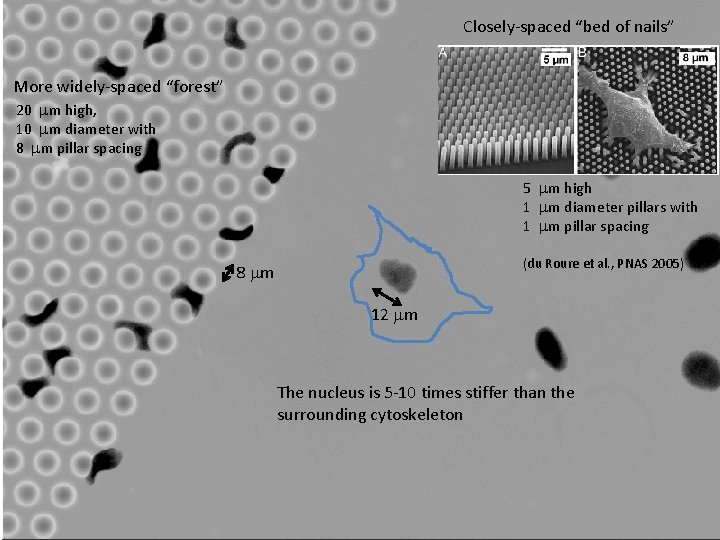
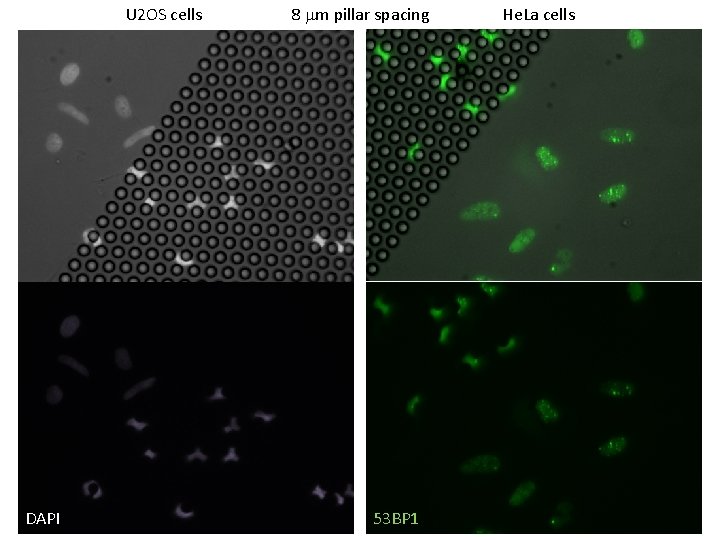
Closely-spaced “bed of nails” More widely-spaced “forest” 20 m high, 10 m diameter with 8 m pillar spacing 5 m high 1 m diameter pillars with 1 m pillar spacing (du Roure et al. , PNAS 2005) 8 m 12 m The nucleus is 5 -10 times stiffer than the surrounding cytoskeleton
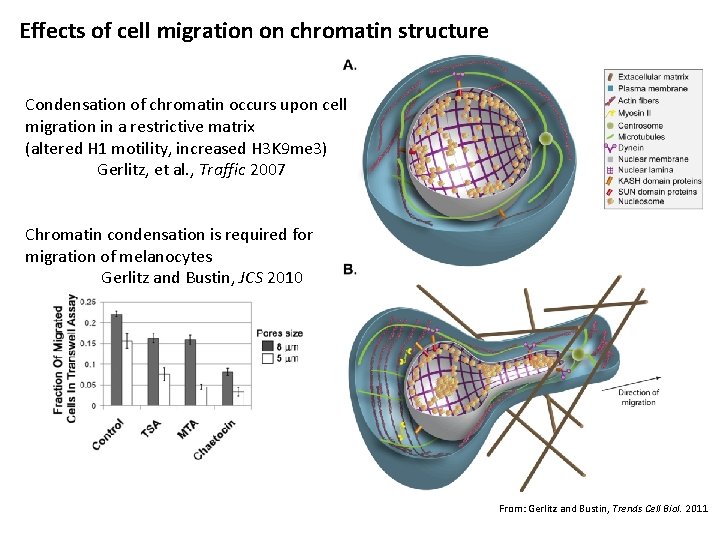
Effects of cell migration on chromatin structure Condensation of chromatin occurs upon cell migration in a restrictive matrix (altered H 1 motility, increased H 3 K 9 me 3) Gerlitz, et al. , Traffic 2007 Chromatin condensation is required for migration of melanocytes Gerlitz and Bustin, JCS 2010 From: Gerlitz and Bustin, Trends Cell Biol. 2011
U 2 OS cells DAPI 8 m pillar spacing 53 BP 1 He. La cells
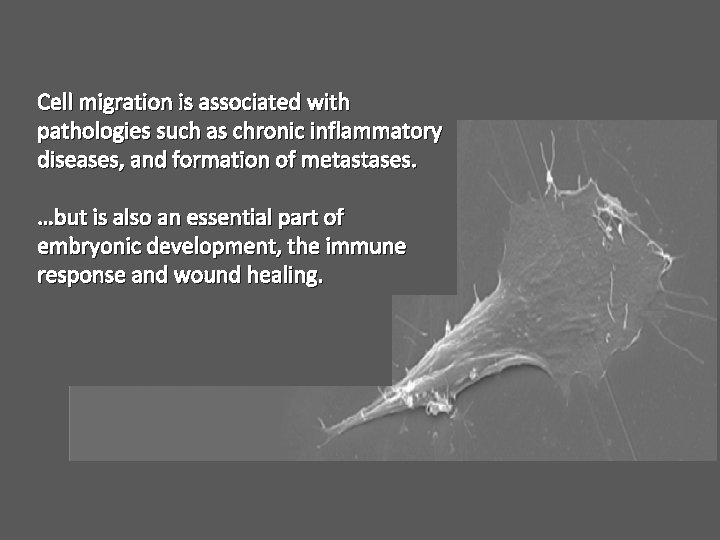
Cell migration is associated with pathologies such as chronic inflammatory diseases, and formation of metastases. …but is also an essential part of embryonic development, the immune response and wound healing.