
THE EDUCATION SYSTEM OF CYPRUS Presented by Anthi
THE EDUCATION SYSTEM OF CYPRUS Presented by Anthi Agapiou and Christiana Pishia July 2014 1
Contents 1. The structure of the Education System 2. System characteristics 3. School unit evaluation and accountability processes 4. The role of school leaders 5. Teacher Evaluation System - Promotions 6. Education policy 2
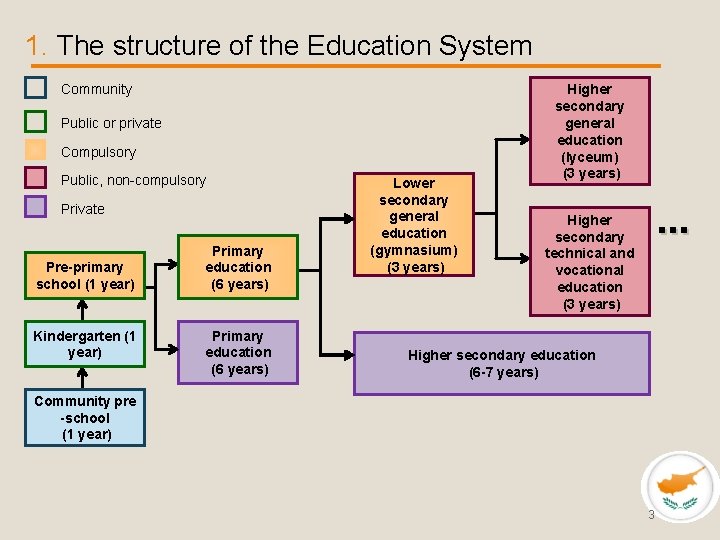
1. The structure of the Education System Community Public or private Compulsory Public, non-compulsory Private Pre-primary school (1 year) Kindergarten (1 year) Primary education (6 years) Lower secondary general education (gymnasium) (3 years) Higher secondary general education (lyceum) (3 years) . . . Higher secondary technical and vocational education (3 years) Higher secondary education (6 -7 years) Community pre -school (1 year) 3
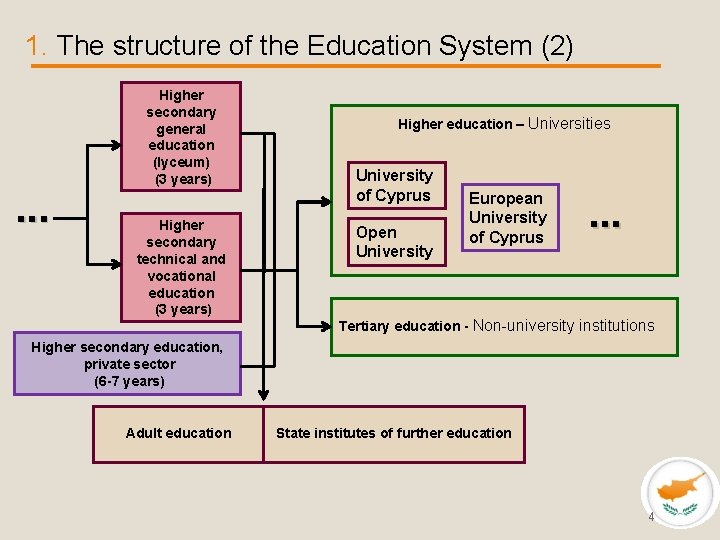
1. The structure of the Education System (2) . . . Higher secondary general education (lyceum) (3 years) Higher secondary technical and vocational education (3 years) Higher education – Universities University of Cyprus Open University European University of Cyprus . . . Tertiary education - Non-university institutions Higher secondary education, private sector (6 -7 years) Adult education State institutes of further education 4
2. System characteristics § Highly centralized § Council of Ministers - Ministry of Education and Culture (Mo. EC) Educational Service Commission (ESC) - Local school boards § Education policy § Policy implementation and service delivery § Large central ministry § Short-term planning and decisions on a range of school-level administrative matters 5
2. System characteristics (2) § Pedagogical Institute (CPI) - Center for Educational Research and Evaluation (CERE). § identify and support schools‘ capacity development needs, § monitor the effectiveness of training programs § identify and manage research to inform education policy reform or implementation § School boards 6
3. School unit evaluation and accountability processes § Not accountable to local stakeholders § Lack of established, formal education standards § Lack of continuous assessment § Little autonomy over their programs and resources § Management of pedagogy centralized in the Mo. EC § Administration and finances § Lack of school implementation unit evaluation system and improvement plan § A form of school unit evaluation takes place when the school leader is under evaluation. 7
4. The role of school directors § The person in charge for the school unit § Several teaching hours § Monitor teacher performance § Provide support and guidance to teachers § Heavy administrative duties § Performance is not linked to compensation § Established programs to support the development of principals’ leadership skills 8
5. Teacher Evaluation System - Primary Education Pre-Primary Schools (public) § Kindergarteners § Kindergartener/Deputy Directors (in charge) (Leader) § Deputy Directors (in charge)/Director (Leader) The Primary Schools § Teachers § Deputy Directors § Director (Leader) 9
5. Teacher Evaluation System - Primary Education (2) § The rules of the Teachers’ Evaluation System for the Primary School Teachers, Deputy Directors and Directors were constituted in 1976. § Since then, NOTHING has changed According to the Evaluation Rules: § Inspector: evaluate teachers, Deputy Directors and the Director of the school § The teaching stuff is being evaluated, not the school, neither the learning outcomes. 10
5. Teacher Evaluation System – Primary Education(3) According to the Evaluation Rules: § 12 th year of a teacher’s carrier - first evaluation § First 11 years of a teacher’s carrier - yearly contract, under evaluation, full time § During the years of the yearly contracts § 13 th year of a teacher’s carrier - second evaluation § Evaluated every second year until the 25 th year is completed or until promoted to Director § Then, numerical evaluation comes every third year 11
5. Teacher Evaluation System – Primary Education(4) Evaluation system outcomes: § Teachers care/work as expected only when they are under evaluation § No in service motivation for Teacher Professional Development (TPD). § Evaluation is purely summative § No formative evaluation for teachers § No systems in place to assess student learning § Only senior teachers can acquire the position of the director § No opportunities for younger talents to be in charge of a school 12
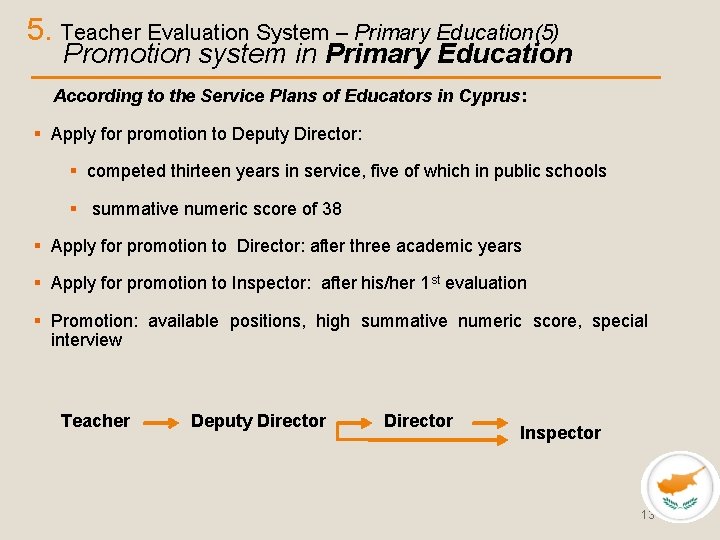
5. Teacher Evaluation System – Primary Education(5) Promotion system in Primary Education According to the Service Plans of Educators in Cyprus: § Apply for promotion to Deputy Director: § competed thirteen years in service, five of which in public schools § summative numeric score of 38 § Apply for promotion to Director: after three academic years § Apply for promotion to Inspector: after his/her 1 st evaluation § Promotion: available positions, high summative numeric score, special interview Teacher Deputy Director Inspector 13
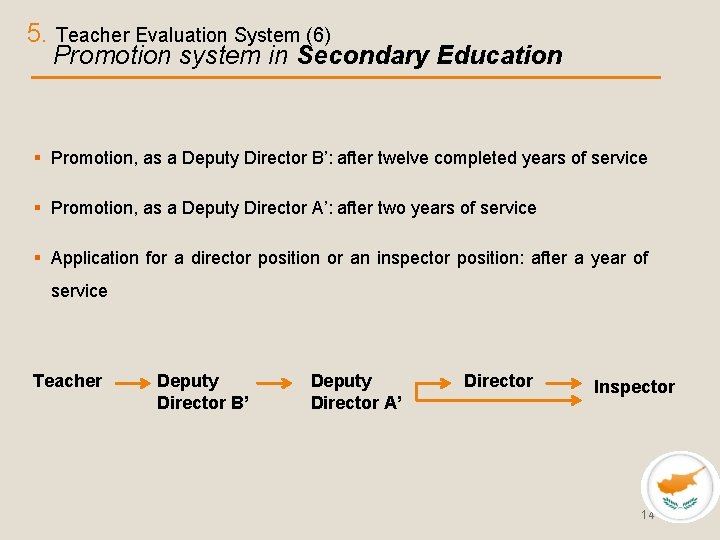
5. Teacher Evaluation System (6) Promotion system in Secondary Education § Promotion, as a Deputy Director B’: after twelve completed years of service § Promotion, as a Deputy Director A’: after two years of service § Application for a director position or an inspector position: after a year of service Teacher Deputy Director B’ Deputy Director A’ Director Inspector 14
6. Education policy § Quality - Renovation - Revision § In 2003: Committee of Seven Academics (CSA) - proposals for comprehensive reform. § In 2007: set of proposals for reforming the Education System § In 2010: broad education policies were presented § In the 2012 -2013 school year: § new Curricula and School Timetables in all Primary Schools § new Curricula in all Secondary Schools § Working Groups for the Curricula 15
6. Education policy (2) § In 2013: gradual evaluation of the process § Ad hoc committees: § Interdepartmental Committee for the Evaluation of the National Curriculum § Coordinating Committee § Scientific Committee (CSA) 16
6. Education policy (3) § Implementation of educational programmes (i. e. Road Safety, Environmental education etc) § Participation in European programmes (Life Long Learning) § Participation in regional co-operation programmes (i. e. EUROMED, ASEM) § School unit evaluation and accountability processes are now under discussion, for reform § World Bank proposals for reform 17
Education policy (4) Prospects for Teacher Evaluation System Reform § In 2009: begun a dialogue between the Mo. EC, the Ministry of Finance and Teacher Unions: - recommendations of the Committee on Education Reform (2004) - proposals of the Consortium "Athena" (2006) § On the 10 th of June 2014: Committee of the Cyprus Education Evaluation System 18
Thank you for your time!
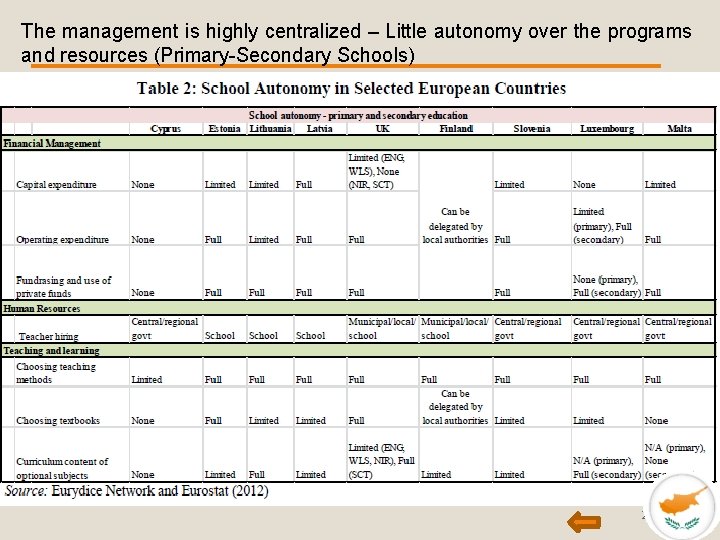
The management is highly centralized – Little autonomy over the programs and resources (Primary-Secondary Schools) 20
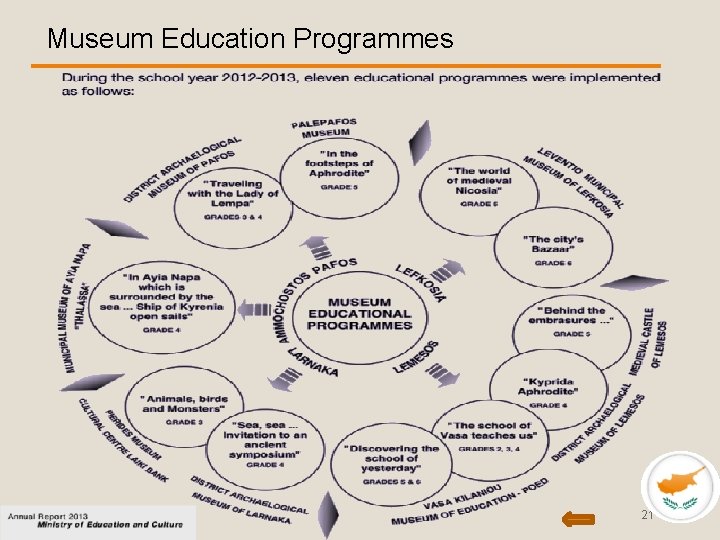
Museum Education Programmes 21
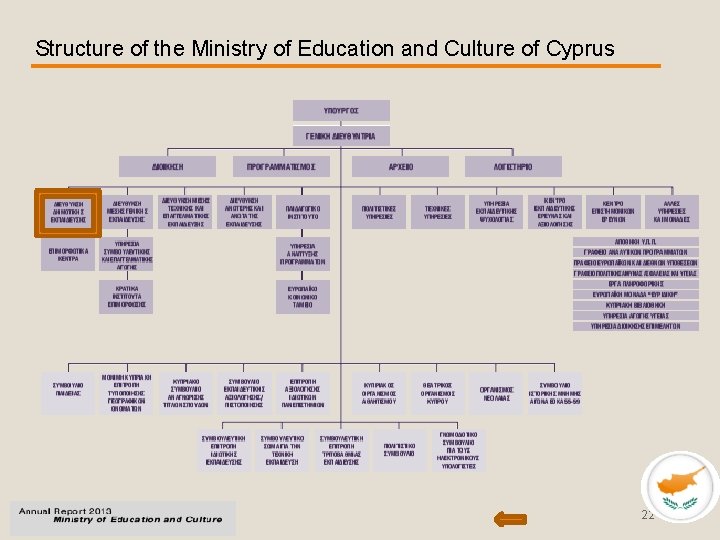
Structure of the Ministry of Education and Culture of Cyprus 22
- Slides: 22