
The Economics Politics of Foreign Aid Chris Coyne



- Slides: 37
The Economics & Politics of Foreign Aid Chris Coyne Department of Economics George Mason University
1. Context
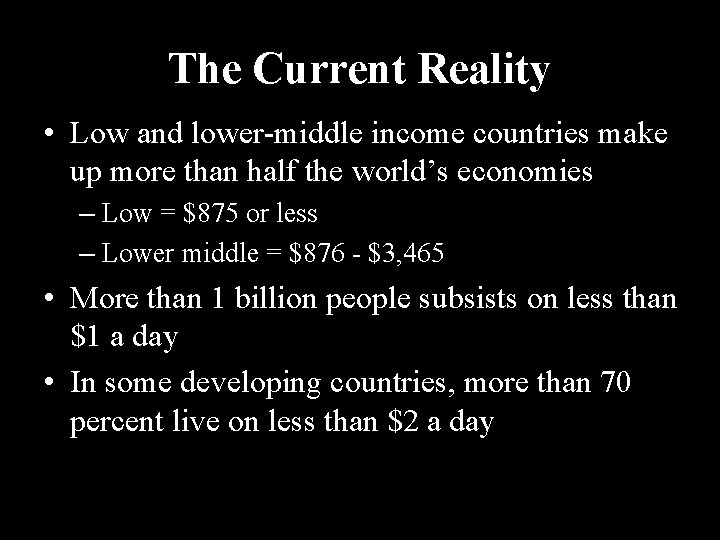
The Current Reality • Low and lower-middle income countries make up more than half the world’s economies – Low = $875 or less – Lower middle = $876 - $3, 465 • More than 1 billion people subsists on less than $1 a day • In some developing countries, more than 70 percent live on less than $2 a day
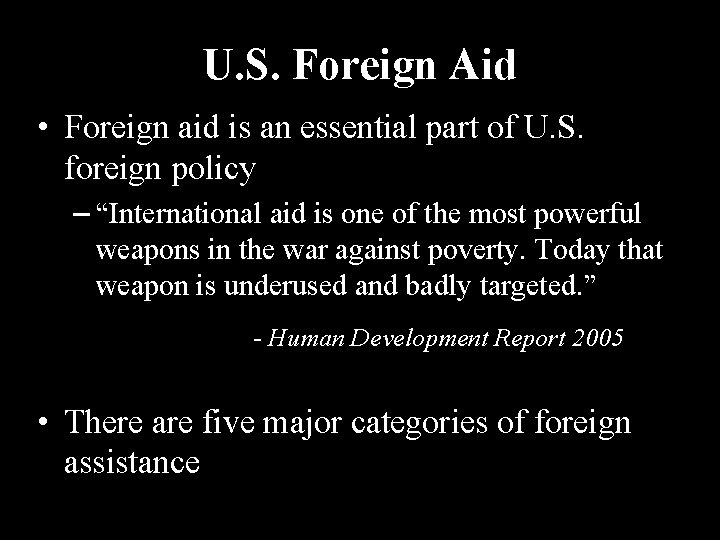
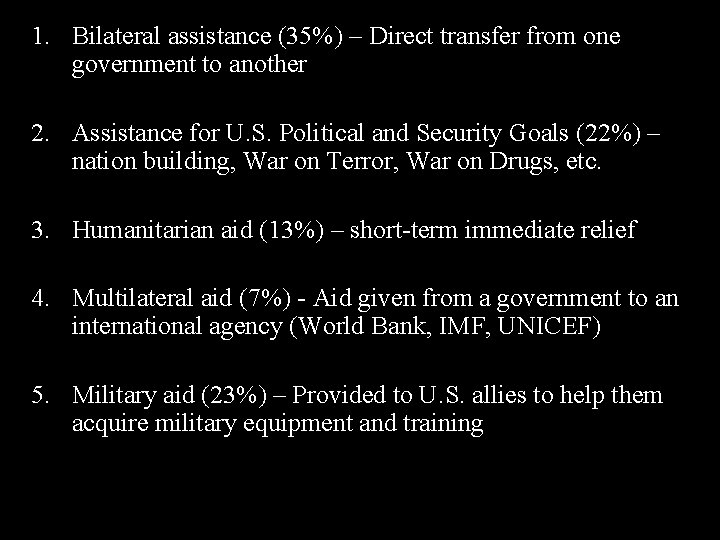
U. S. Foreign Aid • Foreign aid is an essential part of U. S. foreign policy – “International aid is one of the most powerful weapons in the war against poverty. Today that weapon is underused and badly targeted. ” - Human Development Report 2005 • There are five major categories of foreign assistance
1. Bilateral assistance (35%) – Direct transfer from one government to another 2. Assistance for U. S. Political and Security Goals (22%) – nation building, War on Terror, War on Drugs, etc. 3. Humanitarian aid (13%) – short-term immediate relief 4. Multilateral aid (7%) - Aid given from a government to an international agency (World Bank, IMF, UNICEF) 5. Military aid (23%) – Provided to U. S. allies to help them acquire military equipment and training
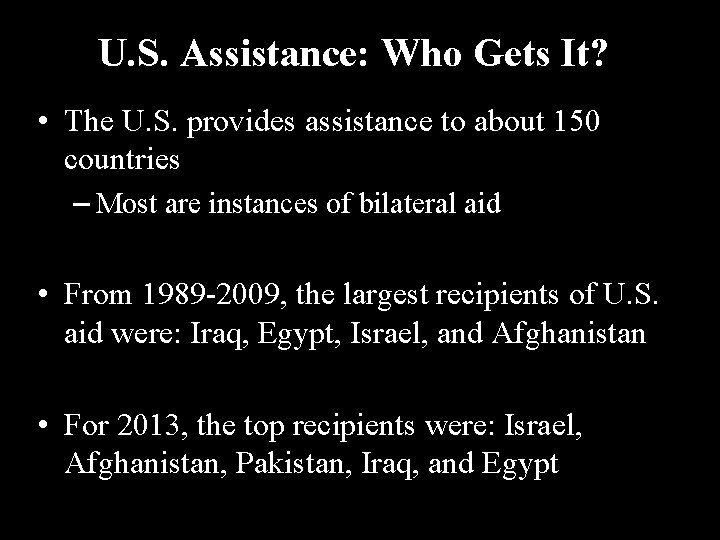
U. S. Assistance: Who Gets It? • The U. S. provides assistance to about 150 countries – Most are instances of bilateral aid • From 1989 -2009, the largest recipients of U. S. aid were: Iraq, Egypt, Israel, and Afghanistan • For 2013, the top recipients were: Israel, Afghanistan, Pakistan, Iraq, and Egypt
2. Has Assistance Worked?
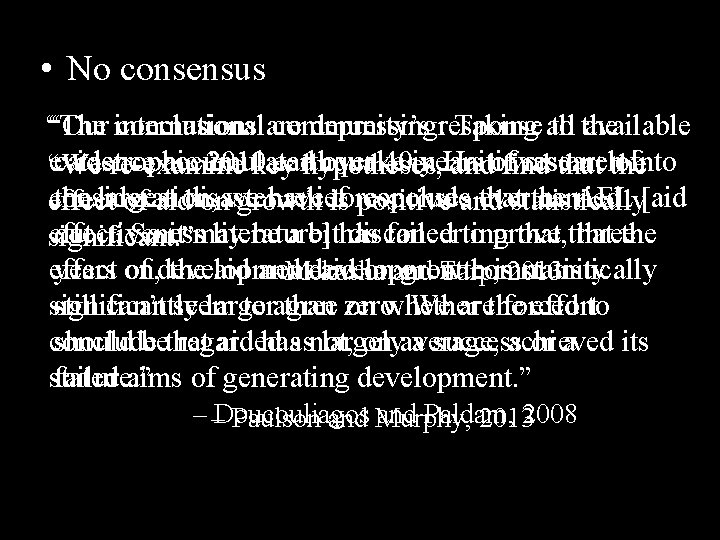
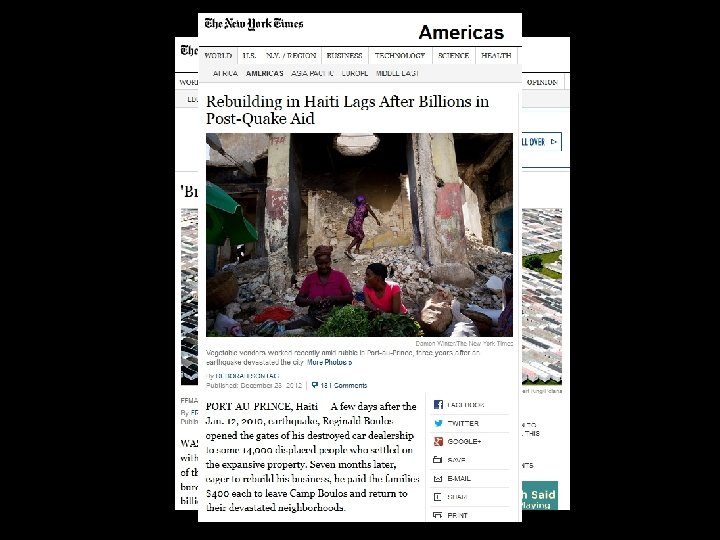
• No consensus “Our international conclusions are depressing: response Taking all available “The community’s to the evidence accumulated over 40 in years research catastrophic 2010 key earthquake Haiti was one the ofinto “We re-examine hypotheses, andoffind that consideration, have toresponses concludeand that the AEL [aid the largest relief ever carried effect of aiddisaster onwe growth is positive statistically effectiveness literature] failed to prove the out. . . So it may be a bithas disconcerting that, that three significant. ” effect of development aid onand growth is 2013 statistically years on, the aid and development community – Mekasha Tarp, significantly larger than zero. We arethe forced still can’t seem to agree on whether effortto conclude aid hasasnot, on average, achieved its should bethat regarded largely a success or a stated aims of generating development. ” failure. ” – –Doucouliagos and Paldam, Paulson and Murphy, 20132008
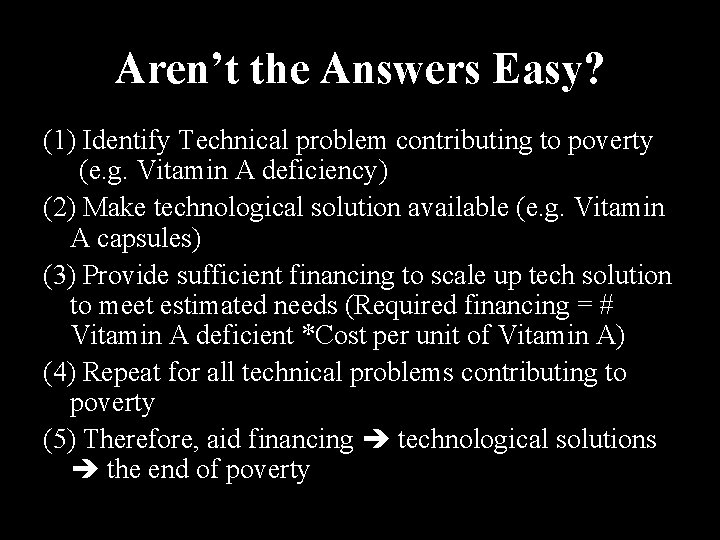
Aren’t the Answers Easy? (1) Identify Technical problem contributing to poverty (e. g. Vitamin A deficiency) (2) Make technological solution available (e. g. Vitamin A capsules) (3) Provide sufficient financing to scale up tech solution to meet estimated needs (Required financing = # Vitamin A deficient *Cost per unit of Vitamin A) (4) Repeat for all technical problems contributing to poverty (5) Therefore, aid financing technological solutions the end of poverty
Why It Might Not be That Easy • Aid money does not spend itself, and technology does not implement itself • Humans spend aid money and implement technology
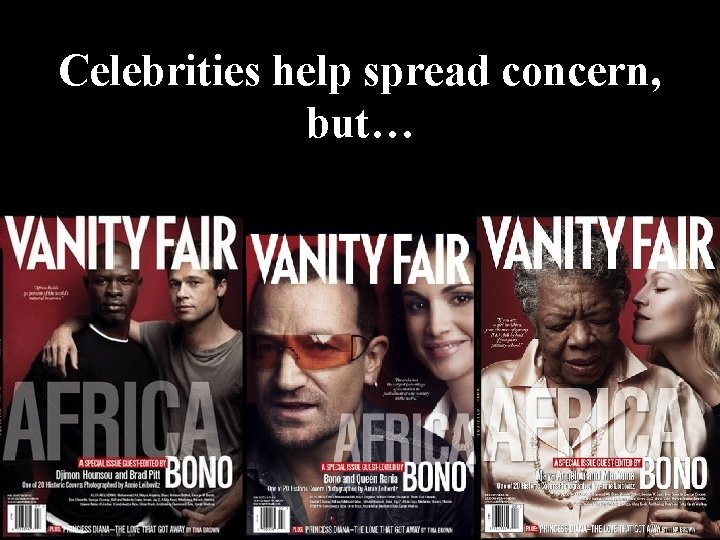
Celebrities help spread concern, but…
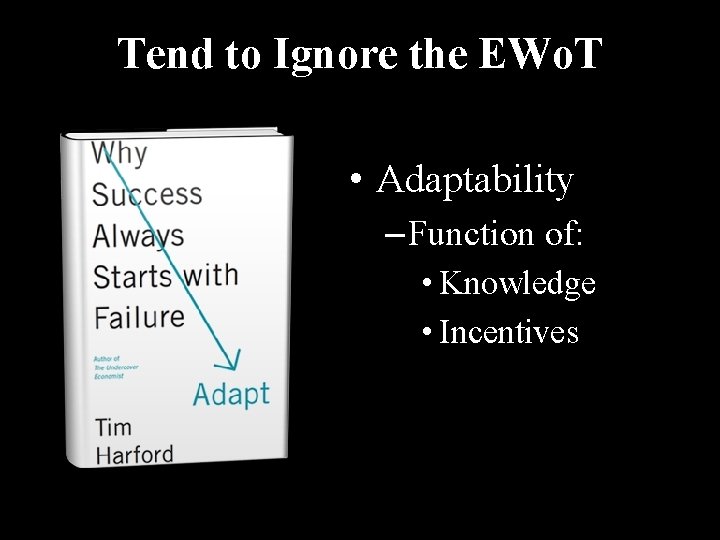
Tend to Ignore the EWo. T • Adaptability – Function of: • Knowledge • Incentives
3. Why Might Aid Fail?
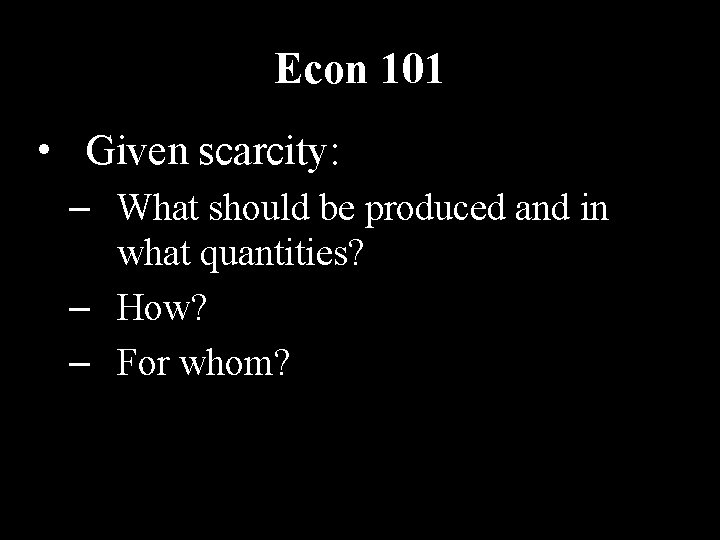
Econ 101 • Given scarcity: – What should be produced and in what quantities? – How? – For whom?
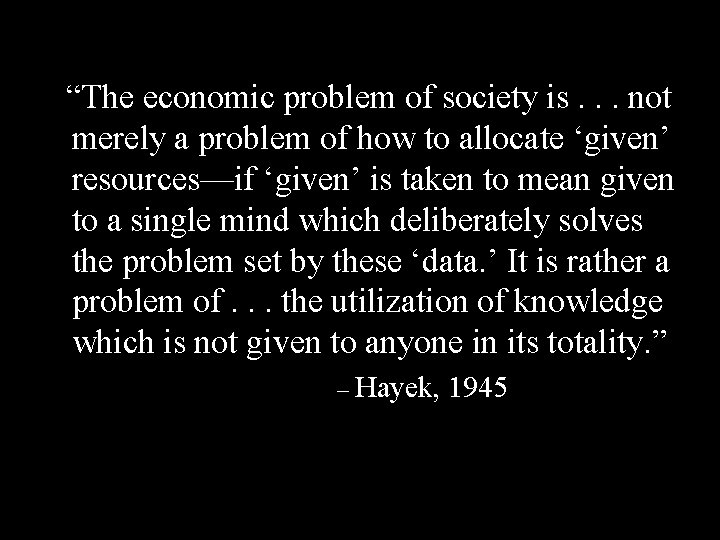
“The economic problem of society is. . . not merely a problem of how to allocate ‘given’ resources—if ‘given’ is taken to mean given to a single mind which deliberately solves the problem set by these ‘data. ’ It is rather a problem of. . . the utilization of knowledge which is not given to anyone in its totality. ” – Hayek, 1945
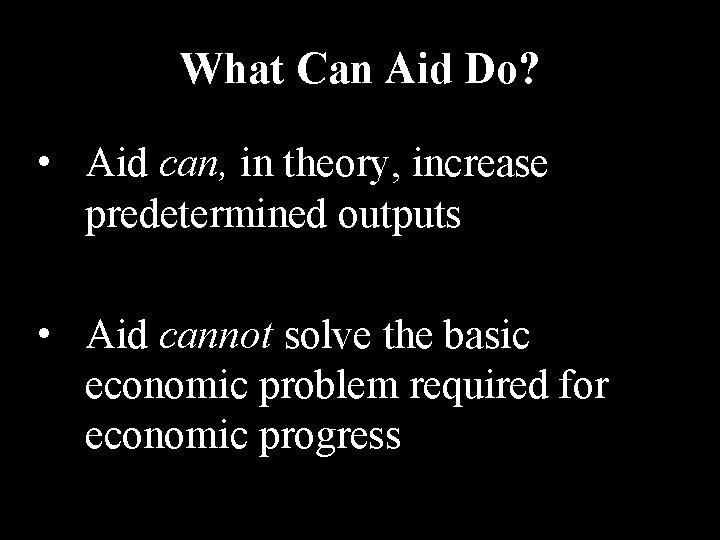
What Can Aid Do? • Aid can, in theory, increase predetermined outputs • Aid cannot solve the basic economic problem required for economic progress
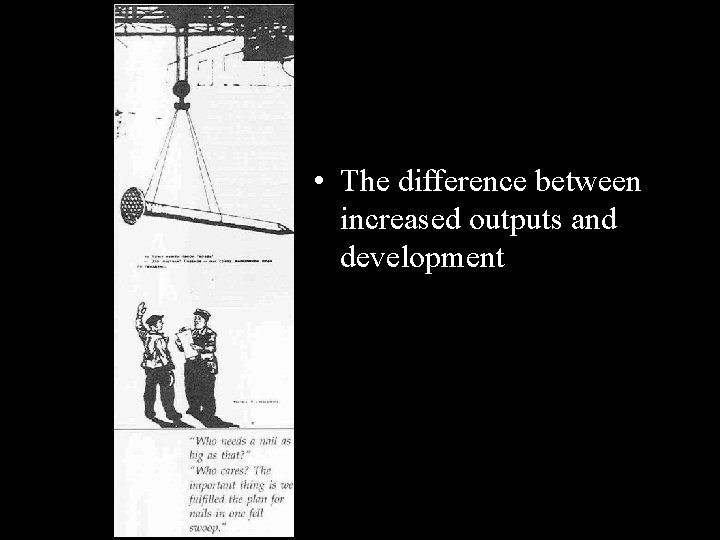
• The difference between increased outputs and development
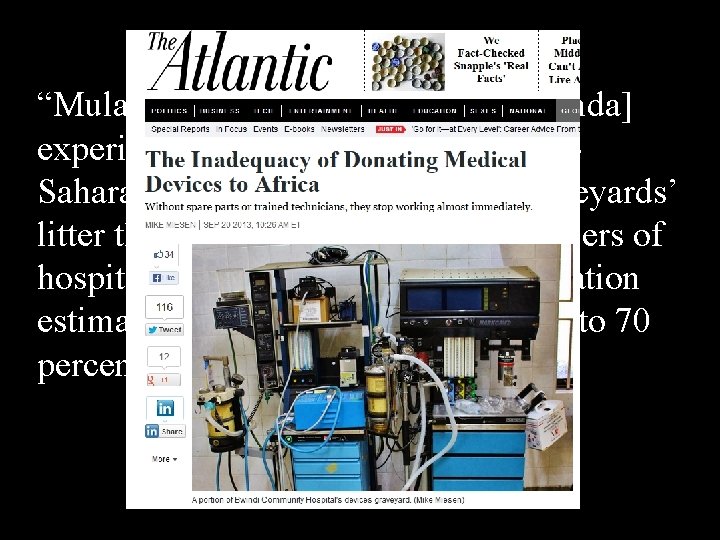
“Mulago’s [located in Kampala, Uganda] experience is not unique. Across Sub. Saharan Africa, ‘medical device graveyards’ litter the empty closets and spare corners of hospitals. The World Health Organization estimates that ‘a large proportion (up to 70 percent) of equipment lies idle. ’”
Political Competition… • • Between recipient governments Within the donor government Between NGOs Among special interests • Implications for those in need: – – They have a weak or nonexistent voice Those in need often do not receive assistance
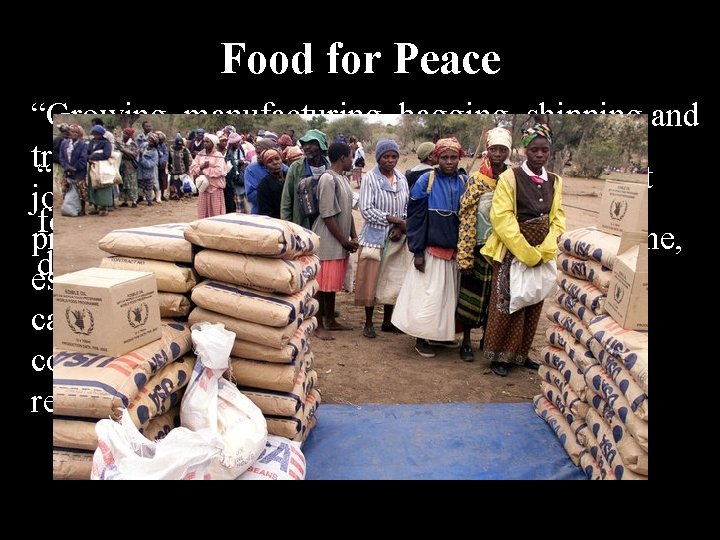
Food for Peace “Growing, manufacturing, bagging, shipping and transportation of nutritious U. S. food creates “I’ve run these operations, and I know that jobs and economic activity here at home, food aid often gets there after everyone’s provides support for our U. S. Merchant Marine, dead. ” essential to our national defense sealift – Andrew Natsios, 2013 capability, and sustains a robust domestic constituency for these programs not easily replicated in foreign aid programs. ” – Letter to Congress and Obama Administration from 60 U. S. food organizations
Bureaucracy • Discretionary budget – Mission creep and hubris – Waste
Unintended Consequences • A complex system has two characteristics • • Interconnected units or elements Entire system exhibits properties different from its individual parts – Reinforce status quo, Corruption, Political Instability, Dependency, Escalation in conflict and human rights violations, etc.
“The cause of this mess is no mystery. Ever since Uganda began receiving generous amounts of foreign aid two decades ago, senior Ugandan politicians and civil servants have been stealing virtually every shilling they can get their hands on … The US, Japan, and Europe also poured in aid, and as they did, ever more outrageous scandals ensued. ” – Helen Murphy, “Murder in Uganda, ” The New York Review of Books, April 3, 2014
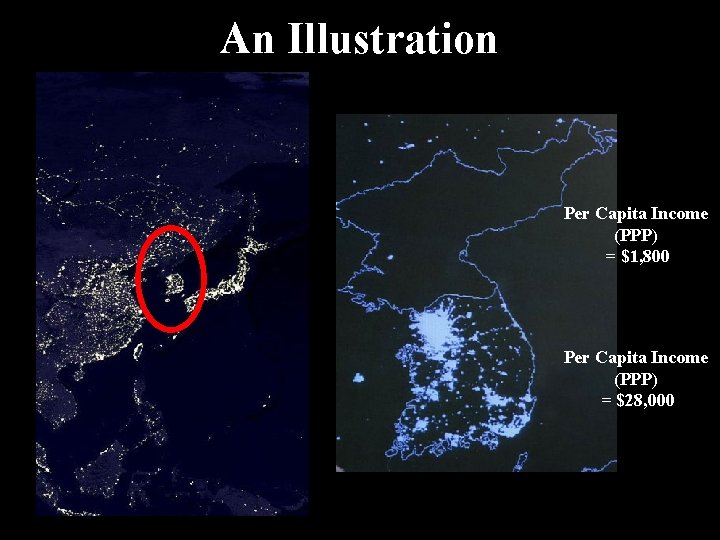
4. Institutions: The Key to Economic Growth
An Illustration Per Capita Income (PPP) = $1, 800 Per Capita Income (PPP) = $28, 000
Economic Freedom • Economic Freedom means that people are free to trade with others, compete in markets, buy what they want, earn a living in a job they choose, keep what they earn, and own things privately
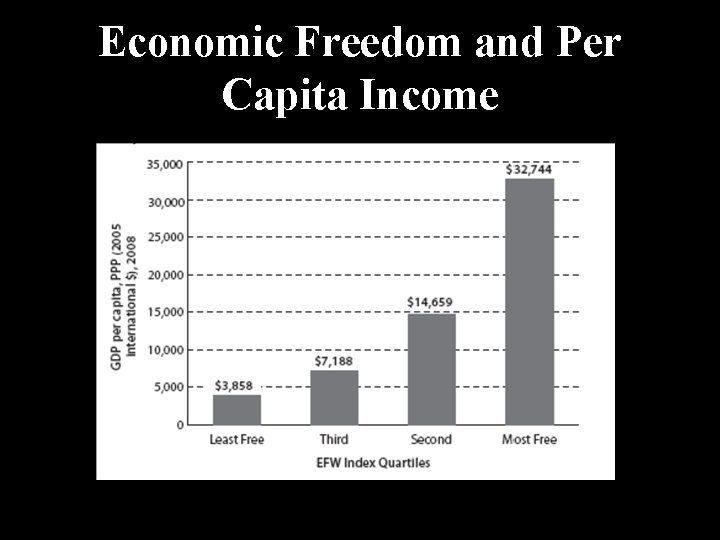
Economic Freedom and Per Capita Income
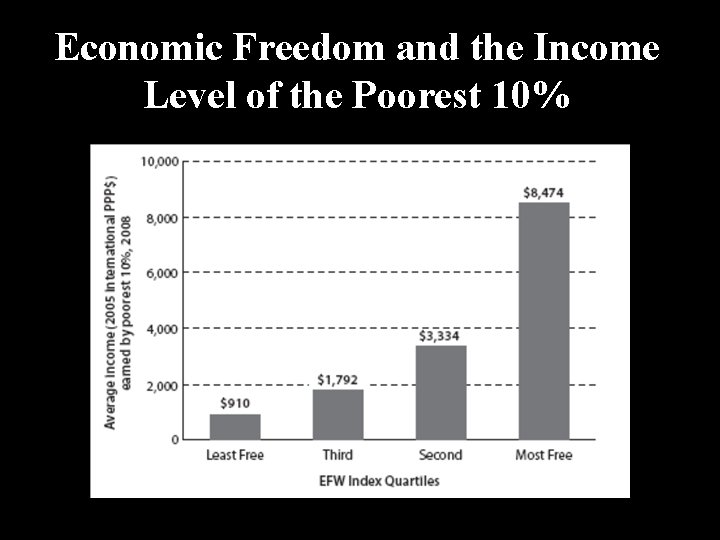
Economic Freedom and the Income Level of the Poorest 10%
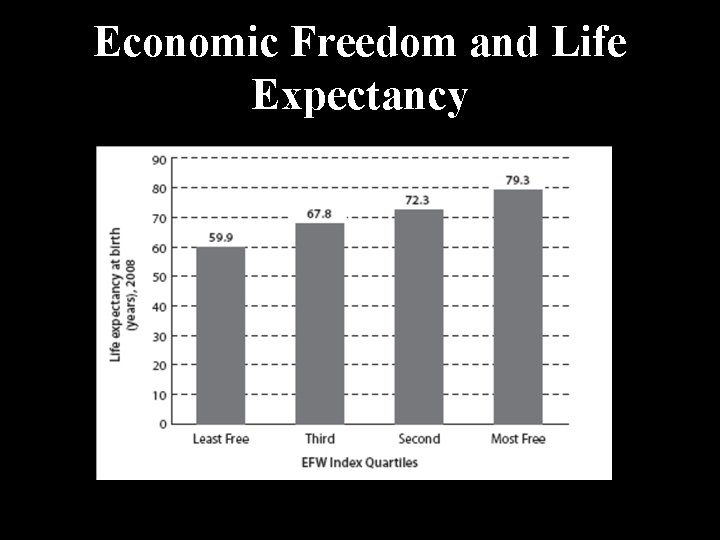
Economic Freedom and Life Expectancy
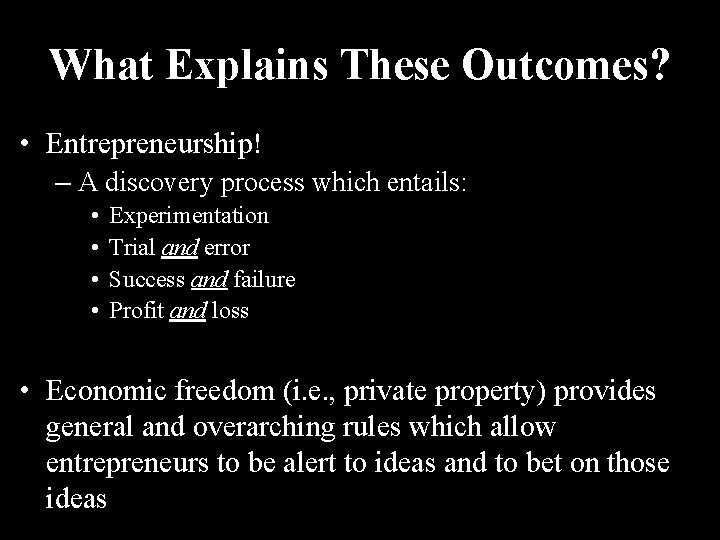
What Explains These Outcomes? • Entrepreneurship! – A discovery process which entails: • • Experimentation Trial and error Success and failure Profit and loss • Economic freedom (i. e. , private property) provides general and overarching rules which allow entrepreneurs to be alert to ideas and to bet on those ideas
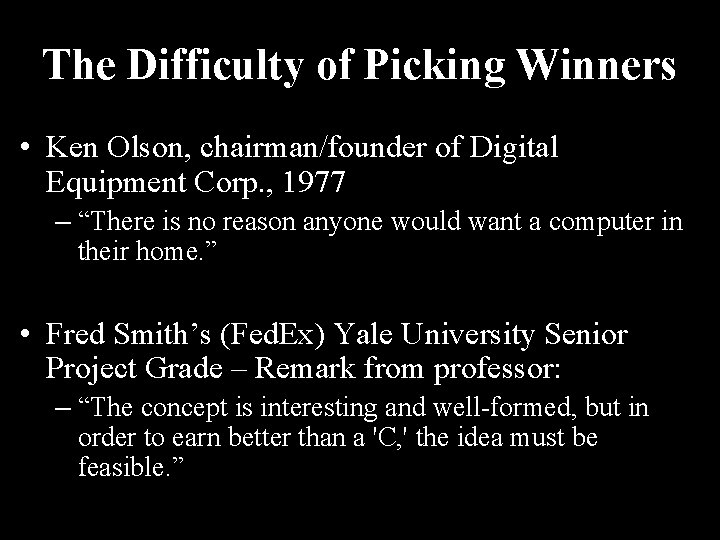
The Difficulty of Picking Winners • Ken Olson, chairman/founder of Digital Equipment Corp. , 1977 – “There is no reason anyone would want a computer in their home. ” • Fred Smith’s (Fed. Ex) Yale University Senior Project Grade – Remark from professor: – “The concept is interesting and well-formed, but in order to earn better than a 'C, ' the idea must be feasible. ”
Would You Invest?
5. Summing Up
The question that often arises in discussions of humanitarian issues: What must “we” do to end suffering?
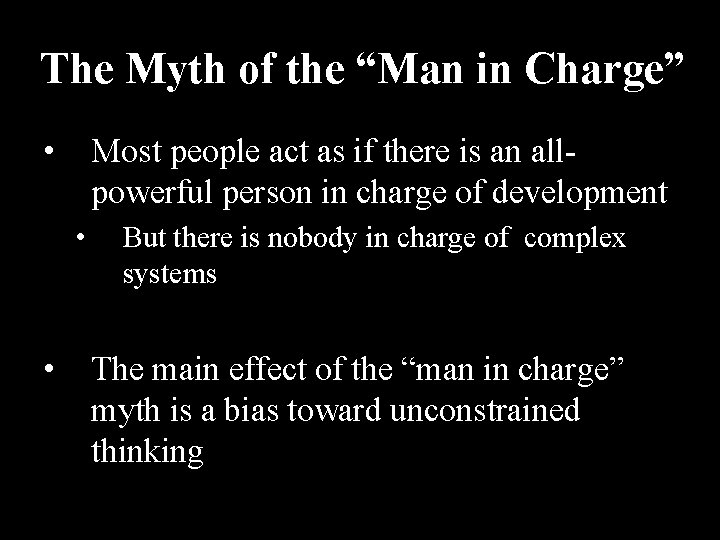
The Myth of the “Man in Charge” • Most people act as if there is an allpowerful person in charge of development • • But there is nobody in charge of complex systems The main effect of the “man in charge” myth is a bias toward unconstrained thinking
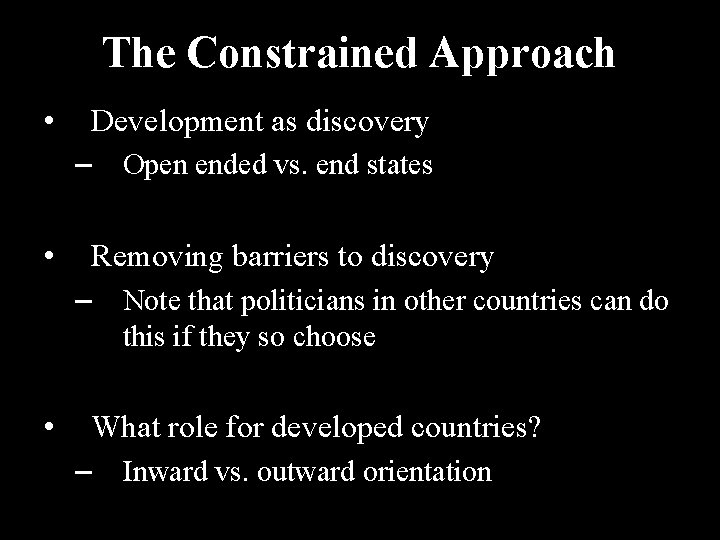
The Constrained Approach • Development as discovery – Open ended vs. end states • Removing barriers to discovery – Note that politicians in other countries can do this if they so choose • What role for developed countries? – Inward vs. outward orientation