
The Economics of the Flu Shot Presented by
The Economics of the Flu Shot Presented by Indrakshi Roy
A little about The Flu v Influenza is a serious disease that can lead to hospitalization and sometimes even death. v Over a period of 31 seasons between 1976 and 2007, estimates of flu-associated deaths in the United States range from a low of about 3, 000 to a high of about 49, 000 people. v During a regular flu season, about 90 percent of deaths occur in people 65 years and older. v “Flu season” in the United States can begin as early as October and last as late as May. v Flu viruses constantly change and mutate. The flu vaccine protects you against that season’s three or four most common flu virus strains.
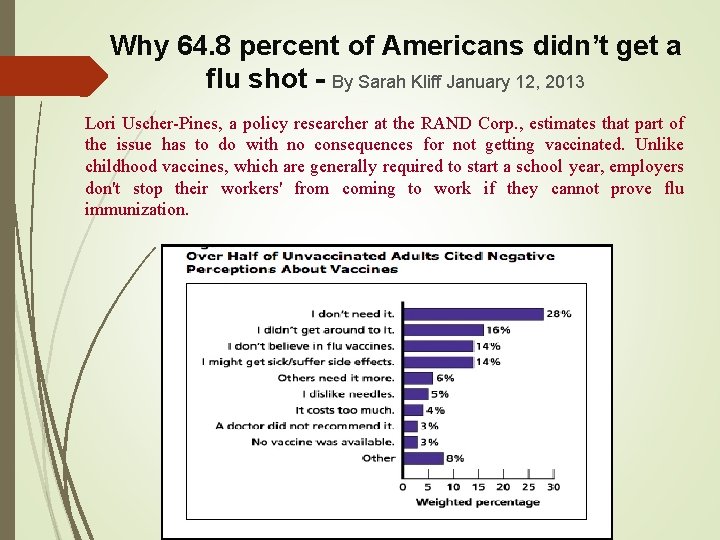
Why 64. 8 percent of Americans didn’t get a flu shot - By Sarah Kliff January 12, 2013 Lori Uscher-Pines, a policy researcher at the RAND Corp. , estimates that part of the issue has to do with no consequences for not getting vaccinated. Unlike childhood vaccines, which are generally required to start a school year, employers don't stop their workers' from coming to work if they cannot prove flu immunization.
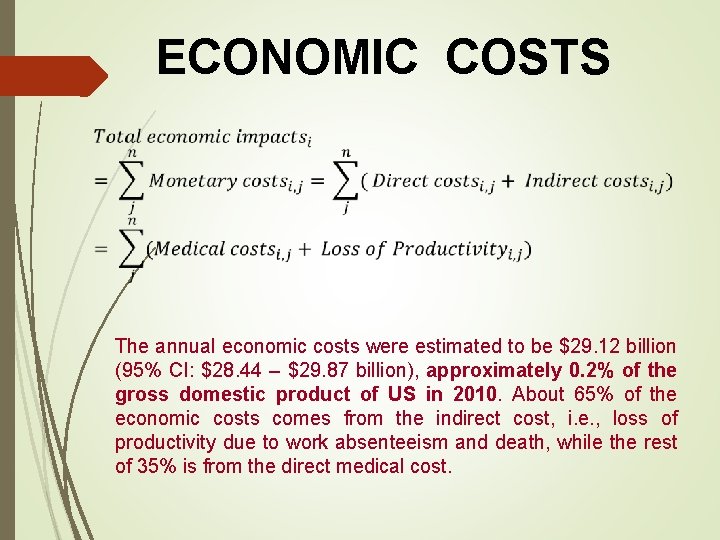
ECONOMIC COSTS The annual economic costs were estimated to be $29. 12 billion (95% CI: $28. 44 – $29. 87 billion), approximately 0. 2% of the gross domestic product of US in 2010. About 65% of the economic costs comes from the indirect cost, i. e. , loss of productivity due to work absenteeism and death, while the rest of 35% is from the direct medical cost.
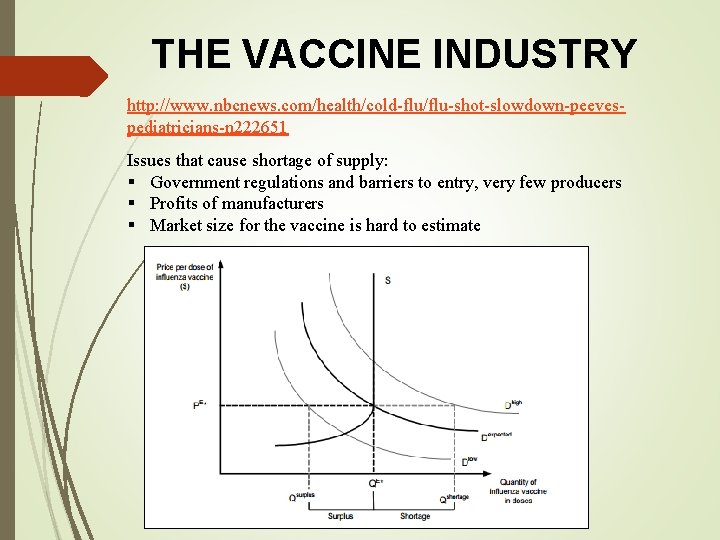
THE VACCINE INDUSTRY http: //www. nbcnews. com/health/cold-flu/flu-shot-slowdown-peevespediatricians-n 222651 Issues that cause shortage of supply: § Government regulations and barriers to entry, very few producers § Profits of manufacturers § Market size for the vaccine is hard to estimate
Possible strategies to reduce or eliminate influenza vaccine shortages v harmonize licensing requirements for influenza vaccine producers across international markets; v increase demand for the vaccine; v develop government purchase programs; buy-back or guaranteed v create strategic reserves; and v encourage and speed the development and implementation of new technologies for producing influenza vaccine.
Possible strategies for most effective vaccine distribution v Most studies investigate vaccination strategies only at a national level, but few have considered the county differences, i. e. , distributing vaccine resources based on county characteristics. One research ˡ has explored four county-based strategies and suggested that vaccination prioritizing counties with high attack rates would produce the greatest cost-benefits. v Vaccination of health care workers has economic benefits. A Thai study found the cost of investigating an influenza outbreak in their intensive care ward was over 10 -times that of vaccinating all of the staff. Another study found the economic benefits outweighed the costs by a factor of 4. 5. v In July 2000, the province of Ontario, Canada, initiated a universal influenza immunization program (UIIP) to provide free seasonal influenza vaccines for the entire population. Reduced influenza cases by 61% and mortality by 28%. Reducing influenza cases decreases health care services cost by 52%. ² ˡhttp: //www. ijhealthgeographics. com/content/1/1/16 ²http: //www. plosmedicine. org/article/info%3 Adoi%2 F 10. 1371%2 Fjournal. pmed. 1000256
REFERENCES http: //www. cdc. gov/flu/protect/keyfacts. htm http: //www. flu. gov/about_the_flu/virus_changes/index. html http: //www. washingtonpost. com/blogs/wonkblog/wp/2013/01/12/why-64 -8 -percent-of-americans-didnt-get-a-flu-shot/ http: //www. ij-healthgeographics. com/content/11/1/16 https: //www. rti. org/pubs/laytoneconomics. pdf http: //www. apaci. asia/influenza/burden-of-influenza-a-benefit-ofvaccination http: //www. plosmedicine. org/article/info%3 Adoi%2 F 10. 1371%2 Fjournal. p med. 1000256
- Slides: 8