
THE ECONOMIC FEASIBILITY OF ETHANOL PRODUCTION FROM SUGAR
THE ECONOMIC FEASIBILITY OF ETHANOL PRODUCTION FROM SUGAR IN THE UNITED STATES USDA report released July 2006
Study Outline • • • The U. S. Ethanol Industry Price Outlook for Ethanol Feedstock Available for Production of Ethanol Byproducts of Ethanol and Sugar Industries Starch and Sugar Content of Grains and Sugar Crops Feedstock Production Costs, Net Feedstock Costs & Processing Costs • Costs in Other Countries • Capital Costs • Other Issues: Plant Location; New Technologies; Market Outlook for Sugar
Feedstocks Available for Ethanol Production • • • Sugarcane Sugar beets Sugarcane or sugar beet molasses Raw sugar (domestic and imports) Refined sugar
Byproducts of Ethanol Production • Corn: – DDGs, CGF, CGM, corn oil, CO 2 • Sugarcane: – Electricity, CO 2, bagasse, vinasse • Sugar beets: – Beet pulp, CO 2, vinasse • Molasses: – CO 2, vinasse • Raw and refined sugar: – CO 2, vinasse
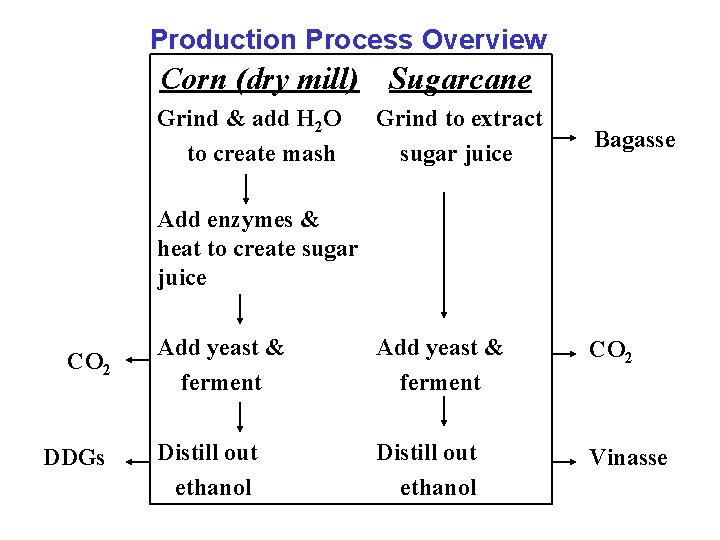
Production Process Overview Corn (dry mill) Sugarcane Grind & add H 2 O to create mash Grind to extract sugar juice Bagasse Add enzymes & heat to create sugar juice CO 2 DDGs Add yeast & ferment CO 2 Distill out ethanol Vinasse
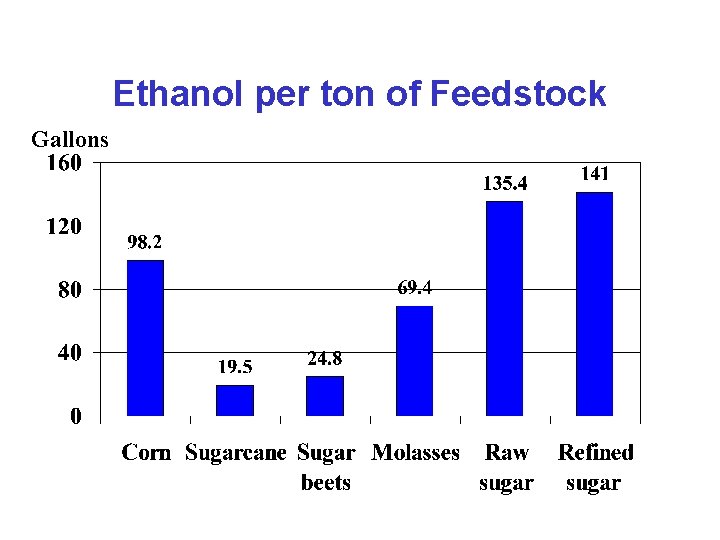
Ethanol per ton of Feedstock Gallons
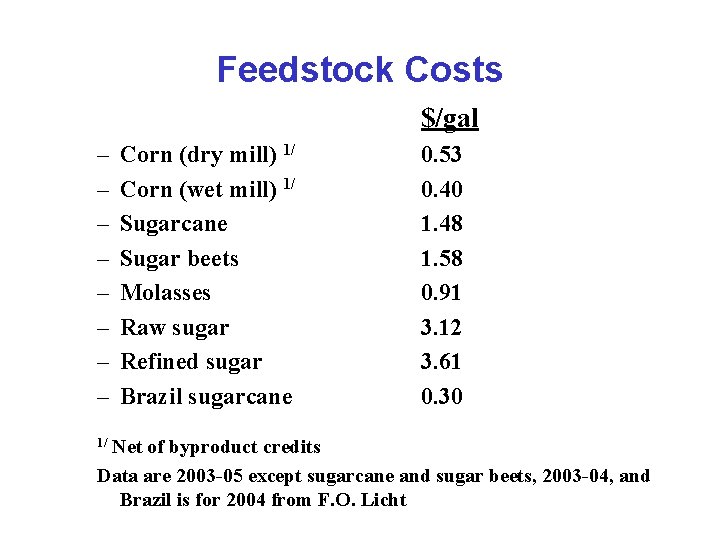
Feedstock Costs $/gal – – – – Corn (dry mill) 1/ Corn (wet mill) 1/ Sugarcane Sugar beets Molasses Raw sugar Refined sugar Brazil sugarcane 0. 53 0. 40 1. 48 1. 58 0. 91 3. 12 3. 61 0. 30 Net of byproduct credits Data are 2003 -05 except sugarcane and sugar beets, 2003 -04, and Brazil is for 2004 from F. O. Licht 1/
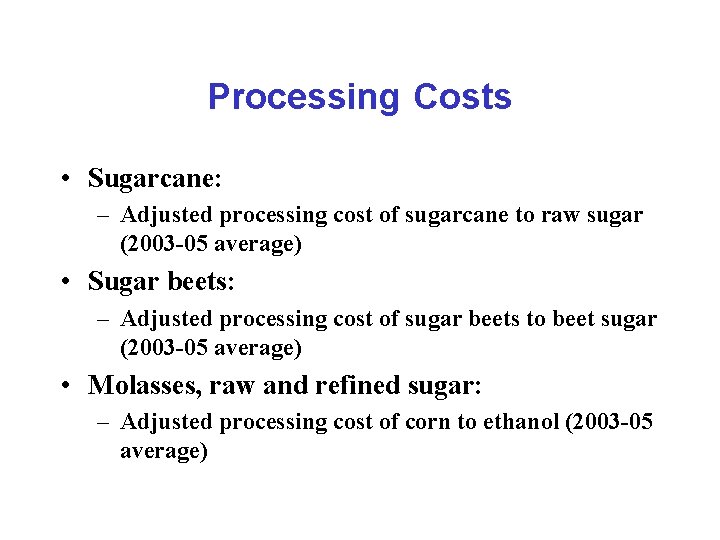
Processing Costs • Sugarcane: – Adjusted processing cost of sugarcane to raw sugar (2003 -05 average) • Sugar beets: – Adjusted processing cost of sugar beets to beet sugar (2003 -05 average) • Molasses, raw and refined sugar: – Adjusted processing cost of corn to ethanol (2003 -05 average)
Processing Cost Adjustments • Sugarcane & sugar beets compared with corn: – Reductions due to energy, enzymes; increases due to transportation, maintenance, labor • Molasses, raw and refined sugar compared with corn: – Reductions due to energy, enzymes
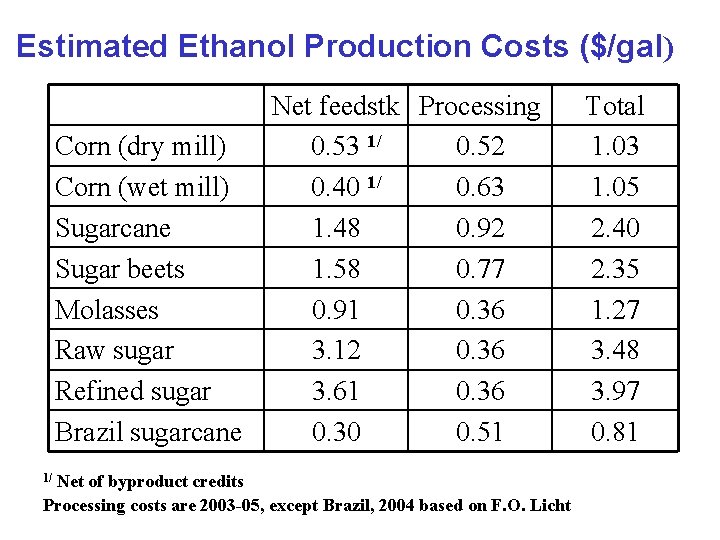
Estimated Ethanol Production Costs ($/gal) Corn (dry mill) Corn (wet mill) Sugarcane Sugar beets Molasses Raw sugar Refined sugar Brazil sugarcane Net feedstk Processing 0. 53 1/ 0. 52 0. 40 1/ 0. 63 1. 48 0. 92 1. 58 0. 77 0. 91 0. 36 3. 12 0. 36 3. 61 0. 36 0. 30 0. 51 Net of byproduct credits Processing costs are 2003 -05, except Brazil, 2004 based on F. O. Licht 1/ Total 1. 03 1. 05 2. 40 2. 35 1. 27 3. 48 3. 97 0. 81
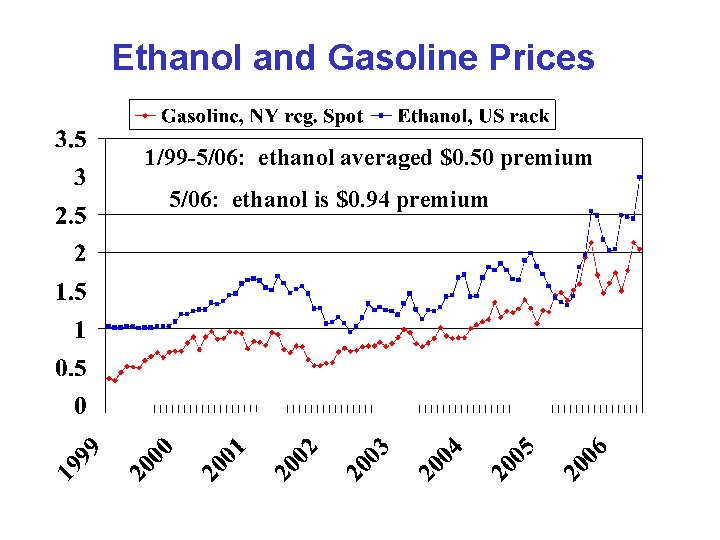
Ethanol and Gasoline Prices 1/99 -5/06: ethanol averaged $0. 50 premium 5/06: ethanol is $0. 94 premium
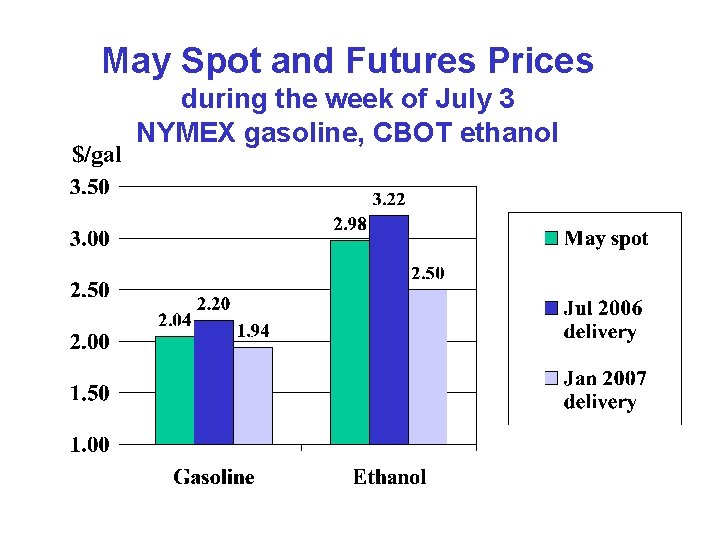
May Spot and Futures Prices $/gal during the week of July 3 NYMEX gasoline, CBOT ethanol
Sugarcane & Sugar Beet Ethanol Economic Advantages Not Considered in Cost Estimates • Sugarcane ethanol is a green renewable fuel and could be eligible for 2. 5 credits per gallon under the renewable fuels standard (RFS) • Byproducts may offset costs more than assumed • Electricity produced by burning bagasse is green renewable electricity and could be eligible for 1. 9 cents per kwh credit (closed loop) or half that under (open loop)
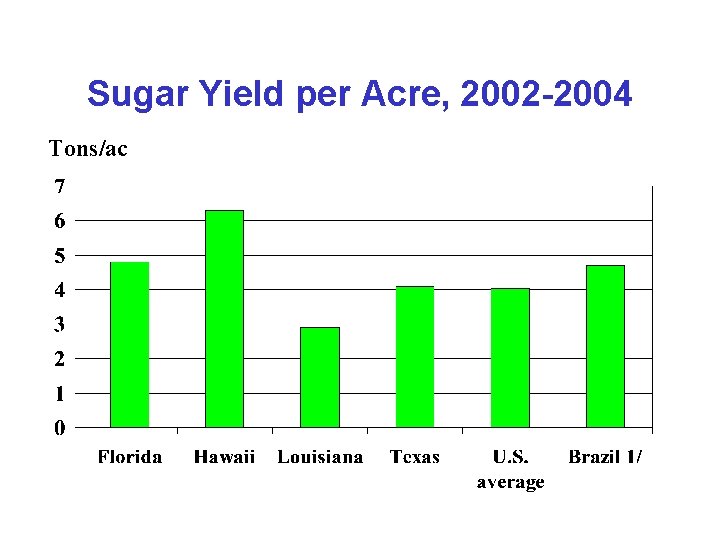
Sugar Yield per Acre, 2002 -2004 Tons/ac
Conclusions • Molasses competitive with corn—but supply issues exist • While production costs for other sugar feedstocks are more than twice that for corn, production is feasible if ethanol price are high enough – Current ethanol futures price (MERC) for 1/2007 deliver is $2. 50/gal. (buyer pays freight from Chicago) – Suggests sugarcane and sugar beet ethanol return would drop to breakeven or less by then, excluding capital costs • Report addresses efficient plant location, capital costs and new technologies • Results of the study are uncertain, given volatile and uncertain global oil markets, no sugar-to-ethanol plants in the U. S. , and uncertain relationship between ethanol and gasoline prices in the longer run
- Slides: 15