
The Earths Past Geologic Time Scale Earth is
- Slides: 35
The Earth’s Past Geologic Time Scale (Earth is 4. 6 billion years old)
Geologic Time Scale Time scale that outlines the development of Earth and of life on Earth Time scale divisions based on major changes in the Earth’s surface, climate, or types of organisms Time scale divisions usually based on dominant life forms
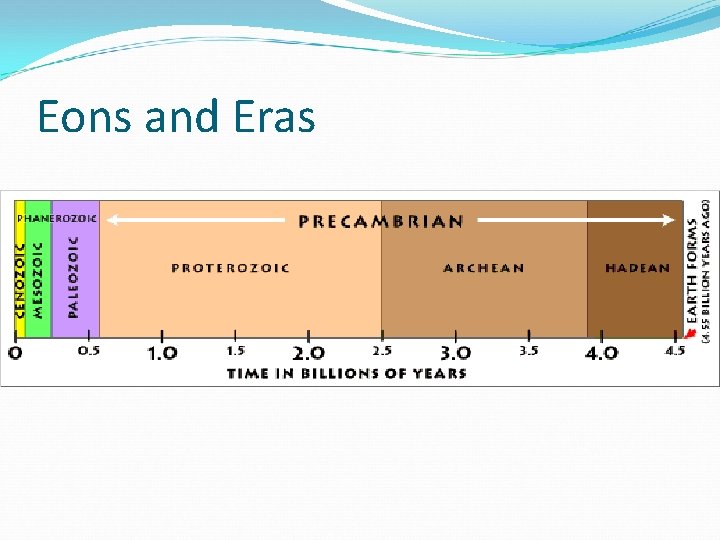
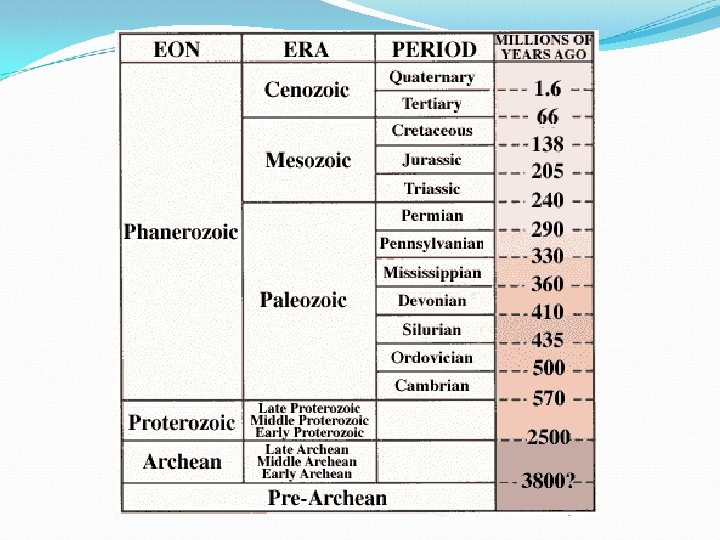
Geologic Time Units Eon Largest unit of time 4 eons Hadean, Archean, Proterozoic, & Phanerozoic Precambrian time Hadean + Archean + Proterozoic Covers about first 4 billion years of the Earth
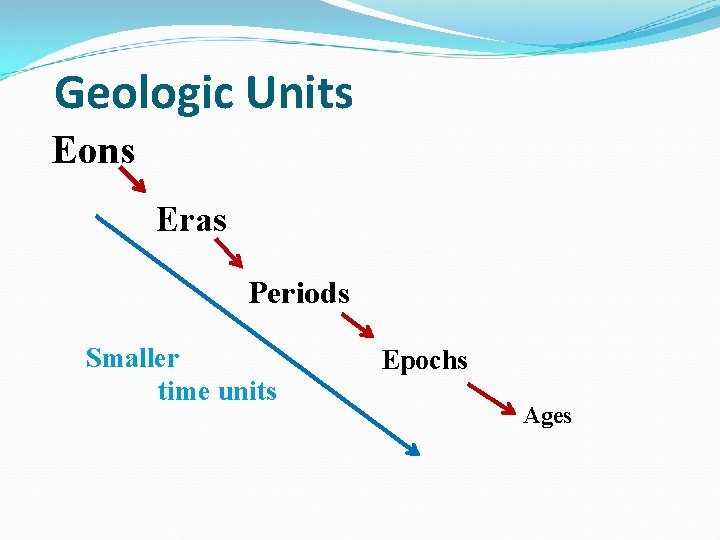
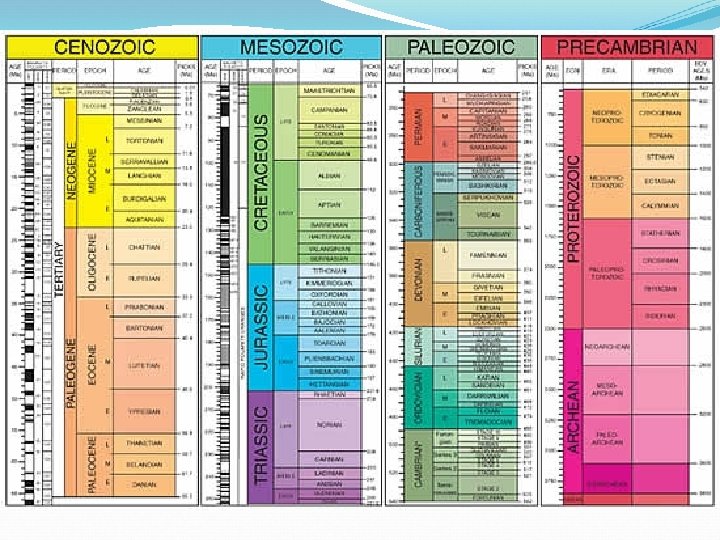
Geologic Time Units (continued) Eons broken into Eras Phanerozoic Paleozoic, Mesozoic, & Cenozoic Eras broken into Periods broken into Epochs can be broken into Ages
Geologic Units Eons Eras Periods Smaller time units Epochs Ages
Eons and Eras
Geologic Columns An ordered arrangement of rock layers that is based on the relative ages of the rocks in which the oldest rocks are at the bottom Layers are distinguished by the type of rock and types of fossils in the rock
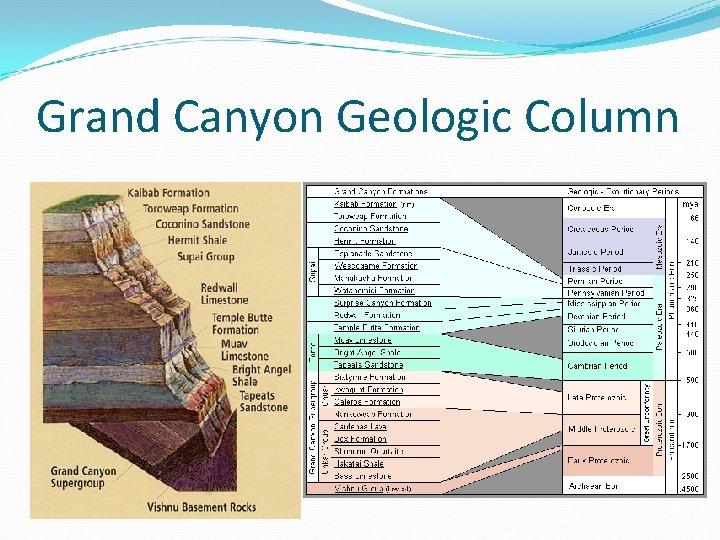
Grand Canyon Geologic Column
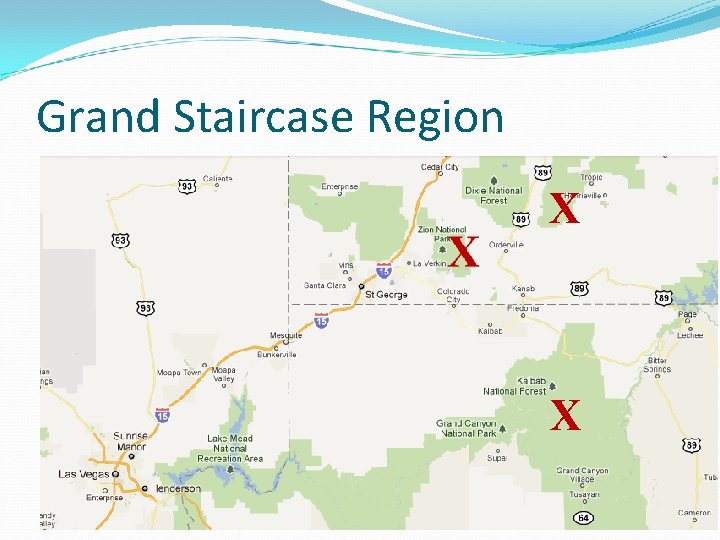
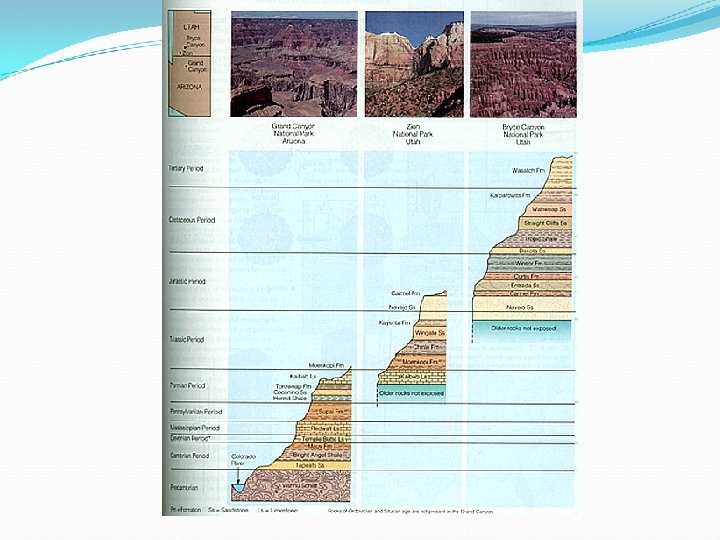
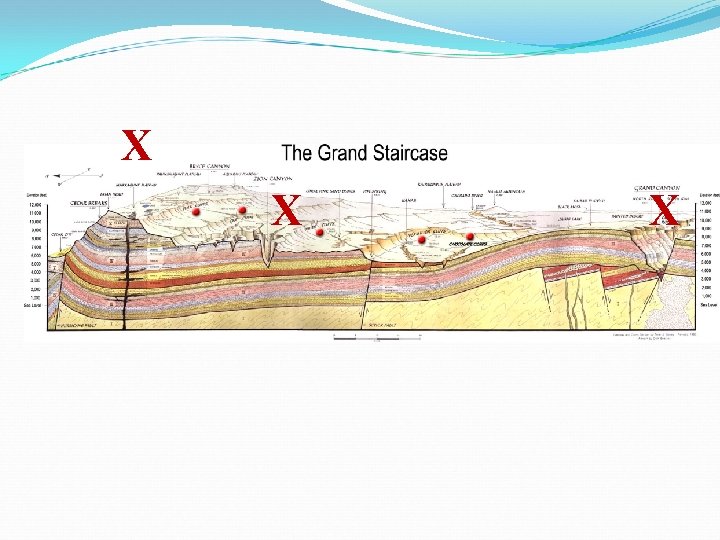
Grand Staircase Region X X
X X X
Precambrian Time 4. 6 Ga (Billion years) – 542 Ma (million years) 88% of Earth’s history Little known about this time Rocks are deformed and altered by tectonic activity
Precambrian Rocks & Life Rocks Shields – large exposed Precambrian rocks Nearly ½ of valuable mineral deposits found in shields Life Very few fossils Stromatolites – blue-green algae deposits
Paleozoic Era 542 Ma – 251 Ma Land masses started out apart but ended up together (Pangaea) Rocks have lots of fossils Plant & animal species increase dramatically at beginning of era 7 Periods
Cambrian Period Marine life forms Warm shallow seas cover much of the continents No evidence of land dwelling plants or animals
Ordovician Period Primitive fish Lots of invertebrates First vertebrates (mostly fish) appear No plant life on land
Silurian Period Vertebrate and invertebrate marine life dominate Land plants & animals evolve near end of period
Devonian Period “Age of Fishes” Amphibians Land plants and seed bearing plants evolve
Carboniferous Period Includes Mississippian and Pennsylvanian Periods Climate was warm and humid Forests and swamps responsible for coal deposits Amphibians, fish, large insects
Permian Period Appalachian Mountains created Shallow inland seas disappear Mass extinction Many invertebrates die out Reptiles & amphibians survive
Mass Extinctions Used to indicate end of an era Permian mass extinction 90% of marine organisms 70% of land organisms Plenty of resources for other species to begin to dominate
Mesozoic Era 251 Ma – 65. 5 Ma Pangaea breaks apart to form continents Mountain ranges form Sierra Nevadas, Andes “Age of Reptiles” Includes Triassic, Jurassic, & Cretaceous Periods
Triassic Period Dinosaurs – mostly 16 feet long Reptiles in the oceans Ammonites – Mesozoic index fossil First mammals appear
Jurassic Period Dinosaurs become dominant life form 2 major groups of dinosaurs Saurischians – lizard hipped Herbivores & Carnivores Ornithischians – bird hipped Herbivores Flying reptiles First birds
Cretaceous Period Dinosaurs still dominate T Rex Horned and duck-billed dinosaurs First flowering plants (angiosperms) Magnolias, willows, oaks, maples, walnuts
Cretaceous-Tertiary Mass Extinction C-T Extinction End of Cretaceous Period No dinosaur fossils found in rocks formed after Cretaceous Period Due to environmental changes from continental movement or volcanic activity
C-T Extinction (continued) Impact hypothesis Giant meteorite crashed into the Earth Produces dust that blocks the sun Planet cools, plant life dies off, animals die off Iridium near suspected impact site (Iridium is common in meteorites, but not Earth rocks
Cenozoic Era 65. 5 Ma to present day Continents move to present day position Alps and Himalayas form Ice ages Mammals become dominant
Cenozoic Era (continued) Divided into 2 periods Tertiary Period Time before the last Ice Age Quaternary Period From last ice age to present day Divided into 7 epochs
Cenozoic Epochs Paleocene & Eocene Primates evolve Whales, flying squirrels, bats Still lots of small reptiles Worldwide temp drops about 4 o. C at end of Eocene
Cenozoic Epochs (Continued) Oligocene Uplifting of Himalayas World climate becomes much cooler & drier Grasslands favored Miocene Antarctic ice caps begin to form Mediterranean Sea fills and empties several times Large land mammals Earliest human ancestors(? )
Cenozoic Epochs (Continued) Pliocene Dramatic climate changes Ice caps grow, water levels fall Alaska and Russia connected by Bering land bridge North and South America become connected Species migrate into different continents
Cenozoic Epochs (Continued) Pleistocene Ice ages Fossils of earliest modern humans Holocene 11500 years ago as last ice age ends Sea level rises 140 m Great Lakes take their shape Humans develop agriculture and begin to use tools