
The Earths Internal Process Earthquakes and Volcanoes GMC
- Slides: 22
The Earth’s Internal Process: Earthquakes and Volcanoes GMC Santos San Beda College
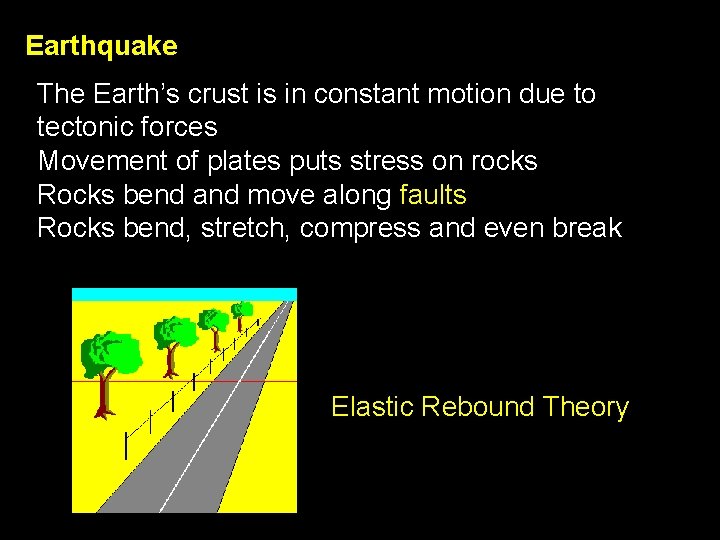
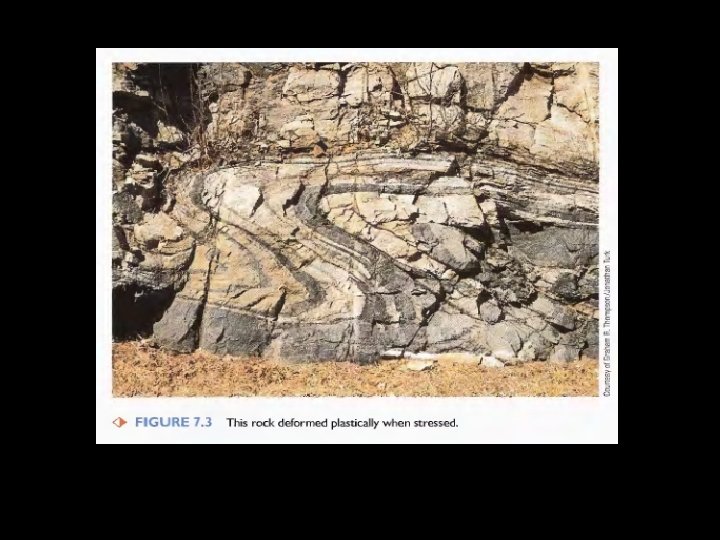
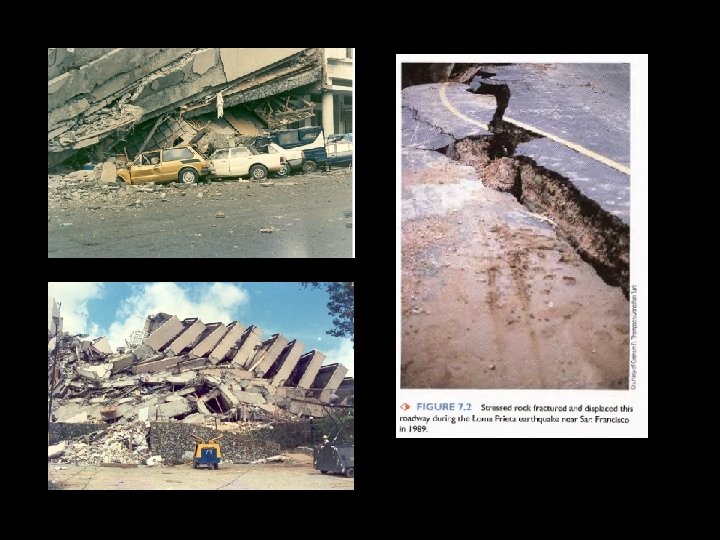
Earthquake The Earth’s crust is in constant motion due to tectonic forces Movement of plates puts stress on rocks Rocks bend and move along faults Rocks bend, stretch, compress and even break Elastic Rebound Theory
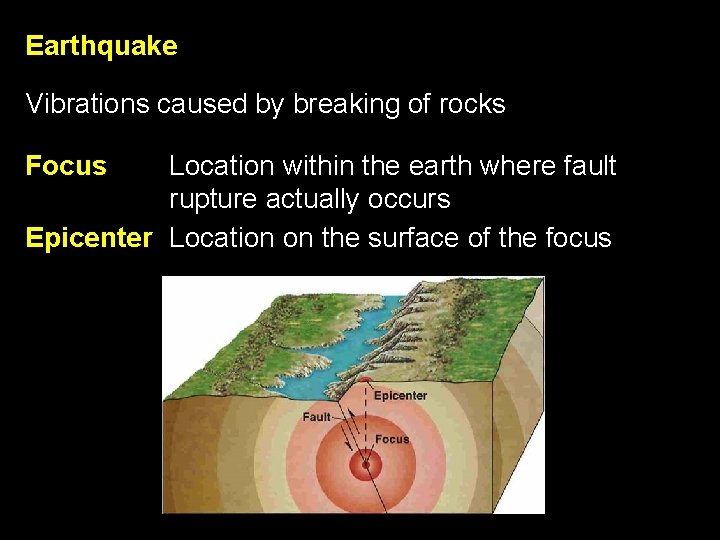
Earthquake Vibrations caused by breaking of rocks Focus Location within the earth where fault rupture actually occurs Epicenter Location on the surface of the focus
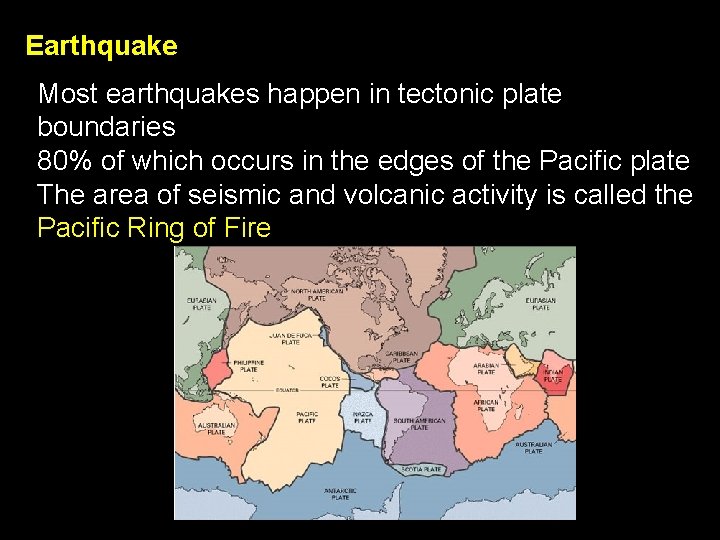
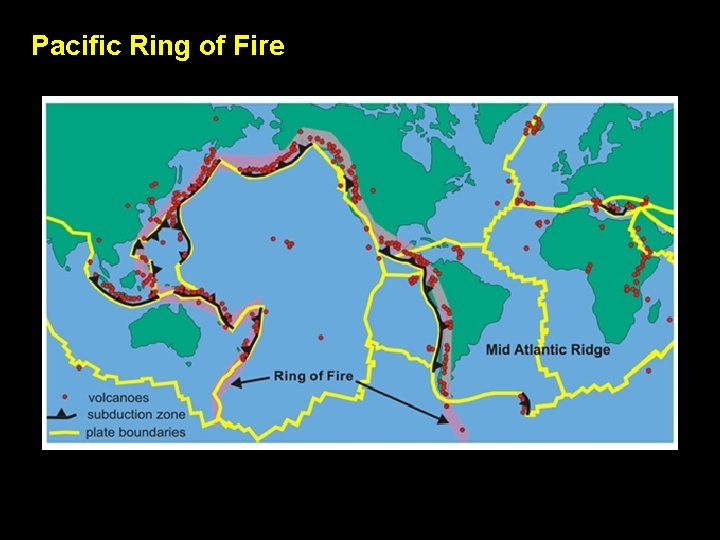
Earthquake Most earthquakes happen in tectonic plate boundaries 80% of which occurs in the edges of the Pacific plate The area of seismic and volcanic activity is called the Pacific Ring of Fire
Pacific Ring of Fire
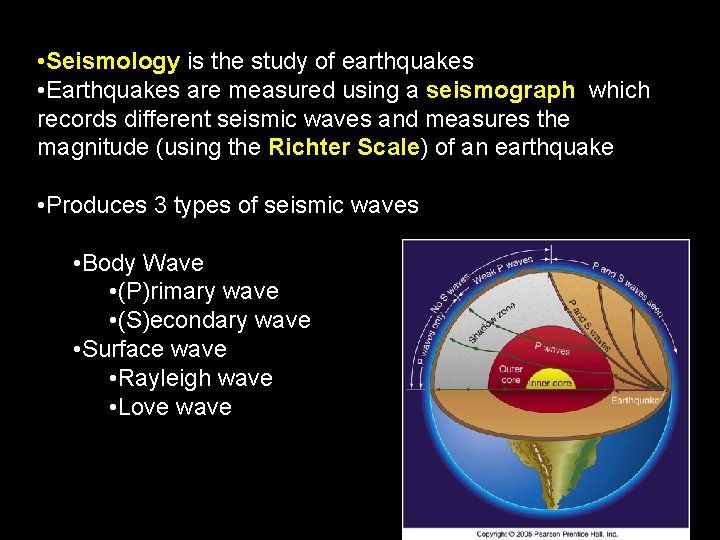
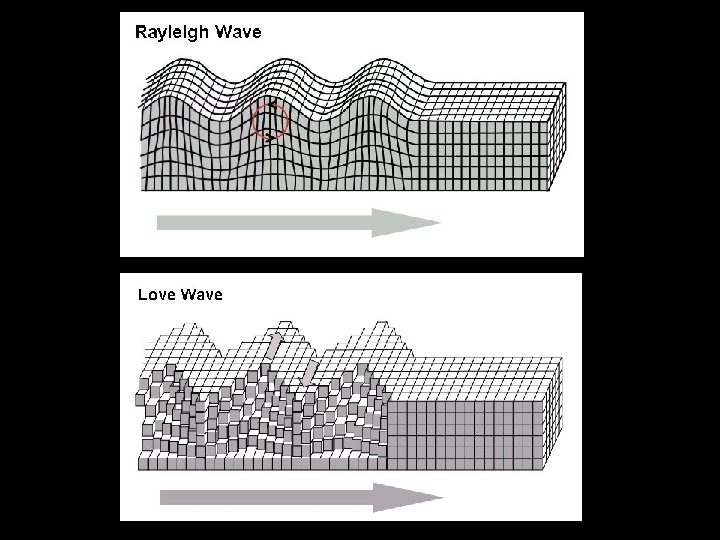
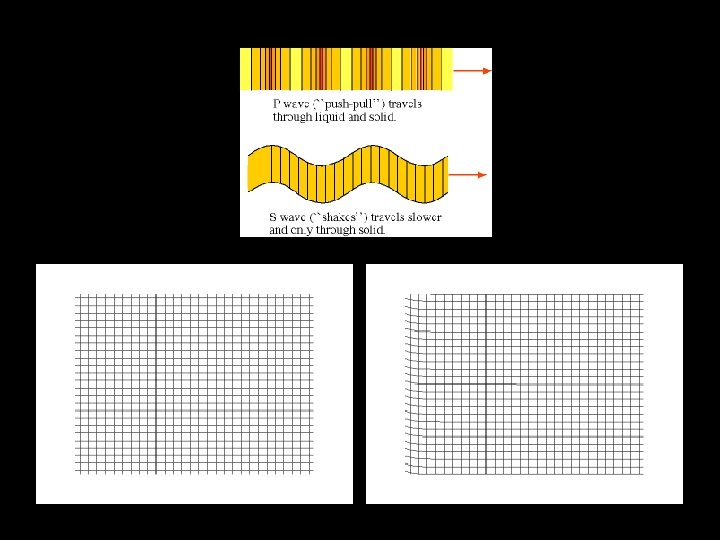
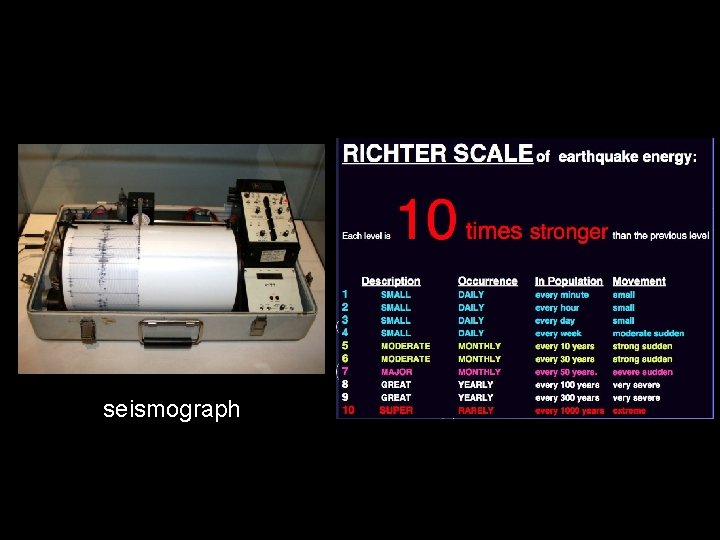
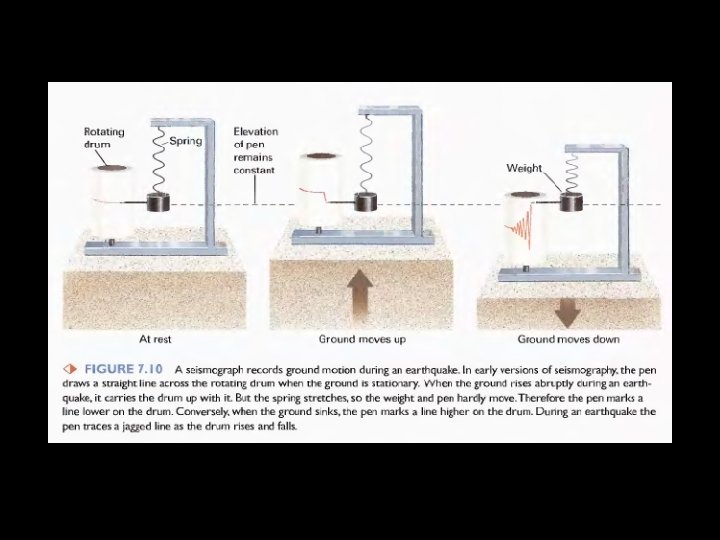
• Seismology is the study of earthquakes • Earthquakes are measured using a seismograph which records different seismic waves and measures the magnitude (using the Richter Scale) of an earthquake • Produces 3 types of seismic waves • Body Wave • (P)rimary wave • (S)econdary wave • Surface wave • Rayleigh wave • Love wave
seismograph
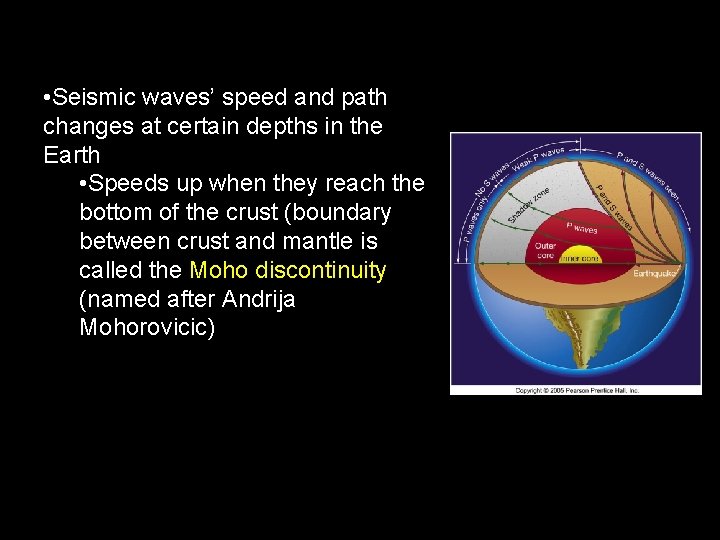
• Seismic waves’ speed and path changes at certain depths in the Earth • Speeds up when they reach the bottom of the crust (boundary between crust and mantle is called the Moho discontinuity (named after Andrija Mohorovicic)
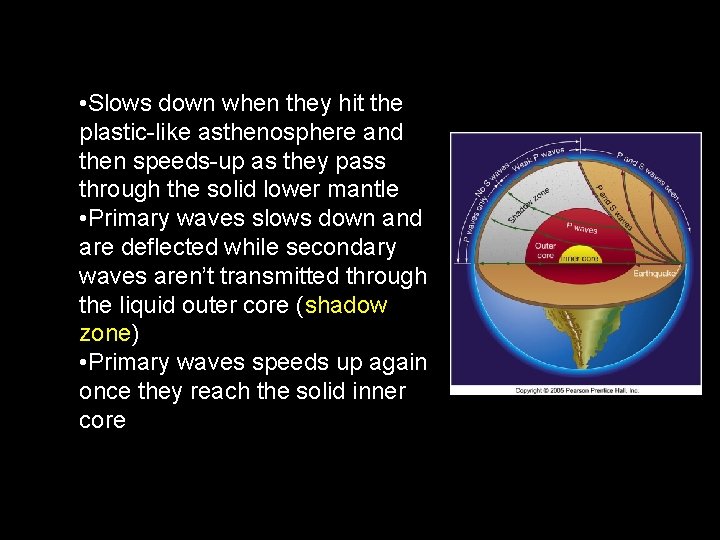
• Slows down when they hit the plastic-like asthenosphere and then speeds-up as they pass through the solid lower mantle • Primary waves slows down and are deflected while secondary waves aren’t transmitted through the liquid outer core (shadow zone) • Primary waves speeds up again once they reach the solid inner core
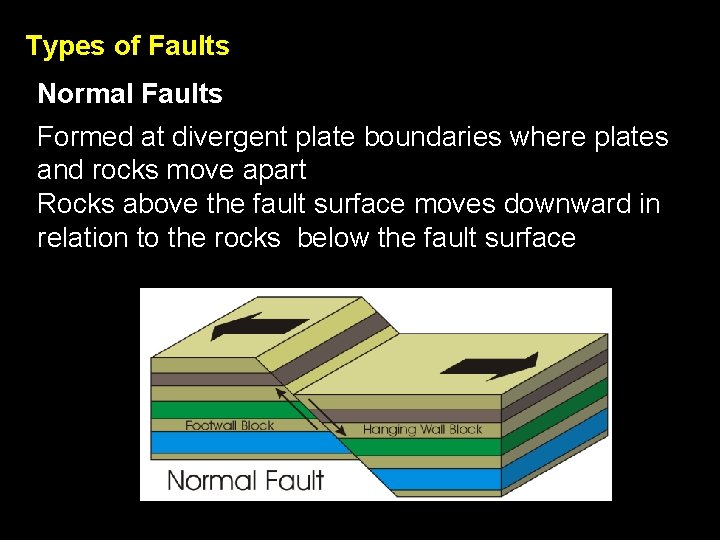
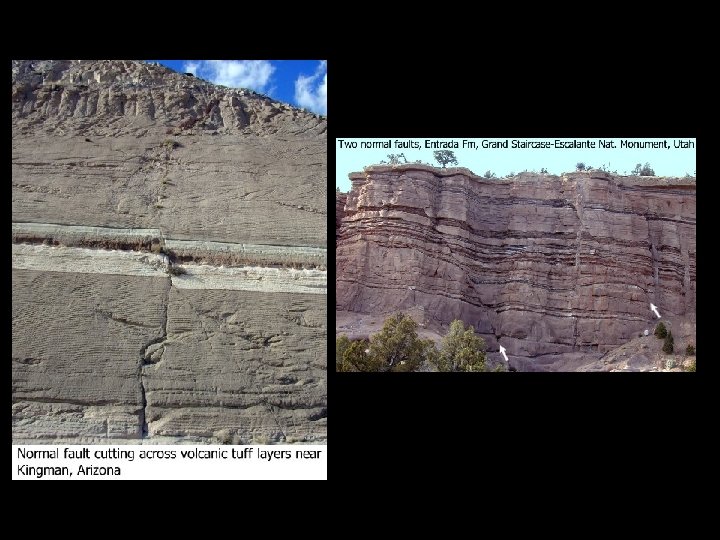
Types of Faults Normal Faults Formed at divergent plate boundaries where plates and rocks move apart Rocks above the fault surface moves downward in relation to the rocks below the fault surface
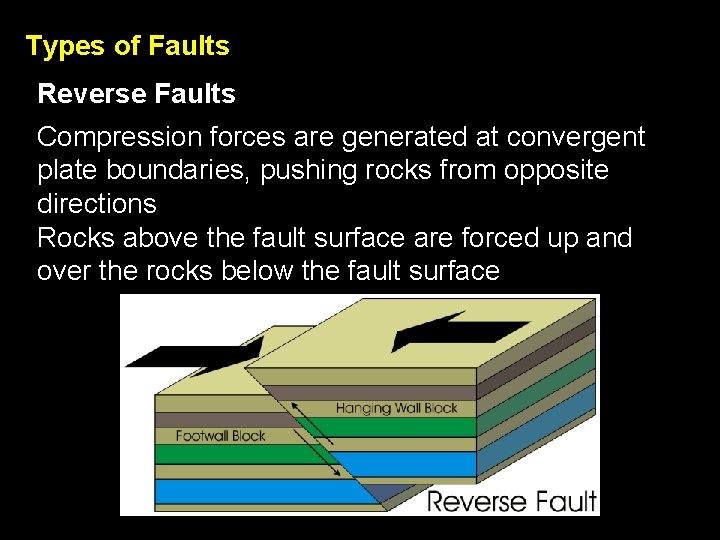
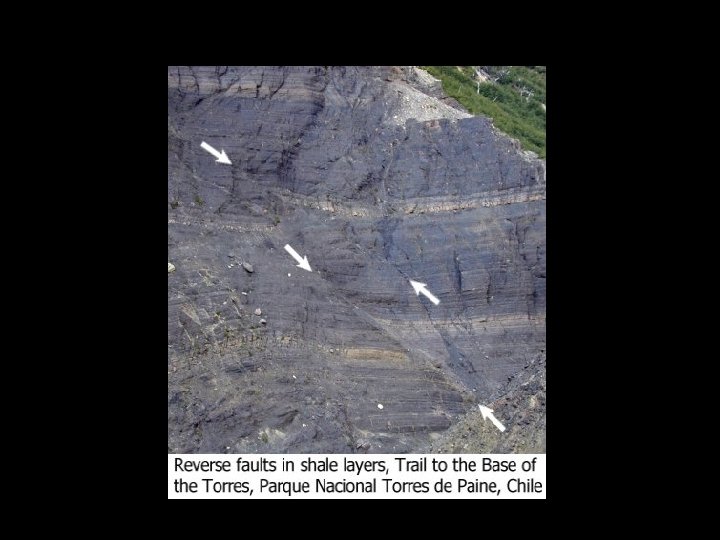
Types of Faults Reverse Faults Compression forces are generated at convergent plate boundaries, pushing rocks from opposite directions Rocks above the fault surface are forced up and over the rocks below the fault surface
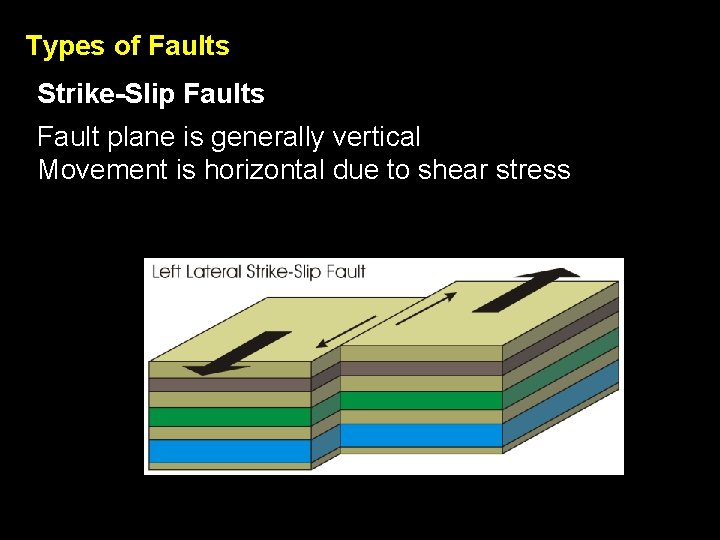
Types of Faults Strike-Slip Faults Fault plane is generally vertical Movement is horizontal due to shear stress
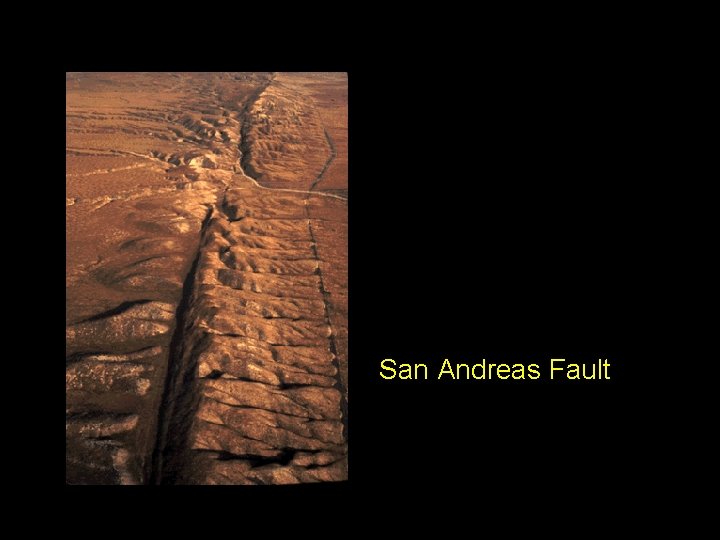
San Andreas Fault
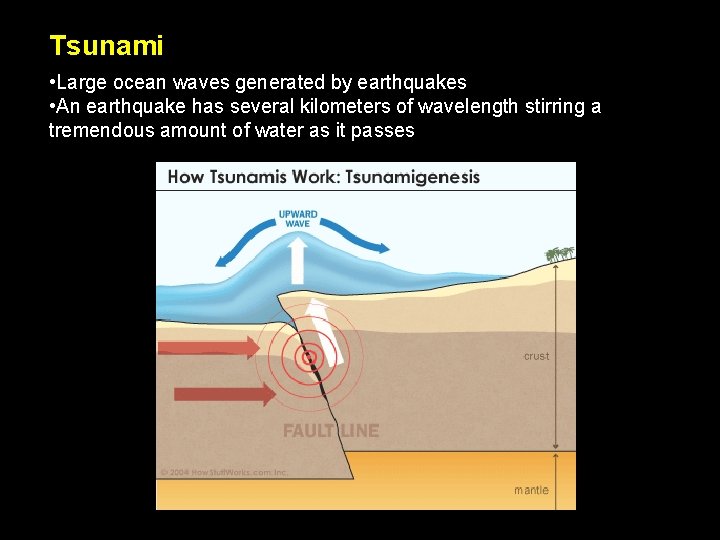
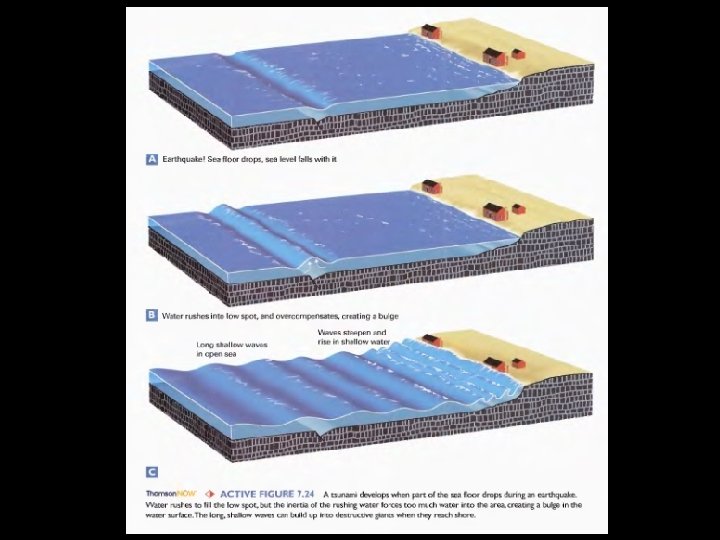
Tsunami • Large ocean waves generated by earthquakes • An earthquake has several kilometers of wavelength stirring a tremendous amount of water as it passes