
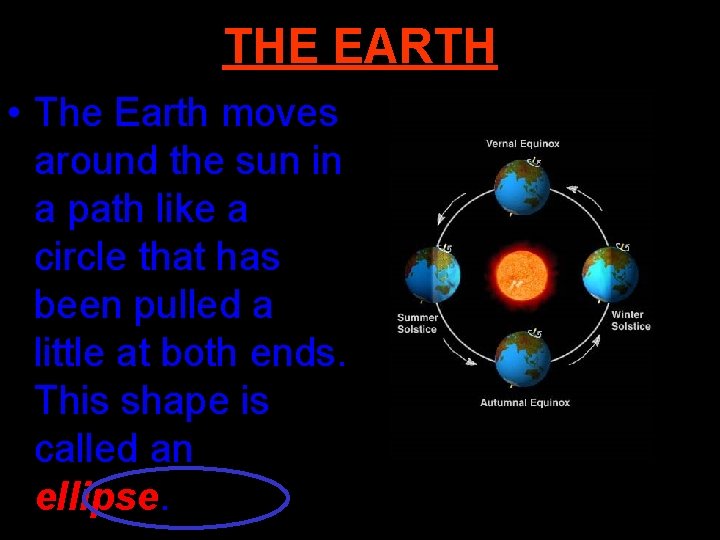
THE EARTH The Earth moves around the sun

- Slides: 20
THE EARTH • The Earth moves around the sun in a path like a circle that has been pulled a little at both ends. This shape is called an ellipse.
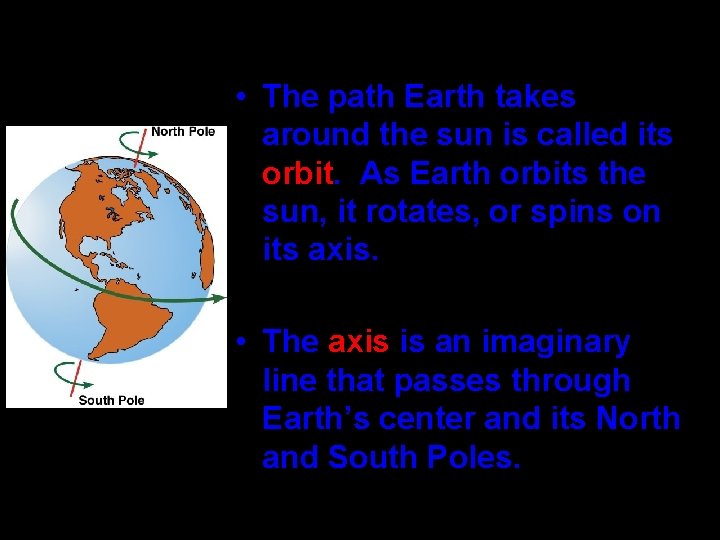
• The path Earth takes around the sun is called its orbit. As Earth orbits the sun, it rotates, or spins on its axis. • The axis is an imaginary line that passes through Earth’s center and its North and South Poles.
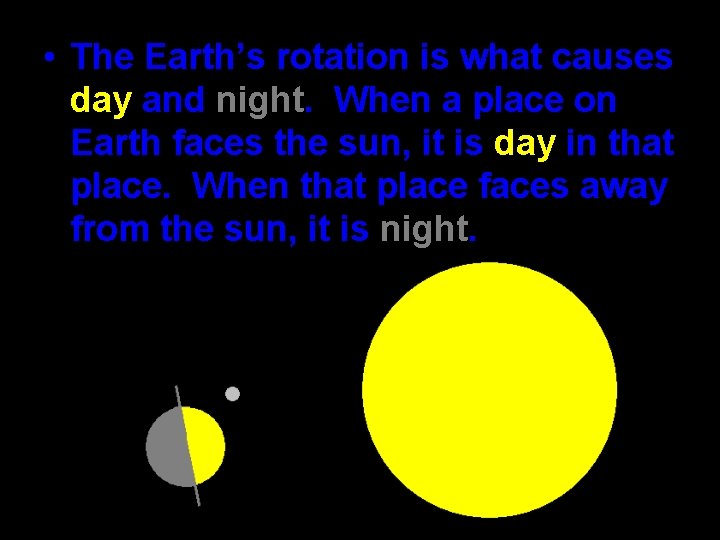
• The Earth’s rotation is what causes day and night. When a place on Earth faces the sun, it is day in that place. When that place faces away from the sun, it is night.
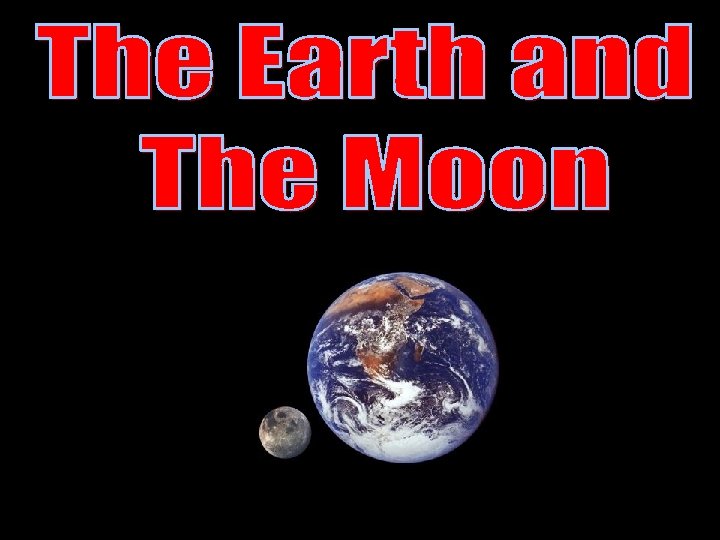
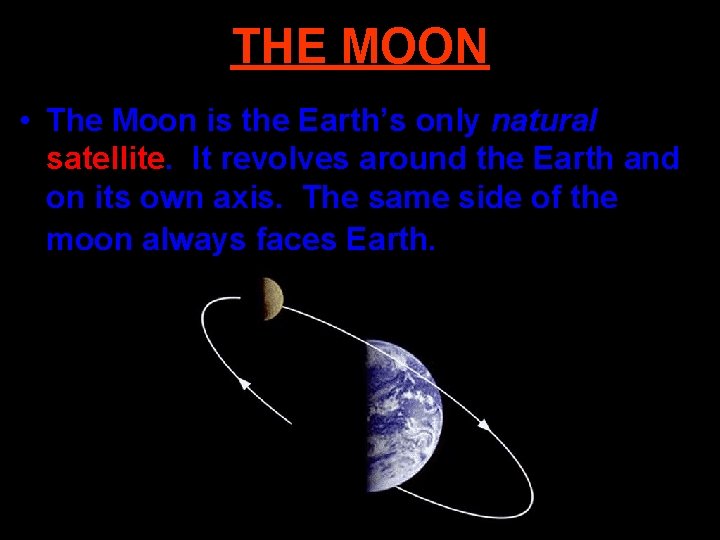
THE MOON • The Moon is the Earth’s only natural satellite. It revolves around the Earth and on its own axis. The same side of the moon always faces Earth.
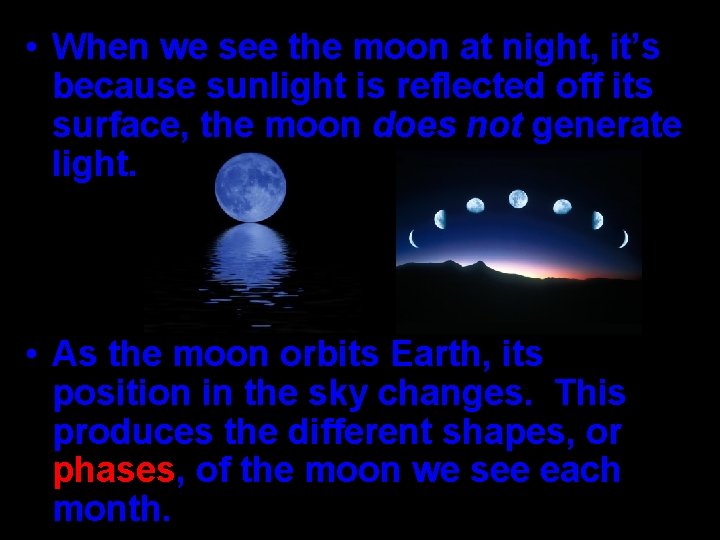
• When we see the moon at night, it’s because sunlight is reflected off its surface, the moon does not generate light. • As the moon orbits Earth, its position in the sky changes. This produces the different shapes, or phases, of the moon we see each month.
Solar and Lunar Eclipses • An eclipse occurs when one object passes through the shadow of another. • There are seven eclipses- two lunar and five solar- in a single year.
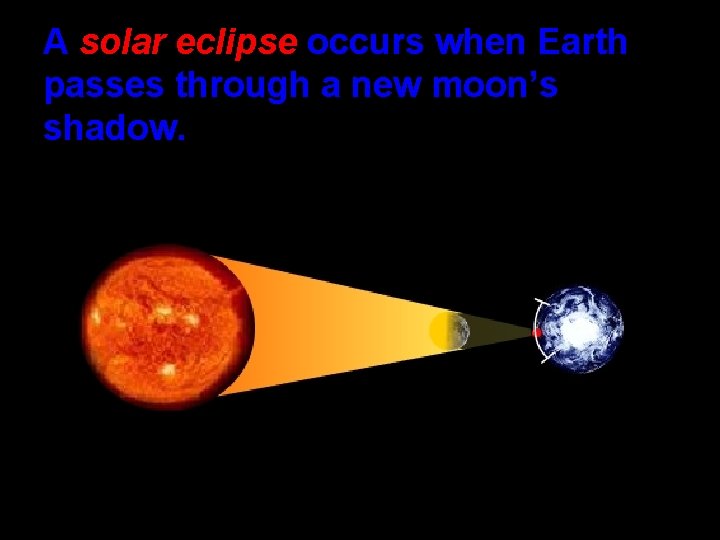
A solar eclipse occurs when Earth passes through a new moon’s shadow.
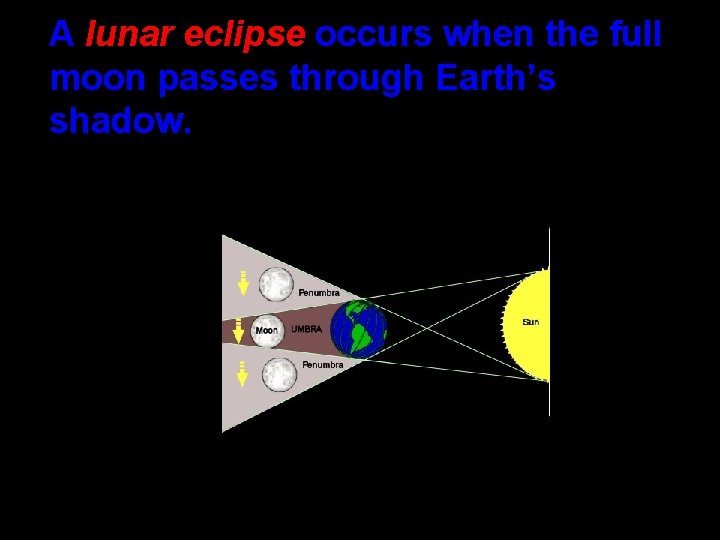
A lunar eclipse occurs when the full moon passes through Earth’s shadow.
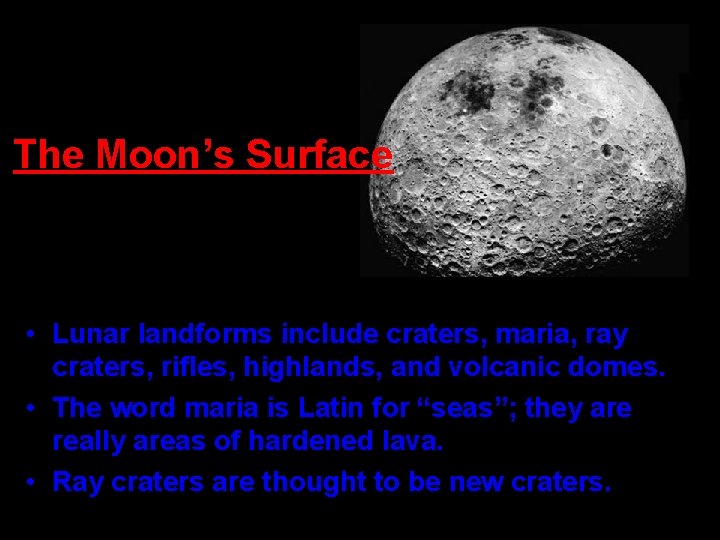
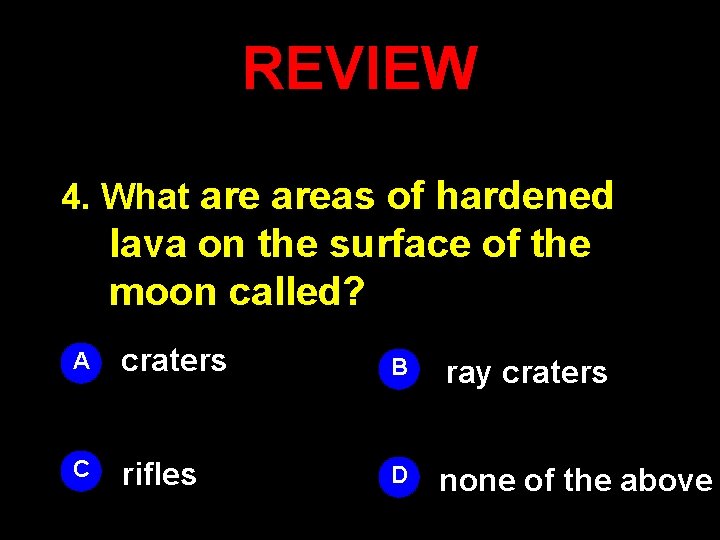
The Moon’s Surface • Lunar landforms include craters, maria, ray craters, rifles, highlands, and volcanic domes. • The word maria is Latin for “seas”; they are really areas of hardened lava. • Ray craters are thought to be new craters.
REVIEW ( Please use the mouse for the review section…) 1. What is the name of the path that Earth takes around the sun? A orbit B ellipse C cycle D None of the above
Sorry, that is not correct… TRY AGAIN!
That is CORRECT!
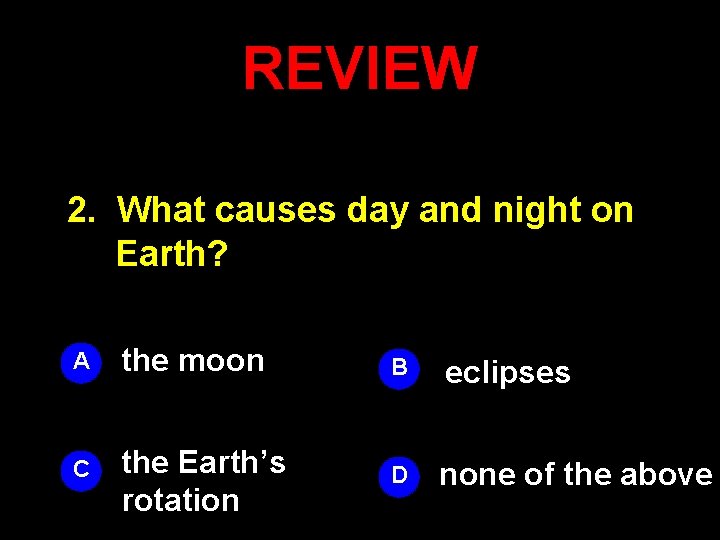
REVIEW 2. What causes day and night on Earth? A the moon B eclipses C the Earth’s rotation D none of the above
That is CORRECT!
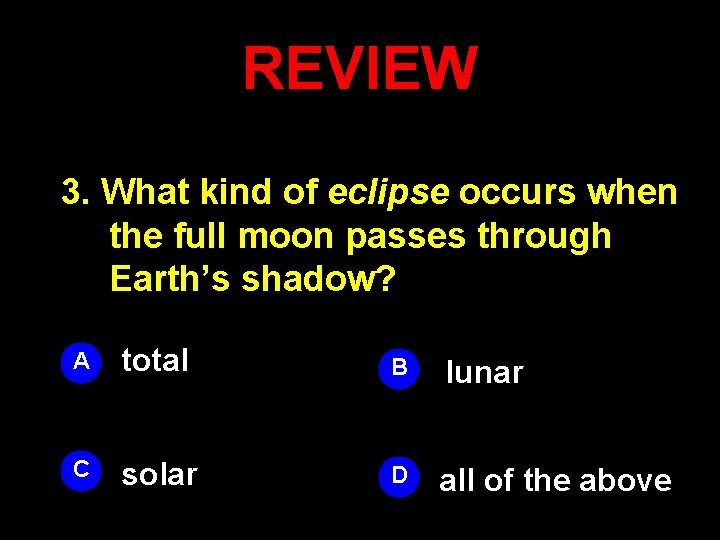
REVIEW 3. What kind of eclipse occurs when the full moon passes through Earth’s shadow? A total B lunar C solar D all of the above
That is CORRECT!
REVIEW 4. What areas of hardened lava on the surface of the moon called? A craters B ray craters C rifles D none of the above
That is CORRECT!
Works Cited… • www. bbc. co. uk/science/space/ solarsystem/sun/solareclipse. shtml • www. office. microsoft. com/clipart • Microsoft® Encarta® Encyclopedia 2002. © 1993 -2001 Microsoft Corporation.