
The Earth in the Universe Location Rotation Precession

- Slides: 26
The Earth in the Universe Location, Rotation, Precession and Nutation
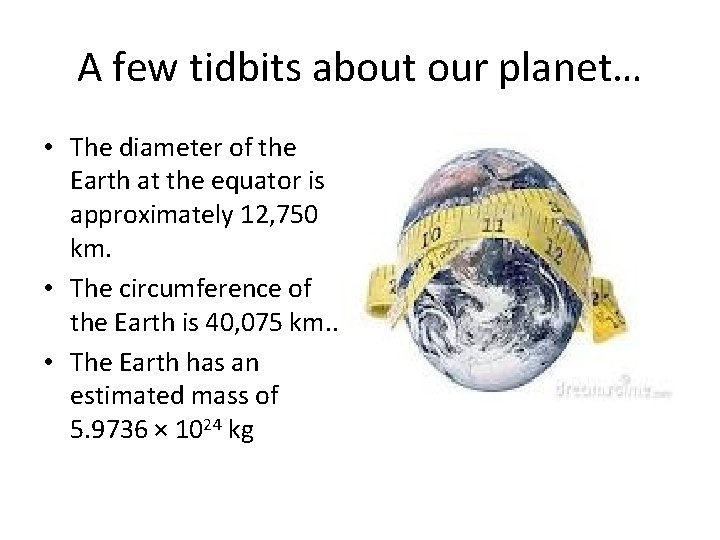
A few tidbits about our planet… • The diameter of the Earth at the equator is approximately 12, 750 km. • The circumference of the Earth is 40, 075 km. . • The Earth has an estimated mass of 5. 9736 × 1024 kg
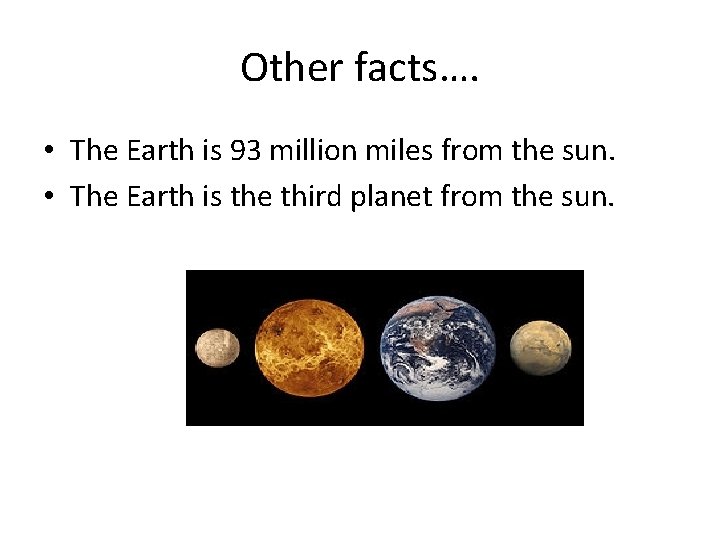
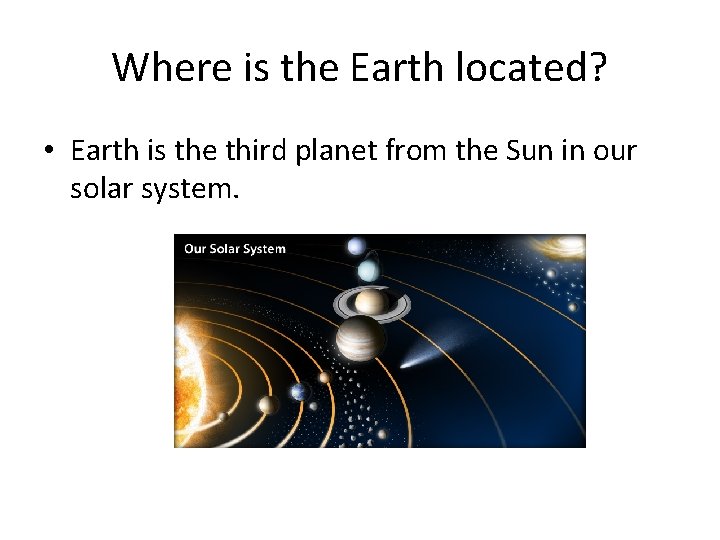
Other facts…. • The Earth is 93 million miles from the sun. • The Earth is the third planet from the sun.
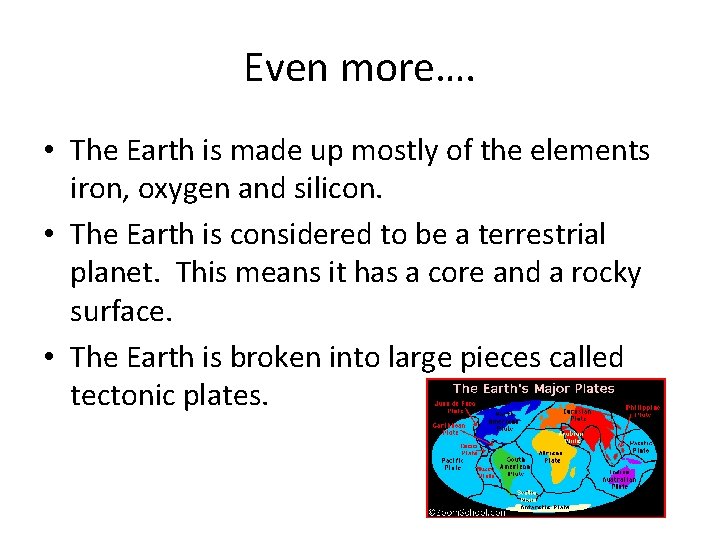
Even more…. • The Earth is made up mostly of the elements iron, oxygen and silicon. • The Earth is considered to be a terrestrial planet. This means it has a core and a rocky surface. • The Earth is broken into large pieces called tectonic plates.
Where is the Earth located? • Earth is the third planet from the Sun in our solar system.
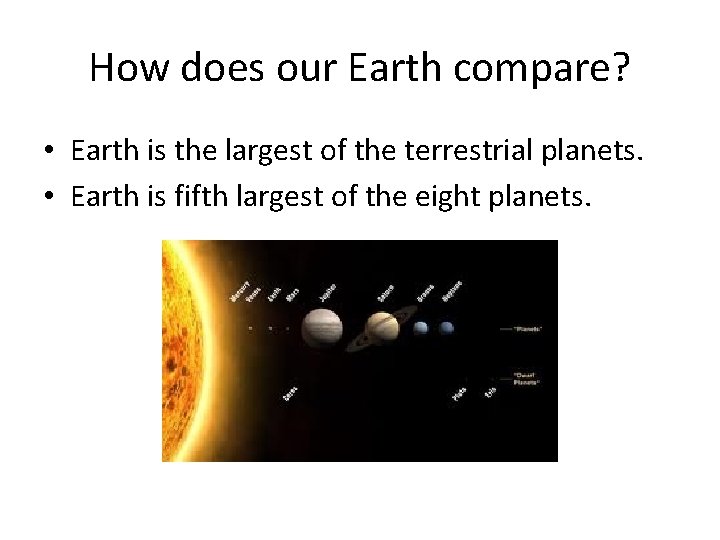
How does our Earth compare? • Earth is the largest of the terrestrial planets. • Earth is fifth largest of the eight planets.
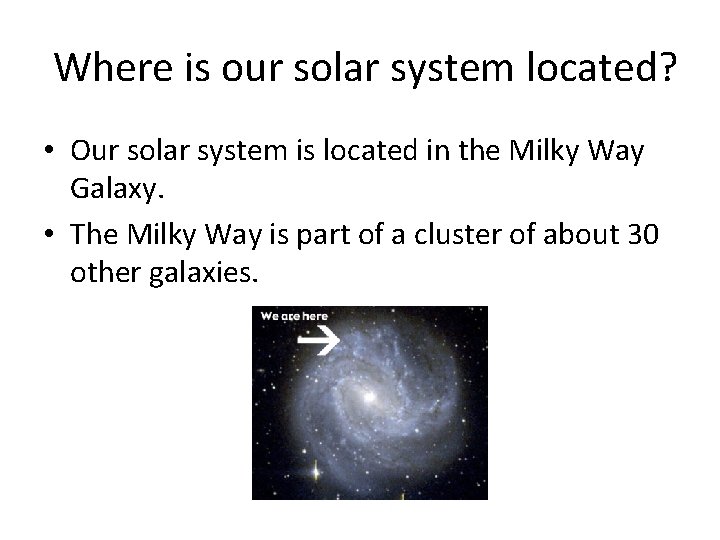
Where is our solar system located? • Our solar system is located in the Milky Way Galaxy. • The Milky Way is part of a cluster of about 30 other galaxies.
More about our galaxy http: //www. youtube. com/watch? v=VYTt. A 3 AGV MM Zoom through our galaxy http: //www. youtube. com/watch? feature=endsc reen&v=sm-ucb. DVy. RU&NR=1
Review…. . • The universe is made up of many galaxies. • Galaxies are made up of many stars. • Some stars have planetary systems similar to our solar system. • Earth is a satellite planet of one particular star…. our Sun.
Building Our Milky Way Let’s understand our galaxy by building it. http: //amazingspace. stsci. edu/resources/explorations/galaxi es-galore/build/index. html
Building Our Milky Way • The central bulge is at the center. • Spiral arms are around the central bulge. They contain mostly blue stars, gas and dust. • The Earth is located in one of the spiral arms. • There are blue stars and red stars in our galaxy. • Blue stars are young and hot stars. • Red stars are old and cool stars.
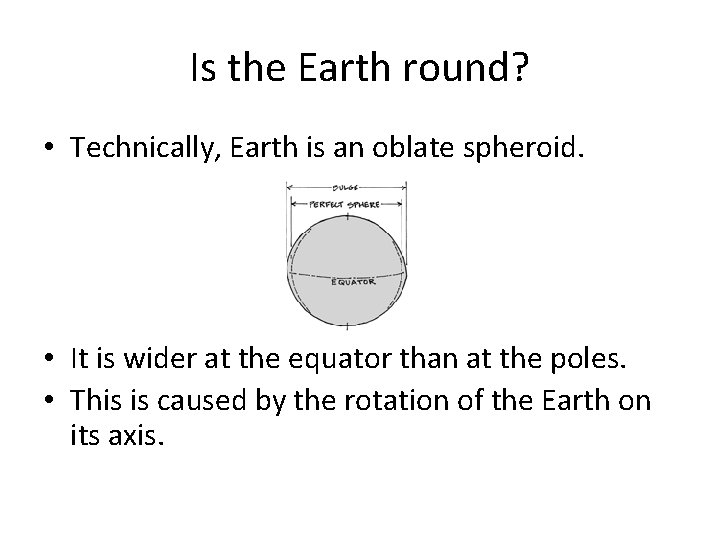
Is the Earth round? • Technically, Earth is an oblate spheroid. • It is wider at the equator than at the poles. • This is caused by the rotation of the Earth on its axis.
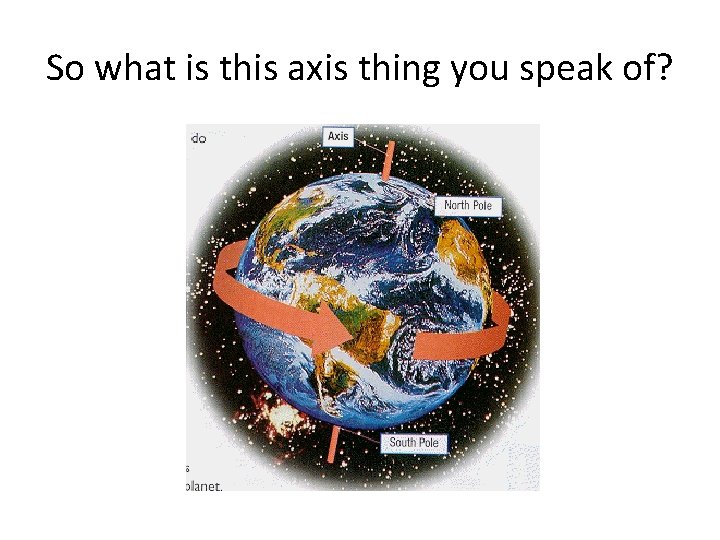
So what is this axis thing you speak of?
Earth’s axis • The Earth’s axis is an imaginary line that runs through the center of the Earth from the north pole to the south pole. • The Earth is “tilted” with relation to this imaginary line 23. 5⁰
Motion on the Earth’s Axis • One “spin” of the Earth about its axis is called a rotation. • One rotation takes 24 hours to complete. • This is what makes a “day”.
Some visuals about Earth’s rotation • http: //www. youtube. com/watch? v=kn. K 87 Go Ny. Go • Day and Night and Earth's Rotation - You. Tube
Summary about Earth’s Rotation • The Earth rotates on an imaginary axis. • One rotation about the Earth’s axis takes 24 hours. This is called a day. • Rotation about the Earth’s occurs from west to east. (Counter clockwise) • Earth’s rotation is the cause for day and night.
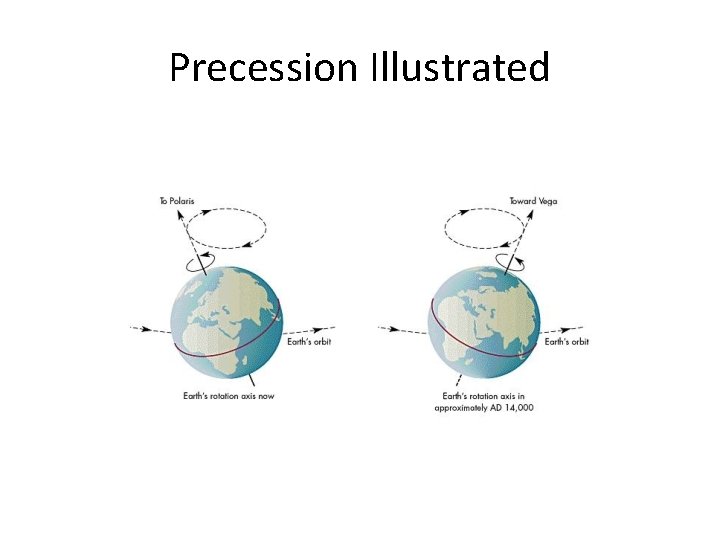
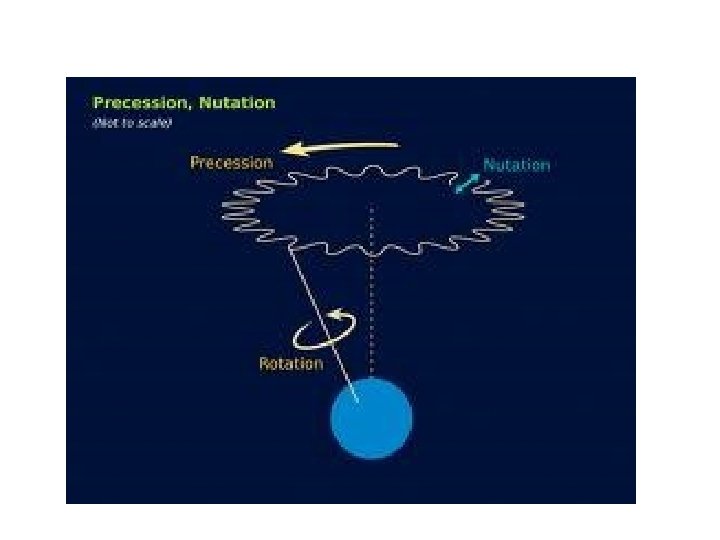
What happens when the direction of the axis changes? • The change in the direction of the Earth’s axis is called precession. • The angle remains the same. • This will affect the stars near the poles • Does not change the seasons as long as the 23. 5⁰ tilt stays the same.
Precession Illustrated
Wobble baby…. . Let’s check it out…. . http: //www. youtube. com/watch? v=siqr. Fp. XBv. B U Ooppsss…. Wrong wobble!!!!
What is wobble and how does it relate to precession? • The “wobble” about the precessional axis is called nutation. • Nutation is a change in the angle of tilt by ½ ⁰ one way or the other. Results in the tilt either being 23⁰ or 24⁰. • This occurs over an 18 year period. • This is due to the Moon. • This causes a slight change in the seasons.
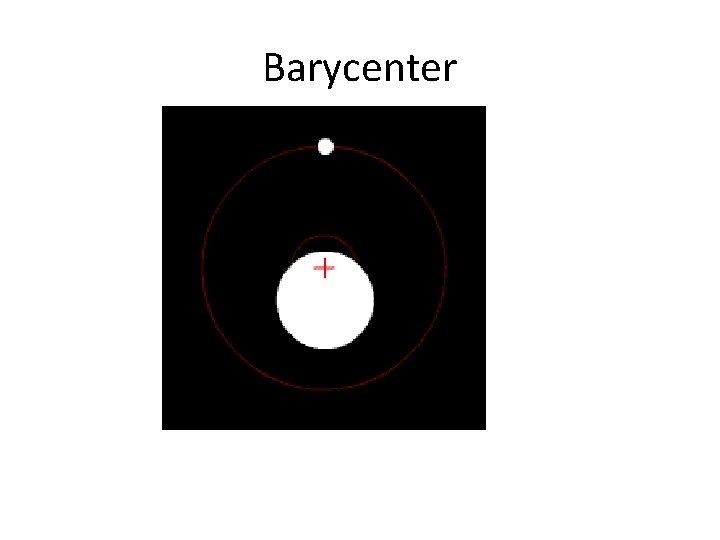
Barycenter
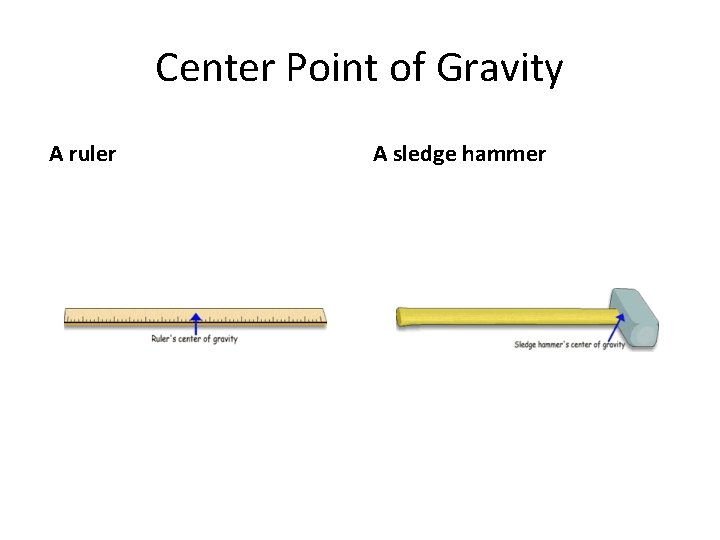
Now… let’s explain what barycenter is. . . • A barycenter is the point between two objects where they balance each other. • Its kind of like the center of gravity. • The center of gravity is the point in the middle of all the material that makes up an object, mass.
Center Point of Gravity A ruler A sledge hammer
Center Point of Gravity and Barycenter • When a moon orbits a planet, or a planet orbits a star, both bodies are orbiting around a point that lies outside the larger body. • The moon does not orbit the exact center of the Earth, but a point about 1710 km below the Earth’s surface. • The sun is not stationary in the solar system. It moves as the planets tug on it, but it never gets too far from the solar system barycenter.