
THE EARLY YEARS OF THE CIVIL RIGHTS MOVEMENT
- Slides: 22
THE EARLY YEARS OF THE CIVIL RIGHTS MOVEMENT 1950’S
MURDER OF EMMETT TILL – AUG. 1955 • The murder and trial of 14 year old Emmett Till in Money, Mississippi horrified the nation and the world. • Mother insisted on an open casket “so all the world could see what they did to my boy” • Killers were arrested and charged with murder but were both acquitted quickly by an all-white, all-male jury. • Till's death was a spark that helped mobilize the civil rights movement. http: //withoutsanctuary. org/main. html https: //www. youtube. com/watch? v=Poa. Kys. Hw. LI 8
CIVIL RIGHTS JOURNAL • You will create an ongoing journal as we learn about the Civil Rights Movement. • All journal entries should be AT LEAST half a page, written legibly. • Be descriptive, creative, and thorough!!!!! Journal Prompt #1 You are 15 years old. It is August 1955 and you have recently learned about the murder of Emmett Till. In your journal, you should write about its effect on you. Questions to consider: How did you learn about the murder? Did you see a picture of Emmett? Did you read an article about the murder or trial? How have your parents reacted? How did it make you feel? How has it affected your daily life? Was this event shocking to you? Have you had a previous experience with discrimination, a lynching, etc. that has influenced your thoughts on the murder and trial of Emmett Till?
ESSENTIAL QUESTIONS • Why did WWII finally cause African Americans to leave their ancient conditions of oppression in the rural South? • How did the Brown Decision and the confrontation in Little Rock set the stage for the Civil Rights movement of the 1950’s?
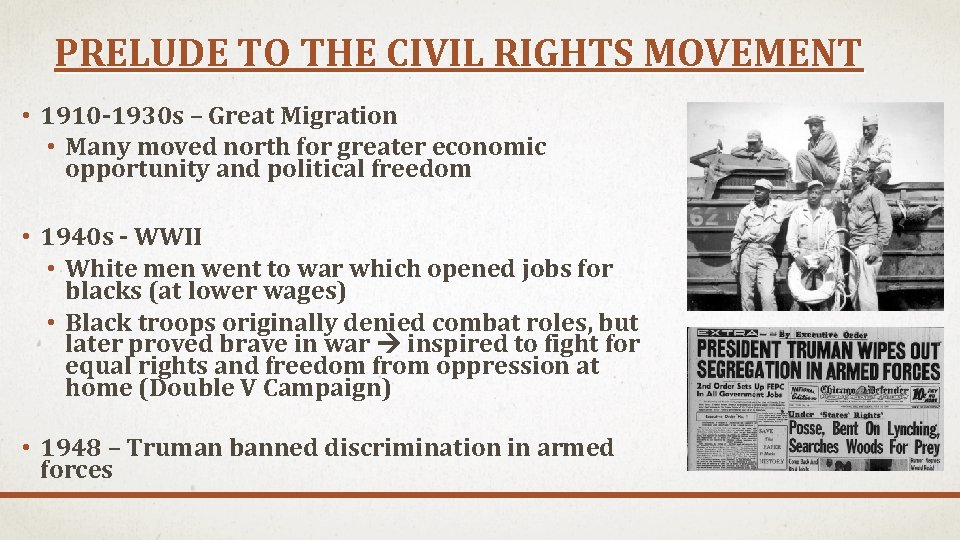
PRELUDE TO THE CIVIL RIGHTS MOVEMENT • 1910 -1930 s – Great Migration • Many moved north for greater economic opportunity and political freedom • 1940 s - WWII • White men went to war which opened jobs for blacks (at lower wages) • Black troops originally denied combat roles, but later proved brave in war inspired to fight for equal rights and freedom from oppression at home (Double V Campaign) • 1948 – Truman banned discrimination in armed forces
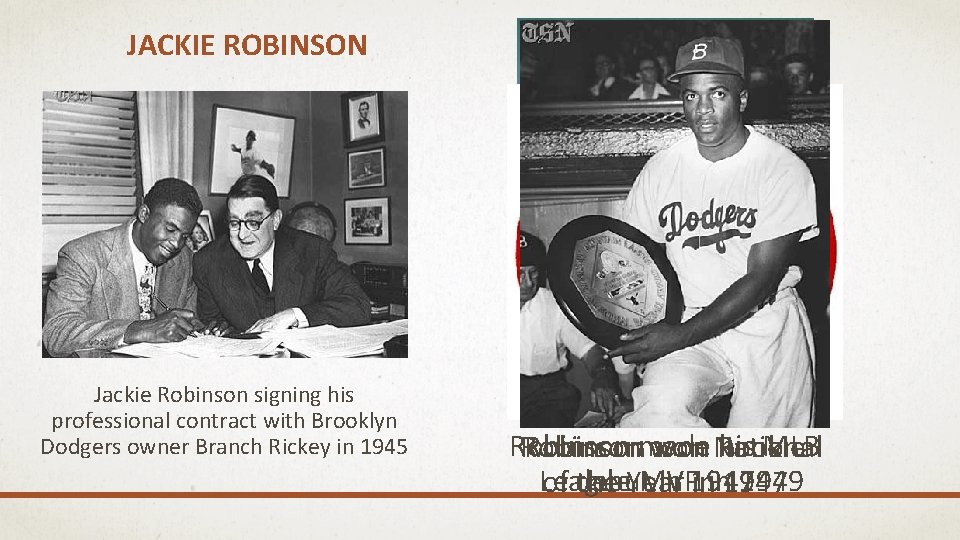
JACKIE ROBINSON Jackie Robinson signing his professional contract with Brooklyn Dodgers owner Branch Rickey in 1945 Robinson his MLB Robinson won Robinsonmade won National Rookie in 1947 League MVP 1949 of debut the Year inin 1947
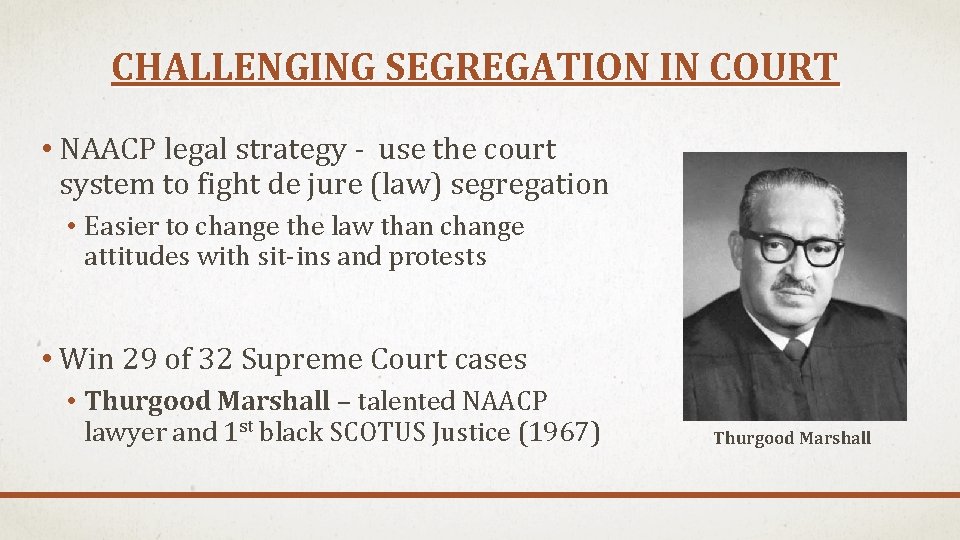
CHALLENGING SEGREGATION IN COURT • NAACP legal strategy - use the court system to fight de jure (law) segregation • Easier to change the law than change attitudes with sit-ins and protests • Win 29 of 32 Supreme Court cases • Thurgood Marshall – talented NAACP lawyer and 1 st black SCOTUS Justice (1967) Thurgood Marshall
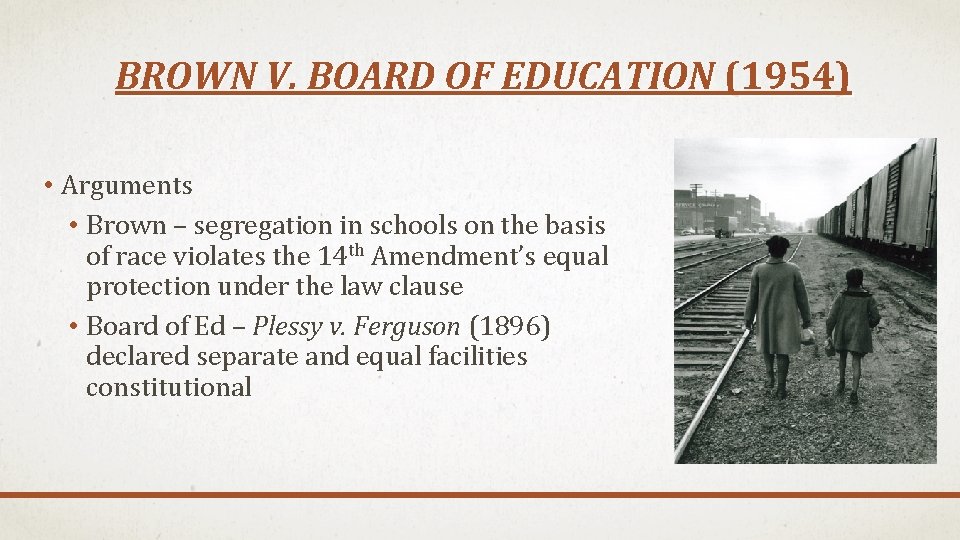
BROWN V. BOARD OF EDUCATION (1954) • Background • Linda Brown denied acceptance to local white school while the black school was 21 blocks away • Brown and 13 families filed a class-action suit against the school district challenging their policy of racial segregation
BROWN V. BOARD OF EDUCATION (1954) • Arguments • Brown – segregation in schools on the basis of race violates the 14 th Amendment’s equal protection under the law clause • Board of Ed – Plessy v. Ferguson (1896) declared separate and equal facilities constitutional
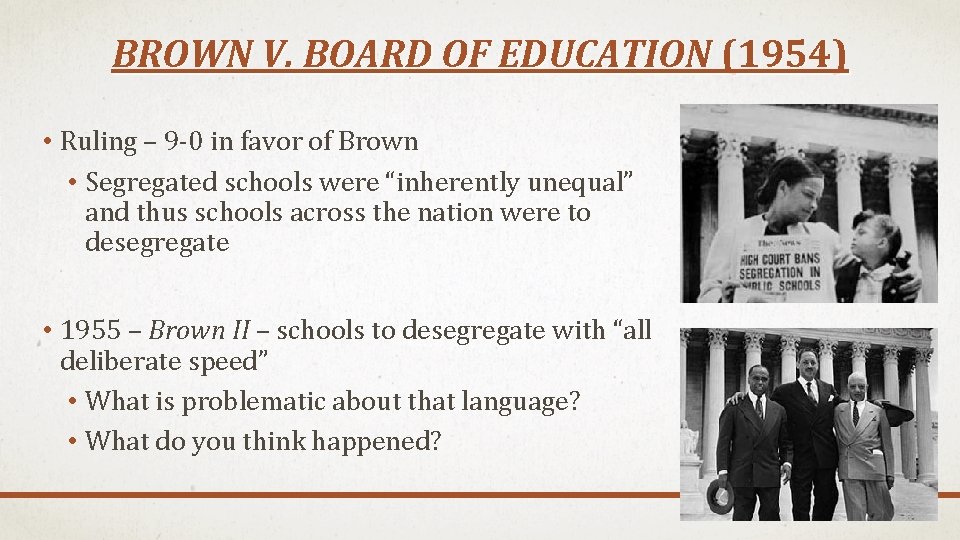
BROWN V. BOARD OF EDUCATION (1954) • Ruling – 9 -0 in favor of Brown • Segregated schools were “inherently unequal” and thus schools across the nation were to desegregate • 1955 – Brown II – schools to desegregate with “all deliberate speed” • What is problematic about that language? • What do you think happened?
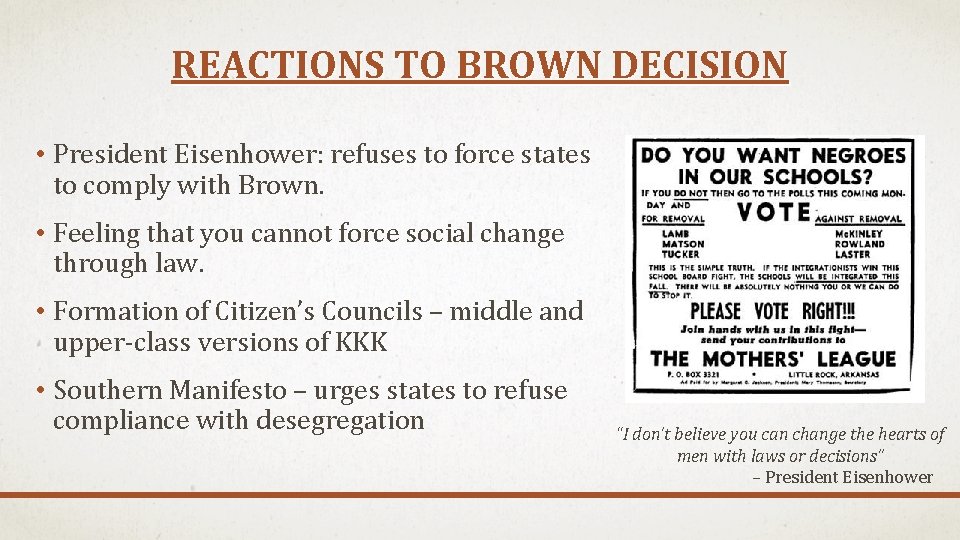
REACTIONS TO BROWN DECISION • President Eisenhower: refuses to force states to comply with Brown. • Feeling that you cannot force social change through law. • Formation of Citizen’s Councils – middle and upper-class versions of KKK • Southern Manifesto – urges states to refuse compliance with desegregation “I don’t believe you can change the hearts of men with laws or decisions” – President Eisenhower
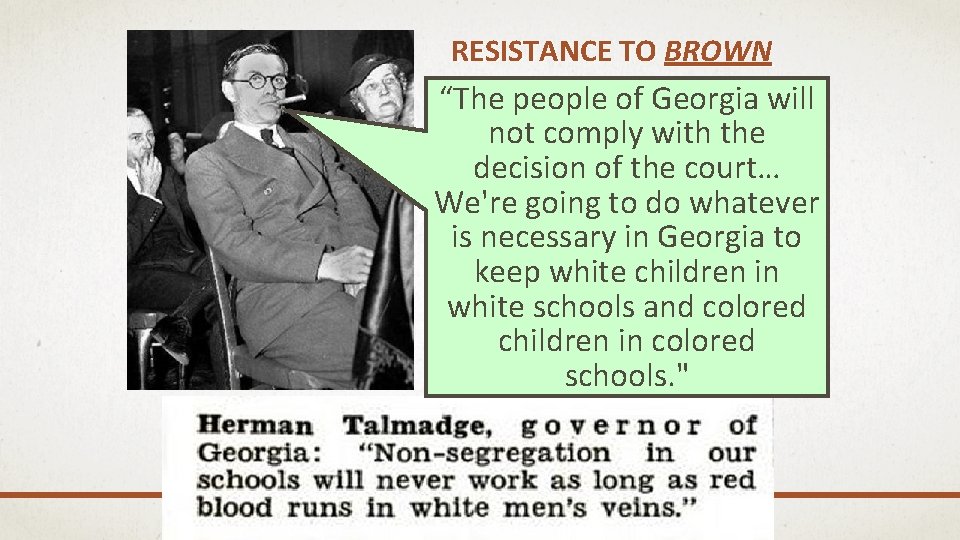
RESISTANCE TO BROWN “The people of Georgia will not comply with the decision of the court… We're going to do whatever is necessary in Georgia to keep white children in white schools and colored children in colored schools. "
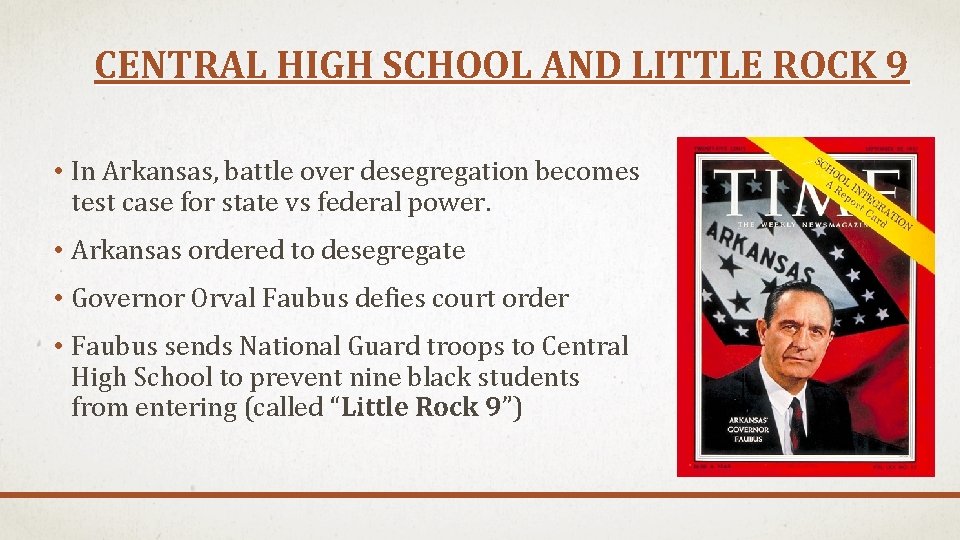
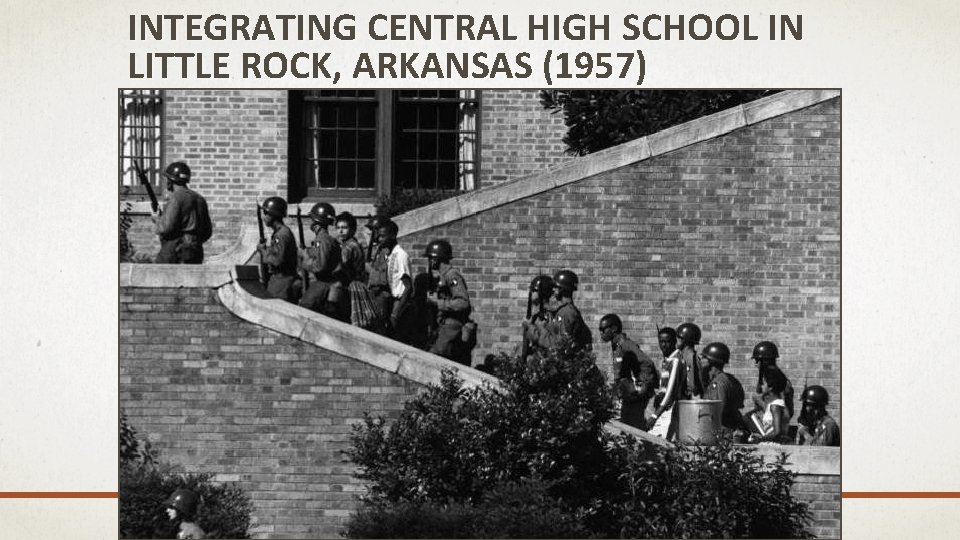
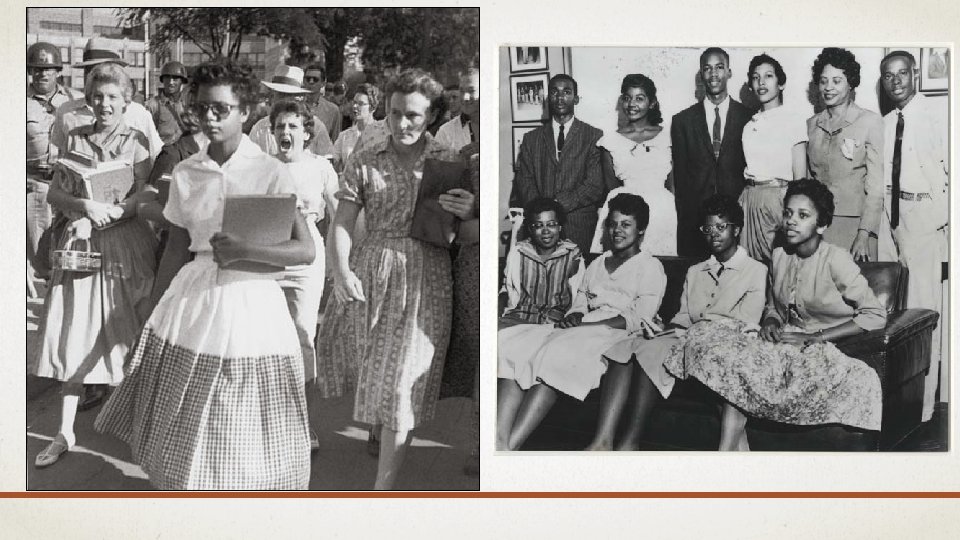
CENTRAL HIGH SCHOOL AND LITTLE ROCK 9 • In Arkansas, battle over desegregation becomes test case for state vs federal power. • Arkansas ordered to desegregate • Governor Orval Faubus defies court order • Faubus sends National Guard troops to Central High School to prevent nine black students from entering (called “Little Rock 9”)
LITTLE ROCK 9 • 3 week standoff • On April 24, Eisenhower places AR National Guard under Federal Control, sends in US army. • Eisenhower justifies action based on upholding federal authority and enforcing the law. • Eisenhower becomes 1 st president since Reconstruction to use Federal troops to protect blacks, affirming power of Federal Government https: //youtu. be/75 dhe 5 Zsy 8 k
INTEGRATING CENTRAL HIGH SCHOOL IN LITTLE ROCK, ARKANSAS (1957) The “Little Rock Nine” Arkansas Governor Orval Faubus
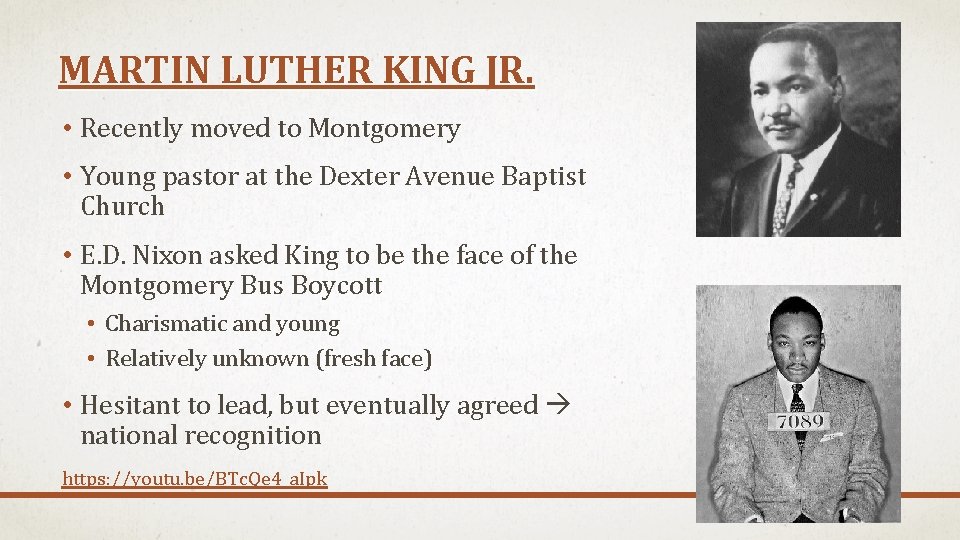
MARTIN LUTHER KING JR. • Recently moved to Montgomery • Young pastor at the Dexter Avenue Baptist Church • E. D. Nixon asked King to be the face of the Montgomery Bus Boycott • Charismatic and young • Relatively unknown (fresh face) • Hesitant to lead, but eventually agreed national recognition https: //youtu. be/BTc. Qe 4_a. Ipk
MLK AND SCLC • 1957 – Founds Southern Christian Leadership Conference (SCLC) – calls on black people to embrace civil disobedience/nonviolent resistance as a instrument of social and political change • Organizes events to promote non-violent resistance – leads to Sit-in movement
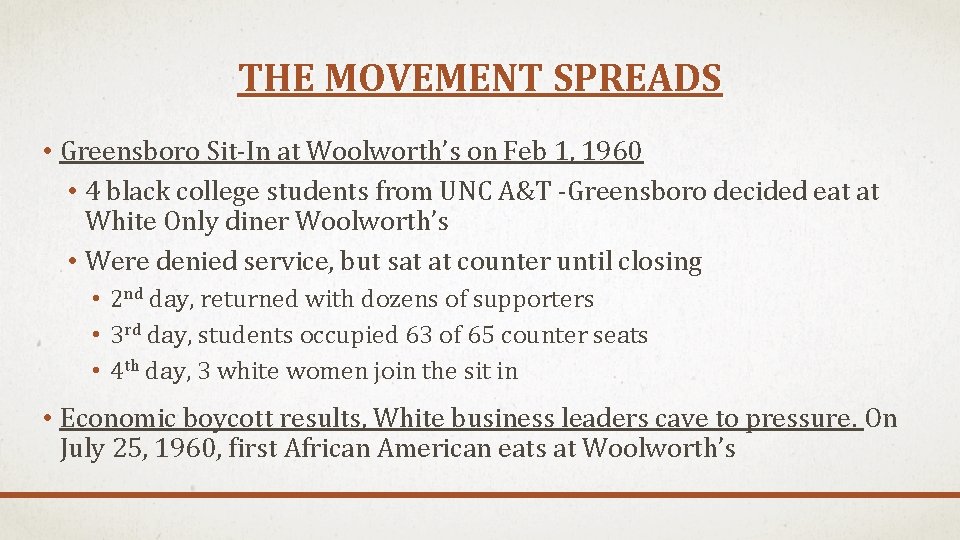
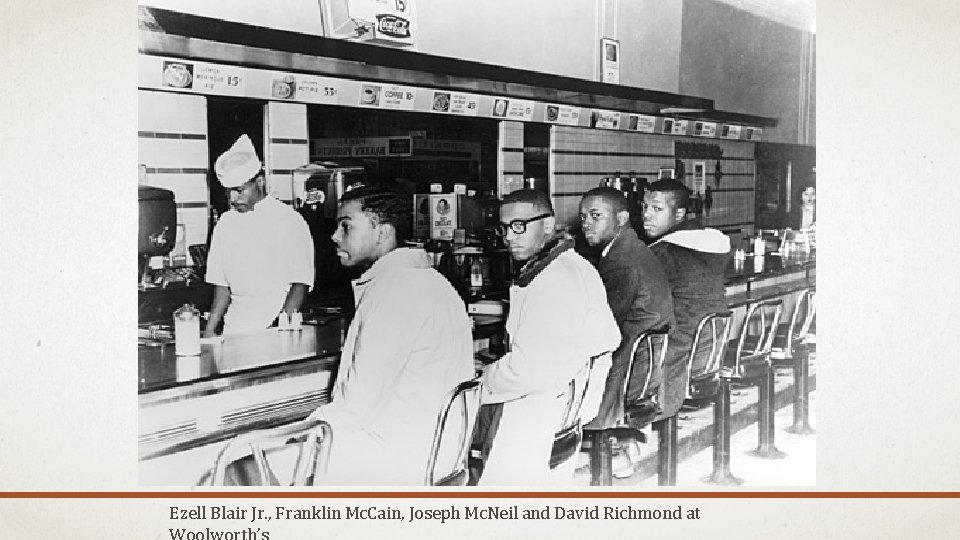
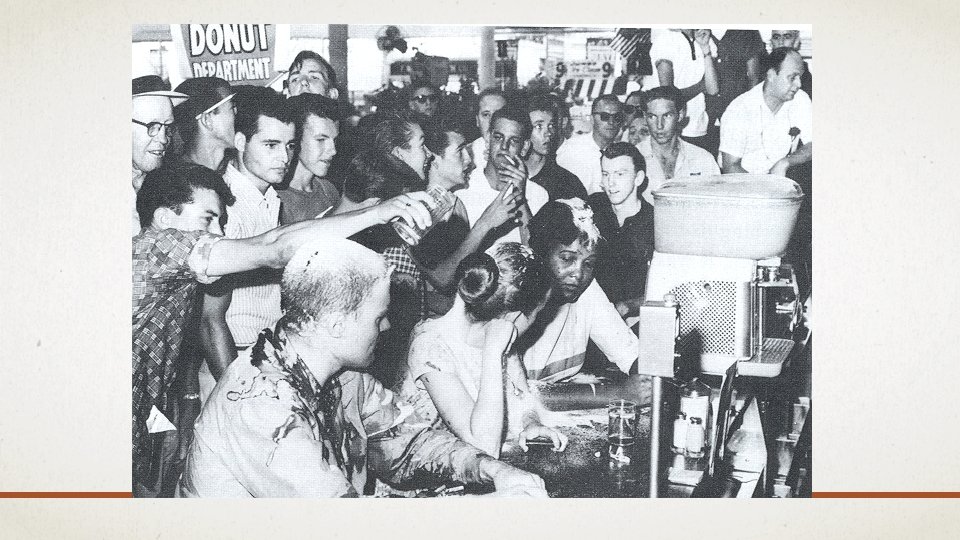
THE MOVEMENT SPREADS • Greensboro Sit-In at Woolworth’s on Feb 1, 1960 • 4 black college students from UNC A&T -Greensboro decided eat at White Only diner Woolworth’s • Were denied service, but sat at counter until closing • 2 nd day, returned with dozens of supporters • 3 rd day, students occupied 63 of 65 counter seats • 4 th day, 3 white women join the sit in • Economic boycott results, White business leaders cave to pressure. On July 25, 1960, first African American eats at Woolworth’s
Ezell Blair Jr. , Franklin Mc. Cain, Joseph Mc. Neil and David Richmond at
PG. 906 • Answer Main Idea Questions as you read (A-H) • Answer Critical Thinking questions 3 and 4 on pg. 913.