
The Early Humans World History Good morning girls




- Slides: 29
The Early Humans World History
Good morning girls! Do now: On a sheet of loose-leaf create a chart like the one listed below. Fill out as many characteristics as you can! What do you think early humans could do? What can humans do today?
What is Anthropology? Anthropology- the study of human life and culture. Culture includes: What people wear How they organize society What they value
What is Anthropology? Anthropology is the study of past societies Anthropologists study artifacts that have been left behind This is how we learned about prehistory Prehistory- a time in history when there are no written records.
What is Archeology? Archeology is the study of past societies through analysis of what people left behind. The remains include: buildings, tools, weapons, pottery, clothing, jewelry. Archeology is a way to learn about prehistory
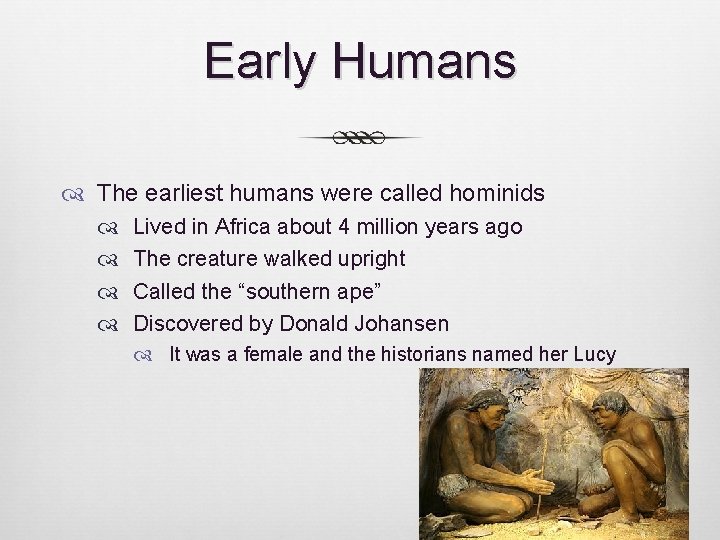
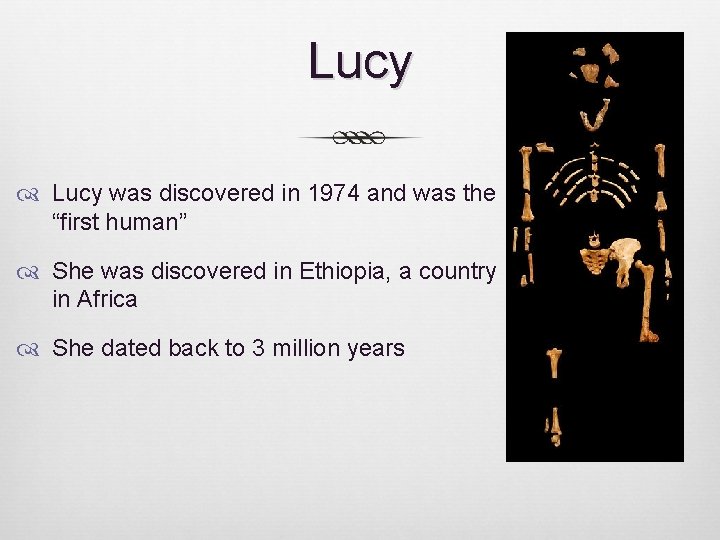
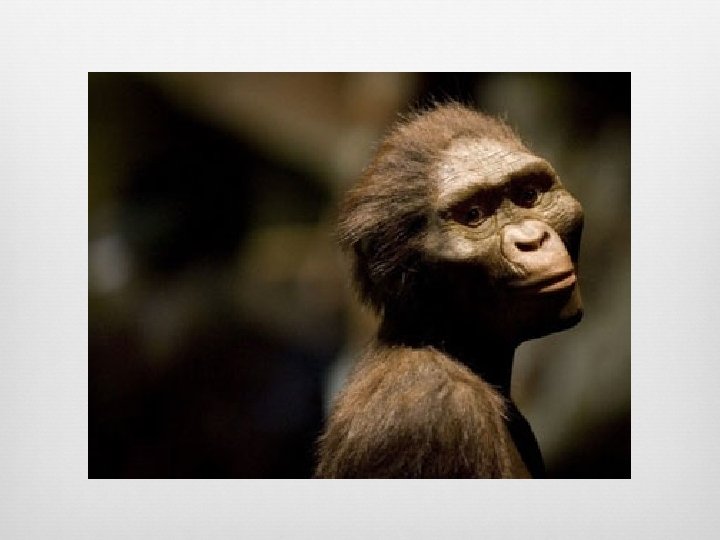
Early Humans The earliest humans were called hominids Lived in Africa about 4 million years ago The creature walked upright Called the “southern ape” Discovered by Donald Johansen It was a female and the historians named her Lucy
http: //www. pbs. org/wgbh/n ova/education/evolution/fin ding-lucy. html
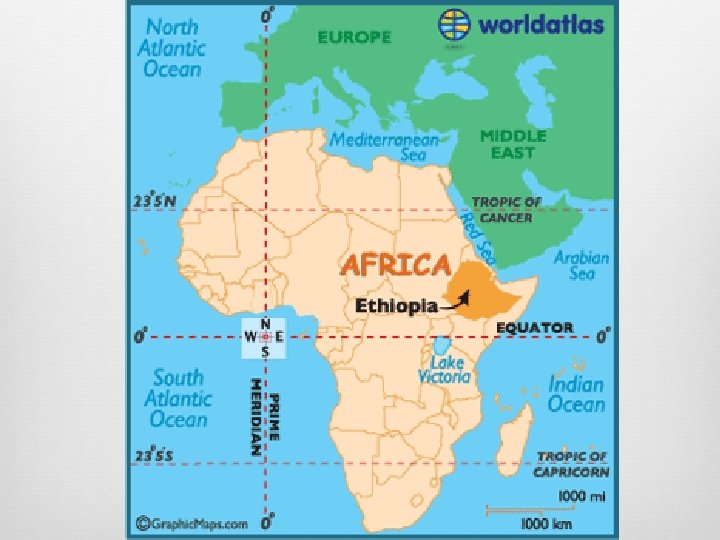
Lucy was discovered in 1974 and was the “first human” She was discovered in Ethiopia, a country in Africa She dated back to 3 million years
Homo Habilis – humans from 2 million years ago “Handy man” First humans to make stone tools Used tools for purposes such as cutting, scraping, chopping, or sawing plants, animals, and wood.
Homo Erectus Term meaning “upright man” Larger brains and bones and smaller teeth than other hominids Homo Sapiens- *First to use fire!* New stone tool- hand ax First to migrate out of Africa
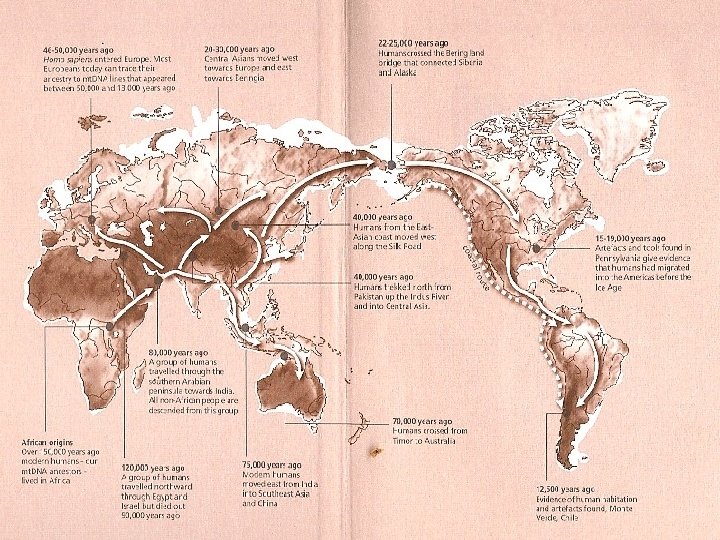
Out of Africa Theory “Out of Africa Theory”- around 250, 000 years ago a new type of human emerged- homo sapiens Homo sapiens- “wise human” Spread from Africa to other parts of the world This is the group of humans we belong to.
https: //www. youtube. com/ watch? v=8183 HPm. A 2_I
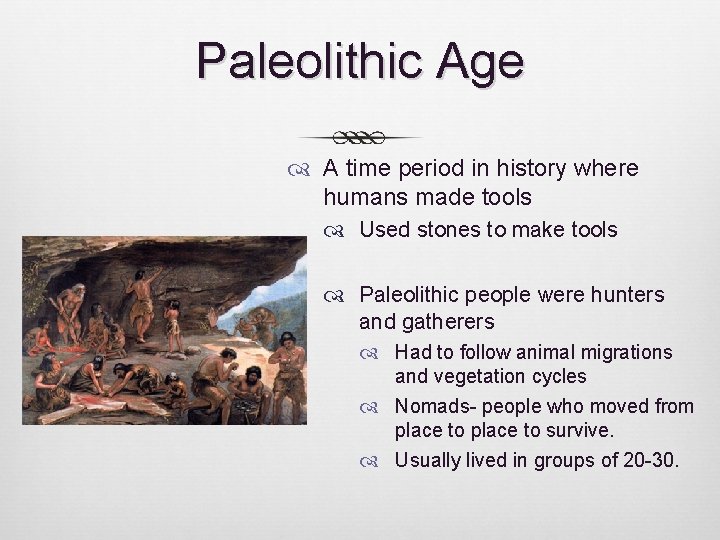
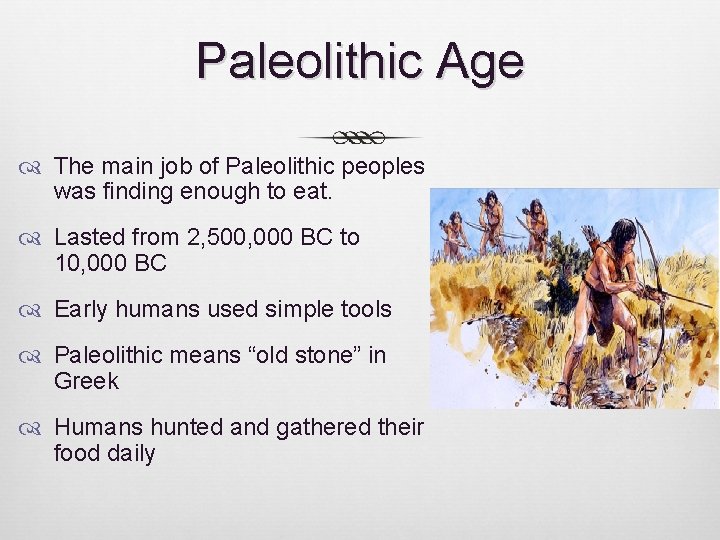
Paleolithic Age A time period in history where humans made tools Used stones to make tools Paleolithic people were hunters and gatherers Had to follow animal migrations and vegetation cycles Nomads- people who moved from place to survive. Usually lived in groups of 20 -30.
Paleolithic Age The main job of Paleolithic peoples was finding enough to eat. Lasted from 2, 500, 000 BC to 10, 000 BC Early humans used simple tools Paleolithic means “old stone” in Greek Humans hunted and gathered their food daily
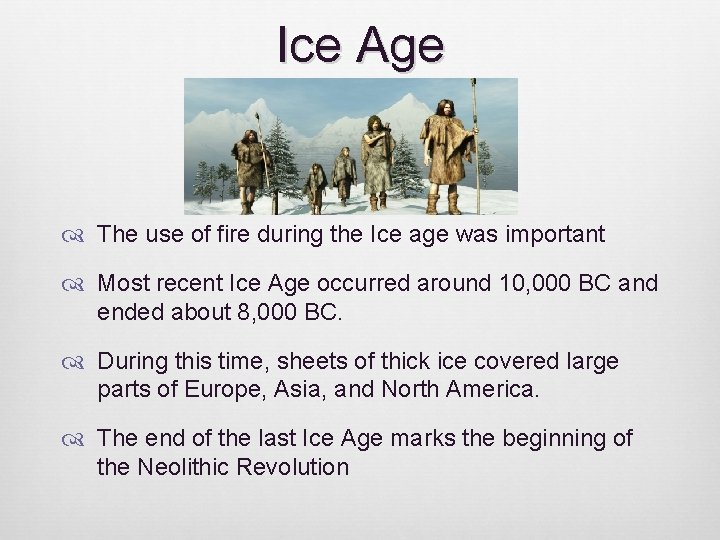
Ice Age The use of fire during the Ice age was important Most recent Ice Age occurred around 10, 000 BC and ended about 8, 000 BC. During this time, sheets of thick ice covered large parts of Europe, Asia, and North America. The end of the last Ice Age marks the beginning of the Neolithic Revolution
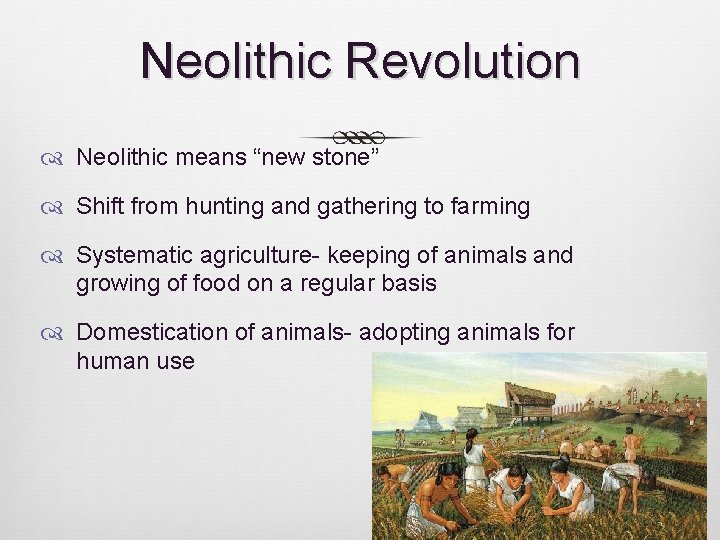
Neolithic Revolution Neolithic means “new stone” Shift from hunting and gathering to farming Systematic agriculture- keeping of animals and growing of food on a regular basis Domestication of animals- adopting animals for human use
Revolution means “to change” Neolithic Revolution- since there was an abundance of food, people were able to give up their nomadic lifestyle and begin forming communities and eventually civilizations
Neolithic Farming Villages Growing crops on a regular basis gave rise to more permanent settlements called Neolithic farming villages These villages appeared in Europe, India, Egypt, China, and Mesoamerica Oldest village- Catalhuyuk has special buildings and shrines
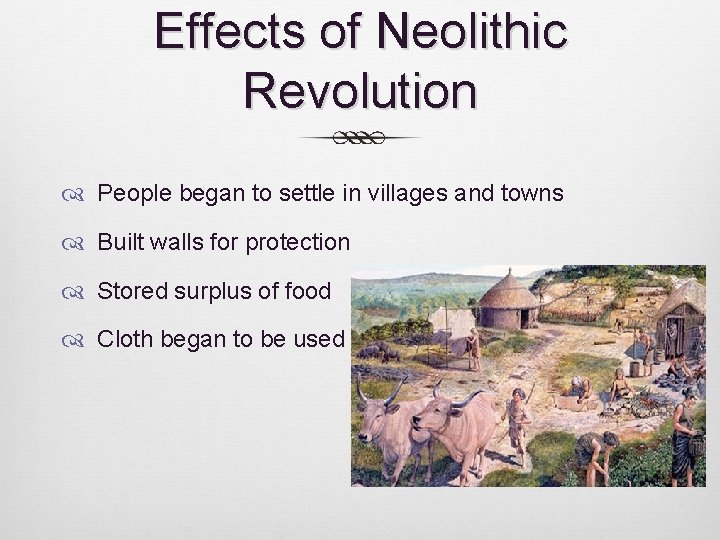
Effects of Neolithic Revolution People began to settle in villages and towns Built walls for protection Stored surplus of food Cloth began to be used
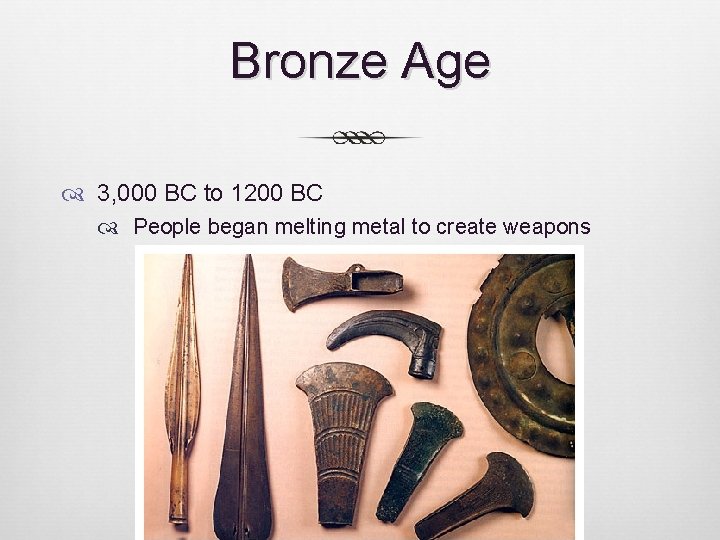
Bronze Age 3, 000 BC to 1200 BC People began melting metal to create weapons
Civilizations Emerge Culture- the way of life a people follow When people started settling down, cultures became more complex Civilization- a complex culture in which large numbers of common elements such as social structure, religion, and art Seven of the most important features of civilizations include: Well-organized governments, complex religions, job specialization, social classes, arts and architecture, public works, writing
Civilizations Emerge First civilizations developed in river valleys where people could carry on the large-scale farming that was needed to feed a large population Governments needed to organize and regulate human activity First governments were led by monarchs who organized military to protect the population
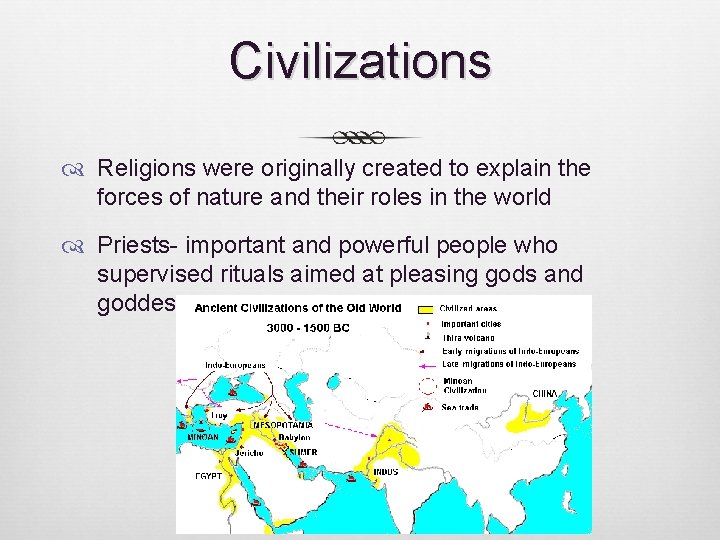
Civilizations Religions were originally created to explain the forces of nature and their roles in the world Priests- important and powerful people who supervised rituals aimed at pleasing gods and goddesses
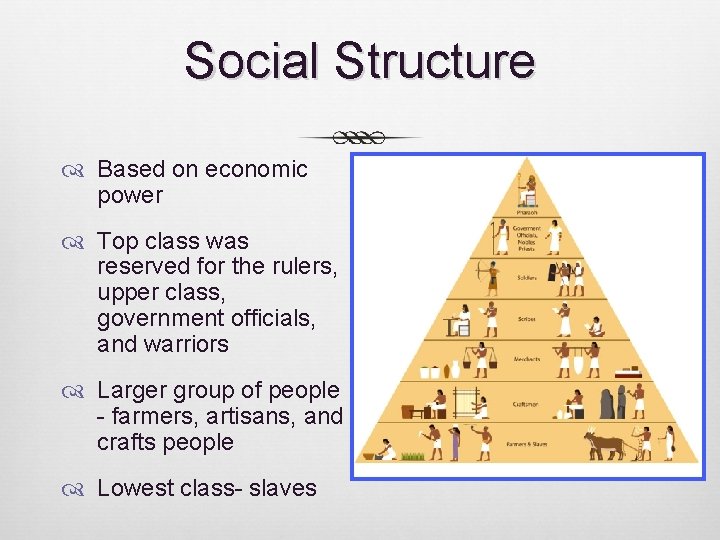
Social Structure Based on economic power Top class was reserved for the rulers, upper class, government officials, and warriors Larger group of people - farmers, artisans, and crafts people Lowest class- slaves
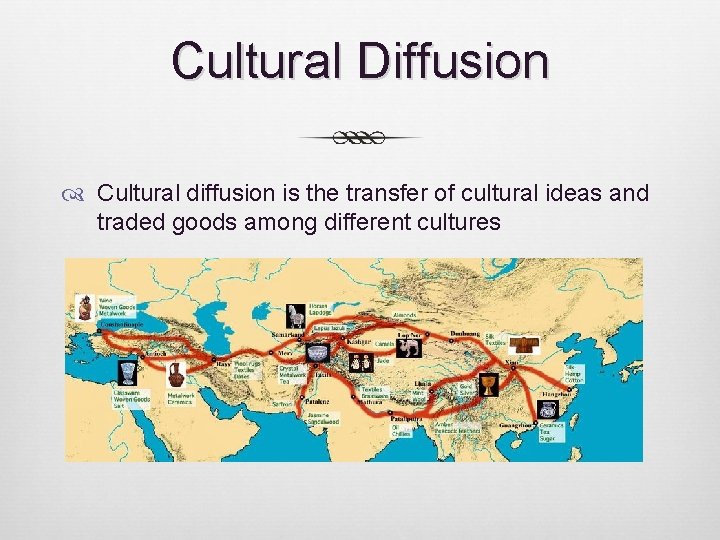
Cultural Diffusion Cultural diffusion is the transfer of cultural ideas and traded goods among different cultures
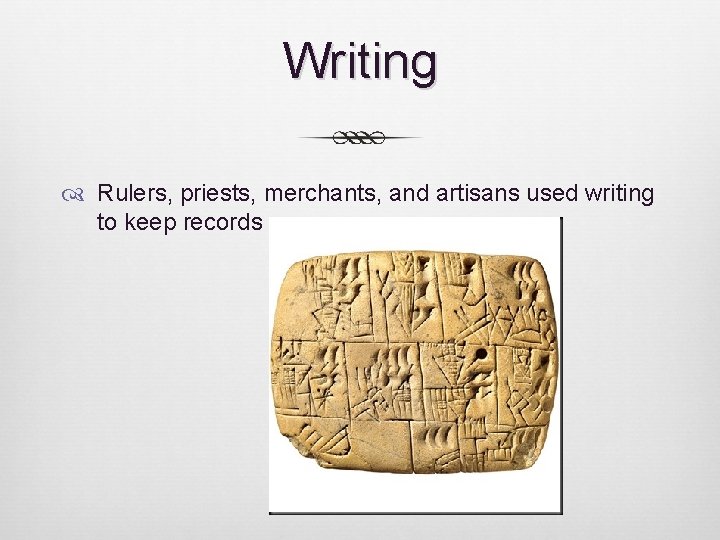
Writing Rulers, priests, merchants, and artisans used writing to keep records