
The Early Greek World Geography The Iliad The
- Slides: 15
The Early Greek World
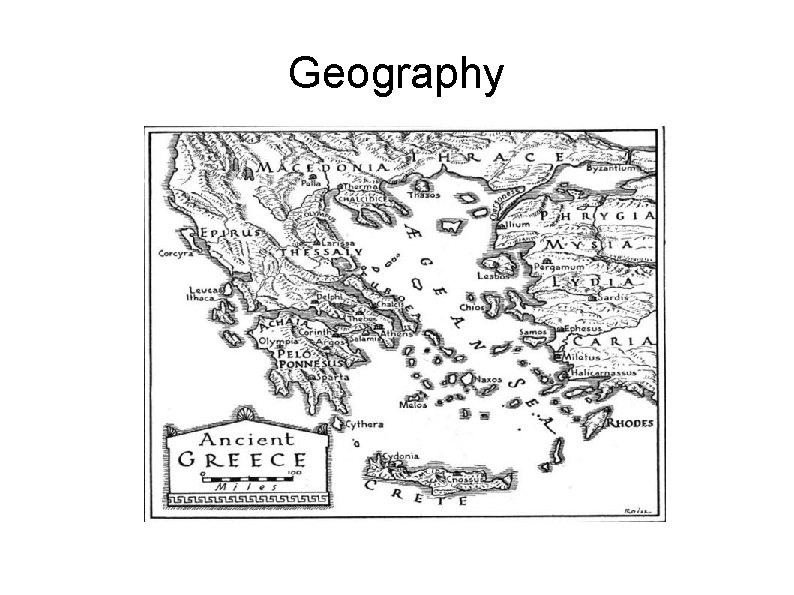
Geography
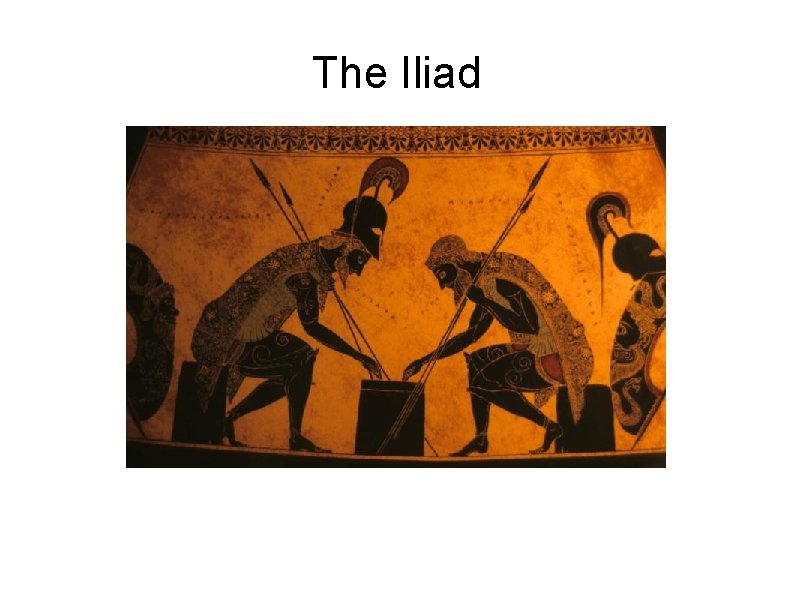
The Iliad
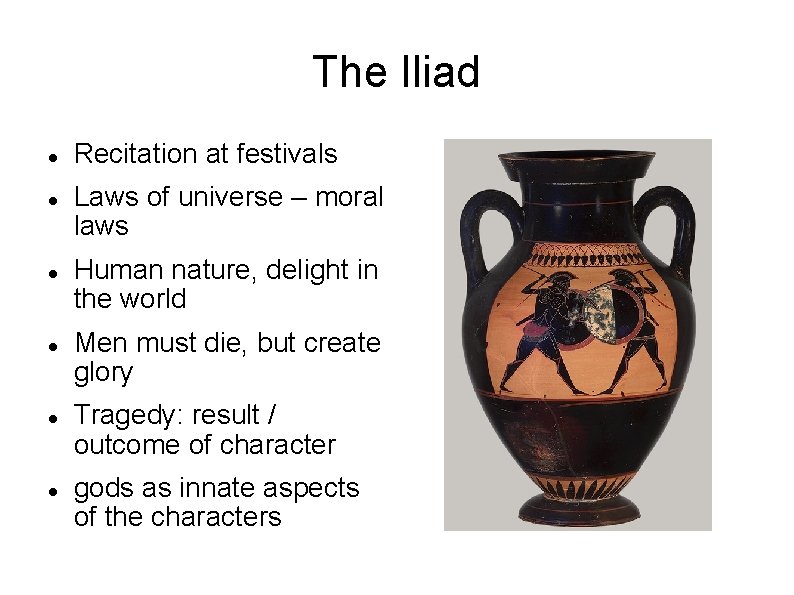
The Iliad Recitation at festivals Laws of universe – moral laws Human nature, delight in the world Men must die, but create glory Tragedy: result / outcome of character gods as innate aspects of the characters
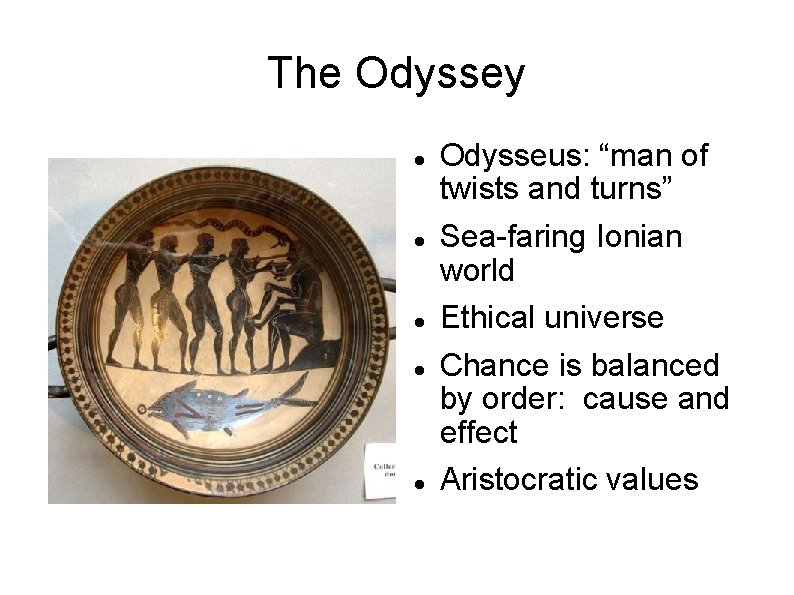
The Odyssey Odysseus: “man of twists and turns” Sea-faring Ionian world Ethical universe Chance is balanced by order: cause and effect Aristocratic values
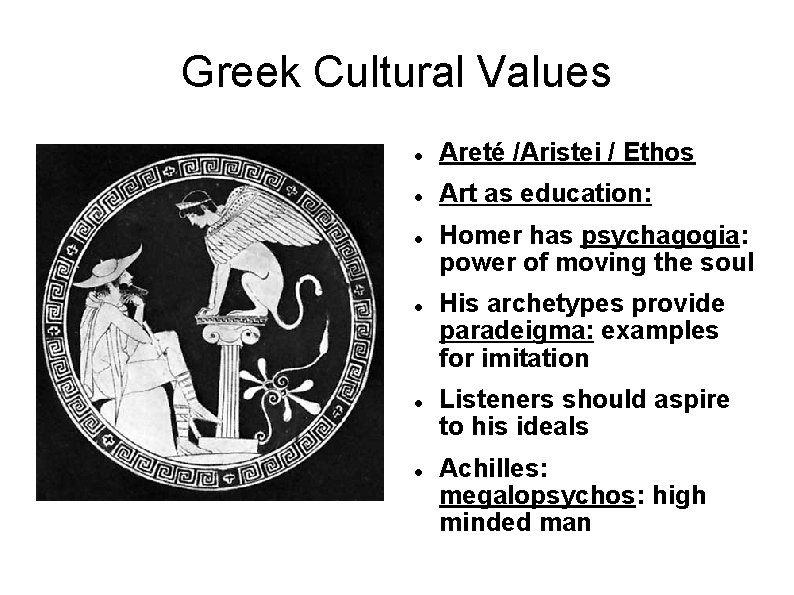
Greek Cultural Values Areté /Aristei / Ethos Art as education: Homer has psychagogia: power of moving the soul His archetypes provide paradeigma: examples for imitation Listeners should aspire to his ideals Achilles: megalopsychos: high minded man
Greek Cultural Values Areté: magnificence: Physical / intellectual / moral prowess and virtue Bravery / Valor Intellectual ability Basis of natural leadership Requires respect and honor Basis of a man’s value Justifiable self-love Aristei : victory as proof of arête Ethos: aristocratic refined interactions Até: passion – beyond which education can only do so much
Hesiod: Works and Days Virtue of labor: “Work is no shame / Idleness is a shame”. Myths as predictors of social problems (Prometheus / Pandora) Ideal of Justice Attacks “gift-eating” nobles Attacks idea that might is right Arete of common man
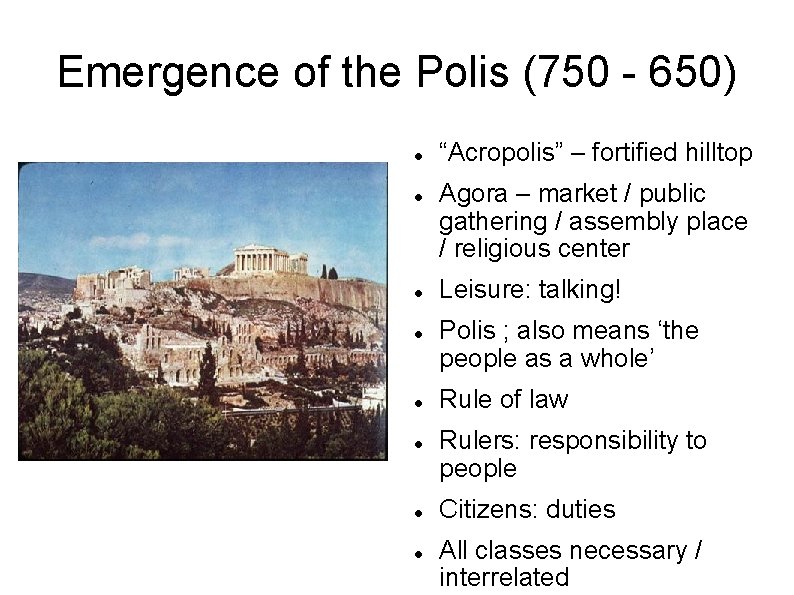
Emergence of the Polis (750 - 650) “Acropolis” – fortified hilltop Agora – market / public gathering / assembly place / religious center Leisure: talking! Polis ; also means ‘the people as a whole’ Rule of law Rulers: responsibility to people Citizens: duties All classes necessary / interrelated
Structure of Athenian Polis Assembly (“Ecclesia” in Athens) Council or steering committee Courts (“Areopagos” in Athens) Kings: religious rites Polemarch: general Archon: civil head Judges Citizens are equal, except women and slaves All citizens participate in public activity
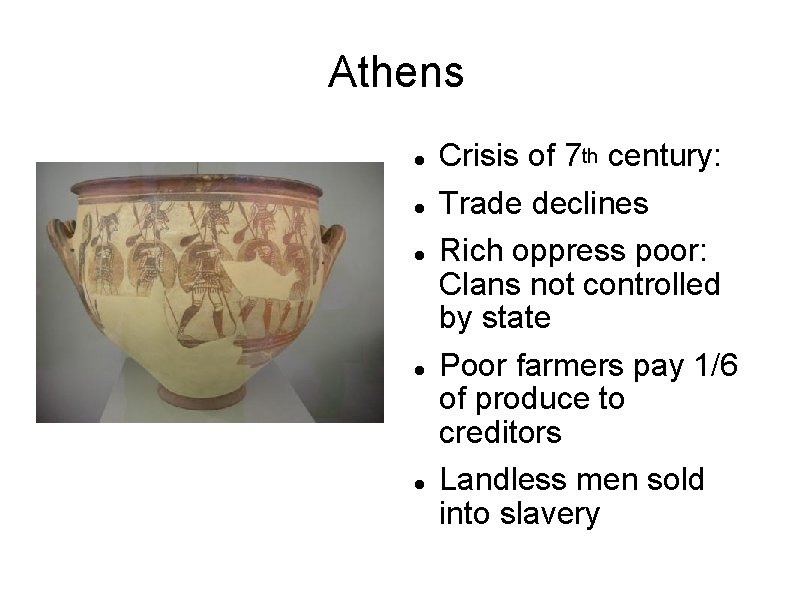
Athens Crisis of 7 th century: Trade declines Rich oppress poor: Clans not controlled by state Poor farmers pay 1/6 of produce to creditors Landless men sold into slavery
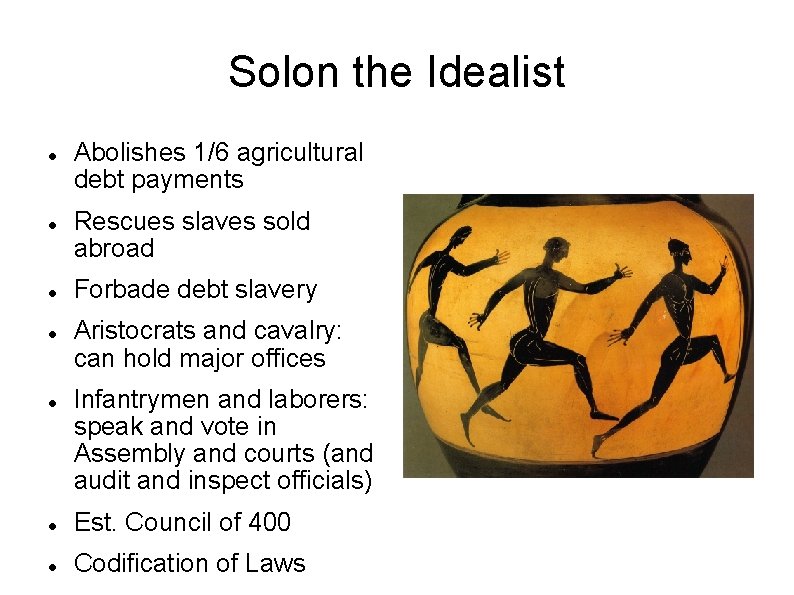
Solon the Idealist Abolishes 1/6 agricultural debt payments Rescues slaves sold abroad Forbade debt slavery Aristocrats and cavalry: can hold major offices Infantrymen and laborers: speak and vote in Assembly and courts (and audit and inspect officials) Est. Council of 400 Codification of Laws
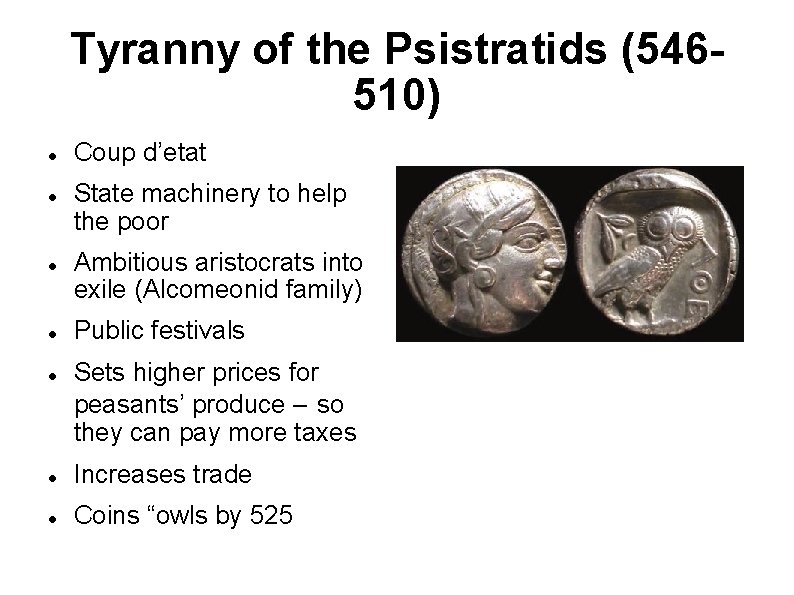
Tyranny of the Psistratids (546510) Coup d’etat State machinery to help the poor Ambitious aristocrats into exile (Alcomeonid family) Public festivals Sets higher prices for peasants’ produce – so they can pay more taxes Increases trade Coins “owls by 525
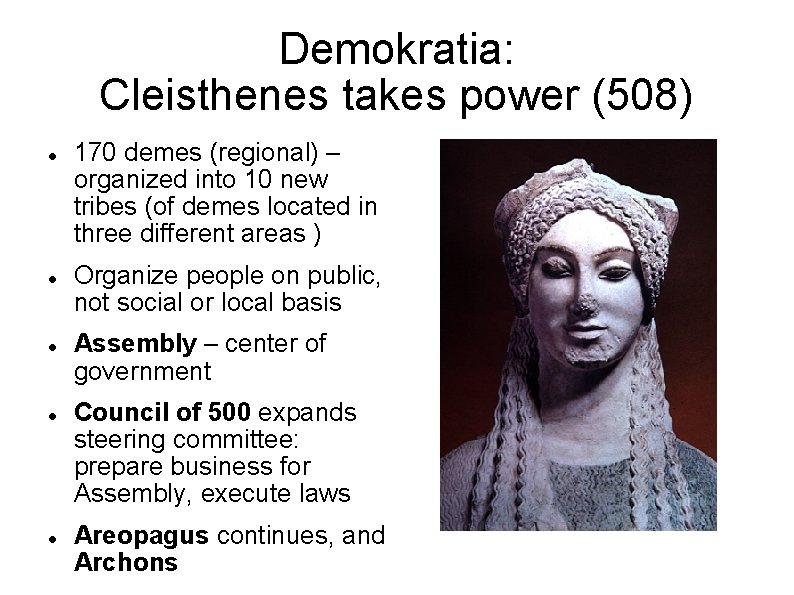
Demokratia: Cleisthenes takes power (508) 170 demes (regional) – organized into 10 new tribes (of demes located in three different areas ) Organize people on public, not social or local basis Assembly – center of government Council of 500 expands steering committee: prepare business for Assembly, execute laws Areopagus continues, and Archons
Credits 1. Map www. greeka. com/greece-maps/ancientgreece-map. jpg 2. Achilles and Ajax www. usu. edu/markdamen/1320 Hist&Civ/slides/ 03 epic/achillesajax. jpg 3. Odysseus and Polyphemus 4. Oedipus and Sphinx