
THE EARLY DAYS OF THE FRENCH REVOLUTION The

- Slides: 30
THE EARLY DAYS OF THE FRENCH REVOLUTION
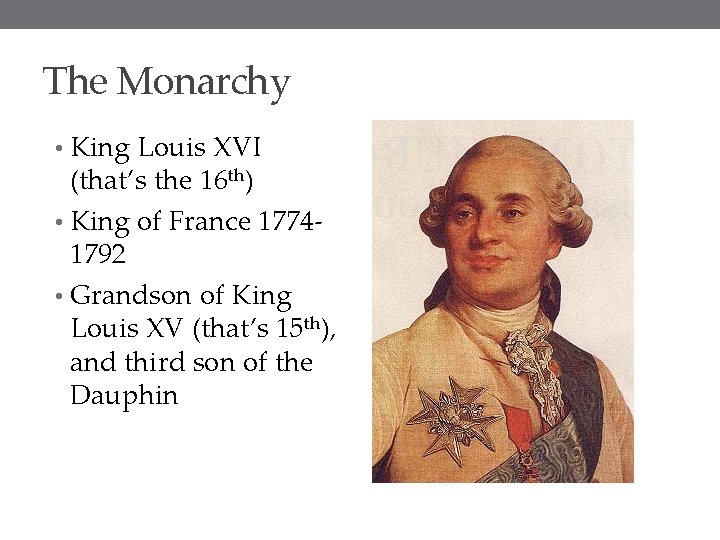
The Monarchy • King Louis XVI (that’s the 16 th) • King of France 17741792 • Grandson of King Louis XV (that’s 15 th), and third son of the Dauphin
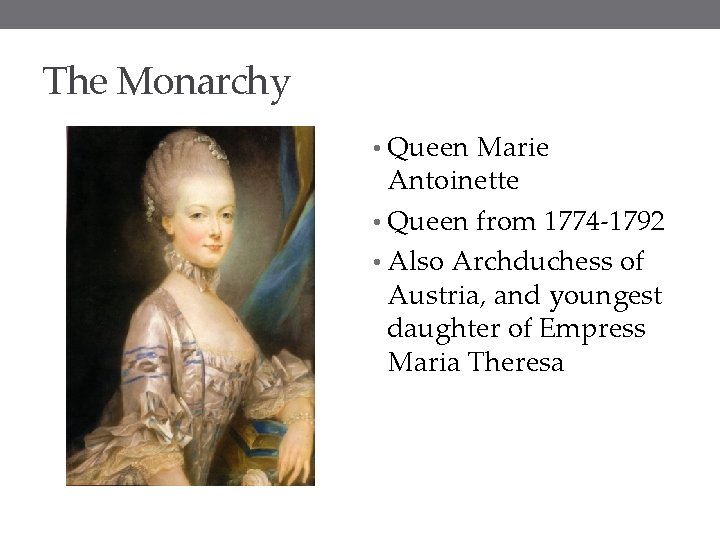
The Monarchy • Queen Marie Antoinette • Queen from 1774 -1792 • Also Archduchess of Austria, and youngest daughter of Empress Maria Theresa
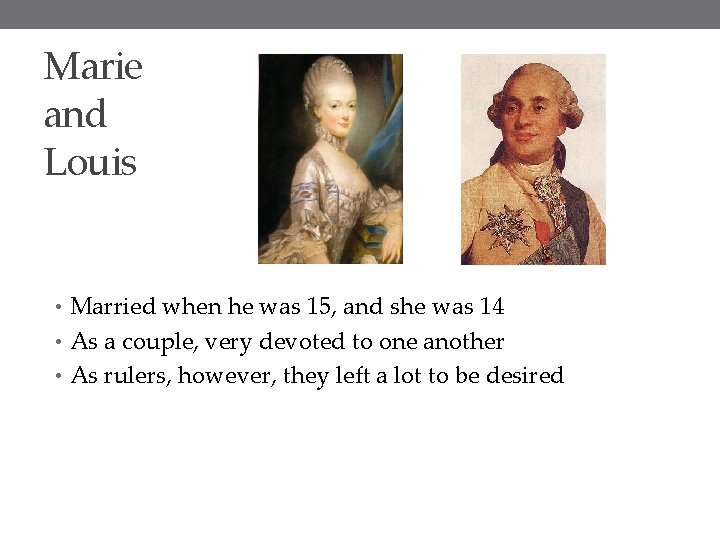
Marie and Louis • Married when he was 15, and she was 14 • As a couple, very devoted to one another • As rulers, however, they left a lot to be desired
Louis and Marie • He was generous and good-hearted, but had real problems handling money • She was viewed as an outsider, a foreigner from Austria instead of a French princess, who was even worse with money than her husband was
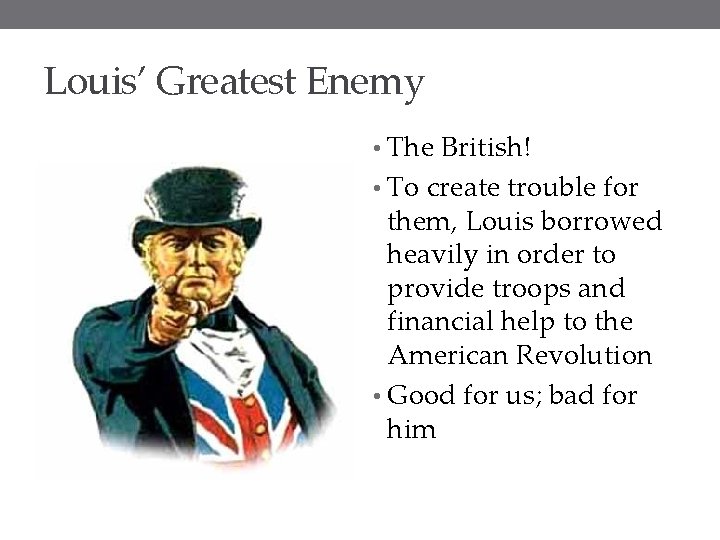
Louis’ Greatest Enemy • The British! • To create trouble for them, Louis borrowed heavily in order to provide troops and financial help to the American Revolution • Good for us; bad for him
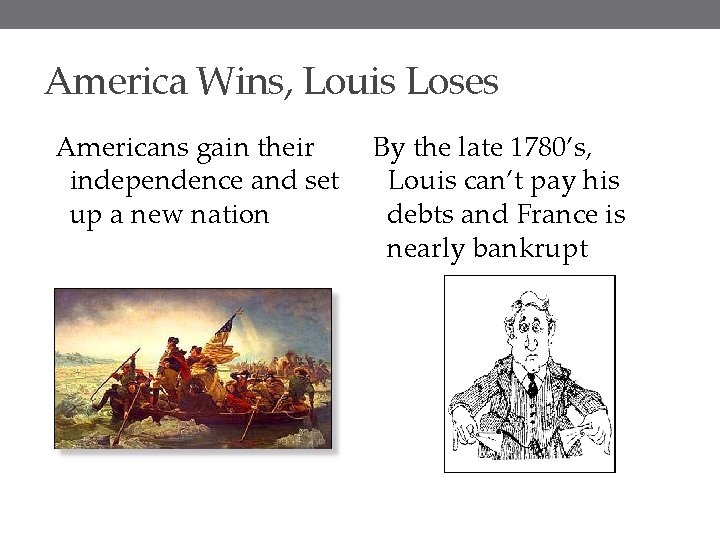
America Wins, Louis Loses Americans gain their independence and set up a new nation By the late 1780’s, Louis can’t pay his debts and France is nearly bankrupt
Louis’ Solution?
Louis Tried Something New • Louis was already taxing most of the people of France as much or more than they could afford • He tried to avoid bankruptcy by taxing his nobles • Historically, nobles in France had not been taxed for decades
Nobles Say NO! • Nobles refuse, saying they will not pay any unless Louis first calls the Estates-General to discuss the issue • The Estates-General is the name given to the meeting of representatives of all three estates • Usually convened in times of national emergency
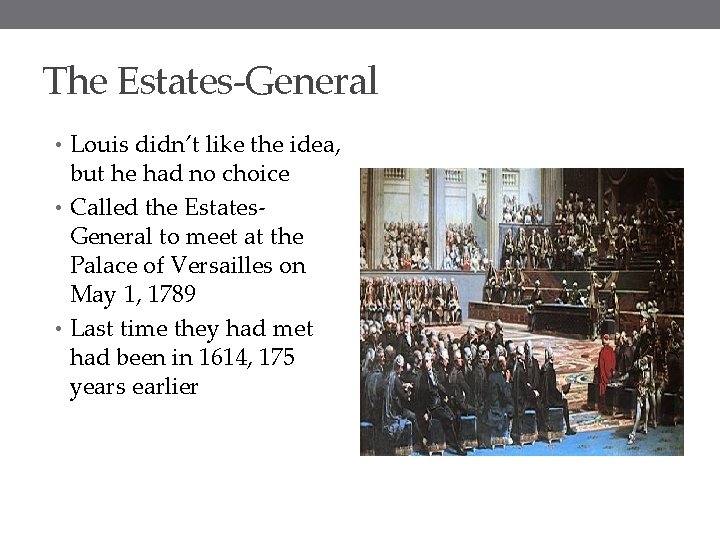
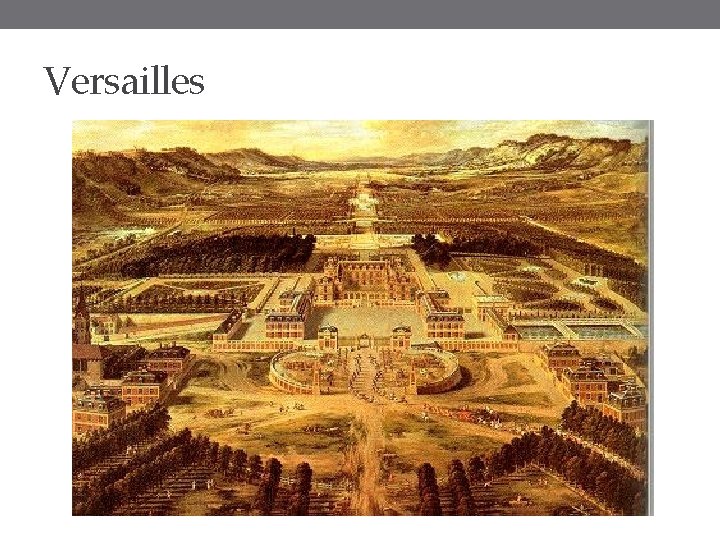
The Estates-General • Louis didn’t like the idea, but he had no choice • Called the Estates. General to meet at the Palace of Versailles on May 1, 1789 • Last time they had met had been in 1614, 175 years earlier
Versailles
Old Way of Meeting • Under old rules, representatives of the Three Estates would meet separately, and each estate would get one vote • First estate (clergy) usually allied with Second estate (nobles), so they could always defeat the Third estate by a 2 -1 margin
This Time • In 1789, Third estate demanded that all three meet together, and that each individual person have one vote • Estates represented in proportion to population; Third Estate had 610 representatives, while the other two combined had 591
The Third Estate • Already heavily taxed • There is often no food for them to buy, even in major cities like Paris • Many are starving, or living in the streets eating rats and garbage • Making this demand, they felt, was the only fair way for them to get their voices heard
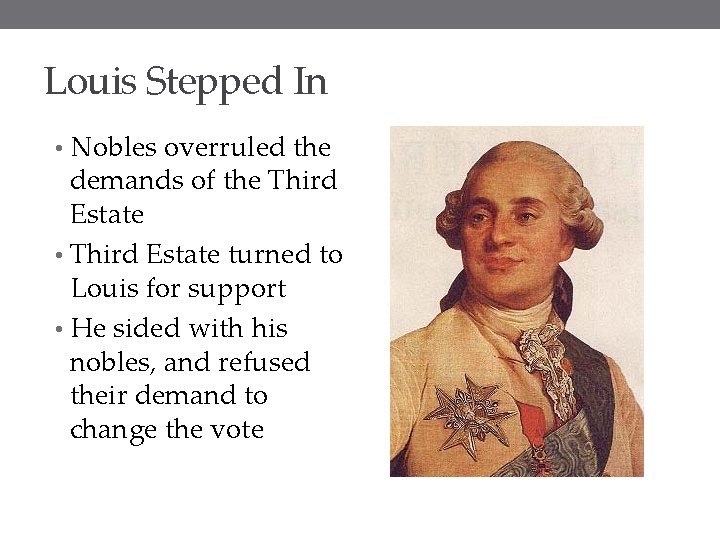
Louis Stepped In • Nobles overruled the demands of the Third Estate • Third Estate turned to Louis for support • He sided with his nobles, and refused their demand to change the vote
Third Estate Revolted • They decided they had already been hurt too much by the monarchy • Decided to do away with it entirely, and set themselves up as the government, or at least force Louis to accept a constitution • They would call their ruling body the National Assembly
June 17 -20, 1789 • On the 17 th, Third Estates voted overwhelmingly to form the National Assembly • On the 20 th, Louis panicked and locked all members of the Third Estate out of Versailles so they could not meet • They broke into the palace, and convened a meeting in an indoor tennis court
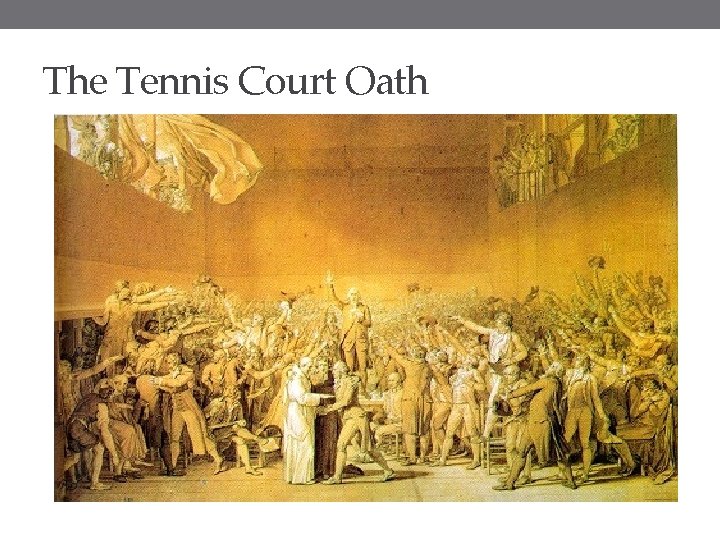
The Tennis Court Oath
The Tennis Court Oath • Held on the tennis court because it was the first place they could find that fit all 610 of them • They swore an oath to stay from June 20 th until such time as they had drafted a constitution
Louis Panicked (Again) • Some time passed after the Tennis Court Oath • Members of the Third Estate did stay on and try to draft a constitution • Members of Louis’ army are also members of the Third Estate • Louis didn’t trust the loyalty of his own soldiers
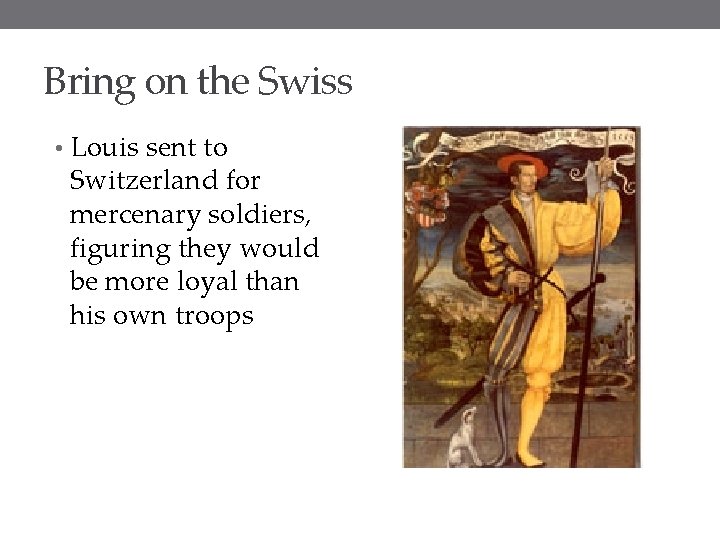
Bring on the Swiss • Louis sent to Switzerland for mercenary soldiers, figuring they would be more loyal than his own troops
Meanwhile, In Paris • Word of what is going at Versailles was leaking out • Riots begin in support of the Third Estate, and in anger over the cost of bread
And in the Countryside. . . • The Swiss reached French soil and began to march toward Paris to answer Louis’ call • Word spread that the Swiss were coming to kill the rioters and to massacre French citizens • It was also reported that the Swiss were actually invading France, and the country was in peril
Rally ‘Round The Flag • French people, even rioters, saw it as their duty to their country to protect Paris from foreign invasion • Soldiers, officers, even peasants began to take up guns and whatever other weapons they could find
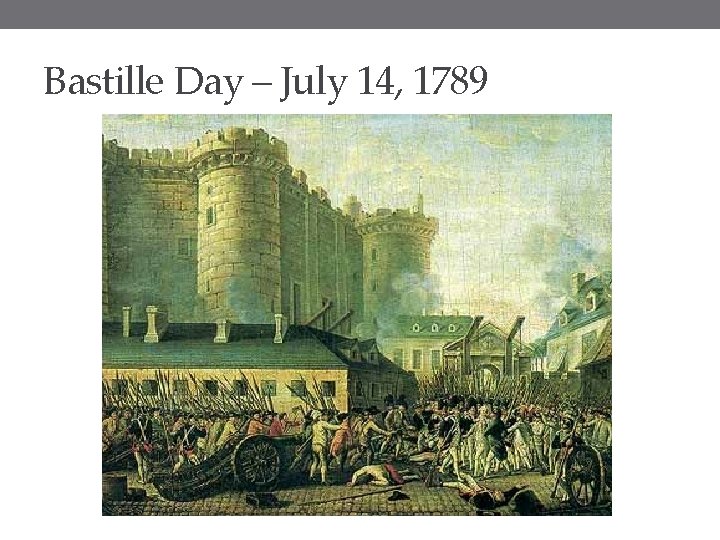
Bastille Day – July 14, 1789
Bastille Day – July 14, 1789 • The Bastille was a prison within the city of Paris • Kept a fairly large guard, but a very large stash of gunpowder • Rioters stormed the Bastille gates to get the gunpowder in order to fight off the Swiss • July 14 is still a national holiday in France, and is celebrated as the official start of the French Revolution
The Great Fear • Rumors spread from Paris to the country that nobles had hired outlaws to terrorize peasants • The Swiss, apparently, never did any real harm to anyone • Panic swept through France, called The Great Fear
Mobs on Parade • People began to notice that in Paris and in the country, huge mobs of people with weapons were all over the place • In the country, peasants broke into the houses of nobles to rob what they could, or tore up papers that bound them to the nobles’ houses
In Paris • Mobs began to get vocal about their support for a National Assembly • For once, they have both the numbers and the firepower at the same time • In October 1789, mobs marched to Versailles and broke in, killing two guards • They forced Louis to leave Versailles, and he and the Royal family were marched back to Paris under guard