
The Early British Colonies The restoration Colonies In

The Early British Colonies
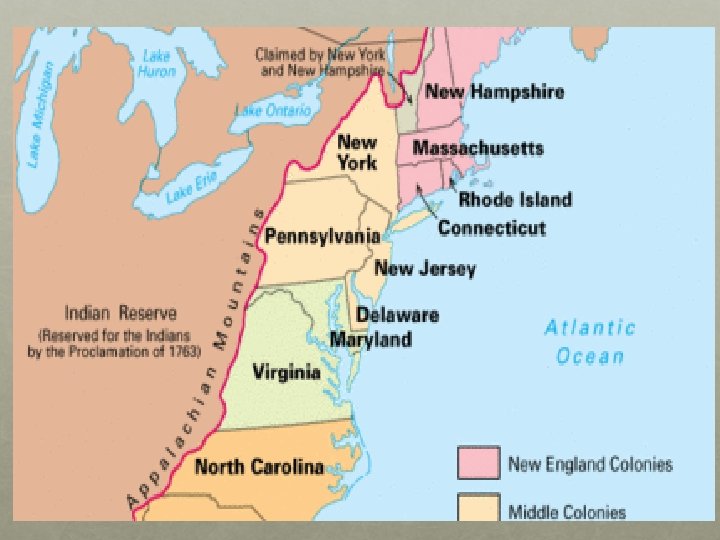
The restoration Colonies • In 1663 Carolina, New York, New Jersey, and Pennsylvania were established as Restoration Colonies. • Largely independent and controlled by proprietors as long as they generally followed English law. • Many policies were put in place to help expand the British economy and give them trade advantages with the colonies. • The Navigation Acts • The Revenue Acts of 1673
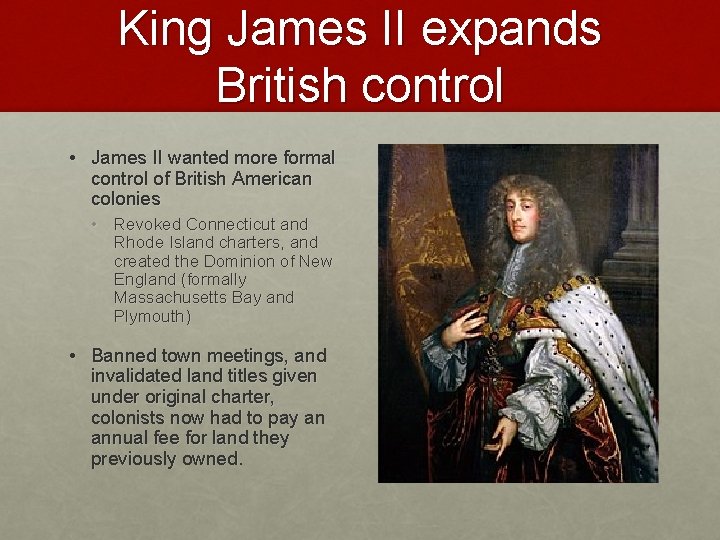
King James II expands British control • James II wanted more formal control of British American colonies • Revoked Connecticut and Rhode Island charters, and created the Dominion of New England (formally Massachusetts Bay and Plymouth) • Banned town meetings, and invalidated land titles given under original charter, colonists now had to pay an annual fee for land they previously owned.
The glorious Revolution • In England, a coup took place and James II was forced to create a constitutional monarchy. • This was inspired by the writings of John Locke (life, liberty, property) • This inspired colonial political leaders to expand power of colonial assemblies (i. e. take power away from monarch appointed governors). • Because of the continual wars England was in, they largely left the colonies alone. This furthered the norm of independent rule.
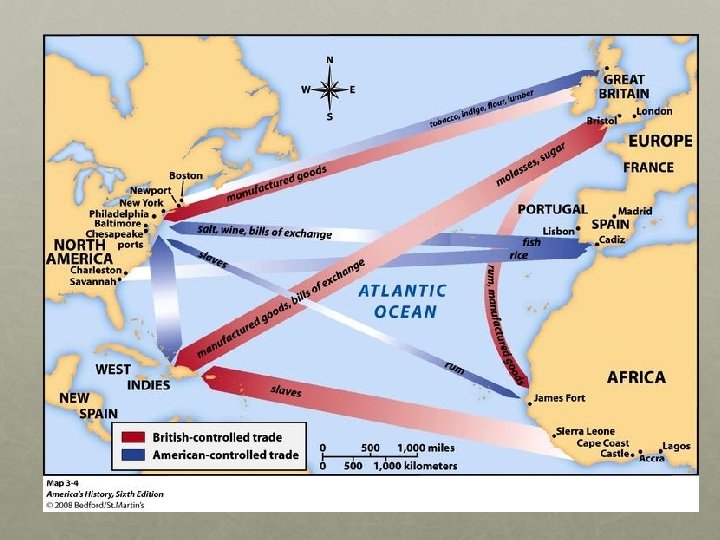
The south Atlantic System • Britain won thousands of acres of land in the colonies through victories in Europe, and set up a quest for commercial supremacy. • Focus was on new agricultural products and slaves. • England made a TON of money and helped them become an economic world leader • Slavery became a core institution in the colonies

The rise of colonial assemblies • The colonies continued to limit the power of crown officials • Took the power to tax and make government appointments • Because of salutary neglect, these assemblies gained power and Britain largely let them have internal affairs. • These assemblies were responsive to people and increased resistance to British control. • This was the foundation of the American independence movement.
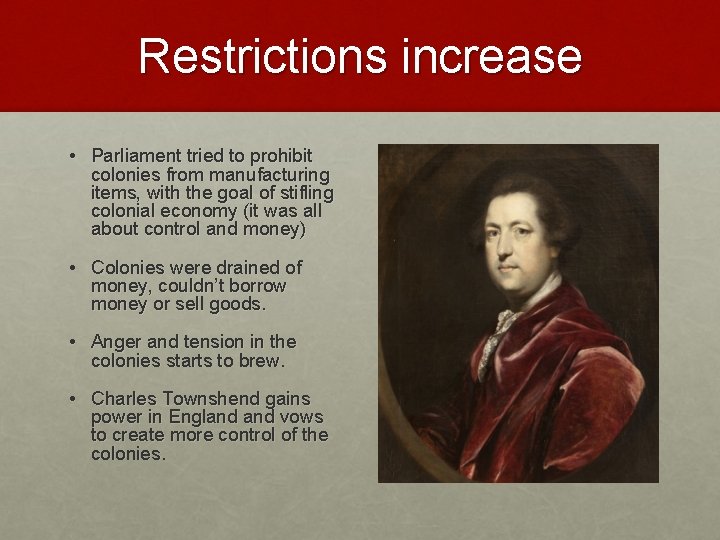
Restrictions increase • Parliament tried to prohibit colonies from manufacturing items, with the goal of stifling colonial economy (it was all about control and money) • Colonies were drained of money, couldn’t borrow money or sell goods. • Anger and tension in the colonies starts to brew. • Charles Townshend gains power in England vows to create more control of the colonies.
Wheel of Empire • 1650 s: England sets out to create a centrally managed Atlantic empire and slowly achieve aspects of their goal. • Internal unrest and salutary neglect weakened British control of colonies. • 1740 s: Britain recognizes the threat of self government and vows to reassert power.
- Slides: 10