
The Ear Part 1 Structure and Function Introduction

- Slides: 22
The Ear Part 1: Structure and Function
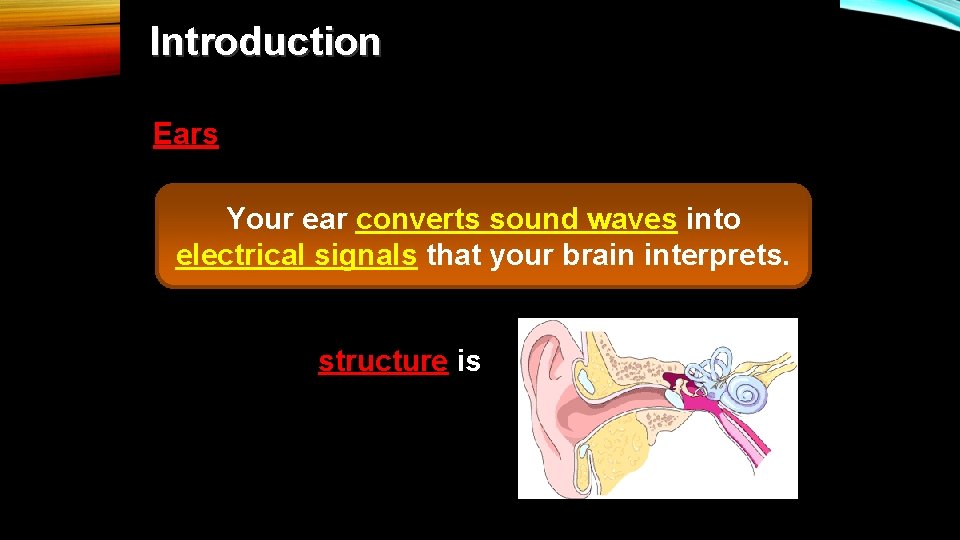
Introduction Ears are sense organs that respond to sound. Your ear converts sound waves into electrical signals that your brain interprets. The ear’s structure is designed to receive and transmit the sound waves…
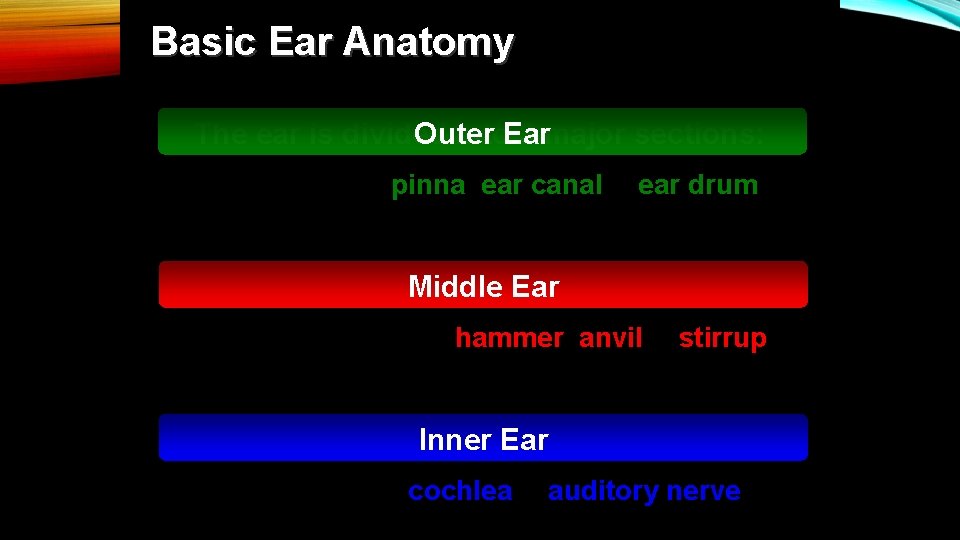
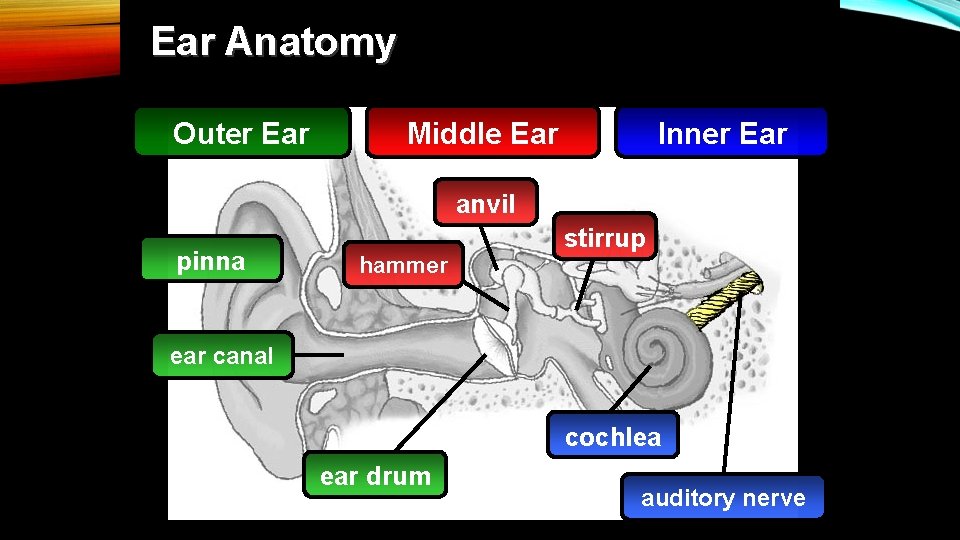
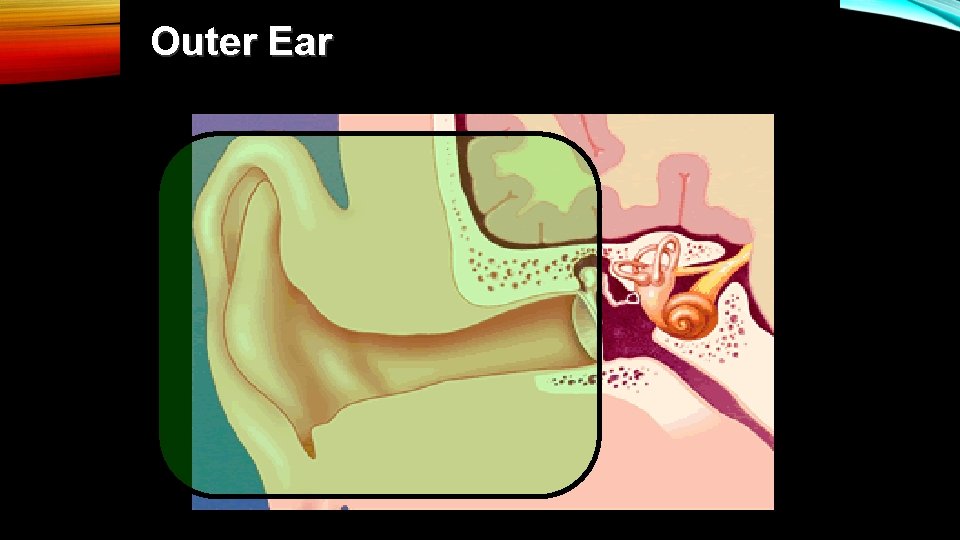
Basic Ear Anatomy The ear is divided into. Ear 3 major sections: Outer Contains the pinna, ear canal & ear drum Middle Ear Contains 3 bones: hammer, anvil & stirrup Inner Ear Contains the cochlea & auditory nerve
Ear Anatomy Outer Ear Middle Ear Inner Ear anvil pinna hammer stirrup ear canal cochlea ear drum auditory nerve
Outer Ear
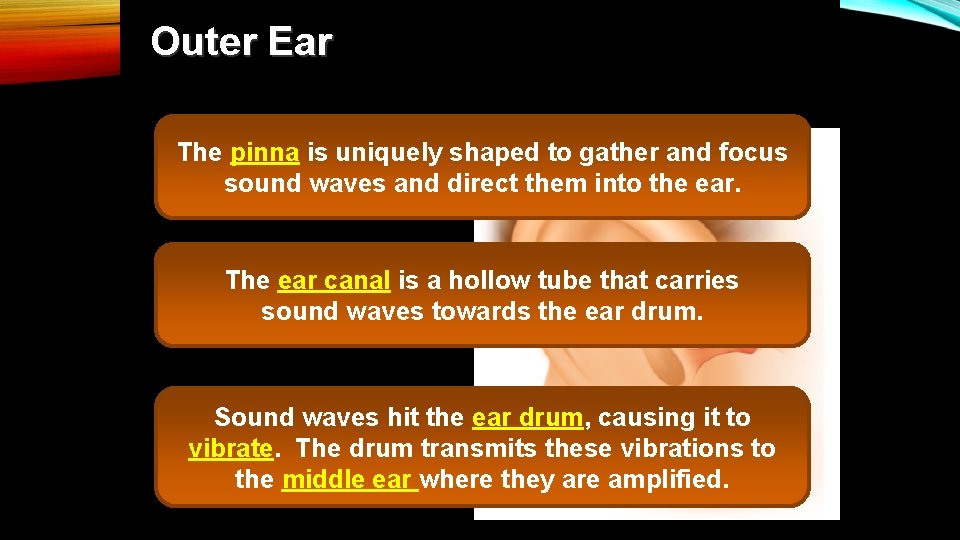
Outer Ear The pinna is uniquely shaped to gather and focus sound waves and direct them into the ear. The ear canal is a hollow tube that carries sound waves towards the ear drum. Sound waves hit the ear drum, causing it to vibrate. The drum transmits these vibrations to the middle ear where they are amplified.
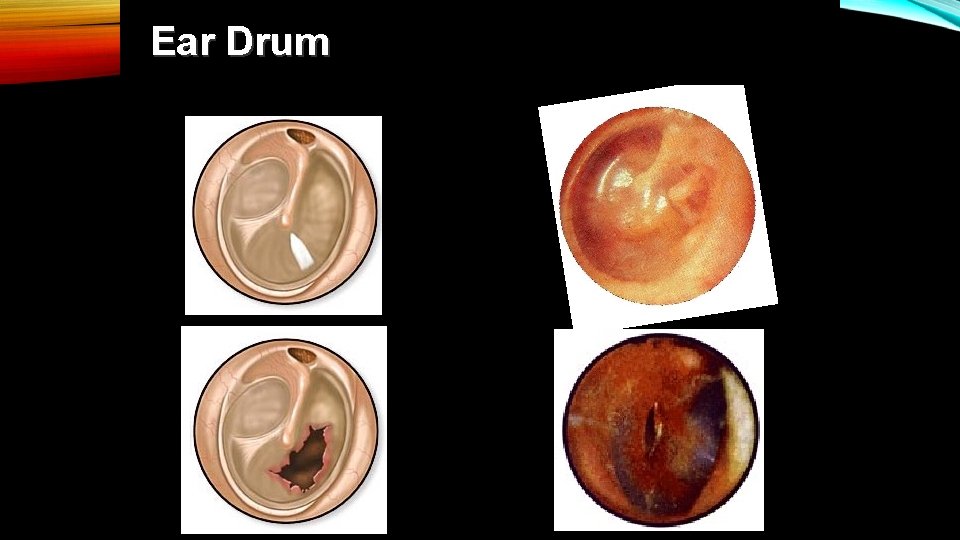
Ear Drum Normal ear drum Ripped ear drum
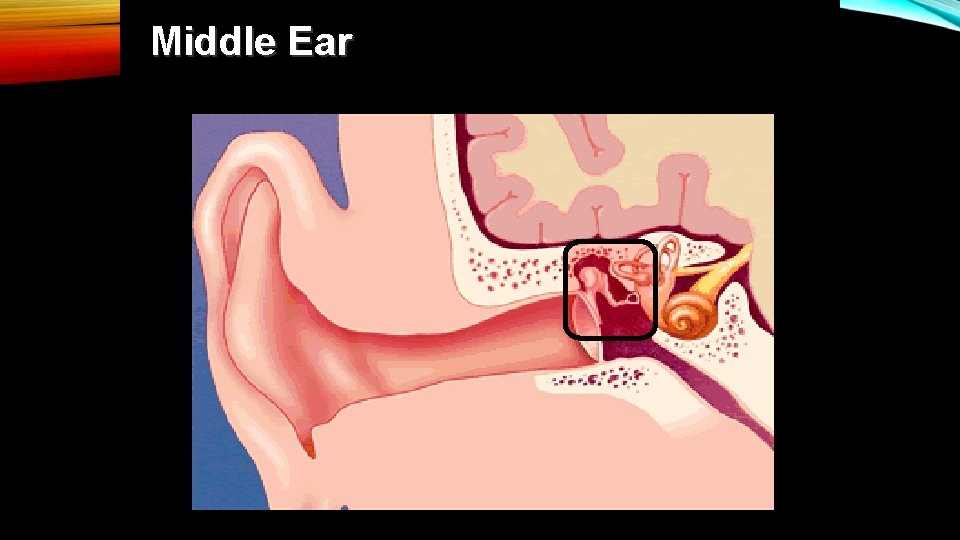
Middle Ear
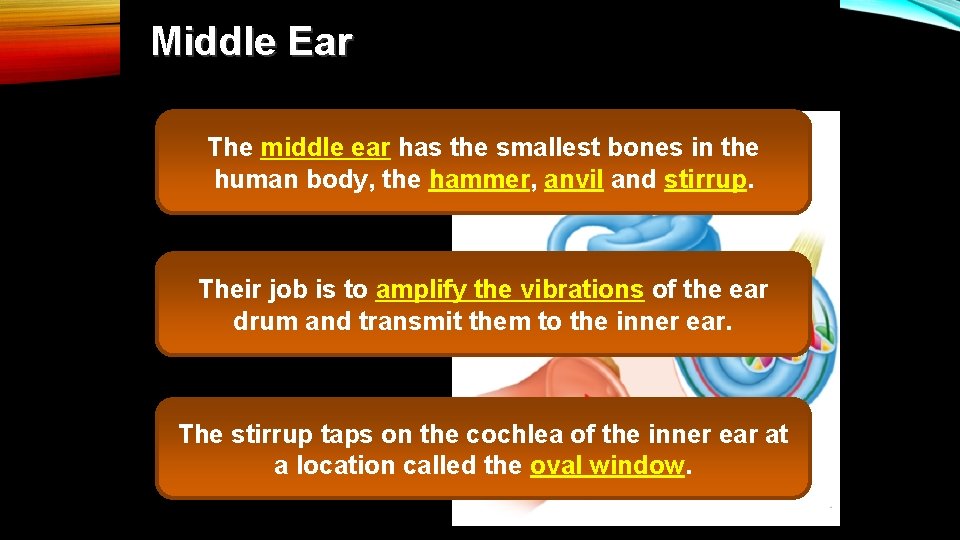
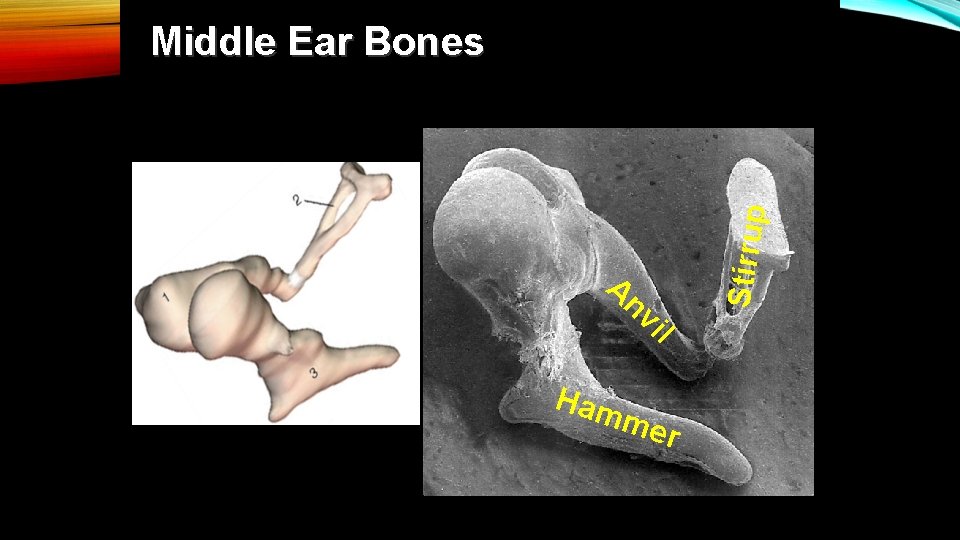
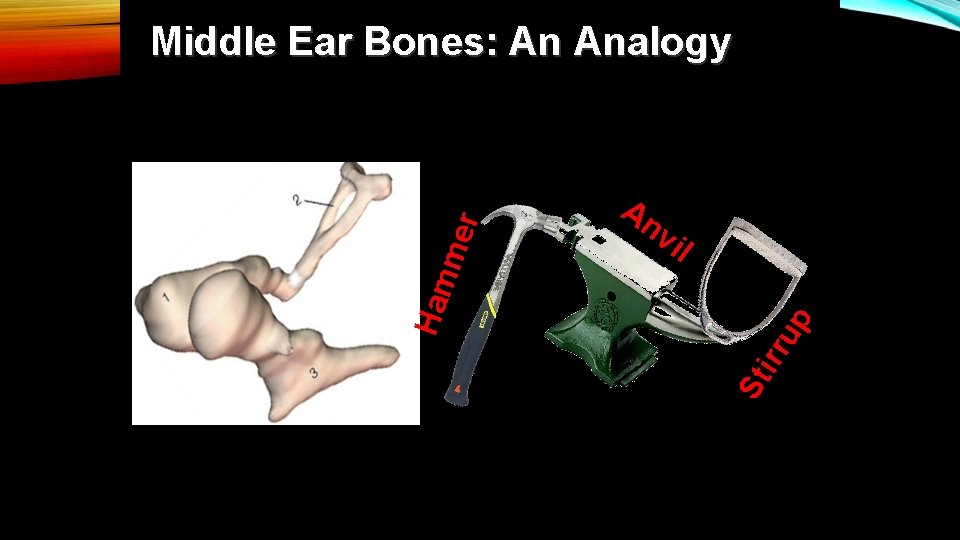
Middle Ear The middle ear has the smallest bones in the human body, the hammer, anvil and stirrup. Their job is to amplify the vibrations of the ear drum and transmit them to the inner ear. The stirrup taps on the cochlea of the inner ear at a location called the oval window.
A nv il Ham mer Stirrup Middle Ear Bones
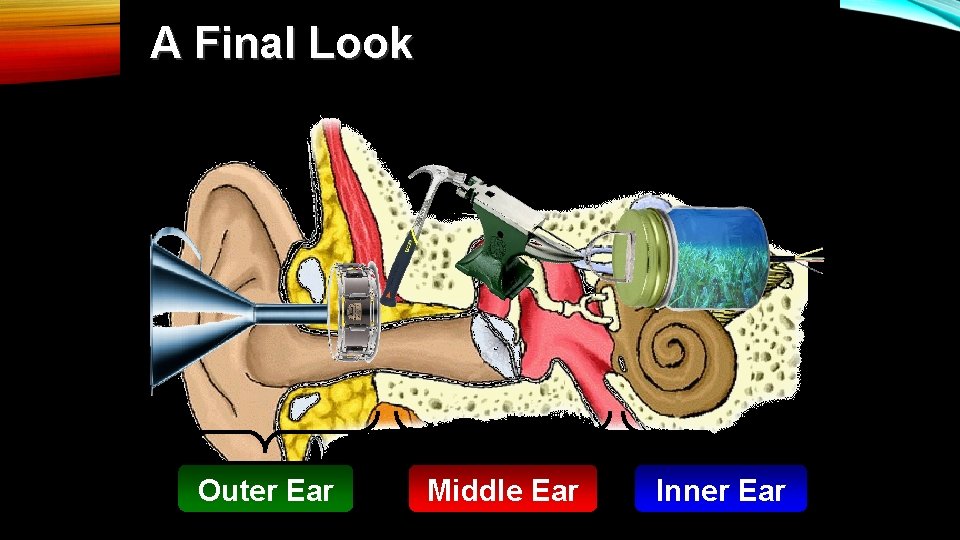
vi l irr up An St Ham me r Middle Ear Bones: An Analogy
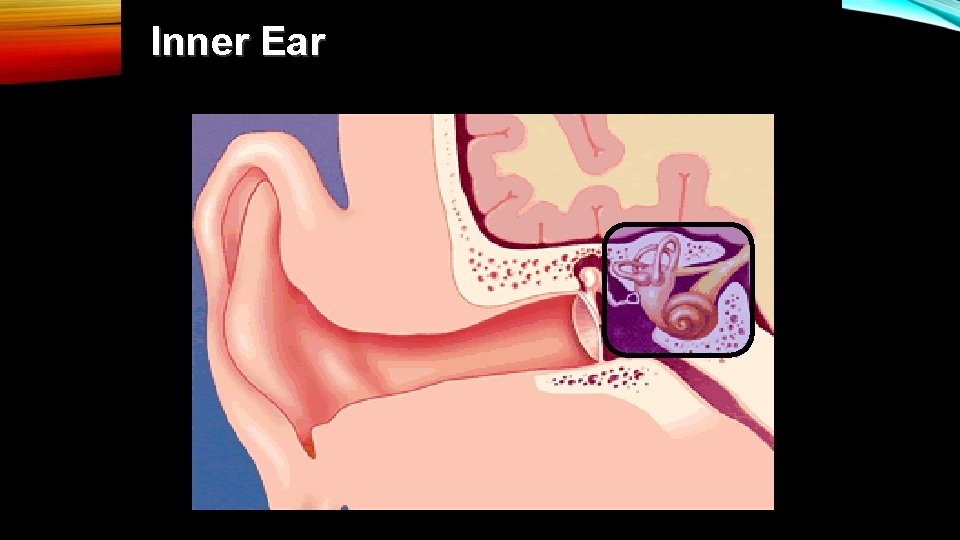
Inner Ear
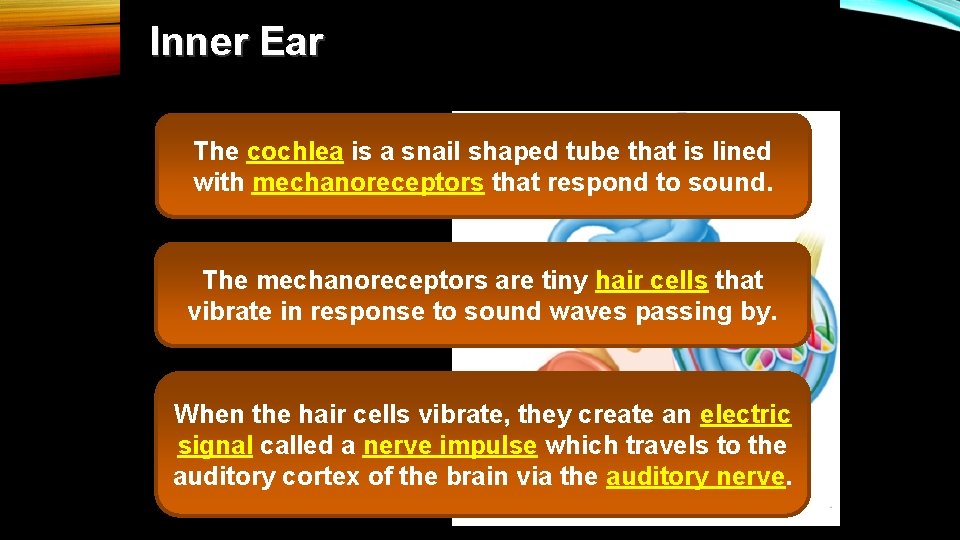
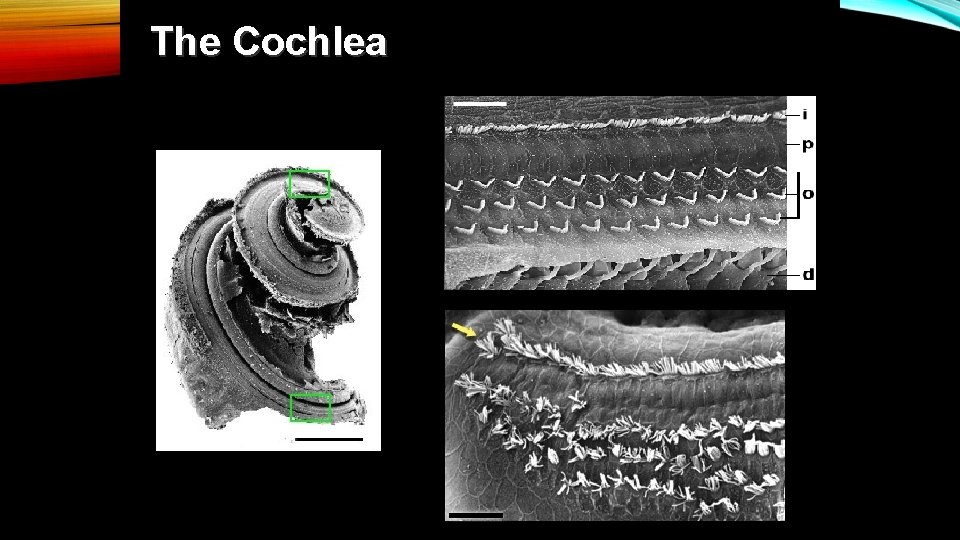
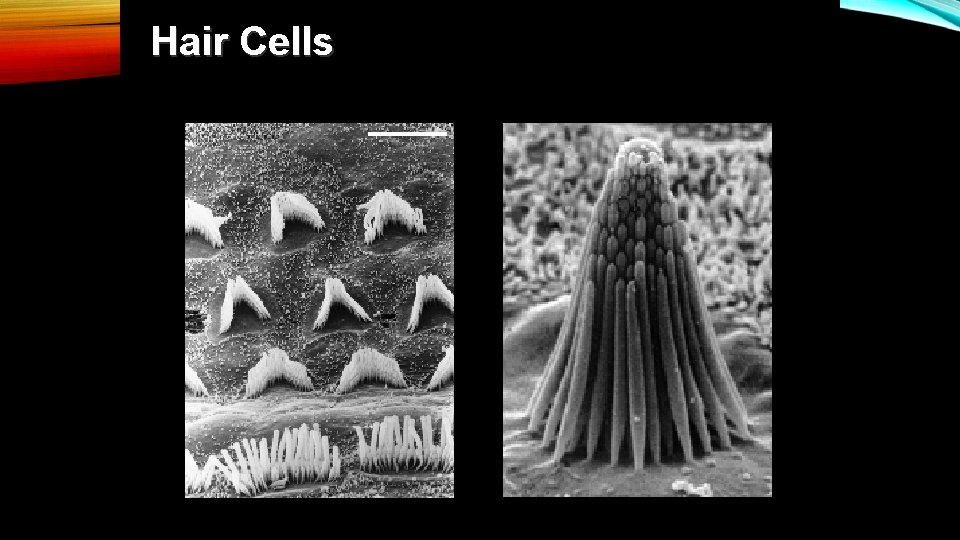
Inner Ear The cochlea is a snail shaped tube that is lined with mechanoreceptors that respond to sound. The mechanoreceptors are tiny hair cells that vibrate in response to sound waves passing by. When the hair cells vibrate, they create an electric signal called a nerve impulse which travels to the auditory cortex of the brain via the auditory nerve.
The Cochlea
Hair Cells
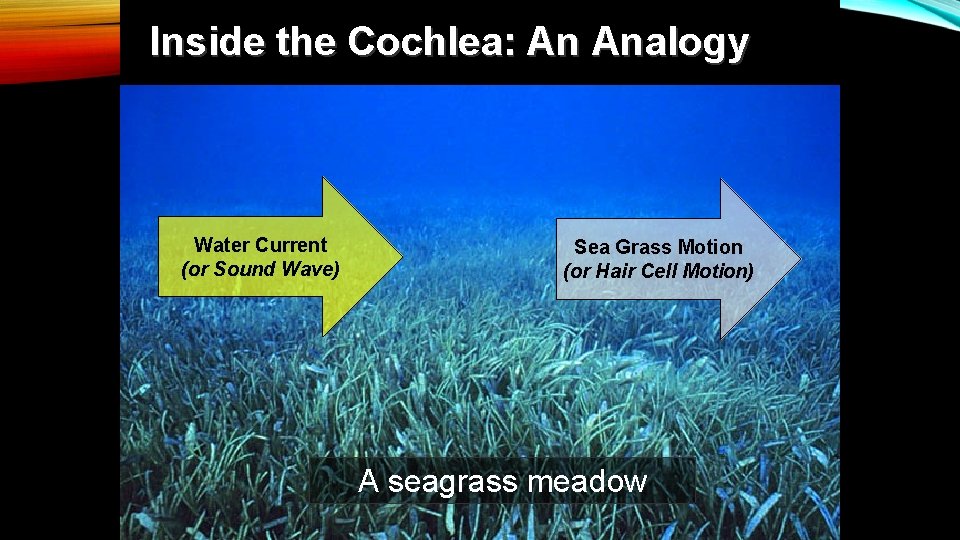
Inside the Cochlea: An Analogy Water Current (or Sound Wave) Sea Grass Motion (or Hair Cell Motion) A seagrass meadow
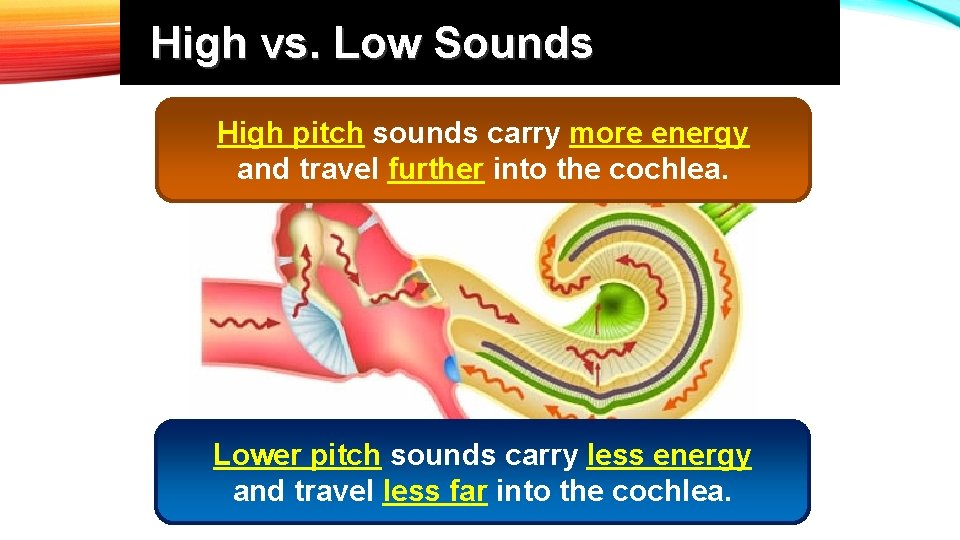
High vs. Low Sounds High pitch sounds carry more energy and travel further into the cochlea. Lower pitch sounds carry less energy and travel less far into the cochlea.
A Final Look Outer Ear Middle Ear Inner Ear
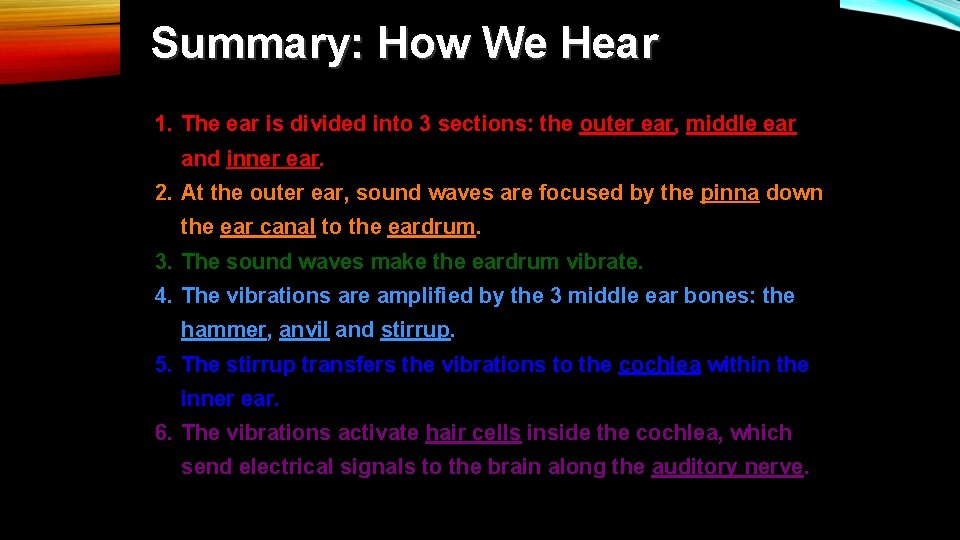
Summary: How We Hear 1. The ear is divided into 3 sections: the outer ear, middle ear and inner ear. 2. At the outer ear, sound waves are focused by the pinna down the ear canal to the eardrum. 3. The sound waves make the eardrum vibrate. 4. The vibrations are amplified by the 3 middle ear bones: the hammer, anvil and stirrup. 5. The stirrup transfers the vibrations to the cochlea within the inner ear. 6. The vibrations activate hair cells inside the cochlea, which send electrical signals to the brain along the auditory nerve. 7. The brain interprets these signals as sound.
Any Questions?
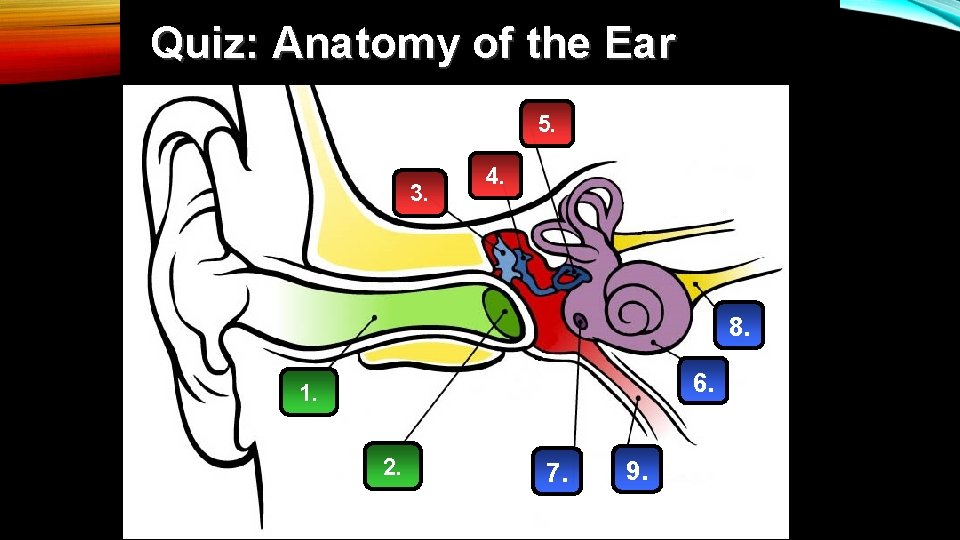
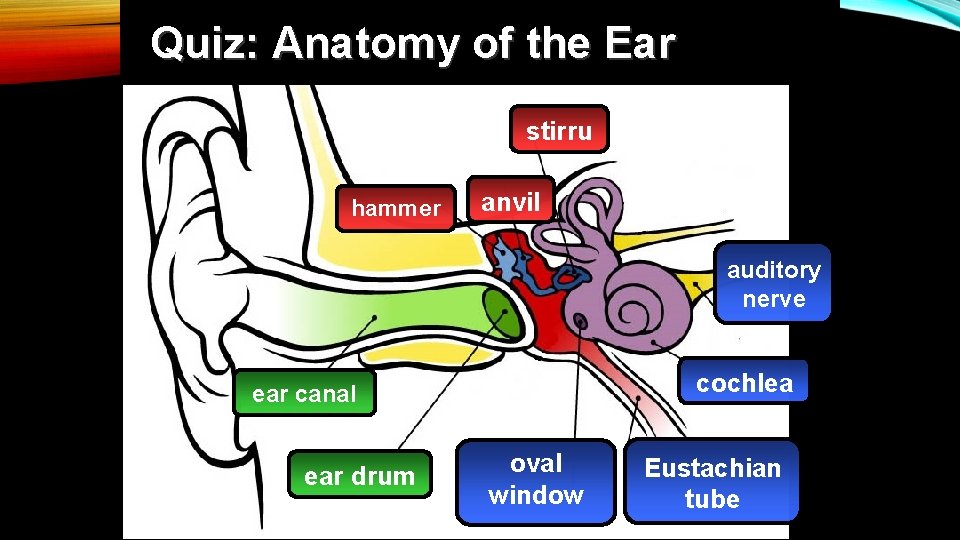
Quiz: Anatomy of the Ear 5. 3. 4. 8. 6. 1. 2. 7. 9.
Quiz: Anatomy of the Ear stirru p hammer anvil auditory nerve cochlea ear canal ear drum oval window Eustachian tube