
The Dynamic Earth Introduction to Earth Systems n
- Slides: 22
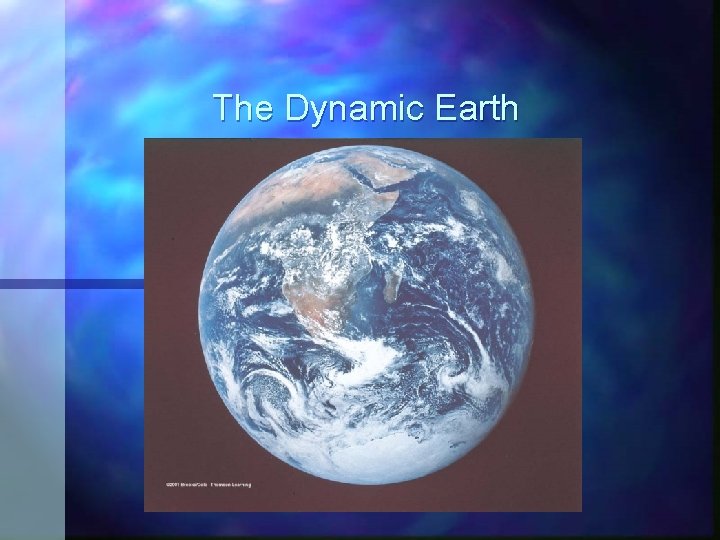
The Dynamic Earth
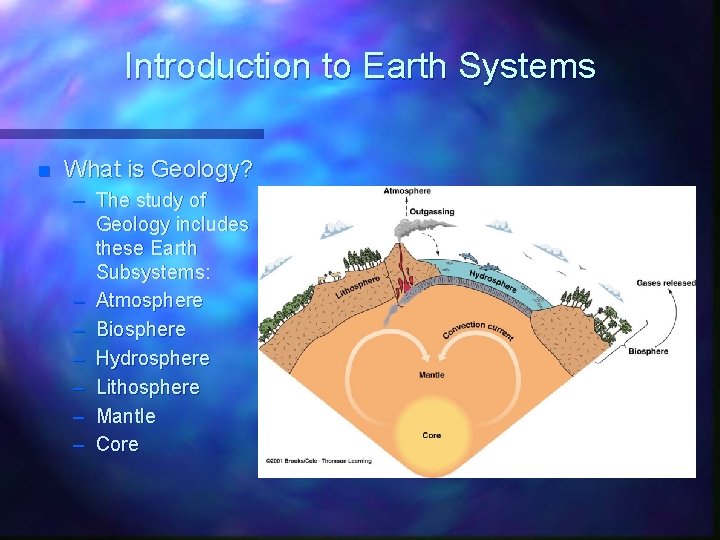
Introduction to Earth Systems n What is Geology? – The study of Geology includes these Earth Subsystems: – Atmosphere – Biosphere – Hydrosphere – Lithosphere – Mantle – Core
What is Geology? Specialties of Geology related to the subsystems of Earth: Geochronology Paleontology Geochemistry Mineralogy Planetary Geology Environmental Geology Paleoclimatology Hydrogeology Geophysics Structural geology Stratigraphy Seismology Oceanography
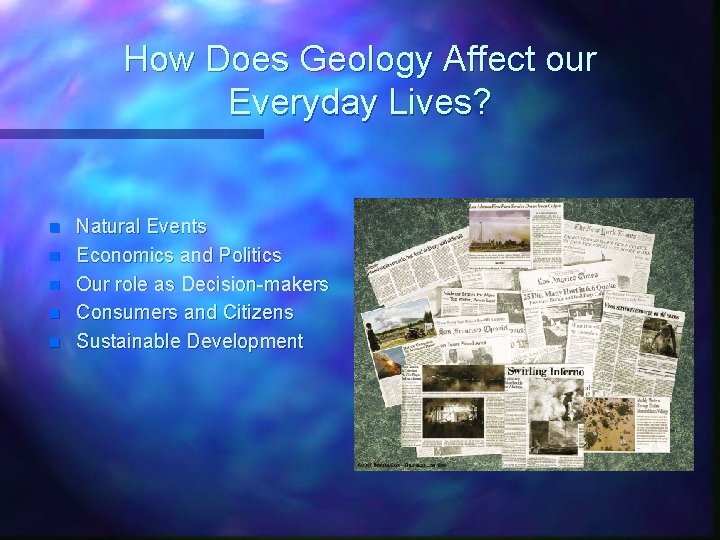
How Does Geology Affect our Everyday Lives? n n n Natural Events Economics and Politics Our role as Decision-makers Consumers and Citizens Sustainable Development
Geology and the Formulation of Theories n n The Rock Cycle Plate Tectonic Theory Geologic Time Organic Evolution These theories, supported by extensive research, are the cornerstones of the study of geology, and help explain many seemingly unrelated observations.
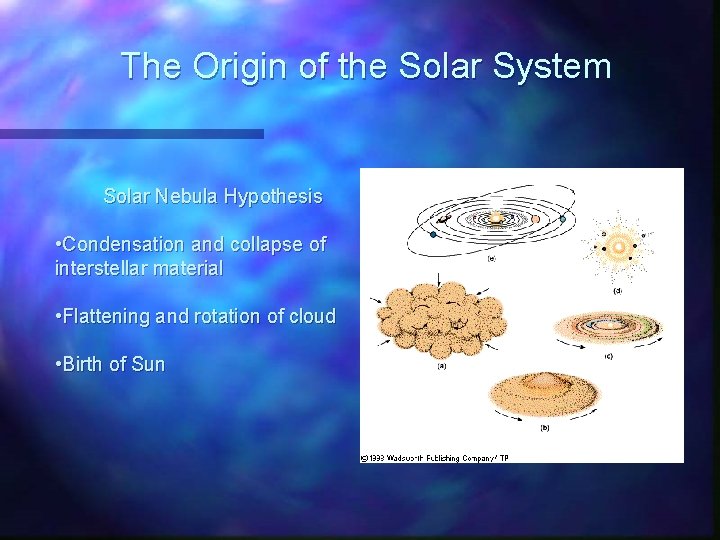
The Origin of the Solar System Solar Nebula Hypothesis • Condensation and collapse of interstellar material • Flattening and rotation of cloud • Birth of Sun
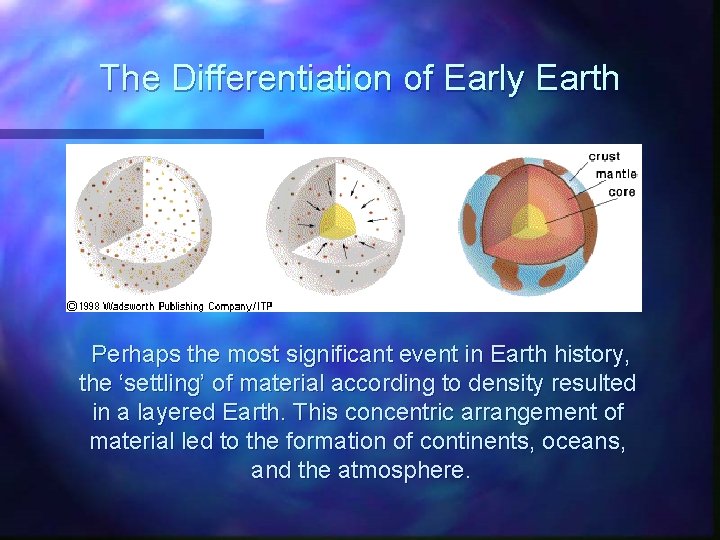
The Differentiation of Early Earth Perhaps the most significant event in Earth history, the ‘settling’ of material according to density resulted in a layered Earth. This concentric arrangement of material led to the formation of continents, oceans, and the atmosphere.
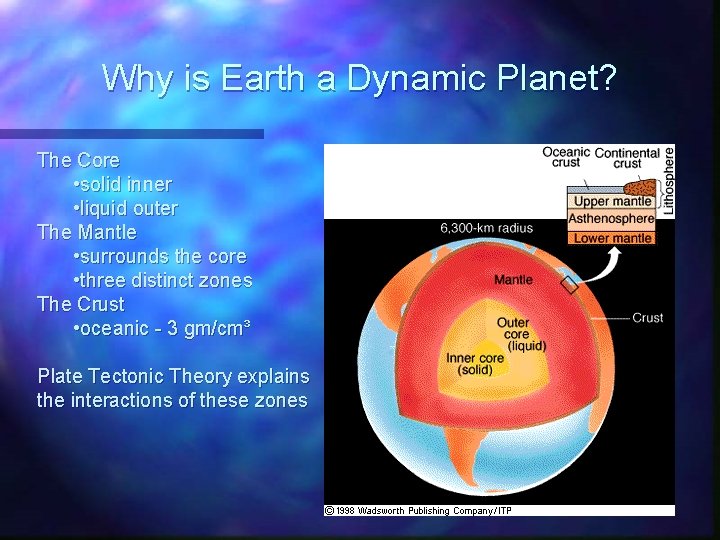
Why is Earth a Dynamic Planet? The Core • solid inner • liquid outer The Mantle • surrounds the core • three distinct zones The Crust • oceanic - 3 gm/cm³ Plate Tectonic Theory explains the interactions of these zones
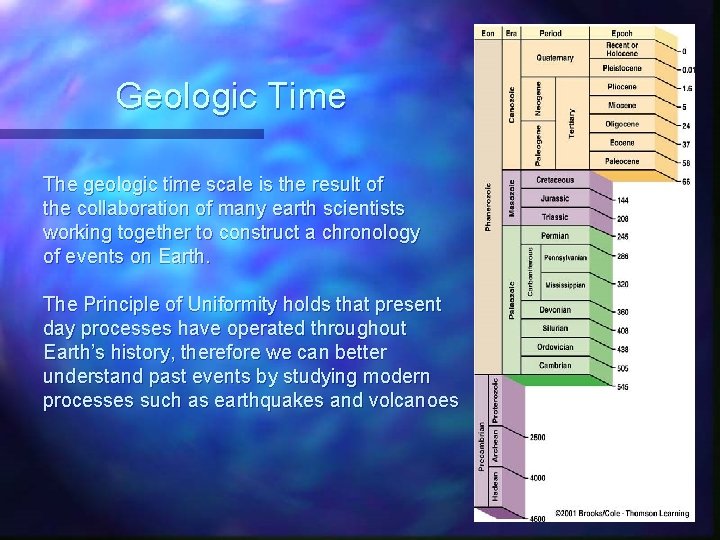
Geologic Time The geologic time scale is the result of the collaboration of many earth scientists working together to construct a chronology of events on Earth. The Principle of Uniformity holds that present day processes have operated throughout Earth’s history, therefore we can better understand past events by studying modern processes such as earthquakes and volcanoes
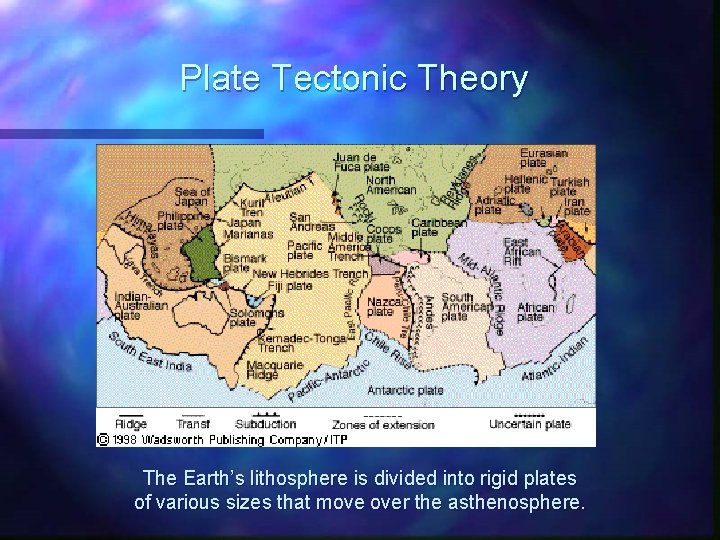
Plate Tectonic Theory The Earth’s lithosphere is divided into rigid plates of various sizes that move over the asthenosphere.
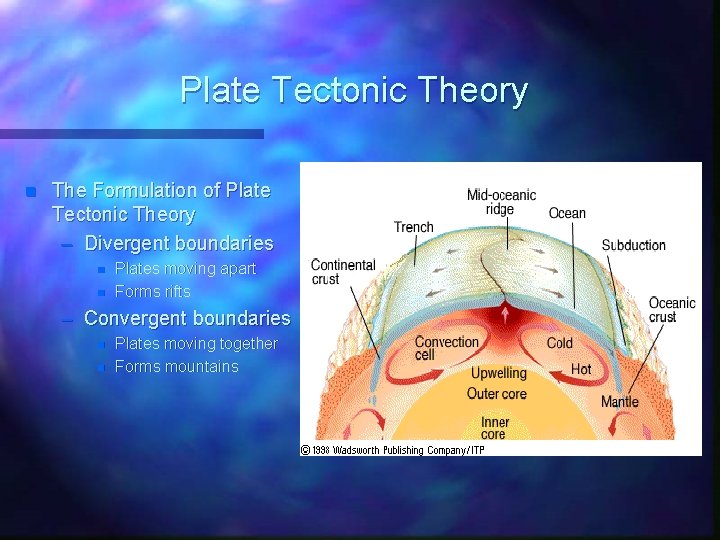
Plate Tectonic Theory n The Formulation of Plate Tectonic Theory – Divergent boundaries n n Plates moving apart Forms rifts – Convergent boundaries n n Plates moving together Forms mountains
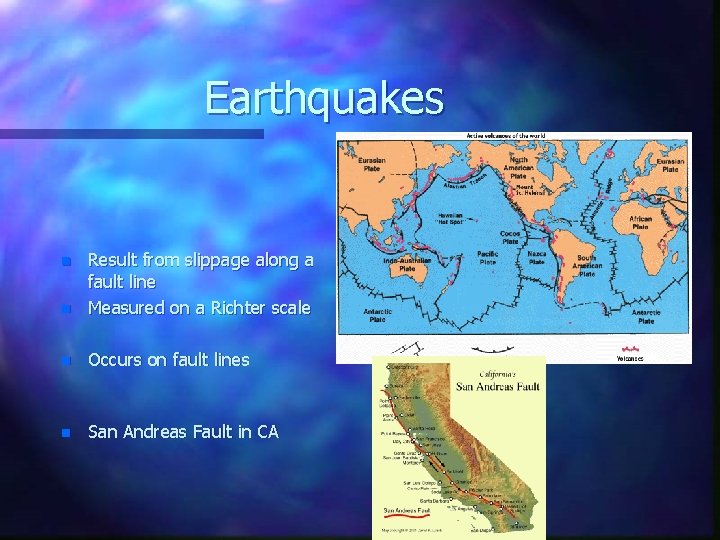
Earthquakes n Result from slippage along a fault line Measured on a Richter scale n Occurs on fault lines n San Andreas Fault in CA n
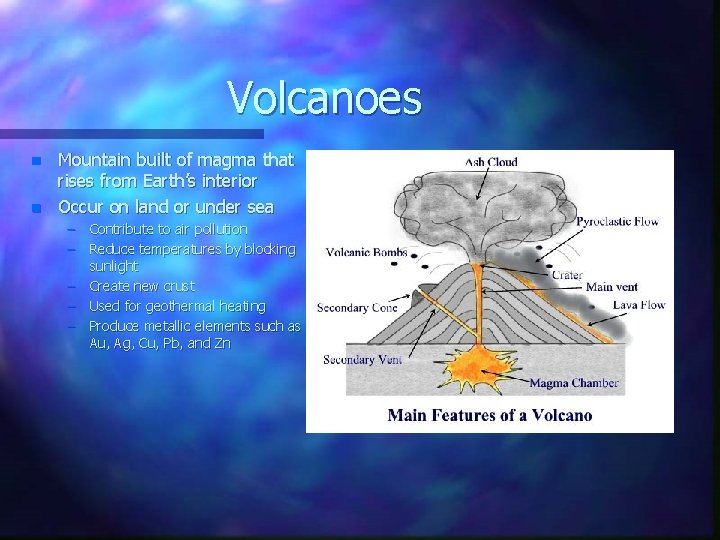
Volcanoes n n Mountain built of magma that rises from Earth’s interior Occur on land or under sea – Contribute to air pollution – Reduce temperatures by blocking sunlight – Create new crust – Used for geothermal heating – Produce metallic elements such as Au, Ag, Cu, Pb, and Zn
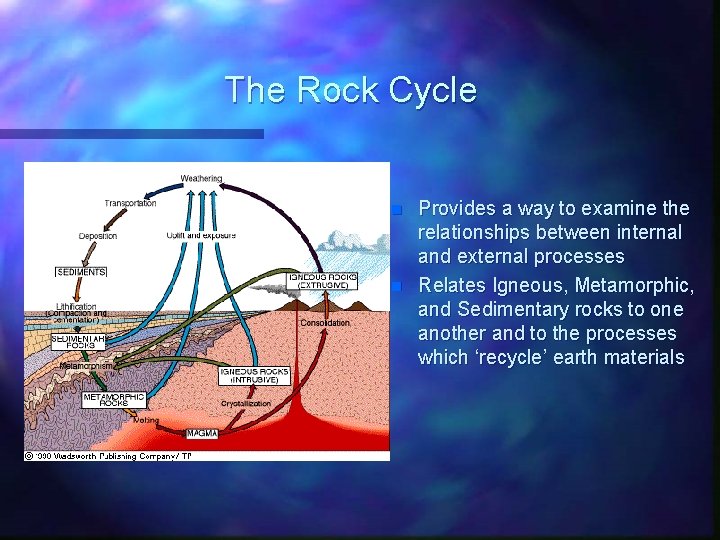
The Rock Cycle n n Provides a way to examine the relationships between internal and external processes Relates Igneous, Metamorphic, and Sedimentary rocks to one another and to the processes which ‘recycle’ earth materials
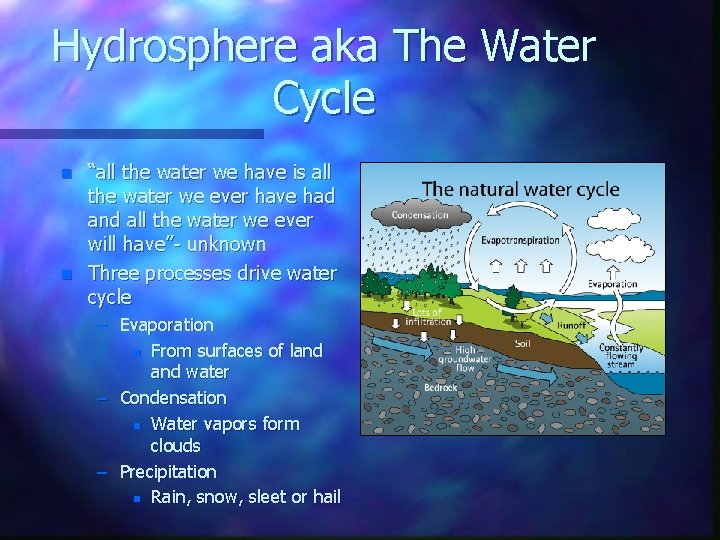
Hydrosphere aka The Water Cycle n n “all the water we have is all the water we ever have had and all the water we ever will have”- unknown Three processes drive water cycle – Evaporation n From surfaces of land water – Condensation n Water vapors form clouds – Precipitation n Rain, snow, sleet or hail
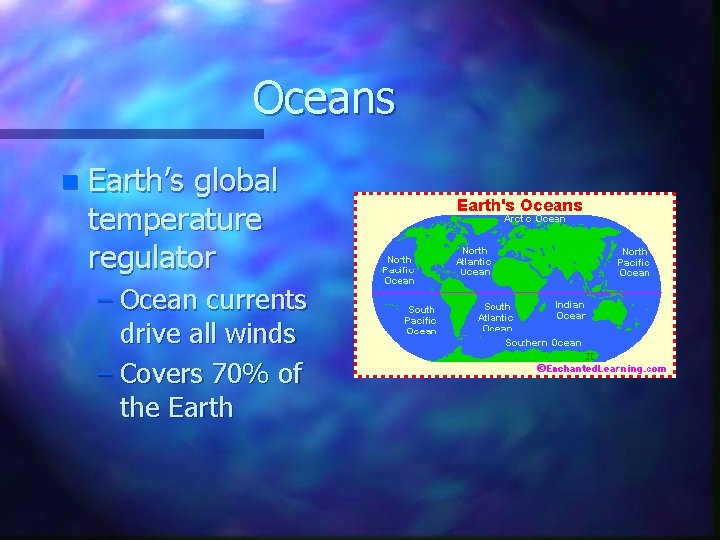
Oceans n Earth’s global temperature regulator – Ocean currents drive all winds – Covers 70% of the Earth
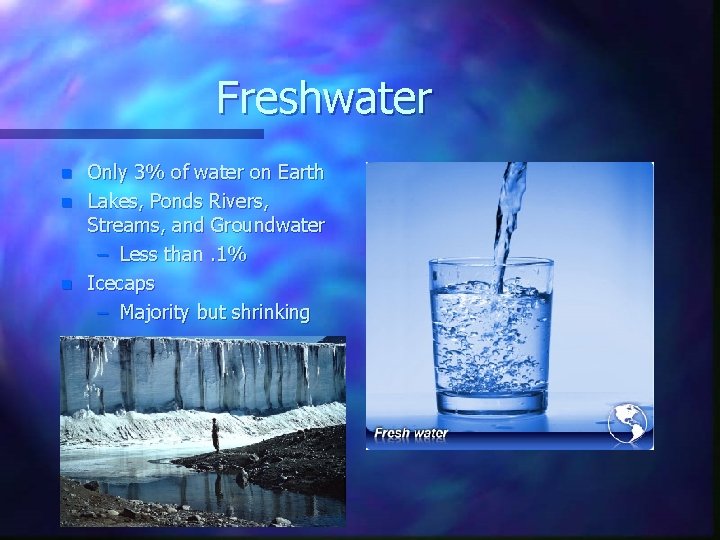
Freshwater n n n Only 3% of water on Earth Lakes, Ponds Rivers, Streams, and Groundwater – Less than. 1% Icecaps – Majority but shrinking
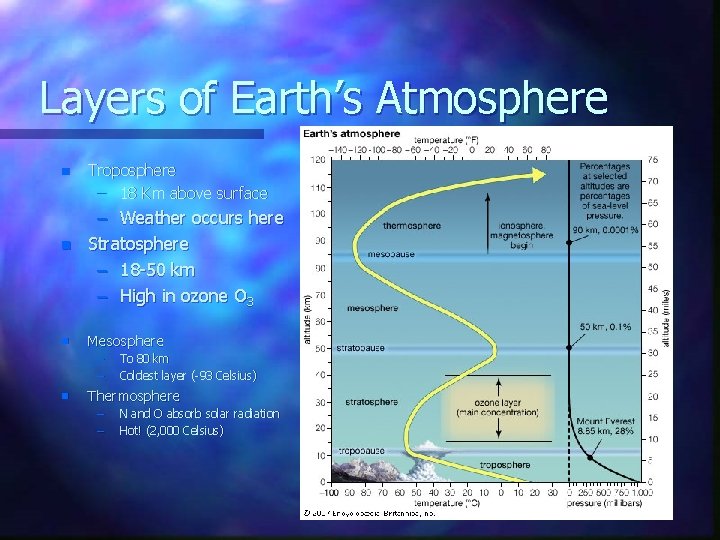
Layers of Earth’s Atmosphere n n n Troposphere – 18 Km above surface – Weather occurs here Stratosphere – 18 -50 km – High in ozone O 3 Mesosphere – – n To 80 km Coldest layer (-93 Celsius) Thermosphere – – N and O absorb solar radiation Hot! (2, 000 Celsius)
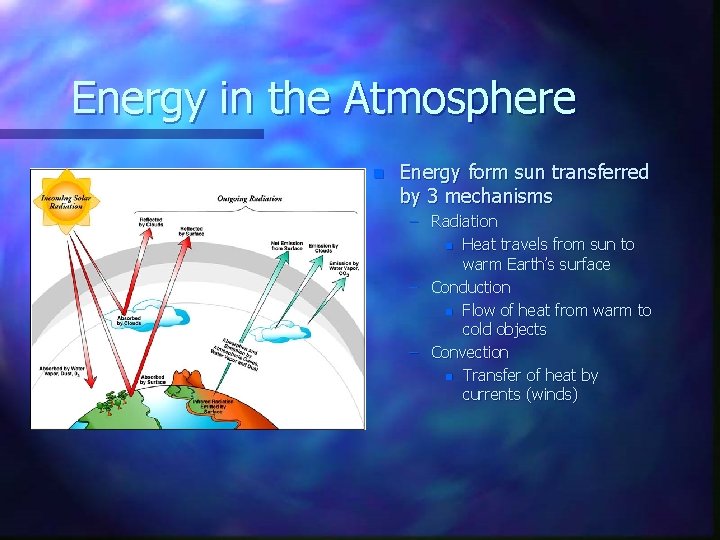
Energy in the Atmosphere n Energy form sun transferred by 3 mechanisms – Radiation n Heat travels from sun to warm Earth’s surface – Conduction n Flow of heat from warm to cold objects – Convection n Transfer of heat by currents (winds)
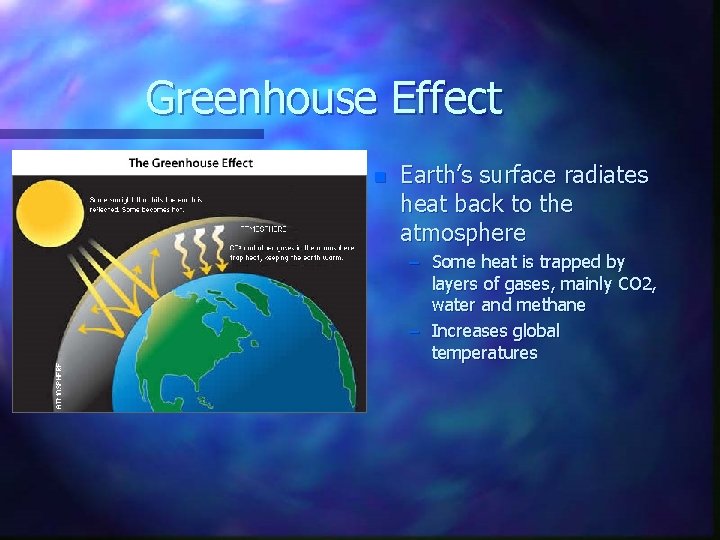
Greenhouse Effect n Earth’s surface radiates heat back to the atmosphere – Some heat is trapped by layers of gases, mainly CO 2, water and methane – Increases global temperatures
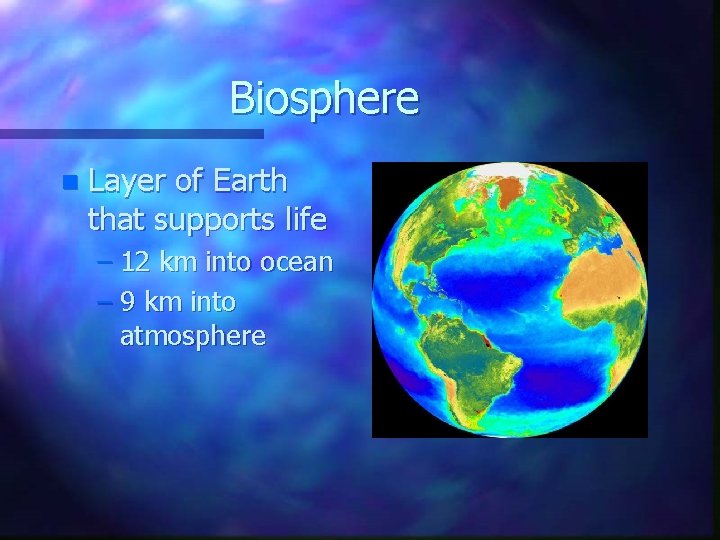
Biosphere n Layer of Earth that supports life – 12 km into ocean – 9 km into atmosphere
We do not inherit the earth from our ancestors, we borrow it from our children. ~Native American Proverb