
THE DUST BOWL 1931 1939 What was the

THE DUST BOWL 1931 – 1939
What was the Dust Bowl? Where was the Dust Bowl? Who did the Dust Bowl affect? Was it serious? How did the Dust Bowl happen?
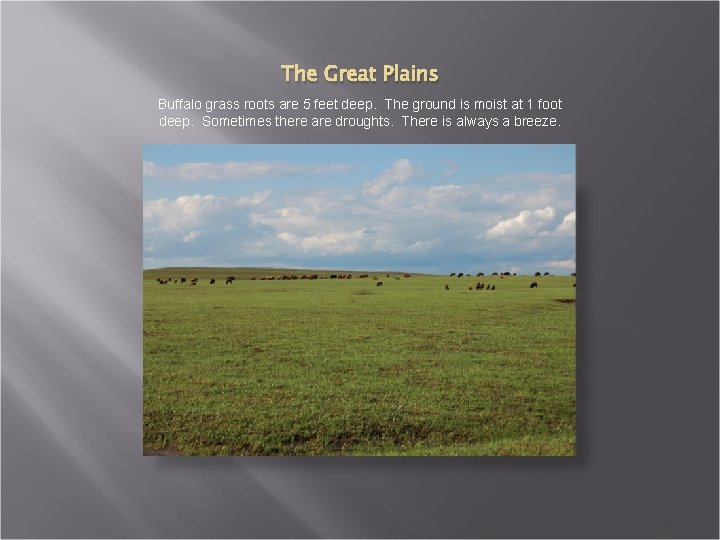
The Great Plains Buffalo grass roots are 5 feet deep. The ground is moist at 1 foot deep. Sometimes there are droughts. There is always a breeze.
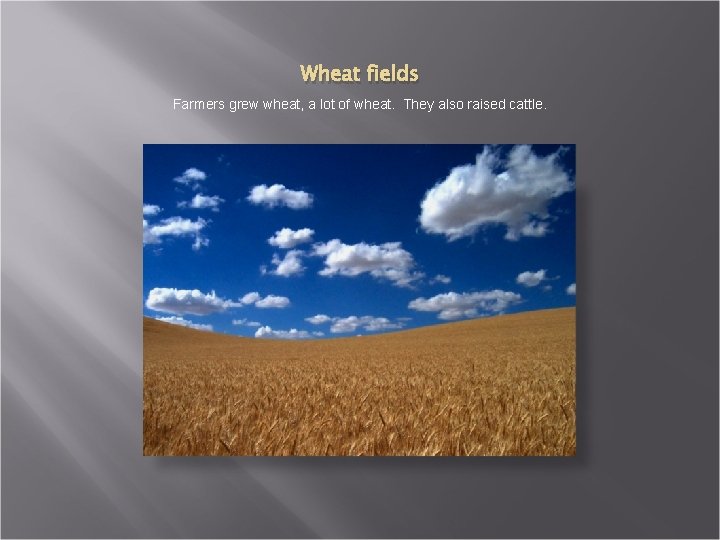
Wheat fields Farmers grew wheat, a lot of wheat. They also raised cattle.
FARMERS PLOW MORE LAND World War I came. Europe needed wheat. American farmers sold it for $2. 00 a bushel. After the war, the price dropped to $1. 00 a bushel. Farmers still needed to pay their bills, so they plowed more land.
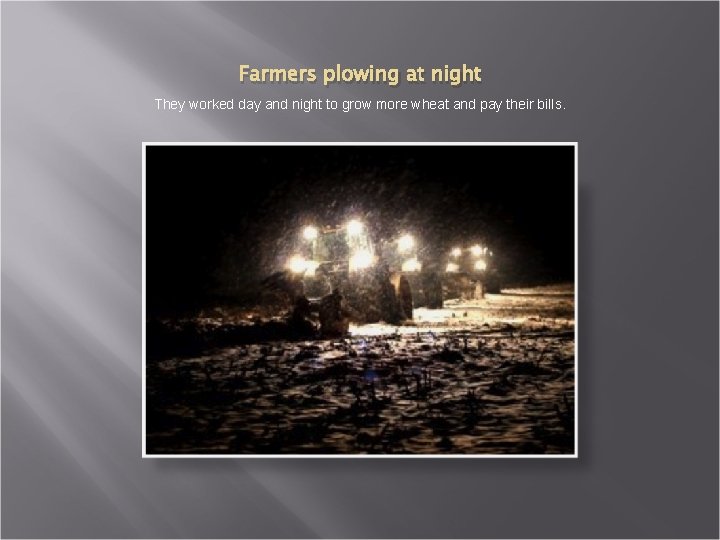
Farmers plowing at night They worked day and night to grow more wheat and pay their bills.
1929 The Great Depression The stock market crashed. Banks failed. Companies failed. People lost their jobs. People lost their homes. Prices dropped. Farmers still had the same debt. No longer $2. 00 a bushel for wheat. No longer $1. 00 a bushel for wheat. At one point, wheat dropped to 17 cents a bushel.
Supply and Demand If an item is rare, and people want or need it, then it costs more money. During World War I, wheat sold in Europe and USA for $2. 00 a bushel. There was demand. If there is an abundance of an item, then it costs less. After World War I, farmers sold wheat only in USA. The cost dropped because there was less demand. Farmers produced more wheat making the cost lower still.
Wait, let’s think! What happens if there is a drought and continuous wind? BUFFALO GRASS ROOTS GROW 5 FEET DEEP Buffalo grass helps keep moisture in the ground Roots are already very deep Protects the soil from erosion WHEAT ROOTS GROW 8 INCHES IN 2 MONTHS Planted in freshly plowed soil Takes months for roots to grow deep Plowing loosens the soil
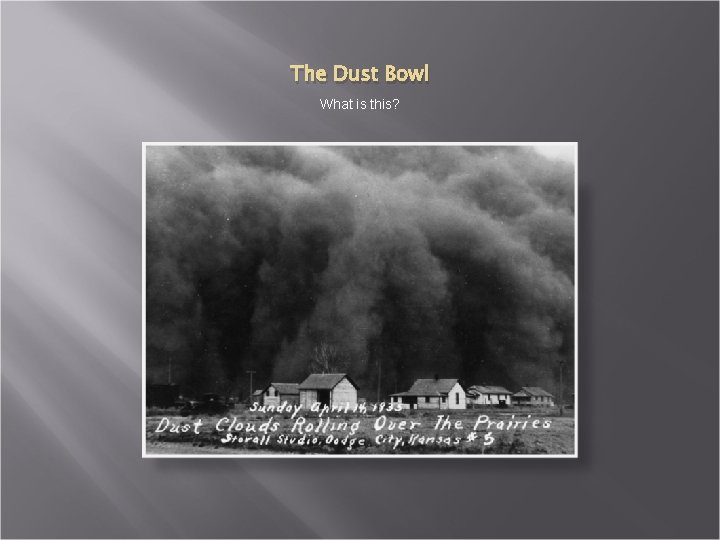
The Dust Bowl What is this?
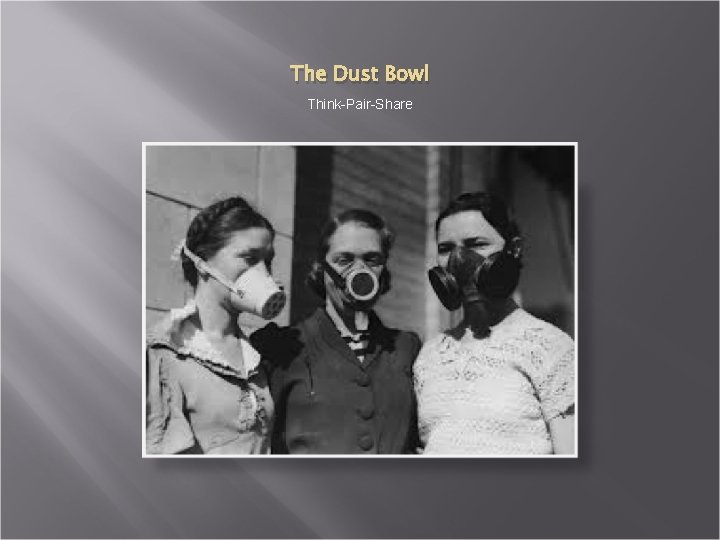
The Dust Bowl Think-Pair-Share
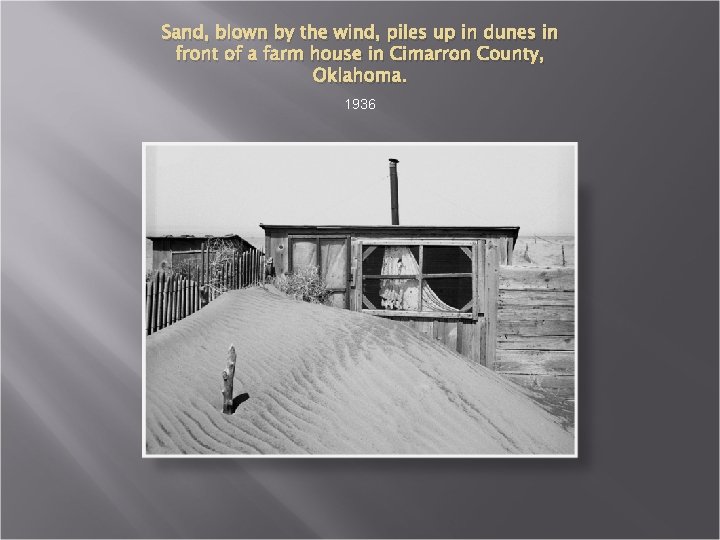
Sand, blown by the wind, piles up in dunes in front of a farm house in Cimarron County, Oklahoma. 1936
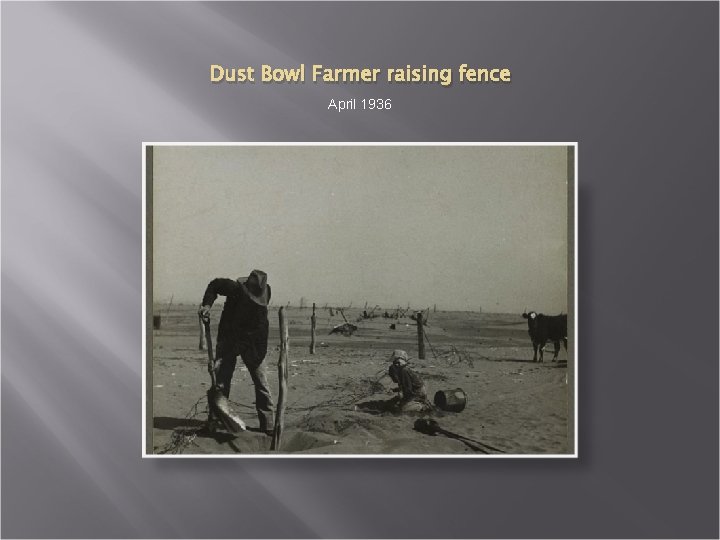
Dust Bowl Farmer raising fence April 1936
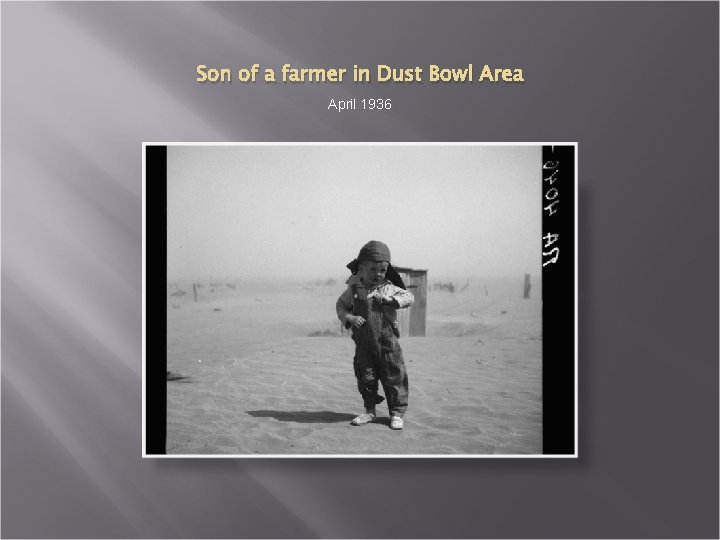
Son of a farmer in Dust Bowl Area April 1936
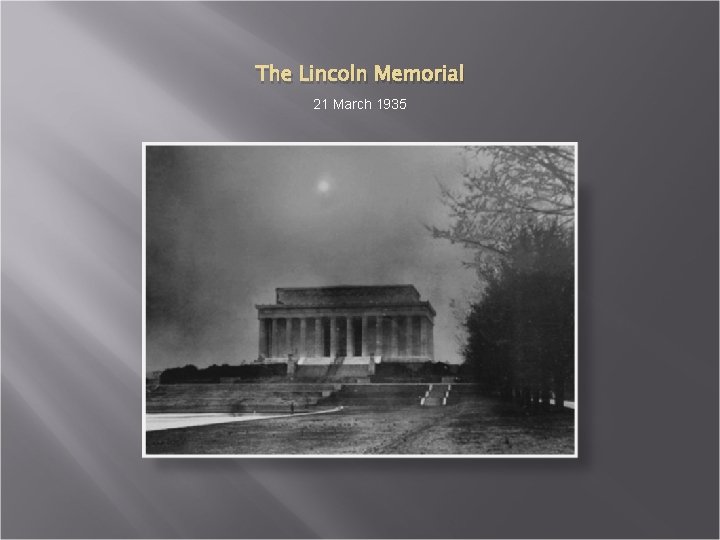
The Lincoln Memorial 21 March 1935
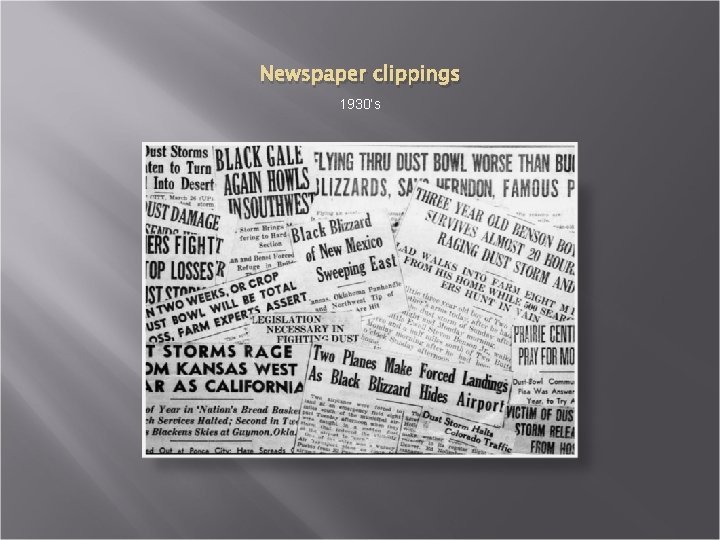
Newspaper clippings 1930’s
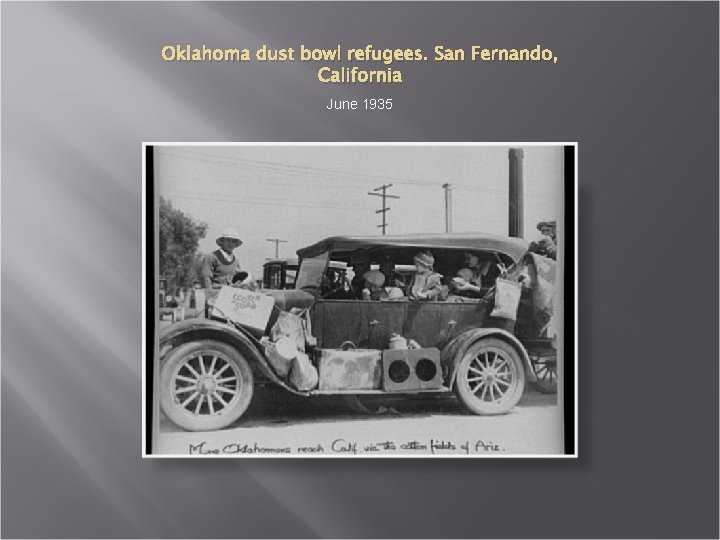
Oklahoma dust bowl refugees. San Fernando, California June 1935
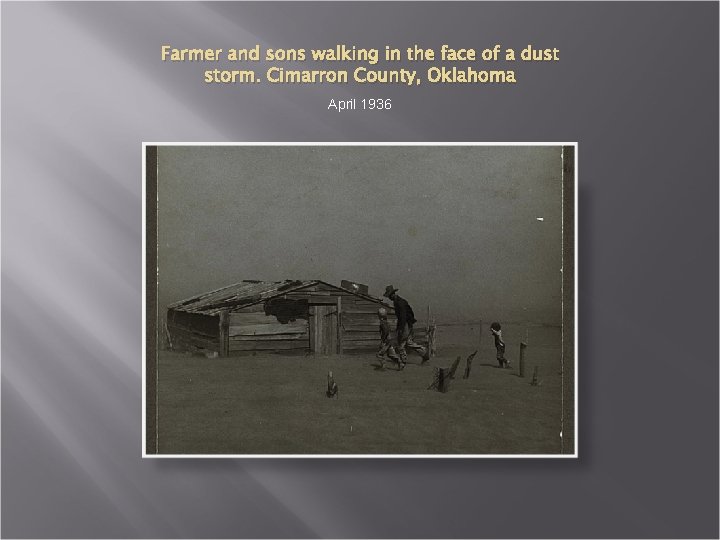
Farmer and sons walking in the face of a dust storm. Cimarron County, Oklahoma April 1936
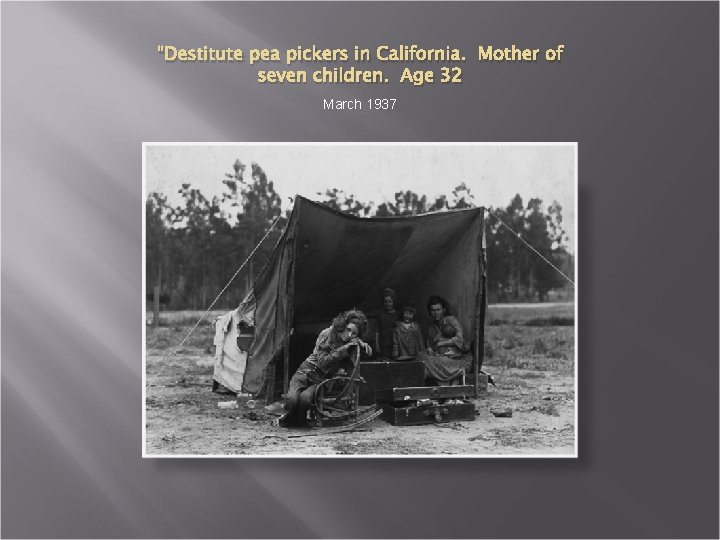
“Destitute pea pickers in California. Mother of seven children. Age 32 March 1937

Fireside Chat with FDR Fireside chat

Ken Burns’ PBS special http: //video. pbs. org/video/2272961927

Woodie Guthrie Dust Bowl Refuge http: //www. youtube. com/watch? v=N_eh. Ykr 0 Nh. U
Sources � � � Source #1: Winters, Steven. “Patch Burning – Biodiversity and Fire Grazing. ” Photograph. Oklahoma State University 2006. https: //www. google. com/search? hl=en&sugexp=les%3 B&gs_rn=3&gs_ri=psyab&cp=10&gs_id=12&xhr=t&q=great+plains&bav=on. 2, or. r_gc. r_pw. r_qf. &bvm=bv. 42553238, d. dm. Q&biw=1680&bih=93 1&um=1&ie=UTF 8&tbm=isch&source=og&sa=N&tab=wi&ei=Lr. Yd. Uf. PXFOH 20 g. GN 6 YCABA#imgrc=5 tn. Eh. Dusf 9 dn. JM%3 A%3 BD_r. Rxe. EL 6 FTWYM%3 Bhttp%253 A%252 Ffireecology. okstate. edu%252 Fimages%252 FTGPP%252520 bison%252520 on%25 2520 patch 4. JPG%3 Bhttp%253 A%252 Ffireecology. okstate. edu%252 Fpatch_burning__biodiversityfiregrazing. html %3 B 2256%3 B 1496 (13 Feb 2013). Source #2: Front Porch, Fat Johnny. “Wheat Field. ” Photograph. Topeka, Kansas; July 2009. https: //www. google. com/search? hl=en&site=imghp&tbm=isch&source=hp&biw=1680&bih=931&q=wheat+field+midwest& oq=wheat+field+midwest&gs_l=img. 3. . . 2386. 10449. 0. 10552. 19. 9. 0. 10. 0. 77. 469. 9. 9. 0. 0. . . 1 ac. 1. 3. img. s. Rwpe. Upp-U#imgrc=0 r 3 Vy. GD 16 Jq. OGM%3 A%3 Be 915 wk 02 TAs. CIM%3 Bhttp%253 A%252 F 2. bp. blogspot. com%252 F_8 XIbd _8 ua. PM%252 FSm 5 XGTq. AMm. I%252 FAAAACns%252 F 5 Iv. NAoly 1 Mo%252 Fs 400%252 Fwheat_field. jpg%3 Bhttp% 253 A%252 Fchez-frontporch. blogspot. com%252 F 2009_07_01_archive. html%3 B 400%3 B 267 (13 Feb 2013). Source #3: Attribution unknown. “Three Tractors Plowing at Night. ” Shutterstock. https: //www. google. com/search? hl=en&site=imghp&tbm=isch&source=hp&biw=1680&bih=931&q=1920+farmers+plowin g+at+night&oq=1920+farmers+plowing+at+night&gs_l=img. 3. . . 3325. 14555. 0. 14955. 31. 10. 1. 20. 21. 0. 120. 634. 8 j 2. 10. 0. . . 1 ac. 1. 3. img. 0 UEu. GQamt 0 c#imgrc=EOCNOFj 93 ZMZt. M%3 A%3 Bh. SBC 41 Su. XK 7 Ow. M%3 Bhttp%253 A%252 Fa k 7. picdn. net%252 Fshutterstock%252 Fvideos%252 F 981925%252 Fpreview%252 Fstock-footage-three-tractors-plowing-at -night. jpg%3 Bhttp%253 A%252 Ffootage. shutterstock. com%252 Fclip-1598092 -stock-footage-tractor-plowing-atnight. html%3 B 400%3 B 224 (13 Feb 2013). Source #4: Attribution unknown. “Sunday, April 14, 1935. Dust Clouds rolling over the Prairies. ” Photograph. Stoveall Studio. Dodge City, Kansas, 1935. Special Collections, Wichita State University Library. http: //specialcollections. wichita. edu/exhibits/soulofapeople/images/hard%20 times/1%20 dust. html (16 Feb 2013).
Sources continued � � � � � Source #5: Garia, Bert. “Three Girls Model Mask. ” Photograph. Keystone/Hulton Archive/ Getty Images. Ca 1935. http: //www. history. co. uk/explore-history/history-of-america/entry/gallery. html (13 Feb 2013). Source # 6: Rothstein, Arthur. “Sand, blown by the wind, piles up in dunes in front of farmhouse in Cimarron, County, Oklahoma. ” Photograph. Cimarron County, Oklahoma. April 1936. Library of Congress: Dust Bowl Collection. http: //www. circleofblue. org/waternews/2012/commentary/editorial-in-the-circle-fresh-focus/ken-burnss-the-dust-bowl-revives-an-american-tragedy/ (13 Feb 2013). Source #7: Rothstein, Arthur. “Dust bowl farmer raising fence to keep it from being buried under drifting sand. Cimarron County, Oklahoma. ” Photograph. Cimarron County, Oklahoma. April 1936. Library of Congress: Dust Bowl Collection. http: //www. loc. gov/pictures/item/fsa 1998018982/PP/ (16 Feb 2013). Source #8: Rothstein, Arthur. “Son of farmer in dust bowl area. ” Photograph. Cimarron County, Oklahoma. April 1936. Library of Congress: Dust Bowl Collection. http: //www. loc. gov/pictures/resource/cph. 3 c 30123/ (15 Feb 2013). Source #9: Attribution unknown. “The Lincoln Memorial in the Middle of a Dust Storm. ” 21 March 1935 http: //www. weta. org/tv/picks/dustbowl/perfectstorm (16 Feb 2013). Source #10: Attribution unknown. “Collage of 1930’s headlines about the Dust Bowl. (Library of Congress)” Photograph. American Business 20 April 2011. http: //american-business. org/2454 -dust-bowl. html (16 Feb 2013). Source #11: Lange, Dorothea. “Oklahoma dust bowl refuges. San Fernando, California. ” Photograph. San Fernando, California. June 1936. From Library of Congress: Dust Bowl Collection. http: //www. loc. gov/pictures/item/fsa 1998018535/PP/ (16 Feb 2013). Source 12: Rothstein, Arthur. “Farmer and sons walking in the face of a dust storm. Cimarron County, Oklahoma. ” Photograph. Cimarron County, Oklahoma. April 1936. From Library of Congress: Dust Bowl Collection. http: //www. loc. gov/pictures/item/fsa 1998018983/PP/ (16 Feb 2013). Source 13: Lange, Dorothea. “Destitute pea pickers in California. Mother of seven children. Age 32. ” Photograph. Calipatria, California. March 1937. From Library of Congress: Dust Bowl Collection. (Not digitized). https: //www. google. com/search? hl=en&site=imghp&tbm=isch&source=hp&biw=1680&bih=931&q=dust+bowl+photos&oq=dust+bowl&gs_l=img. 1. 6. 0 l 10. 994. 2328. 0. 7501. 9. 7. 0. 2. 2. 0. 83. 411. 7. 7. 0. 0. . . 1 ac. 1. 3. img. u. YKZQ 3 Rq. T 88#imgrc=0 hbs. OLg. IEm 6 VSM%3 A%3 B_5 v 3 JZ 7 Go. GNw. M%3 Bhttp%253 A%252 Fwww. laobserved. com%252 Fassets_c%252 F 2012%252 F 11%252 Fdust-bowl-nipomo-lange-thumb-600 x 47717051. jpg%3 Bhttp%253 A%252 Fwww. laobserved. com%252 Farchive%252 F 2012%252 F 11%252 Fthe_dust_bowl_as_biggest. php%3 B 600%3 B 477 (13 Feb 2013)
- Slides: 24