
The Double Helix The Structure of DNA n
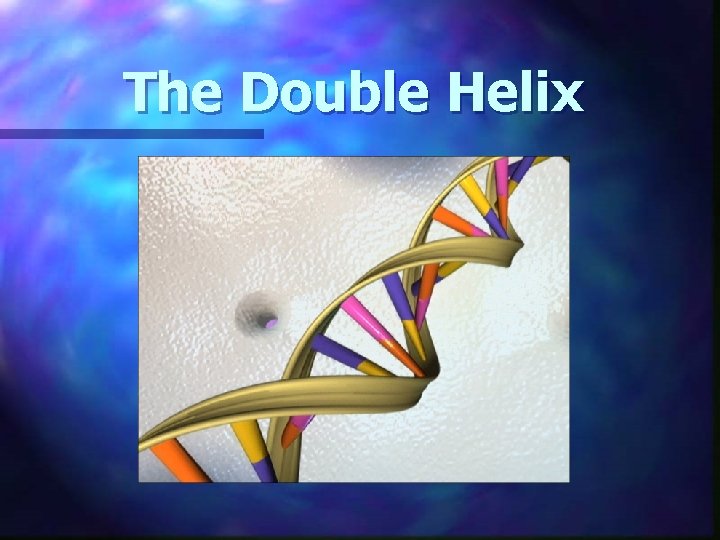
The Double Helix

The Structure of DNA n DNA is a nucleic acid n (Deoxyribonucleic acid) n Nucleic acids are polymers (long chains) of nucleotides.

Nucleotides n 3 Parts: Phosphate group 5 carbon sugar Nitrogenous base

DNA Nucleotides In DNA, there are four types of nucleotides divided into two categories… Purines: (Adenine & Guanine) two rings of carbon and nitrogen. Pyrimidines: (Cytosine & Thymine) one ring of carbon and nitrogen.

Purines Adenine Guanine

Pyrimidines Cytosine Thymine

Chargaff’s Rule n Amount of nucleotides in a DNA sample follows a pattern – Adenine = Thymine – Cytosine = Guanine


Chemical Bonds in the Double Helix Backbone of helix Covalent bonds alternating between phosphate groups and sugars Nitrogenous Bases Weak Hydrogen bonds between bases


helicase An enzyme called helicase causes the molecule to untwist.


* *The enzymes here are called DNA polymerases.


Accuracy and Repair… • 1 error in every 10, 000 paired nucleotides -change = mutation • Proofreading and repair enzymes make error rate 1 per billion nucleotides • DNA can also be damaged by carcinogens and U. V. light

DNA Replication

DNA Replication n Once the DNA has replicated itself the cell is ready for:

What is the ultimate purpose of DNA? To make PROTEINS! n These proteins will tell the body how to act and look. n

2 steps to making proteins! n Transcription (making RNA from DNA code) n Translation (sending RNA to ribosomes)

Function: carries out genetic instructions contained in DNA Structure: Similar to DNA except for the following: -single strand -ribose sugar -uracil pairs with adenine

nm. RNA: The DNA decoding tool (“m” stands for messenger)

Transcription: Part of a DNA molecule is copied to m. RNA nucleotides pair with “unzipped” DNA

m. RNA: The Journey m. RNA copies the DNA strand, leaves the nucleus and travels to the cytoplasm. In the cytoplasm, m. RNA attaches to a ribosome where the code is “translated”

The Genetic Code m. RNA nucleotides are “read” in groups of three. These groups are called Codons. Each codon “translates” into a specific type of amino acid. There are 20 amino acids The order of the amino acids Determines what the protein does

Translation begins w/ the start codon AUG An anticodon of t. RNA pairs with a specific codon of m. RNA. t. RNA adds an amino acid to the forming protein chain

Putting it all together

The Finished Product. . . Translation is finished when the ribosome reaches a stop codon. The sequence of the amino acids assembled at the ribosome determines the characteristics of the protein http: //www. wisc-online. com/objects/index_tj. asp? obj. ID=AP 1302


- Slides: 29