
The Diversity of Life I A Brief History

The Diversity of Life I. A Brief History of Life II. Classifying Life III. The Prokaryote Domains: Bacteria and Archaea IV. The Domain Eukarya D. Plants: 1. Green algal ancestors

The Diversity of Life I. A Brief History of Life II. Classifying Life III. The Prokaryote Domains: Bacteria and Archaea IV. The Domain Eukarya D. Plants: 1. Green algal ancestors Alternation of generation
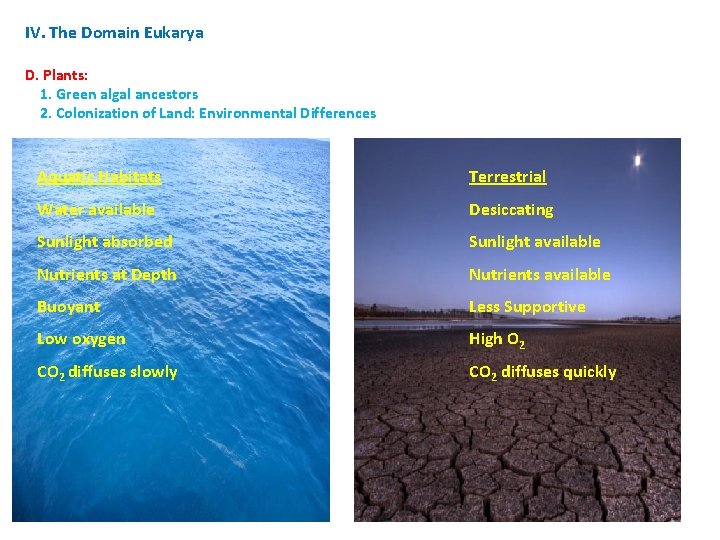
IV. The Domain Eukarya D. Plants: 1. Green algal ancestors 2. Colonization of Land: Environmental Differences Aquatic Habitats Terrestrial Water available Desiccating Sunlight absorbed Sunlight available Nutrients at Depth Nutrients available Buoyant Less Supportive Low oxygen High O 2 CO 2 diffuses slowly CO 2 diffuses quickly
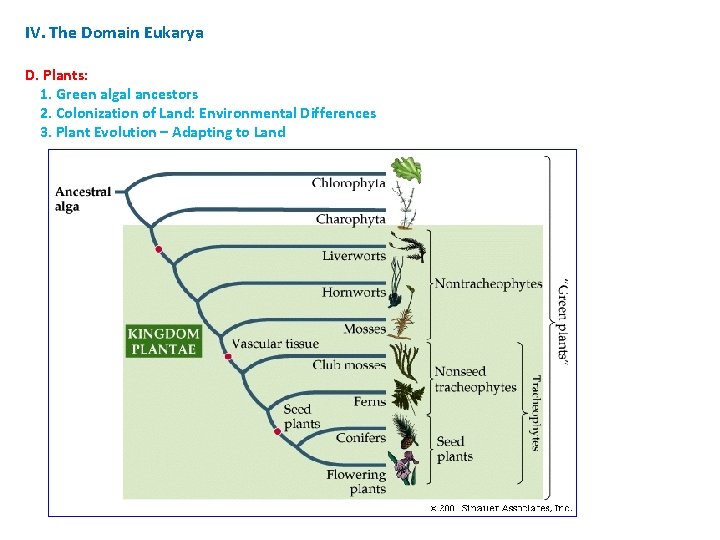
IV. The Domain Eukarya D. Plants: 1. Green algal ancestors 2. Colonization of Land: Environmental Differences 3. Plant Evolution – Adapting to Land
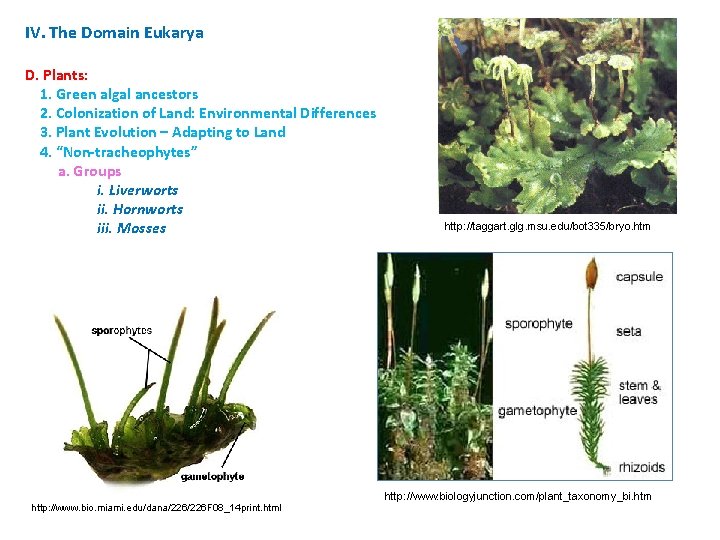
IV. The Domain Eukarya D. Plants: 1. Green algal ancestors 2. Colonization of Land: Environmental Differences 3. Plant Evolution – Adapting to Land 4. “Non-tracheophytes” a. Groups i. Liverworts ii. Hornworts iii. Mosses http: //www. bio. miami. edu/dana/226 F 08_14 print. html http: //taggart. glg. msu. edu/bot 335/bryo. htm http: //www. biologyjunction. com/plant_taxonomy_bi. htm
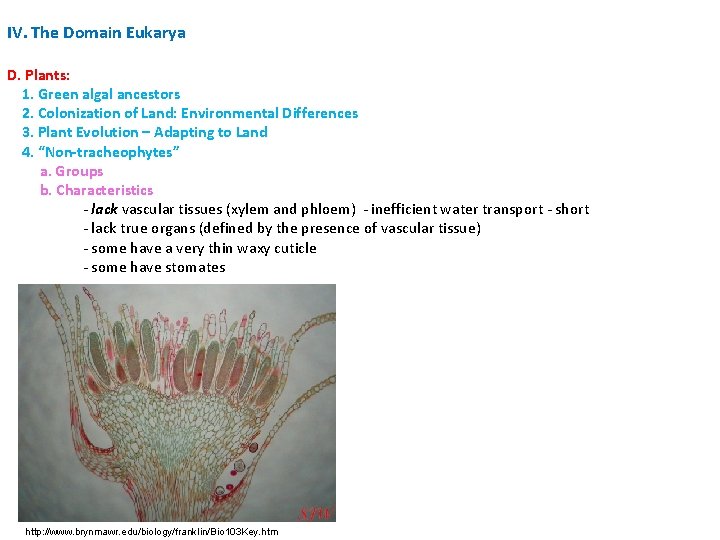
IV. The Domain Eukarya D. Plants: 1. Green algal ancestors 2. Colonization of Land: Environmental Differences 3. Plant Evolution – Adapting to Land 4. “Non-tracheophytes” a. Groups b. Characteristics - lack vascular tissues (xylem and phloem) - inefficient water transport - short - lack true organs (defined by the presence of vascular tissue) - some have a very thin waxy cuticle - some have stomates http: //www. brynmawr. edu/biology/franklin/Bio 103 Key. htm
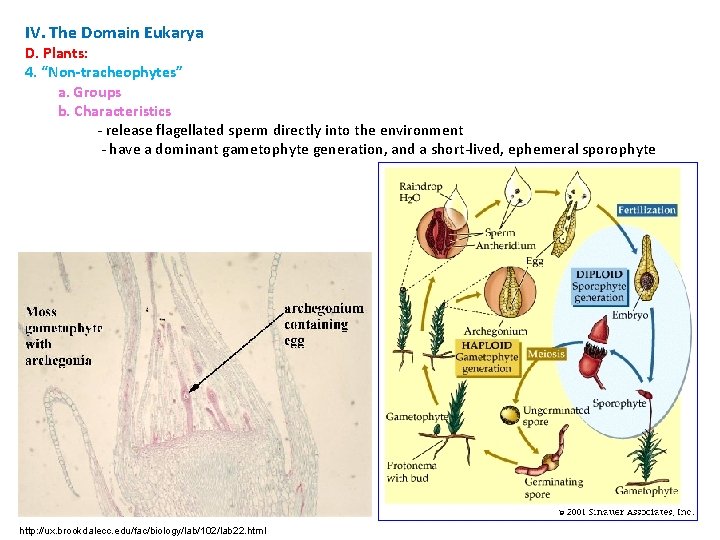
IV. The Domain Eukarya D. Plants: 4. “Non-tracheophytes” a. Groups b. Characteristics - release flagellated sperm directly into the environment - have a dominant gametophyte generation, and a short-lived, ephemeral sporophyte http: //ux. brookdalecc. edu/fac/biology/lab/102/lab 22. html
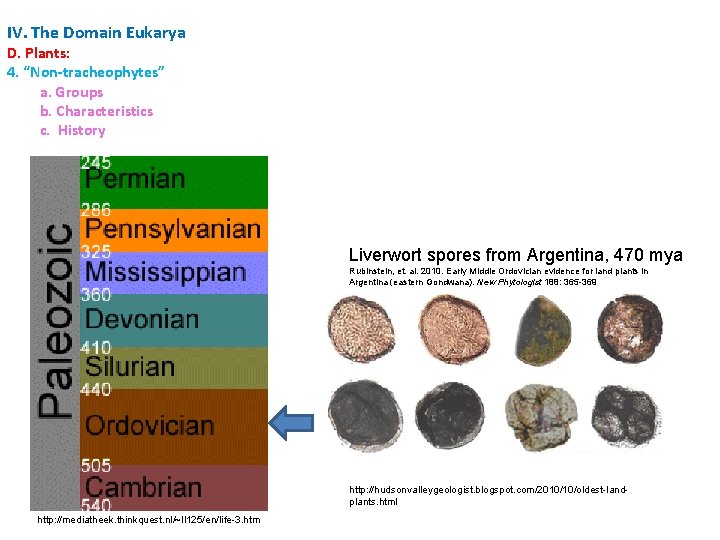
IV. The Domain Eukarya D. Plants: 4. “Non-tracheophytes” a. Groups b. Characteristics c. History Liverwort spores from Argentina, 470 mya Rubinstein, et. al. 2010. Early Middle Ordovician evidence for land plants in Argentina (eastern Gondwana). New Phytologist 188: 365 -369 http: //hudsonvalleygeologist. blogspot. com/2010/10/oldest-landplants. html http: //mediatheek. thinkquest. nl/~ll 125/en/life-3. htm
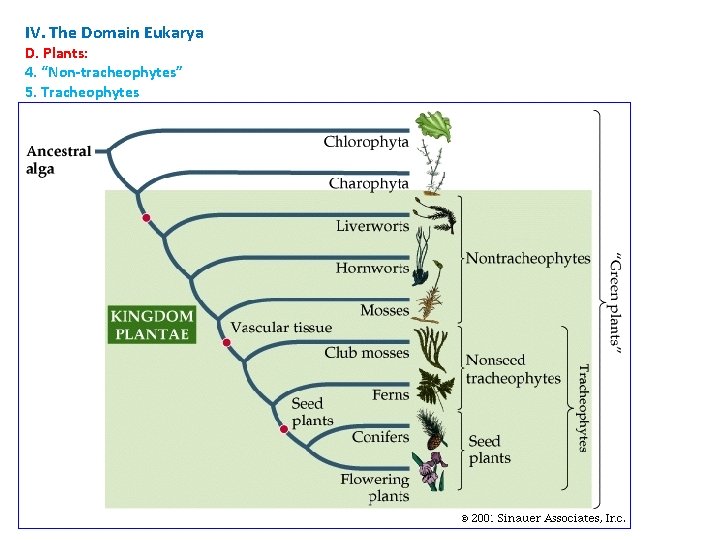
IV. The Domain Eukarya D. Plants: 4. “Non-tracheophytes” 5. Tracheophytes a. Characteristics Vascular tissue: http: //manravbioeducation. blogspot. com/2007/08/transport-ofmaterials-in-plants. html Xylem: water up Phloem: sugars down
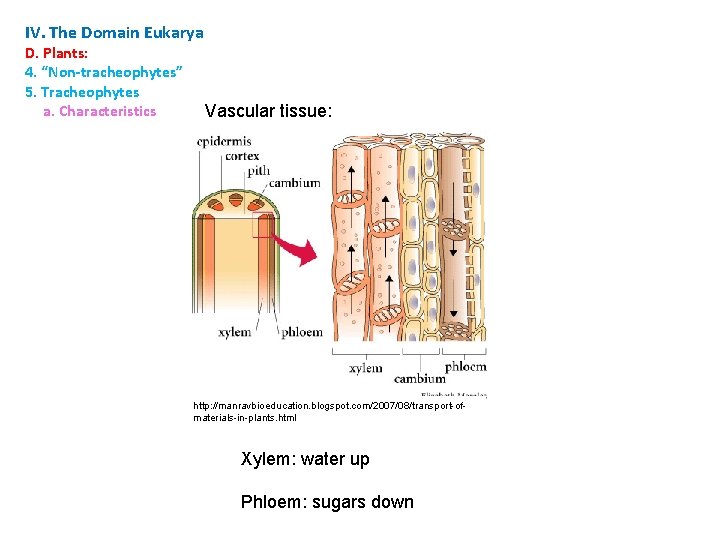
IV. The Domain Eukarya D. Plants: 4. “Non-tracheophytes” 5. Tracheophytes a. Characteristics Vascular tissue: http: //manravbioeducation. blogspot. com/2007/08/transport-ofmaterials-in-plants. html Xylem: water up Phloem: sugars down
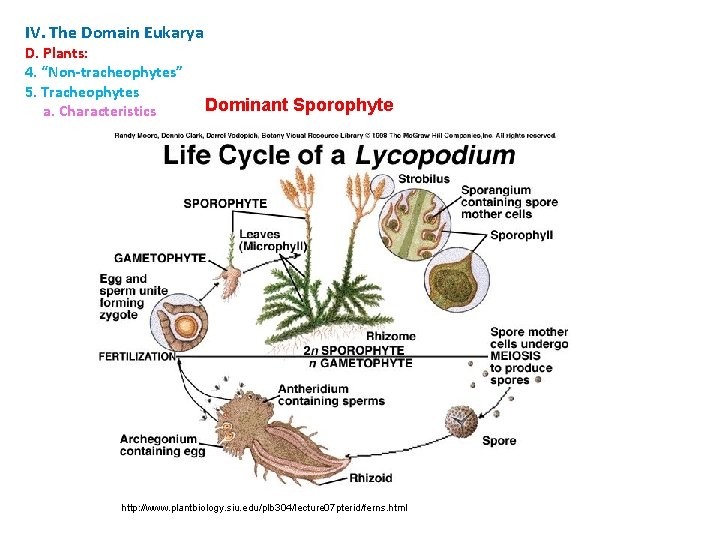
IV. The Domain Eukarya D. Plants: 4. “Non-tracheophytes” 5. Tracheophytes a. Characteristics Dominant Sporophyte http: //www. plantbiology. siu. edu/plb 304/lecture 07 pterid/ferns. html
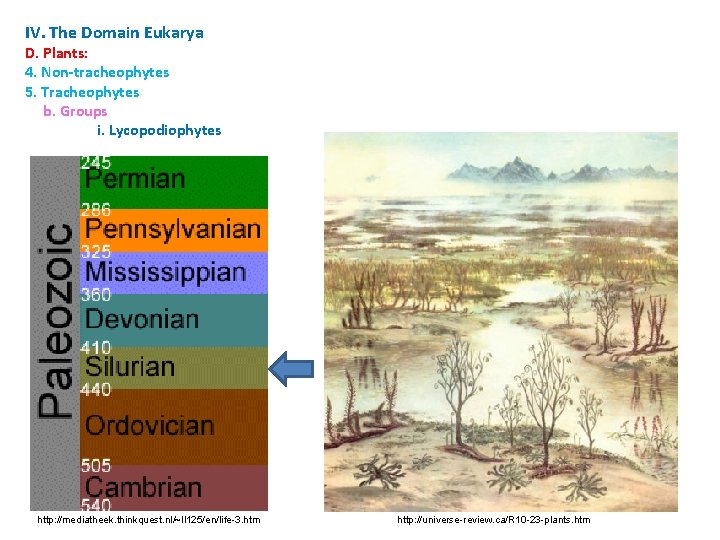
IV. The Domain Eukarya D. Plants: 4. Non-tracheophytes 5. Tracheophytes b. Groups i. Lycopodiophytes http: //mediatheek. thinkquest. nl/~ll 125/en/life-3. htm http: //universe-review. ca/R 10 -23 -plants. htm
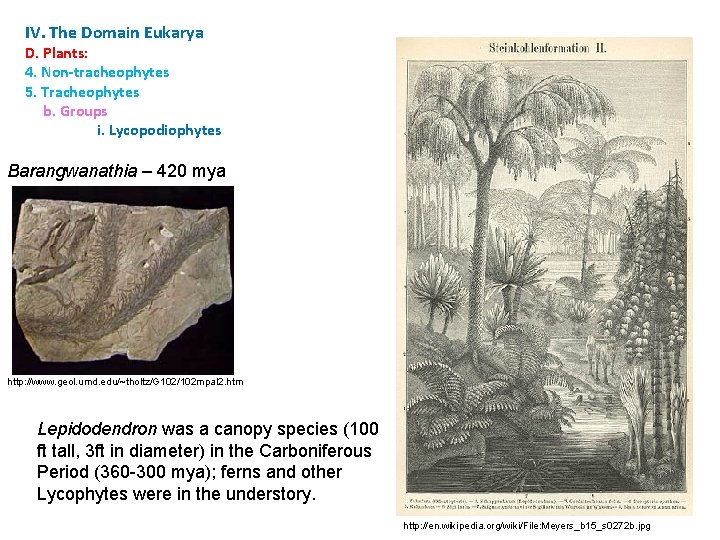
IV. The Domain Eukarya D. Plants: 4. Non-tracheophytes 5. Tracheophytes b. Groups i. Lycopodiophytes Barangwanathia – 420 mya http: //www. geol. umd. edu/~tholtz/G 102/102 mpal 2. htm Lepidodendron was a canopy species (100 ft tall, 3 ft in diameter) in the Carboniferous Period (360 -300 mya); ferns and other Lycophytes were in the understory. http: //en. wikipedia. org/wiki/File: Meyers_b 15_s 0272 b. jpg
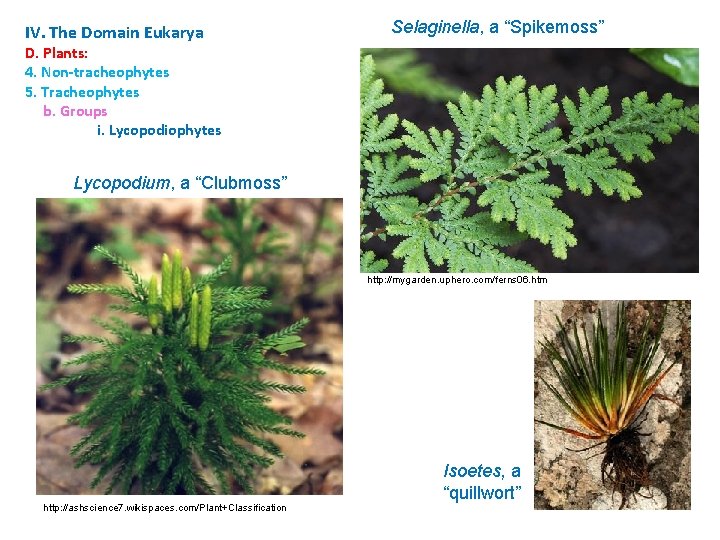
IV. The Domain Eukarya Selaginella, a “Spikemoss” D. Plants: 4. Non-tracheophytes 5. Tracheophytes b. Groups i. Lycopodiophytes Lycopodium, a “Clubmoss” http: //mygarden. uphero. com/ferns 06. htm http: //ashscience 7. wikispaces. com/Plant+Classification Isoetes, a “quillwort”
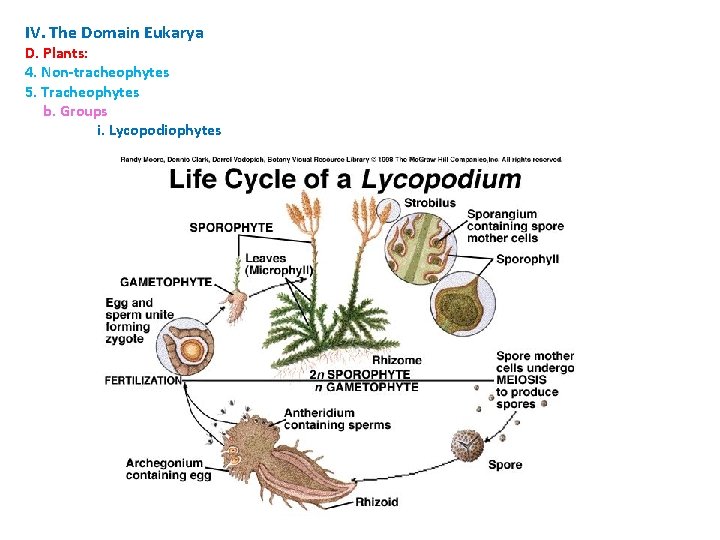
IV. The Domain Eukarya D. Plants: 4. Non-tracheophytes 5. Tracheophytes b. Groups i. Lycopodiophytes
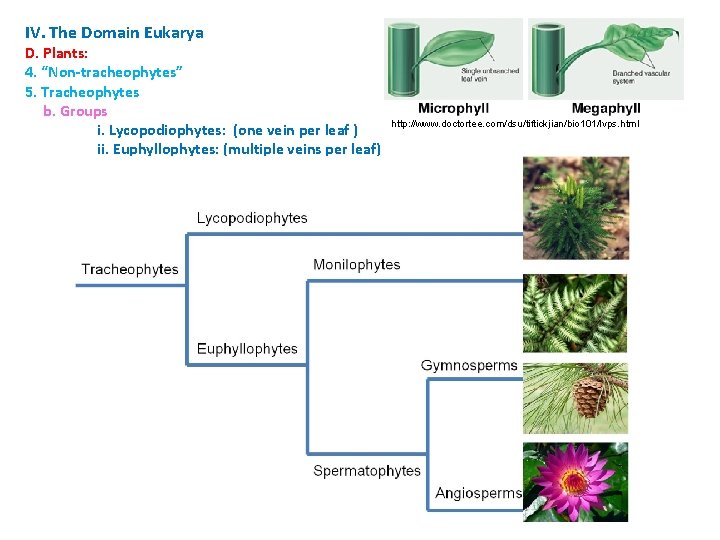
IV. The Domain Eukarya D. Plants: 4. “Non-tracheophytes” 5. Tracheophytes b. Groups i. Lycopodiophytes: (one vein per leaf ) ii. Euphyllophytes: (multiple veins per leaf) http: //www. doctortee. com/dsu/tiftickjian/bio 101/lvps. html

IV. The Domain Eukarya D. Plants: 4. “Non-tracheophytes” 5. Tracheophytes b. Groups i. Lycopodiophytes ii. Monilophytes - Characteristics: Vascular (tracheophytes) with true leaves (euphyllophytes) Most release spores to the environment from sporangia Have swimming sperm Do NOT have seeds (distinguishing them from the other major clade within the euphyllophytes, the spermatophytes)
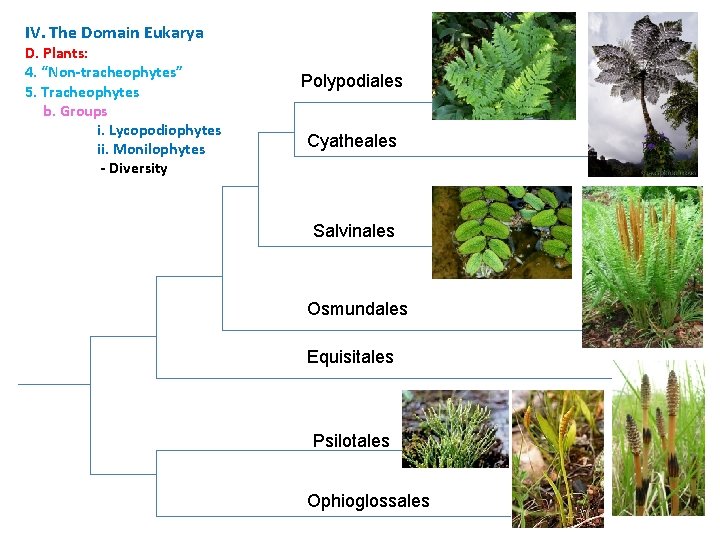
IV. The Domain Eukarya D. Plants: 4. “Non-tracheophytes” 5. Tracheophytes b. Groups i. Lycopodiophytes ii. Monilophytes - Diversity Polypodiales Cyatheales Salvinales Osmundales Equisitales Psilotales Ophioglossales
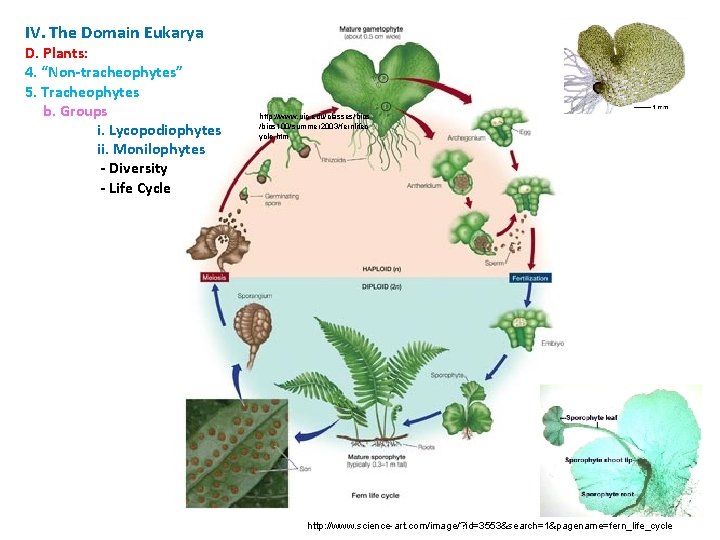
IV. The Domain Eukarya D. Plants: 4. “Non-tracheophytes” 5. Tracheophytes b. Groups i. Lycopodiophytes ii. Monilophytes - Diversity - Life Cycle http: //www. uic. edu/classes/bios 100/summer 2003/fernlifec ycle. htm http: //www. science-art. com/image/? id=3553&search=1&pagename=fern_life_cycle
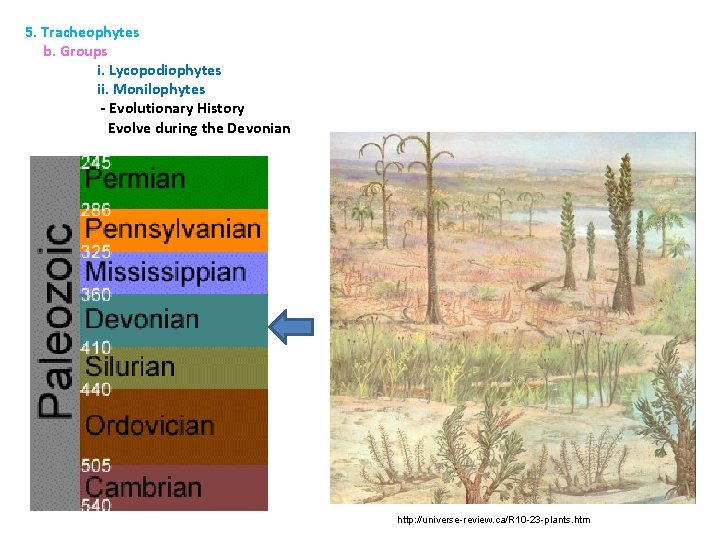
5. Tracheophytes b. Groups i. Lycopodiophytes ii. Monilophytes - Evolutionary History Evolve during the Devonian http: //universe-review. ca/R 10 -23 -plants. htm
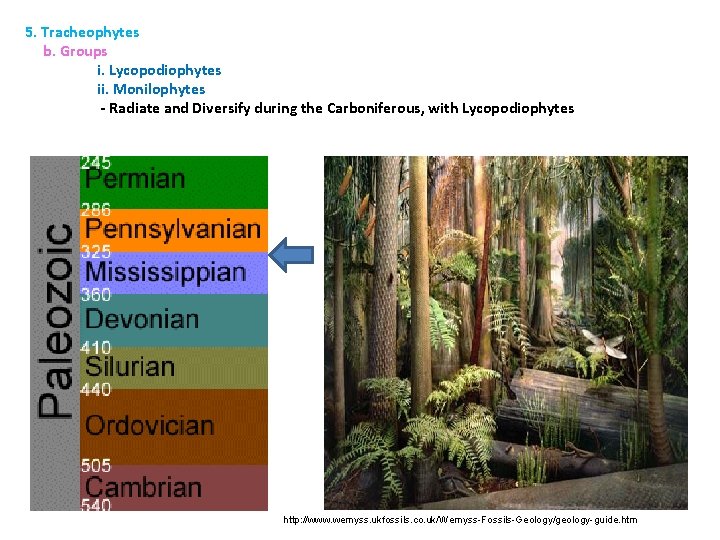
5. Tracheophytes b. Groups i. Lycopodiophytes ii. Monilophytes - Radiate and Diversify during the Carboniferous, with Lycopodiophytes http: //www. wemyss. ukfossils. co. uk/Wemyss-Fossils-Geology/geology-guide. htm
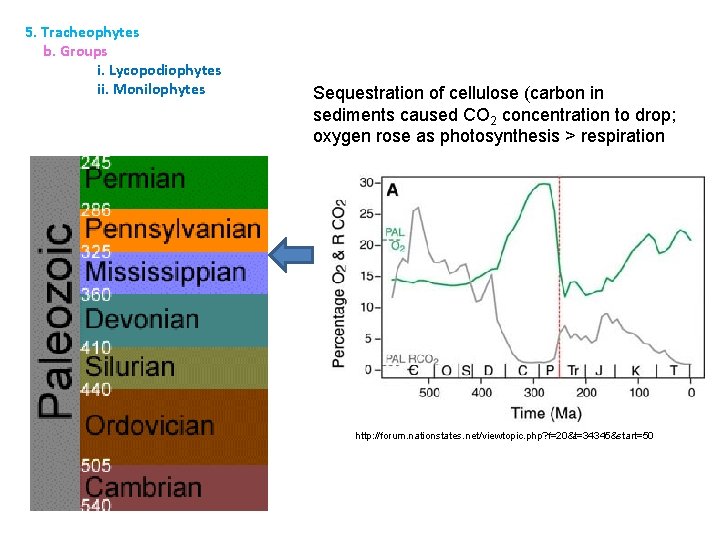
5. Tracheophytes b. Groups i. Lycopodiophytes ii. Monilophytes Sequestration of cellulose (carbon in sediments caused CO 2 concentration to drop; oxygen rose as photosynthesis > respiration http: //forum. nationstates. net/viewtopic. php? f=20&t=34345&start=50
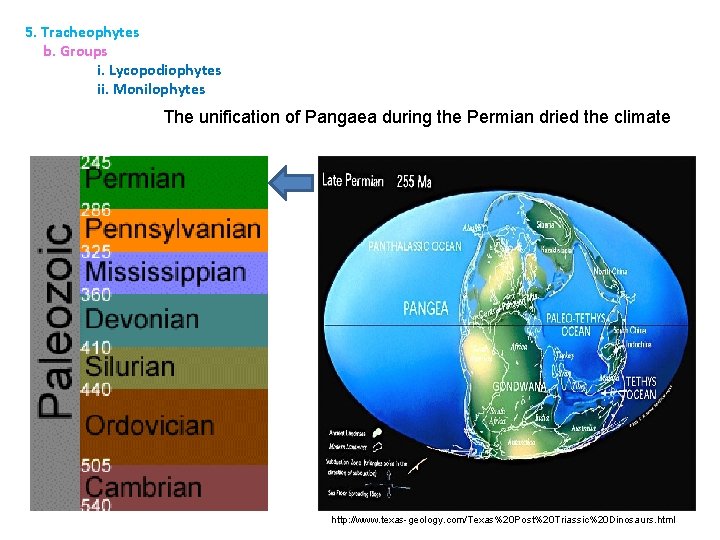
5. Tracheophytes b. Groups i. Lycopodiophytes ii. Monilophytes The unification of Pangaea during the Permian dried the climate http: //www. texas-geology. com/Texas%20 Post%20 Triassic%20 Dinosaurs. html
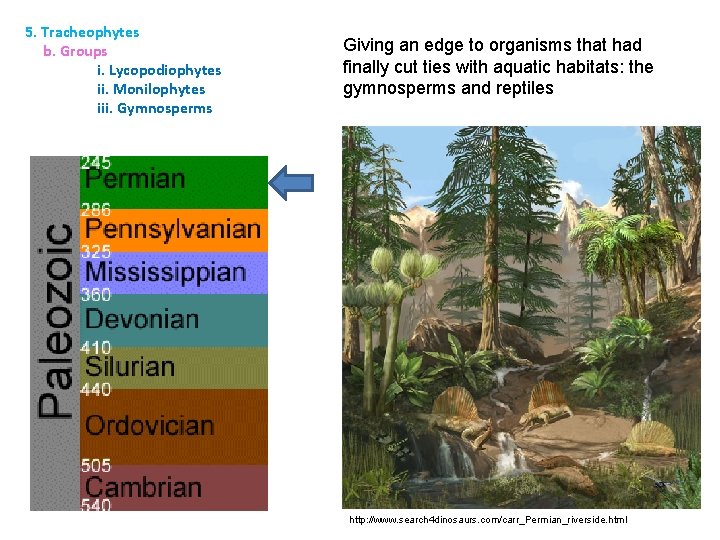
5. Tracheophytes b. Groups i. Lycopodiophytes ii. Monilophytes iii. Gymnosperms Giving an edge to organisms that had finally cut ties with aquatic habitats: the gymnosperms and reptiles http: //www. search 4 dinosaurs. com/carr_Permian_riverside. html
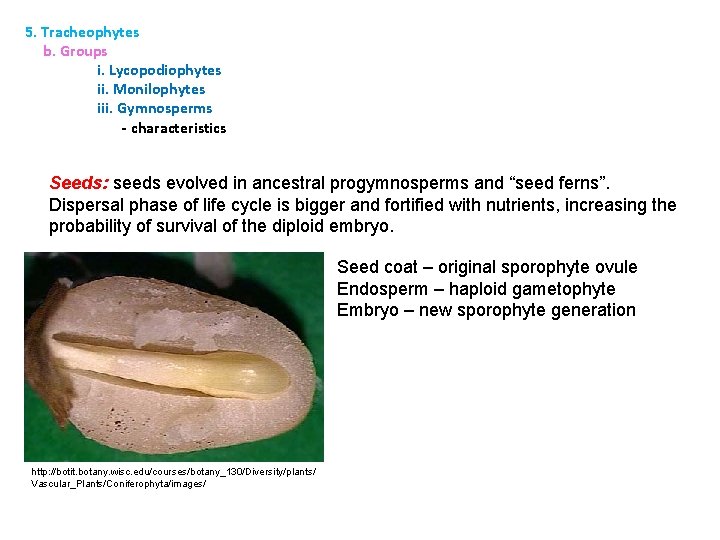
5. Tracheophytes b. Groups i. Lycopodiophytes ii. Monilophytes iii. Gymnosperms - characteristics Seeds: seeds evolved in ancestral progymnosperms and “seed ferns”. Dispersal phase of life cycle is bigger and fortified with nutrients, increasing the probability of survival of the diploid embryo. Seed coat – original sporophyte ovule Endosperm – haploid gametophyte Embryo – new sporophyte generation http: //botit. botany. wisc. edu/courses/botany_130/Diversity/plants/ Vascular_Plants/Coniferophyta/images/
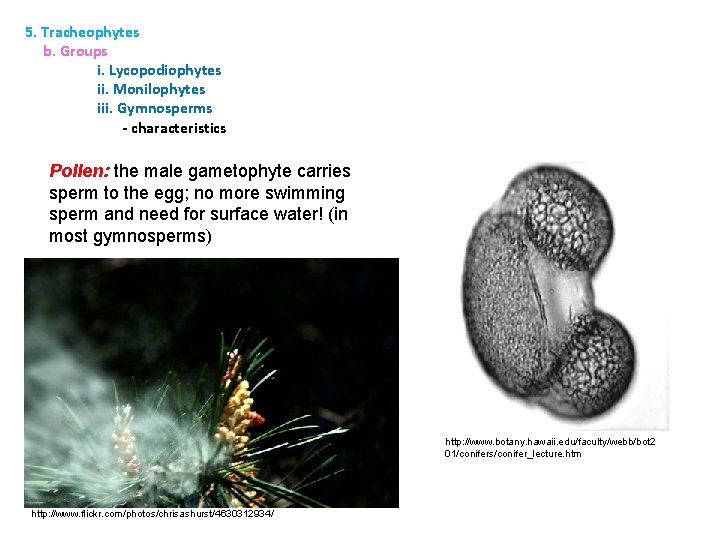
5. Tracheophytes b. Groups i. Lycopodiophytes ii. Monilophytes iii. Gymnosperms - characteristics Pollen: the male gametophyte carries sperm to the egg; no more swimming sperm and need for surface water! (in most gymnosperms) http: //www. botany. hawaii. edu/faculty/webb/bot 2 01/conifers/conifer_lecture. htm http: //www. flickr. com/photos/chrisashurst/4630312934/

5. Tracheophytes b. Groups i. Lycopodiophytes ii. Monilophytes iii. Gymnosperms - Diversity Common Conifers: Pines Spruce Fir Hemlock Cedars Cypress Yew Larch Redwood Conifers* http: //sorokaapbio 1011. blogspot. com/ Gnetales http: //dbpedia. neofonie. de/browse/rdftype: Plant/rdf-type: Gnetophytes/ Ginkgo Cycads http: //www. ucmp. berkeley. edu/seedplant s/ginkgoales/ginkgo. html http: //www. moplants. com/blog/? p=1077
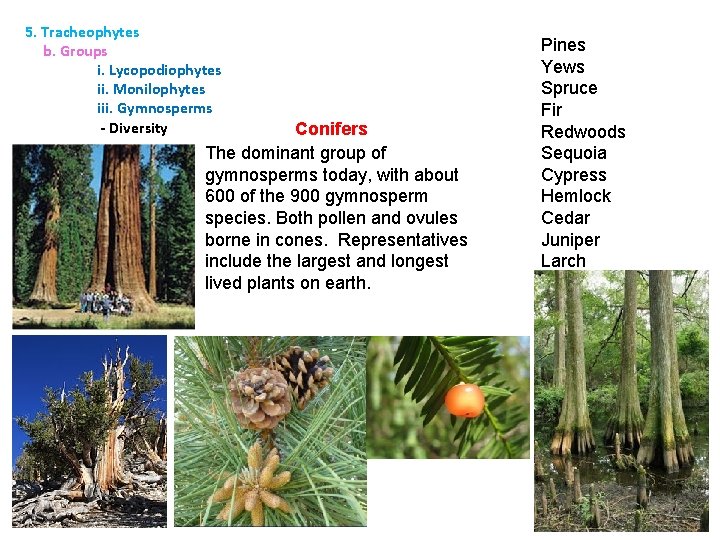
5. Tracheophytes b. Groups i. Lycopodiophytes ii. Monilophytes iii. Gymnosperms - Diversity Conifers The dominant group of gymnosperms today, with about 600 of the 900 gymnosperm species. Both pollen and ovules borne in cones. Representatives include the largest and longest lived plants on earth. Pines Yews Spruce Fir Redwoods Sequoia Cypress Hemlock Cedar Juniper Larch
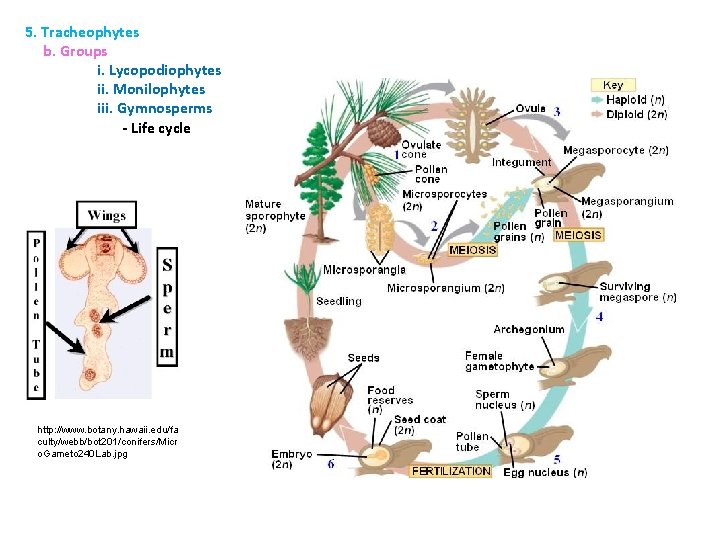
5. Tracheophytes b. Groups i. Lycopodiophytes ii. Monilophytes iii. Gymnosperms - Life cycle http: //www. botany. hawaii. edu/fa culty/webb/bot 201/conifers/Micr o. Gameto 240 Lab. jpg
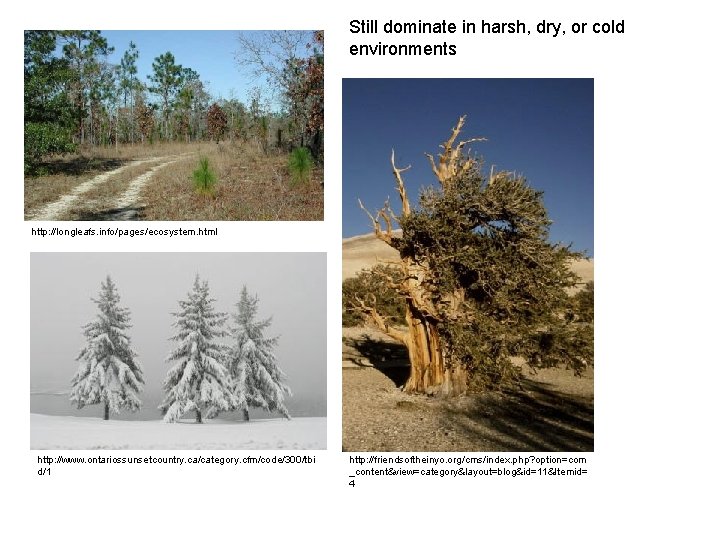
Still dominate in harsh, dry, or cold environments http: //longleafs. info/pages/ecosystem. html http: //www. ontariossunsetcountry. ca/category. cfm/code/300/tbi d/1 http: //friendsoftheinyo. org/cms/index. php? option=com _content&view=category&layout=blog&id=11&Itemid= 4
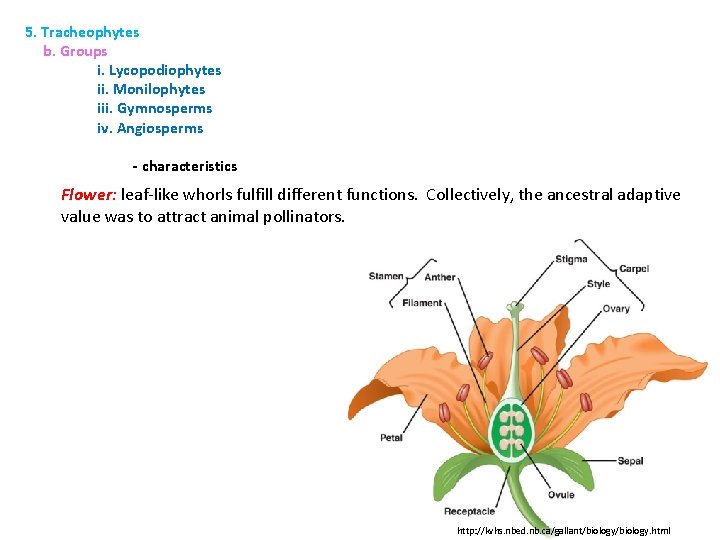
5. Tracheophytes b. Groups i. Lycopodiophytes ii. Monilophytes iii. Gymnosperms iv. Angiosperms - characteristics Flower: leaf-like whorls fulfill different functions. Collectively, the ancestral adaptive value was to attract animal pollinators. http: //kvhs. nbed. nb. ca/gallant/biology. html
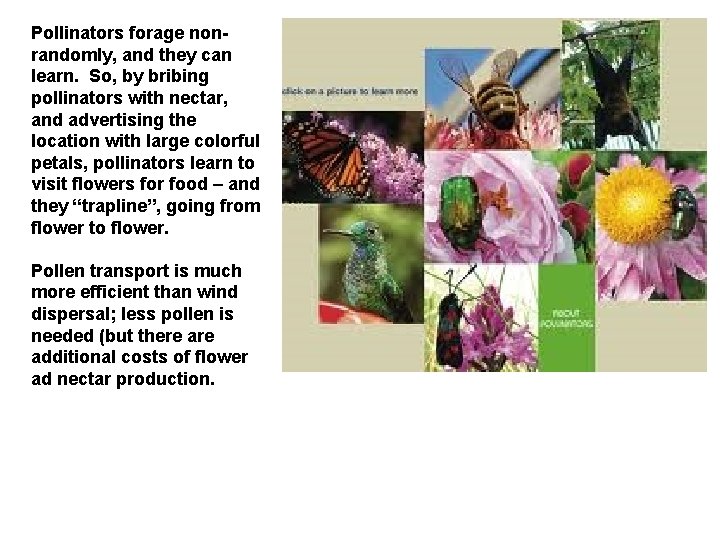
Pollinators forage nonrandomly, and they can learn. So, by bribing pollinators with nectar, and advertising the location with large colorful petals, pollinators learn to visit flowers for food – and they “trapline”, going from flower to flower. Pollen transport is much more efficient than wind dispersal; less pollen is needed (but there additional costs of flower ad nectar production.
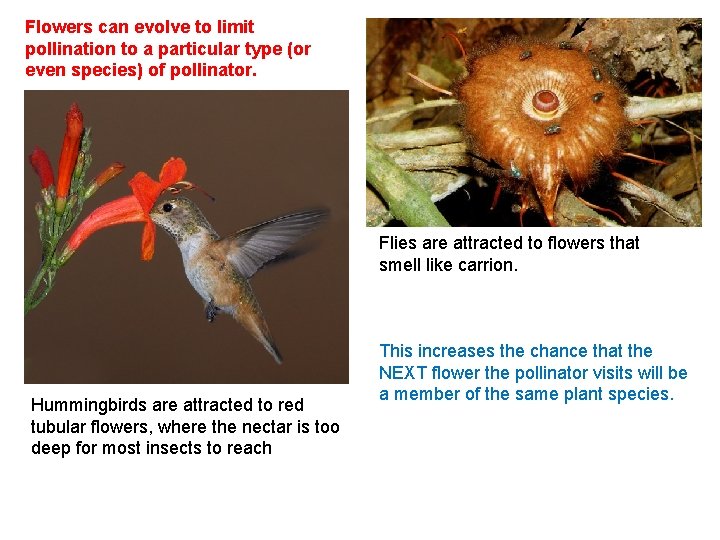
Flowers can evolve to limit pollination to a particular type (or even species) of pollinator. Flies are attracted to flowers that smell like carrion. Hummingbirds are attracted to red tubular flowers, where the nectar is too deep for most insects to reach This increases the chance that the NEXT flower the pollinator visits will be a member of the same plant species.
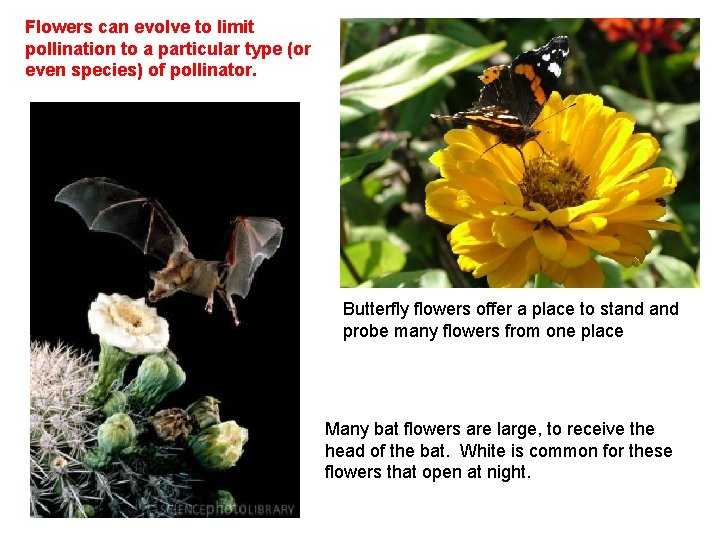
Flowers can evolve to limit pollination to a particular type (or even species) of pollinator. Butterfly flowers offer a place to stand probe many flowers from one place Many bat flowers are large, to receive the head of the bat. White is common for these flowers that open at night.
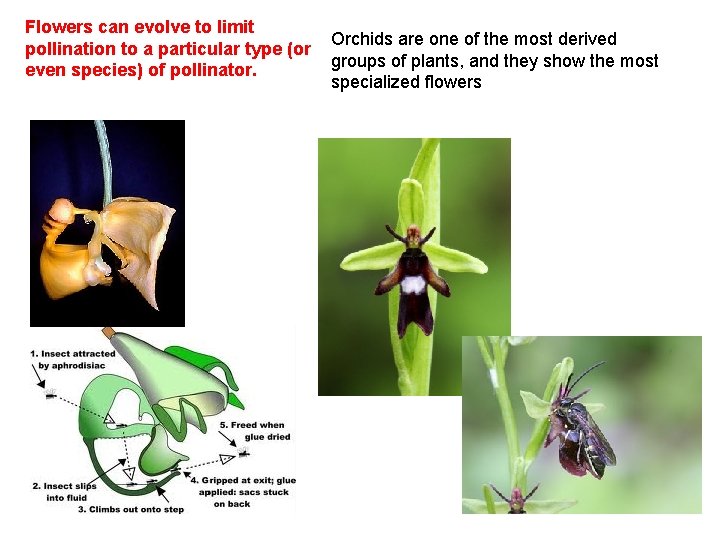
Flowers can evolve to limit pollination to a particular type (or even species) of pollinator. Orchids are one of the most derived groups of plants, and they show the most specialized flowers
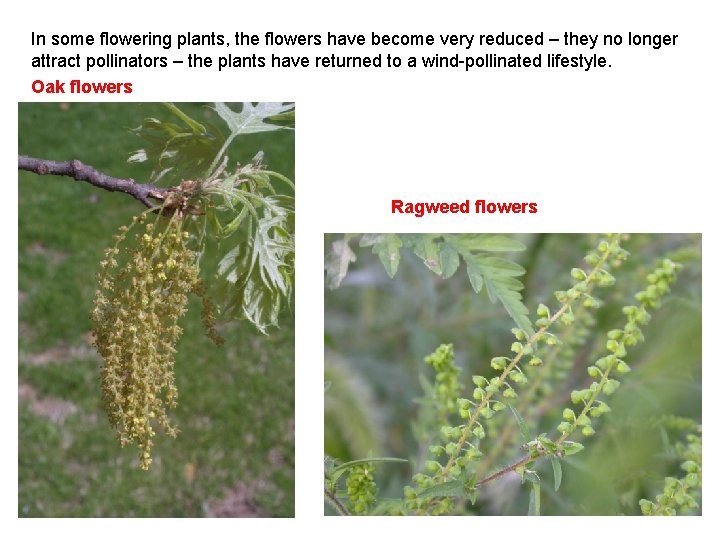
In some flowering plants, the flowers have become very reduced – they no longer attract pollinators – the plants have returned to a wind-pollinated lifestyle. Oak flowers Ragweed flowers
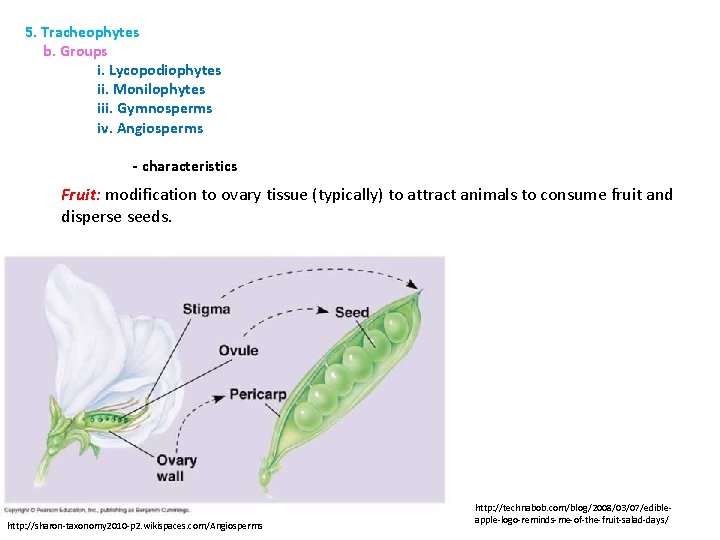
5. Tracheophytes b. Groups i. Lycopodiophytes ii. Monilophytes iii. Gymnosperms iv. Angiosperms - characteristics Fruit: modification to ovary tissue (typically) to attract animals to consume fruit and disperse seeds. http: //sharon-taxonomy 2010 -p 2. wikispaces. com/Angiosperms http: //technabob. com/blog/2008/03/07/edibleapple-logo-reminds-me-of-the-fruit-salad-days/
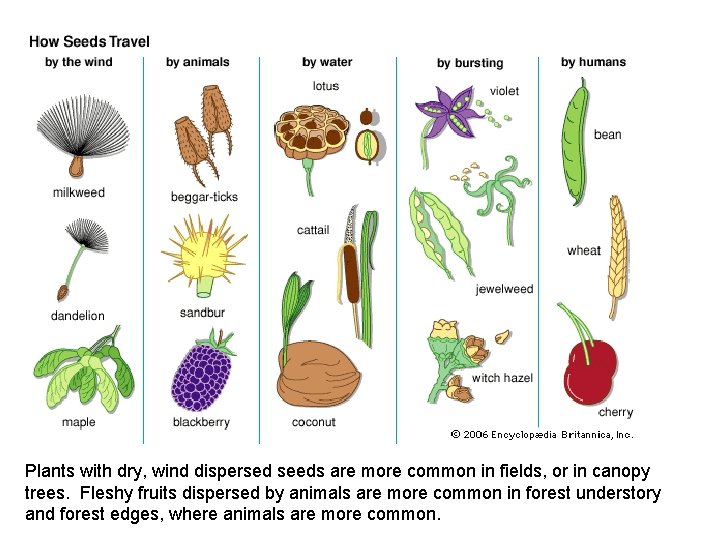
Plants with dry, wind dispersed seeds are more common in fields, or in canopy trees. Fleshy fruits dispersed by animals are more common in forest understory and forest edges, where animals are more common.
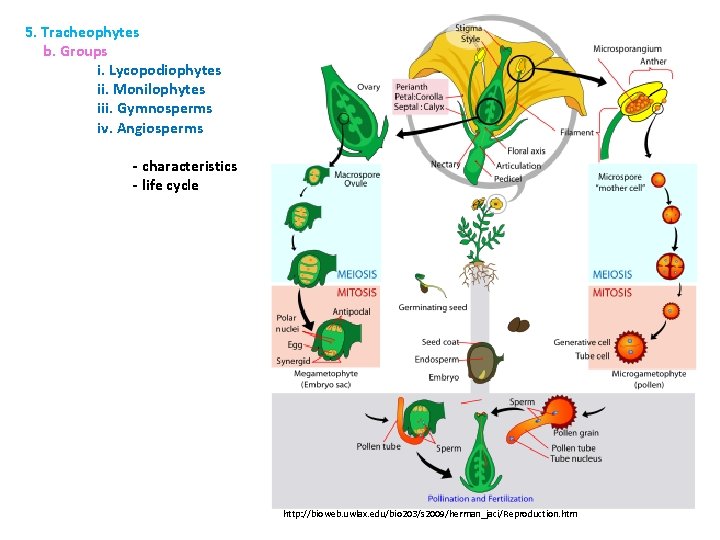
5. Tracheophytes b. Groups i. Lycopodiophytes ii. Monilophytes iii. Gymnosperms iv. Angiosperms - characteristics - life cycle http: //bioweb. uwlax. edu/bio 203/s 2009/herman_jaci/Reproduction. htm
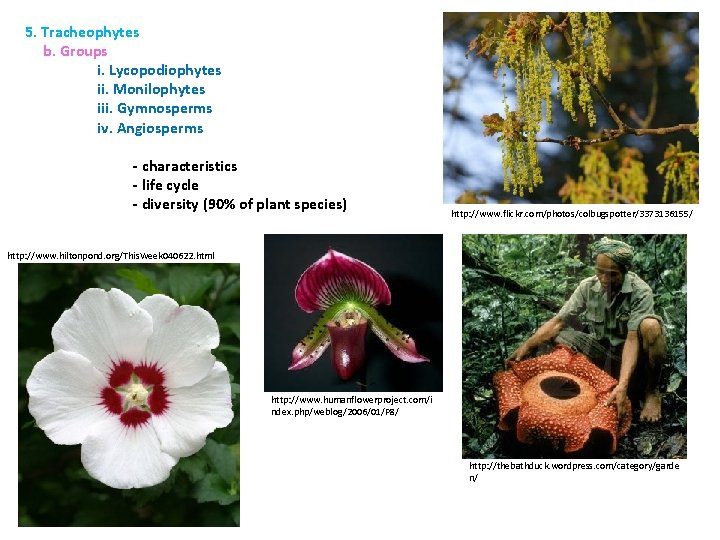
5. Tracheophytes b. Groups i. Lycopodiophytes ii. Monilophytes iii. Gymnosperms iv. Angiosperms - characteristics - life cycle - diversity (90% of plant species) http: //www. flickr. com/photos/colbugspotter/3373136155/ http: //www. hiltonpond. org/This. Week 040622. html http: //www. humanflowerproject. com/i ndex. php/weblog/2006/01/P 8/ http: //thebathduck. wordpress. com/category/garde n/
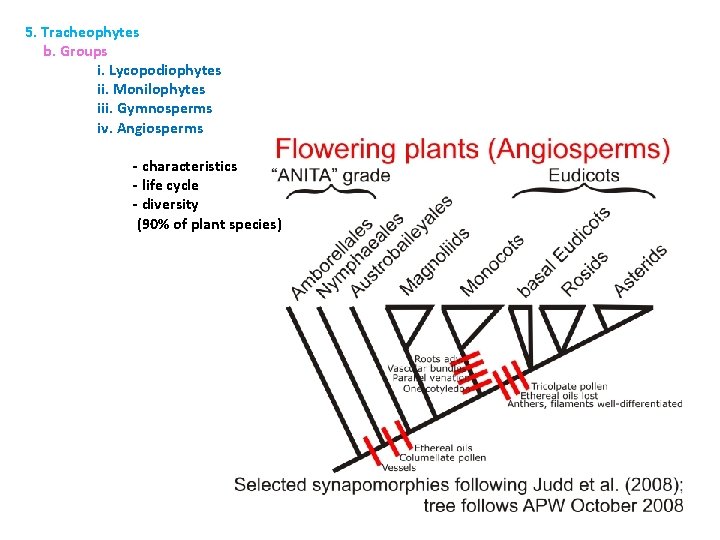
5. Tracheophytes b. Groups i. Lycopodiophytes ii. Monilophytes iii. Gymnosperms iv. Angiosperms - characteristics - life cycle - diversity (90% of plant species)
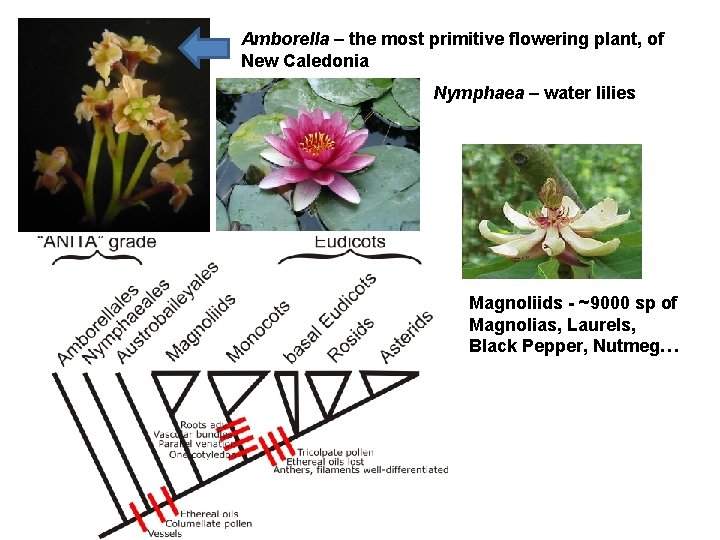
Amborella – the most primitive flowering plant, of New Caledonia Nymphaea – water lilies Magnoliids - ~9000 sp of Magnolias, Laurels, Black Pepper, Nutmeg…
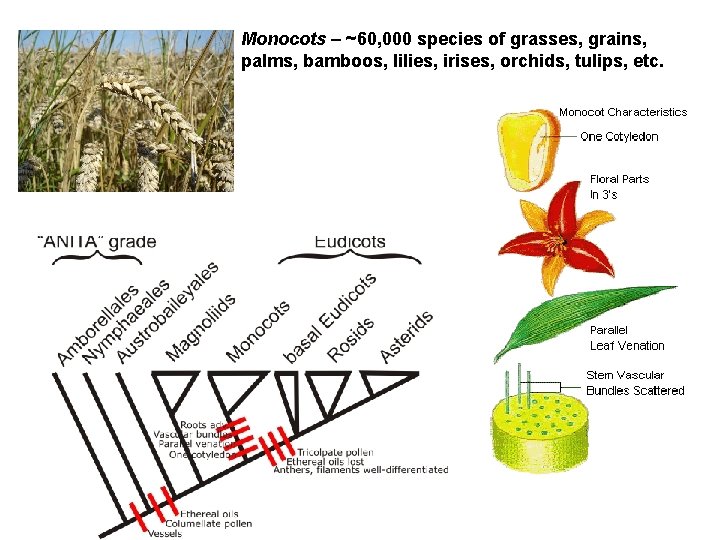
Monocots – ~60, 000 species of grasses, grains, palms, bamboos, lilies, irises, orchids, tulips, etc.
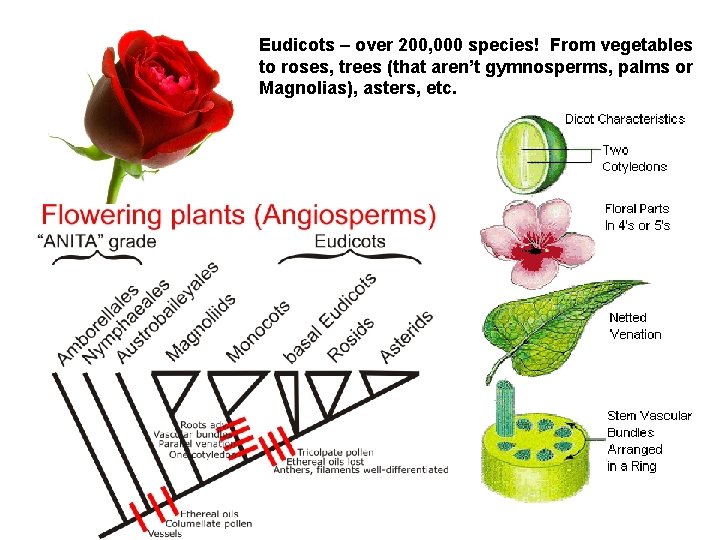
Eudicots – over 200, 000 species! From vegetables to roses, trees (that aren’t gymnosperms, palms or Magnolias), asters, etc.
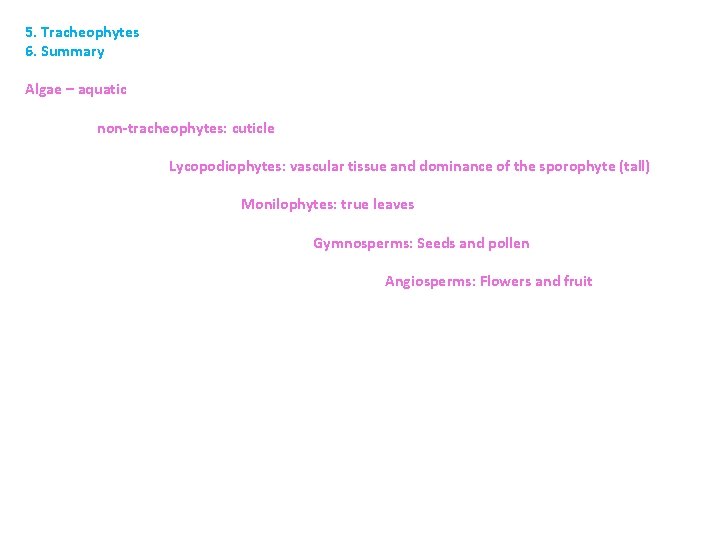
5. Tracheophytes 6. Summary Algae – aquatic non-tracheophytes: cuticle Lycopodiophytes: vascular tissue and dominance of the sporophyte (tall) Monilophytes: true leaves Gymnosperms: Seeds and pollen Angiosperms: Flowers and fruit
- Slides: 46