
The Diversity of Cells HO2C Bellringer Cells remain
The Diversity of Cells HO#__2__C Bellringer: Cells remain small because their surface area: _____ ratio must stay balanced.
Cells and the Cell Theory l Robert Hooke l l 1665 Cork l l Plants and fungi l l Saw “little boxes” AKA cells Cell walls Living cells l “juicy”
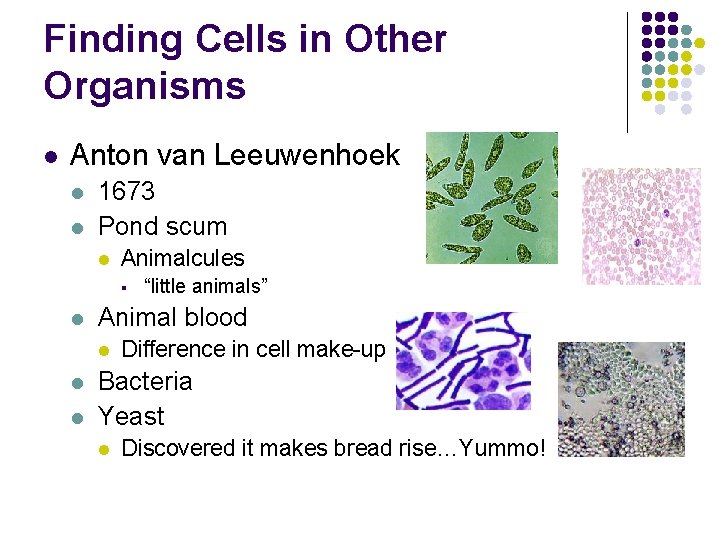
Finding Cells in Other Organisms l Anton van Leeuwenhoek l l 1673 Pond scum l Animalcules § l Animal blood l l l “little animals” Difference in cell make-up Bacteria Yeast l Discovered it makes bread rise…Yummo!
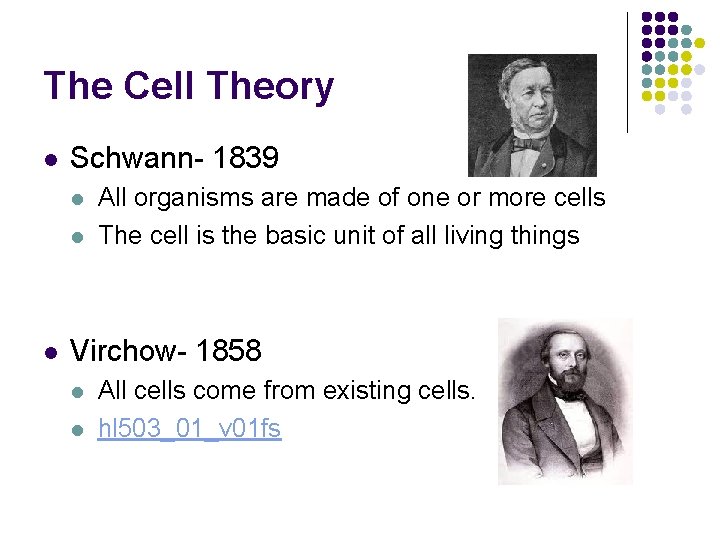
The Cell Theory l Schwann- 1839 l l l All organisms are made of one or more cells The cell is the basic unit of all living things Virchow- 1858 l l All cells come from existing cells. hl 503_01_v 01 fs
Cell Size l Supersize Please l l Egg yolk is one large cell Value size l Most cells are microscopic l l Why? ? ? Must have surface area to volume ratio § § Bigger cell = more food/wastes Surface area grows slower than volume § Not enough nutrients in and not enough wastes out!! § We get a big useless blob!!! § http: //www. cellsalive. com/howbig. htm
Parts of a Cell l Cell Membrane (AKA: North Pole Walls and Guard Elves) l l Cytoplasm (AKA: A bowl full of jelly) l l Fluid inside the cell Organelles (AKA: the elves) l l Protective layer that covers the cell’s surface and acts as a barrier Perform functions inside the cell Genetic Material (AKA: Santa) l l l All cells have DNA at some point Controls activities of a cell Kept in a nucleus (AKA: Santa’s Office) l only in Eukaryotes l Humans- nucleus l Bacteria- no nucleus
Two Kinds of Cells l l Prokaryotes- single celled organisms that do not have a nucleus or membrane bound organelles Two Types l l Bacteria Archae
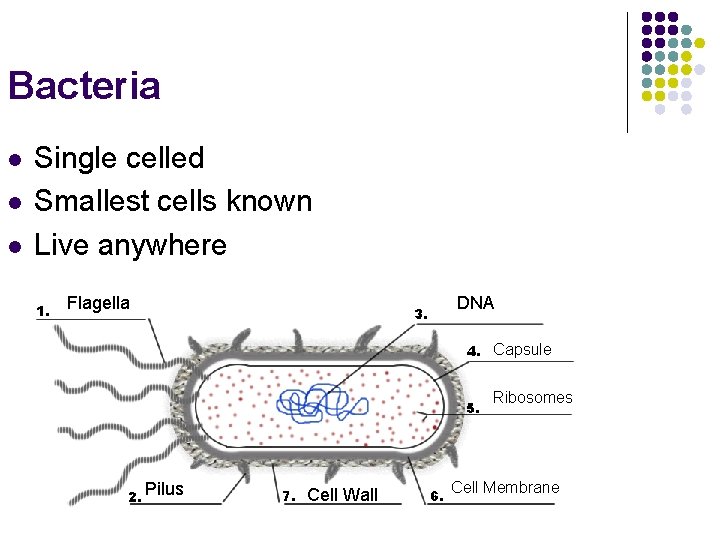
Bacteria l l l Single celled Smallest cells known Live anywhere Flagella DNA Capsule Ribosomes Pilus Cell Wall Cell Membrane
Archae l l l Single Celled No Nucleus Has: l l Ribosomes DNA Cell membrane Three types l l l Heat loving l extremophile Salt loving l extremophile Methane-making
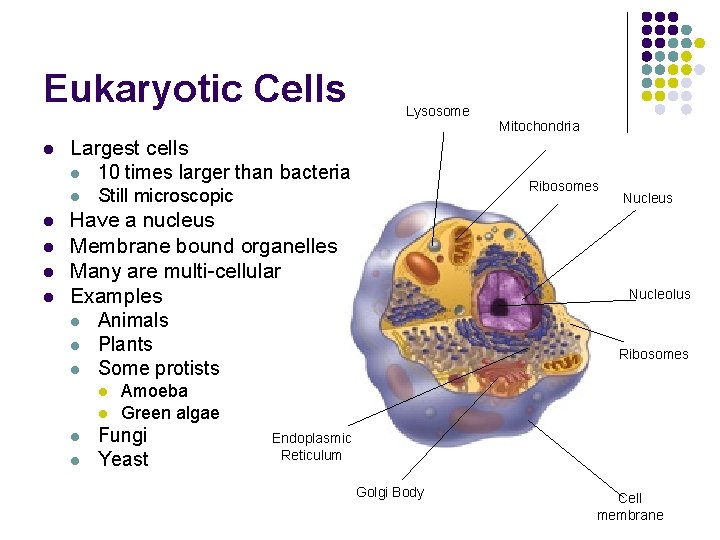
Eukaryotic Cells l Largest cells l 10 times larger than bacteria l l l Lysosome Ribosomes Still microscopic Have a nucleus Membrane bound organelles Many are multi-cellular Examples l Animals l Plants l Some protists l l Mitochondria Nucleus Nucleolus Ribosomes Amoeba Green algae Fungi Yeast Endoplasmic Reticulum Golgi Body Cell membrane
What do you know? ? l What are two differences between a Eukaryotic cell and a Prokaryotic cell?
- Slides: 11