
The Discovery of Fission The Manhattan Project An
- Slides: 48
The Discovery of Fission The Manhattan Project An Overview Prepared by Dr. Chris Mc. Gowan Dean, College of Science and Mathematics Southeast Missouri State University
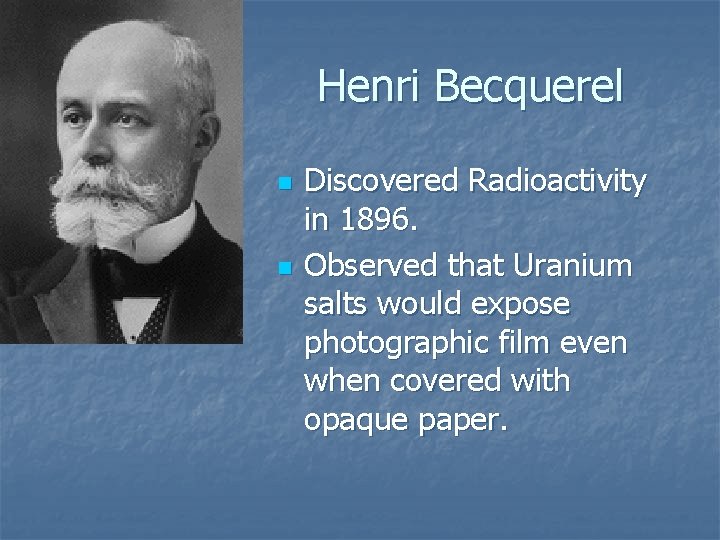
Henri Becquerel n n Discovered Radioactivity in 1896. Observed that Uranium salts would expose photographic film even when covered with opaque paper.
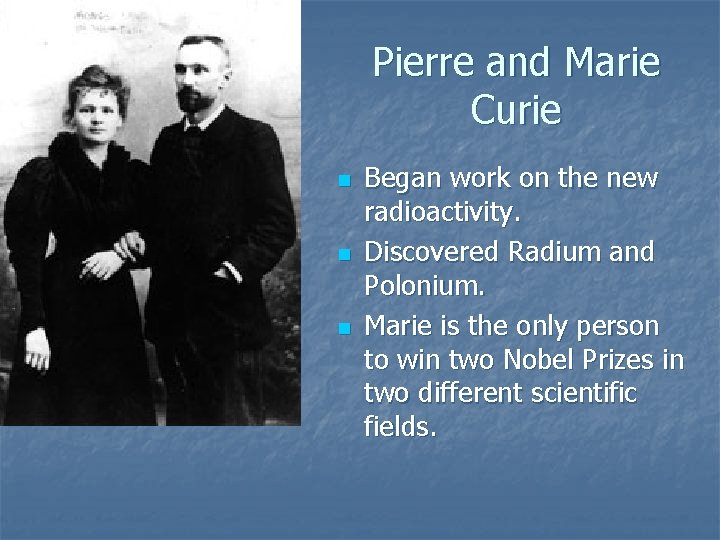
Pierre and Marie Curie n n n Began work on the new radioactivity. Discovered Radium and Polonium. Marie is the only person to win two Nobel Prizes in two different scientific fields.
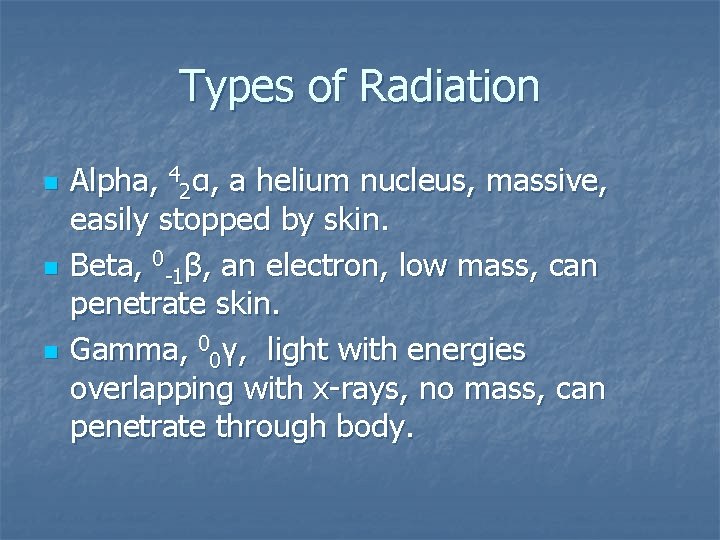
Types of Radiation n Alpha, 42α, a helium nucleus, massive, easily stopped by skin. Beta, 0 -1β, an electron, low mass, can penetrate skin. Gamma, 00γ, light with energies overlapping with x-rays, no mass, can penetrate through body.
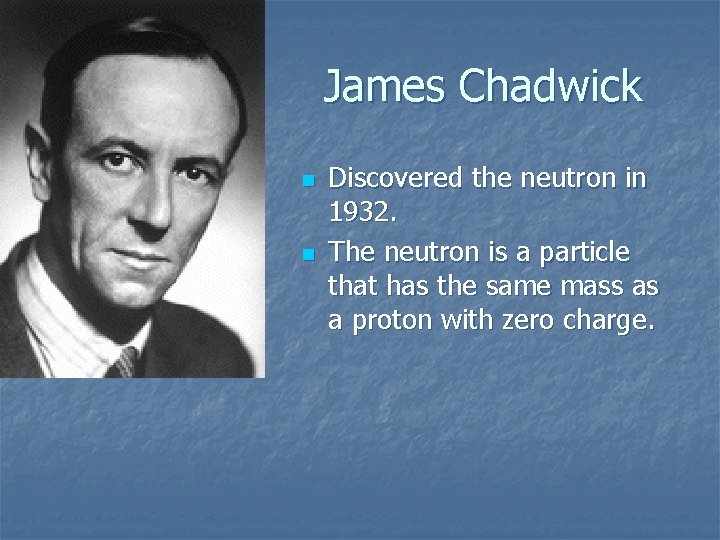
James Chadwick n n Discovered the neutron in 1932. The neutron is a particle that has the same mass as a proton with zero charge.
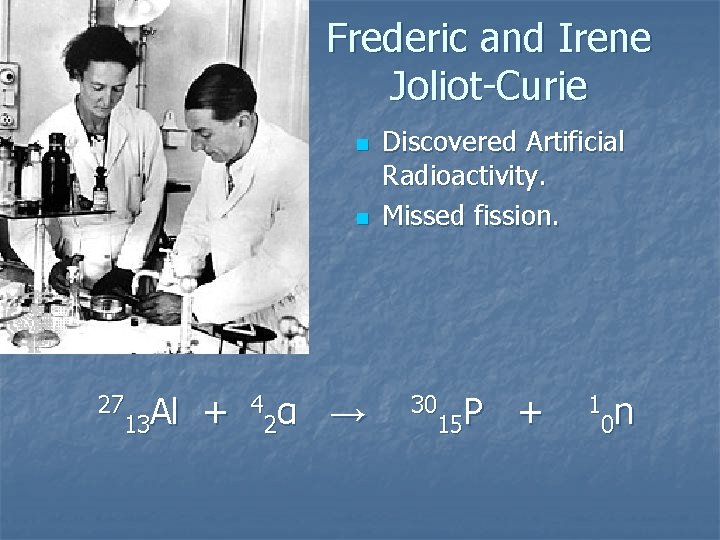
Frederic and Irene Joliot-Curie n n 27 Al 13 + 4 α 2 → Discovered Artificial Radioactivity. Missed fission. 30 P 15 + 1 n 0
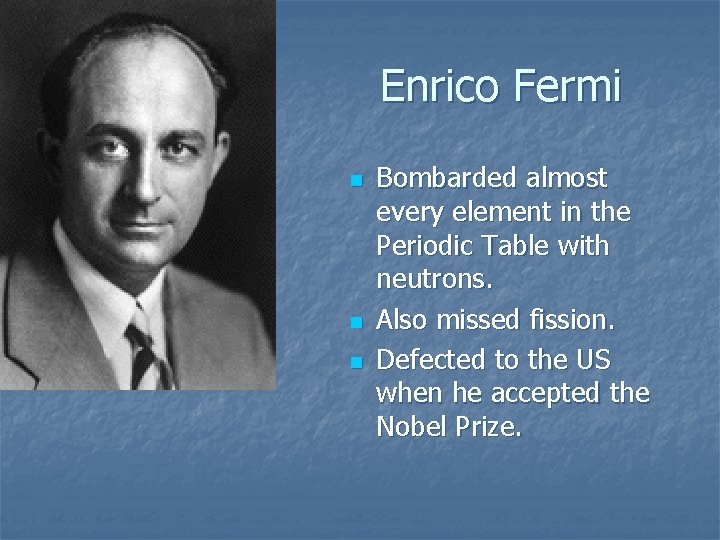
Enrico Fermi n n n Bombarded almost every element in the Periodic Table with neutrons. Also missed fission. Defected to the US when he accepted the Nobel Prize.
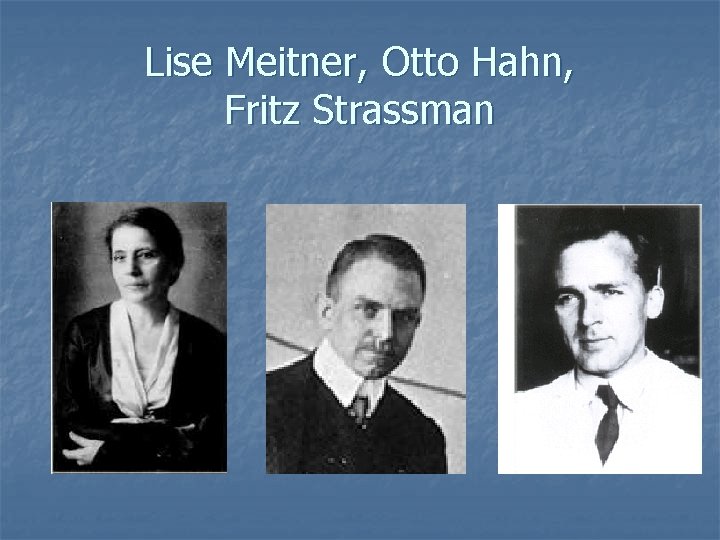
Lise Meitner, Otto Hahn, Fritz Strassman
n n n Meitner and Hahn and had worked together for several years on various aspects of radioactivity. They also were bombarding uranium with neutrons trying to make transuranic elements. Meitner was Jewish and fled Germany in 1938. She first went to Holland, then to Copenhagen where Niels Bohr worked, and ultimately to Sweden. Meitner and Hahn were in daily contact through the mail and continued to collaborate.
n n n In one experiment, Hahn and Strassman were trying to isolate a new element they thought would be similar to barium by trying to co-precipitate the new element with barium carbonate. At the end of a paper they stated that the element appeared to be barium. The paper was picked up on Dec. 22, 1938 by Paul Rosbaud and published Jan. 6, 1939.
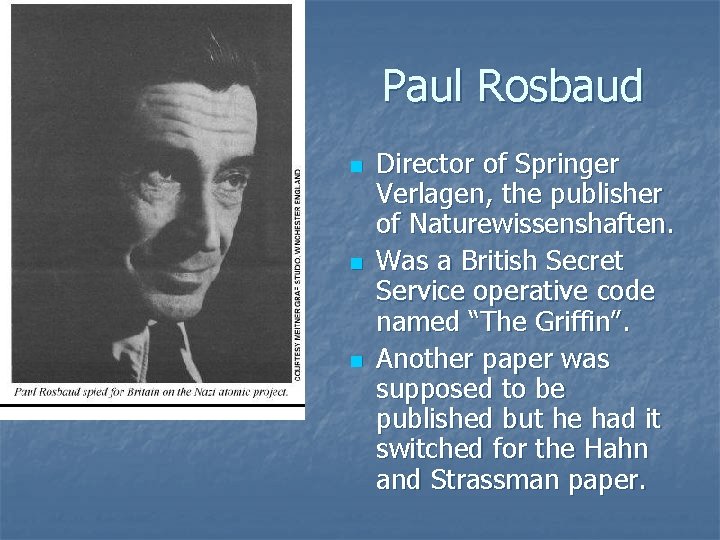
Paul Rosbaud n n n Director of Springer Verlagen, the publisher of Naturewissenshaften. Was a British Secret Service operative code named “The Griffin”. Another paper was supposed to be published but he had it switched for the Hahn and Strassman paper.
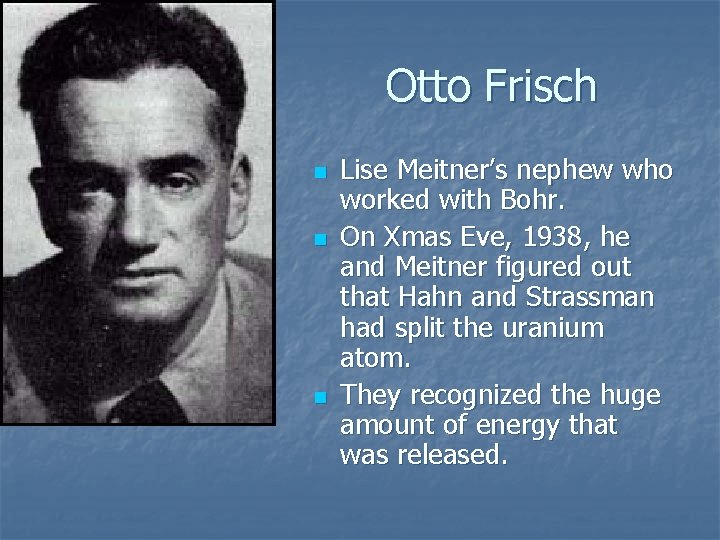
Otto Frisch n n n Lise Meitner’s nephew who worked with Bohr. On Xmas Eve, 1938, he and Meitner figured out that Hahn and Strassman had split the uranium atom. They recognized the huge amount of energy that was released.
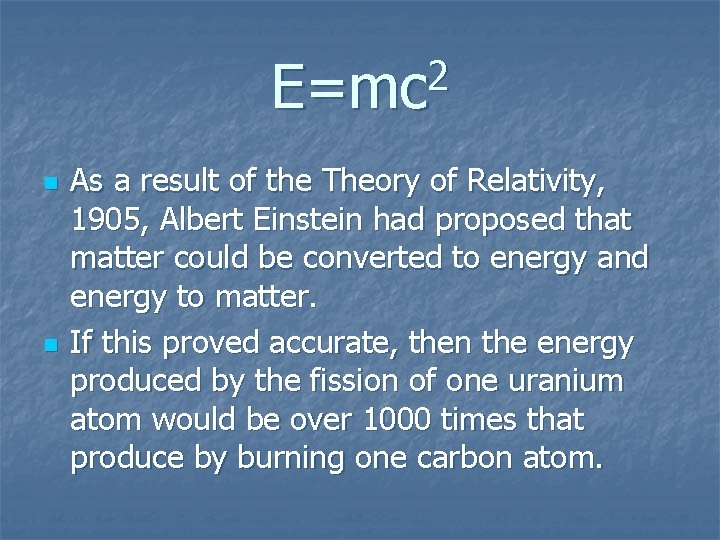
2 E=mc n n As a result of the Theory of Relativity, 1905, Albert Einstein had proposed that matter could be converted to energy and energy to matter. If this proved accurate, then the energy produced by the fission of one uranium atom would be over 1000 times that produce by burning one carbon atom.
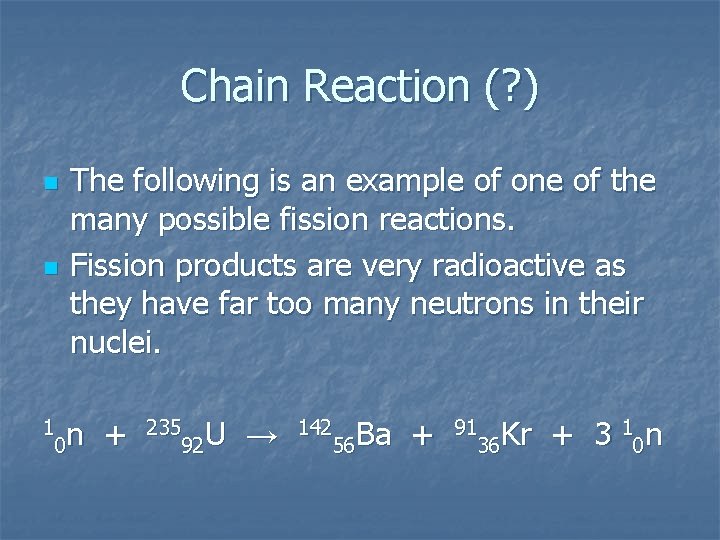
Chain Reaction (? ) n n The following is an example of one of the many possible fission reactions. Fission products are very radioactive as they have far too many neutrons in their nuclei. 1 n 0 + 235 U 92 → 142 Ba 56 + 91 Kr 36 + 3 10 n
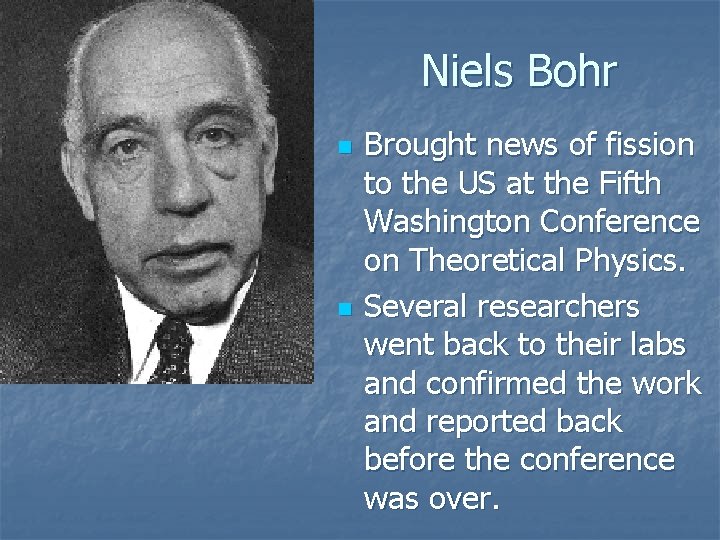
Niels Bohr n n Brought news of fission to the US at the Fifth Washington Conference on Theoretical Physics. Several researchers went back to their labs and confirmed the work and reported back before the conference was over.
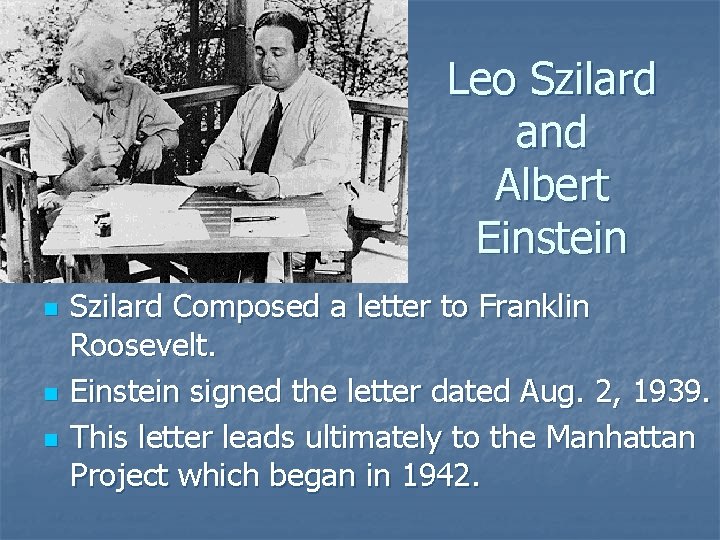
Leo Szilard and Albert Einstein n Szilard Composed a letter to Franklin Roosevelt. Einstein signed the letter dated Aug. 2, 1939. This letter leads ultimately to the Manhattan Project which began in 1942.
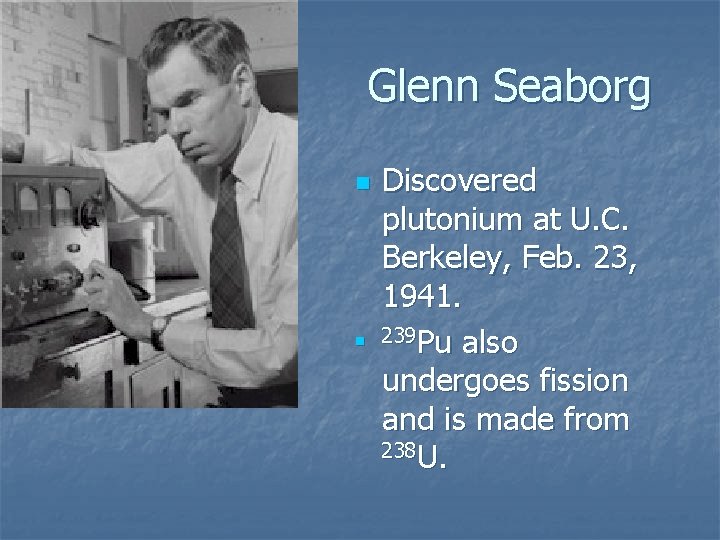
Glenn Seaborg n n Discovered plutonium at U. C. Berkeley, Feb. 23, 1941. 239 Pu also undergoes fission and is made from 238 U.
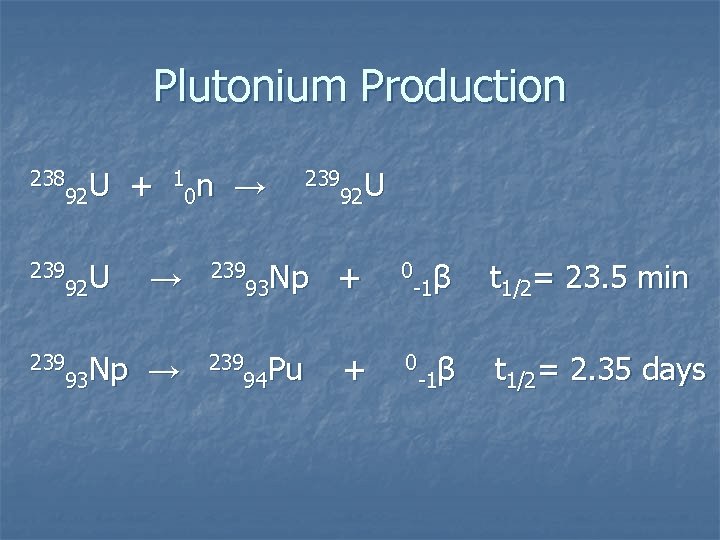
Plutonium Production 238 U 92 + 1 n 0 → 239 U 92 → 239 Np 93 + 0 β -1 t 1/2= 23. 5 min 239 Np 93 → 239 Pu 94 + 0 β -1 t 1/2= 2. 35 days
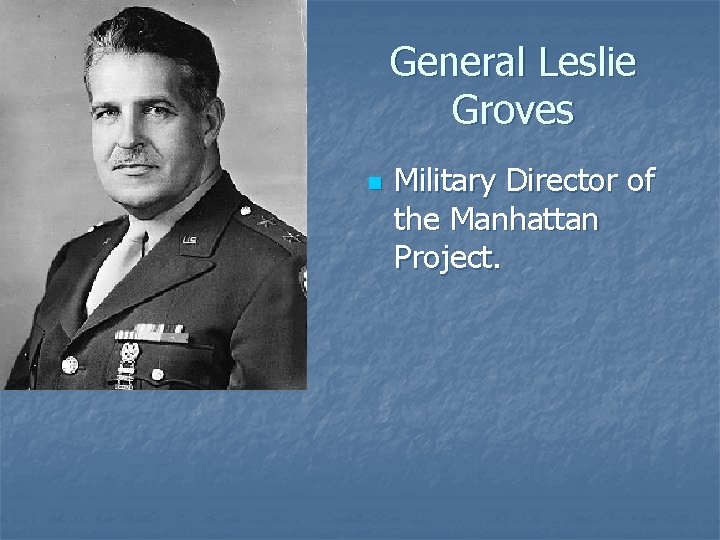
General Leslie Groves n Military Director of the Manhattan Project.
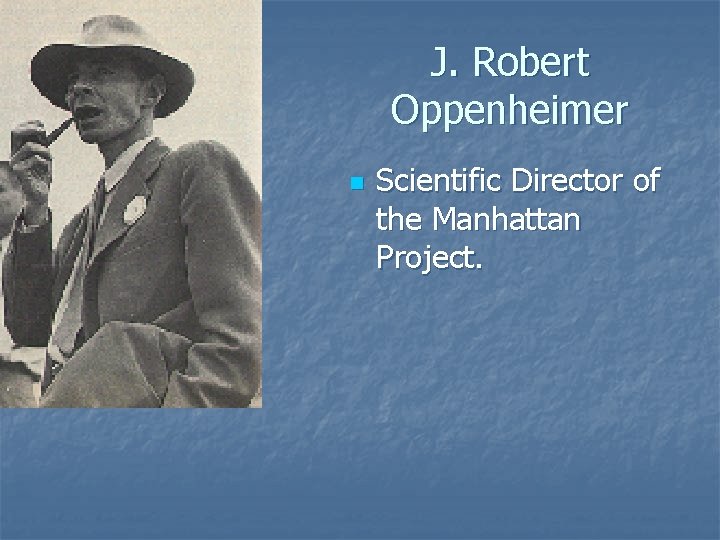
J. Robert Oppenheimer n Scientific Director of the Manhattan Project.
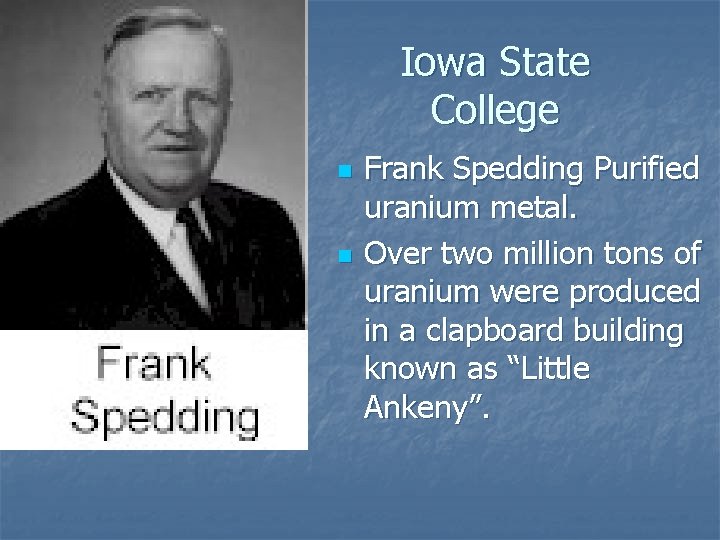
Iowa State College n n Frank Spedding Purified uranium metal. Over two million tons of uranium were produced in a clapboard building known as “Little Ankeny”.
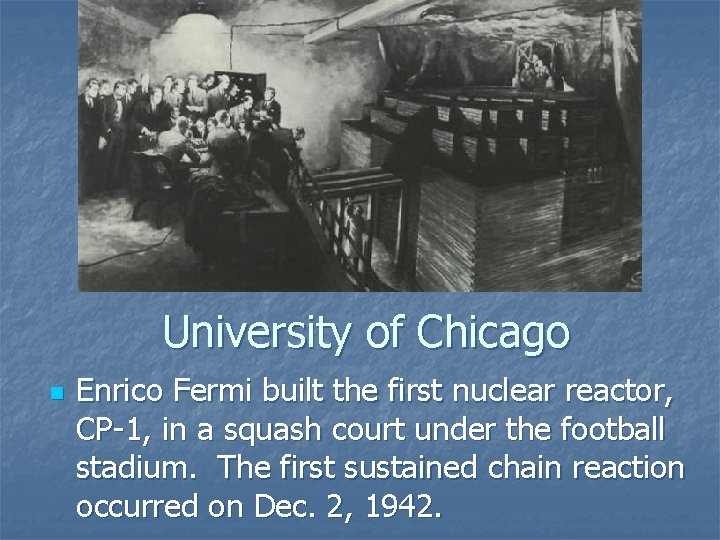
University of Chicago n Enrico Fermi built the first nuclear reactor, CP-1, in a squash court under the football stadium. The first sustained chain reaction occurred on Dec. 2, 1942.
Nuclear Reactors n n n Fuel – fissionable material usually enriched 235 U. CP-1 used uranium metal from Iowa State. Moderator – slows down the neutrons usually graphite, heavy water, or water. CP-1 used graphite. Control Rods – absorb neutrons usually boron or cadmium. CP-1 used cadmium.
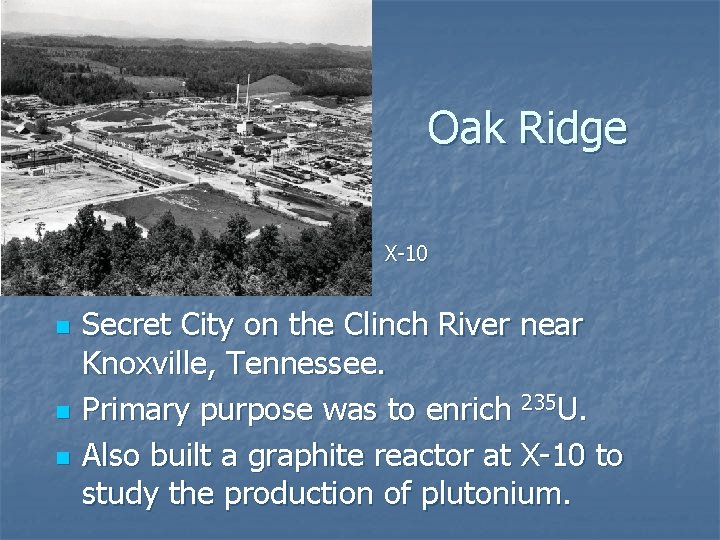
Oak Ridge X-10 n n n Secret City on the Clinch River near Knoxville, Tennessee. Primary purpose was to enrich 235 U. Also built a graphite reactor at X-10 to study the production of plutonium.
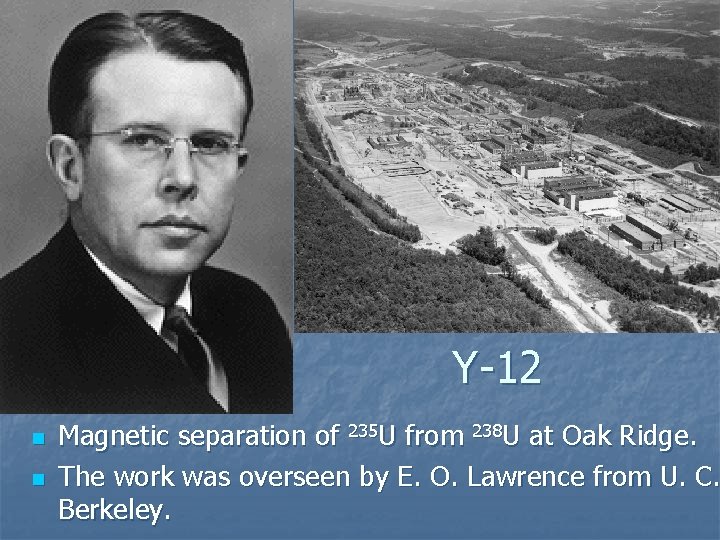
Y-12 n n Magnetic separation of 235 U from 238 U at Oak Ridge. The work was overseen by E. O. Lawrence from U. C. Berkeley.
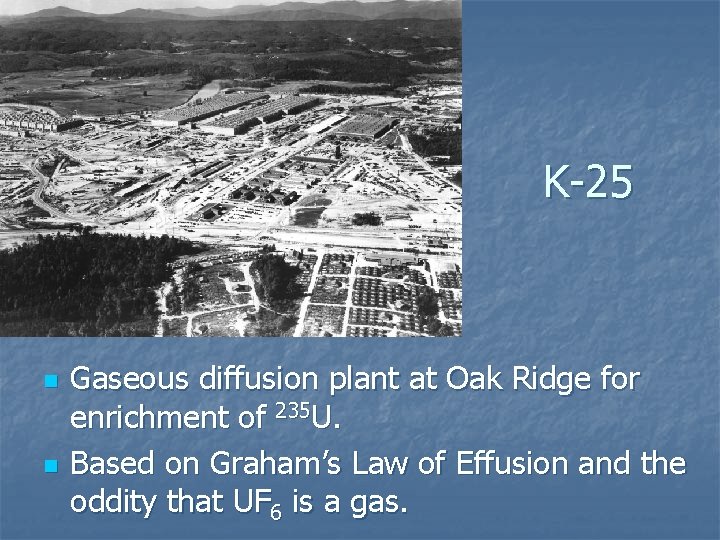
K-25 n n Gaseous diffusion plant at Oak Ridge for enrichment of 235 U. Based on Graham’s Law of Effusion and the oddity that UF 6 is a gas.
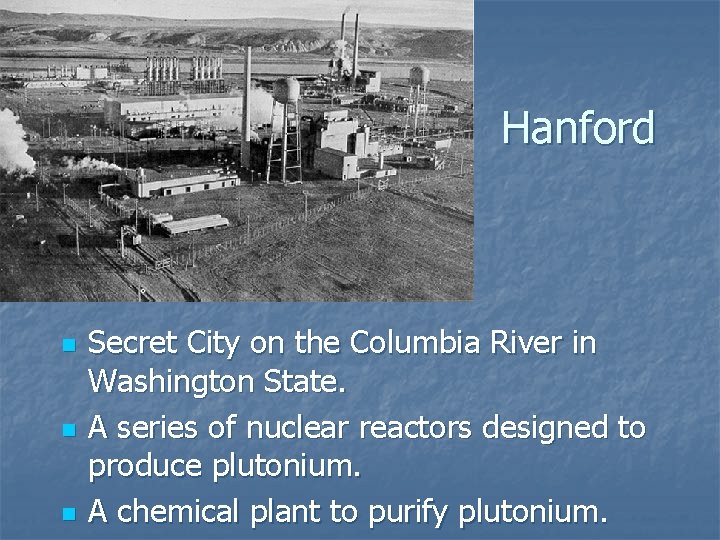
Hanford n n n Secret City on the Columbia River in Washington State. A series of nuclear reactors designed to produce plutonium. A chemical plant to purify plutonium.
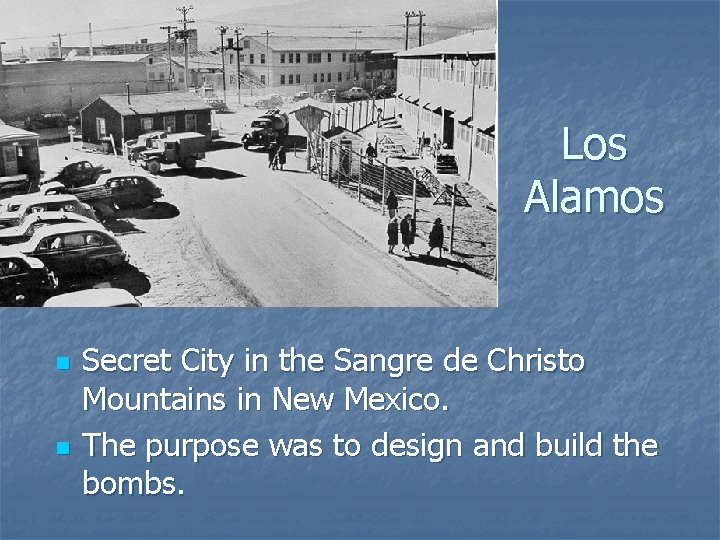
Los Alamos n n Secret City in the Sangre de Christo Mountains in New Mexico. The purpose was to design and build the bombs.
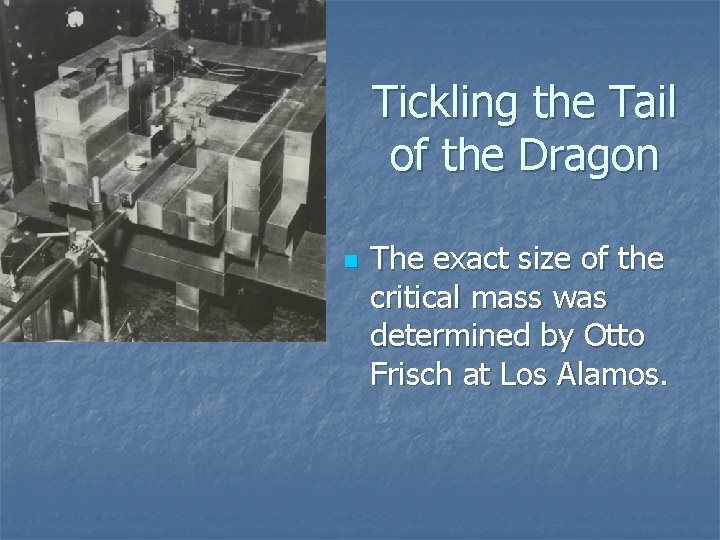
Tickling the Tail of the Dragon n The exact size of the critical mass was determined by Otto Frisch at Los Alamos.
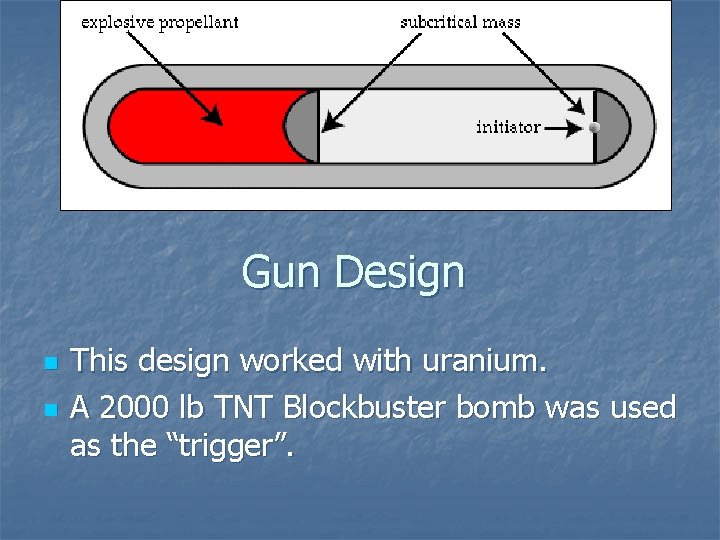
Gun Design n n This design worked with uranium. A 2000 lb TNT Blockbuster bomb was used as the “trigger”.
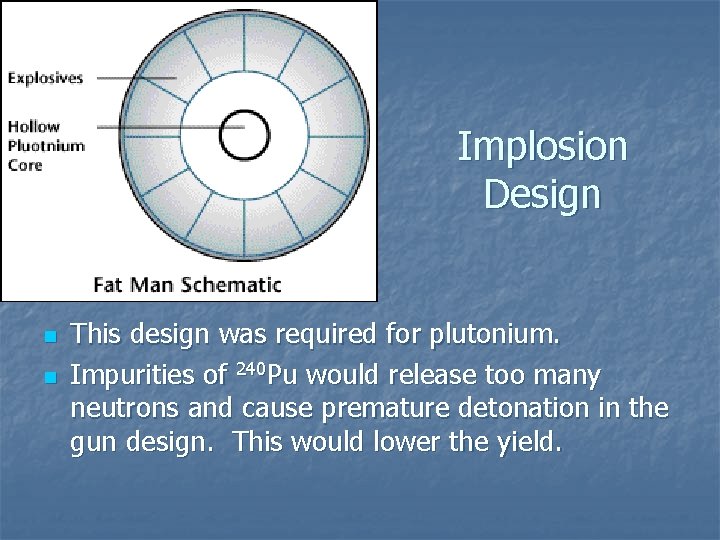
Implosion Design n n This design was required for plutonium. Impurities of 240 Pu would release too many neutrons and cause premature detonation in the gun design. This would lower the yield.
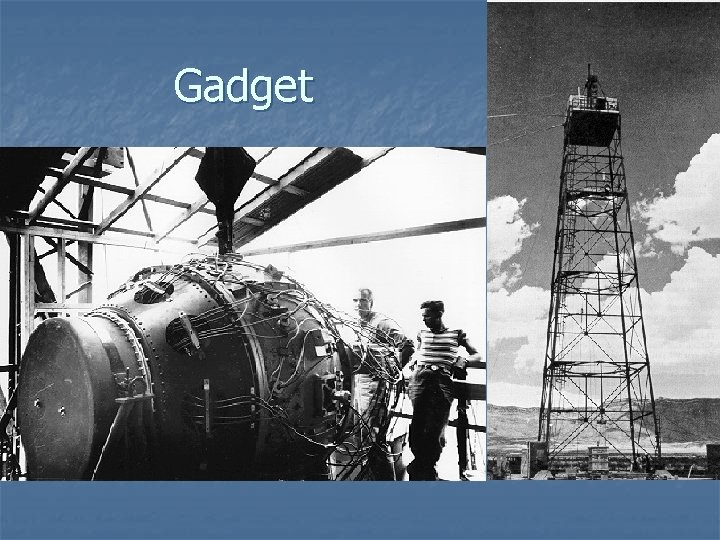
Trinity Site n n n The gun design was simple and the scientists did not feel that testing was necessary. The implosion device was much more complicated and needed to be tested. The chosen site was in the Jornado del Muerto Valley near Alamogordo New Mexico and code named Trinity.
Gadget
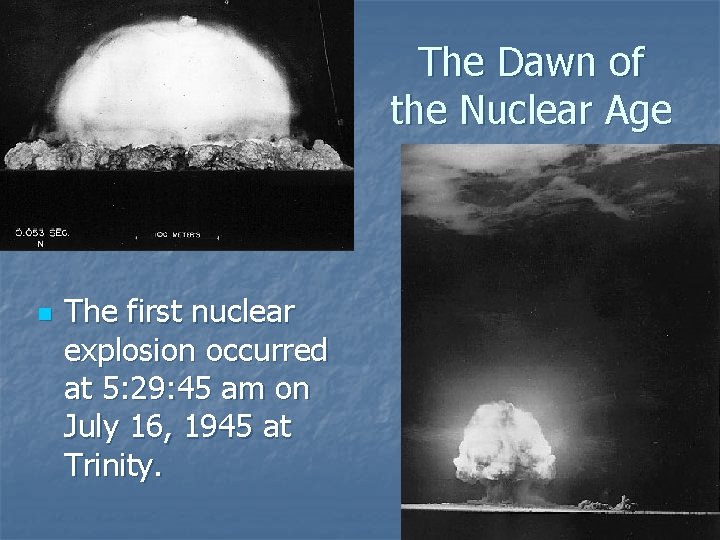
The Dawn of the Nuclear Age n The first nuclear explosion occurred at 5: 29: 45 am on July 16, 1945 at Trinity.
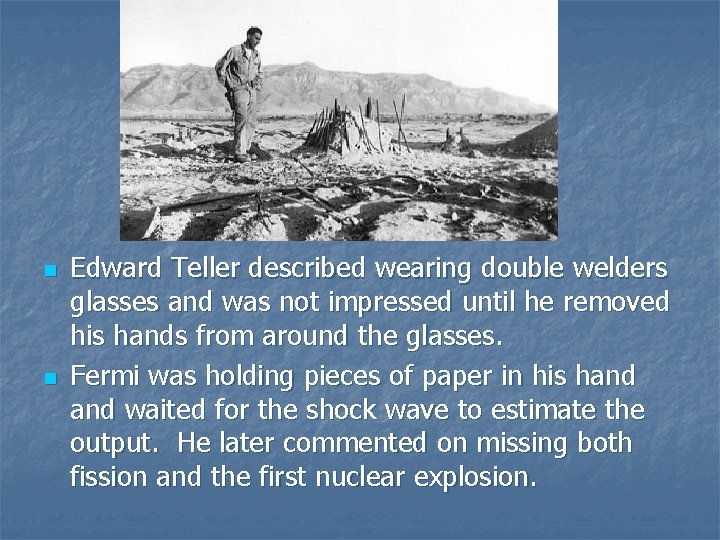
n n Edward Teller described wearing double welders glasses and was not impressed until he removed his hands from around the glasses. Fermi was holding pieces of paper in his hand waited for the shock wave to estimate the output. He later commented on missing both fission and the first nuclear explosion.
To Use or Not to Use n n With the end of the war in Europe on May 8, 1945, discussion began on whether or not to use the bombs. Japan had never been a threat to develop a bomb. Groves definitely wanted to use the bombs. Szilard started a petition, signed by many of the scientists involved in the project, to not drop the bombs. The petition was never delivered to Truman.
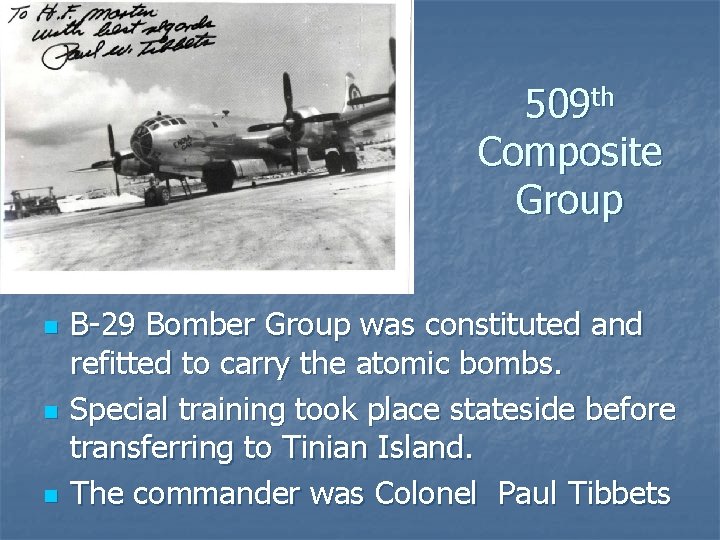
509 th Composite Group n n n B-29 Bomber Group was constituted and refitted to carry the atomic bombs. Special training took place stateside before transferring to Tinian Island. The commander was Colonel Paul Tibbets
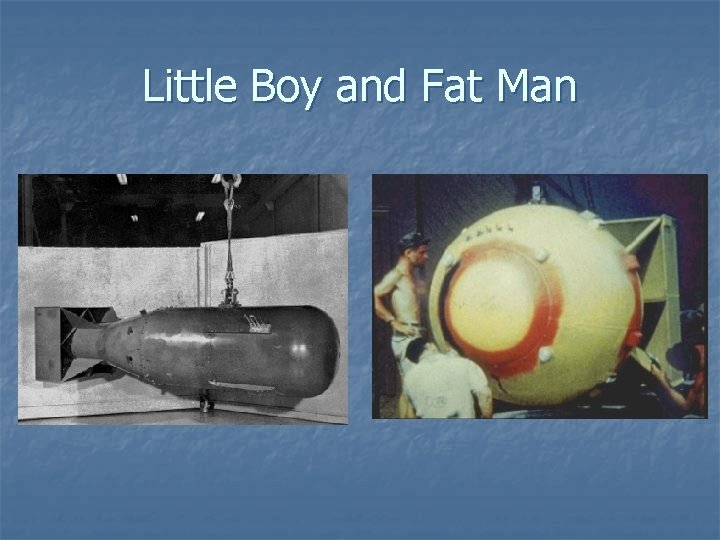
Little Boy and Fat Man n
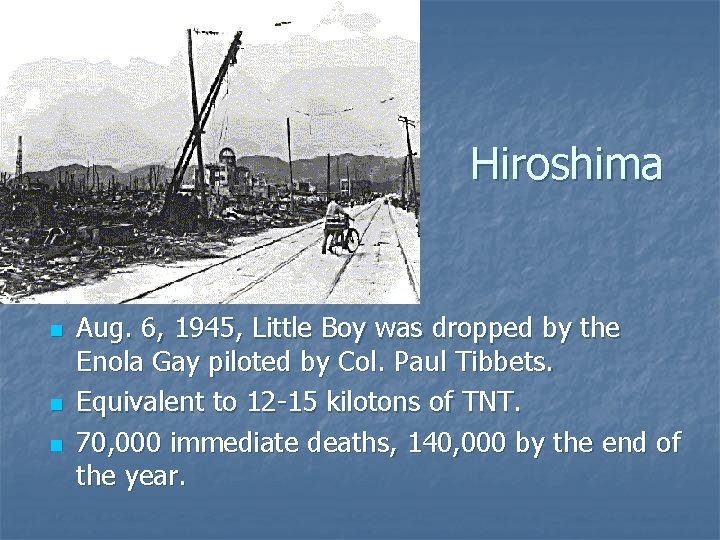
Hiroshima n n n Aug. 6, 1945, Little Boy was dropped by the Enola Gay piloted by Col. Paul Tibbets. Equivalent to 12 -15 kilotons of TNT. 70, 000 immediate deaths, 140, 000 by the end of the year.
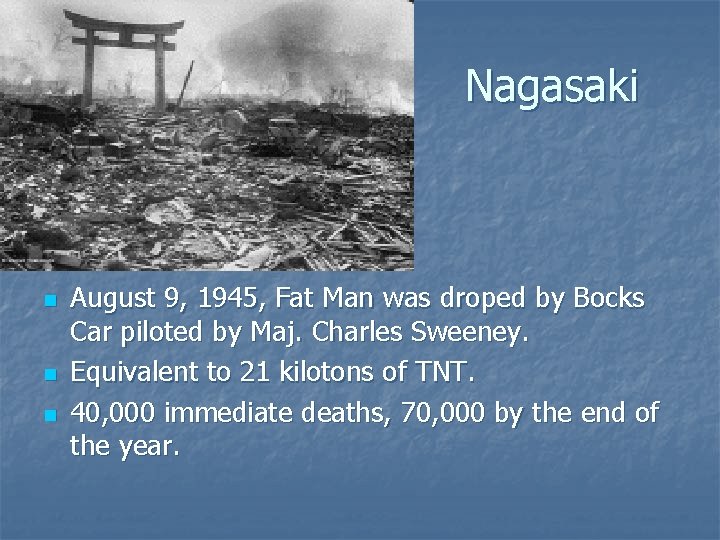
Nagasaki n n n August 9, 1945, Fat Man was droped by Bocks Car piloted by Maj. Charles Sweeney. Equivalent to 21 kilotons of TNT. 40, 000 immediate deaths, 70, 000 by the end of the year.
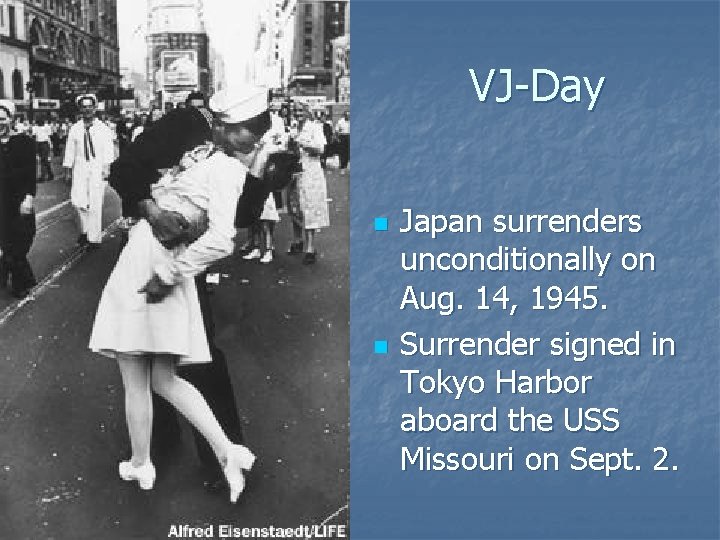
VJ-Day n n Japan surrenders unconditionally on Aug. 14, 1945. Surrender signed in Tokyo Harbor aboard the USS Missouri on Sept. 2.
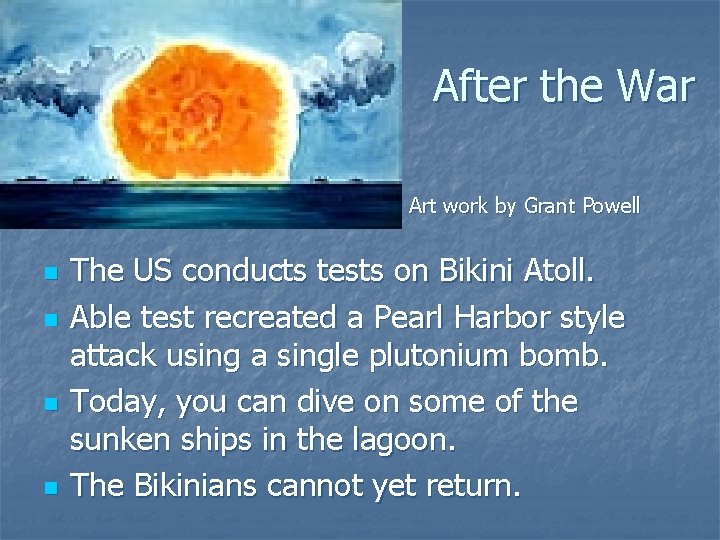
After the War Art work by Grant Powell n n The US conducts tests on Bikini Atoll. Able test recreated a Pearl Harbor style attack using a single plutonium bomb. Today, you can dive on some of the sunken ships in the lagoon. The Bikinians cannot yet return.
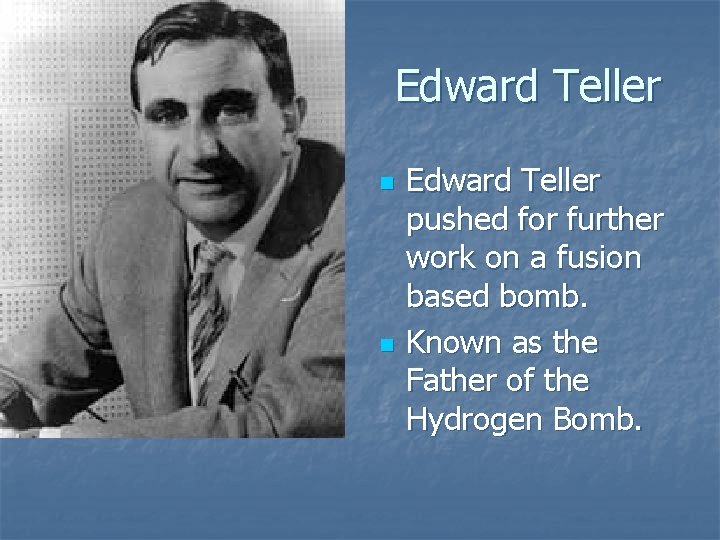
Edward Teller n n Edward Teller pushed for further work on a fusion based bomb. Known as the Father of the Hydrogen Bomb.
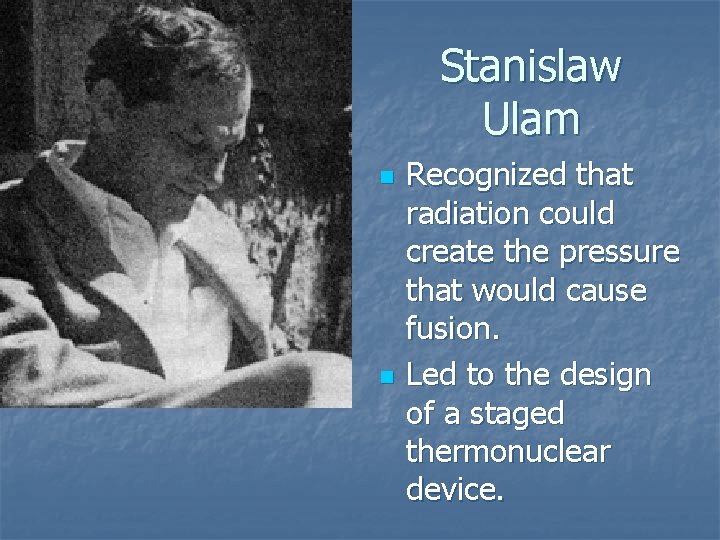
Stanislaw Ulam n n Recognized that radiation could create the pressure that would cause fusion. Led to the design of a staged thermonuclear device.
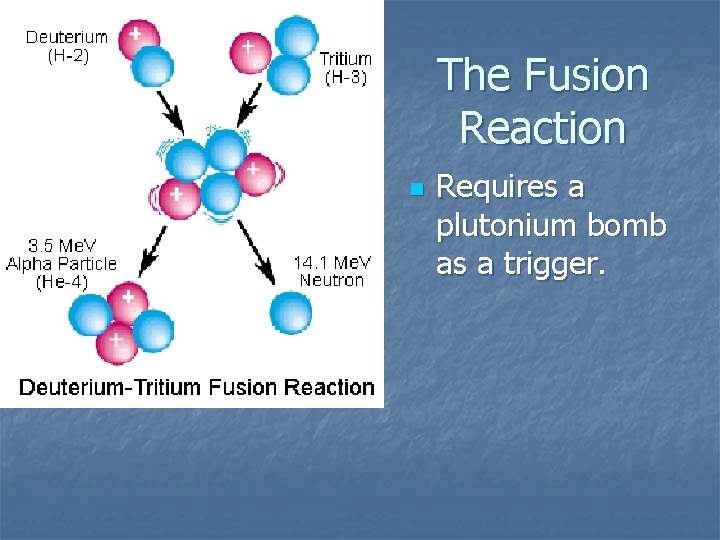
The Fusion Reaction n Requires a plutonium bomb as a trigger.
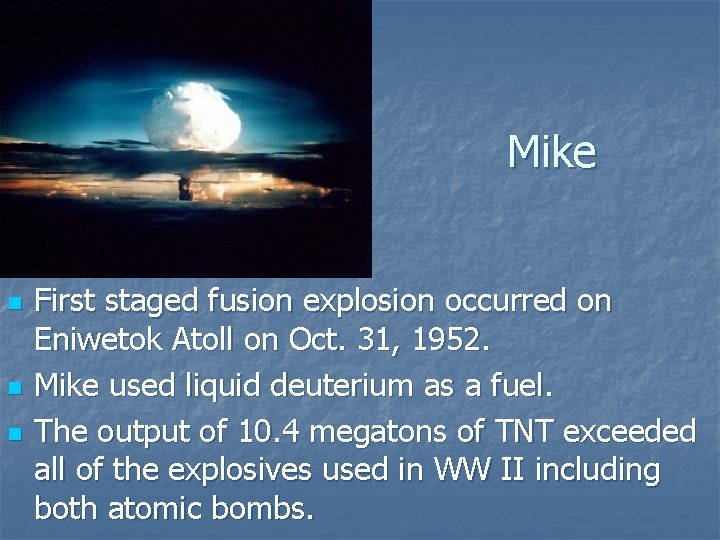
Mike n n n First staged fusion explosion occurred on Eniwetok Atoll on Oct. 31, 1952. Mike used liquid deuterium as a fuel. The output of 10. 4 megatons of TNT exceeded all of the explosives used in WW II including both atomic bombs.
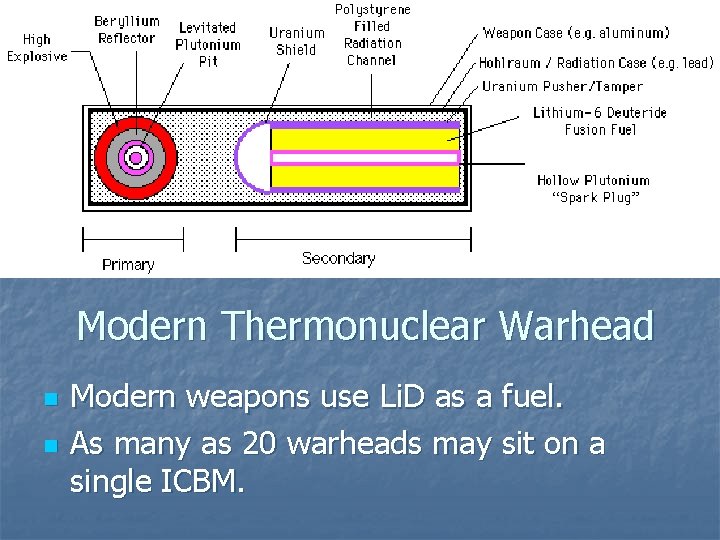
Modern Thermonuclear Warhead n n Modern weapons use Li. D as a fuel. As many as 20 warheads may sit on a single ICBM.
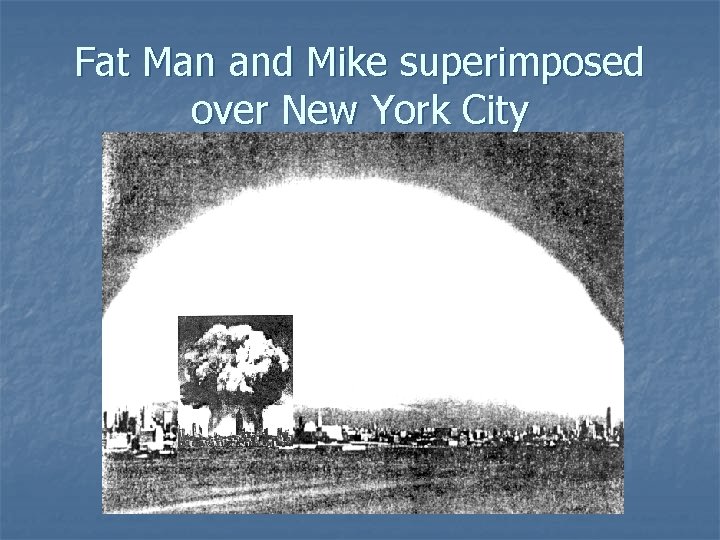
Fat Man and Mike superimposed over New York City