
The digestive system Unit Applied human biology for
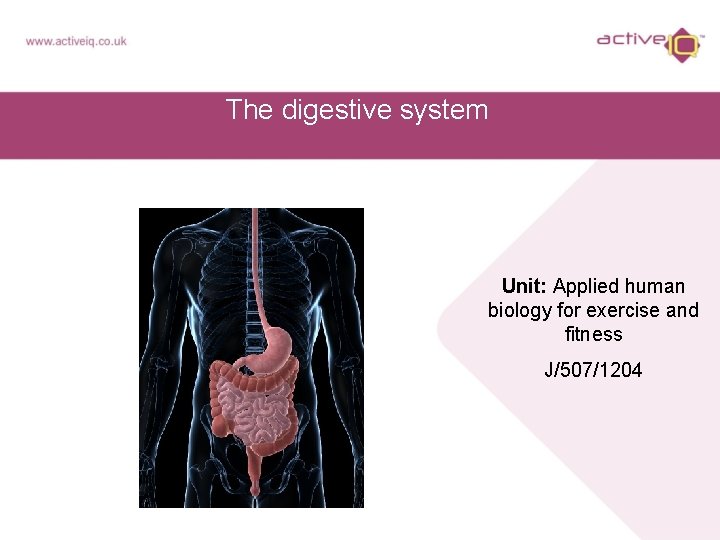
The digestive system Unit: Applied human biology for exercise and fitness J/507/1204
Learning outcomes and assessment criteria Learning outcome: The learner will: LO 7: Know digestive system structure and function in relation to health and fitness Assessment criteria: The learner can: 7. 1 Identify the structure of each section of the gastrointestinal tract in relation to its functions 7. 2 Identify the location and functions of each of the digestive organs 7. 3 Identify the role of the digestive system and gut microbes in maintaining health 7. 4 Recognise the implications of different dietary practices for the digestive system
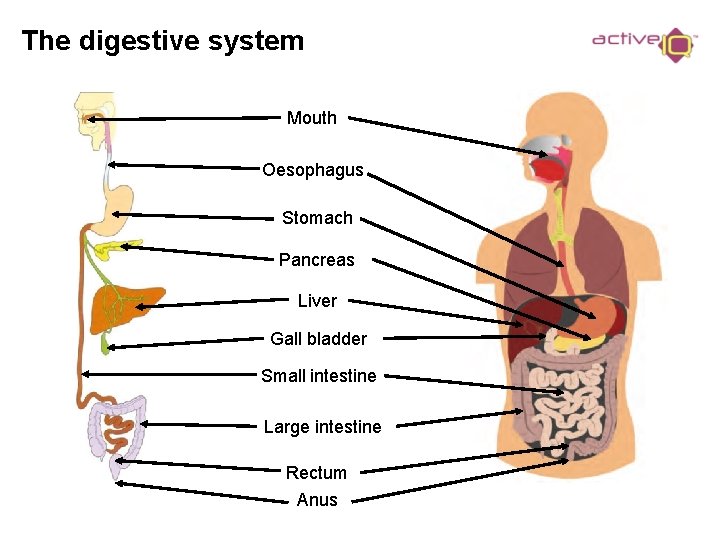
The digestive system Mouth Oesophagus Stomach Pancreas Liver Gall bladder Small intestine Large intestine Rectum Anus
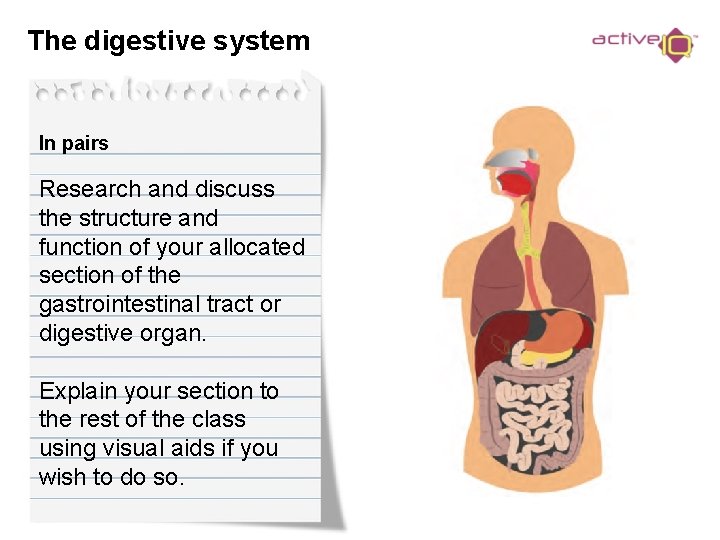
The digestive system In pairs Research and discuss the structure and function of your allocated section of the gastrointestinal tract or digestive organ. Explain your section to the rest of the class using visual aids if you wish to do so.

The gastrointestinal tract (GI tract) • Peristalsis – a wave-like movement that propels food along the GI tract. • The GI tract is approximately 9 m long in an adult. The GI tract includes: • Mouth. • Pharynx. • Oesophagus. • Stomach. • Small intestine. • Large intestine. • Rectum and anus. Organs that aid digestion as food passes through the GI tract: • Teeth. • Tongue. • Salivary glands. • Liver. • Pancreas. • Gall bladder and bile ducts.

The mouth • Mastication – the process of the teeth grinding food down in the mouth (chewing). • Saliva – moistens the food and helps to protect the teeth against decay. • Salivary glands – produce saliva. • Salivary amylase – a digestive enzyme in saliva that begins to breakdown carbohydrates. Bolus – food held together in a ball, ready for swallowing

The stomach • Produces gastric juices containing hydrochloric acid and pepsin. • Hydrochloric acid kills bacteria. • Pepsin is an enzyme that breaks down protein.
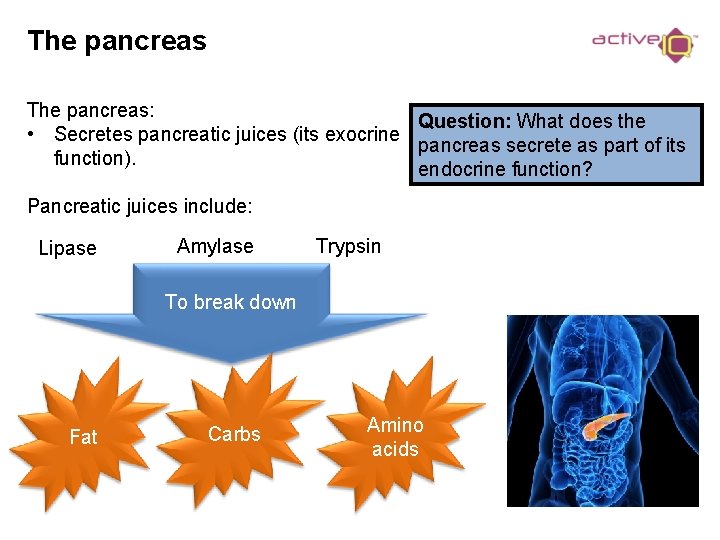
The pancreas: Question: What does the • Secretes pancreatic juices (its exocrine pancreas secrete as part of its function). endocrine function? Pancreatic juices include: Lipase Amylase Trypsin To break down Fat Carbs Amino acids
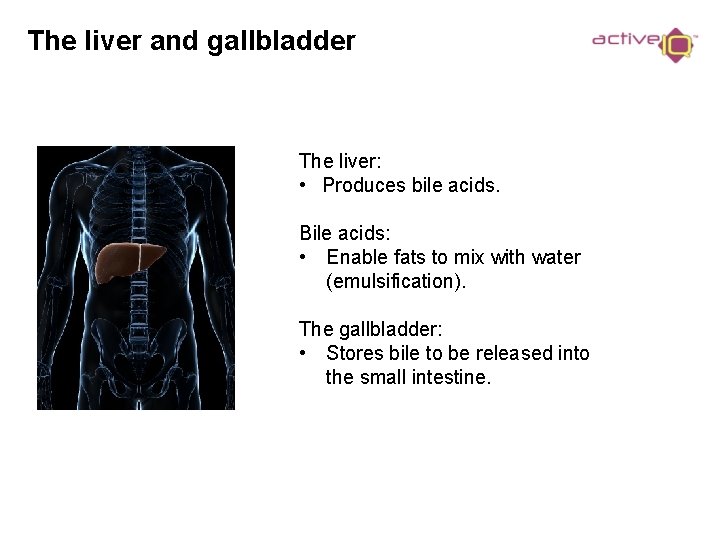
The liver and gallbladder The liver: • Produces bile acids. Bile acids: • Enable fats to mix with water (emulsification). The gallbladder: • Stores bile to be released into the small intestine.
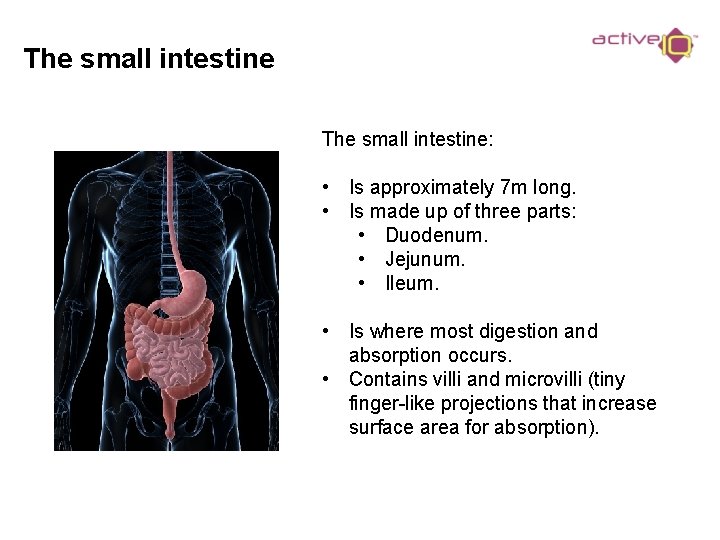
The small intestine: • Is approximately 7 m long. • Is made up of three parts: • Duodenum. • Jejunum. • Ileum. • Is where most digestion and absorption occurs. • Contains villi and microvilli (tiny finger-like projections that increase surface area for absorption).
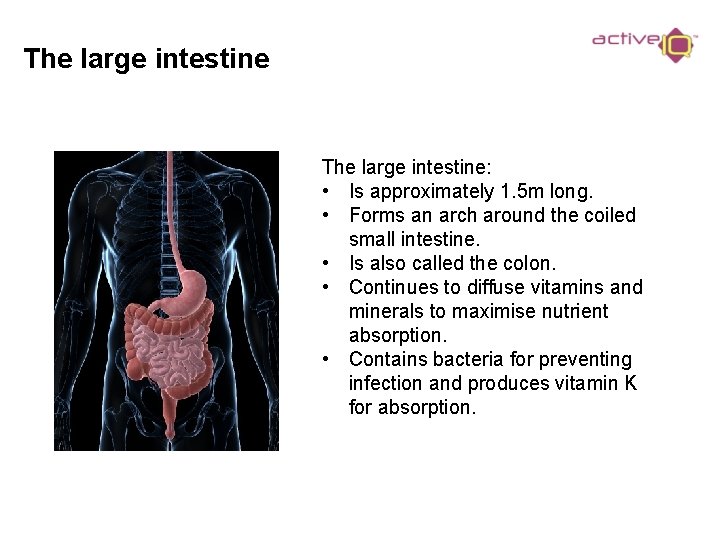
The large intestine: • Is approximately 1. 5 m long. • Forms an arch around the coiled small intestine. • Is also called the colon. • Continues to diffuse vitamins and minerals to maximise nutrient absorption. • Contains bacteria for preventing infection and produces vitamin K for absorption.
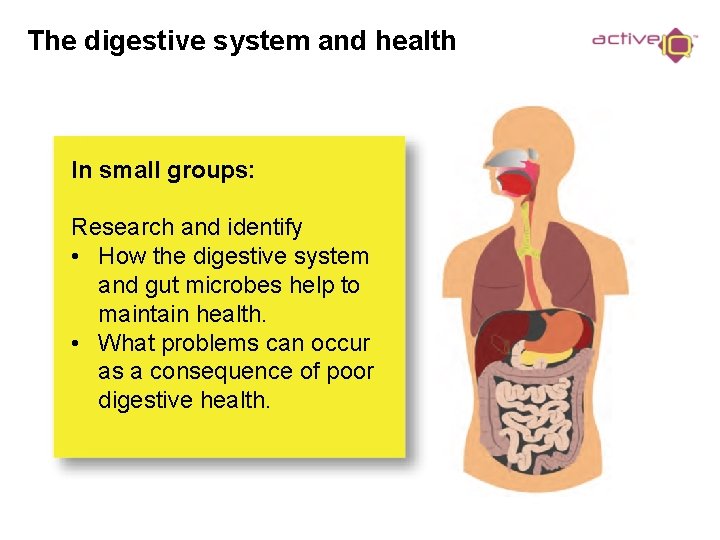
The digestive system and health In small groups: Research and identify • How the digestive system and gut microbes help to maintain health. • What problems can occur as a consequence of poor digestive health.
Physical activity and the digestive system Question: Why is physical activity important for digestive system health?
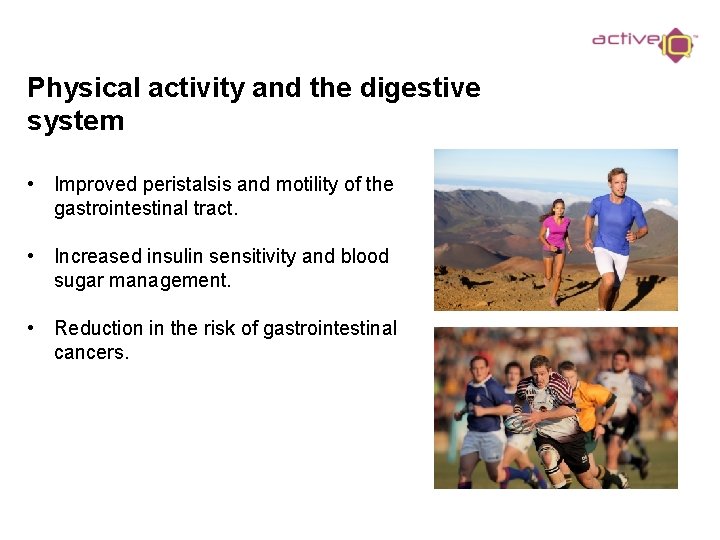
Physical activity and the digestive system • Improved peristalsis and motility of the gastrointestinal tract. • Increased insulin sensitivity and blood sugar management. • Reduction in the risk of gastrointestinal cancers.
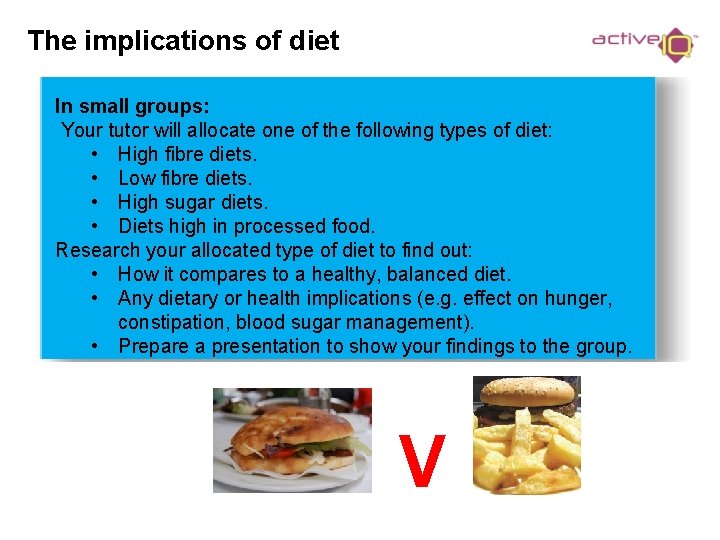
The implications of diet In small groups: Your tutor will allocate one of the following types of diet: • High fibre diets. • Low fibre diets. • High sugar diets. • Diets high in processed food. Research your allocated type of diet to find out: • How it compares to a healthy, balanced diet. • Any dietary or health implications (e. g. effect on hunger, constipation, blood sugar management). • Prepare a presentation to show your findings to the group. V
Learning review Assessment criteria: Can you now: • Identify the structure of each section of the gastrointestinal tract in relation to its functions • Identify the location and functions of each of the digestive organs • Identify the role of the digestive system and gut microbes in maintaining health • Recognise the implications of different dietary practices for the digestive system
- Slides: 16