
The Digestive System The Digestive System Digestion is
- Slides: 24
The Digestive System
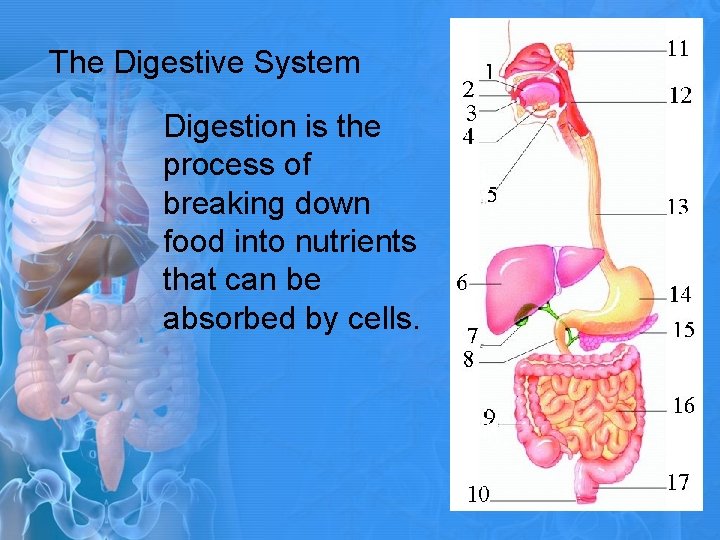
The Digestive System Digestion is the process of breaking down food into nutrients that can be absorbed by cells. 2
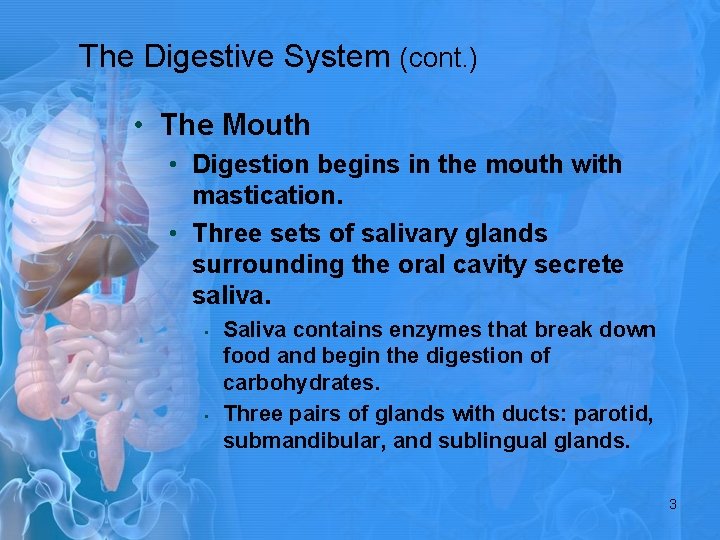
The Digestive System (cont. ) • The Mouth • Digestion begins in the mouth with mastication. • Three sets of salivary glands surrounding the oral cavity secrete saliva. • • Saliva contains enzymes that break down food and begin the digestion of carbohydrates. Three pairs of glands with ducts: parotid, submandibular, and sublingual glands. 3
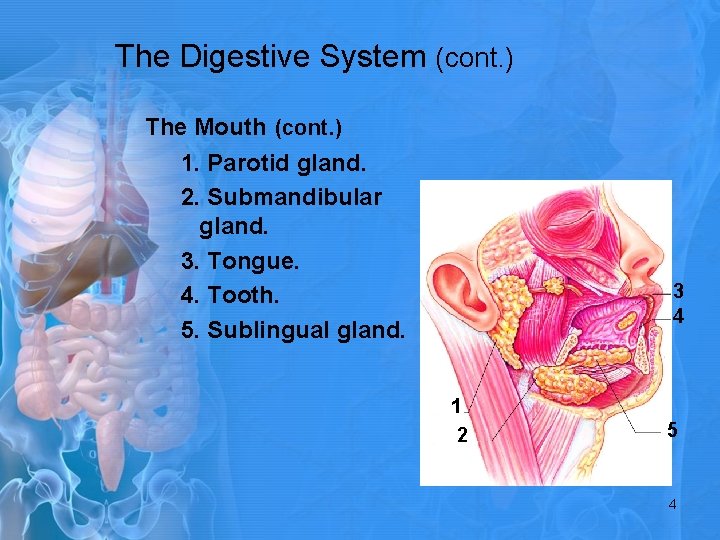
The Digestive System (cont. ) The Mouth (cont. ) 1. Parotid gland. 2. Submandibular gland. 3. Tongue. 4. Tooth. 5. Sublingual gland. 3 4 1 2 5 4
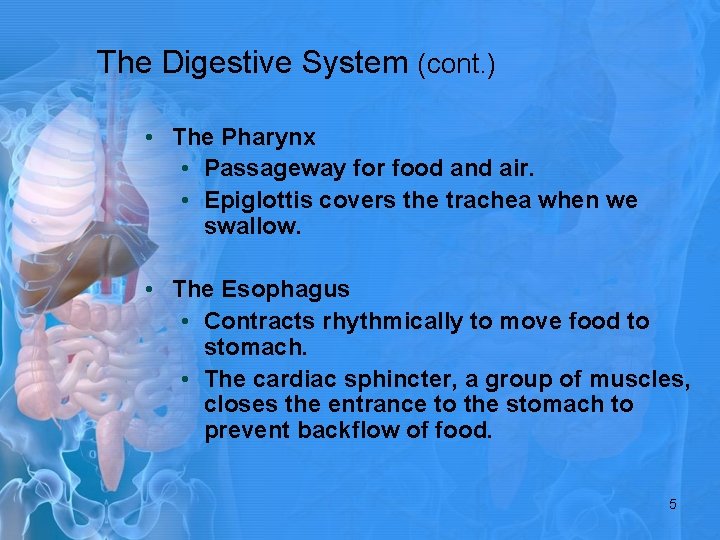
The Digestive System (cont. ) • The Pharynx • Passageway for food and air. • Epiglottis covers the trachea when we swallow. • The Esophagus • Contracts rhythmically to move food to stomach. • The cardiac sphincter, a group of muscles, closes the entrance to the stomach to prevent backflow of food. 5
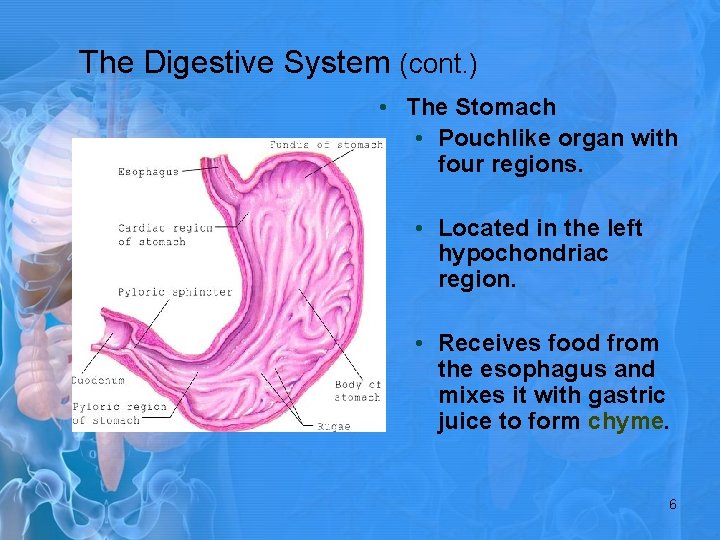
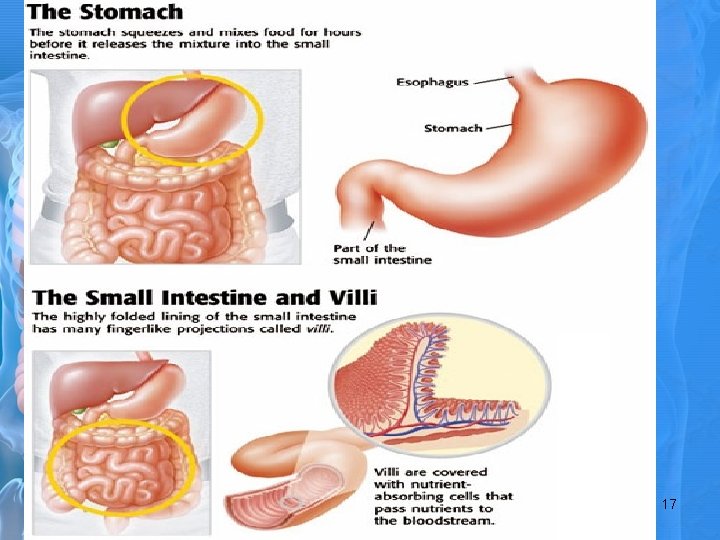
The Digestive System (cont. ) • The Stomach • Pouchlike organ with four regions. • Located in the left hypochondriac region. • Receives food from the esophagus and mixes it with gastric juice to form chyme. 6
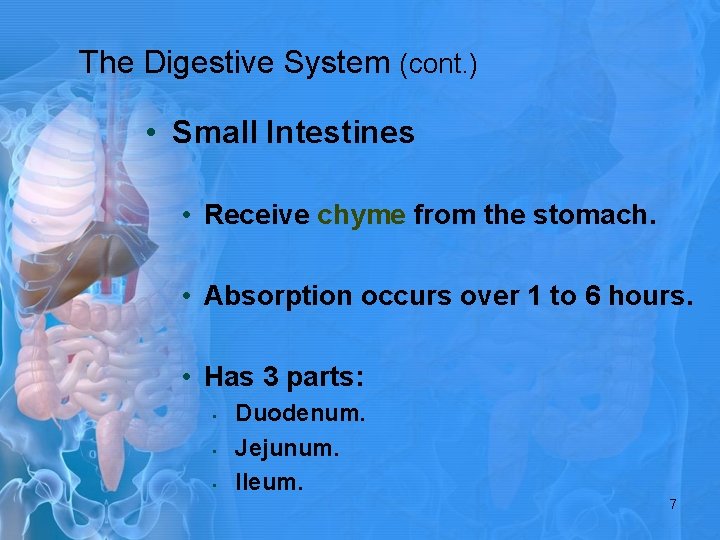
The Digestive System (cont. ) • Small Intestines • Receive chyme from the stomach. • Absorption occurs over 1 to 6 hours. • Has 3 parts: • • • Duodenum. Jejunum. Ileum. 7
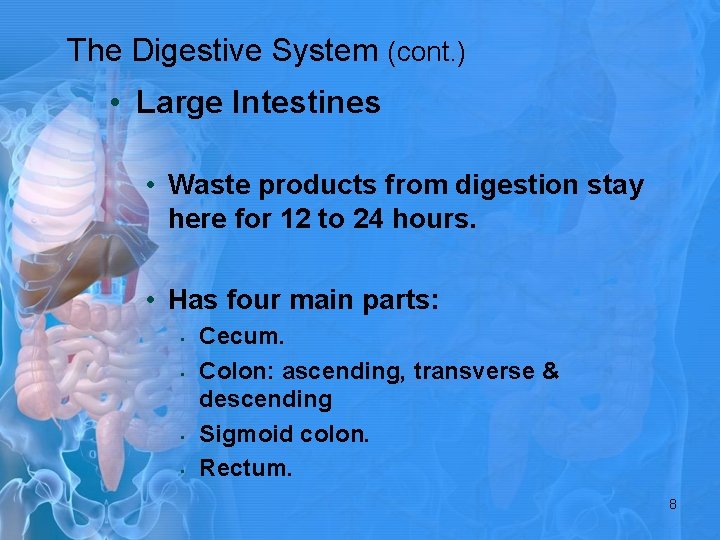
The Digestive System (cont. ) • Large Intestines • Waste products from digestion stay here for 12 to 24 hours. • Has four main parts: • • Cecum. Colon: ascending, transverse & descending Sigmoid colon. Rectum. 8
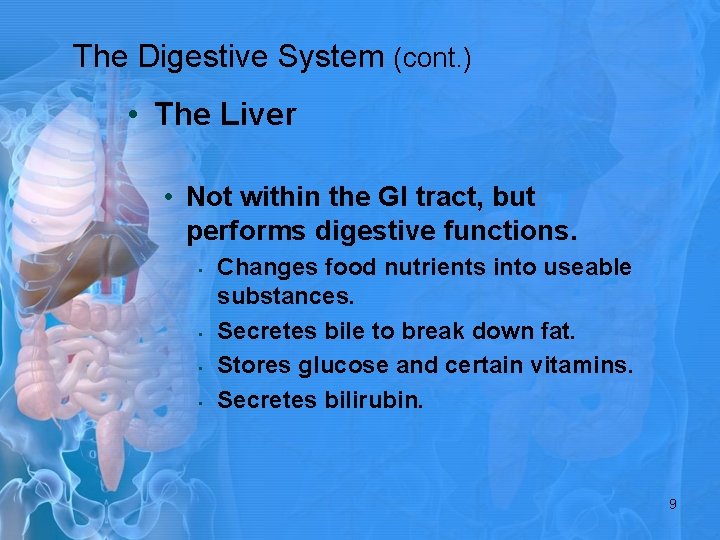
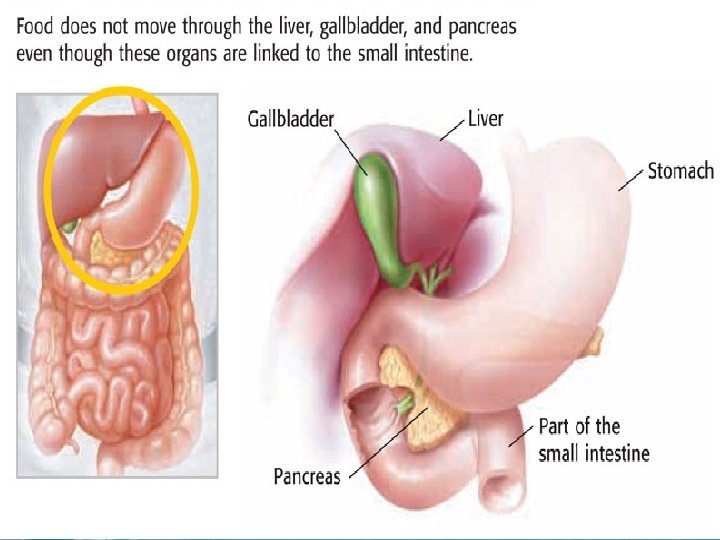
The Digestive System (cont. ) • The Liver • Not within the GI tract, but performs digestive functions. • • Changes food nutrients into useable substances. Secretes bile to break down fat. Stores glucose and certain vitamins. Secretes bilirubin. 9
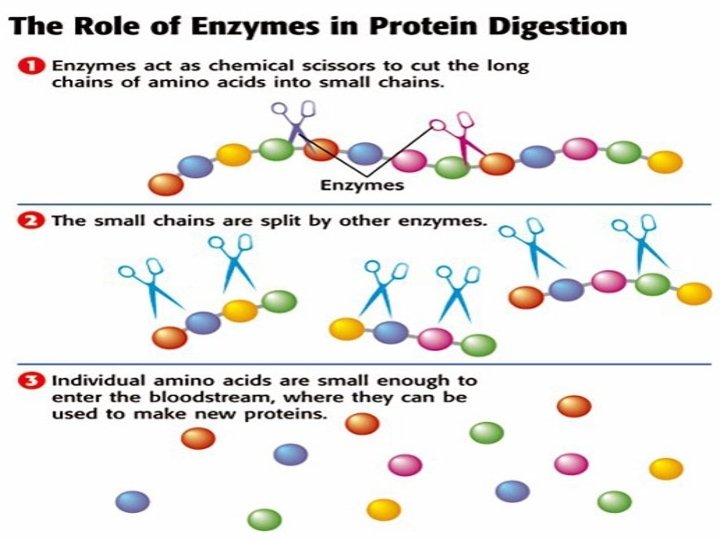
The Process of Digestion-The mouth • Mechanical Digestion is the process of physically breaking down food through chewing • Chemical Digestion occurs when food molecules are further broken down with the help of enzymes 10
11
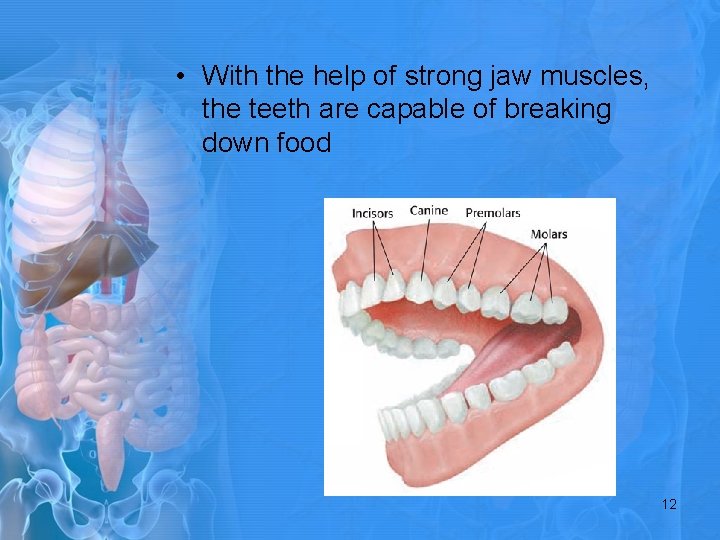
• With the help of strong jaw muscles, the teeth are capable of breaking down food 12
• While mechanically breaking down food in the mouth, enzymes in the saliva begin to chemically break the food molecules down into useable nutrients • Once the food has been reduced to a soft mush, the tongue pushes the food to the back of the mouth, causing the swallowing reflex 13
• Food is pushed to the esophagus, where it slides to the stomach in less than 10 seconds. • Small glands in the stomach produce enzymes and acid which further break down food particles into nutrients • After a few hours of being broken down, the food exits the stomach as a soupy mixture called chyme 14
• After leaving the stomach, chyme is pushed into the small intestine, where the process of absorption will begin. • At this point, fluids produced by the pancreas to protect the small intestine from the acid in the chyme are released 15
• The Small Intestine is the MAIN point of absorption of nutrients into the blood (and eventually the cells). • Numerous small, finger-like projections called villi poke out into the tube of the small intestine, greatly increasing its surface area. • The increase in surface area allows for more absorption to occur here 16
17
• While traveling along the digestive tract, bile is secreted into the small intestine, breaking up fats • Bile is produced in the liver, although it is stored and secreted into the small intestine through the gallbladder 18
19
• Food that cannot be directly absorbed into the blood is pushed from the small intestine into the large intestine • The large intestine is capable of absorbing most of the water from the food remains, turning them into a semi-solid mass known as feces, or stool. • Feces are stored in the rectum until they can be expelled. 20
The Digestive System (cont. ) • Diseases and Disorders • Anorexia nervosa – refusing to eat in order to be thin. • Bulimia nervosa – binging on food and then purposely vomiting for weight loss. • Obesity – usually caused by overeating, possibly a heredity defect. Can contribute to heart disease and diabetes. • Halitosis – bad breath. • Esophageal varices – twisted veins in the esophagus. 21
The Digestive System (cont. ) • Diseases and Disorders (cont. ) • Gastroenteritis – inflammation of the stomach and small intestines. • Flatulence – gas. • Eructation – belching. • Nausea – sick feeling in stomach. • GI ulcer – sores on the mucous membrane of the GI tract. • Hiatal hernia – protrusion of the stomach through an opening in the diaphragm. 22
The Digestive System (cont. ) • Diseases and Disorders (cont. ) • Jaundice – yellow discoloration of the skin. • Cirrhosis – chronic liver disease. • Cholecystitis – inflammation of the gall bladder. • Appendicitis – inflammation of the appendix. • Ulcerative colitis and Crohn’s disease – chronic inflammatory diseases of the intestines. 23
The Digestive System (cont. ) • Diseases and Disorders (cont. ) • Diverticulitis – inflammation of the pouches in the intestinal wall. • Constipation – infrequent or difficult release of bowel movements. • Diarrhea – loose, watery stools. • Hemorrhoids – swollen, twisted, painful veins in the internal and external area. 24