
The Digestive System The Digestive System Digestion is
- Slides: 27
The Digestive System
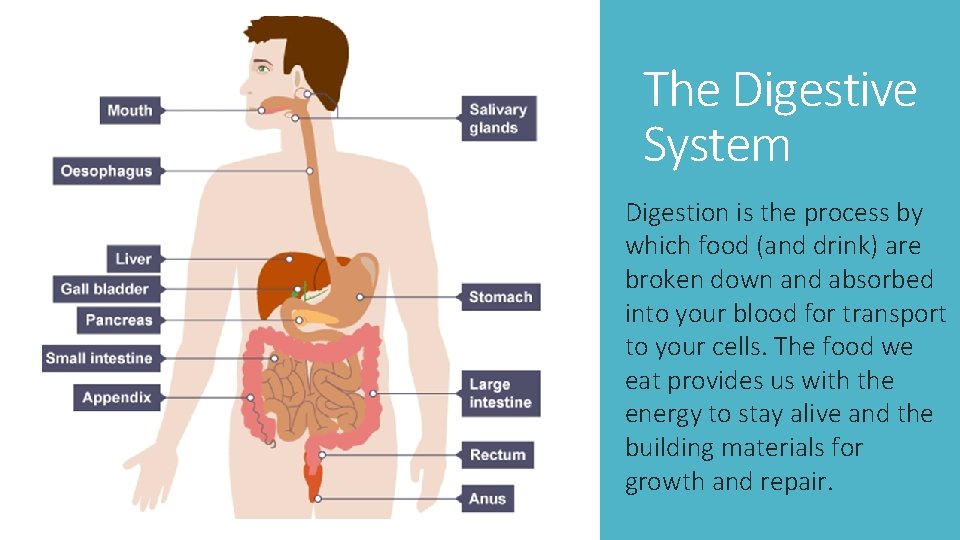
The Digestive System Digestion is the process by which food (and drink) are broken down and absorbed into your blood for transport to your cells. The food we eat provides us with the energy to stay alive and the building materials for growth and repair.
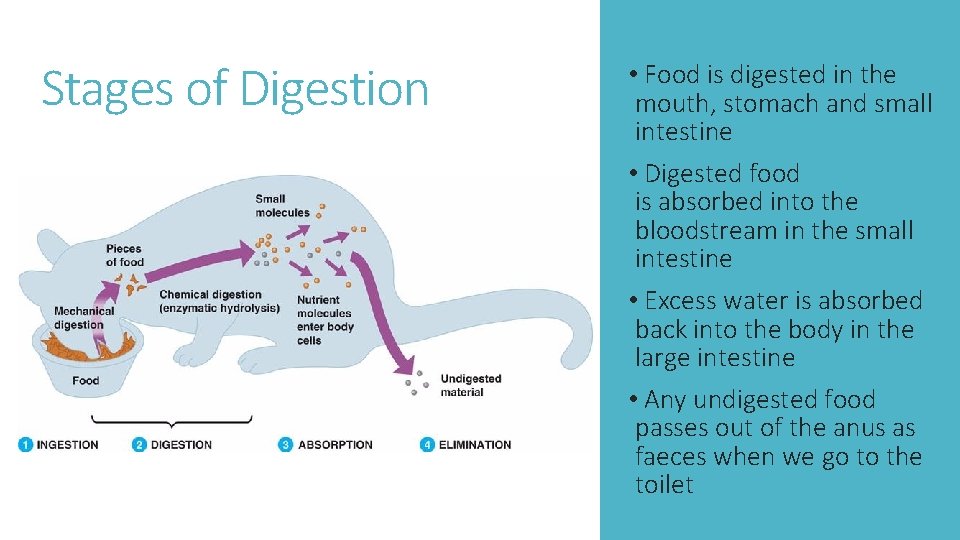
Stages of Digestion • Food is digested in the mouth, stomach and small intestine • Digested food is absorbed into the bloodstream in the small intestine • Excess water is absorbed back into the body in the large intestine • Any undigested food passes out of the anus as faeces when we go to the toilet
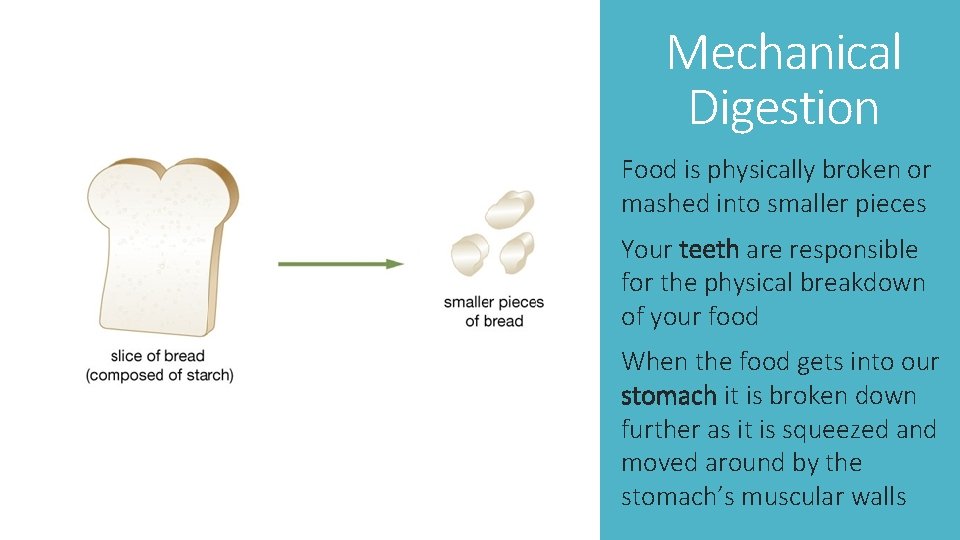
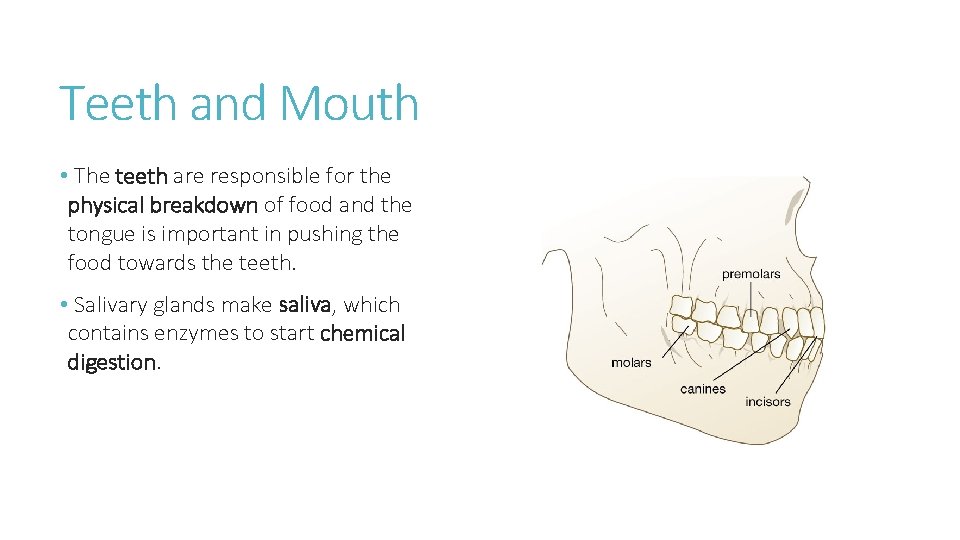
Mechanical Digestion Food is physically broken or mashed into smaller pieces Your teeth are responsible for the physical breakdown of your food When the food gets into our stomach it is broken down further as it is squeezed and moved around by the stomach’s muscular walls
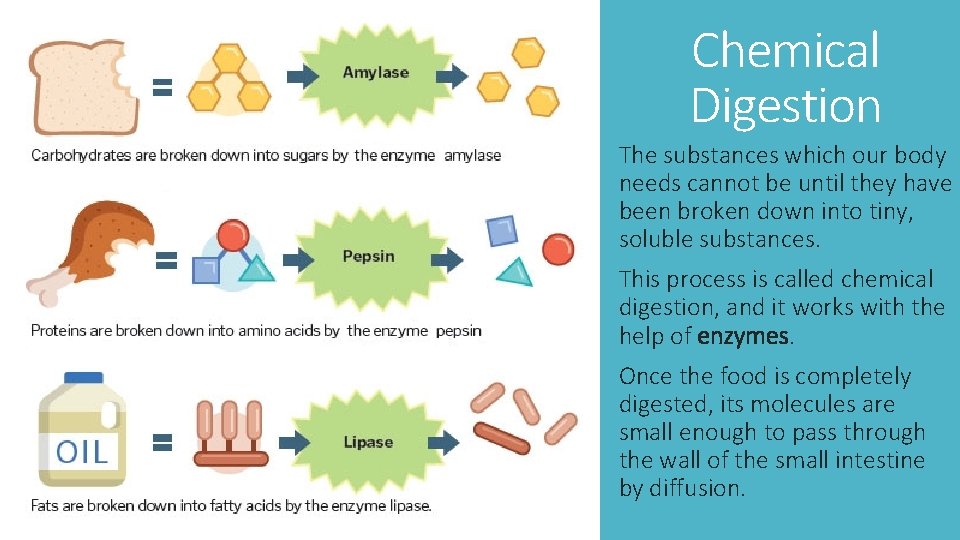
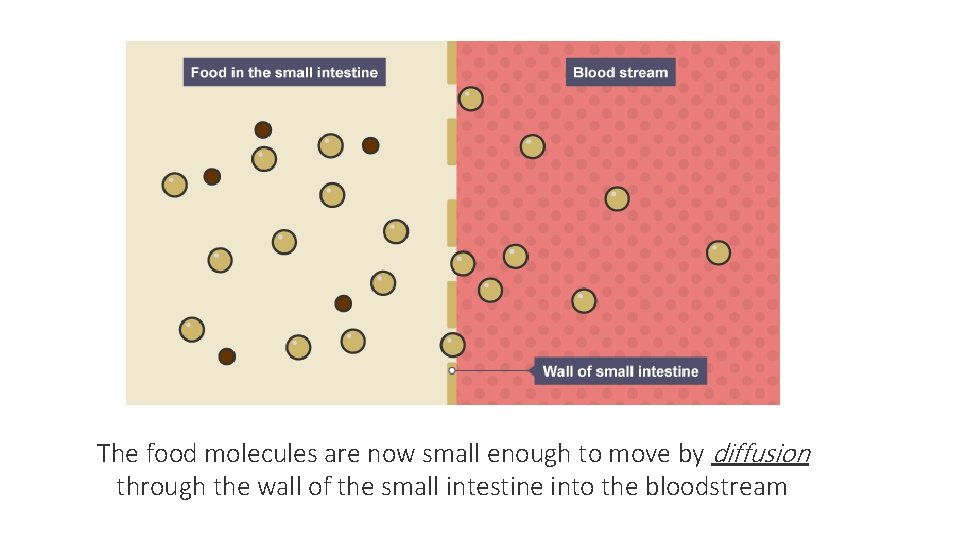
Chemical Digestion The substances which our body needs cannot be until they have been broken down into tiny, soluble substances. This process is called chemical digestion, and it works with the help of enzymes. Once the food is completely digested, its molecules are small enough to pass through the wall of the small intestine by diffusion.
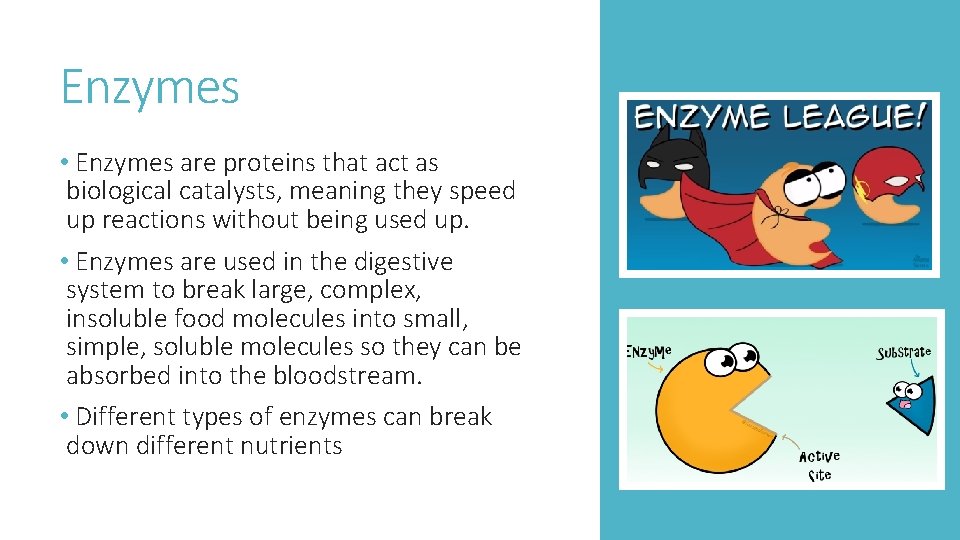
Enzymes • Enzymes are proteins that act as biological catalysts, meaning they speed up reactions without being used up. • Enzymes are used in the digestive system to break large, complex, insoluble food molecules into small, simple, soluble molecules so they can be absorbed into the bloodstream. • Different types of enzymes can break down different nutrients
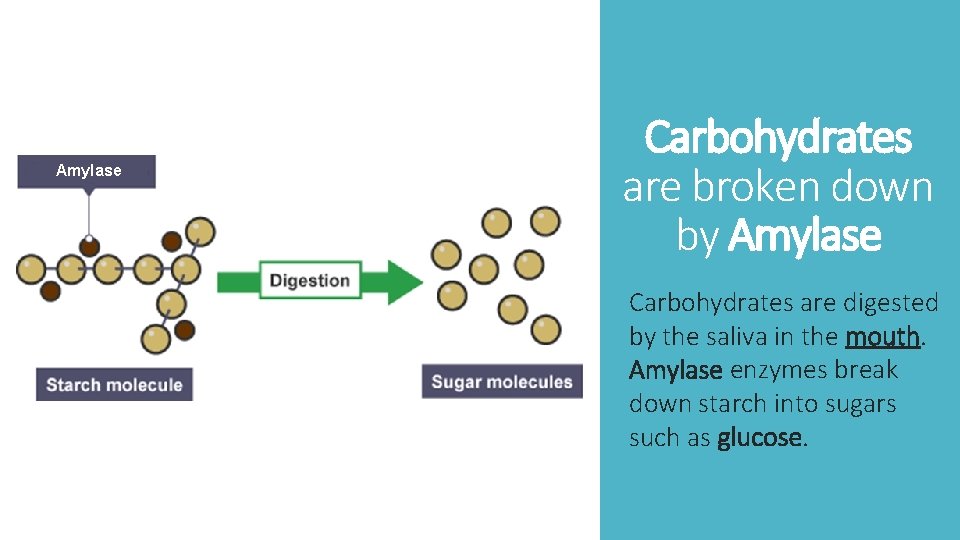
Amylase Carbohydrates are broken down by Amylase Carbohydrates are digested by the saliva in the mouth. Amylase enzymes break down starch into sugars such as glucose.
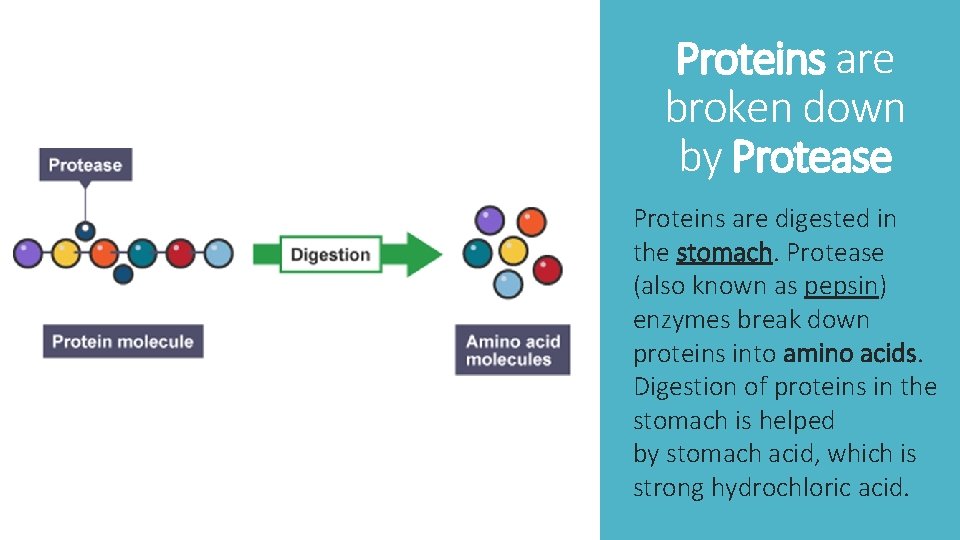
Proteins are broken down by Protease Proteins are digested in the stomach. Protease (also known as pepsin) enzymes break down proteins into amino acids. Digestion of proteins in the stomach is helped by stomach acid, which is strong hydrochloric acid.
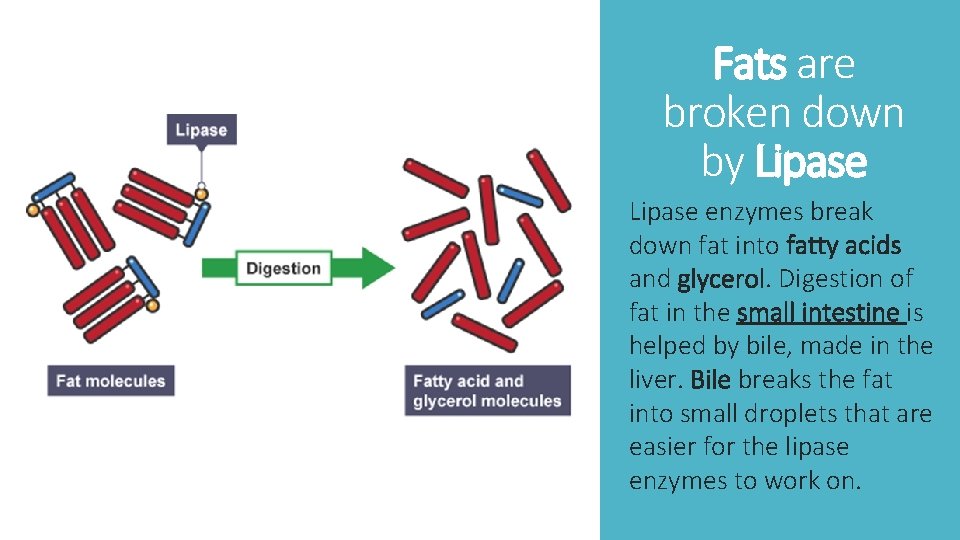
Fats are broken down by Lipase enzymes break down fat into fatty acids and glycerol. Digestion of fat in the small intestine is helped by bile, made in the liver. Bile breaks the fat into small droplets that are easier for the lipase enzymes to work on.
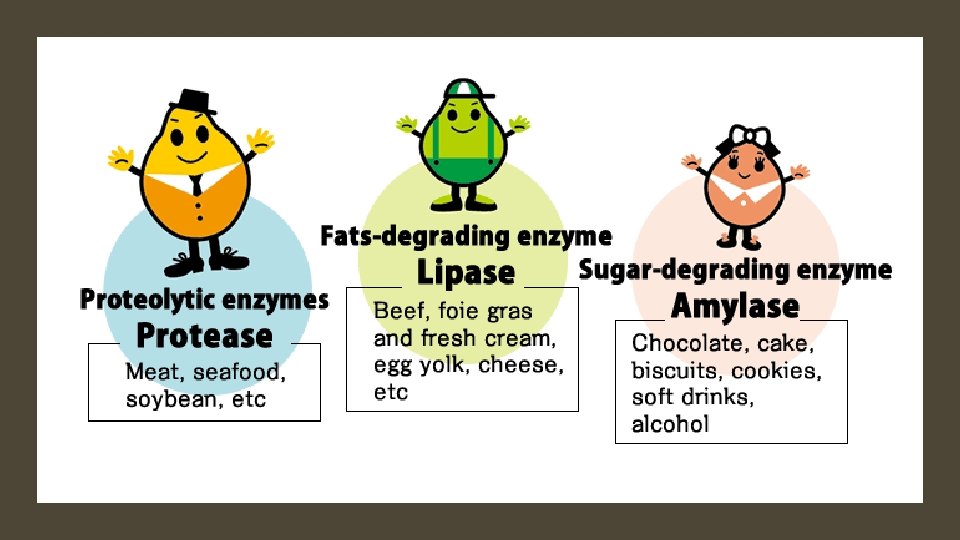
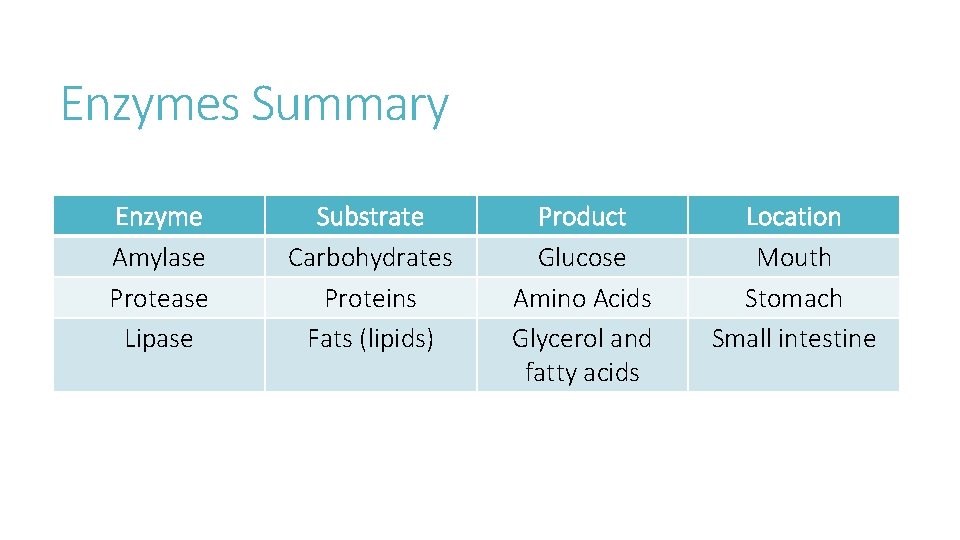
Enzymes Summary Enzyme Amylase Protease Lipase Substrate Carbohydrates Proteins Fats (lipids) Product Glucose Amino Acids Glycerol and fatty acids Location Mouth Stomach Small intestine
Teeth and Mouth • The teeth are responsible for the physical breakdown of food and the tongue is important in pushing the food towards the teeth. • Salivary glands make saliva, which contains enzymes to start chemical digestion.
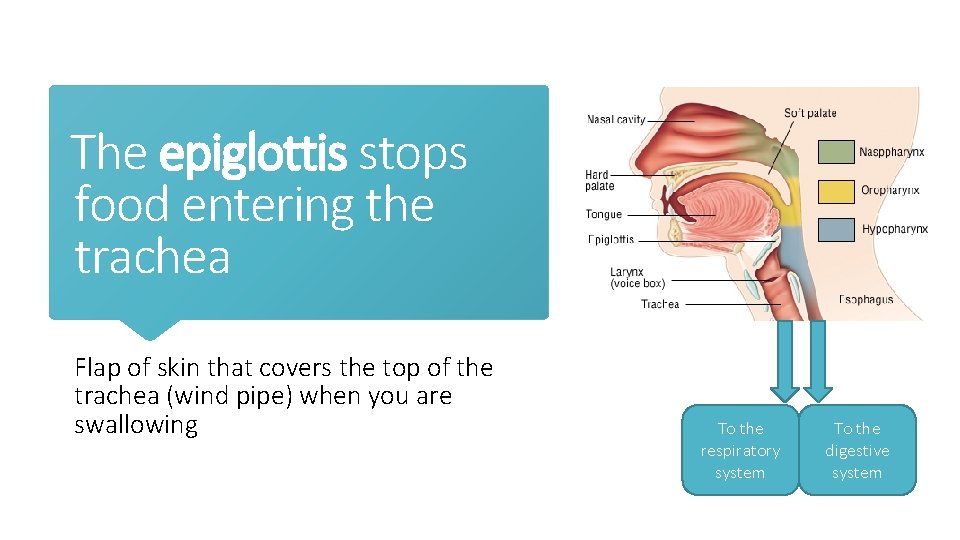
The epiglottis stops food entering the trachea Flap of skin that covers the top of the trachea (wind pipe) when you are swallowing To the respiratory system To the digestive system
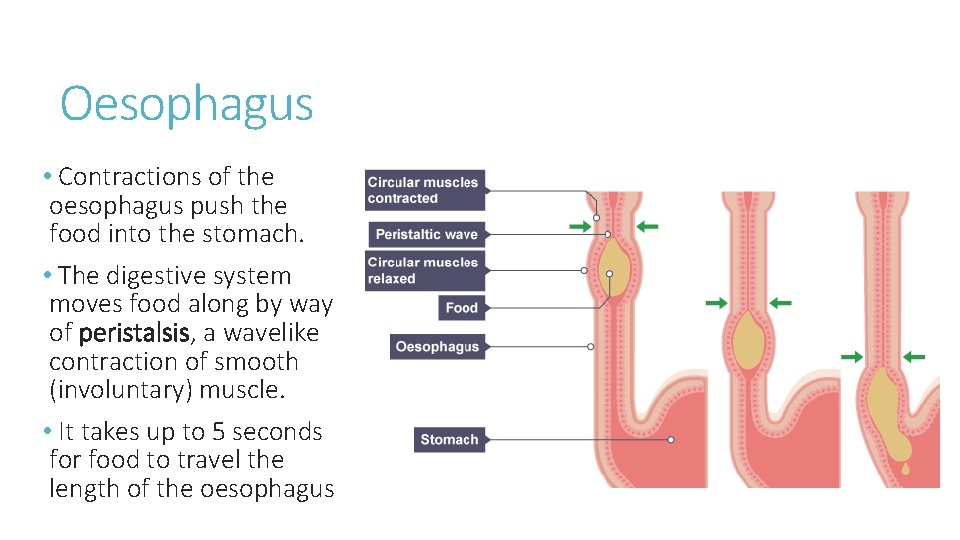
Oesophagus • Contractions of the oesophagus push the food into the stomach. • The digestive system moves food along by way of peristalsis, a wavelike contraction of smooth (involuntary) muscle. • It takes up to 5 seconds for food to travel the length of the oesophagus
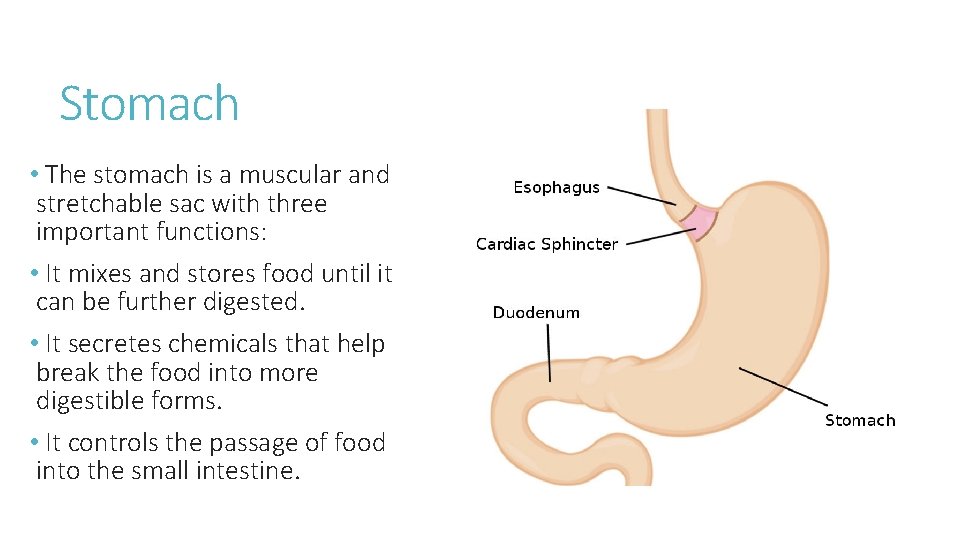
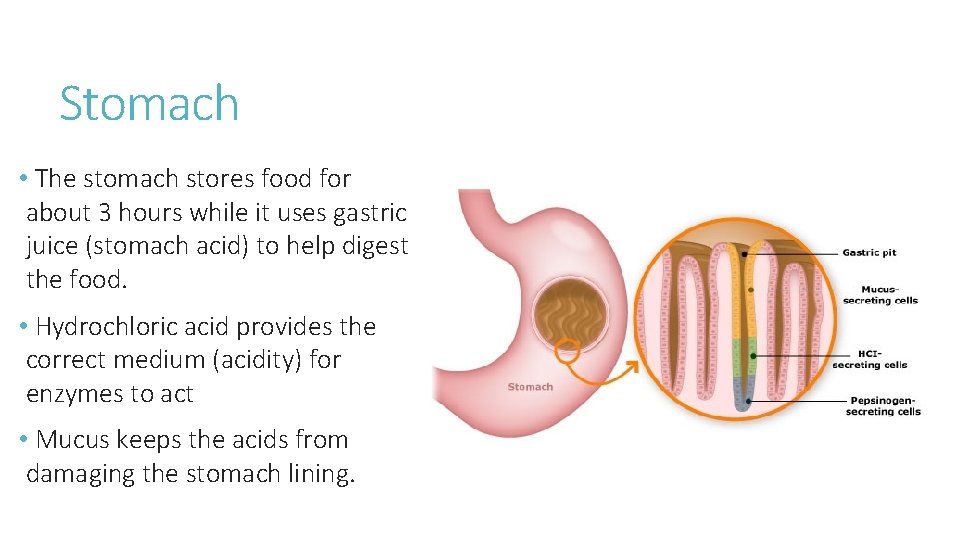
Stomach • The stomach is a muscular and stretchable sac with three important functions: • It mixes and stores food until it can be further digested. • It secretes chemicals that help break the food into more digestible forms. • It controls the passage of food into the small intestine.
Stomach • The stomach stores food for about 3 hours while it uses gastric juice (stomach acid) to help digest the food. • Hydrochloric acid provides the correct medium (acidity) for enzymes to act • Mucus keeps the acids from damaging the stomach lining.
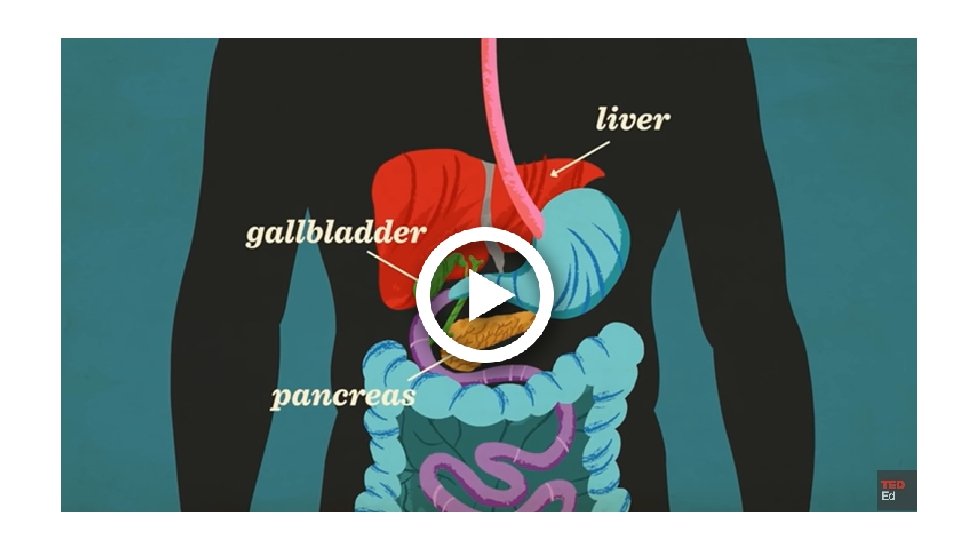
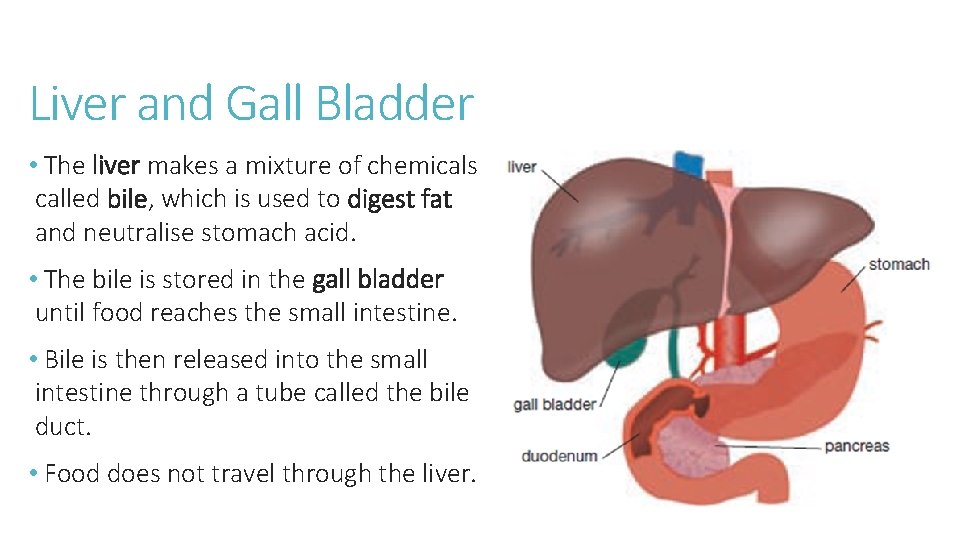
Liver and Gall Bladder • The liver makes a mixture of chemicals called bile, which is used to digest fat and neutralise stomach acid. • The bile is stored in the gall bladder until food reaches the small intestine. • Bile is then released into the small intestine through a tube called the bile duct. • Food does not travel through the liver.
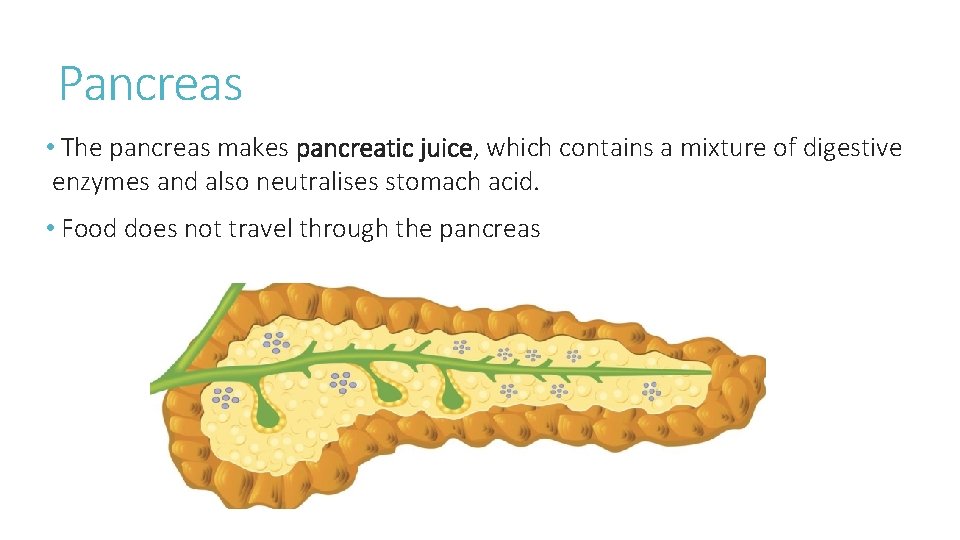
Pancreas • The pancreas makes pancreatic juice, which contains a mixture of digestive enzymes and also neutralises stomach acid. • Food does not travel through the pancreas
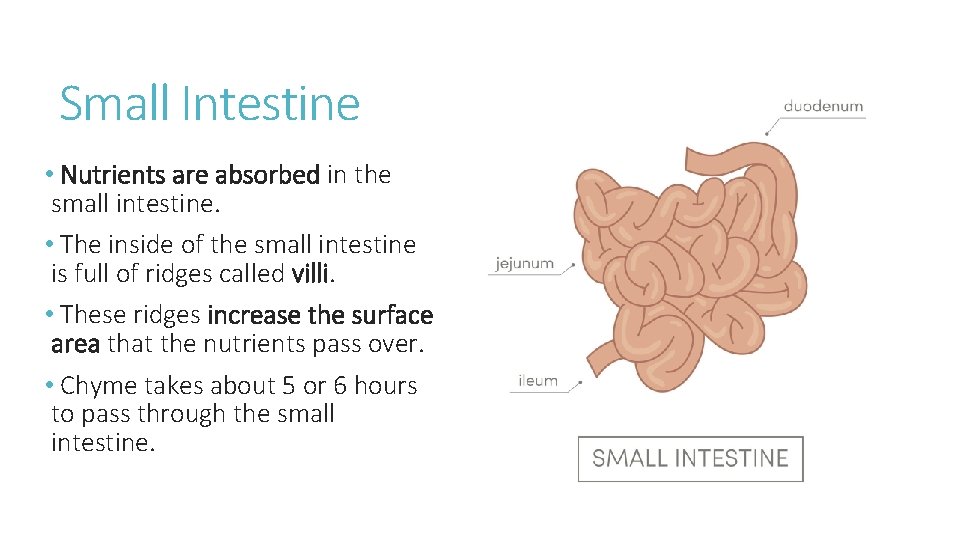
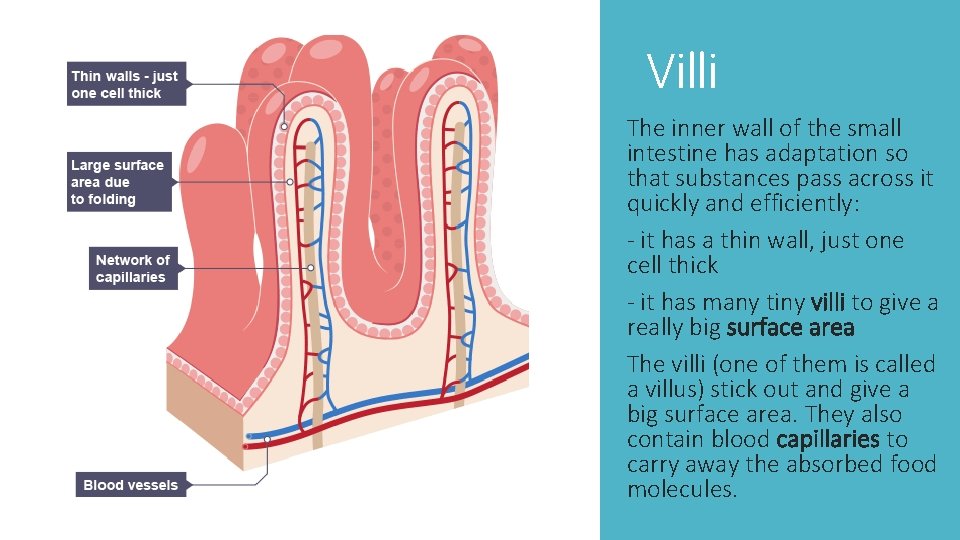
Small Intestine • Nutrients are absorbed in the small intestine. • The inside of the small intestine is full of ridges called villi. • These ridges increase the surface area that the nutrients pass over. • Chyme takes about 5 or 6 hours to pass through the small intestine.
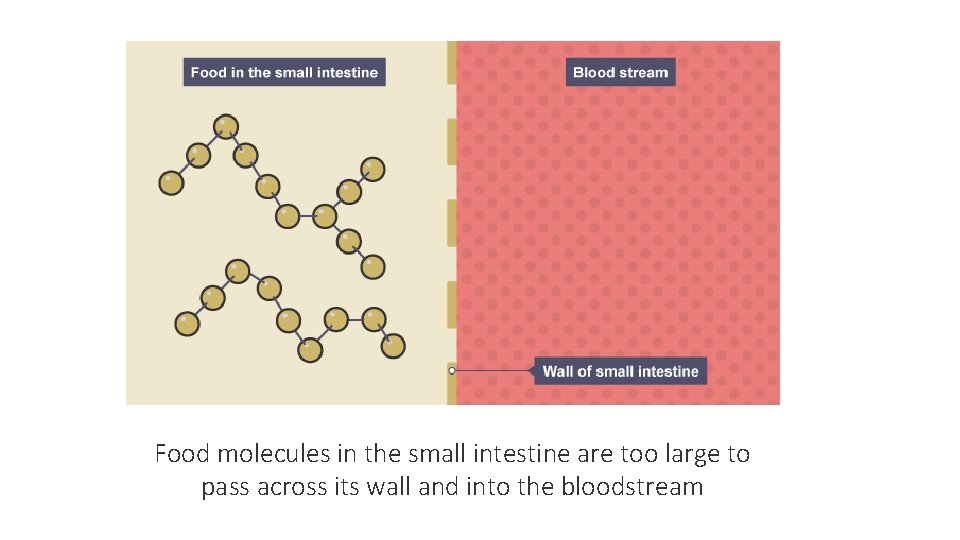
Food molecules in the small intestine are too large to pass across its wall and into the bloodstream
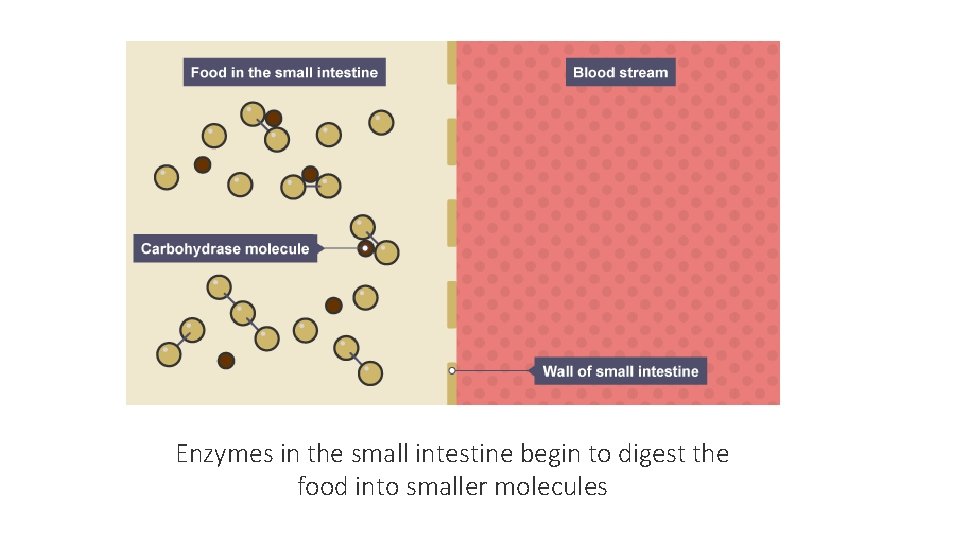
Enzymes in the small intestine begin to digest the food into smaller molecules
The food molecules are now small enough to move by diffusion through the wall of the small intestine into the bloodstream
Villi The inner wall of the small intestine has adaptation so that substances pass across it quickly and efficiently: - it has a thin wall, just one cell thick - it has many tiny villi to give a really big surface area The villi (one of them is called a villus) stick out and give a big surface area. They also contain blood capillaries to carry away the absorbed food molecules.
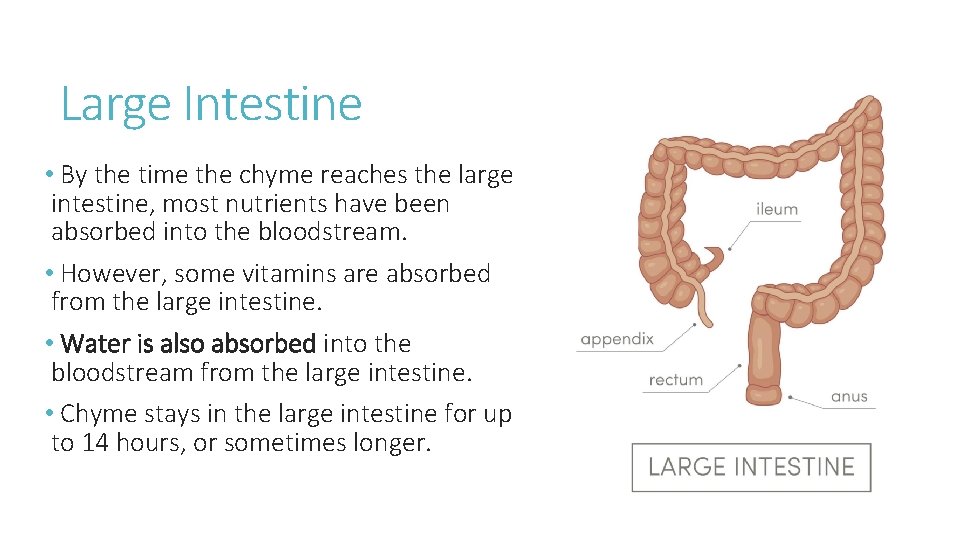
Large Intestine • By the time the chyme reaches the large intestine, most nutrients have been absorbed into the bloodstream. • However, some vitamins are absorbed from the large intestine. • Water is also absorbed into the bloodstream from the large intestine. • Chyme stays in the large intestine for up to 14 hours, or sometimes longer.
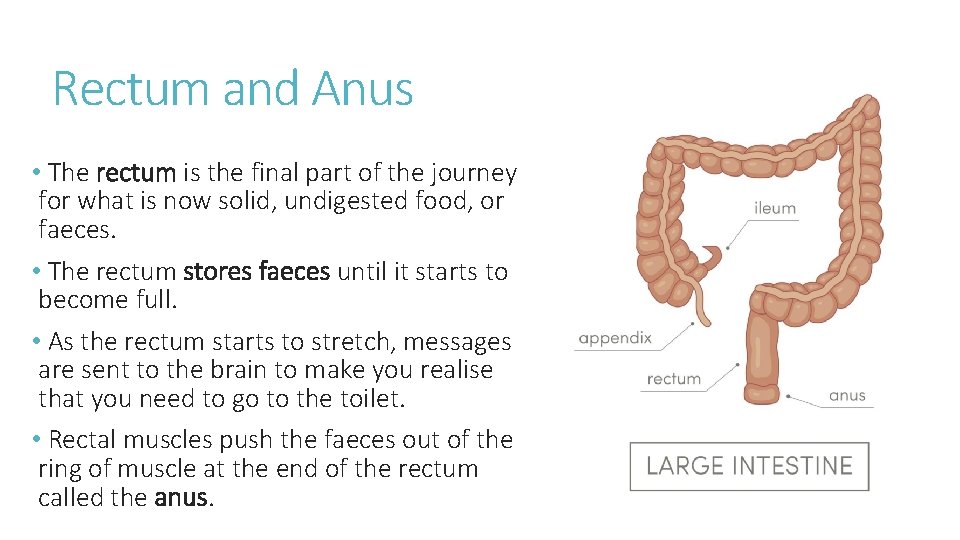
Rectum and Anus • The rectum is the final part of the journey for what is now solid, undigested food, or faeces. • The rectum stores faeces until it starts to become full. • As the rectum starts to stretch, messages are sent to the brain to make you realise that you need to go to the toilet. • Rectal muscles push the faeces out of the ring of muscle at the end of the rectum called the anus.
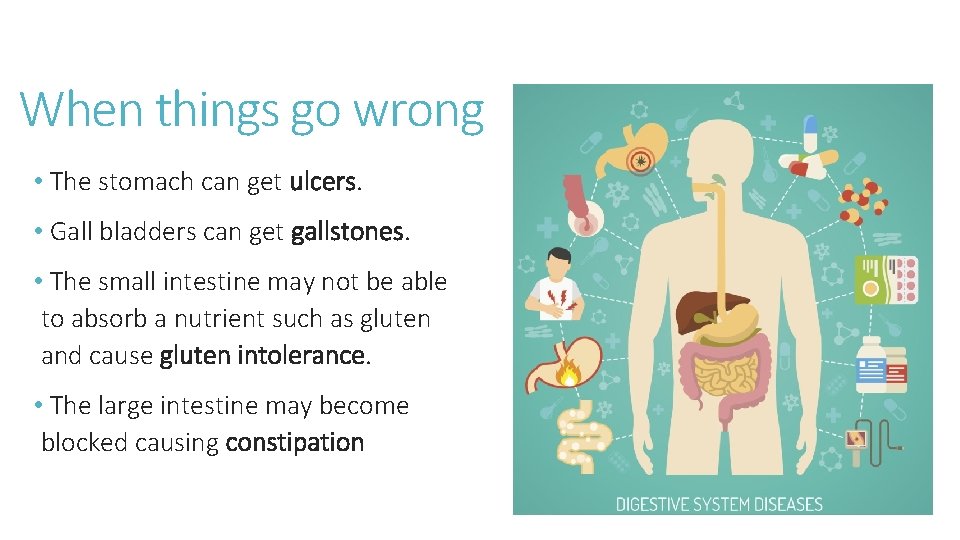
When things go wrong • The stomach can get ulcers. • Gall bladders can get gallstones. • The small intestine may not be able to absorb a nutrient such as gluten and cause gluten intolerance. • The large intestine may become blocked causing constipation