
The Digestive System Simplified And How to Stay
- Slides: 30
The Digestive System Simplified And How to Stay Healthy By: Rebecca K. Fraker
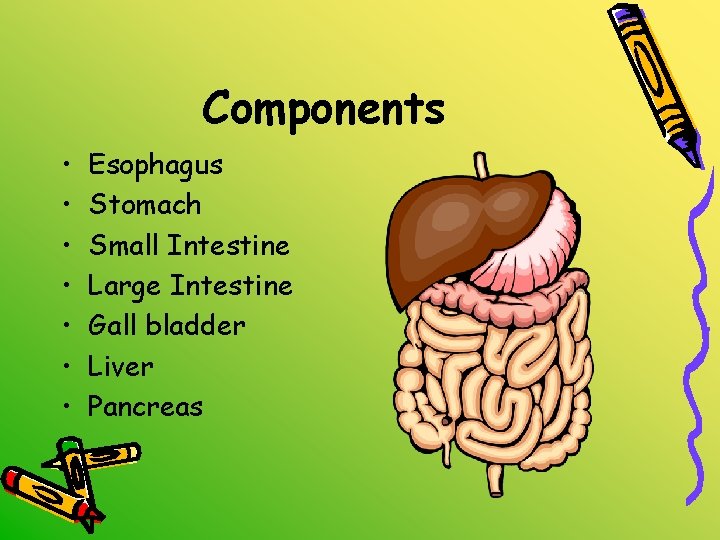
Components • • Esophagus Stomach Small Intestine Large Intestine Gall bladder Liver Pancreas
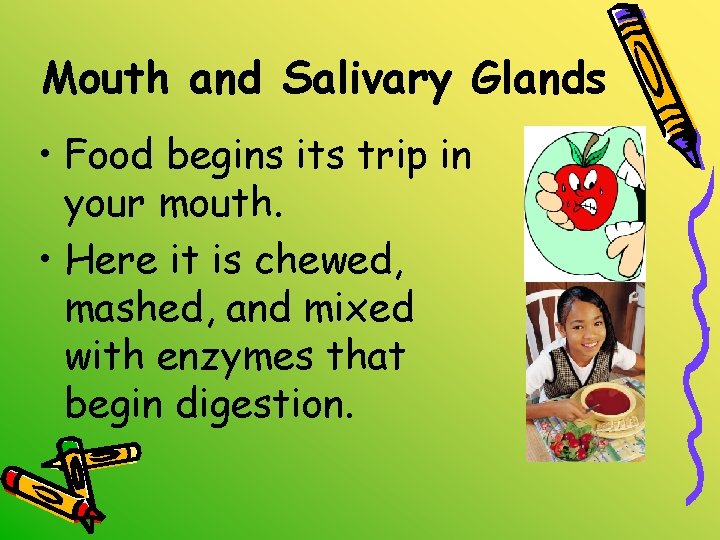
Mouth and Salivary Glands • Food begins its trip in your mouth. • Here it is chewed, mashed, and mixed with enzymes that begin digestion.
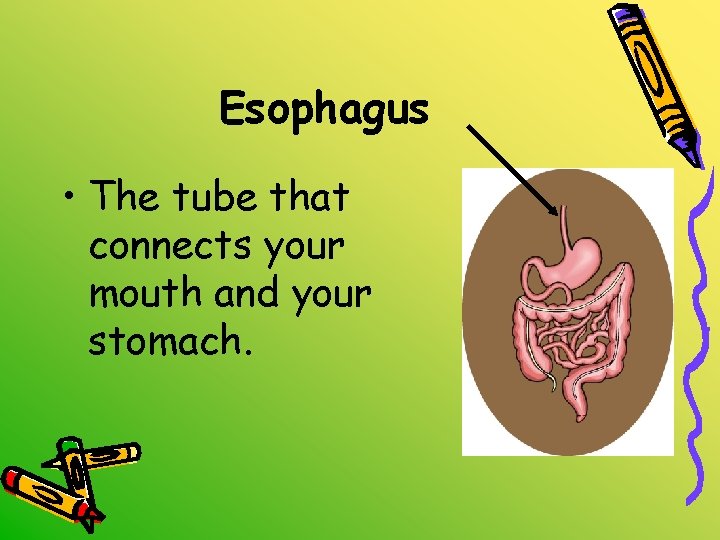
Esophagus • The tube that connects your mouth and your stomach.
Peristalsis • A series of muscle contractions move the food down the tube. This is peristalsis. • If the muscle contractions reverse, you throw up!
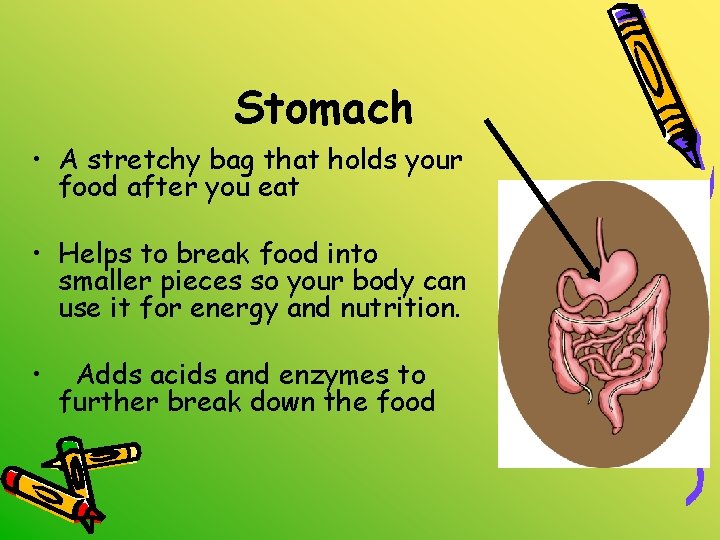
Stomach • A stretchy bag that holds your food after you eat • Helps to break food into smaller pieces so your body can use it for energy and nutrition. • Adds acids and enzymes to further break down the food
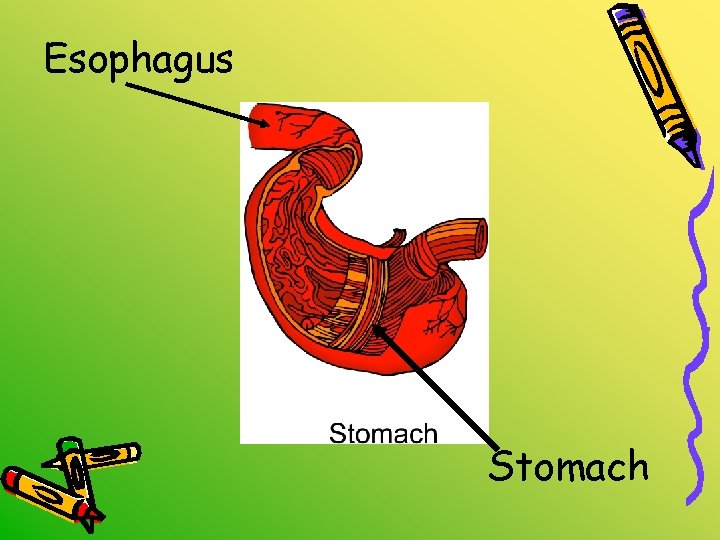
Esophagus Stomach
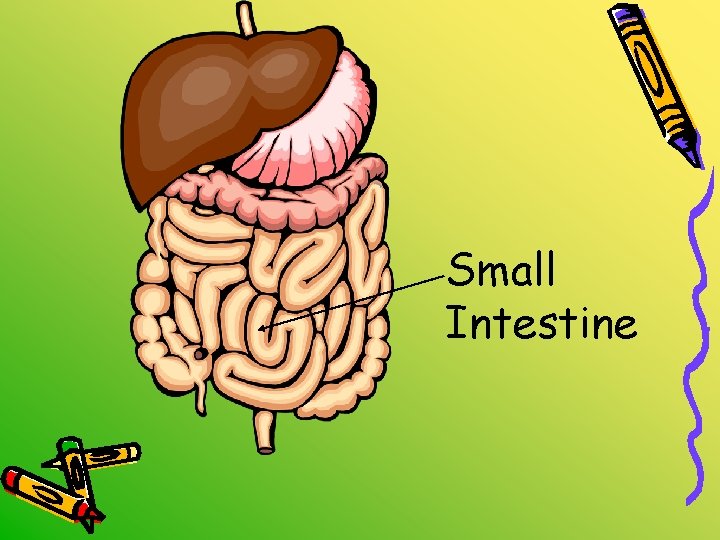
Small Intestine • Tube that is 20 feet long • Continues to digest food • Food stays in your small intestine for 4 to 8 hours
Small Intestine
Large Intestine • Tube that is 5 feet long • Gets waste from small intestine • Waste stays for 10 to 12 hours
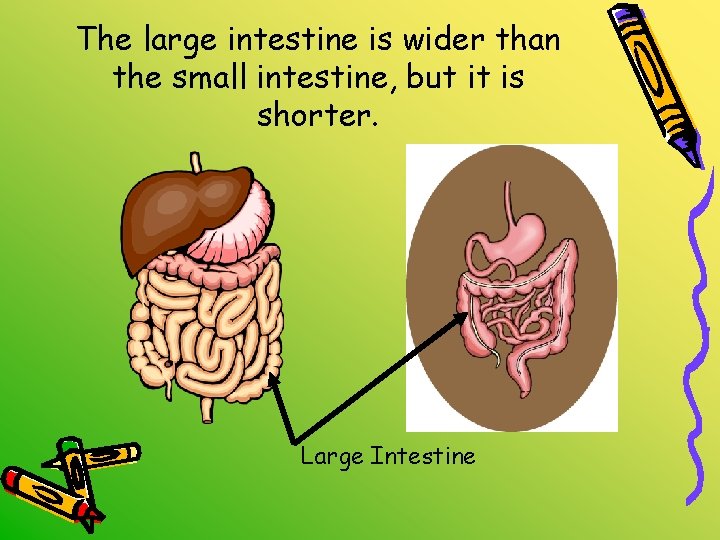
The large intestine is wider than the small intestine, but it is shorter. Large Intestine
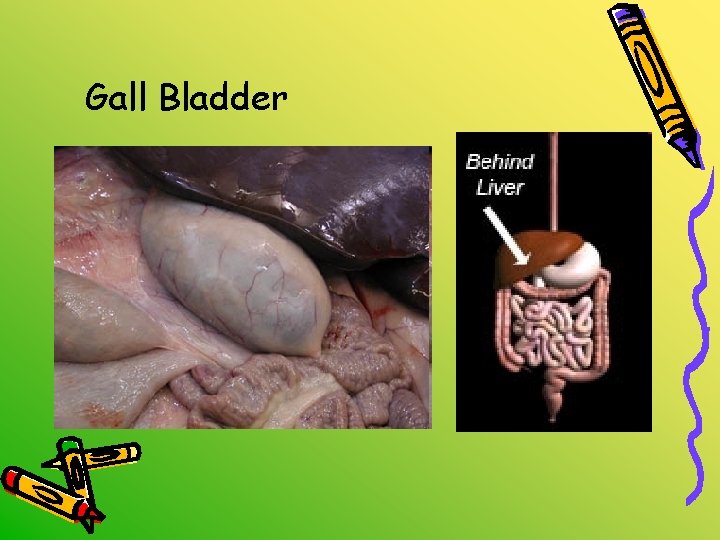
Gall Bladder • Storage tank for bile (a greenishyellow liquid) that helps your body break down and use fats • Located under your liver • Shaped like a pear
Gall Bladder
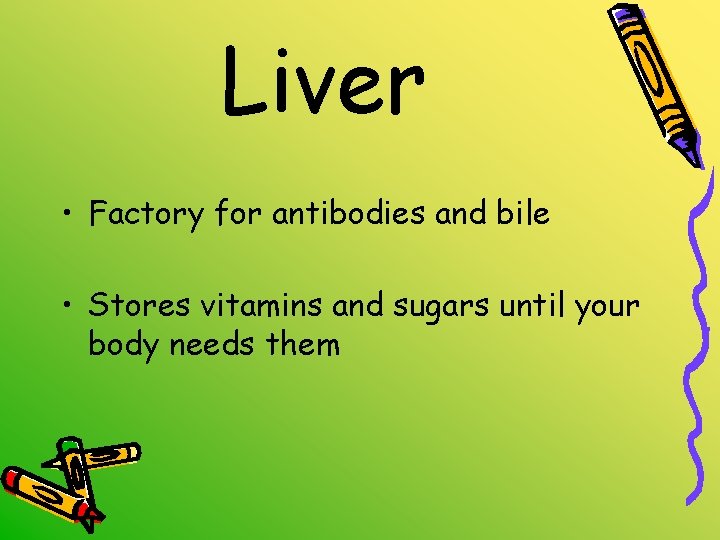
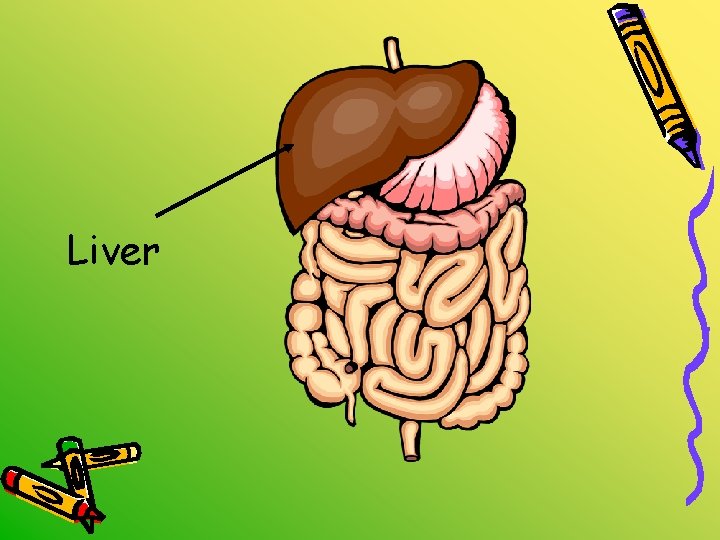
Liver • Factory for antibodies and bile • Stores vitamins and sugars until your body needs them
Liver
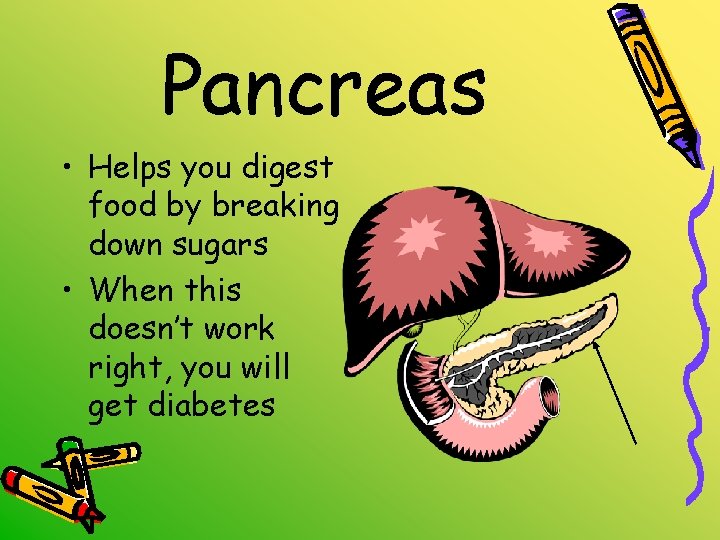
Pancreas • Helps you digest food by breaking down sugars • When this doesn’t work right, you will get diabetes
Functions • Digest the food we eat • Take the nutrients out of your food so your body can use it
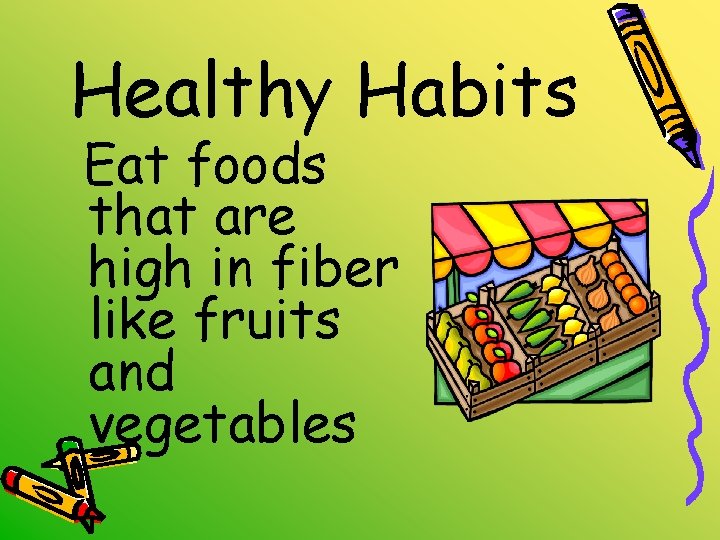
Healthy Habits Eat foods that are high in fiber like fruits and vegetables
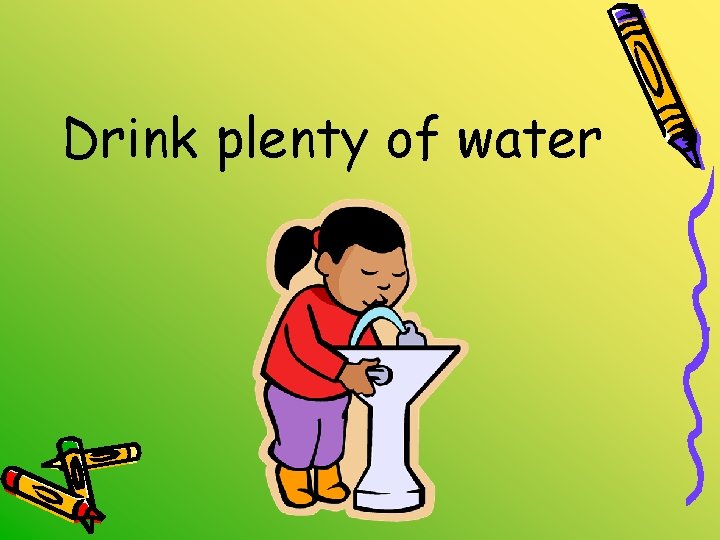
Drink plenty of water
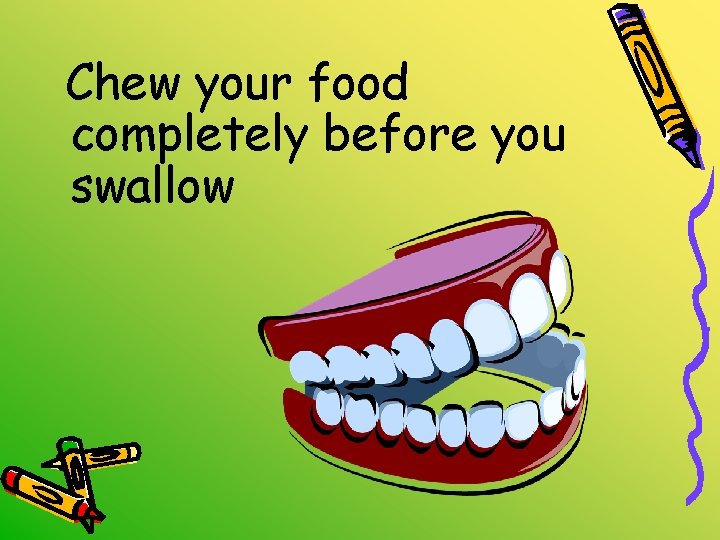
Chew your food completely before you swallow
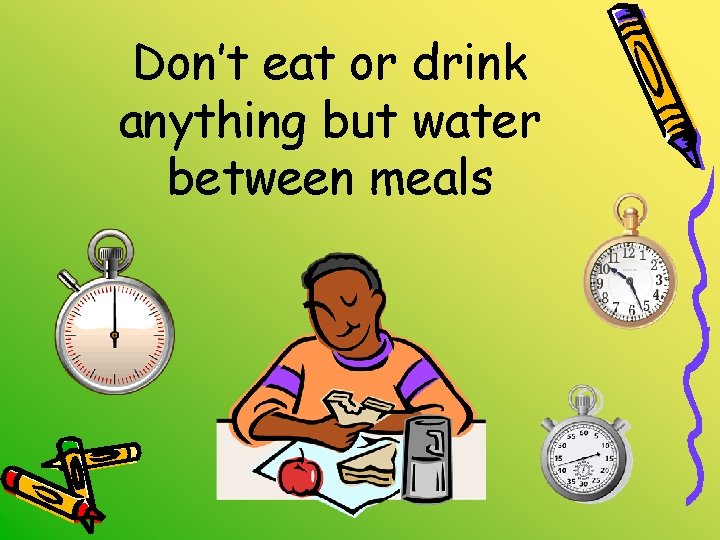
Don’t eat or drink anything but water between meals
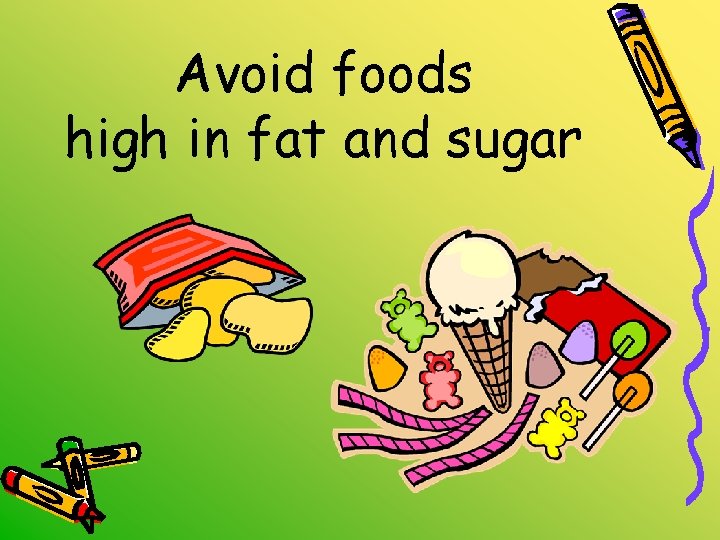
Avoid foods high in fat and sugar
Get plenty of rest and sunlight
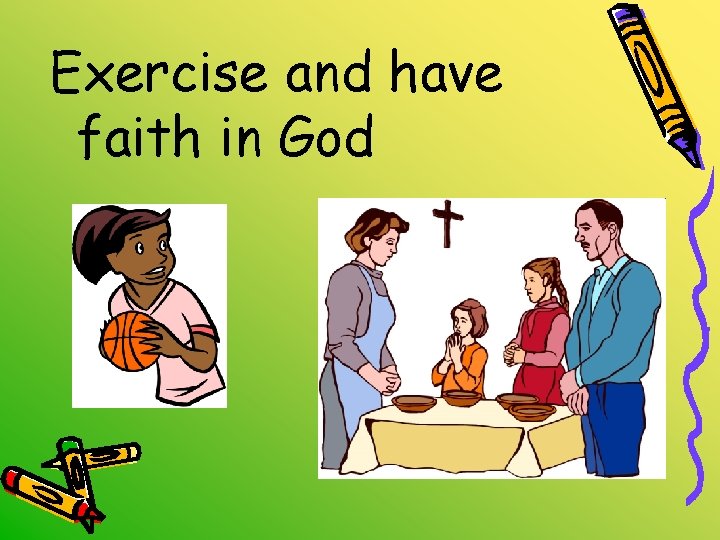
Exercise and have faith in God
Interesting Facts • Food is in your digestive system for about 8 to 24 hours
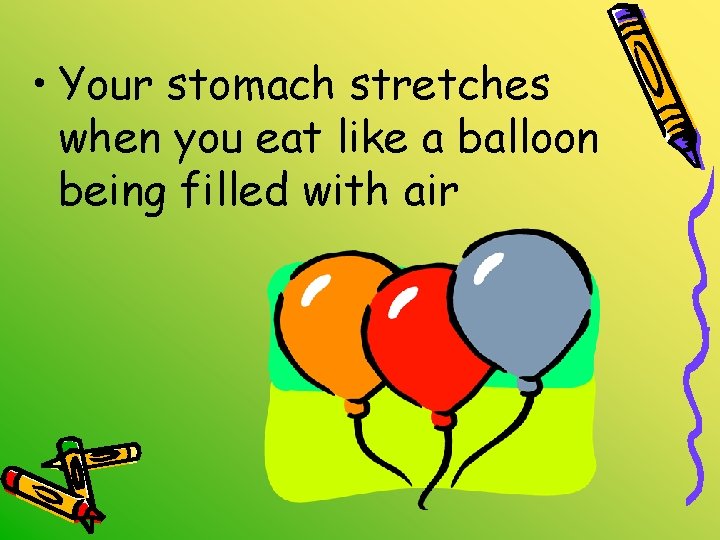
• Your stomach stretches when you eat like a balloon being filled with air
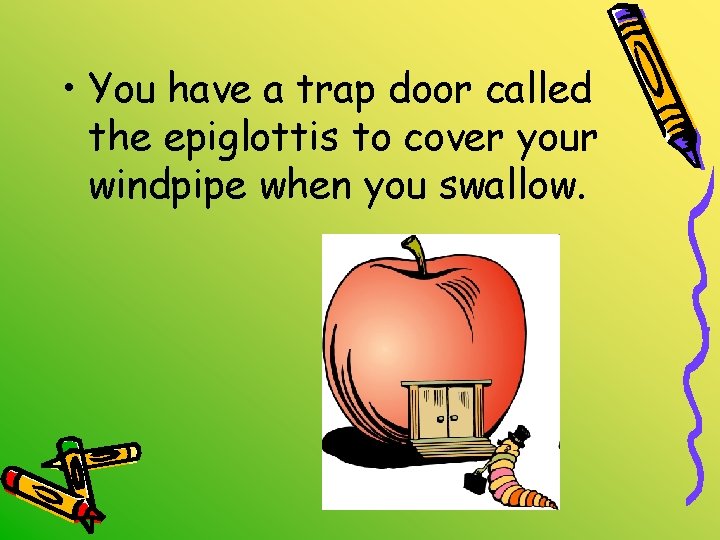
• You have a trap door called the epiglottis to cover your windpipe when you swallow.
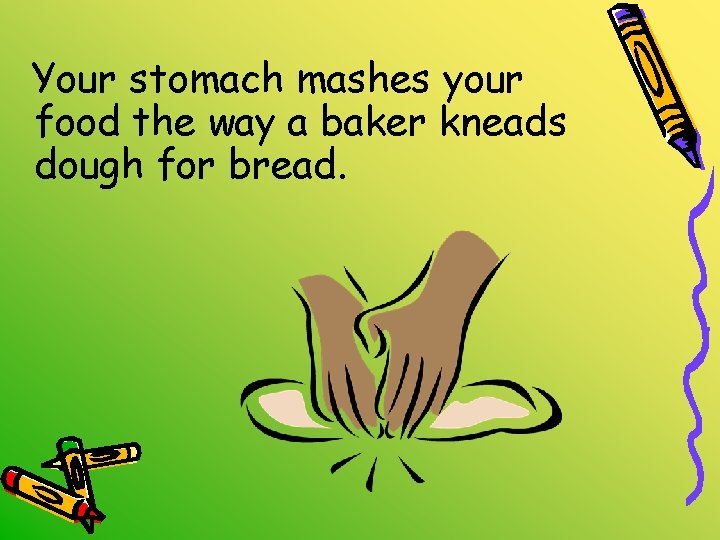
Your stomach mashes your food the way a baker kneads dough for bread.
Summary Functions • Digests food • Absorbs nutrients for the body • • Components Esophagus Stomach Small intestine Large intestine Pancreas Liver Gall Bladder
Summary Healthy Habits • • Eat high fiber foods Drink lots of water Chew food well Avoid high-fat foods