
The Digestive System Objectives 1 State the purpose
The Digestive System Objectives: 1. State the purpose of the digestive system. 2. Be able to describe the structure and function of the organs of the digestive system. 3. Trace the path of a hamburger as it travels through your digestive system.
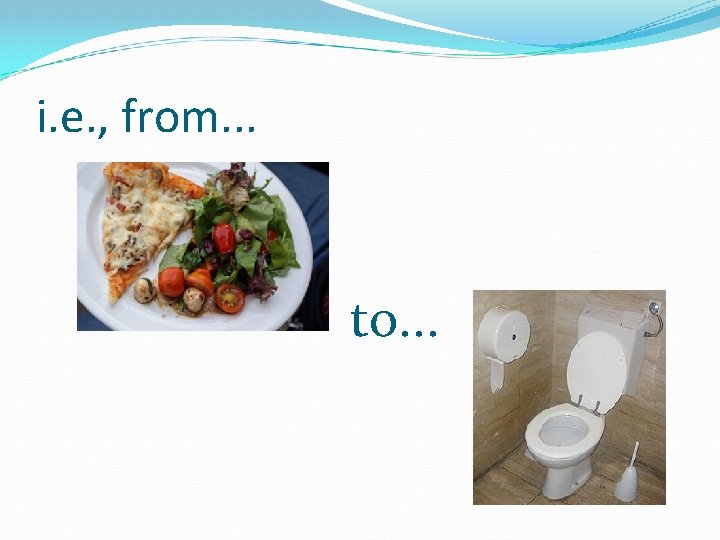
Purpose: Ingestion taking in of nutrients Digestion physical and chemical breakdown of food into nutrients that our cells can use Absorption taking up of digested molecules into the cells of the digestive tract Elimination removal of waste products from the body
Digestion Video http: //highered. mcgrawhill. com/sites/0072495855/student_view 0/chapter 26/ animation__organs_of_digestion. html
Time for you to do some work! Complete the labelling of the Digestive System
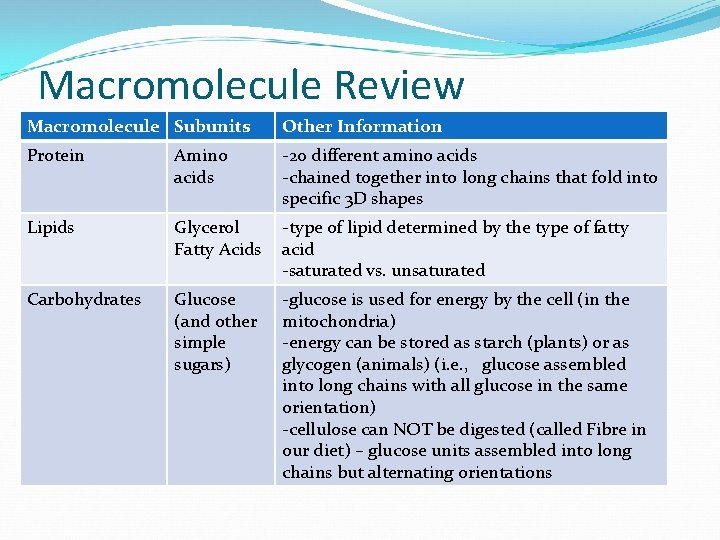
Macromolecule Review Macromolecule Subunits Other Information Protein Amino acids -20 different amino acids -chained together into long chains that fold into specific 3 D shapes Lipids Glycerol Fatty Acids -type of lipid determined by the type of fatty acid -saturated vs. unsaturated Carbohydrates Glucose (and other simple sugars) -glucose is used for energy by the cell (in the mitochondria) -energy can be stored as starch (plants) or as glycogen (animals) (i. e. , glucose assembled into long chains with all glucose in the same orientation) -cellulose can NOT be digested (called Fibre in our diet) – glucose units assembled into long chains but alternating orientations
Let’s begin…. Digestive system is one long tube, open at both ends called the GASTROINTESTINAL TRACT we will follow food through the gastrointestinal tract as it passes through each structure
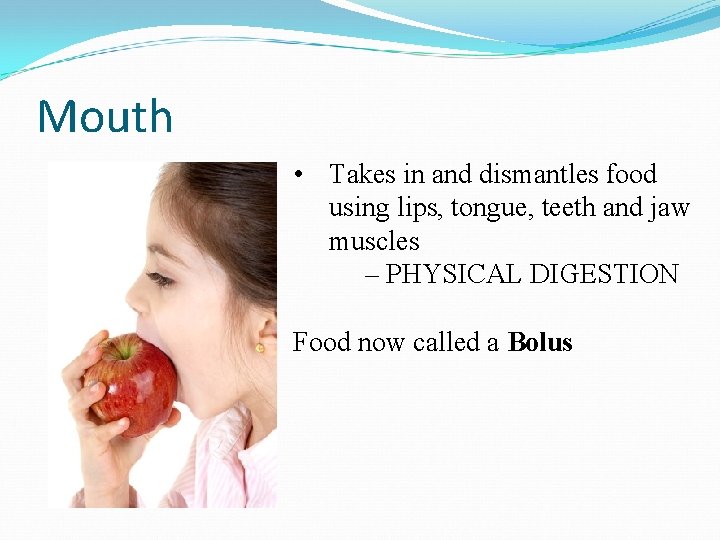
Mouth • Takes in and dismantles food using lips, tongue, teeth and jaw muscles – PHYSICAL DIGESTION Food now called a Bolus

Teeth Incisors cut food Canines pierce and tear Molars crush and grind
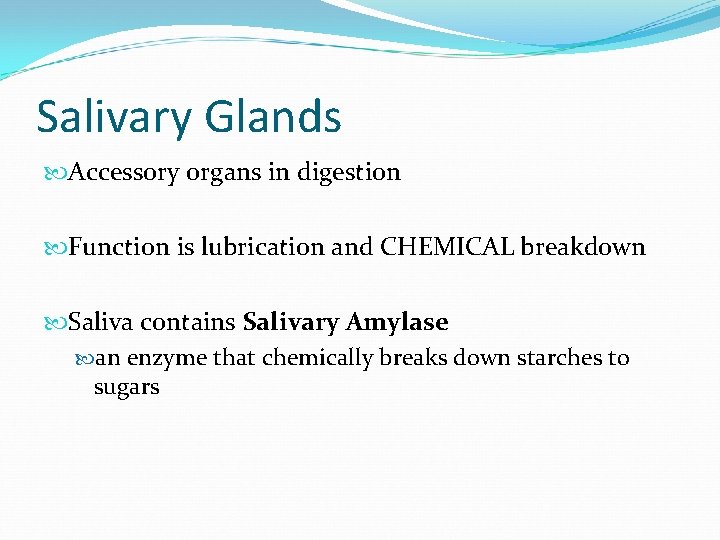
Salivary Glands Accessory organs in digestion Function is lubrication and CHEMICAL breakdown Saliva contains Salivary Amylase an enzyme that chemically breaks down starches to sugars
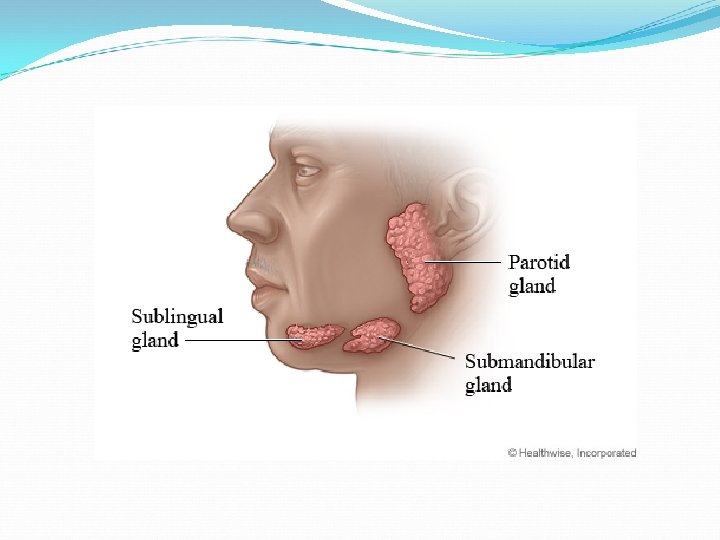
Pharynx and Epiglottis Pharynx is a cavity that joins the mouth to the esophagus and trachea Epiglottis – flap of muscle tissue that closes off the opening to the trachea
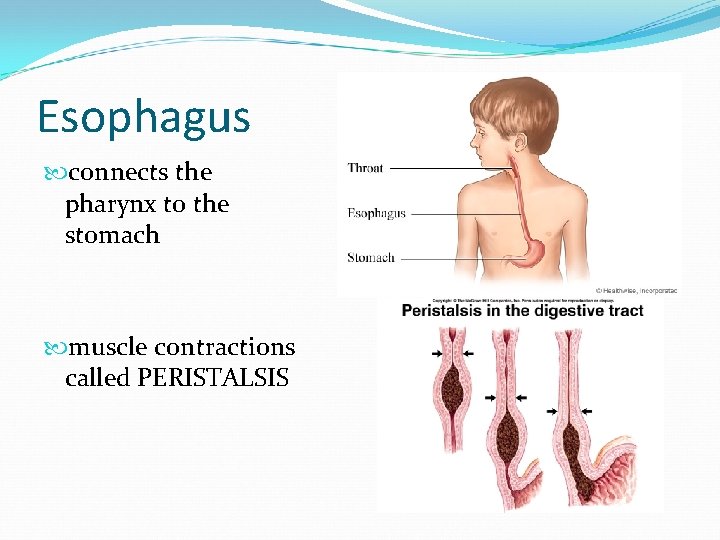
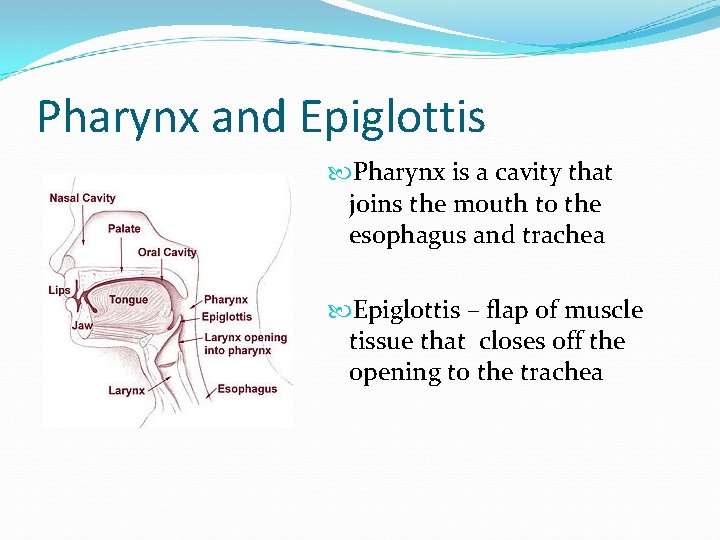
Esophagus connects the pharynx to the stomach muscle contractions called PERISTALSIS
Video of Swallowing http: //youtu. be/Ri 8 b. Bhw 9 ms. Q
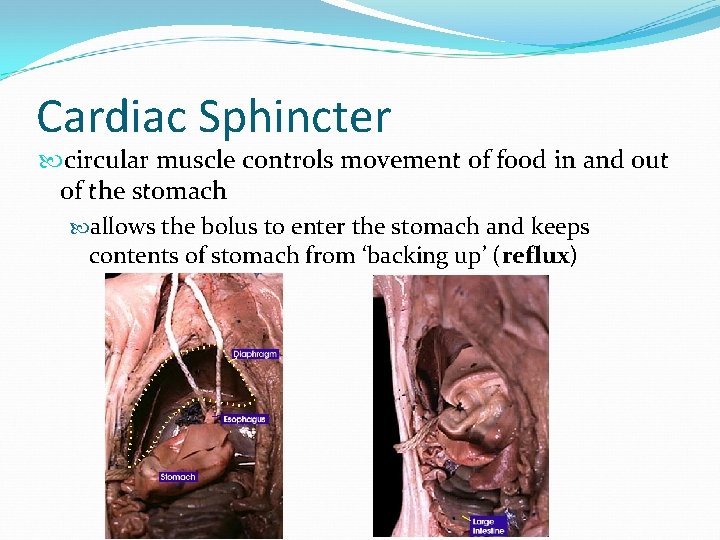
Cardiac Sphincter circular muscle controls movement of food in and out of the stomach allows the bolus to enter the stomach and keeps contents of stomach from ‘backing up’ (reflux)
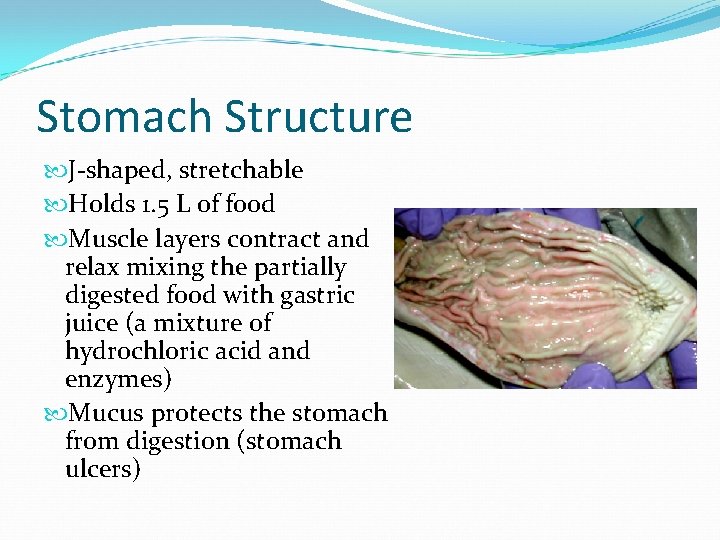
Stomach Structure J-shaped, stretchable Holds 1. 5 L of food Muscle layers contract and relax mixing the partially digested food with gastric juice (a mixture of hydrochloric acid and enzymes) Mucus protects the stomach from digestion (stomach ulcers)

Stomach Function Stores food for short periods Some food is chemically and mechanically digested Enzymes: pepsinogen (at low p. H is converted to active form PEPSIN) digests proteins to small polypeptides Hydrochloric acid: loosens tough fibrous material and kills bacteria Why doesn’t pepsin destroy the cells of the stomach?
Pyloric Sphincter ring of circular muscle at the bottom of stomach Passes chyme from stomach to small intestine (duodenum)
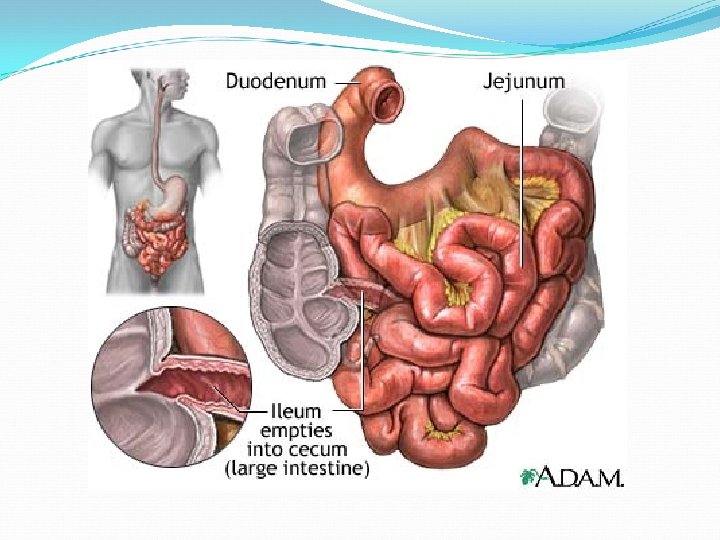

Small Intestine Smaller in diameter than large intestine Diameter: 2. 5 cm Length: 7 m long! Primary function is chemical digestion and absorption Food is absorbed by passive and active transport through the villi and microvilli Villi and microvilli increase the surface area for absorption) Surface area is nearly 250 square meters! (or 2 700 sq ft – the size of a tennis court)
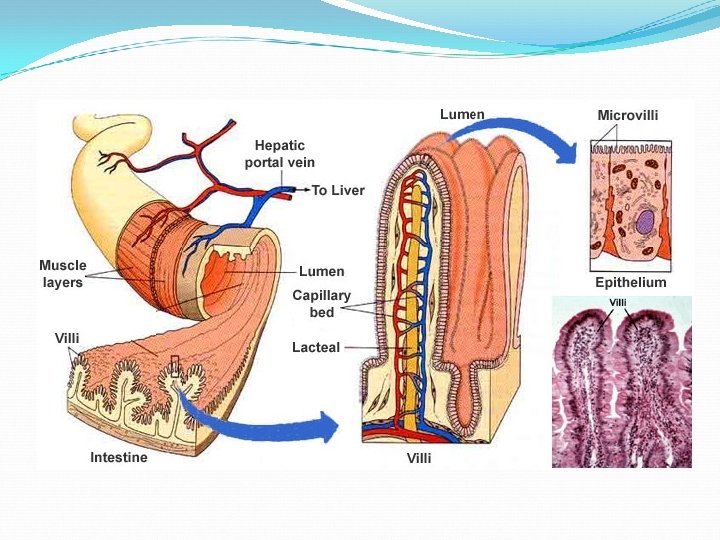

Structure of a Villus • Nutrients absorbed by the capillary system of villus – amino acids, nucleotides, simple sugars • Nutrients absorbed by the lacteal of the villus – lipids (fatty acids and glycerol)
Small Intestine Partially digested food entering the small intestine is called CHYME The acid is neutralized by sodium bicarbonate released by the pancreas
Duodenum 30 cm receives secretions from pancreas and liver Most chemical digestion happens here eg. Lipase (digests lipids) Pancreatic amylase Trypsin (digests proteins) some absorption does occur
Jejunum 2 m villi are densely concentrated gradual shift from digestion to absorption Concentration of villi increase
Ileum 4 m majority of nutrients are absorbed here. accumulation of waste becomes very noticeable
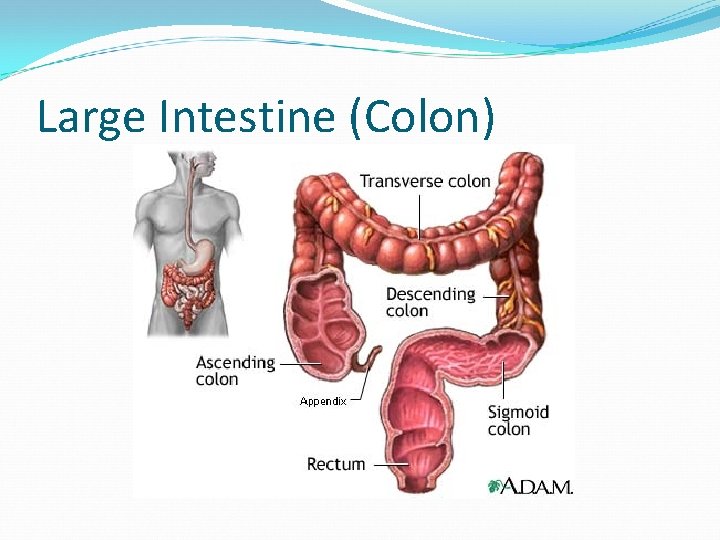
Large Intestine (Colon)

Large Intestine (Colon) Larger in diameter than small intestine Diameter: 7. 5 cm Length: 1. 5 m 4 major functions: 1) Reabsorbs water (major function) 2) Reabsorbs minerals, salts and vitamins and other nutrients 3) Recovers vitamin K and B-12 (made from bacteria in colon) 4) Holds and compacts unabsorbed material (stool, feces) from the small intestine

Cecum and Appendix cecum receives chyme from the small intestine appendix is a VESTIGIAL STRUCTURE - the shrunken remainder of the cecum ceca in herbivores are large and contain mutualistic bacteria that help digest cellulose Why still there? – protect beneficial bacteria
Large Intestine Ascending Transverse Descending Sigmoid
Rectum and Anus Rectum: Passes feces from large intestine to the anus As wastes build up in the large intestine receptors in the walls signal the central nervous system which prompts the large intestine to void the waste Anus: Pair of circular muscles called anal sphincters Controls defecation Cellulose is the main component of feces – if you do not eat enough fibre you will have fewer bowel movements and are at risk of bowel cancer
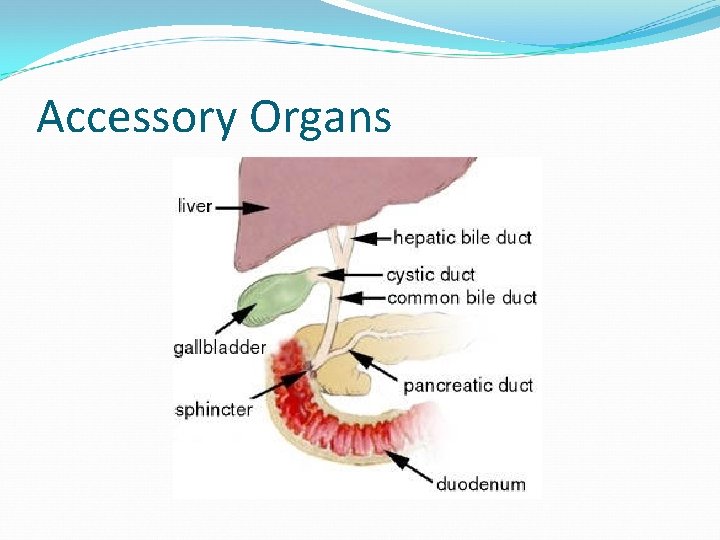
Accessory Organs
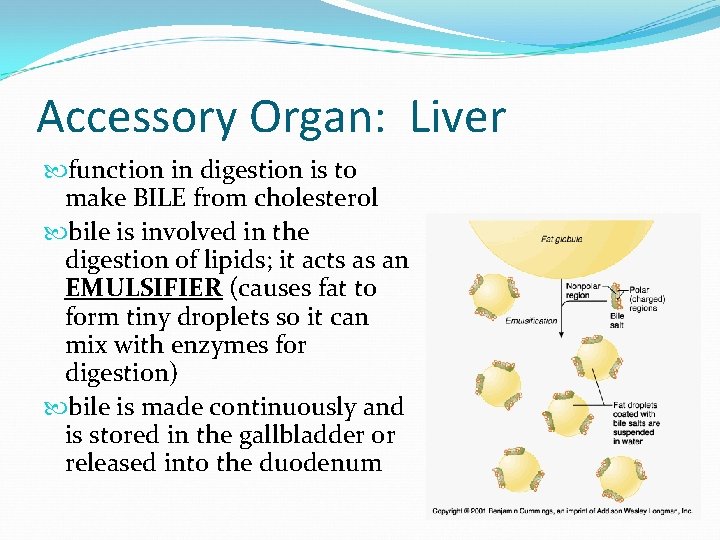
Accessory Organ: Liver function in digestion is to make BILE from cholesterol bile is involved in the digestion of lipids; it acts as an EMULSIFIER (causes fat to form tiny droplets so it can mix with enzymes for digestion) bile is made continuously and is stored in the gallbladder or released into the duodenum
Gallbladder found attached to the large lobe of the liver stores bile Why? fatty meals require a lot of bile all at once
Pancreas produces many enzymes lipases break down lipids, carbohydrases break down carbohydrates and proteases break down proteins produces hormones to regulate blood sugar (insulin and glucagon) produces bicarbonate ions to neutralize HCl after digestion
Homework: Pg. 188 # 2, 4, 5, and 7
- Slides: 36