
The Digestive System Miss Ulrich Obtaining and Processing
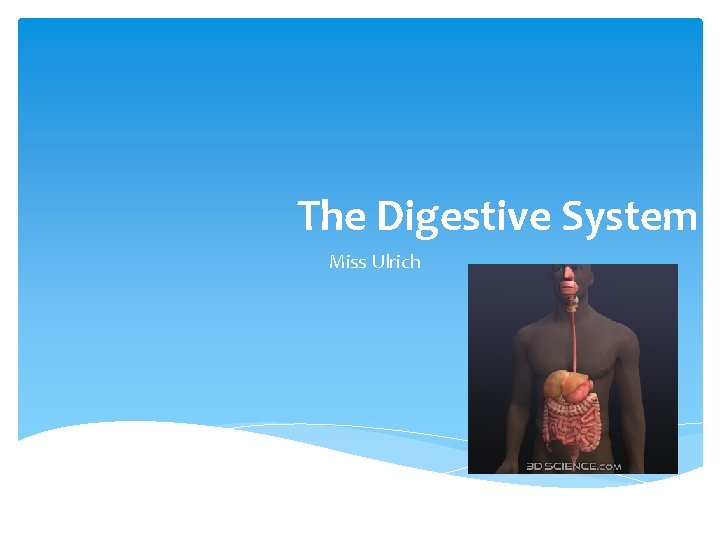
The Digestive System Miss Ulrich
Obtaining and Processing Food All organisms need a way to obtain essential nutrients Organisms that depend on organic molecules manufactured by other living things are called heterotrophs (organisms that lack chlorophyll: animals, fungi) Survival depends on organic molecules synthesized by autotrophs (directly or indirectly) Organism that can nourish themselves using inorganic materials (water & carbon dioxide) are called autotrophs (photosynthetic organisms) Self-sufficient Autotrophs produce food, will heterotrophs consume it.
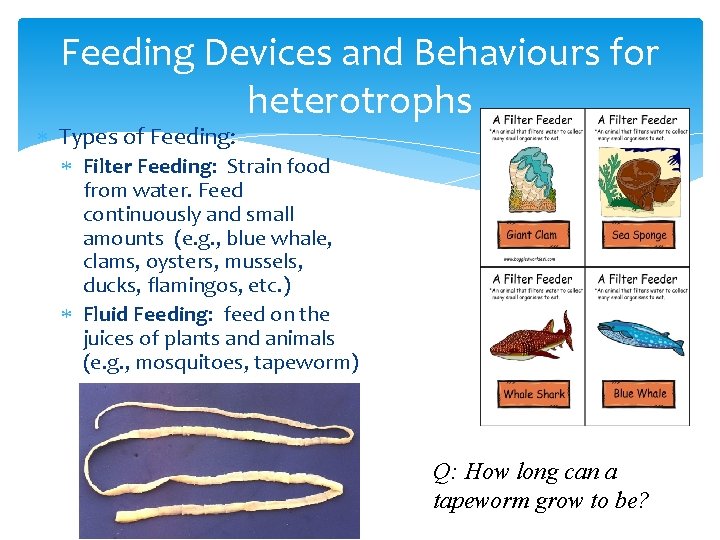
Feeding Devices and Behaviours for heterotrophs Types of Feeding: Filter Feeding: Strain food from water. Feed continuously and small amounts (e. g. , blue whale, clams, oysters, mussels, ducks, flamingos, etc. ) Fluid Feeding: feed on the juices of plants and animals (e. g. , mosquitoes, tapeworm) Q: How long can a tapeworm grow to be?
Feeding Devices (Cont’d) Many animals , including a large number of insects, ingest large amounts of food at a time, and therefore not continuously. Great variety of feeding devices displayed For Example: Mammals: Grasping trunk of elephant Mobile lips and tongue of a cow Hands of human
Digestion: Essential Food Processing In larger organisms (e. g. , mammals), cells are numerous and packed in tissues from the internal surface of the digestive tract. Most of digestive tract is not permeable to substances in food Solution to this problem: development of digestive system and circulatory system Digestive system: breaks down food masses that can be absorbed by circulatory system Circulatory System: transports substances to individual cells where they are absorbed
Digestion: To fully understand digestion we need to explore some of the processes and anatomical structures involved. We will be looking at: 1. The digestive tract through which food travels 2. Mechanical digestion: how food moves 3. Chemical digestion 4. Accessory organs and their contribution to the digestive system
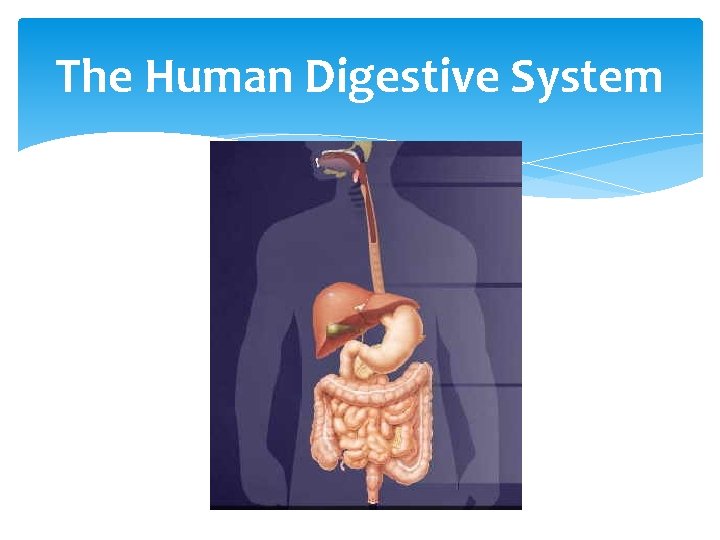
The Human Digestive System
4 Steps to Food Processing: 1. Ingestion: the taking in of nutrients 2. Digestion: The chemical and physical breakdown of complex organic substances into smaller ones 3. Absorption: The taking up of digested molecules into the cells of the digestive tract 4. Egestion: The removal of wastes from the body
The Human Digestive System Foods taken into the body consist of large complex organic compounds. Digestion must occur in order to release the nutrients contained within the food. Digestion will break down the large complex organic compounds into smaller, simpler units that can be absorbed and used by the cells of the organism.
Two Types of Digestion 1. Mechanical Digestion Physical breaking up of food into smaller pieces by the teeth. The tongue manipulates the food into a mass called the bolus The squishing action in the esophagus and intestines further break up the food mass The Churning action of the stomach muscles contracting to mix food with the digestive juices in the stomache
Two Type of Digestion 2. Chemical Digestion Separation of food into its molecular components using chemicals like stomach acid and digestive enzymes Begins in the mouth with salivary amylase which breaks down sugars into simpler sugars Majority takes place in the stomach with the help of hydrochloric acid and in the small intestine with the help of various digestive enzymes
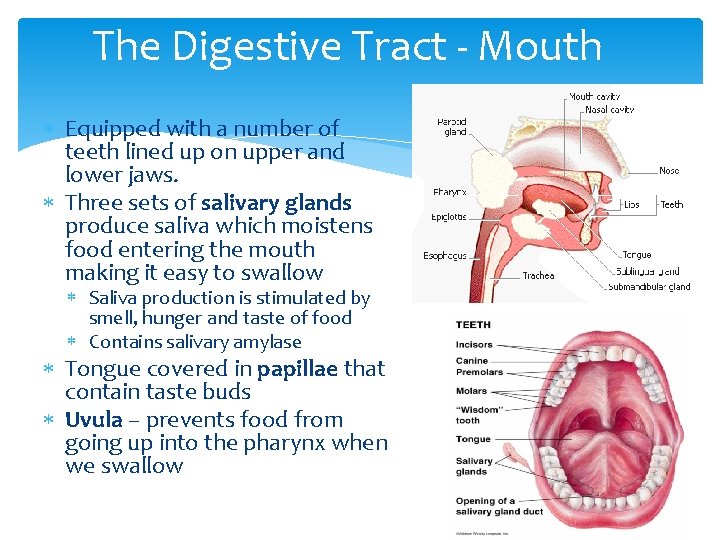
The Digestive Tract - Mouth Equipped with a number of teeth lined up on upper and lower jaws. Three sets of salivary glands produce saliva which moistens food entering the mouth making it easy to swallow Saliva production is stimulated by smell, hunger and taste of food Contains salivary amylase Tongue covered in papillae that contain taste buds Uvula – prevents food from going up into the pharynx when we swallow
Pharynx Made up of muscular walls containing: Trachea – tube going to the lungs When you swallow the epiglottis closed over the glottis preventing food from entering the trachea Esophagus – Muscular tube going to the stomach Muscles expand contract pushing food down to the stomach – Peristalsis No chemical digestion takes place here
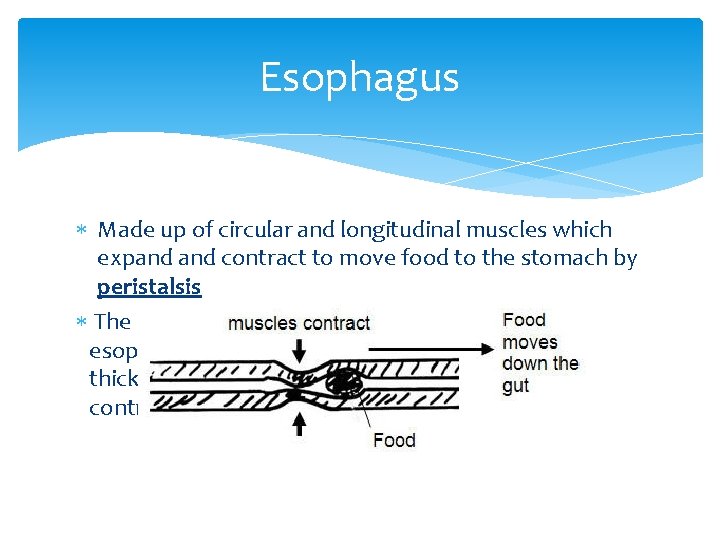
Esophagus Made up of circular and longitudinal muscles which expand contract to move food to the stomach by peristalsis The circular muscle ring at the lower end of the esophagus (near the entrance of the stomach) is thickened to give the individual some involuntary control over the movement of food
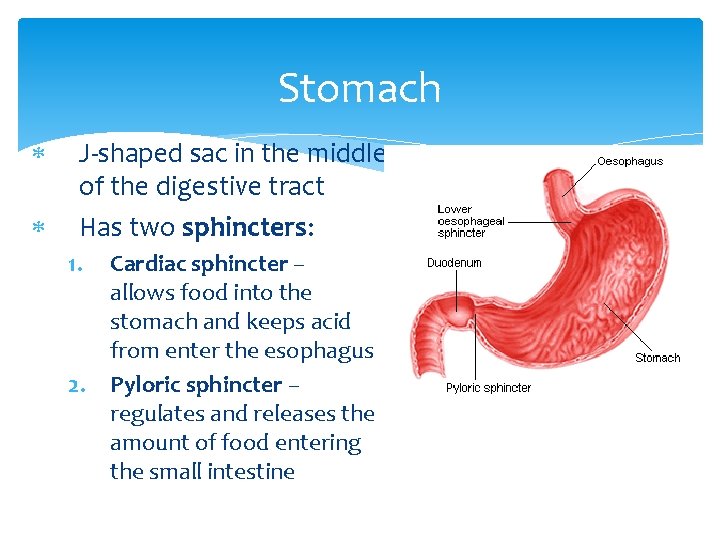
Stomach J-shaped sac in the middle of the digestive tract Has two sphincters: 1. 2. Cardiac sphincter – allows food into the stomach and keeps acid from enter the esophagus Pyloric sphincter – regulates and releases the amount of food entering the small intestine
Stomach - Mechanical Digestion After eating, the stomach walls begin to contract & to mix and churn food with gastric juices This mixture is called chyme GROSS! This is the stuff that comes up when you get sick Food may remain in the stomach for 2 to 6 hours after eating (longer if you eat before going to bed) May stretch to hold up to 2 litres of food or liquid
Stomach – Chemical Digestion Gastric glands found in the wall of the stomach release gastric juices Production is stimulated by: Thought, sight or smell of food Food entering the stomach Stretching of stomach wall Some Digestion takes place here: water, some medicine, and alcohol
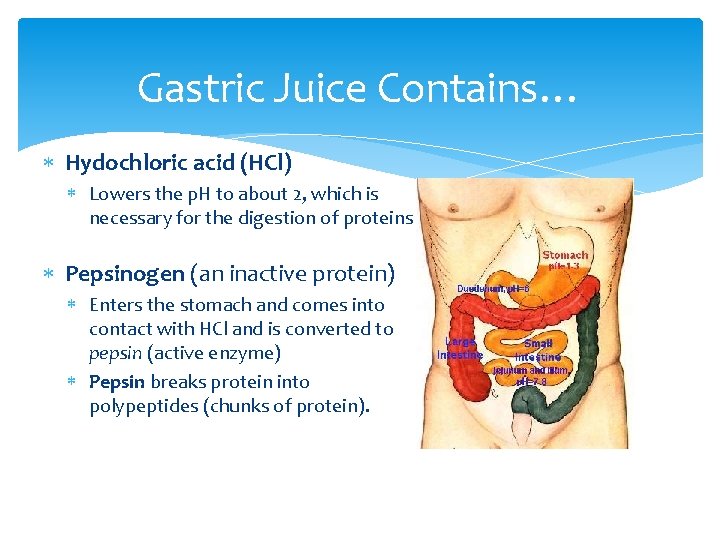
Gastric Juice Contains… Hydochloric acid (HCl) Lowers the p. H to about 2, which is necessary for the digestion of proteins Pepsinogen (an inactive protein) Enters the stomach and comes into contact with HCl and is converted to pepsin (active enzyme) Pepsin breaks protein into polypeptides (chunks of protein).
Small Intestine Subdivided into three parts: 1. 2. 3. Duodenum – (First 25 cm after the stomach) U-shaped, Pancreative and bile ducts open into here making it a site for chemical breakdown of partially digested material from the stomach Jejunum – (The next 2 metres) breaks down remaining proteins and carbs so the end product can be absorbed, more folds than duodenum Ileum – (the last 5 metres) fewer and smaller villi, absorb nutrients, push remaining undigested material into large intestine This is the site of most digestion, along with nutrient absorption The small intestine has many folds and finger-like projections called villi, along with their microvilli drastically increase the surface area inside the small intestine increasing the amount of nutrient absorption that can take place.
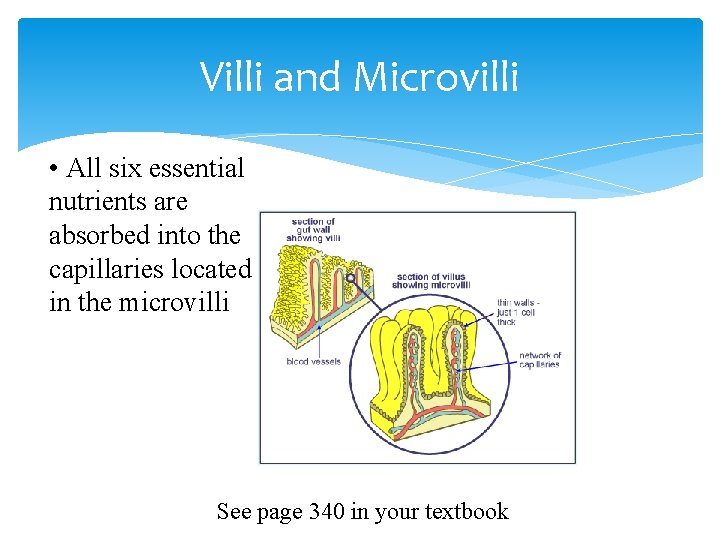
Villi and Microvilli • All six essential nutrients are absorbed into the capillaries located in the microvilli See page 340 in your textbook
Small Intestine – Mechanical Digestion Peristalsis Rhythmical segmentation is a form of peristalsis that mixes and pushes partially digested food through the small intestines Emulsification Fats are broken down into smaller droplets (not chemically changed) by bile Bile is produced in the liver and stored in the gall bladder, it enters the duodenum via the common bile duct Bile activates the lipases that will later chemically break down fats
Small Intestine – Chemical Digestion Two major glands involved in digestion in the small intestine: 1. The Pancreas 2. The Intestinal glands More on this tomorrow. .
The Large Intestine Consists of the caecum, colon, rectum and anal canal Caecum Blind end of the large intestine Appendix Plays no role in digestion but may help fight infections hangs from the Caecum Colon Divided into 3 sections Ascending (up) Transverse (across) Descending (down)
From Colon to Anus In the colon water and dissolved minerals are absorbed into the blood from undigested food Bacteria help release more nutrients by further breaking down food The mass of indigestible material left behind is called feces Feces passes into the rectum and anal canal The anal sphicter allows limited control over the elimination of waste material from the body via the anus
Accessory Organs Pancreas secretes enzymes to break down fat Liver (largest internal organ) secretes bile, which digests fats also stores iron More on this tomorrow…
Homework: Read Sections 10. 1 and 10. 2
- Slides: 26