
The Digestive System Learning Goals I will be
The Digestive System Learning Goals: I will be able to explain the anatomy of the digestive system, and the function of each organ, the link between the digestive system and the circulatory system, as well as disorders of the digestive system (heartburn, ulcers, coliti & constipation)
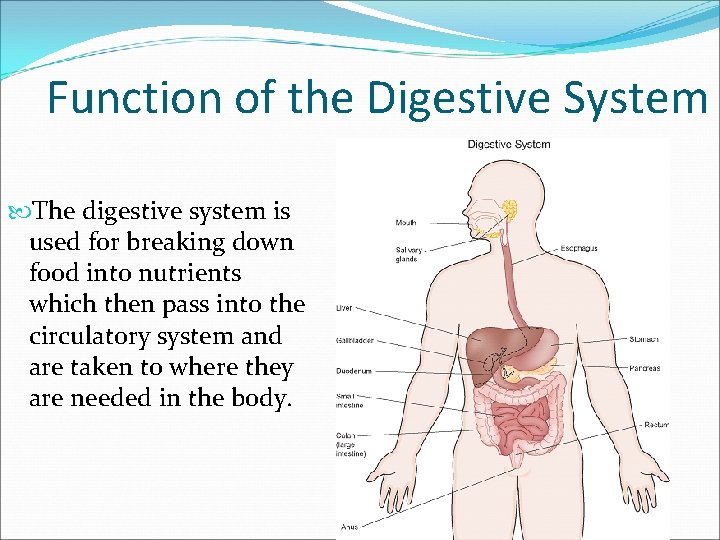
Function of the Digestive System The digestive system is used for breaking down food into nutrients which then pass into the circulatory system and are taken to where they are needed in the body.
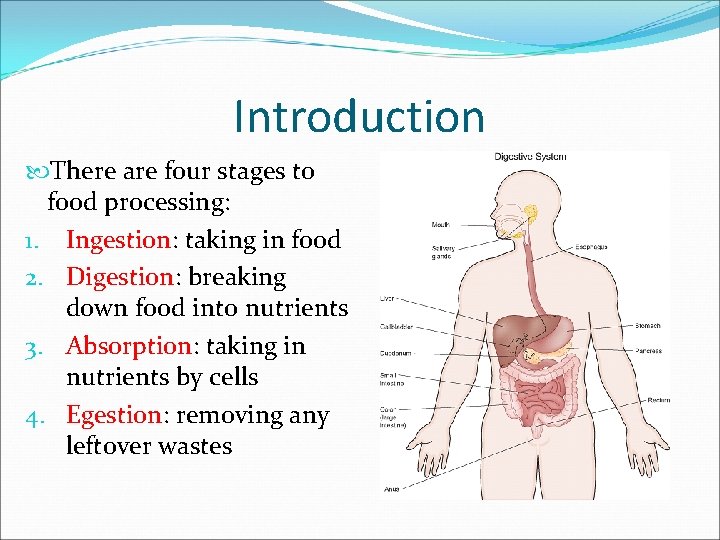
Introduction There are four stages to food processing: 1. Ingestion: taking in food 2. Digestion: breaking down food into nutrients 3. Absorption: taking in nutrients by cells 4. Egestion: removing any leftover wastes
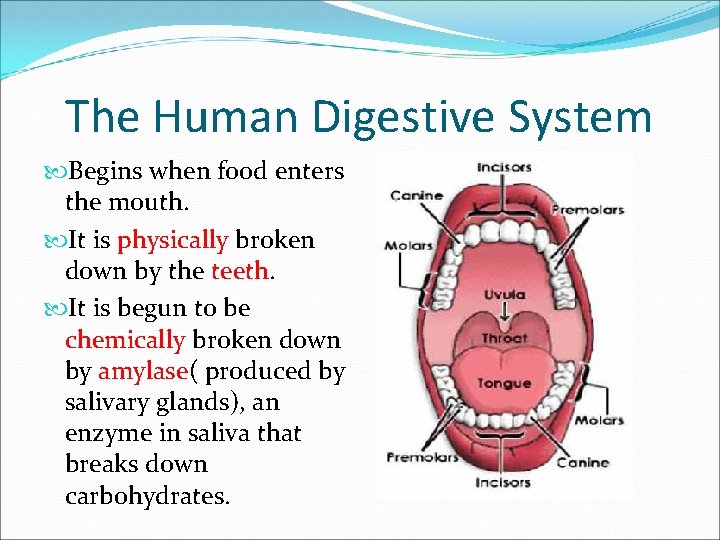
The Human Digestive System Begins when food enters the mouth. It is physically broken down by the teeth. It is begun to be chemically broken down by amylase( produced by salivary glands), an enzyme in saliva that breaks down carbohydrates.
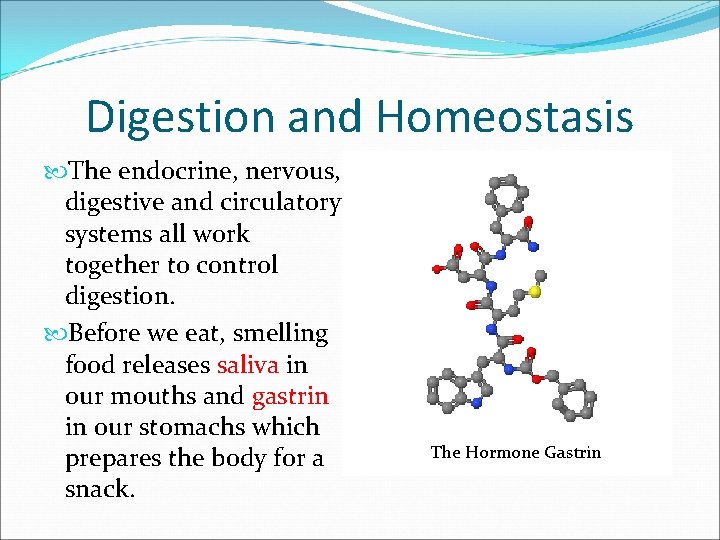
Digestion and Homeostasis The endocrine, nervous, digestive and circulatory systems all work together to control digestion. Before we eat, smelling food releases saliva in our mouths and gastrin in our stomachs which prepares the body for a snack. The Hormone Gastrin
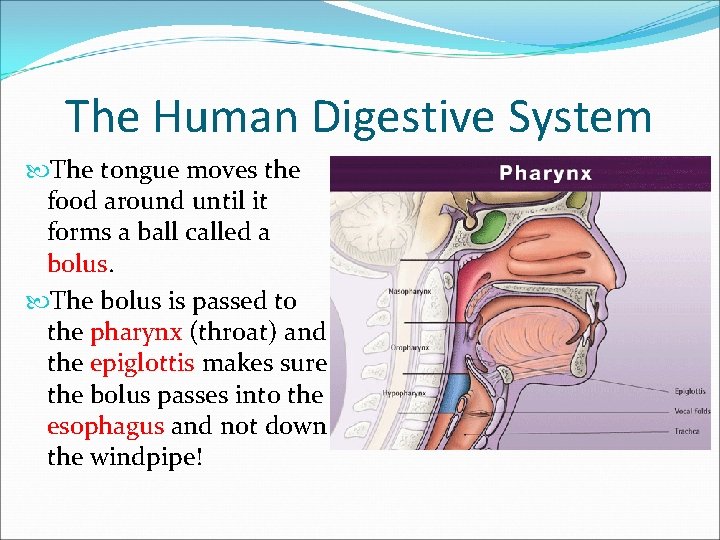
The Human Digestive System The tongue moves the food around until it forms a ball called a bolus. The bolus is passed to the pharynx (throat) and the epiglottis makes sure the bolus passes into the esophagus and not down the windpipe!
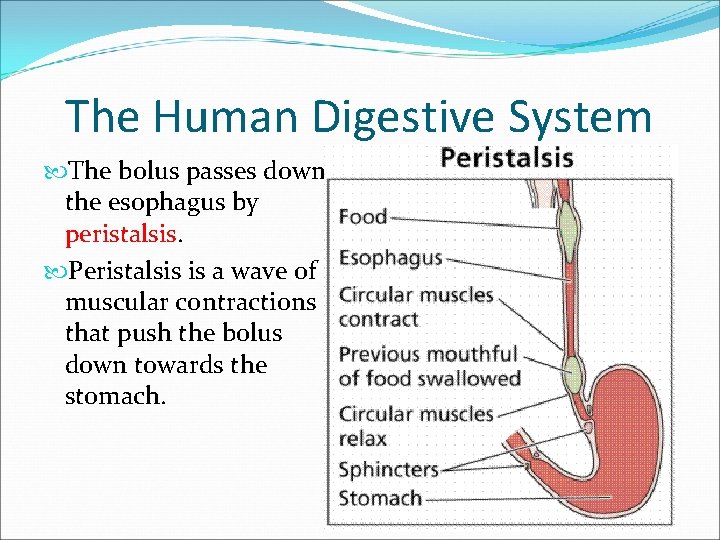
The Human Digestive System The bolus passes down the esophagus by peristalsis. Peristalsis is a wave of muscular contractions that push the bolus down towards the stomach.
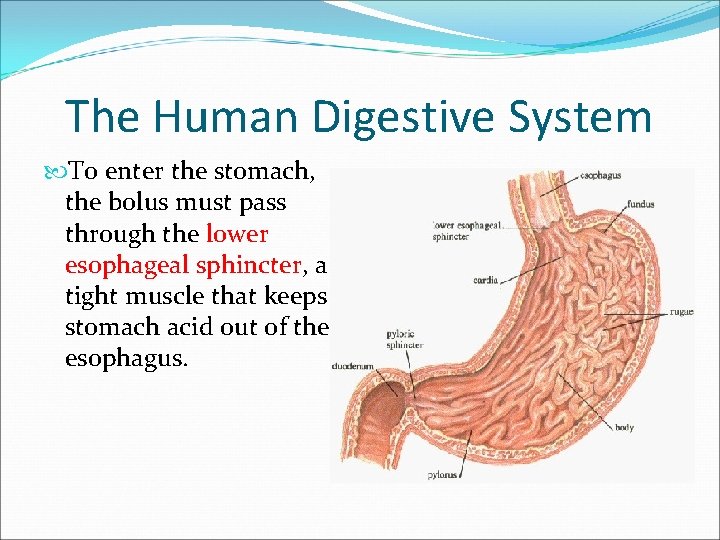
The Human Digestive System To enter the stomach, the bolus must pass through the lower esophageal sphincter, a tight muscle that keeps stomach acid out of the esophagus.
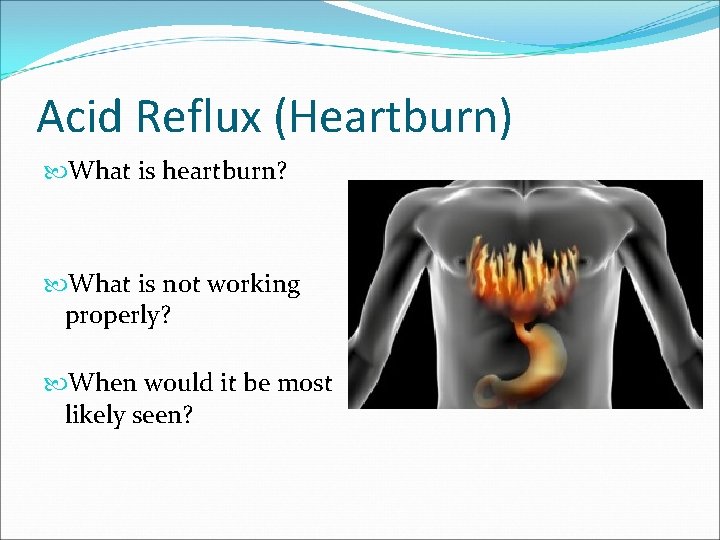
Acid Reflux (Heartburn) What is heartburn? What is not working properly? When would it be most likely seen?
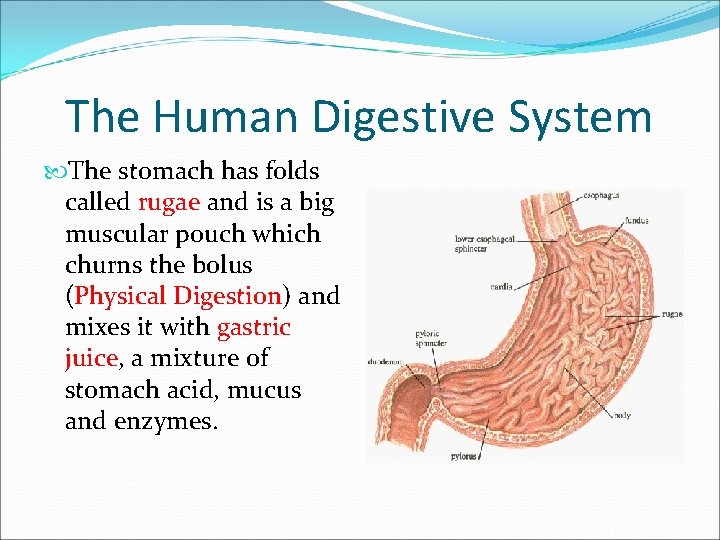
The Human Digestive System The stomach has folds called rugae and is a big muscular pouch which churns the bolus (Physical Digestion) and mixes it with gastric juice, a mixture of stomach acid, mucus and enzymes.
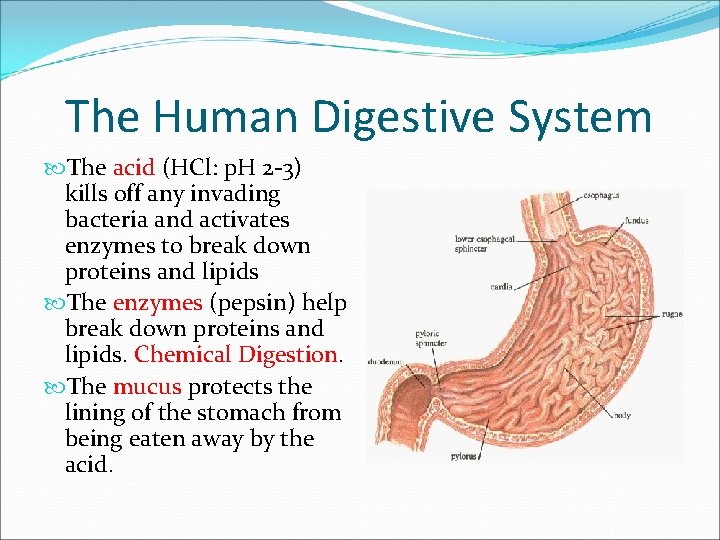
The Human Digestive System The acid (HCl: p. H 2 -3) kills off any invading bacteria and activates enzymes to break down proteins and lipids The enzymes (pepsin) help break down proteins and lipids. Chemical Digestion. The mucus protects the lining of the stomach from being eaten away by the acid.
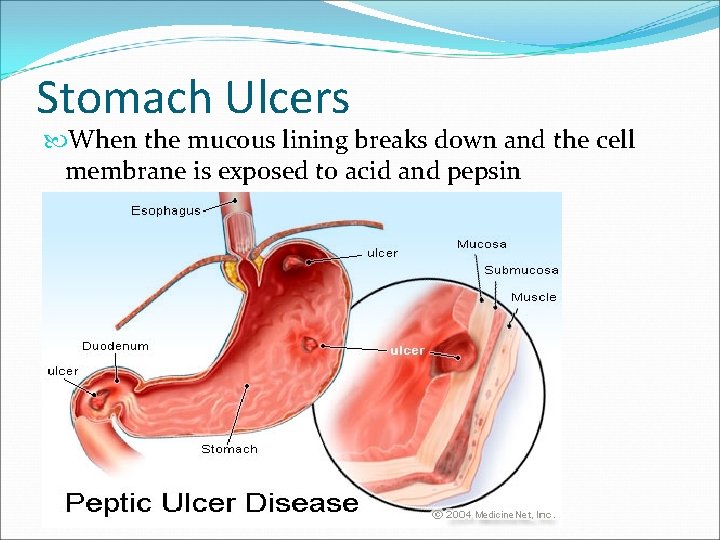
Stomach Ulcers When the mucous lining breaks down and the cell membrane is exposed to acid and pepsin
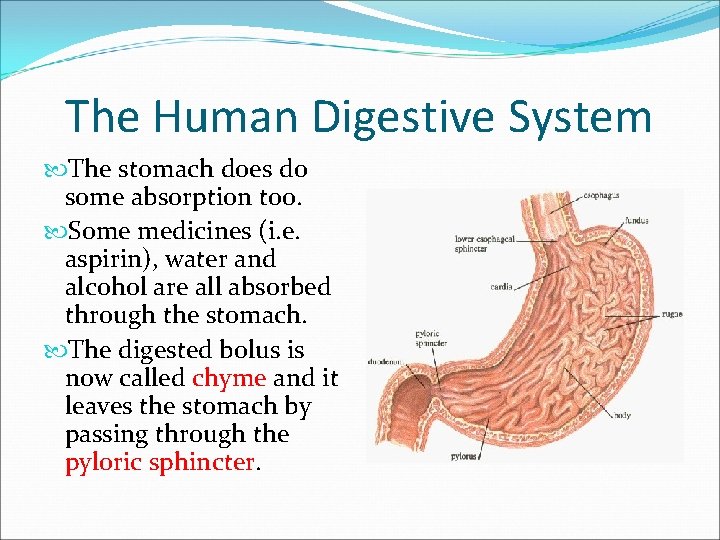
The Human Digestive System The stomach does do some absorption too. Some medicines (i. e. aspirin), water and alcohol are all absorbed through the stomach. The digested bolus is now called chyme and it leaves the stomach by passing through the pyloric sphincter.
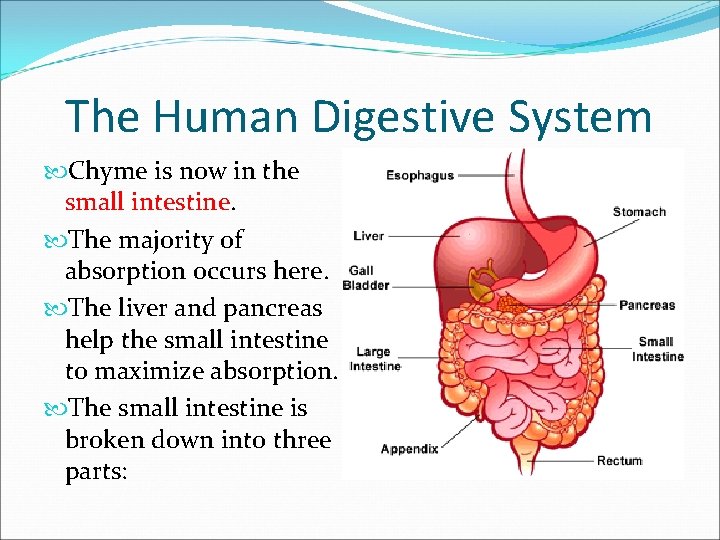
The Human Digestive System Chyme is now in the small intestine. The majority of absorption occurs here. The liver and pancreas help the small intestine to maximize absorption. The small intestine is broken down into three parts:
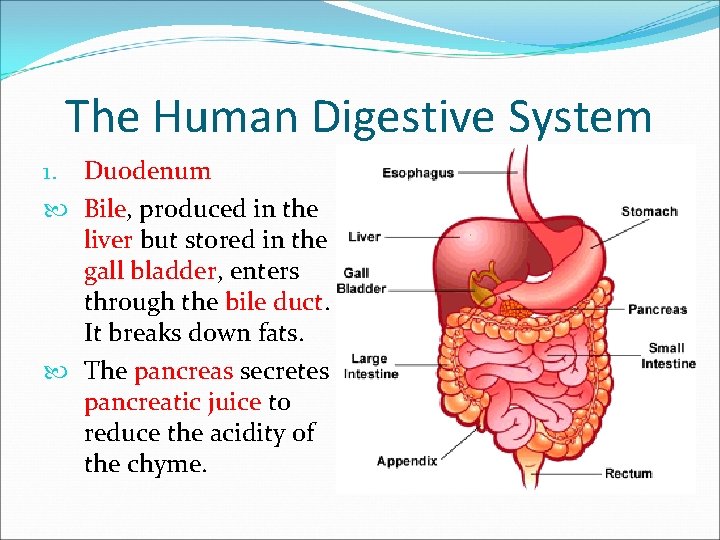
The Human Digestive System 1. Duodenum Bile, produced in the liver but stored in the gall bladder, enters through the bile duct. It breaks down fats. The pancreas secretes pancreatic juice to reduce the acidity of the chyme.
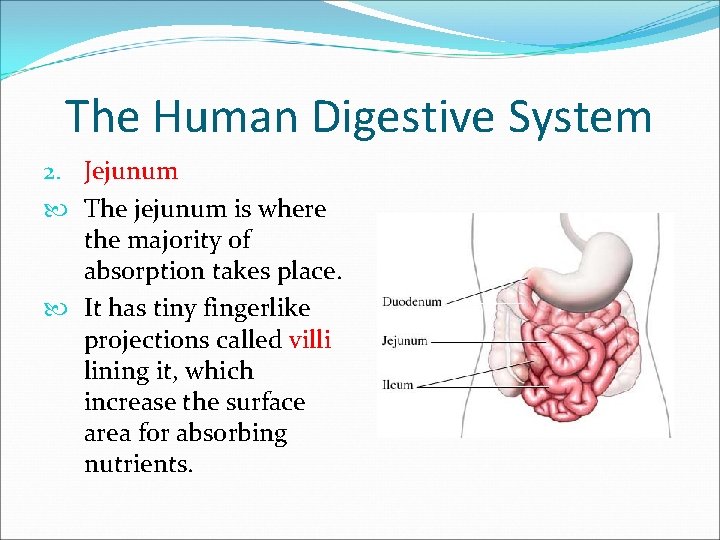
The Human Digestive System 2. Jejunum The jejunum is where the majority of absorption takes place. It has tiny fingerlike projections called villi lining it, which increase the surface area for absorbing nutrients.
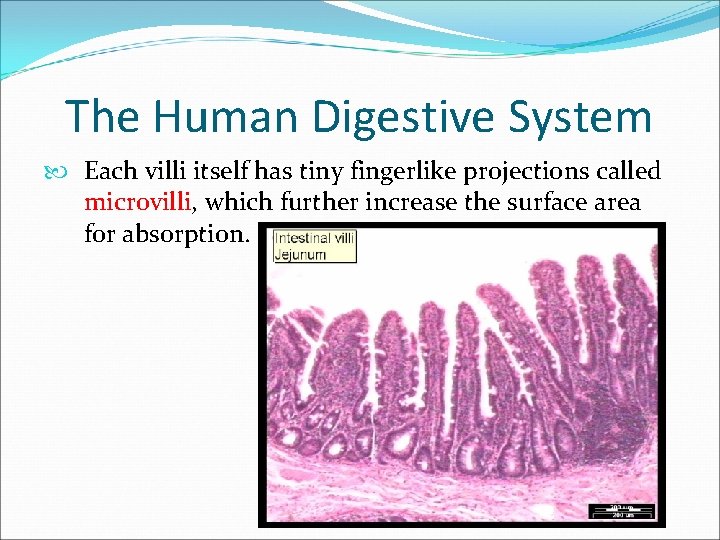
The Human Digestive System Each villi itself has tiny fingerlike projections called microvilli, which further increase the surface area for absorption.
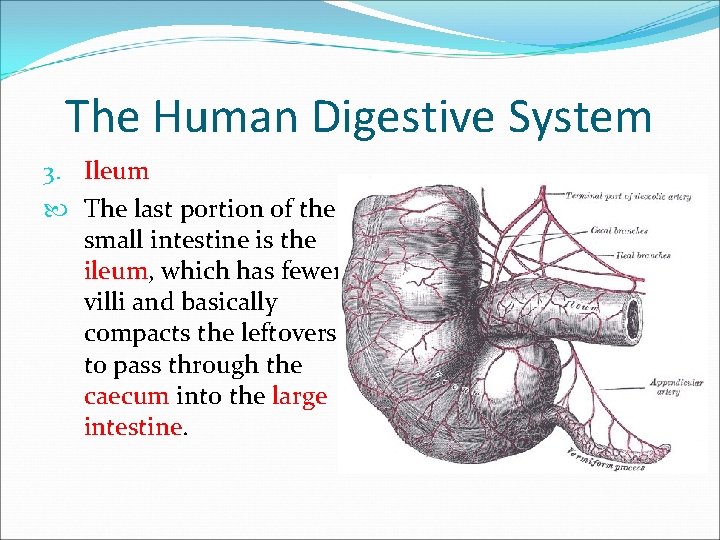
The Human Digestive System 3. Ileum The last portion of the small intestine is the ileum, which has fewer villi and basically compacts the leftovers to pass through the caecum into the large intestine.
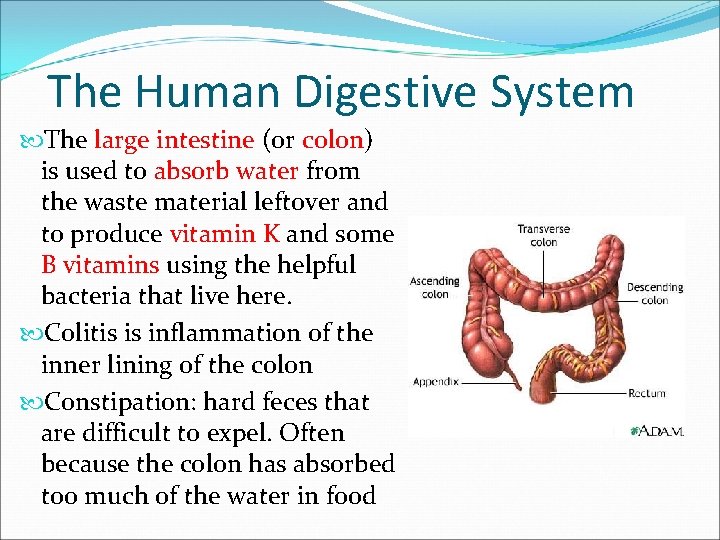
The Human Digestive System The large intestine (or colon) is used to absorb water from the waste material leftover and to produce vitamin K and some B vitamins using the helpful bacteria that live here. Colitis is inflammation of the inner lining of the colon Constipation: hard feces that are difficult to expel. Often because the colon has absorbed too much of the water in food
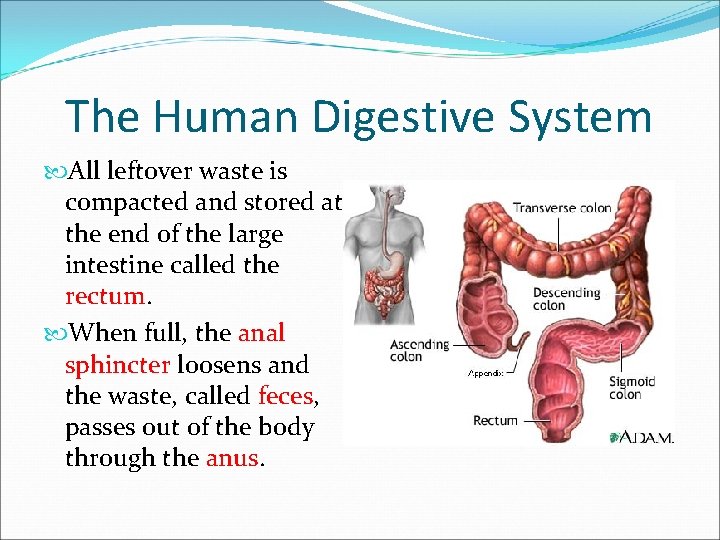
The Human Digestive System All leftover waste is compacted and stored at the end of the large intestine called the rectum. When full, the anal sphincter loosens and the waste, called feces, passes out of the body through the anus.
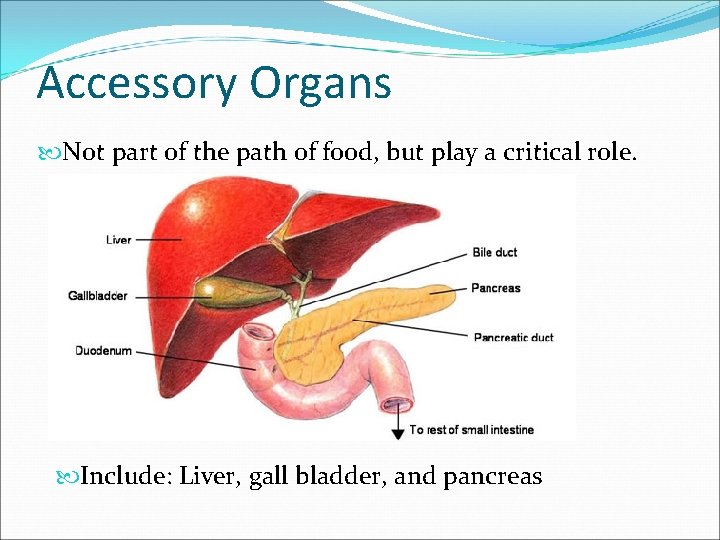
Accessory Organs Not part of the path of food, but play a critical role. Include: Liver, gall bladder, and pancreas
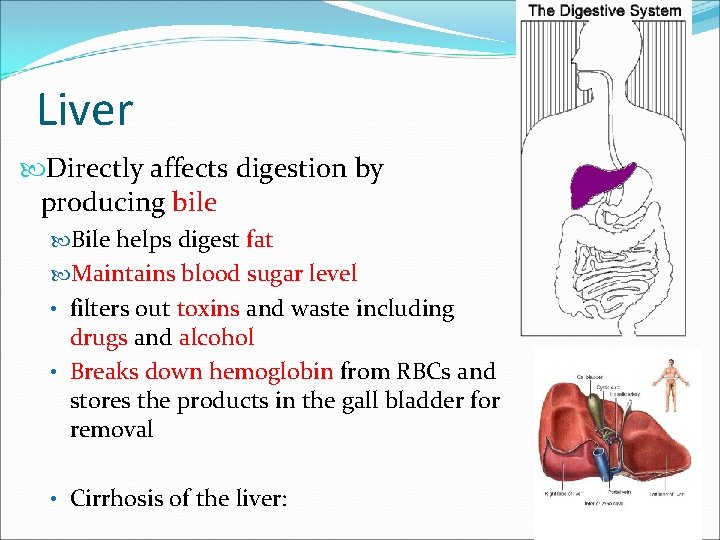
Liver Directly affects digestion by producing bile Bile helps digest fat Maintains blood sugar level • filters out toxins and waste including drugs and alcohol • Breaks down hemoglobin from RBCs and stores the products in the gall bladder for removal • Cirrhosis of the liver: 22
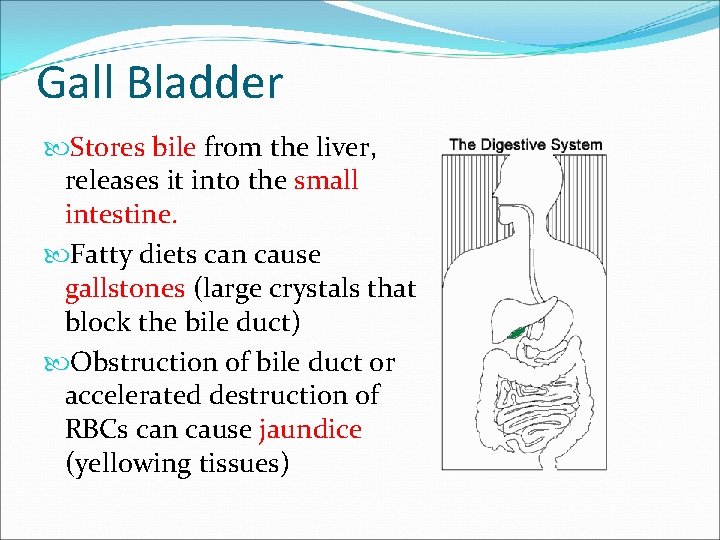
Gall Bladder Stores bile from the liver, releases it into the small intestine. Fatty diets can cause gallstones (large crystals that block the bile duct) Obstruction of bile duct or accelerated destruction of RBCs can cause jaundice (yellowing tissues)
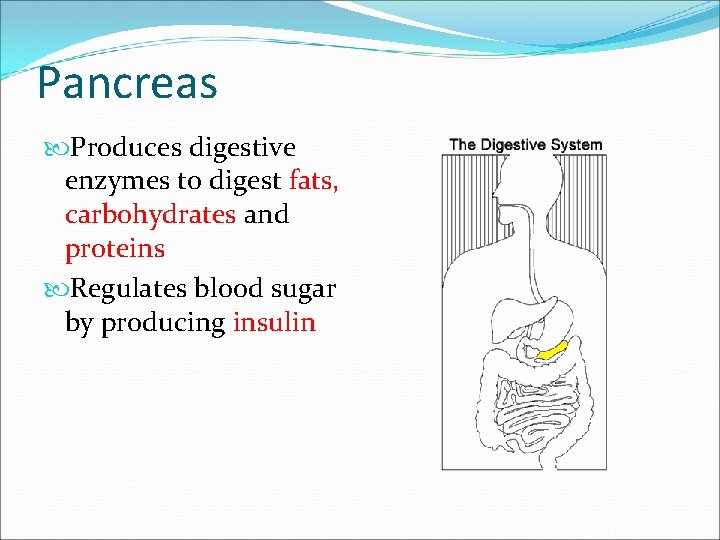
Pancreas Produces digestive enzymes to digest fats, carbohydrates and proteins Regulates blood sugar by producing insulin
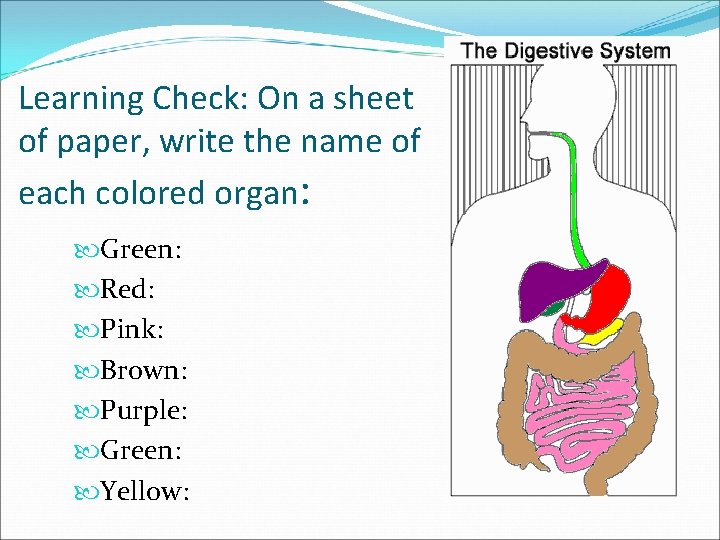
Learning Check: On a sheet of paper, write the name of each colored organ: Green: Red: Pink: Brown: Purple: Green: Yellow:
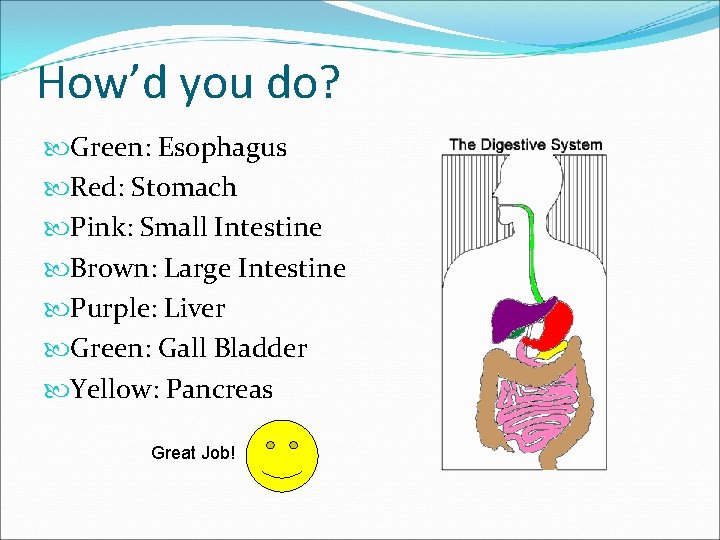
How’d you do? Green: Esophagus Red: Stomach Pink: Small Intestine Brown: Large Intestine Purple: Liver Green: Gall Bladder Yellow: Pancreas Great Job!
- Slides: 26