
The Digestive System just the facts Why is

- Slides: 28
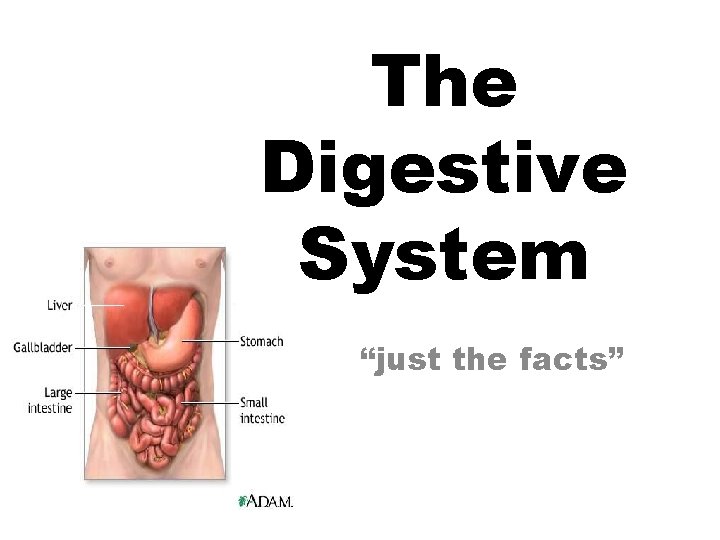
The Digestive System “just the facts”
Why is Digestion Important? • We eat things that can’t be used by our bodies in that form (too big)- so they have to be broken down (into microscopic size) • Body uses these microscopic nutrients to nourish and build cells (GRR…growth, repair, reproduction). • These nutrients provide ENERGY!
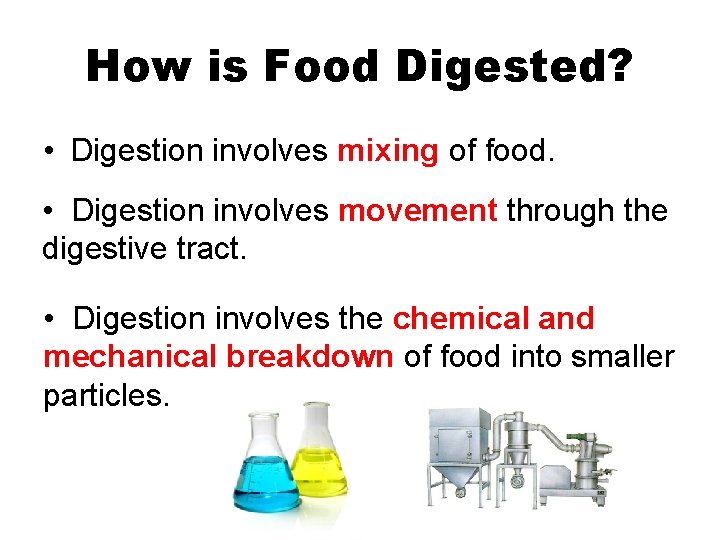
How is Food Digested? • Digestion involves mixing of food. • Digestion involves movement through the digestive tract. • Digestion involves the chemical and mechanical breakdown of food into smaller particles.
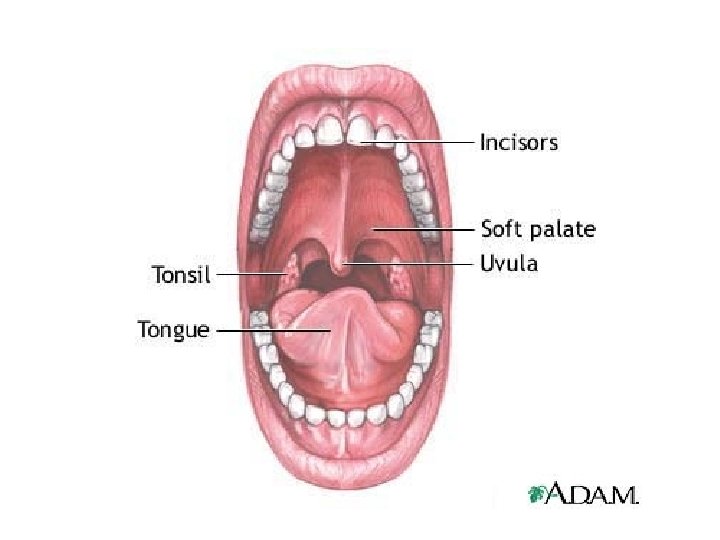
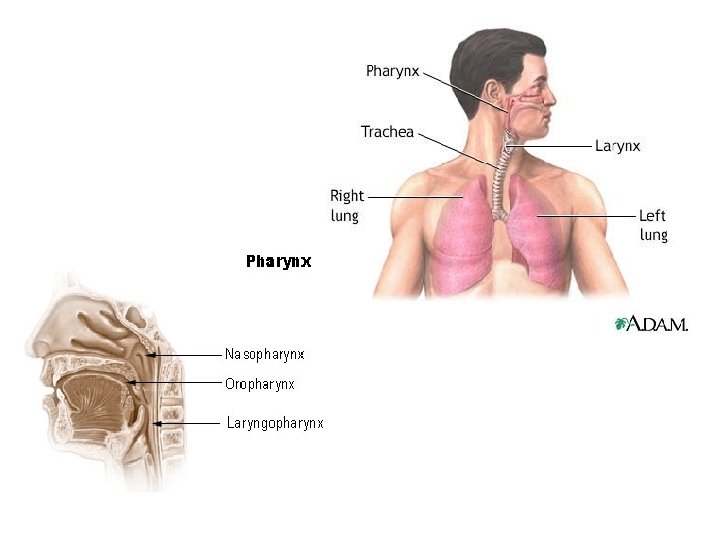
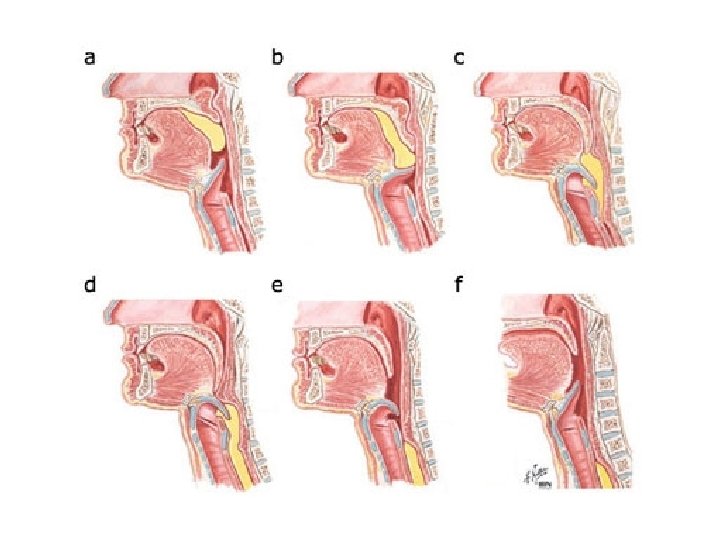
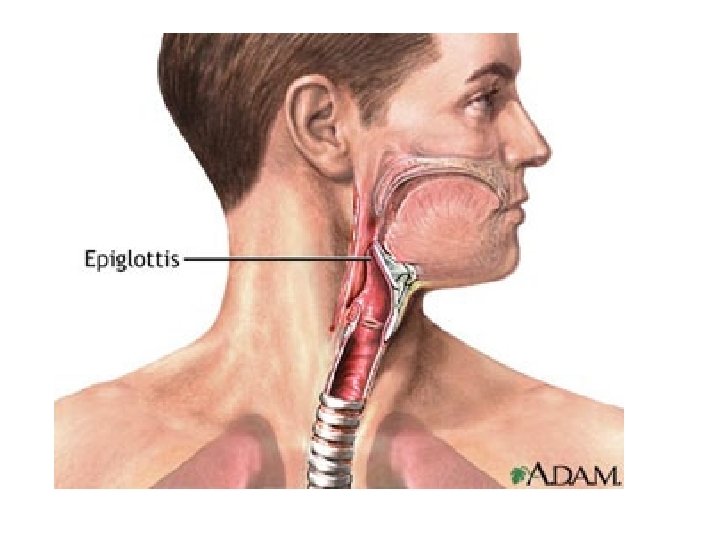
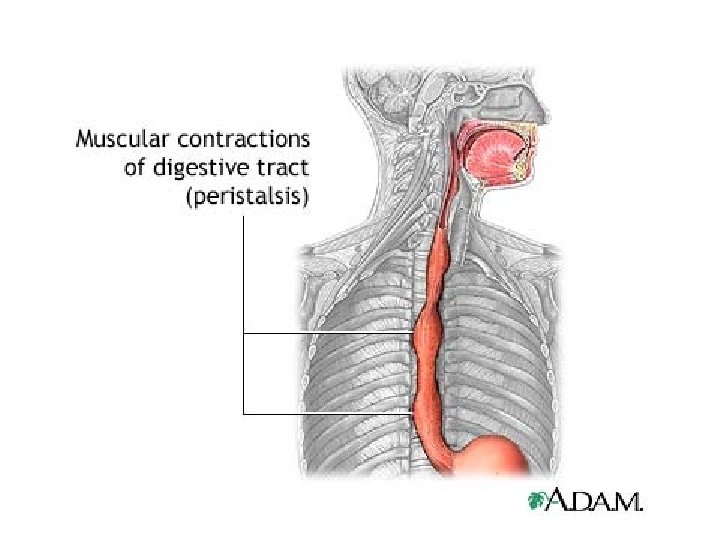
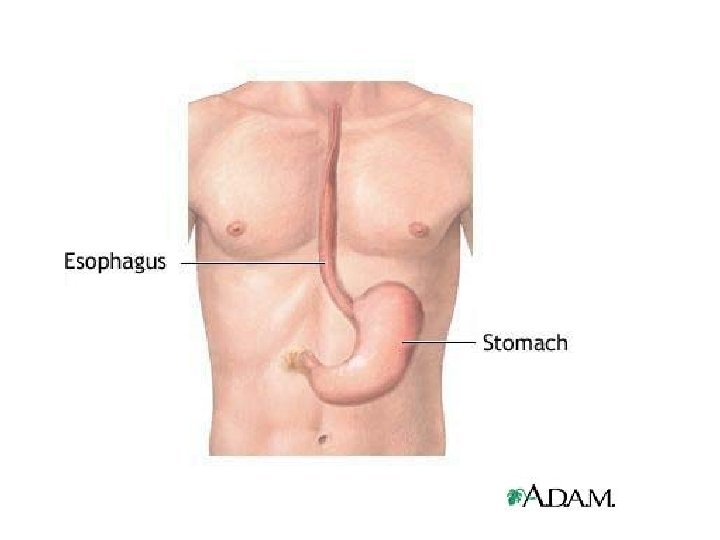
Movement of Food through the System • Digestion begins in the mouth. • We chew our food and mechanically break it down into smaller pieces. • Saliva is secreted by salivary glands and this fluid chemically starts to break down starches. • As we chew, food is pushed to the back of the mouth. • When we swallow, food passes through the pharynx (back of the throat) and over the epiglottis (flap of tissue covering the trachea). • After passing over the epiglottis the bolus of food is pushed down the esophagus (peristalsis) into the stomach.
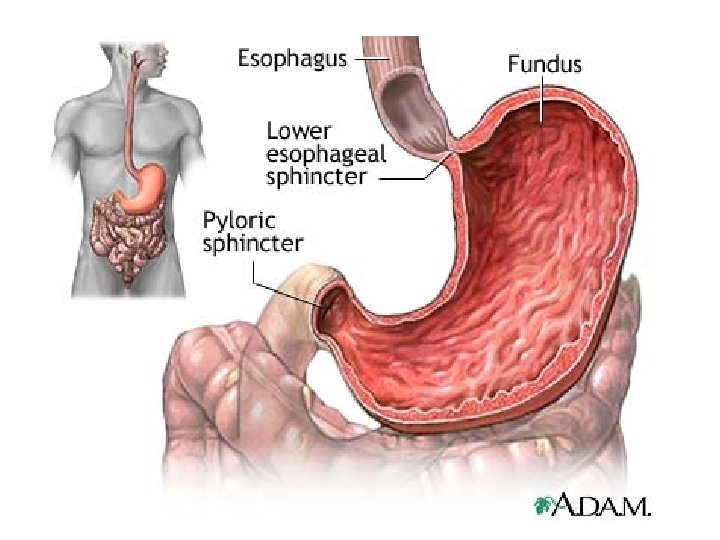
Let’s Keep Movin on Down…. . • There is a muscular ring that opens and closes at the top of the stomach called the CE Sphincter. • This prevents acid and stomach contents from “going the wrong way”! • When food enters the stomach it is chemically and mechanically broken down with churning and HCl. • The stomach is lined with rugae that increase surface area for more secretions. • The stomach stores, mixes, and releases small amounts of food, into the small intestine.
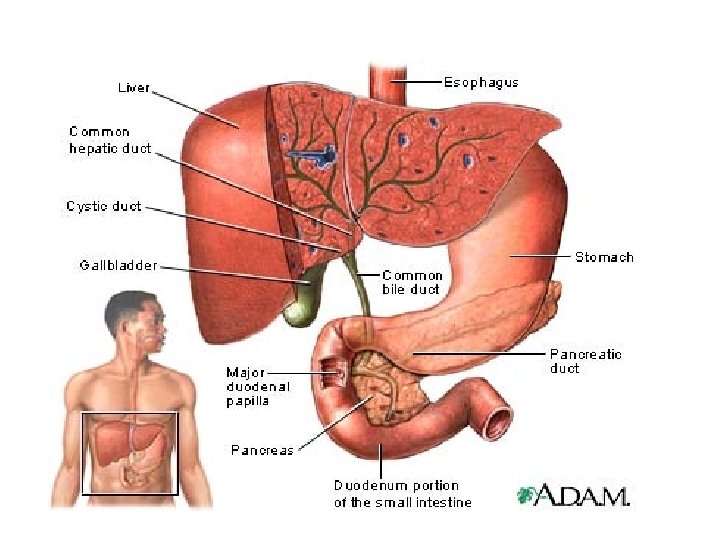
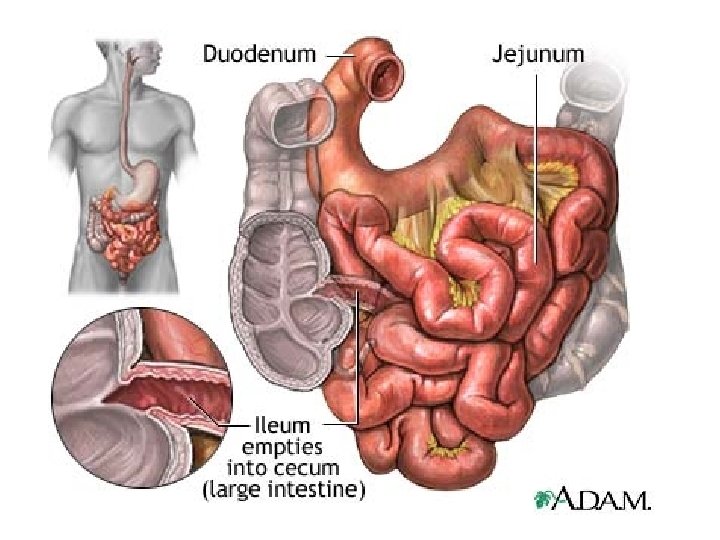
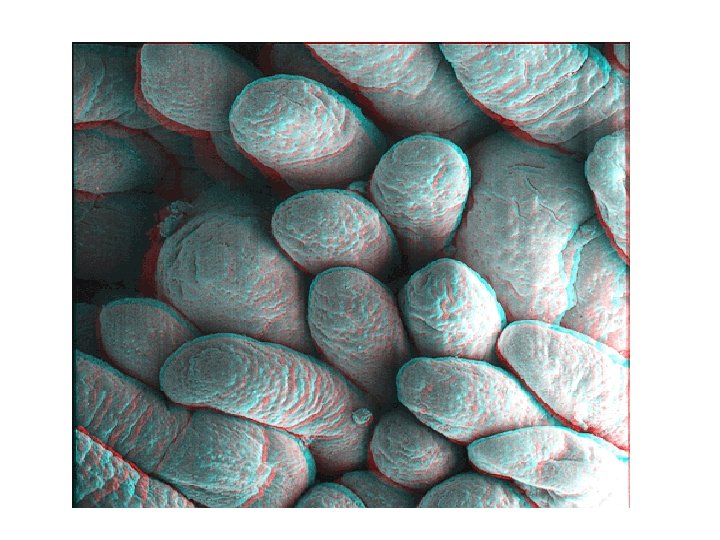
Move it Along…………. . • The small intestine is the final area where digestion and absorption takes place. • The Liver contains the Gall Bladder that secretes bile, which breaks down fats. • The Pancreas secretes a number of enzymes to break down fats, proteins, and starches (Amylase, Lipase, and Trypsinogen). • The small intestine is lined with villi (increases surface area for absorption) and has three sections (Duodenum, Jejunum, Ileum).
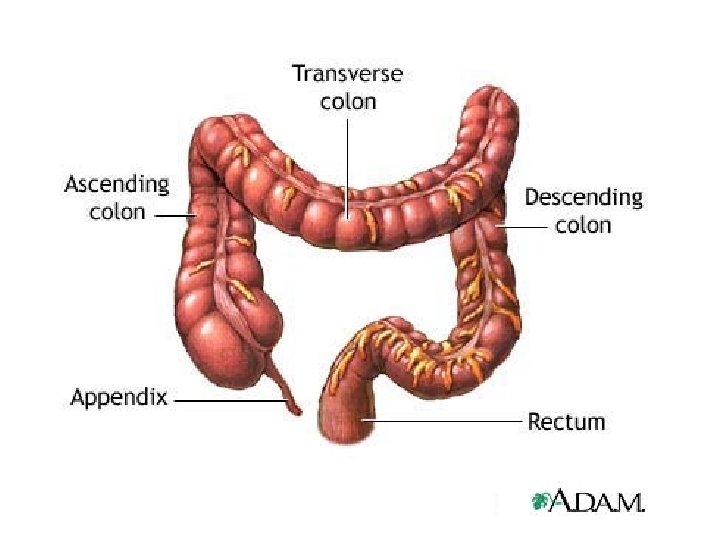
And Last but not Least! • The small intestine empties into the large intestine. • The large intestine absorbs water, minerals, and vitamins. • All solid waste (feces) is stored in the large intestine. • Egestion occurs when feces stored in the rectum is passed through the sphincter muscle called the anus. • The appendix- is a vestigial organ and has no function. • The final products of digestion are: monosaccharides, amino acids, and fatty acids and glycerol.
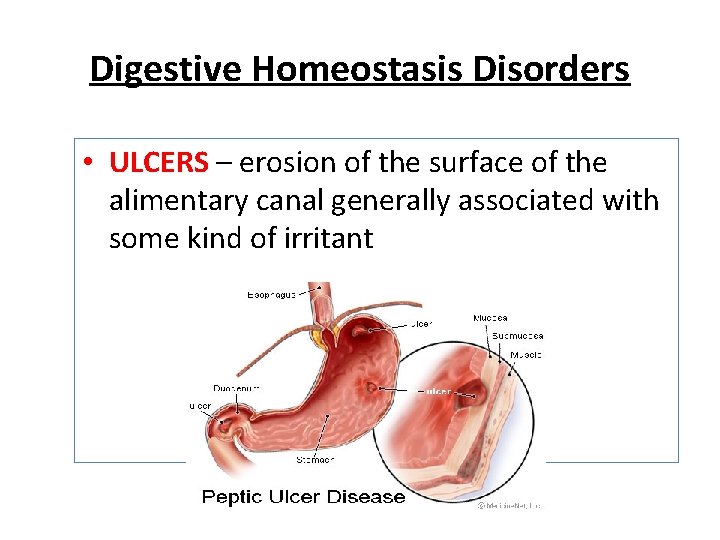
Digestive Homeostasis Disorders • ULCERS – erosion of the surface of the alimentary canal generally associated with some kind of irritant
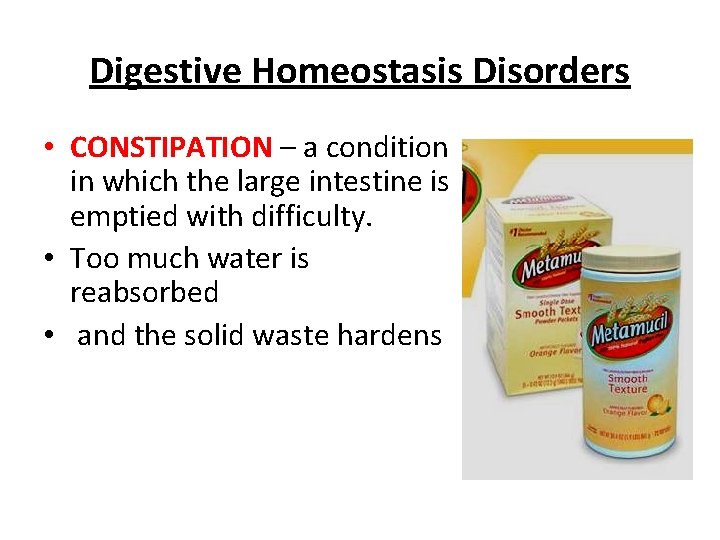
Digestive Homeostasis Disorders • CONSTIPATION – a condition in which the large intestine is emptied with difficulty. • Too much water is reabsorbed • and the solid waste hardens
Digestive Homeostasis Disorders • DIARRHEA – a gastrointestinal disturbance characterized by decreased water absorption and increased peristaltic activity of the large intestine. • This results in increased, multiple, watery feces. • This condition may result in severe dehydration, especially in infants
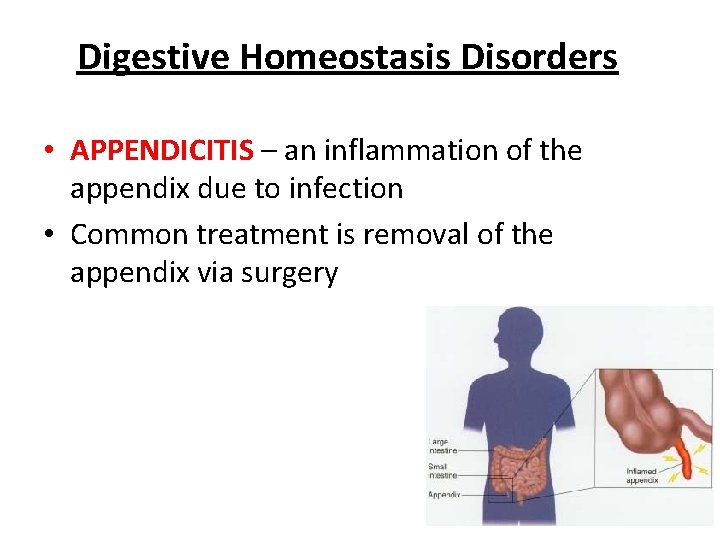
Digestive Homeostasis Disorders • APPENDICITIS – an inflammation of the appendix due to infection • Common treatment is removal of the appendix via surgery
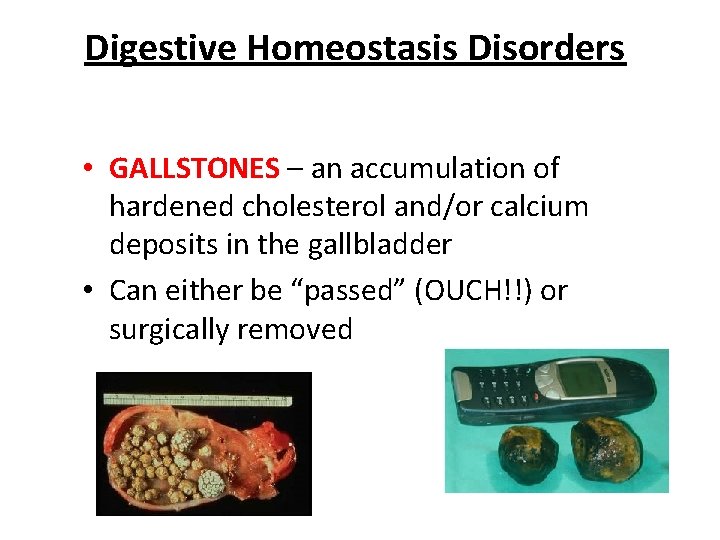
Digestive Homeostasis Disorders • GALLSTONES – an accumulation of hardened cholesterol and/or calcium deposits in the gallbladder • Can either be “passed” (OUCH!!) or surgically removed
Digestive Homeostasis Disorders • • ANOREXIA NERVOSA - a psychological condition where an individual thinks they appear overweight and refuses to eat. Weighs 85% or less than what is developmentally expected for age and height Young girls do not begin to menstruate at the appropriate age. BULIMIA- binge and purge syndrome, individuals will consume massive quantities of food and then get rid of it, by either vomiting or using laxatives.
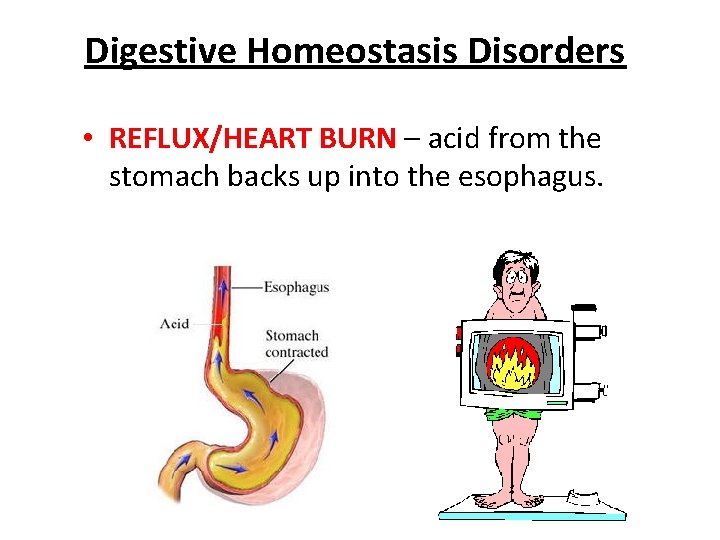
Digestive Homeostasis Disorders • REFLUX/HEART BURN – acid from the stomach backs up into the esophagus.
Let’s go to the Video!
Digestive System Cadaver
Travel Through the Digestive System