
THE DIGESTIVE SYSTEM JOB Changes food into substances
THE DIGESTIVE SYSTEM
JOB • Changes food into substances that can be used by the bodies cells • Includes the mouth, salivary glands, esophagus, stomach, and small/large intestines Ø Mechanical digestion-chewing Ø Chemical digestion- saliva
The path food takes 1. Mouth-your teeth chop and grind the food and your saliva begins breaking down the food 2. Pharynx- the throat 3. Salivary Glands- moisten the food 4. Esophagus- the chewed food moves down this muscular tube to the stomach 5. Stomach- temporarily stores the food for up to 6 hrs. /gastric juices begin breaking food down 6. Small intestine- broken down food particles leave stomach and arrive here

THE PATH FOOD TAKES (cont. ) 7. Blood Vessels- the food particles (now very small) enter through the wall of the small intestine into your blood vessels. Your blood vessels deliver these particles to all of the cells of your body 8. Large intestine- final step in digestion. All of the left over water and undigested food (waste) is stored here and eventually excreted
FACTS • An empty stomach has a volume of 1/5 of a cup • When eating, the stomach can expand to hold 8 cups of food or more…. . • Your stomach produces 3 quarts of acids/enzymes each day • Eventually the food you put in your mouth will be absorbed into your bloodstream and used as energy
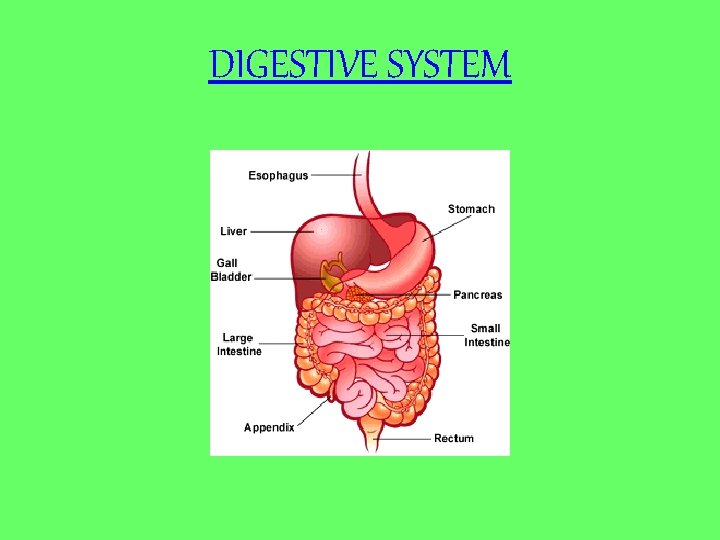
DIGESTIVE SYSTEM
Problems of Digestive System • IBS-(irritable bowl syndrome) common intestinal disorder that affects the colon. • Stomach ulcers- when the protective mucous coating of stomach is weakened this allows the acid to form holes or sores on the lining of the stomach • IBD- (inflammatory bowel disease)chronic inflammation of the intestines that affects kids/teens
- Slides: 7