
The Digestive System Introduction The digestive system is
- Slides: 19
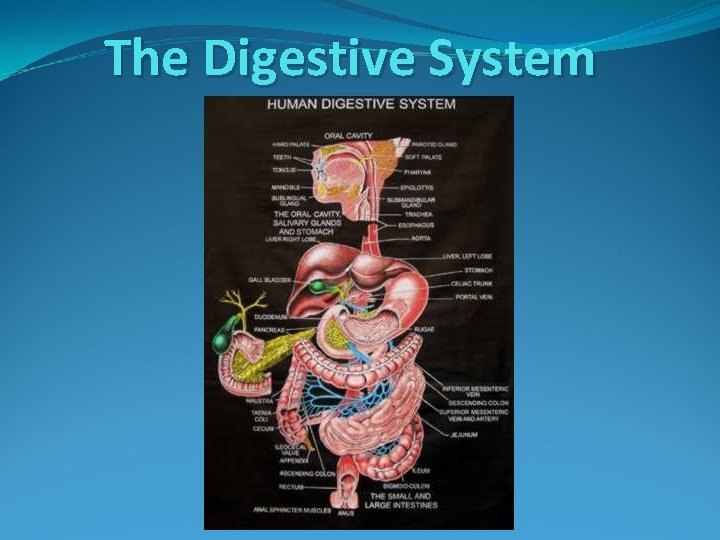
The Digestive System
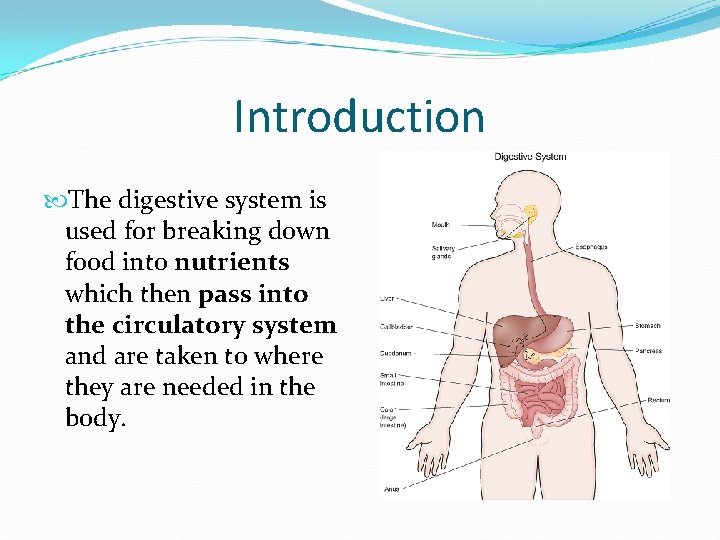
Introduction The digestive system is used for breaking down food into nutrients which then pass into the circulatory system and are taken to where they are needed in the body.
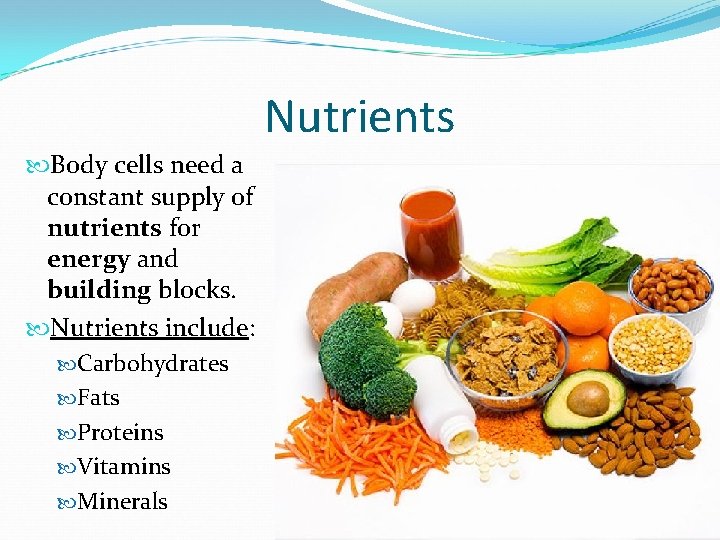
Nutrients Body cells need a constant supply of nutrients for energy and building blocks. Nutrients include: Carbohydrates Fats Proteins Vitamins Minerals
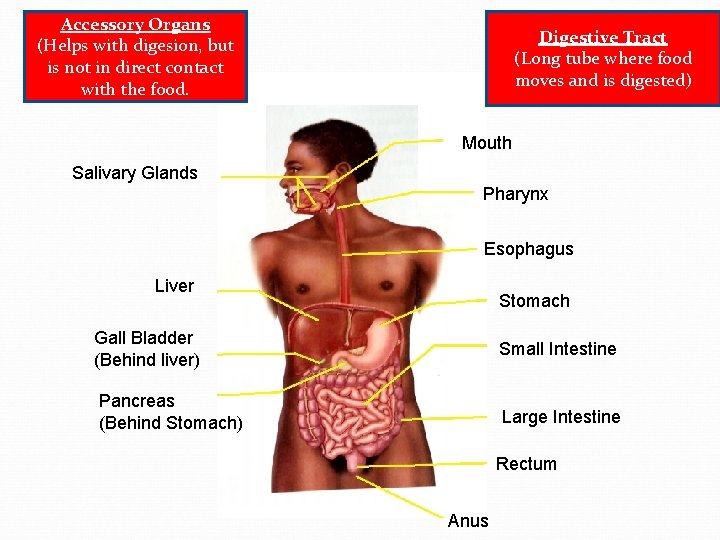
Accessory Organs (Helps with digesion, but is not in direct contact with the food. Digestive Tract (Long tube where food moves and is digested) Mouth Salivary Glands Pharynx Esophagus Liver Stomach Gall Bladder (Behind liver) Small Intestine Pancreas (Behind Stomach) Large Intestine Rectum Anus
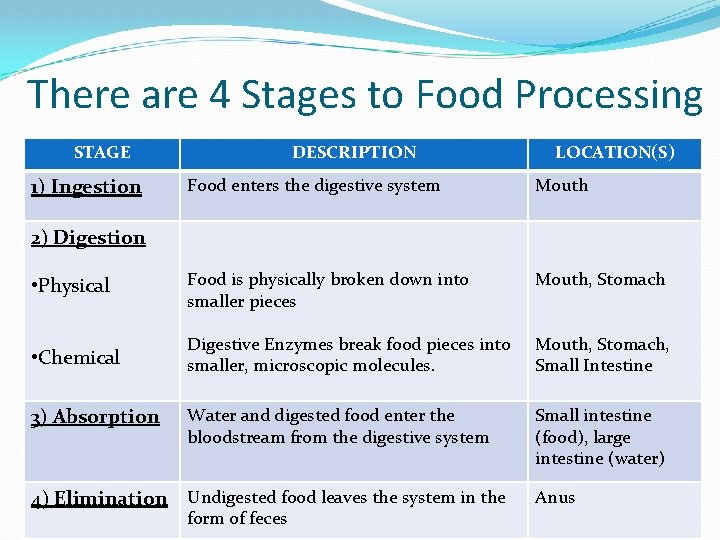
There are 4 Stages to Food Processing STAGE 1) Ingestion DESCRIPTION LOCATION(S) Food enters the digestive system Mouth • Physical Food is physically broken down into smaller pieces Mouth, Stomach • Chemical Digestive Enzymes break food pieces into smaller, microscopic molecules. Mouth, Stomach, Small Intestine Water and digested food enter the bloodstream from the digestive system Small intestine (food), large intestine (water) 2) Digestion 3) Absorption 4) Elimination Undigested food leaves the system in the form of feces Anus
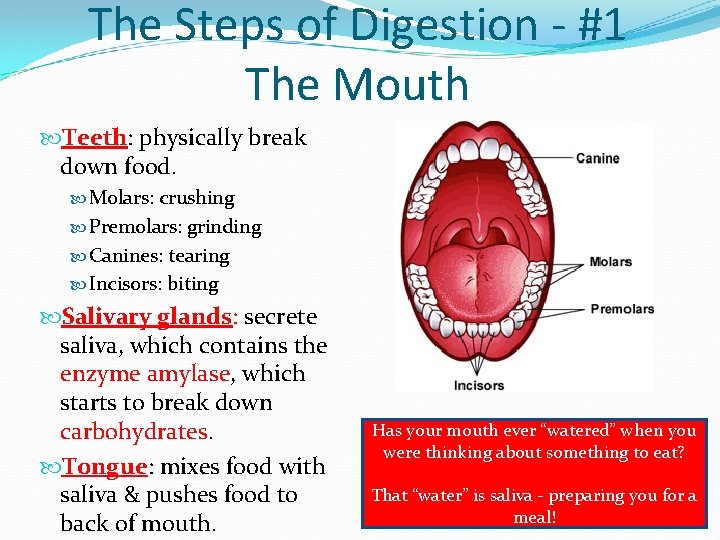
The Steps of Digestion - #1 The Mouth Teeth: physically break down food. Molars: crushing Premolars: grinding Canines: tearing Incisors: biting Salivary glands: secrete saliva, which contains the enzyme amylase, which starts to break down carbohydrates. Tongue: mixes food with saliva & pushes food to back of mouth. Has your mouth ever “watered” when you were thinking about something to eat? That “water” is saliva - preparing you for a meal!
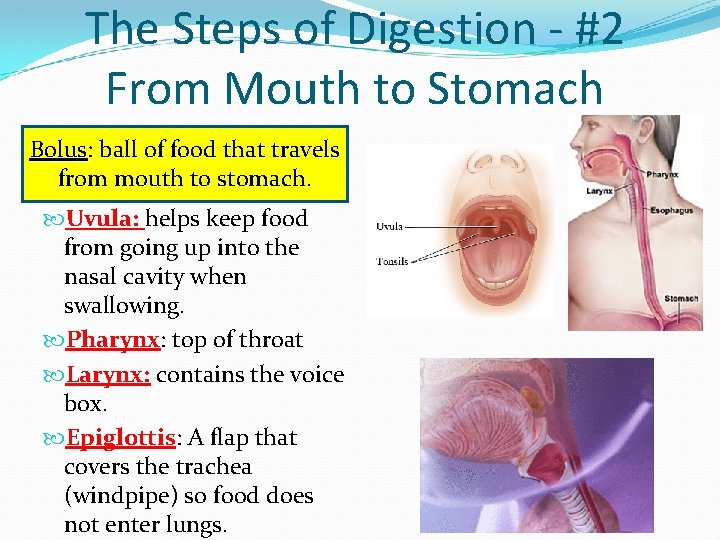
The Steps of Digestion - #2 From Mouth to Stomach Bolus: ball of food that travels from mouth to stomach. Uvula: helps keep food from going up into the nasal cavity when swallowing. Pharynx: top of throat Larynx: contains the voice box. Epiglottis: A flap that covers the trachea (windpipe) so food does not enter lungs.
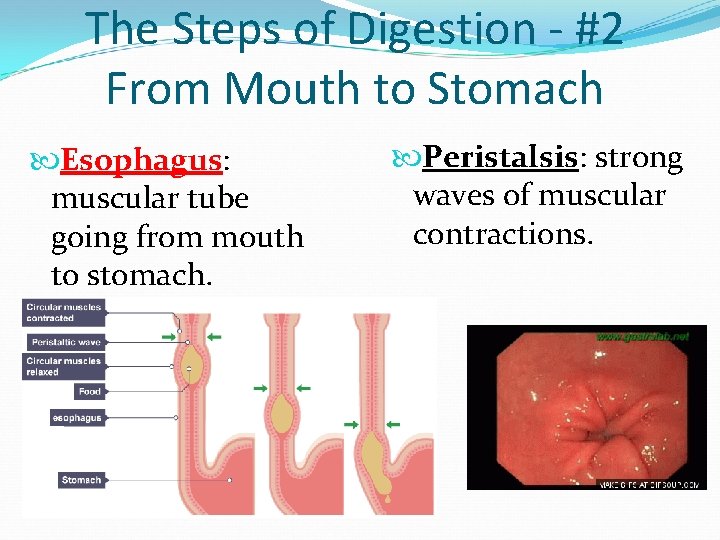
The Steps of Digestion - #2 From Mouth to Stomach Esophagus: muscular tube going from mouth to stomach. Peristalsis: strong waves of muscular contractions.
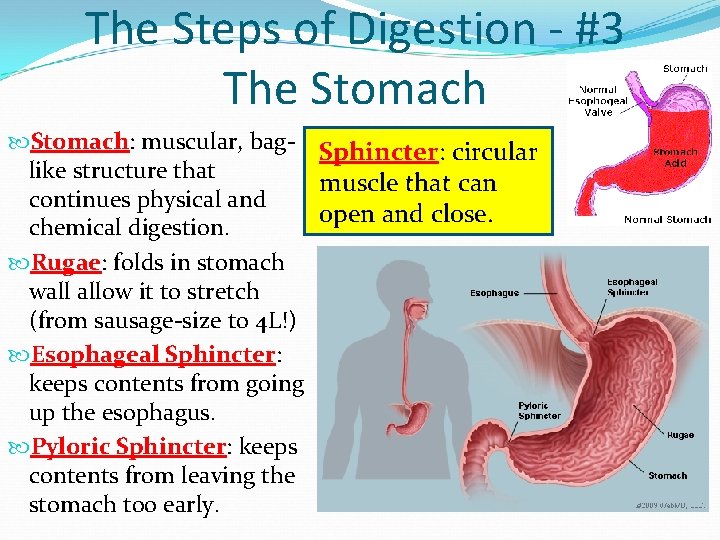
The Steps of Digestion - #3 The Stomach: muscular, bag- Sphincter: circular like structure that muscle that can continues physical and open and close. chemical digestion. Rugae: folds in stomach wall allow it to stretch (from sausage-size to 4 L!) Esophageal Sphincter: keeps contents from going up the esophagus. Pyloric Sphincter: keeps contents from leaving the stomach too early.
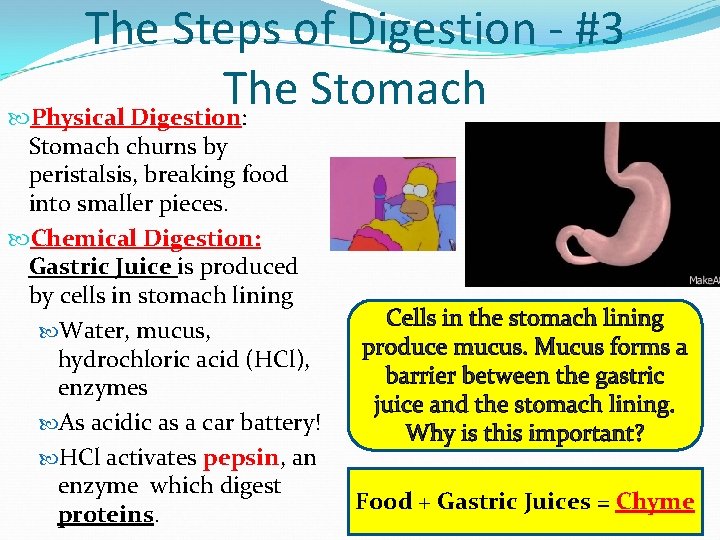
The Steps of Digestion - #3 The Stomach Physical Digestion: Stomach churns by peristalsis, breaking food into smaller pieces. Chemical Digestion: Gastric Juice is produced by cells in stomach lining Water, mucus, hydrochloric acid (HCl), enzymes As acidic as a car battery! HCl activates pepsin, an enzyme which digest proteins. Cells in the stomach lining produce mucus. Mucus forms a barrier between the gastric juice and the stomach lining. Why is this important? Food + Gastric Juices = Chyme
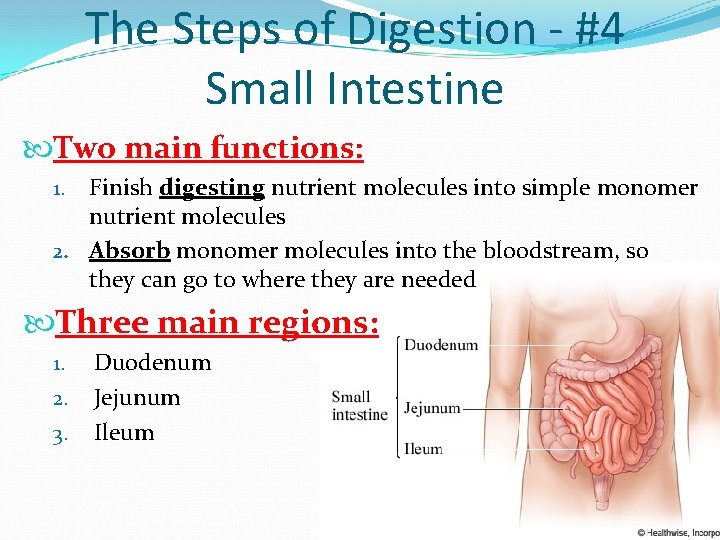
The Steps of Digestion - #4 Small Intestine Two main functions: Finish digesting nutrient molecules into simple monomer nutrient molecules 2. Absorb monomer molecules into the bloodstream, so they can go to where they are needed 1. Three main regions: 1. 2. 3. Duodenum Jejunum Ileum
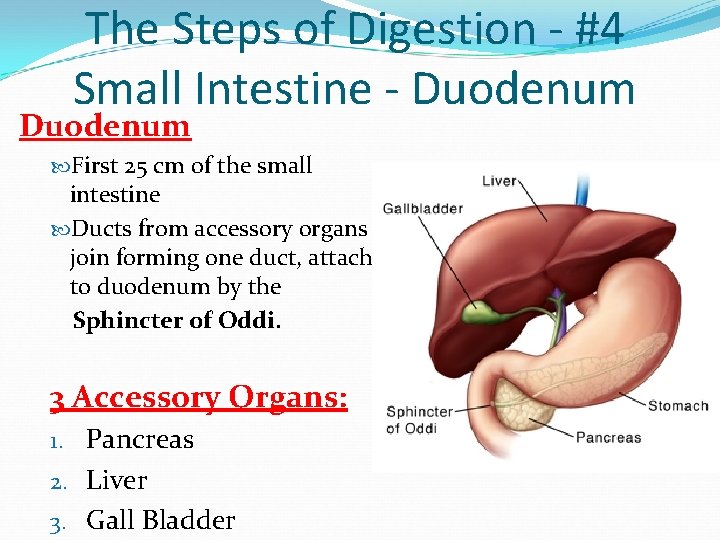
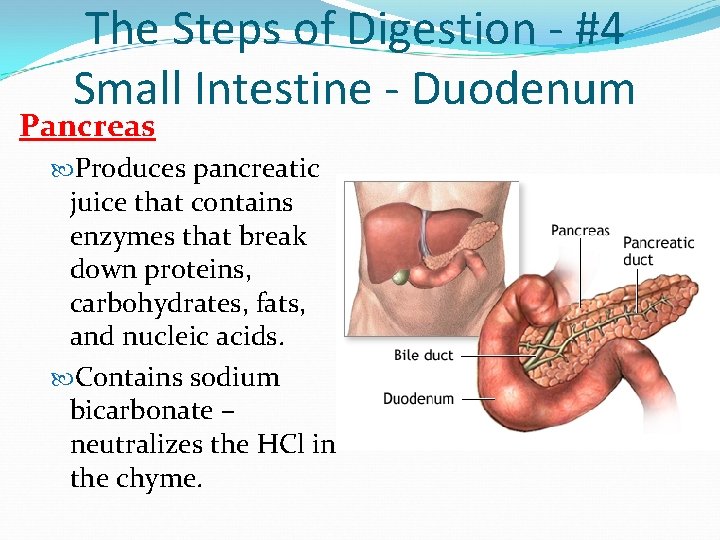
The Steps of Digestion - #4 Small Intestine - Duodenum First 25 cm of the small intestine Ducts from accessory organs join forming one duct, attached to duodenum by the Sphincter of Oddi. 3 Accessory Organs: 1. Pancreas 2. Liver 3. Gall Bladder
The Steps of Digestion - #4 Small Intestine - Duodenum Pancreas Produces pancreatic juice that contains enzymes that break down proteins, carbohydrates, fats, and nucleic acids. Contains sodium bicarbonate – neutralizes the HCl in the chyme.
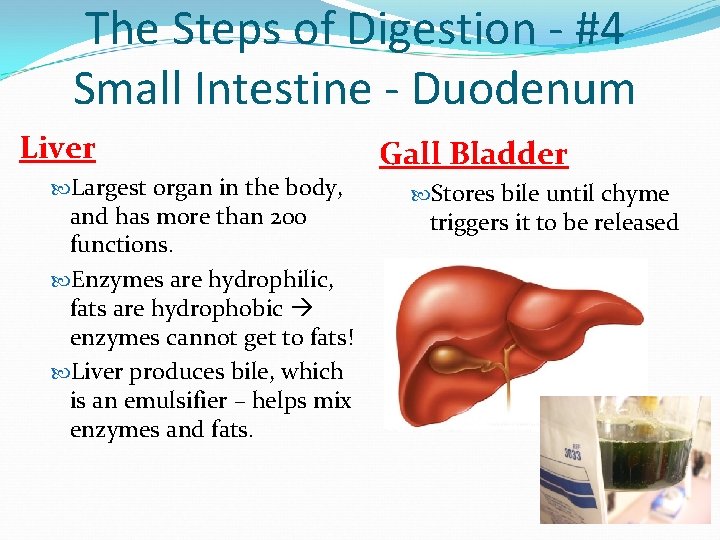
The Steps of Digestion - #4 Small Intestine - Duodenum Liver Largest organ in the body, and has more than 200 functions. Enzymes are hydrophilic, fats are hydrophobic enzymes cannot get to fats! Liver produces bile, which is an emulsifier – helps mix enzymes and fats. Gall Bladder Stores bile until chyme triggers it to be released
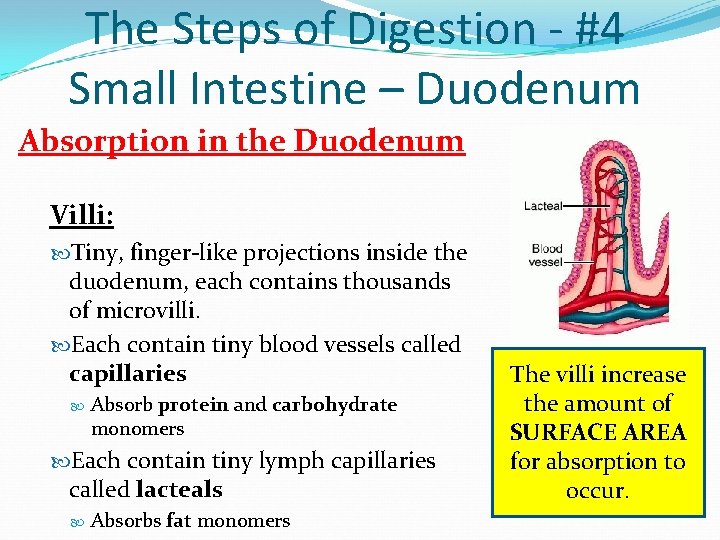
The Steps of Digestion - #4 Small Intestine – Duodenum Absorption in the Duodenum Villi: Tiny, finger-like projections inside the duodenum, each contains thousands of microvilli. Each contain tiny blood vessels called capillaries Absorb protein and carbohydrate monomers Each contain tiny lymph capillaries called lacteals Absorbs fat monomers The villi increase the amount of SURFACE AREA for absorption to occur.
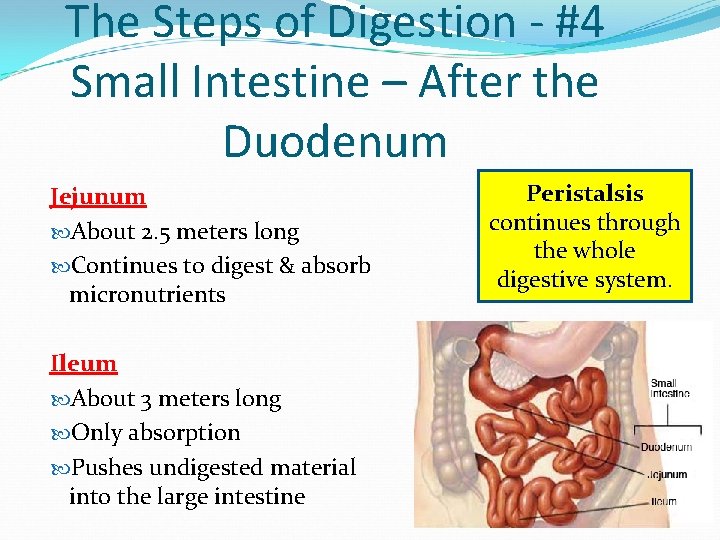
The Steps of Digestion - #4 Small Intestine – After the Duodenum Jejunum About 2. 5 meters long Continues to digest & absorb micronutrients Ileum About 3 meters long Only absorption Pushes undigested material into the large intestine Peristalsis continues through the whole digestive system.
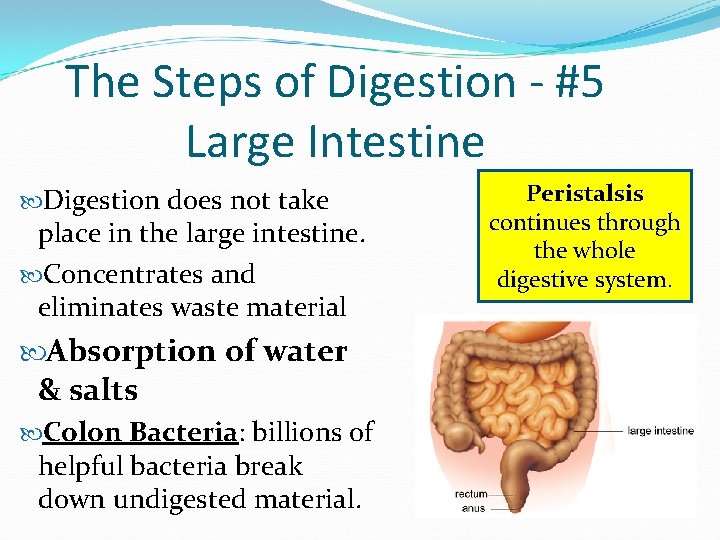
The Steps of Digestion - #5 Large Intestine Digestion does not take place in the large intestine. Concentrates and eliminates waste material Absorption of water & salts Colon Bacteria: billions of helpful bacteria break down undigested material. Peristalsis continues through the whole digestive system.
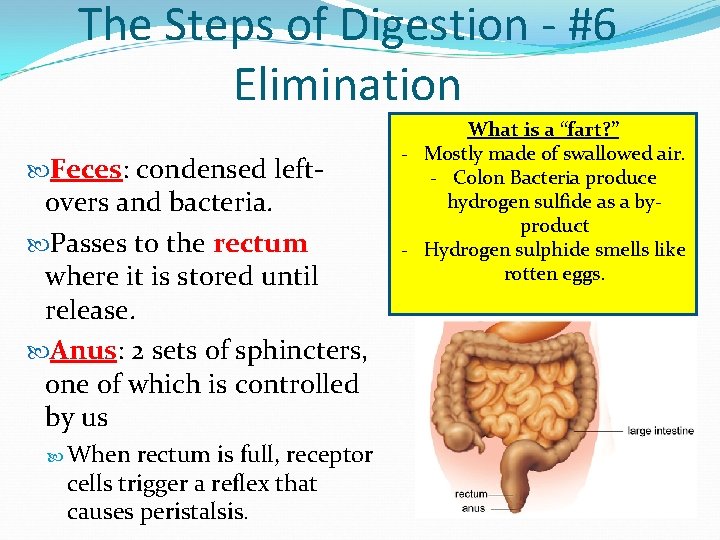
The Steps of Digestion - #6 Elimination Feces: condensed left- overs and bacteria. Passes to the rectum where it is stored until release. Anus: 2 sets of sphincters, one of which is controlled by us When rectum is full, receptor cells trigger a reflex that causes peristalsis. What is a “fart? ” - Mostly made of swallowed air. - Colon Bacteria produce hydrogen sulfide as a byproduct - Hydrogen sulphide smells like rotten eggs.
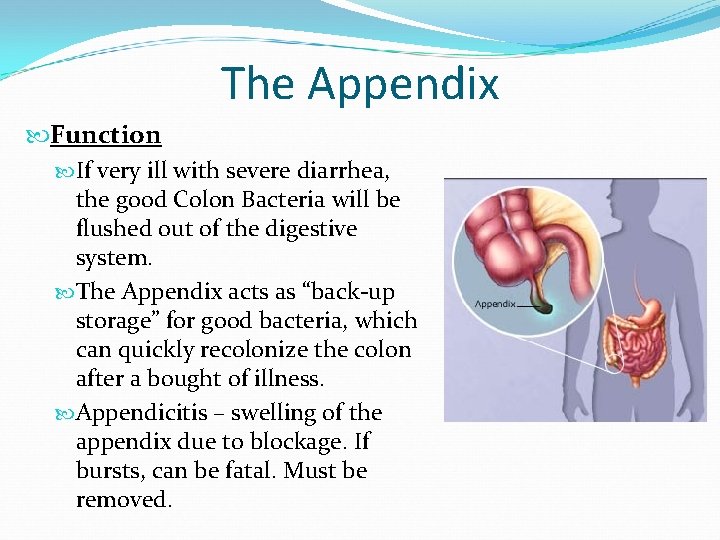
The Appendix Function If very ill with severe diarrhea, the good Colon Bacteria will be flushed out of the digestive system. The Appendix acts as “back-up storage” for good bacteria, which can quickly recolonize the colon after a bought of illness. Appendicitis – swelling of the appendix due to blockage. If bursts, can be fatal. Must be removed.